Wild Creatures That Can Be Deadly — Where They Live, Why They Attack and How Humans Can Stay Safe


India is home to an extraordinary variety of wildlife. From the Himalayas to the Western Ghats, from the Sundarbans to the forests of central India, millions of wild animals live across the country.
Most wild animals do not deliberately seek out humans. However, encounters can sometimes become dangerous when animals feel threatened, surprised, injured, cornered or when people enter their habitat.
Some species are especially important when discussing human-wildlife conflict because of their size, strength, venom or defensive behaviour.
Here are some of India’s most dangerous animals—and the fascinating facts behind them.
🐅 1. Bengal Tiger


The Bengal tiger is India’s iconic big cat and one of the world’s most powerful predators.
Adult tigers are capable of taking down large prey, and their combination of strength, claws and powerful jaws makes them potentially dangerous to people.
Tiger attacks on humans are relatively uncommon compared with the enormous number of people and tigers sharing India’s landscapes, but conflicts can occur.
Where are they found?
Major tiger landscapes include:
- Sundarbans
- Central Indian forests
- Western Ghats
- Terai region
- Assam
- Rajasthan
- Karnataka
- Madhya Pradesh
Why can a tiger attack?
Possible circumstances include:
- A tiger is surprised at close range.
- It feels cornered.
- It is injured or old.
- It has become accustomed to humans.
- People enter its territory.
A tiger should never be approached for a photograph or selfie.
🐘 2. Asian Elephant


The Asian elephant is one of India’s most magnificent animals.
But its enormous size and strength mean that a close encounter can become extremely dangerous.
An adult elephant can weigh several tonnes.
When are elephants dangerous?
Elephants may become aggressive when:
- They feel threatened.
- A person gets between a mother and calf.
- They are surprised at close range.
- Bulls experience musth, a period associated with heightened testosterone and reproductive behaviour.
- Habitat fragmentation brings elephants closer to settlements.
Elephants are responsible for significant human-wildlife conflict in parts of India.
Safety tip
If you encounter a wild elephant:
Do not approach, chase, surround or provoke it.
Give the animal plenty of space and follow instructions from local forest authorities.
🐊 3. Saltwater Crocodile


The saltwater crocodile is one of the world’s largest living reptiles.
In India, important populations occur in places such as Bhitarkanika in Odisha and parts of the Andaman and Nicobar Islands.
They are powerful ambush predators.
Why are crocodiles dangerous?
A crocodile may remain almost completely hidden in water before suddenly attacking prey near the shoreline.
People should therefore avoid entering or swimming in waters known to contain crocodiles.
Remember:
A calm-looking crocodile is still a wild predator.
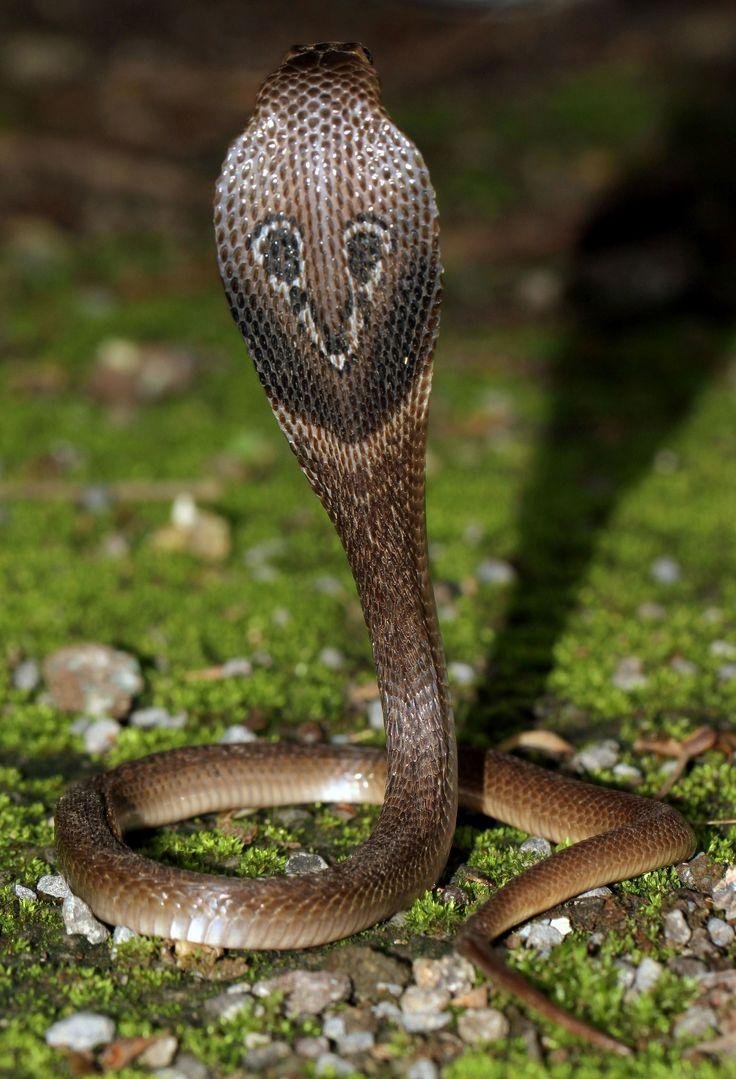
🐍 4. Indian Cobra


The Indian cobra is one of India’s best-known venomous snakes.
Its scientific name is Naja naja.
When threatened, it can raise the front part of its body and spread its characteristic hood.
Its venom contains powerful neurotoxic components that can interfere with the nervous system and breathing.
Where can cobras be found?
They occur across much of India and can sometimes enter:
- Farms
- Villages
- Gardens
- Buildings
- Areas containing rodents
Important rule
Never attempt to catch or kill a snake yourself.
If a snake enters a house, contact a trained local snake rescuer or the appropriate wildlife/forest authority.
🐍 5. Common Krait


The common krait is another medically important venomous snake found in India.
It is often more active at night.
Its venom contains powerful neurotoxins.
One of the dangers with snakebite is that a bite may initially appear less dramatic than people expect.
Never wait for symptoms.
A suspected venomous snakebite is a medical emergency.
The victim should be taken to a hospital as quickly and safely as possible.
🐍 6. Russell’s Viper


The Russell’s viper is a large venomous snake found in many parts of India.
It can be responsible for serious snakebite.
Its venom can cause severe tissue damage and affect blood clotting and other body systems.
It is often associated with agricultural landscapes, grasslands and areas where rodents are abundant.
🐍 7. Saw-Scaled Viper


The saw-scaled viper is a relatively small snake, but its venom makes it medically important.
It gets its name from the characteristic rough scales along its body.
When threatened, it may produce a distinctive rubbing sound by moving its body scales against each other.
It occurs in various dry and semi-arid parts of India.
🐍 India’s “Big Four” Venomous Snakes
India’s four snakes traditionally associated with a large proportion of medically important snakebite cases are often called the Big Four:
| Snake | Scientific Name |
|---|---|
| Indian Cobra | Naja naja |
| Common Krait | Bungarus caeruleus |
| Russell’s Viper | Daboia russelii |
| Saw-scaled Viper | Echis carinatus |
The term is useful historically and educationally, but India has many other venomous snakes capable of causing serious bites.
🐻 8. Sloth Bear


The sloth bear is one of India’s most unpredictable large mammals.
It looks slow and somewhat harmless, but it is powerful and can move surprisingly quickly.
Sloth bears have long claws adapted for digging into termite mounds and other food sources.
Why do attacks happen?
A bear may react aggressively when:
- It is surprised at close range.
- It feels threatened.
- A person comes between a mother and cub.
- It encounters humans suddenly in dense vegetation.
In areas where sloth bears occur, people should avoid walking alone through dense forest, especially without local guidance.
🐆 9. Leopard


Leopards are highly adaptable predators.
Unlike many large carnivores, they can live surprisingly close to human settlements.
They may occur near:
- Villages
- Farms
- Forest edges
- Tea plantations
- Sugarcane fields
- Suburban areas
This adaptability sometimes creates conflict.
A leopard is particularly dangerous if it becomes trapped inside a building or surrounded by a crowd.
Never surround a leopard.
Crowds can increase stress and provoke unpredictable behaviour.
🐃 10. Gaur — The Indian Bison


The gaur is India’s largest wild bovine.
It looks similar to domestic cattle but is significantly more powerful.
A large adult can weigh well over 1,000 kilograms.
Gaur generally avoid humans, but a threatened animal can be extremely dangerous.
The safest response is to keep a large distance and never block its escape route.
🐃 11. Wild Water Buffalo


Wild water buffalo are powerful animals found in parts of northeastern and central India.
Their horns and immense body strength make them potentially dangerous when threatened.
They are especially important in protected areas such as Kaziranga.
Visitors should remain inside authorised safari vehicles and follow the instructions of guides and forest officials.
🐗 12. Wild Boar


The wild boar may not look as frightening as a tiger or crocodile, but it can be dangerous.
A large boar has:
- Strong muscles
- Sharp tusks
- Powerful jaws
- Considerable speed
A cornered or injured animal can charge.
People should never attempt to feed or approach wild boars.
🦁 13. Asiatic Lion


India’s Asiatic lions are primarily found in and around the Gir landscape of Gujarat.
Lions are powerful predators capable of killing large prey.
However, like tigers, they generally avoid unnecessary confrontation with humans.
Visitors should maintain strict distance and never attempt to attract a lion for photographs.
🐊 14. Mugger Crocodile


The mugger crocodile is found across parts of the Indian subcontinent.
It can live in:
- Lakes
- Rivers
- Reservoirs
- Marshes
- Slow-moving waters
Because muggers can inhabit freshwater environments used by people, conflicts can occur.
Never enter water where crocodiles are known to be present.
🐍 15. King Cobra


The king cobra is the world’s longest venomous snake.
It can exceed 4 metres in length.
India’s king cobras are mainly associated with forested areas, particularly parts of the Western Ghats and northeastern India.
Despite its fearsome reputation, king cobras generally avoid humans.
Its size, intelligence and powerful venom make it an animal that should never be approached.
🐆 16. Clouded Leopard


The clouded leopard is an elusive forest predator found in parts of northeastern India.
It spends much of its life away from humans.
Although it is a predator, encounters with people are rare.
Its biggest threat is actually human activity and habitat loss, rather than the danger it poses to people.
🐍 17. Indian Rock Python


The Indian rock python is a large non-venomous snake.
It kills prey by constriction rather than venom.
Despite frightening stories, attacks on healthy adult humans are uncommon.
People should still never attempt to handle a large wild python.
🦈 18. Sharks


India has a long coastline along the Arabian Sea, Bay of Bengal and Indian Ocean.
Many shark species occur in Indian waters.
However, it is important not to confuse presence with danger.
Most shark species do not routinely attack humans.
Unprovoked shark attacks are rare, and sharks play an important role in marine ecosystems.
🦟 19. Mosquitoes — A Tiny Animal With a Huge Impact


If we define “dangerous” by the potential impact on human health rather than size, mosquitoes deserve special attention.
Mosquitoes can transmit diseases including:
- Dengue
- Malaria
- Japanese encephalitis
- Chikungunya
The danger comes not from the bite itself but from pathogens transmitted through certain mosquito species.
This is a good reminder that the most dangerous animal isn’t necessarily the largest one.
🦂 20. Indian Red Scorpion


The Indian red scorpion (Hottentotta tamulus) is medically significant.
It occurs in parts of India and neighbouring South Asia.
Its sting can cause serious systemic effects, particularly in children.
If someone is stung by a potentially dangerous scorpion, medical attention should be sought promptly.
⚠️ Which Animals Cause the Greatest Risk?
It is difficult to create a scientifically perfect ranking because risk depends on:
- Population size
- Human population density
- Habitat overlap
- Frequency of encounters
- Medical access
- Local behaviour
- Season
- Reporting practices
Therefore, saying “Animal X is India’s No. 1 most dangerous animal” can be misleading.
A snake may be extremely dangerous because of venom, while an elephant may cause serious injury through physical force.
A mosquito can pose a major disease risk despite being tiny.
🛡️ How to Stay Safe Around Wild Animals
🚫 Never feed wild animals
Feeding can make animals associate humans with food.
📸 Never approach for selfies
A photograph is never worth risking your life.
🚗 Stay inside safari vehicles
When visiting national parks, follow the guide’s instructions.
🌳 Don’t enter forests alone
Use authorised routes and local guidance.
🐍 Never handle snakes
Even a non-venomous snake can bite, while identifying venomous species incorrectly can be fatal.
🐘 Give elephants plenty of space
Never block their path.
🐊 Stay away from crocodile habitats
Don’t swim or wash near waters known to contain crocodiles.
🐻 Don’t run toward a bear
If you encounter one, follow local wildlife-safety guidance and avoid provoking or cornering it.
🚑 What To Do After a Snakebite
A suspected venomous snakebite should be treated as a medical emergency.
Do:
- Keep the person calm.
- Keep the bitten limb as still as reasonably possible.
- Remove rings, watches or tight items near the affected limb.
- Get emergency medical care immediately.
- If safe, remember the snake’s appearance from a distance.
Do NOT:
- Cut the wound.
- Suck out the venom.
- Apply ice directly.
- Attempt to catch the snake.
- Use a traditional or unverified remedy instead of medical treatment.
- Delay hospital treatment.
Antivenom and supportive medical care are the appropriate treatments for serious venomous snakebite.
🌿 The Bigger Story: Humans and Wildlife
India has one of the world’s largest human populations and also contains extraordinary wildlife.
As cities, farms, roads and industries expand, humans and animals increasingly share landscapes.
This can produce conflict.
But the solution isn’t simply to label animals as “dangerous.”
Wild animals are usually responding to their environment.
The real goal should be:
Protect people + protect wildlife + protect habitats.
📊 India’s Dangerous Animals — Quick View
| Animal | Major Risk | Typical Habitat |
|---|---|---|
| 🐅 Bengal Tiger | Powerful predator | Forests, grasslands |
| 🐘 Asian Elephant | Size, defensive behaviour | Forests |
| 🐊 Saltwater Crocodile | Powerful bite | Coastal wetlands |
| 🐍 Indian Cobra | Venom | Many habitats |
| 🐍 Common Krait | Neurotoxic venom | Agricultural/rural areas |
| 🐍 Russell’s Viper | Serious venom | Grasslands, farms |
| 🐍 Saw-scaled Viper | Venom | Dry regions |
| 🐻 Sloth Bear | Defensive attacks | Forests |
| 🐆 Leopard | Predator/conflict | Forests & human edges |
| 🐃 Gaur | Size & strength | Forests |
| 🦁 Asiatic Lion | Powerful predator | Gir landscape |
| 🐊 Mugger Crocodile | Powerful bite | Freshwater |
| 🦂 Red Scorpion | Venomous sting | Various habitats |
| 🦟 Mosquitoes | Disease transmission | Human environments |
🇮🇳 Conclusion
India’s wildlife is one of the country’s greatest natural treasures.
Tigers, elephants, leopards, crocodiles, snakes, bears and countless other species are essential parts of India’s ecosystems.
Some can certainly be dangerous to humans—but fear should not become hatred.
The safest approach is simple:
Keep your distance. Respect wildlife. Never provoke wild animals. Follow local forest and wildlife authorities.
When humans understand animals instead of simply fearing them, coexistence becomes much more possible.
🐅 India’s forests belong to wildlife too. Protecting them means protecting India’s natural heritage. 🇮🇳


🇮🇳 MANA BHARATHAM
Stories, Facts & Wonders From India
✍️ Written by Pasupuleti Saida Rao
Leave a Reply