Author: pasupuleti Saidarao

  • BEFORE  -AFTER   INDIAN TRANSPORT LIFE IN

    BEFORE -AFTER INDIAN TRANSPORT LIFE IN

     India is ancient and venerable. There is no doubt that the transportation system, which began with walking on foot in ancient times, has now been developed to the point where it allows one to travel around the entire world.India has many types of transportation facilities. People choose each mode of transport based on their convenience, affordability, and the time available for their journey. In ancient times, people reached their destinations on foot. There is no doubt that the first mode of transportation in India was the horse. Sages, maharishis, kings, and those with financial means were the first to use the horse as a means of transport.

     What were the changes in transportation brought about by the use of horses?

     The use of horses became highly developed because of their speed and the very low cost involved. It wasn’t just for transportation; whether it was for waging wars or sending envoys, in those days, they essentially had no other option. There is no doubt that horses were the very first step in the history of transportation.
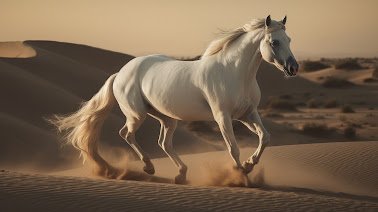
    After started traveling by riding horses, carrying food, water, and clothing became essential for every journey.  All of this wasn’t possible on a single horse. That’s when the donkey, another mode of transportation, was invented by the Indians. Although this might be a little difficult to accept, it’s true. Yes, people had to travel for many days, and since there were no hotels or other facilities, they carried all their necessary supplies on a donkey during their journeys. While a donkey couldn’t travel as fast as a horse, it was excellent at carrying heavy loads. In India, the donkey deserves the second place in terms of transportation. The donkey also only ate grass, drank less water, and could travel long distances.

    After using horses and donkeys for travel, humans encountered many problems such as exposure to the sun, rain, and strong winds. The idea that arose from these challenges was the chariot. Yes, it was pulled by horses. This was primarily invented by kings and emperors for themselves and their queens.  It allowed them to travel without facing any problems from the sun, rain, or wind along their journey.  Importantly, it was also used to protect themselves from attacks by wild animals.

    It is no exaggeration to say that even today, donkeys are used as a means of transportation in some areas.

     How to lift heavy weights in India

     It is impossible for a man to work beyond his capacity. But in India, the word ‘impossible’ has no place. This is a true example of how a man can do anything for his survival. This time, the path the man chose was an elephant. Yes, he chose an elephant, which is many times larger and stronger than himself. Compared to its weight and size, the man is insignificant, but with his love, he conquered even that. He tamed it and made it perform tasks that were considered impossible. This is a testament to the ingenuity of the Indian people.Not only did they use elephants for work, but riding on them was something they considered a cherished dream. It was also a matter of honor and prestige for them.In accordance with the times, the bullock cart came into use. People used the oxen for their farming, making them captives of their own needs, and sustained their livelihood through transportation, agriculture, and the milk obtained from them.

    What were the changes that occurred in India during the British era?

     The railway system introduced by the British in 1853 can be considered a fortunate development for India. Following this, both the transportation system and the travel methods of the people in India changed significantly. Through this system, trade and commerce could easily reach from one region to another within India.As a result, goods transportation also developed very rapidly.
     The transportation system in India after independence.
     After India gained independence, significant changes occurred in public transportation.  It has developed in many ways, including rickshaws, auto-rickshaws, tractors, and buses. Today, in many Indian cities, public transport options like metro trains, local trains, and Ola and uber taxis have become widely accessible.  Besides these, airplanes, ships, vande Bharat trains, and bullet trains are also developing rapidly in India. Man is striving to reach his destination ahead of time, even exceeding his capabilities, but in competing with time, he is losing his own time.

  • BEFORE  -AFTER   INDIAN TRANSPORT LIFE IN

    BEFORE -AFTER INDIAN TRANSPORT LIFE IN

     India is ancient and venerable. There is no doubt that the transportation system, which began with walking on foot in ancient times, has now been developed to the point where it allows one to travel around the entire world.India has many types of transportation facilities. People choose each mode of transport based on their convenience, affordability, and the time available for their journey. In ancient times, people reached their destinations on foot. There is no doubt that the first mode of transportation in India was the horse. Sages, maharishis, kings, and those with financial means were the first to use the horse as a means of transport.

     What were the changes in transportation brought about by the use of horses?

     The use of horses became highly developed because of their speed and the very low cost involved. It wasn’t just for transportation; whether it was for waging wars or sending envoys, in those days, they essentially had no other option. There is no doubt that horses were the very first step in the history of transportation.

    After started traveling by riding horses, carrying food, water, and clothing became essential for every journey.  All of this wasn’t possible on a single horse. That’s when the donkey, another mode of transportation, was invented by the Indians. Although this might be a little difficult to accept, it’s true. Yes, people had to travel for many days, and since there were no hotels or other facilities, they carried all their necessary supplies on a donkey during their journeys. While a donkey couldn’t travel as fast as a horse, it was excellent at carrying heavy loads. In India, the donkey deserves the second place in terms of transportation. The donkey also only ate grass, drank less water, and could travel long distances.

    After using horses and donkeys for travel, humans encountered many problems such as exposure to the sun, rain, and strong winds. The idea that arose from these challenges was the chariot. Yes, it was pulled by horses. This was primarily invented by kings and emperors for themselves and their queens.  It allowed them to travel without facing any problems from the sun, rain, or wind along their journey.  Importantly, it was also used to protect themselves from attacks by wild animals.

    It is no exaggeration to say that even today, donkeys are used as a means of transportation in some areas.

     How to lift heavy weights in India

     It is impossible for a man to work beyond his capacity. But in India, the word ‘impossible’ has no place. This is a true example of how a man can do anything for his survival. This time, the path the man chose was an elephant. Yes, he chose an elephant, which is many times larger and stronger than himself. Compared to its weight and size, the man is insignificant, but with his love, he conquered even that. He tamed it and made it perform tasks that were considered impossible. This is a testament to the ingenuity of the Indian people.Not only did they use elephants for work, but riding on them was something they considered a cherished dream. It was also a matter of honor and prestige for them.In accordance with the times, the bullock cart came into use. People used the oxen for their farming, making them captives of their own needs, and sustained their livelihood through transportation, agriculture, and the milk obtained from them.

    What were the changes that occurred in India during the British era?
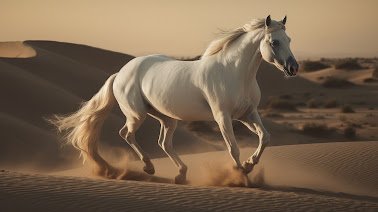
     The railway system introduced by the British in 1853 can be considered a fortunate development for India. Following this, both the transportation system and the travel methods of the people in India changed significantly. Through this system, trade and commerce could easily reach from one region to another within India.As a result, goods transportation also developed very rapidly.
     The transportation system in India after independence.
     After India gained independence, significant changes occurred in public transportation.  It has developed in many ways, including rickshaws, auto-rickshaws, tractors, and buses. Today, in many Indian cities, public transport options like metro trains, local trains, and Ola and uber taxis have become widely accessible.  Besides these, airplanes, ships, vande Bharat trains, and bullet trains are also developing rapidly in India. Man is striving to reach his destination ahead of time, even exceeding his capabilities, but in competing with time, he is losing his own time.

  • what is the kurma village in india what is the special

    what is the kurma village in india what is the special

     That period was between 1500 and 500 BC. The Vedic culture originated in India, which is not just a tradition or custom, but a magnificent way of life for human development.A life of complete wisdom, enjoying nature, listening to Vedic chants, and absorbing knowledge. We can never go back to that era, and besides, are there any people alive who have witnessed it? No.           If we are asked whether any of us can follow such customs and traditional practices, the answer would have to be no. This is because, in today’s era, every person is running faster than time itself, and there is no doubt about that. The reason is money; we have heard many times in our lives the saying that there is no life without money. Is this true or false? Please tell us in the comments after studying the entire topic. Now, let’s get to the point.                                

             There is no doubt that India, since ancient times, has taught the world about traditions, customs, and ways of life.  Seeing the way people live in that part of India, which is completely different from the rest of the world today, will leave not only India but the entire world astonished.  The village I’m talking about is Kurma village. It is located in Srikakulam district of Andhra Pradesh state in India. There is no public transportation to reach this village; everyone has to travel in their own vehicle. There is no electricity, no phone signals, and no frills or luxuries of any kind. Here, you can see firsthand how a person lives in the most basic and simple way.

              Their way of life is completely opposite to that of today’s world. They wake up at four in the morning, perform their daily ablutions, take a refreshing bath, and offer morning prayers. Afterwards, they cook their own breakfast, which they partake of as a sacred offering. They then inform everyone about the day’s activities, engage in folk dances and devotional singing, and prepare their own meals. They even cultivate the vegetables, rice, and other ingredients needed for their cooking themselves. Their daily life follows this routine. They have no targets, no desires, no anger, and they treat each other with love and affection. Their health is also excellent, and they are free from any diseases. Theirs is a truly fulfilling life.

    Whatever the case, while there are said to be seven wonders in the world, there is no doubt that this village in India is the eighth wonder of the world.

  • Why is marriage so important in every person’s life?

    Why is marriage so important in every person’s life?

     In this universe, creation and its opposite are essential, like the right hand to the left hand. East to west, north to south, right to wrong, righteousness to corruption, good to evil—everything in this universe has its importance, and the importance of one is related to the other.  The economic progress and growth of a country depend on the progress of its people.  Whether this universe exists or undergoes transformation, whether a country exists or rises to prominence, it all depends on the lifestyle of the people within that country. Every person strives to spend their earnings and manage their finances for the sake of their family members, their happiness, and a joyful life. Every person’s birth is considered a symbol of the extraordinary love between their parents.  A newborn child has the support of their parents for a certain period, and later, friends enter their life. As they study and grow, reaching adolescence, they experience physical and mental changes. They naturally seek out people of the same age to share their thoughts with, which is normal for everyone. But the important point here is that the physical and mental changes I mentioned lead them to develop an inclination towards the opposite sex. In the course of life, if they find compatibility, their thoughts and desires become centered on each other. Then, whether for physical pleasure or for companionship, they live their entire lives for one another. This is the average human life.   It all depends on their respective regions and traditions. This is the thinking of an average person. But how many people know that marriage is not just about two lives becoming one, but that it is like the backbone of a nation? This is the naked truth. There is no doubt that a person choosing to live alone without getting married is a sign of their immaturity. If marriage does enter a person’s life, they should consider it a great blessing. The two letters that make up the word ‘marriage’ not only affect the lives of the two individuals involved but also their two families and relatives, unknowingly building a protective shield around them.  Through the money earned and spent on the wedding ceremony, hundreds of families earn a living. Yes, this is true. A B


    rahmin priest, musicians, lighting technicians, cooks, servers, those involved in providing wedding attire and jewelry, photographers, videographers, and travel providers—so many people earn money through their respective professions. This is one reason why a country remains economically stable; the circulation of money allows many families to sustain their livelihoods. Believe it or not, this is the truth. A country’s exports and imports depend on the consumption patterns of its people. Without marriage, there would be no more births in this universe; this creation would come to an end. This much is the truth.