Ashwamedha and the Unexpected Encounter
In the next article, we’ll explore Rama’s Ashwamedha ceremony, the arrival of Lava and Kusha, their powerful recitation of the Ramayana, their meeting with Rama’s royal court, and the beginning of a remarkable revelation about their true identity.


The Ashwamedha Ceremony
After establishing his rule in Ayodhya, Rama decided to perform the Ashwamedha ceremony, an important royal ritual described in the later tradition of the Ramayana.
The ceremony was associated with royal authority and the prosperity of the kingdom.
A specially prepared horse was allowed to travel through different territories.
Wherever the horse travelled, rulers had to accept Rama’s authority or challenge it.
Lava and Kusha Hear About the Ceremony
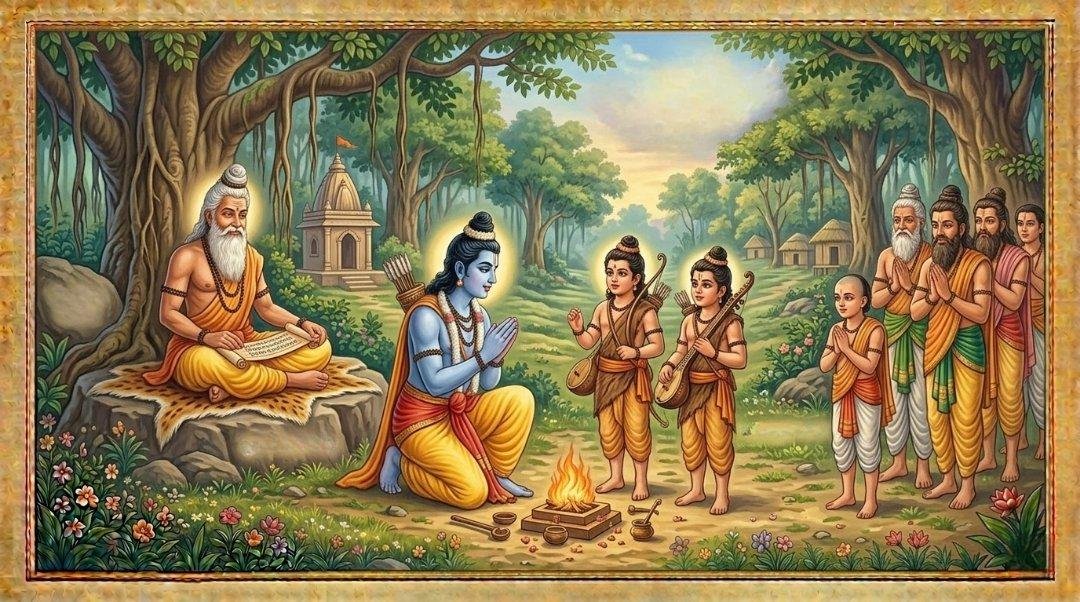
Meanwhile, Lava and Kusha were still living at Sage Valmiki’s ashram.
They had become highly skilled in reciting the Ramayana.
Valmiki had taught them the verses of the epic, and the brothers could sing the story with remarkable confidence.
As the royal horse and its accompanying warriors travelled through the region, the lives of Lava and Kusha were about to intersect with Rama’s kingdom.


The Two Young Warriors
Lava and Kusha were young, but they had been trained in archery and martial skills.
They were not afraid to stand up for what they believed was right.
Their courage and confidence surprised those who encountered them.
The events surrounding the Ashwamedha horse would soon bring them into conflict with powerful warriors connected to Rama’s kingdom.
A Remarkable Encounter
The young brothers demonstrated extraordinary skill.
They were able to face experienced warriors despite their young age.
Their courage attracted attention, and word of the two talented boys eventually reached the royal side.
But there was something nobody fully understood yet.
The two young warriors were not ordinary children.
They were Lava and Kusha, the sons of Rama and Sita.
Lava and Kusha Sing the Ramayana
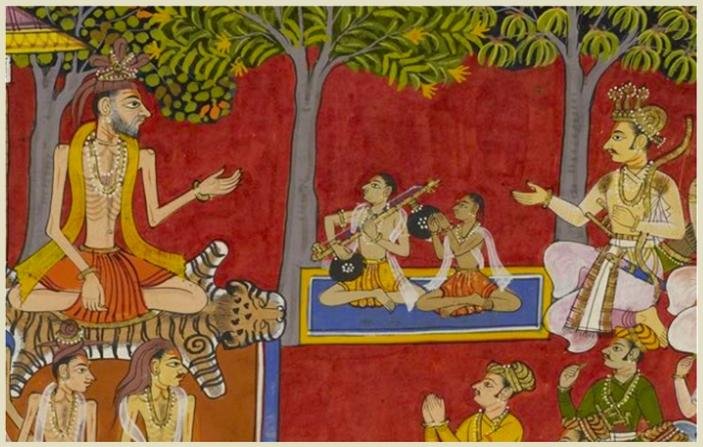
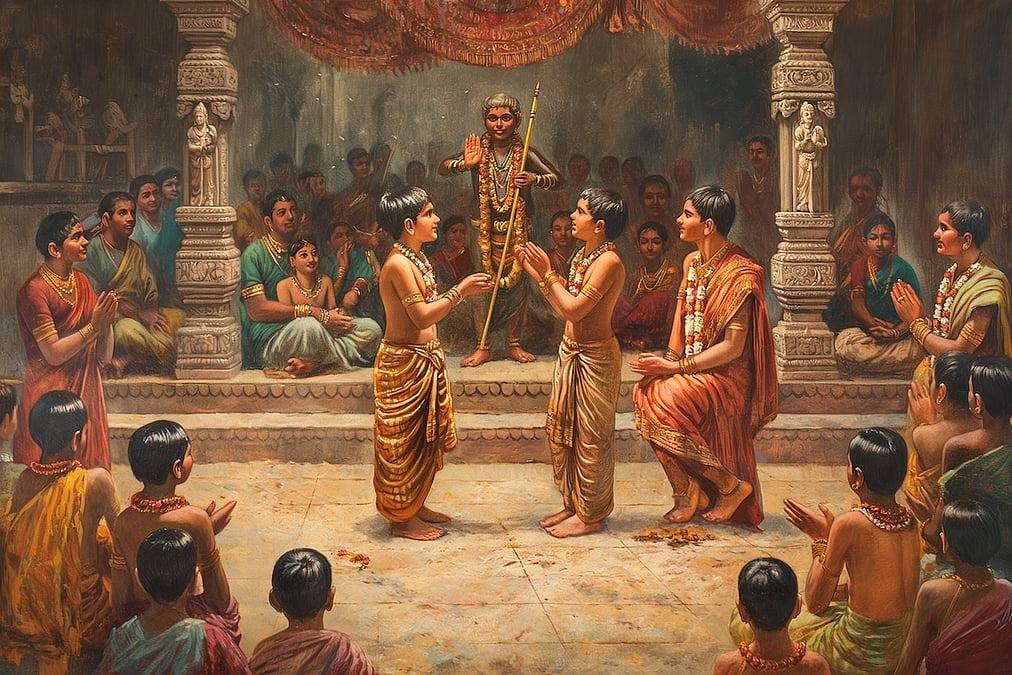
Eventually, Lava and Kusha came before Rama’s court.
Instead of immediately revealing their identity, they began singing the story of the Ramayana.
They described:
📖 Rama’s birth
👑 His life in Ayodhya
🌳 His exile
💍 His marriage to Sita
🦅 The search for Sita
🌊 The journey to Lanka
⚔️ The battle with Ravana
🏰 Rama’s return to Ayodhya
Rama listened carefully.
The story they were singing was his own life.


Rama Is Deeply Moved
As Rama listened to the boys’ recitation, he was deeply moved by the story.
The brothers sang with great confidence and emotion.
The people around Rama were also amazed by their talent.
Their performance raised an important question:
Who were these extraordinary young boys?
The Hidden Truth
The answer was one of the most emotional revelations in the later Ramayana tradition.
Lava and Kusha were the sons of Rama and Sita.
They had grown up away from the royal palace and had never lived as ordinary princes of Ayodhya.
Their connection to Rama was finally becoming clear.
A Father Meets His Sons
For Rama, the encounter carried deep emotional meaning.
He was hearing his own life story from the voices of his sons.
Lava and Kusha had inherited courage and talent from their parents, while their education under Valmiki had made them accomplished young men.
The meeting brought together two generations of the Ramayana.


The Importance of This Meeting
The meeting between Rama and Lava-Kusha is important because it connects several major parts of the Ramayana.
👑 Rama’s Kingdom
The story returns to Ayodhya and the royal court.
👩 Sita’s Life
Sita’s sons, raised away from Ayodhya, finally enter the story of their father’s kingdom.
📖 Valmiki’s Ramayana
The epic is being performed by the very children whose lives are connected to its central characters.
👨👦 Father and Sons
Rama finally encounters the sons he had been separated from.
A Story Passed From One Generation to Another
The story of Lava and Kusha also reminds us about the importance of preserving history through storytelling.
Before written books became widely available, stories were often remembered and passed from generation to generation through:
🎵 Songs
📖 Poetry
🗣️ Oral storytelling
🎭 Performances
The Ramayana itself has survived through many such traditions.
Conclusion
The arrival of Lava and Kusha brings a major turning point in the later Ramayana.
Two young boys from Valmiki’s ashram enter the world of Ayodhya and amaze everyone with their courage and their beautiful recitation of the Ramayana.
Most importantly, their encounter with Rama begins to reveal the truth about their identity.
They are the sons of Rama and Sita.
But the story is not yet complete.
In the next part, we will explore Sita’s return to the story, the final meeting of Rama and Sita, and one of the most emotional moments in the entire Ramayana.