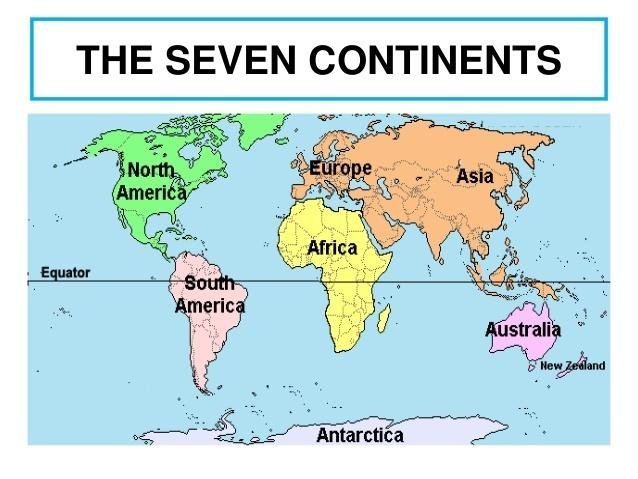
Our planet is divided into seven commonly recognized continents, each with its own geography, climate, wildlife, cultures and history.
From the enormous mountains of Asia to the frozen landscapes of Antarctica, every continent has a unique character. Understanding the continents is one of the best ways to understand how our world is organized.


🌎 What Is a Continent?
A continent is a large, continuous or broadly connected area of land traditionally recognized as a major division of Earth’s landmass.
The commonly taught model identifies seven continents:
- Asia
- Africa
- North America
- South America
- Antarctica
- Europe
- Australia
Each continent contains different countries and regions, except Antarctica, which has no sovereign countries.
🌏 1. Asia – The Largest Continent
Asia is the largest continent in the world by both land area and population.
It stretches from the Mediterranean region in the west to the Pacific Ocean in the east.
Countries such as India, China, Japan, Indonesia, Saudi Arabia and South Korea are located in Asia.
Asia contains some of Earth’s most spectacular landscapes, including the Himalayas, the Gobi Desert, the Arabian Desert and enormous river systems.


🌟 Interesting Facts About Asia
- Asia is the world’s largest continent.
- It has the largest population of any continent.
- Mount Everest is located in Asia.
- The continent contains some of the world’s oldest civilizations.
- Asia has extremely diverse climates, from Arctic conditions to tropical environments.
🌍 2. Africa – The Continent of Incredible Diversity
Africa is the second-largest continent.
It is famous for its diverse landscapes, wildlife and cultures.
The Sahara Desert covers a huge part of northern Africa, while tropical forests, grasslands and mountains can be found in other regions.
Countries such as Egypt, Kenya, Nigeria, Ethiopia, Morocco and South Africa are located here.


🌟 Interesting Facts About Africa
- Africa is the second-largest continent.
- The Sahara is the world’s largest hot desert.
- The Nile is one of the world’s longest rivers.
- Africa has an extraordinary variety of wildlife.
- The continent contains many different languages and cultures.
🌎 3. North America – From Arctic Lands to Tropical Islands
North America is located mainly in the Northern and Western Hemispheres.
Canada, the United States and Mexico are among its largest countries.
The continent includes Arctic environments in the north, huge forests, grasslands, deserts, mountains and tropical areas.
Central America and the Caribbean are also commonly discussed as part of the broader North American region.


🌟 Interesting Facts About North America
- Greenland, the world’s largest island, is geographically part of North America.
- The continent contains the Rocky Mountains.
- North America has both Arctic and tropical environments.
- Canada has one of the world’s longest coastlines.
- The continent has a wide variety of ecosystems.
🌎 4. South America – Home of the Amazon
South America is famous for its extraordinary natural environments.
The Amazon Basin contains the world’s largest tropical rainforest system.
The Andes Mountains run along much of the western side of the continent.
Countries including Brazil, Argentina, Peru, Chile, Colombia and Ecuador are located in South America.


🌟 Interesting Facts About South America
- Brazil is the largest country in South America.
- The Andes form one of the world’s major mountain ranges.
- The Amazon rainforest covers a huge area of the continent.
- The Galápagos Islands belong to Ecuador.
- South America has many unique plant and animal species.
🧊 5. Antarctica – The Frozen Continent
Antarctica is the southernmost continent on Earth.
It surrounds the South Pole and is covered almost entirely by ice.
Unlike the other continents, Antarctica has no sovereign countries.
Scientists from many countries work at research stations across the continent, studying climate, ice, oceans and wildlife.


🌟 Interesting Facts About Antarctica
- Antarctica is the coldest continent.
- It is also the driest continent overall.
- Most of its surface is covered by ice.
- Penguins are strongly associated with Antarctica.
- Antarctica has no permanent native human population.
🇪🇺 6. Europe – A Continent Rich in History
Europe is one of the smaller continents by land area, but it has had a major influence on world history.
It contains many countries with long histories, famous cities, historic monuments and diverse cultural traditions.
Countries such as France, Germany, Italy, Spain, Greece, Norway and the United Kingdom are located in Europe.


🌟 Interesting Facts About Europe
- Europe contains many independent countries within a relatively small area.
- The Alps are one of Europe’s major mountain systems.
- Europe has numerous historic cities and monuments.
- Many influential developments in art, science and philosophy originated in Europe.
- The continent has a wide variety of languages and cultures.
🇦🇺 7. Australia – The Smallest Continent
Australia is commonly described as the smallest continent.
It is also a country, making it unique in geographical terms.
The continent is known for its distinctive wildlife, including kangaroos, koalas and the platypus.
The Great Barrier Reef lies off Australia’s northeastern coast.


🌟 Interesting Facts About Australia
- Australia is both a country and a continent.
- It is the smallest of the seven commonly recognized continents.
- Many Australian animals are found nowhere else naturally.
- The Great Barrier Reef is one of Earth’s most famous marine ecosystems.
- Much of Australia’s interior is dry or semi-arid.
🌐 Comparing the Seven Continents
| Continent | Key Feature |
|---|---|
| Asia | Largest continent |
| Africa | Extraordinary wildlife and cultural diversity |
| North America | Wide range of climates and landscapes |
| South America | Amazon rainforest and Andes |
| Antarctica | Frozen southern continent |
| Europe | Rich history and cultural diversity |
| Australia | Smallest continent and unique wildlife |
🌍 Why Are Continents Important?
Continents help us understand the physical structure of our planet.
They influence:
- Climate
- Natural habitats
- Human settlement
- Agriculture
- Trade
- Transportation
- Culture
- History
- Biodiversity
Studying continents also makes it easier to understand where countries are located and how different parts of the world are connected.
🌟 Amazing Facts About the Seven Continents
🌏 Asia is the largest continent.
🌍 Africa is home to the Sahara Desert and enormous biodiversity.
🌎 North America stretches from Arctic environments to tropical regions.
🌎 South America contains the Amazon rainforest and Andes Mountains.
🧊 Antarctica is the coldest continent.
🇪🇺 Europe has a remarkable concentration of historic countries and cities.
🇦🇺 Australia is the smallest continent in the commonly used seven-continent model.


🌎 Final Thoughts
The seven continents show just how diverse our planet is.
Each one has its own combination of landscapes, climates, wildlife, cultures and history.
From the Himalayas in Asia and the African savannas to the Amazon rainforest, European cities, North American landscapes, Australian wildlife and the frozen wilderness of Antarctica, our world offers an incredible variety of places to explore and understand.
Learning about the continents is the first step toward discovering the fascinating countries and regions that make up our planet.
❓ Frequently Asked Questions
How many continents are there?
The commonly taught geographical model has seven continents.
Which is the largest continent?
Asia is the largest continent by land area and population.
Which is the smallest continent?
Australia is commonly considered the smallest of the seven continents.
Which continent is the coldest?
Antarctica is the coldest continent.
Which continent has the most countries?
Africa has the largest number of internationally recognized sovereign states.
Is Australia a country or a continent?
Australia is both a country and a continent.
Does Antarctica have countries?
No. Antarctica does not have sovereign countries.