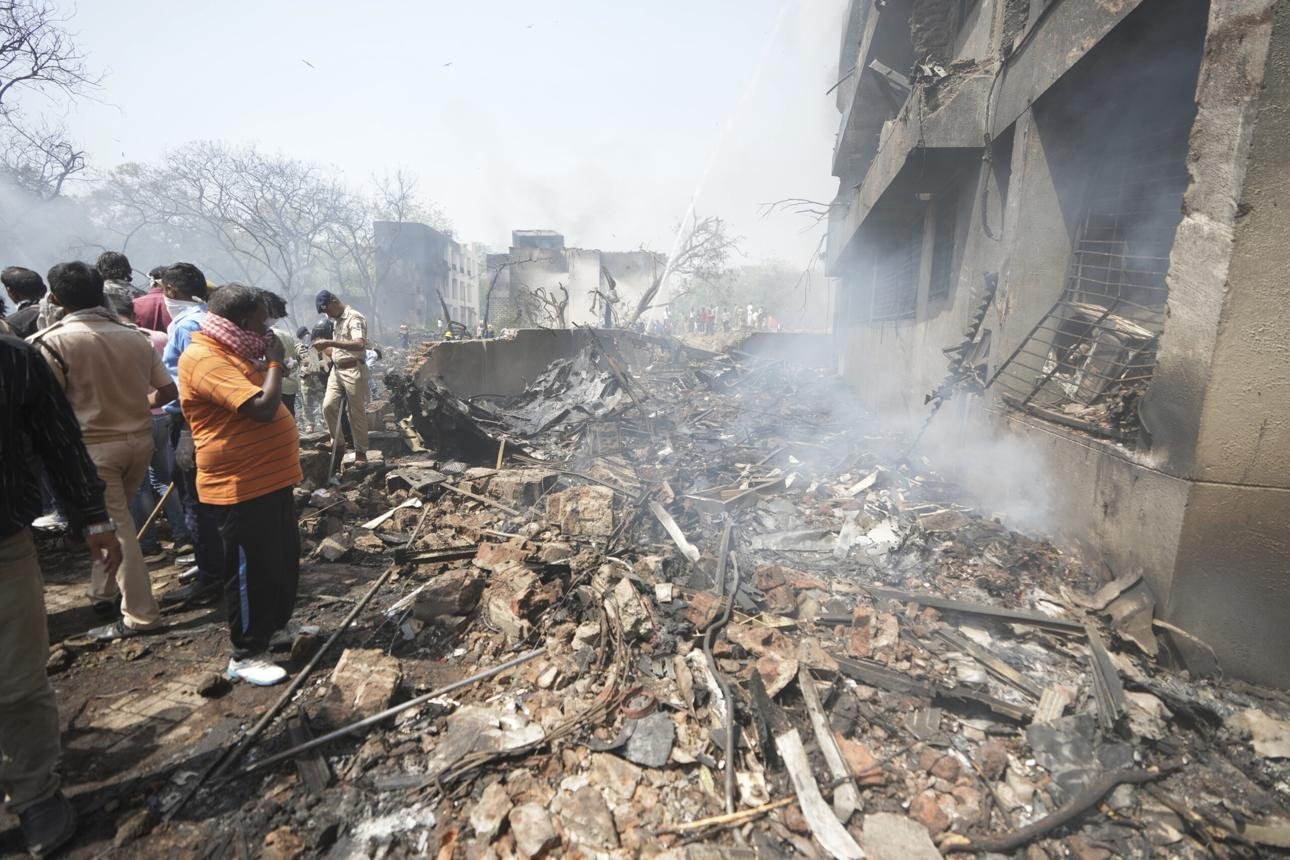

Air travel is one of the fastest and most convenient ways to travel, but aviation history has also witnessed some tragic accidents. India has experienced several major aircraft crashes, runway accidents, mid-air collisions, hijackings and other aviation incidents over the decades.
From the early years after Independence to the present day, these incidents have resulted in significant loss of life and have also led to important improvements in aviation safety.
This article looks at some of the major flight accidents and aviation tragedies connected with India from 1947 to 2026.
1. Air India Flight 245 – 1950

On November 3, 1950, Air India Flight 245 crashed into Mont Blanc in the French Alps while flying from Bombay to London via Geneva.
All 48 people on board were killed.
The accident became one of the earliest major tragedies in Air India’s history and highlighted the challenges of navigation and flying in mountainous regions.
2. Air India Flight 101 – 1966
On January 24, 1966, Air India Flight 101 crashed into Mont Blanc while operating a flight from Bombay to London.
All 117 people on board died. Among the victims was Dr. Homi Jehangir Bhabha, one of India’s most prominent nuclear scientists.
The accident remains one of the most significant tragedies in India’s aviation history.
3. Air India Flight 855 – 1978
On January 1, 1978, Air India Flight 855 crashed into the Arabian Sea shortly after taking off from Bombay.
The Boeing 747 was carrying 213 people, all of whom died.
The accident raised concerns about cockpit instrument interpretation, aircraft orientation and flight crew decision-making.
4. Air India Flight 403 – 1982
In June 1982, Air India Flight 403 crashed while attempting to land at Bombay Airport during poor weather conditions.
The aircraft was badly damaged and there were fatalities and injuries.
The incident emphasized the importance of safe landing procedures and weather awareness during aircraft operations.
5. Air India Flight 182 – 1985
On June 23, 1985, Air India Flight 182, known as Kanishka, was destroyed by a bomb over the Atlantic Ocean near Ireland.
All 329 people on board were killed.
Although the aircraft was not flying over India at the time, the tragedy is closely connected with India’s aviation history because it involved an Air India aircraft and Indian citizens.
It remains one of the deadliest acts of aviation terrorism in history.
6. Indian Airlines Flight 491 – 1993
On April 26, 1993, Indian Airlines Flight 491 crashed shortly after takeoff from Aurangabad Airport in Maharashtra.
The aircraft was carrying passengers on a domestic route when it crashed near the airport.
The accident became another reminder of the importance of takeoff safety, aircraft performance and airport surroundings.
7. Charkhi Dadri Mid-Air Collision – 1996
One of the worst aviation disasters in Indian history occurred on November 12, 1996.
A Saudi Arabian Airlines Boeing 747 and a Kazakhstan Airlines Ilyushin Il-76 collided in mid-air near Charkhi Dadri, Haryana.
All 349 people aboard the two aircraft were killed.
The disaster led to increased attention to air-traffic control procedures, communication and aircraft separation in Indian airspace.

8. Indian Airlines Flight 814 Hijacking – 1999
On December 24, 1999, Indian Airlines Flight 814, operating from Kathmandu to Delhi, was hijacked.
The aircraft was eventually taken to Kandahar, Afghanistan. One passenger was killed during the incident.
Although this was a hijacking rather than an aircraft crash, it became one of the most important aviation security incidents in India’s history.
9. Alliance Air Flight 7412 – 2000
On July 17, 2000, Alliance Air Flight 7412 crashed into a residential area in Patna, Bihar.
The Boeing 737 was approaching Patna Airport when it lost control and crashed.
More than 60 people on board and on the ground were killed.
The accident raised concerns about flight operations, airport surroundings and aviation safety.
10. Air India Express Flight 812 – Mangalore, 2010
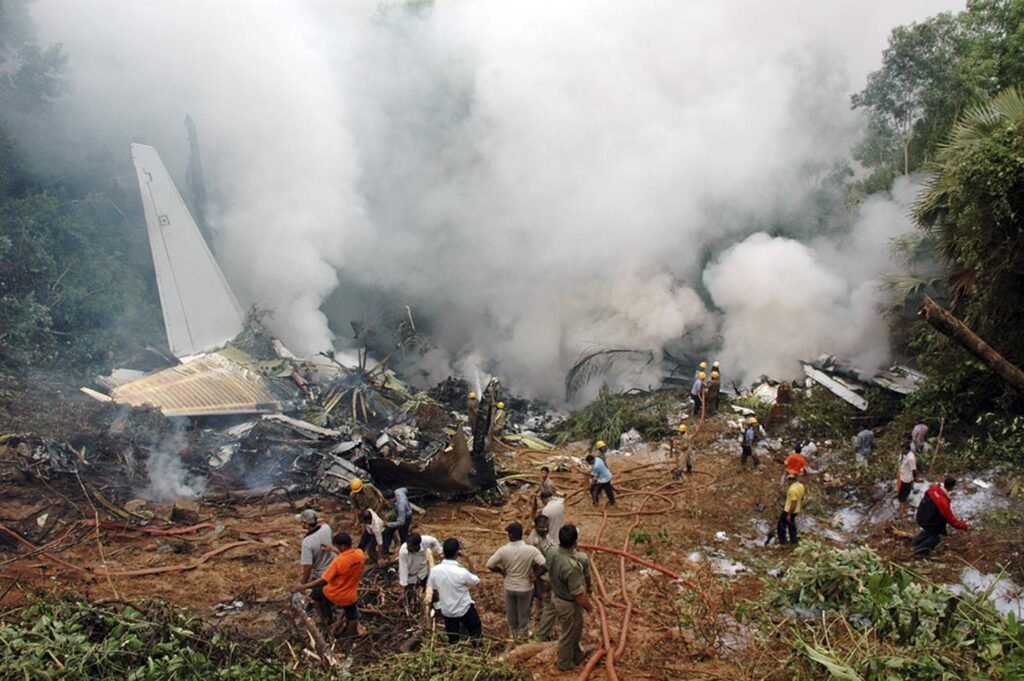
On May 22, 2010, Air India Express Flight 812, travelling from Dubai to Mangalore, crashed while landing at Mangalore International Airport.
The Boeing 737-800 overshot the runway and fell into a valley.
There were 166 people on board, and 158 people died, while eight survived.
The accident became one of India’s deadliest aviation disasters. It also drew attention to the challenges of operating aircraft at airports with tabletop runways.
11. Air India Express Flight 1344 – Kozhikode, 2020
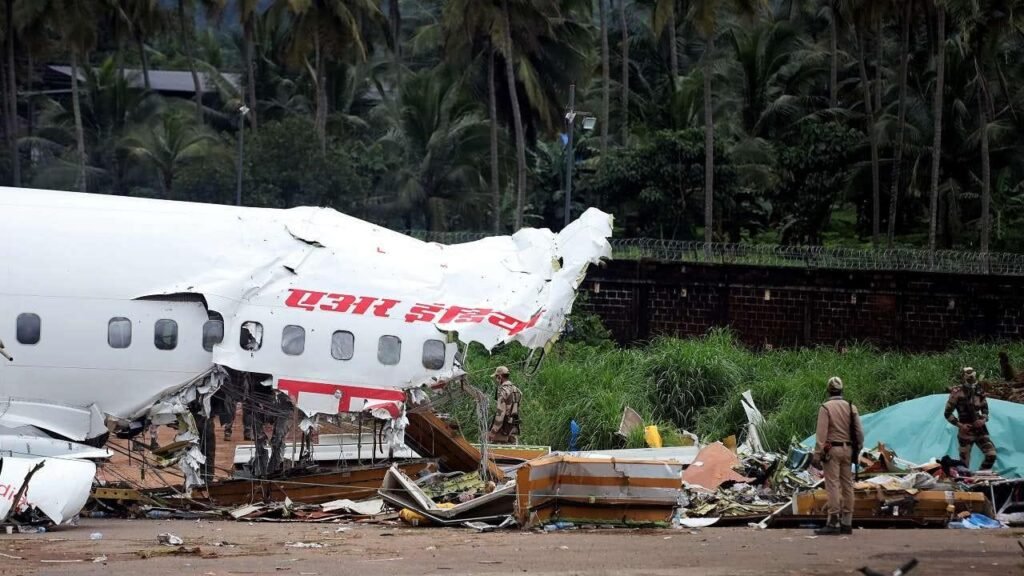
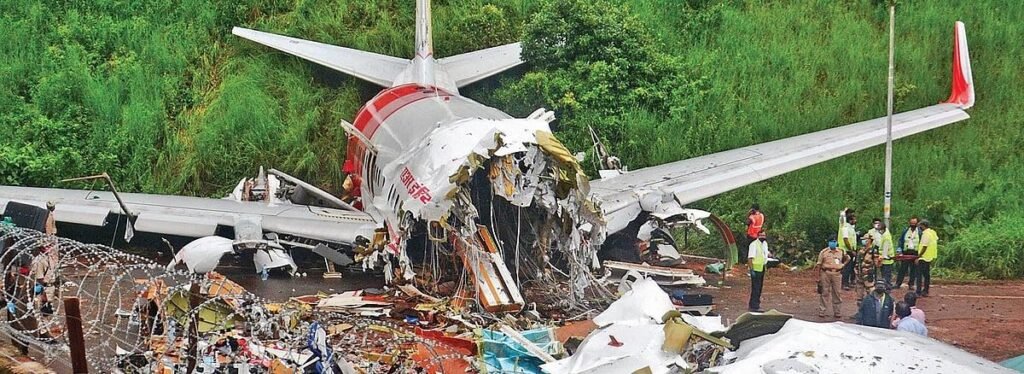
On August 7, 2020, Air India Express Flight 1344 was attempting to land at Kozhikode Airport in Kerala during heavy rain.
The aircraft overshot the runway and crashed into a valley beyond the runway.
There were 190 people on board. 21 people died, including both pilots.
The accident highlighted the risks associated with runway overruns, heavy rain and challenging airport terrain.
12. 2025 Ahmedabad Air India Crash
One of the most tragic aviation disasters in India’s recent history occurred on June 12, 2025.
Air India Flight 171, a Boeing 787-8 Dreamliner operating from Ahmedabad to London Gatwick, crashed shortly after takeoff.
The aircraft struck a building in a residential area near the airport. There were 242 people on board. One passenger survived, while people on the ground were also killed.
The accident shocked India and the international aviation community. Investigators began examining flight data, cockpit recordings, maintenance records and other evidence to determine the exact sequence of events.
The crash once again highlighted the importance of aircraft safety, emergency response and aviation investigation.
13. Aviation Incidents in 2026
Aviation safety incidents have continued to occur in 2026, although not every incident results in a crash.
In January 2026, IndiaOne Air Flight 102, a Cessna 208, made a forced landing near Rourkela during approach, with five people surviving and one person reported dead.
In August 2026, an Air India flight travelling from Phuket to New Delhi experienced a sudden drop of approximately 300 feet shortly after takeoff. Twenty-four passengers and crew members were injured. The incident was under investigation, with authorities examining factors including flight data, maintenance records and crew-related information.
These incidents demonstrate that aviation safety requires continuous monitoring even when an event does not result in a complete aircraft crash.
Why Do Flight Accidents Happen?
Aircraft accidents can have many different causes. Sometimes several factors contribute to a single accident.
Common contributing factors include:
- Human error
- Poor weather conditions
- Technical or mechanical problems
- Runway overruns
- Navigation errors
- Air traffic control issues
- Inadequate communication
- Bird strikes
- Terrain and airport-related risks
- Security threats or terrorism
- Maintenance-related problems
It is important to remember that an accident investigation is a detailed technical process. The initial reports about a crash may change as investigators examine flight recorders, aircraft components, weather information and other evidence.
How Aviation Safety Has Improved
The aviation industry has changed significantly over the decades.
Modern aircraft use advanced navigation and communication systems. Pilots undergo extensive training, while airlines follow strict maintenance schedules.
Airports have also improved runway safety systems, emergency response procedures and passenger evacuation systems.
Air traffic control technology has become more sophisticated, helping aircraft maintain safe separation from one another.
India has also strengthened its aviation safety and accident-investigation systems over the years.
Lessons Learned from India’s Aviation Tragedies
Every major accident has provided important lessons for the aviation industry.
1. Better Pilot Training
Regular training and simulator exercises help pilots handle emergencies, bad weather and unusual situations.
2. Improved Airport Safety
Runway design, runway-end safety areas, lighting and drainage can play an important role in preventing serious accidents.
3. Advanced Navigation
Modern navigation systems help pilots and air traffic controllers maintain accurate aircraft positions.
4. Better Weather Forecasting
Accurate weather information is essential for safe takeoffs and landings.
5. Strong Emergency Response
Firefighters, medical teams, police and rescue personnel must be able to respond quickly when an accident occurs.
6. Continuous Investigation
Accident investigations help identify what went wrong and prevent similar accidents in the future.
Conclusion
From the early years after India’s Independence to 2026, the country has witnessed several tragic aviation accidents and security incidents.
The loss of passengers, pilots, crew members and people on the ground has left a lasting impact on families and communities.
At the same time, every major accident has provided valuable lessons. Improvements in aircraft technology, pilot training, air traffic control, airport design, emergency response and safety regulations have made aviation considerably safer.
The history of flight accidents is therefore not only a history of tragedy. It is also a history of learning, technological progress and continuous efforts to make air travel safer.
Remembering these accidents respectfully helps us understand the importance of aviation safety and the responsibility shared by airlines, pilots, engineers, airports, regulators and passengers.
Every lesson learned from an aviation tragedy can help save lives in the future.