Continuing our 18 Mahapuranas series, today we have reached the final part — Part 18: Brahmanda Purana.
The Brahmanda Purana is traditionally counted among the 18 Mahapuranas. Its name comes from Brahmanda, meaning the cosmic universe or cosmic egg. The Purana deals with subjects such as creation, cosmic time, dynasties, Dharma, sacred places, religious traditions and spiritual knowledge.


Image ALT: Brahmanda Purana and the Hindu concept of the cosmic universe represented as Brahmanda
What Is the Brahmanda Purana?
The Brahmanda Purana is traditionally regarded as the 18th and final Mahapurana in the commonly listed group of 18 Mahapuranas.

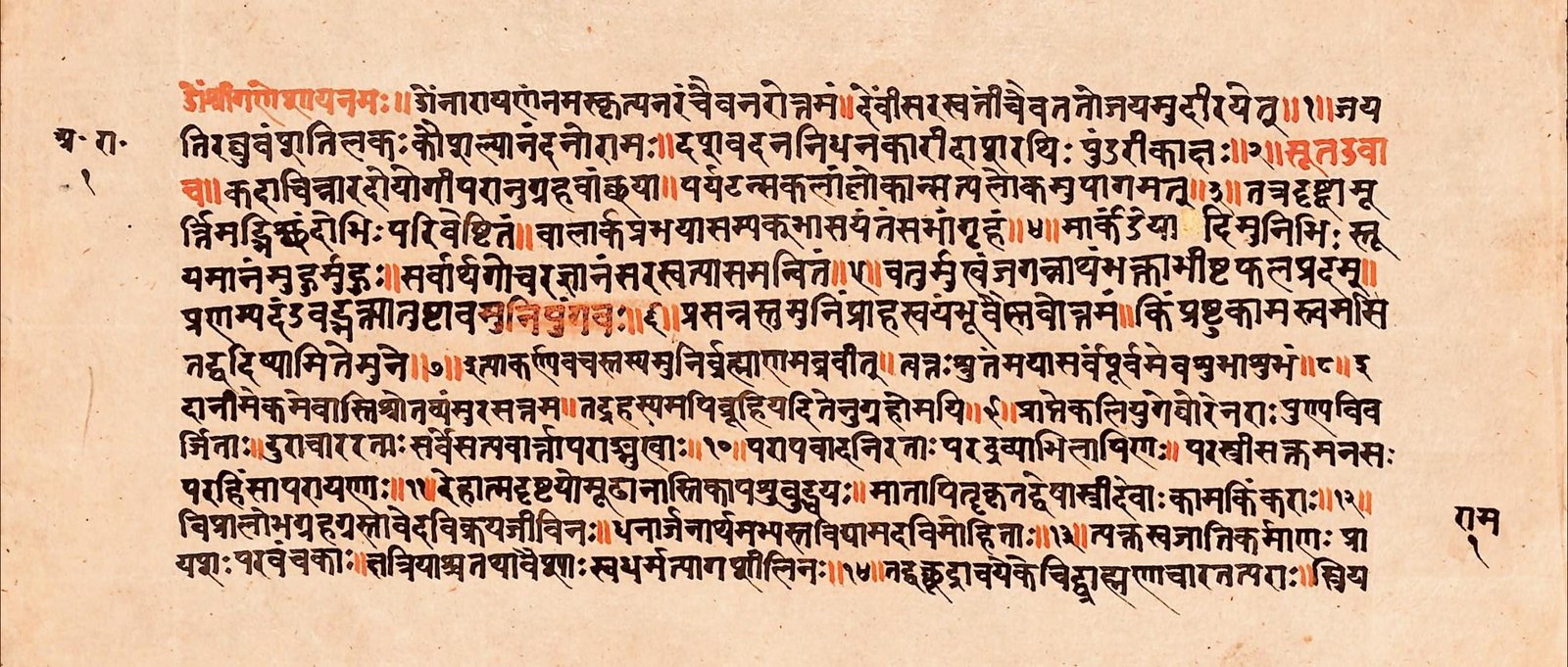
Image ALT: Ancient Sanskrit manuscript representing the Brahmanda Purana
The word Brahmanda is formed from:
- Brahma – associated with the creator principle
- Anda – egg
Thus, Brahmanda can be understood as the cosmic egg or universe.
The Cosmic Egg
The idea of the universe as a cosmic egg appears in Hindu cosmological traditions.


Image ALT: The cosmic egg or Brahmanda representing the universe in Hindu cosmology
The universe is imagined as an immense cosmic structure containing different levels of existence.
Creation of the Universe
The Brahmanda Purana contains traditions concerning creation and cosmic evolution.


Image ALT: Brahma and the creation of the universe in Hindu cosmological tradition
Creation is understood through a vast cosmic framework involving different beings, worlds and cycles of time.
Brahma
Brahma is traditionally associated with the creation of the universe.


Image ALT: Lord Brahma, the four-headed creator deity, in traditional Hindu art
Brahma is commonly depicted with four heads, symbolizing his connection with the four directions and sacred knowledge.
Vishnu and Shiva
Puranic literature frequently presents traditions concerning Vishnu and Shiva alongside Brahma.


Image ALT: Brahma Vishnu and Shiva representing the Trimurti in Hindu tradition
The three are commonly associated with:
- Brahma – creation
- Vishnu – preservation
- Shiva – dissolution
Cosmic Time
One of the fascinating aspects of Puranic cosmology is its enormous scale of time.


Image ALT: Cycles of cosmic time and Yugas in Hindu cosmological tradition
Time is described through recurring cycles rather than as a single linear sequence.
The Four Yugas
Hindu traditions describe four major Yugas:
- Satya Yuga
- Treta Yuga
- Dvapara Yuga
- Kali Yuga


Image ALT: The four Yugas representing cycles of time in Hindu cosmology
Each Yuga is traditionally associated with a different condition of Dharma.
Manvantara
Another important concept in Puranic cosmology is the Manvantara.
Image ALT: Manvantara and Manu represented within Hindu cosmic time
A Manvantara is a major period of cosmic time associated with a particular Manu.
Kalpa
A Kalpa represents an immense period of cosmic time.


Image ALT: Vast cosmic cycle of time represented by a Kalpa in Hindu cosmology
These enormous periods illustrate the scale of time in Puranic thought.
Creation and Dissolution
Hindu cosmology presents creation and dissolution as recurring processes.

Image ALT: Hindu cosmic cycle of creation preservation and dissolution
The universe comes into manifestation, exists for a period and eventually undergoes dissolution before another cycle begins.
Pralaya
Pralaya refers to cosmic dissolution.

Image ALT: Cosmic dissolution or Pralaya in Hindu cosmological tradition
Pralaya is therefore part of the recurring cosmic cycle.
The Importance of Dharma
The Brahmanda Purana also belongs to the wider Puranic tradition of teaching Dharma.


Image ALT: Hindu sage teaching Dharma and righteous living
Dharma can involve:
- Duty
- Truth
- Compassion
- Self-control
- Charity
- Religious responsibility
Sacred Places
The Brahmanda Purana contains traditions connected with sacred geography and pilgrimage.


Image ALT: Hindu devotees visiting a sacred pilgrimage site
Sacred places are an important part of Hindu religious culture.
Tirtha
A Tirtha is a sacred place or pilgrimage destination.


Image ALT: Hindu pilgrims visiting a sacred Tirtha and river
Tirthas can include:
- Rivers
- Temples
- Mountains
- Lakes
- Sacred cities
Lalita Tradition
One of the most important sections associated with the Brahmanda Purana is the Lalita tradition, especially the Lalita Sahasranama.


Image ALT: Goddess Lalita Tripurasundari representing the Lalita tradition associated with the Brahmanda Purana
Lalita Sahasranama is a celebrated devotional hymn consisting of a thousand names of Goddess Lalita.
Goddess Lalita
Lalita Tripurasundari is an important form of the Divine Mother in Shakta traditions.


Image ALT: Goddess Lalita Tripurasundari in traditional Shakta art
She is associated with:
- Divine beauty
- Shakti
- Knowledge
- Compassion
- Cosmic power
Lalita Sahasranama
The Lalita Sahasranama is one of the most famous devotional works connected with the Brahmanda Purana tradition.


Image ALT: Lalita Sahasranama Sanskrit devotional text associated with Goddess Lalita
The name Sahasranama means thousand names.
Devotees recite these names as an act of devotion and worship.
Sri Vidya Tradition
The Lalita tradition is closely connected with Sri Vidya, an important Shakta spiritual tradition.


Image ALT: Sri Chakra associated with Lalita Tripurasundari and Sri Vidya tradition
The Sri Chakra is one of the most important sacred symbols associated with this tradition.
Sri Chakra
The Sri Chakra is a sacred geometric diagram used in Sri Vidya traditions.


Image ALT: Sri Chakra or Sri Yantra representing sacred geometry in the Sri Vidya tradition
It represents the interconnected relationship between Shakti and Shiva and the structure of the cosmos within the tradition.
Devi and Shakti
The Brahmanda Purana therefore has an important place in the history of Devi worship.


Image ALT: Goddess Shakti representing the Divine Feminine in Hindu tradition
Shakti represents divine power and cosmic energy.
Spiritual Knowledge
Like other Puranas, the Brahmanda Purana combines mythology with spiritual teachings.


Image ALT: Hindu sage teaching spiritual knowledge and wisdom
The purpose is not simply to tell stories but also to communicate ideas about Dharma, devotion and spiritual life.
Yoga and Meditation
Spiritual discipline and meditation are important themes in the wider Puranic tradition.


Image ALT: Hindu yogi practicing meditation and spiritual discipline
Meditation can help cultivate:
- Concentration
- Self-control
- Inner peace
- Spiritual awareness
Moksha
Moksha means liberation from the cycle of Samsara.


Image ALT: Hindu sage meditating toward Moksha or spiritual liberation
Liberation is one of the highest spiritual goals described in Hindu traditions.
The Human Place in the Universe
The cosmic vision of the Brahmanda Purana places human life within an enormous universe and an equally enormous cycle of time.


Image ALT: Human existence represented within the vast cosmic universe of Hindu cosmology
This perspective encourages reflection on the relationship between individual life and the larger cosmos.
Dynasties and Kings
Puranic texts also preserve traditions concerning ancient royal dynasties and rulers.
Image ALT: Ancient Indian king and royal court representing Puranic dynastic traditions
These accounts connect mythology, genealogy and cultural memory.
Genealogies
Genealogical traditions are an important feature of Puranic literature.


Image ALT: Ancient Indian royal genealogy representing Puranic dynastic traditions
They preserve lists and stories concerning different lineages and rulers.
Sacred Stories
The Brahmanda Purana contains stories that connect the human world with the divine and cosmic worlds.


Image ALT: Gods and sages appearing in sacred Puranic stories
These stories helped transmit religious ideas across generations.
Religious Practices
The Purana also belongs to the larger Puranic tradition of describing religious observances.


Image ALT: Hindu devotee performing traditional religious worship
Such practices can include:
- Puja
- Fasting
- Charity
- Prayer
- Pilgrimage
- Devotional recitation
Charity
Dana, or charity, is considered an important virtue.


Image ALT: Traditional Hindu practice of Dana or charitable giving
Charity encourages generosity and compassion.
Devotion
Bhakti, or devotion to the Divine, is central to many Puranic traditions.


Image ALT: Hindu devotee practicing Bhakti through prayer and worship
Devotion can take many forms, including prayer, chanting and worship.
Why Is the Brahmanda Purana Important?
1. Final Mahapurana
It is traditionally counted as the 18th of the 18 Mahapuranas.
2. Hindu Cosmology
Its name itself connects it with the Brahmanda, or cosmic universe.
3. Cosmic Time
It preserves traditions concerning Yugas, Manvantaras, Kalpas and cosmic cycles.
4. Lalita Tradition
It is especially important for the tradition surrounding Lalita Sahasranama.
5. Shakti Worship
It preserves important traditions concerning Devi and Shakti.
6. Dharma and Spirituality
It contains traditions concerning Dharma, devotion, pilgrimage and spiritual life.
What Can We Learn From the Brahmanda Purana?
Think Beyond Ourselves
Human life is part of a vast cosmic framework.
Respect Dharma
Righteous living remains an important foundation.
Understand Impermanence
Cosmic cycles remind us that everything in the material world changes.
Practice Devotion
Bhakti provides a path toward a deeper relationship with the Divine.
Seek Knowledge
Spiritual knowledge helps us understand our place in the universe.
Respect the Divine Feminine
The Lalita tradition highlights Shakti as an important expression of divine power.
Brahmanda Purana – Quick Facts
Series: 18 Mahapuranas – Part 18
Name: Brahmanda Purana
Language: Sanskrit
Meaning: Brahmanda – cosmic universe / cosmic egg
Position: 18th Mahapurana
Major Themes: Creation, cosmology, cosmic time, Dharma, pilgrimage, dynasties, spiritual knowledge and Devi traditions
Important Tradition: Lalita Sahasranama
Important Goddess: Lalita Tripurasundari
Associated Tradition: Sri Vidya
Important Symbol: Sri Chakra
Frequently Asked Questions
What is the Brahmanda Purana?
The Brahmanda Purana is traditionally regarded as the 18th of the 18 Mahapuranas.
What does Brahmanda mean?
Brahmanda can be translated as the cosmic egg or cosmic universe.
Why is the Brahmanda Purana important?
It is important for its material concerning cosmology, cosmic time, Dharma, pilgrimage, religious traditions and Devi worship.
What is Lalita Sahasranama?
Lalita Sahasranama is a famous devotional hymn consisting of one thousand names of Goddess Lalita.
Who is Lalita Tripurasundari?
She is an important form of the Divine Mother in Shakta and Sri Vidya traditions.
What is Sri Chakra?
Sri Chakra is a sacred geometric diagram closely associated with Sri Vidya and Lalita worship.
Is Brahmanda Purana the last Mahapurana?
Yes. In the commonly used traditional listing of the 18 Mahapuranas, Brahmanda Purana is listed as the 18th.
🌟 Conclusion – 18 Mahapuranas Series Complete
With Brahmanda Purana – Part 18, our journey through the 18 Mahapuranas comes to an end.
We started with the first Purana and travelled through stories of creation, avatars, gods, goddesses, Dharma, Karma, pilgrimage, sacred places, spiritual knowledge and cosmic mysteries.
The final Purana brings us back to the biggest subject of all — the universe itself.
The word Brahmanda reminds us that Hindu Puranic tradition views existence on an enormous cosmic scale, with cycles of creation, preservation and dissolution.
At the same time, the Brahmanda Purana brings spirituality close to everyday life through Dharma, devotion, pilgrimage and religious practice.
Its association with Lalita Sahasranama and the worship of Goddess Lalita also gives the Purana a particularly important place in Shakta traditions.