Police are responsible for protecting citizens, maintaining law and order and investigating crimes.
But what happens when a police officer himself is accused of committing a crime?
Over the decades, India has witnessed cases involving police personnel accused of custodial violence, illegal detention, corruption, assault, abuse of authority, human-rights violations, sexual offences and other criminal misconduct.
This raises an important question:
How many criminal cases have been registered against police personnel in India?
The answer is more complicated than a single number.
India does not have one publicly available official database containing every case against every police officer from 1947 to 2026.
Instead, the National Crime Records Bureau (NCRB) publishes annual statistics under specific categories, including cases registered against state police personnel and cases involving human-rights violations. The data are supplied by States and Union Territories.
Therefore, a responsible article must distinguish between complaints, registered criminal cases, arrests, charge-sheets, completed trials and convictions.
📊 What Does Official NCRB Data Show?
Recent NCRB data provide a much clearer picture.
For 2022, NCRB recorded:
6,164 cases registered against State Police Personnel across India
The same table recorded:
- 4,390 police personnel charge-sheeted
- 1,810 final reports submitted
- 1,163 police personnel arrested
- 832 police personnel charge-sheeted
- 239 cases withdrawn/disposed of
- 240 trials completed
- 15 police personnel convicted
- 225 acquitted or discharged
These figures are from NCRB’s table on cases registered against State Police Personnel for 2022.
2022 at a glance
| Category | Number |
|---|---|
| Cases registered | 6,164 |
| Police personnel arrested | 1,163 |
| Police personnel charge-sheeted | 832 |
| Trials completed | 240 |
| Police personnel convicted | 15 |
| Acquitted/discharged | 225 |
One important point is that a case registered is not the same thing as a conviction.
A person against whom a case is registered is legally only an accused unless and until a court establishes guilt.
⚖️ Does This Mean Only 15 Police Officers Committed Crimes?
No.
This is one of the most important points to understand.
The figure of 15 convictions in the 2022 NCRB table means 15 police personnel were recorded as convicted in the cases represented in that year’s disposal data.
It does not mean that only 15 police officers were accused of wrongdoing in India.
Likewise, 225 acquittals or discharges do not necessarily mean that every original complaint was false.
Criminal cases can remain pending for years.
Some can be closed after investigation.
Some accused persons can be acquitted.
Some cases can be withdrawn or otherwise disposed of.
Therefore:
Registered cases ≠ guilty persons
Arrests ≠ convictions
Charge-sheet ≠ conviction
Complaint ≠ proof of crime
This distinction is essential when writing about police misconduct.
🧑⚖️ Why Is the Number of Convictions Much Smaller?
There can be a large gap between a complaint and a final conviction.
A typical criminal case may go through several stages:
Complaint → FIR/Case Registration → Investigation → Arrest → Charge-sheet or Final Report → Trial → Judgment → Conviction/Acquittal
A case can disappear from the conviction statistics at several stages.
For example, investigators may submit a final report, a court may stay or quash proceedings, the accused may be acquitted, or the trial may still be pending.
Therefore, looking only at the final conviction number can give an incomplete picture.
🚨 What Types of Cases Are Registered Against Police Personnel?
Police personnel can face allegations under many different categories.
These may include:
1. Custodial Violence
Allegations that a person was physically or otherwise abused while in police custody are among the most serious allegations involving law-enforcement personnel.
2. Custodial Death
Deaths occurring while a person is in police custody are subject to special scrutiny.
The National Human Rights Commission (NHRC) requires authorities to report custodial deaths within 24 hours.
3. Illegal Detention
A person may allege that police kept him or her in custody without lawful authority.
4. Abuse of Power
Police officers have significant legal powers. Using those powers improperly can result in disciplinary or criminal proceedings depending on the circumstances.
5. Corruption
Police personnel can face allegations involving bribery, illegal gratification or other corruption-related offences.
6. Assault
Physical assault by an officer can result in criminal proceedings depending on the facts and applicable law.
7. Human-Rights Violations
The NCRB separately records cases involving human-rights violations by police personnel.
8. Sexual Offences
Police personnel can also be accused of sexual offences. Such allegations are investigated under the applicable criminal law just as other allegations are.
🕵️ Human-Rights Violation Cases Against Police
The issue becomes particularly serious when police personnel are accused of violating fundamental human rights.
The NCRB’s Crime in India datasets include a specific category for incidence of human-rights violation by police.
The recorded categories include matters such as:
- Custodial violence
- Illegal detention
- Abuse of authority
- Custodial death
- Police action-related deaths
- Other alleged human-rights violations
However, the existence of a registered case does not itself establish that the police officer committed the alleged violation.
A final judicial determination is different from registration of a case.
🏛️ What Does the NHRC Do?
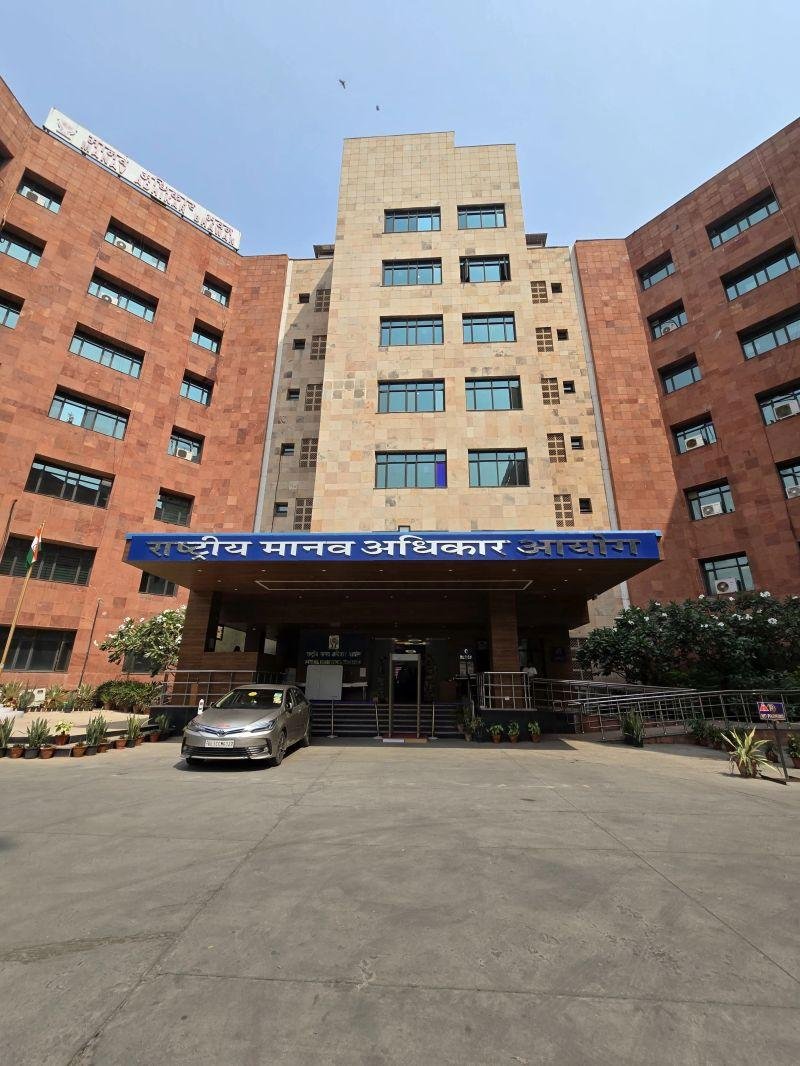
The National Human Rights Commission of India (NHRC) has an important role in cases involving alleged human-rights violations.
Its investigation division deals with matters including:
- Custodial deaths
- Custodial rape
- Deaths during police action
- Encounter deaths
- Other alleged human-rights violations
The NHRC states that custodial deaths—whether in police or judicial custody—must be reported within 24 hours, while deaths during police action are subject to a 48-hour reporting requirement.
The Commission can investigate, seek reports, conduct inquiries and make recommendations to public authorities.
Its law division also handles complaints and official notifications relating to incidents such as custodial deaths and deaths resulting from police action or inaction.


📌 A Recent Example of How Police Cases Are Recorded
The NCRB’s 2022 data demonstrate how dramatically the numbers can differ between states.
For example, the 2022 table recorded:
- Maharashtra – 375 registered cases
- Andhra Pradesh – 221
- Gujarat – 130
- Kerala – 101
- Karnataka – 60
- Madhya Pradesh – 48
- Haryana – 41
- Tamil Nadu – 113
- Telangana – 91
- Rajasthan – 245
These figures should not automatically be interpreted as proof that police in one state are more criminal than police in another.
NCRB itself cautions that State/UT figures should not be compared purely on the basis of crime numbers.
Differences in reporting practices, population, policing structures, complaint mechanisms and registration practices can affect the numbers.
📈 What About 2023?
NCRB’s Crime in India 2023 dataset includes state/UT-wise cases registered against state police personnel and a separate dataset covering human-rights violations by police personnel. These datasets were published through the Government of India’s Open Government Data platform in February 2026.
This is important because it shows that official statistics are continuing to be updated rather than ending with the older NCRB reports.
⚠️ Why You Should Be Careful With 2024 Data
There is an interesting example showing why crime statistics need to be checked carefully.
The NCRB’s 2024 report reportedly recorded 4,069 cases against police personnel in Chandigarh.
However, Chandigarh Police publicly disputed the figure, saying it appeared incorrect and might have been a data-entry error. Previous NCRB figures for Chandigarh were only 2 cases in 2020, 6 in 2021, 4 in 2022 and 6 in 2023.
This is a powerful reminder:
Official statistics should be read carefully, especially when a number suddenly changes dramatically.
It also demonstrates why a responsible blog should mention disputes or corrections instead of presenting every database figure as unquestionable fact.
💰 Police Corruption Cases
Corruption is another major area in which public officials, including police personnel, may face investigation.
The NCRB’s 2023 datasets include information on cases handled by Anti-Corruption Bureaus, Vigilance organisations and Lokayuktas under the Prevention of Corruption Act and related provisions.
Allegations can involve:
- Bribery
- Illegal gratification
- Misuse of official position
- Abuse of authority
- Unlawful financial benefits
A corruption allegation, however, still needs to be investigated and proved according to law.
🚔 Custodial Deaths: One of the Most Serious Issues
A custodial death is particularly sensitive because the individual is under the control or supervision of the State.
NCRB separately publishes data on deaths in police custody or lock-ups.
The causes can vary.
They may include:
- Illness
- Suicide
- Injuries suffered before custody
- Injuries during custody
- Accidents
- Other causes
Therefore, not every custodial death automatically means that a police officer committed murder or assault.
Each case requires investigation.
The NHRC specifically has procedures and guidelines for custodial deaths and police-action deaths.


⚖️ What Punishments Can a Guilty Police Officer Face?
There is no single punishment called a “police crime punishment.”
The punishment depends on:
- What offence was committed
- Which law applies
- Evidence presented
- Court’s findings
- Whether the accused is convicted
- The seriousness of the offence
Depending on the offence, punishment can include:
Imprisonment
Serious criminal offences can result in imprisonment.
Fine
Courts can impose fines where the applicable law provides for them.
Both imprisonment and fine
Some offences provide for both.
Departmental action
Separately from a criminal case, police personnel may face departmental proceedings.
Possible disciplinary consequences can include:
- Warning or censure
- Suspension
- Reduction in rank
- Compulsory retirement
- Dismissal from service
The exact disciplinary rules differ according to the police organisation and applicable service regulations.
🧑⚖️ Criminal Punishment and Departmental Punishment Are Different
This distinction is very important.
Suppose a police officer is accused of accepting a bribe.
There can potentially be:
Criminal proceedings in court
and
Departmental proceedings by the police/service authority
These are not necessarily the same process.
A criminal court decides criminal guilt under the applicable criminal law.
The department can separately examine whether the officer violated service rules or professional conduct standards.
🇮🇳 What Changed After the New Criminal Laws?
India’s criminal-law framework underwent a major change on 1 July 2024.
The Bharatiya Nyaya Sanhita (BNS) replaced the Indian Penal Code (IPC) for offences under the new framework.
The Bharatiya Nagarik Suraksha Sanhita (BNSS) replaced the Code of Criminal Procedure (CrPC).
The Bharatiya Sakshya Adhiniyam (BSA) replaced the Indian Evidence Act.
BPR&D, under the Ministry of Home Affairs, provides official information and resources relating to the new criminal laws.
Therefore, an article covering 1947–2026 needs to remember that the legal provisions applicable to a case can depend on when the alleged offence occurred.
🕰️ Why Can’t We Give One Number for 1947–2026?
This is perhaps the most important part of the entire article.
There is no reliable single official number that can be presented as:
“Exactly X police officers were charged and Y were convicted between 1947 and 2026.”
Why?
Because:
- Historical records were maintained differently.
- Categories changed over time.
- NCRB’s modern statistical framework does not provide a single uninterrupted series from 1947.
- A complaint is different from a registered criminal case.
- A criminal case can remain pending for years.
- Police personnel can face departmental proceedings that are not identical to criminal cases.
- Human-rights complaints before NHRC are not the same thing as criminal convictions.
- Different agencies maintain different datasets.
For example, the Government of India’s Open Data platform has a dataset specifically covering complaints/cases registered against police personnel during 1995, demonstrating that older records exist, but that still does not create a single complete 1947–2026 series.
The available statistics tell us two things at the same time.
First:
There have been thousands of allegations and registered cases involving police personnel.
Second:
A registered case does not automatically mean the accused officer was guilty.
The 2022 NCRB figures are a good illustration.
6,164 cases were registered, but only 240 trials were recorded as completed, with 15 police personnel recorded as convicted and 225 acquitted/discharged in the table.
This shows why case registration, investigation and conviction must never be treated as the same thing.
🔍 Why Accountability Matters
Police officers have powers that ordinary citizens do not possess.
They can:
- Register criminal cases
- Arrest people under legal conditions
- Investigate offences
- Search premises under legal authority
- Question suspects and witnesses
- Maintain public order
Because these powers are significant, accountability is equally important.
A trustworthy police system needs both:
Strong policing
and
Strong accountability.
Neither one can replace the other.
🤝 Police and Public Trust
Public trust is one of the most important assets of any police organisation.
When citizens believe that police will act fairly, lawfully and professionally, they are more likely to cooperate with investigations and report crimes.
On the other hand, allegations of corruption, torture, illegal detention or abuse of power can seriously damage public confidence.
This is why investigations into police misconduct are important—not because all police officers are corrupt, but because a professional police system must be capable of identifying and dealing with misconduct when it occurs.
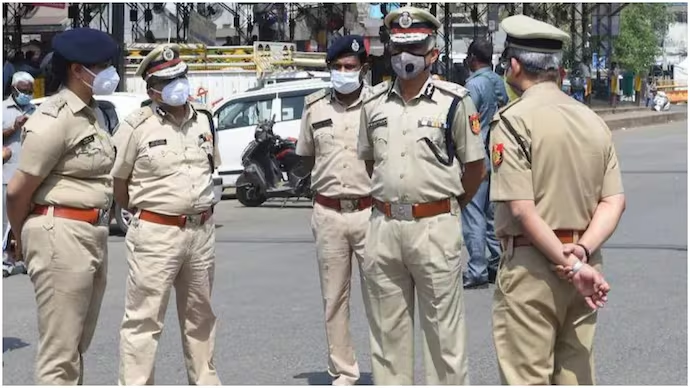
📷 IMAGE – POLICE AND ACCOUNTABILITY


📝 Final Conclusion
From independence in 1947 to 2026, India’s policing system has changed enormously.
Millions of police personnel have served the country, often under difficult and dangerous conditions.
At the same time, there have been cases and allegations involving some police personnel in matters such as corruption, custodial violence, illegal detention, abuse of authority and other criminal or human-rights violations.
The official data available today do not support giving one simple number for all cases against police personnel from 1947 to 2026.
However, recent NCRB statistics demonstrate that thousands of cases can be registered in a single year.
For example, 6,164 cases against State Police Personnel were recorded across India in 2022, while the same table recorded 15 convictions among police personnel in the relevant disposal figures.
The most important lesson is therefore not simply the number of cases.
It is the difference between:
Allegation → Investigation → Charge-sheet → Trial → Conviction
Every stage matters.
A police officer should not be declared guilty merely because a complaint was filed.
At the same time, a genuine allegation of abuse of power should never be ignored simply because the accused is a member of the police.