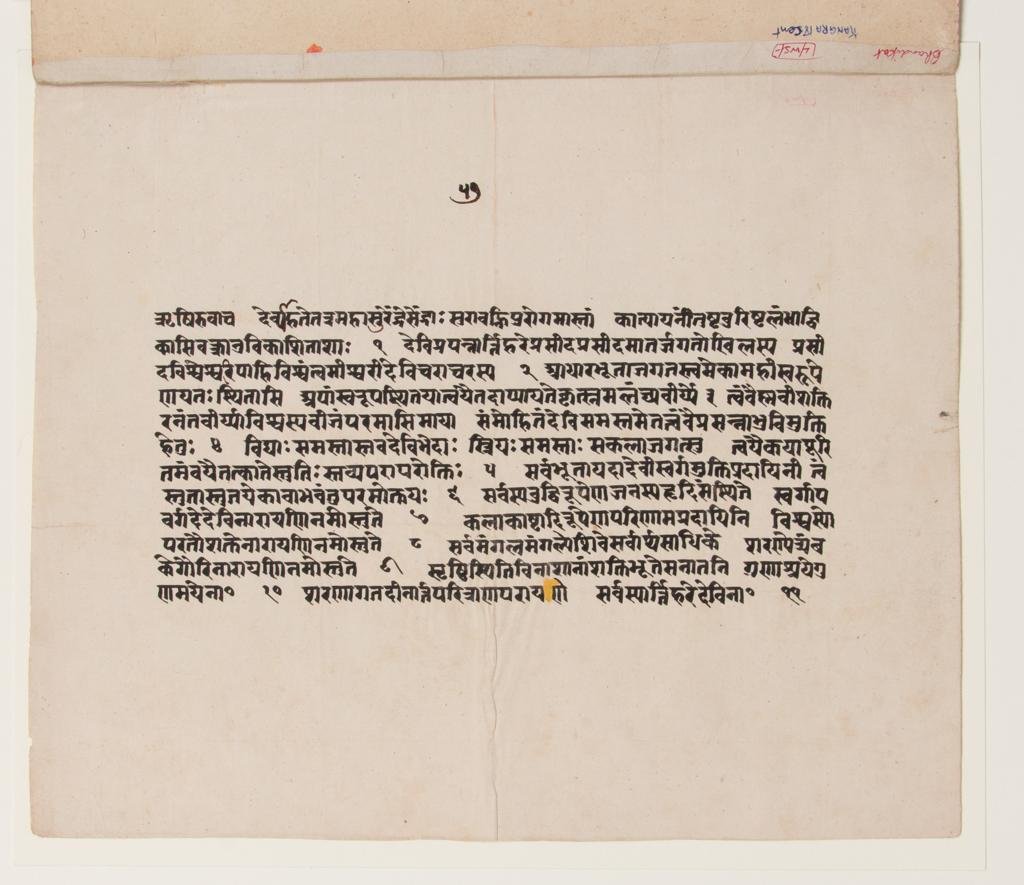
The Markandeya Purana is traditionally counted among the 18 Mahapuranas and is the seventh Purana in our series.
It is named after the great sage Markandeya and is particularly famous for its teachings on Dharma, spiritual knowledge and the Divine Mother.
One of its most celebrated sections is the Devi Mahatmya, also known as Durga Saptashati or Chandi, which describes the glory and power of the Goddess.


Image ALT: Ancient Sanskrit manuscript and Sage Markandeya representing the Markandeya Purana
What Is the Markandeya Purana?
The Markandeya Purana is an ancient Sanskrit Purana containing stories, philosophical teachings and discussions about Dharma and spiritual life.
It is traditionally presented through conversations involving Sage Markandeya and other figures.
The text covers subjects such as:
- Creation
- Dharma
- Karma
- Yoga
- Spiritual knowledge
- Kings and sages
- Devotion
- The Divine Mother
- Cosmic cycles
- Human duties


Image ALT: Sage Markandeya teaching spiritual knowledge in traditional Indian art
Who Is Sage Markandeya?
Markandeya is one of the famous sages of Hindu tradition.
He is remembered for his extraordinary devotion, spiritual knowledge and long life.


Image ALT: Sage Markandeya in meditation representing his devotion and spiritual wisdom
His stories appear in several Hindu texts, and the Markandeya Purana preserves traditions associated with him.
The Famous Story of Markandeya
One of the best-known stories about Markandeya concerns his devotion to Lord Shiva.
According to the traditional story, Markandeya is destined to die at a young age.
However, he becomes deeply devoted to Shiva and worships the Shiva Linga.


Image ALT: Young Markandeya praying to the Shiva Linga while facing Yama in traditional Indian art
When Yama comes to take his life, Markandeya embraces the Shiva Linga and continues his devotion.
Shiva appears and protects Markandeya.
This story is traditionally remembered as a powerful example of devotion and divine grace.
The Divine Mother
The most famous part of the Markandeya Purana is the Devi Mahatmya.
It is one of the most important texts dedicated to the Goddess in Hindu tradition.


Image ALT: Goddess Durga representing the Devi Mahatmya section of the Markandeya Purana
The Devi Mahatmya celebrates the Goddess as the powerful divine force that protects the universe and destroys evil.
What Is Devi Mahatmya?
The Devi Mahatmya is a celebrated section of the Markandeya Purana.
It is also known as:
- Durga Saptashati
- Chandi
- Chandi Path
It consists traditionally of 13 chapters and tells several major stories of the Goddess.


Image ALT: Sanskrit manuscript representing the Devi Mahatmya or Durga Saptashati
The Three Major Episodes
The Devi Mahatmya is traditionally structured around three major episodes.
They describe the Goddess defeating powerful forces of evil.
The major stories include:
- Madhu and Kaitabha
- Mahishasura
- Shumbha and Nishumbha


Image ALT: Goddess Durga battling the demons described in the Devi Mahatmya
Madhu and Kaitabha
The first major episode concerns the demons Madhu and Kaitabha.
They become powerful forces of chaos.
The Goddess helps bring about their destruction.


Image ALT: Goddess defeating Madhu and Kaitabha in the Devi Mahatmya tradition
The story introduces the extraordinary power of the Goddess.
Mahishasura
The story of Mahishasura is perhaps the most famous episode of the Devi Mahatmya.
Mahishasura is a powerful demon who defeats the gods and takes control of the heavenly realm.


Image ALT: Goddess Durga defeating Mahishasura in the famous Mahishasura Mardini tradition
The gods combine their divine powers, from which the Goddess manifests.
She is known as Durga and battles Mahishasura.
After a great battle, Durga defeats him.
Mahishasura Mardini
The Goddess is famously known as Mahishasura Mardini, meaning the destroyer of Mahishasura.


Image ALT: Goddess Durga as Mahishasura Mardini defeating the buffalo demon
This image has become one of the most recognizable representations of Goddess Durga.
The story symbolizes the victory of divine power over destructive forces.
Shumbha and Nishumbha
The final major episode of the Devi Mahatmya concerns the demons Shumbha and Nishumbha.
They become powerful and challenge the Goddess.


Image ALT: Goddess Durga battling Shumbha and Nishumbha in traditional Indian art
The Goddess manifests various divine forms and eventually defeats them.
The Many Forms of the Goddess
The Devi Mahatmya describes the Goddess through many forms and manifestations.
These include forms associated with:
- Durga
- Kali
- Chamunda
- Lakshmi
- Saraswati
- Chandika


Image ALT: Different forms of the Divine Mother represented in traditional Indian art
These manifestations express different aspects of divine power.
Goddess as Shakti
The concept of Shakti, or divine power, is central to the Devi Mahatmya.
The Goddess is presented not merely as a deity but as a powerful divine principle.


Image ALT: Divine Mother Shakti representing cosmic power in traditional Hindu art
Shakti is associated with:
- Creation
- Protection
- Transformation
- Knowledge
- Strength
- Divine energy
Devi as Mother
The Goddess is also worshipped as the Divine Mother.
Devotees approach her with love, respect and surrender.


Image ALT: Goddess Durga worshipped as the Divine Mother in traditional Indian art
The maternal aspect of the Goddess is an important feature of Shakta traditions.
The Goddess and Protection
A major theme of the Devi Mahatmya is the Goddess protecting the gods, humans and the cosmic order.


Image ALT: Goddess Durga protecting and blessing her devotees
Her victories represent the triumph of dharma over destructive forces.
Durga Puja
The stories of the Devi Mahatmya are particularly important during Durga Puja.


Image ALT: Goddess Durga idol during the traditional Durga Puja festival
Durga Puja is celebrated with elaborate worship, music, rituals and cultural events.
The story of Durga defeating Mahishasura is one of its central themes.
Navaratri
The Goddess traditions connected with the Devi Mahatmya are also important during Navaratri.


Image ALT: Devotees worshipping Goddess Durga during Navaratri
Navaratri is traditionally observed over nine nights and is dedicated to different forms of the Goddess.
Vijayadashami
The conclusion of the Navaratri period is associated with Vijayadashami, the festival of victory.


Image ALT: Vijayadashami celebration representing the victory of good over evil
The festival is widely associated with the triumph of righteousness over evil.
The Markandeya Purana Beyond Devi Mahatmya
Although the Devi Mahatmya is its most famous section, the Markandeya Purana is much broader.
It also contains discussions and stories concerning:
- Dharma
- Creation
- Human duties
- Kingship
- Yoga
- Spiritual knowledge
- Cosmology
- Social responsibilities


Image ALT: Ancient sages studying and teaching spiritual knowledge from Puranic traditions
Dharma and Human Life
The Markandeya Purana discusses the responsibilities and conduct expected in human life.
It emphasizes the importance of living according to Dharma.


Image ALT: Traditional Indian representation of family duties and Dharma
Dharma is presented through stories and teachings rather than simply through abstract principles.
Stories of Kings and Sages
Like other Puranas, the Markandeya Purana preserves stories of kings, sages and important figures.
These narratives often explore:
- Good governance
- Duty
- Morality
- Sacrifice
- Spiritual growth
- The consequences of actions


Image ALT: Ancient Indian king receiving guidance from a sage
The Concept of Karma
The Purana also reflects traditional ideas concerning Karma.
Actions are understood to have consequences, and individuals are encouraged to act according to Dharma.


Image ALT: Traditional Indian representation of Karma and Dharma
This connection between actions and consequences is a recurring theme throughout Hindu religious literature.
Spiritual Knowledge
The Markandeya Purana combines stories with spiritual teachings.
It encourages readers to consider:
- The nature of life
- The importance of Dharma
- The power of devotion
- The consequences of actions
- The nature of the divine
Why Is the Markandeya Purana Important?
1. Devi Mahatmya
It preserves the famous Devi Mahatmya, one of the central texts of Goddess worship.
2. Goddess Durga
The Mahishasura story established one of the most famous traditions of Durga worship.
3. Dharma
The Purana contains teachings about righteous living and human responsibilities.
4. Spiritual Knowledge
It combines mythology with philosophical and spiritual ideas.
5. Cultural Influence
Its stories influence festivals such as Navaratri and Durga Puja.
What Can We Learn From the Markandeya Purana?
Courage
Durga’s battles symbolize courage in the face of destructive forces.
Devotion
Markandeya’s devotion demonstrates unwavering faith.
Dharma
The text emphasizes righteous conduct and responsibility.
Divine Power
The Devi Mahatmya presents Shakti as a powerful divine force.
Protection
The Goddess is portrayed as a protector of devotees and cosmic order.
Spiritual Strength
The stories encourage inner strength, discipline and devotion.
Markandeya Purana – Quick Facts
Series: 18 Mahapuranas – Part 7
Name: Markandeya Purana
Language: Sanskrit
Named After: Sage Markandeya
Most Famous Section: Devi Mahatmya
Other Names: Durga Saptashati, Chandi
Major Deity in Devi Mahatmya: Goddess Durga / Devi
Major Themes: Dharma, Shakti, devotion, spiritual knowledge, creation and cosmic order
Important Stories: Markandeya, Madhu-Kaitabha, Mahishasura, Shumbha and Nishumbha
Major Festivals Connected With Its Traditions: Navaratri, Durga Puja and Vijayadashami
Frequently Asked Questions
What is the Markandeya Purana?
The Markandeya Purana is one of the traditional 18 Mahapuranas, named after Sage Markandeya.
What is the most famous part of the Markandeya Purana?
The Devi Mahatmya is its most famous section.
What is Devi Mahatmya?
Devi Mahatmya is a celebrated text describing the glory, power and victories of the Goddess.
What is Durga Saptashati?
Durga Saptashati is another name traditionally used for the Devi Mahatmya.
Who is Mahishasura?
Mahishasura is the powerful demon defeated by Goddess Durga in one of the central stories of the Devi Mahatmya.
What does Mahishasura Mardini mean?
It means the Goddess who destroys Mahishasura.
Is the Markandeya Purana only about Goddess Durga?
No. Although the Devi Mahatmya is extremely famous, the Purana contains many other teachings and stories concerning Dharma, sages, kings, spirituality and cosmology.
Conclusion
The Markandeya Purana – Part 7 is especially important because it connects the world of Puranic storytelling with the powerful tradition of Goddess worship.
Its most celebrated section, the Devi Mahatmya, presents the Goddess as a divine force who protects the universe and defeats powerful forms of evil.
The stories of Durga and Mahishasura, Shumbha and Nishumbha, along with the devotion of Sage Markandeya, have had a lasting influence on Hindu worship, literature, festivals and Indian culture.
The Purana reminds us of the importance of Dharma, courage, devotion and spiritual strength.
This is Part 7 of our 18 Mahapuranas series