Major Incidents, Deaths, Causes and the Long Road to Peace
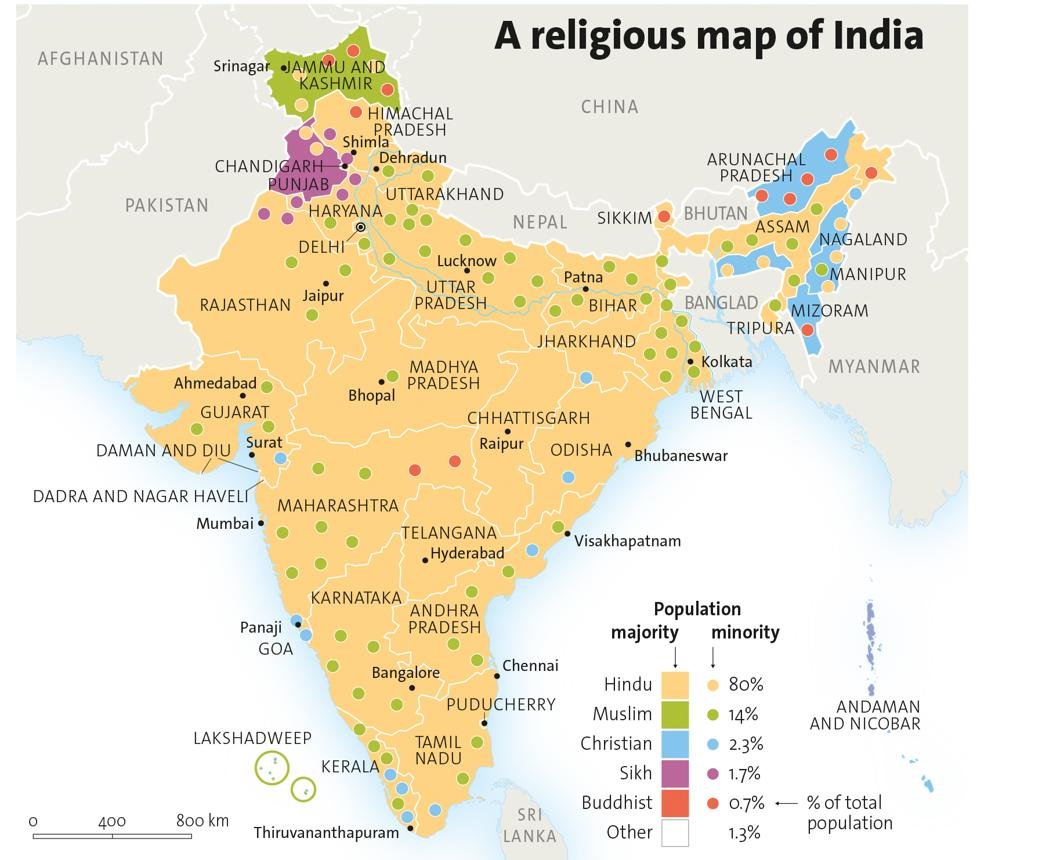
India is one of the world’s most religiously diverse countries. Hindus, Muslims, Christians, Sikhs, Buddhists, Jains and people of many other faiths have lived together for centuries.
Yet independent India has also experienced periods of communal violence, religious clashes and targeted attacks.
These events have caused thousands of deaths, large-scale displacement, destruction of homes and businesses, and long-lasting trauma.
But there is an important fact that is often missed:
There is no single official database that gives a complete death toll for every communal incident in India from 1947 to 2026.
Government statistics generally classify incidents under particular crime categories, while historical researchers and civil-society organisations may use different definitions and sources.
For example, the Ministry of Home Affairs has published NCRB figures for cases registered under “Communal/Religious Rioting.” For 2018, 2019 and 2020, the recorded cases were 512, 438 and 857 respectively.
Therefore, this article focuses on major documented episodes and explains why the numbers sometimes differ between sources.


🕊️ 1947 Partition: The Most Devastating Beginning
India’s independence in 1947 came together with the Partition of British India and the creation of Pakistan.
The Partition triggered enormous communal violence, particularly in Punjab and Bengal.
Hindus, Muslims and Sikhs were among the communities affected.
Millions of people were forced to leave their homes.
Estimates of deaths vary substantially. Historical sources commonly place the death toll somewhere around one to two million, although there is no universally accepted exact number.
The human tragedy was not limited to deaths.
Millions became refugees, families were separated and entire communities were uprooted.
Why did it happen?
Several factors came together:
- Partition and territorial uncertainty
- Political mobilisation around religious identity
- Fear and rumours
- Mass migration
- Breakdown of law and order
- Retaliatory violence
- Local disputes turning into wider communal attacks
The events of 1947 left a deep psychological scar on the societies of India and Pakistan.
🔥 1969 Ahmedabad Riots
Ahmedabad witnessed one of the major communal disturbances of the post-independence period in 1969.
The violence developed amid existing social and political tensions and escalated into widespread attacks.
A historical fact-sheet compiled by PPRC lists 512 deaths for the Ahmedabad violence. Other historical accounts can differ depending on the period and definition used.
The episode demonstrated how a relatively local confrontation could rapidly become large-scale violence.
⚠️ 1980 Moradabad Riots
The Moradabad riots in Uttar Pradesh were another major episode of communal violence.
The exact circumstances and death toll have been disputed in historical accounts.
A PPRC compilation lists approximately 1,500 deaths, illustrating the scale of the tragedy, although figures from different sources should not automatically be treated as identical.
The episode is remembered as one of the most serious communal conflicts of the early 1980s.
🩸 1983 Nellie Massacre, Assam
The violence in Nellie, Assam, in February 1983 was one of the darkest episodes of mass violence in independent India.
The victims were overwhelmingly Bengali-speaking Muslims.
The incident occurred against the backdrop of the Assam Movement, political tensions, questions surrounding immigration and citizenship, and intense ethnic and political mobilisation.
A commonly cited official figure is 1,819 deaths, although historical estimates and accounts vary.
The incident remains a powerful example of how political conflict, ethnic identity and communal tensions can combine with devastating consequences.
🕯️ 1984 Anti-Sikh Violence
In October 1984, Prime Minister Indira Gandhi was assassinated by two of her Sikh bodyguards.
Violence against Sikhs followed in Delhi and several other parts of India.
Thousands of Sikhs were killed, particularly in Delhi.
Different investigations and sources have produced varying totals, but the Delhi death toll is generally reported as being around 2,700–3,000.
Human Rights Watch notes that the violence involved allegations of political complicity and failures of authorities to protect victims.
The 1984 violence remains one of India’s most painful examples of targeted communal violence.
🏙️ 1989 Bhagalpur Riots
Bhagalpur in Bihar witnessed severe communal violence in 1989.
The conflict involved widespread killings and destruction.
A historical compilation lists approximately 1,161 deaths.
The episode demonstrated how communal tensions could continue for an extended period and spread across multiple localities.
🕌 1992 Babri Masjid Demolition and the Riots That Followed
On 6 December 1992, the Babri Masjid in Ayodhya was demolished by a large crowd of Hindu activists.
The demolition triggered communal violence in several parts of India.
Mumbai experienced particularly severe riots during December 1992 and January 1993.
A U.S. Congressional Research Service report states that the riots following the demolition resulted in around 900 deaths across Indian cities.
The violence also contributed to a cycle of retaliation and further tension.
Why was this event so important?
Because it transformed a long-running dispute over the Ayodhya site into one of the most consequential communal and political issues in modern Indian history.
🏙️ 1992–93 Mumbai Riots
Mumbai experienced major communal violence following the Babri Masjid demolition.
The violence occurred in two major phases and involved killings, arson and destruction of property.
A government training document citing historical figures records approximately 900 deaths, including Muslims and Hindus.
The Mumbai violence was followed in March 1993 by a series of bomb blasts, which killed hundreds more.
It is important not to combine the riot deaths and bomb-blast deaths into one category because they were different events with different perpetrators and circumstances.
🔥 2002 Gujarat Riots
The 2002 Gujarat violence remains one of the most discussed communal conflicts in modern Indian history.
The immediate trigger was the burning of a train coach at Godhra, where 58 people were killed.
Communal violence subsequently spread through parts of Gujarat.
The official death toll commonly cited for the riots was 1,044, comprising 790 Muslims and 254 Hindus, with additional people reported missing. A U.S. Congressional Research Service report records these official figures.
The violence resulted in:
- Large numbers of deaths
- Thousands of injuries
- Destruction of homes and businesses
- Displacement
- Long-term legal proceedings
- Deep communal mistrust
The causes and the question of administrative responsibility remain intensely debated.
Human Rights Watch has documented allegations concerning failures by authorities and accountability for those responsible.
⛪ 2007–08 Kandhamal Violence
Communal violence also affected Christians in India.
Kandhamal district in Odisha witnessed serious violence in 2007 and 2008.
The violence involved attacks on Christians, churches, houses and institutions.
Reports documented large-scale displacement and property destruction.
This episode is important because communal violence in India has not been limited to Hindu-Muslim conflicts.
🏘️ 2013 Muzaffarnagar Violence
In 2013, communal violence broke out in Muzaffarnagar and surrounding areas of Uttar Pradesh.
The conflict led to deaths, injuries and large-scale displacement.
Human Rights Watch lists the 2013 Muzaffarnagar violence among major episodes in which authorities faced criticism over the response to communal violence.
The incident also demonstrated how local disputes can become much larger when they interact with political mobilisation and communal identity.
🏙️ 2020 Delhi Riots
In February 2020, serious communal violence occurred in northeast Delhi.
The violence happened amid intense political tensions surrounding protests against the Citizenship Amendment Act.
The clashes resulted in more than 50 deaths and hundreds of injuries.
The episode attracted significant national and international attention because of allegations concerning police response, political rhetoric and the treatment of different groups.
It remains an important example of how political polarisation and misinformation can contribute to communal violence.
📊 What Do Official NCRB Numbers Tell Us?
For recent years, official data gives us a better understanding of registered cases.
According to a Ministry of Home Affairs answer based on NCRB data:
| Year | Communal/Religious Rioting Cases |
|---|---|
| 2017 | 723 |
| 2018 | 512 |
| 2019 | 438 |
| 2020 | 857 |
| 2021 | 378 |
These are registered cases, not the number of deaths.
That distinction is extremely important.
A year with fewer registered cases could still contain a particularly deadly incident, while a year with many cases may contain numerous smaller incidents.
📉 What Happened in 2024?
Independent monitoring by the Centre for Study of Society and Secularism (CSSS) recorded 59 communal riots in 2024, compared with 32 in 2023.
According to its monitoring, 13 people died in those 59 incidents—10 Muslims and 3 Hindus.
CSSS also recorded 13 mob-lynching incidents in 2024 resulting in 11 deaths.
However, CSSS explicitly explains that its methodology is based on reports appearing in selected newspaper editions, so these figures should not be treated as equivalent to an all-India government dataset.


📉 What Happened in 2025?
According to CSSS monitoring, communal riots declined sharply in 2025.
The organisation recorded approximately 29 communal riots, compared with 59 in 2024.
Its monitoring recorded four deaths and 360 injuries from those riots.
It also recorded 14 mob-violence incidents resulting in eight deaths.
Again, these figures represent the methodology of that monitoring organisation and should not be presented as the definitive official national total.
❓ Why Do Different Sources Give Different Death Numbers?
This is one of the most important parts of understanding India’s communal-violence statistics.
Different sources may count:
- Deaths during the immediate riot
- Deaths from injuries later
- Missing persons
- Police firing
- Retaliatory attacks
- Bomb attacks
- Related incidents
- Deaths in surrounding districts
Some reports also count only communal riots, while others include mob lynching, targeted attacks or terrorist retaliation.
Therefore, combining all these categories into one number can produce a misleading result.
For example:
The 1992–93 Mumbai riots and the 1993 Mumbai bombings are historically connected, but they are not the same type of incident.
Likewise, the 2002 Gujarat train burning and the subsequent Gujarat riots should be analysed separately before discussing their combined historical context.
🔍 What Are the Main Causes of Communal Violence?
Communal violence rarely has just one cause.
Usually, several factors interact.
1. Religious and identity-based tension
Differences between communities can become politically or socially charged.
2. Political mobilisation
Religious identity can be used to mobilise voters or supporters.
3. Rumours and misinformation
False information can spread rapidly and provoke fear or retaliation.
4. Provocative speeches
Inflammatory rhetoric can increase tensions between communities.
5. Religious processions
Disputes over routes, music, slogans or places of worship can sometimes trigger clashes.
6. Local disputes
A small neighbourhood dispute can become communal when people interpret it through religious identity.
7. Economic and social competition
Competition over land, jobs, businesses or local political power can acquire a communal dimension.
8. Failure of law enforcement
If authorities fail to prevent violence or protect vulnerable communities, a small confrontation can escalate dramatically.
📱 The Role of Social Media
The nature of communal violence has changed considerably in the digital era.
A rumour that once took hours or days to spread can now reach thousands of people within minutes.
Old videos can be reposted as new incidents.
Images from another country can be falsely presented as events in India.
Edited videos can create the impression that one community has attacked another.
This is why verification is critical.
Before forwarding a religiously sensitive message, people should ask:
Who published it?
When was it recorded?
Where did it actually happen?
Has a reliable news organisation or official authority confirmed it?
A few seconds of verification can sometimes prevent a much larger problem.
🕊️ How Can Communal Violence Be Prevented?
Preventing communal violence requires more than police deployment.
Strong law enforcement
Police must act quickly and impartially against violence.
Responsible political leadership
Political leaders can reduce tension by avoiding inflammatory language.
Better social-media literacy
People need to learn how to identify misinformation.
Community dialogue
Religious and community leaders can help calm tensions.
Fast justice
When perpetrators are held accountable, it can discourage future violence.
Protection of vulnerable communities
Authorities need to protect homes, places of worship, businesses and individuals during periods of tension.
🇮🇳 India’s Other Story: Communal Harmony
While the history of communal violence is important, it should not create the false impression that Indians of different religions have always been in conflict.
Millions of Indians live peacefully with neighbours, friends and colleagues from different religious backgrounds every day.
India has countless examples of:
- Interfaith cooperation
- Shared festivals
- Joint community celebrations
- Religious places supporting one another
- People helping neighbours during disasters
- Families and friendships crossing religious boundaries
This quieter side of Indian society rarely becomes headline news.
Yet it is equally important to India’s history.


📌 A Note About the 1947–2026 Death Toll
“How many people died in communal violence in India from 1947 to 2026?”
the responsible answer is:
There is no single universally accepted official total covering every communal-violence incident in India across the entire 1947–2026 period.
The 1947 Partition alone is estimated by historians at roughly one to two million deaths, but even that figure is disputed.
For subsequent decades, government figures, commissions, historians and civil-society organisations have used different definitions and methodologies.
Therefore, adding individual estimates from unrelated sources and presenting the result as an exact 1947–2026 national death toll would be misleading.
That caveat actually makes your article more credible, not less.
🇮🇳 Conclusion
India’s history since independence contains both terrible episodes of communal violence and extraordinary examples of coexistence.
From the trauma of Partition in 1947 to major episodes in Ahmedabad, Moradabad, Nellie, Delhi, Bhagalpur, Mumbai, Gujarat, Muzaffarnagar and Delhi again in 2020, communal violence has repeatedly demonstrated how quickly fear, misinformation, political mobilisation and local disputes can turn into tragedy.
But history also teaches another lesson.
Communal violence is not inevitable.
Strong institutions, responsible leadership, accurate information, fair policing, speedy justice and everyday cooperation between communities can prevent conflicts from becoming disasters.
The most important lesson from India’s past is therefore not simply how many people died.
It is understanding why the violence happened—and what society can do to ensure that such tragedies are not repeated.