serious problem continues to demand attention: violence and crimes against women.
This is not only a law-and-order issue. It is also a question of safety, dignity, equality and social responsibility.
The numbers reported by India’s National Crime Records Bureau (NCRB) help us understand the scale of the problem.
📊 How Many Crimes Against Women Are Reported?
According to the latest NCRB report currently available, covering 2023, 4,48,211 cases of crimes against women were registered across India.
That works out to approximately:
1,228 registered cases every day
or roughly
51 registered cases every hour.
But there is an important point: these are registered cases, not the total number of incidents that actually occur.
Some incidents may never be reported to police because of fear, social pressure, stigma, financial dependence or other reasons.
⚠️ Does This Mean 1,228 Women Are Raped Every Day?
No.
This is an important distinction.
The NCRB category “Crimes Against Women” includes many different offences.
These can include:
Rape
Attempt to rape
Assault or criminal force against women
Sexual harassment
Kidnapping and abduction
Cruelty by husband or relatives
Dowry-related offences
Stalking
Voyeurism
Other offences against women
Therefore, the figure of 4,48,211 cannot be described as rape cases.
🔴 Rape Is Only One Category
Rape is one of the specific offences recorded separately by NCRB.
That distinction matters because using the entire “crimes against women” number as a rape statistic would give readers incorrect information.
For a responsible article, it is better to explain the numbers rather than use a sensational headline.
🏠 Violence Can Begin Inside the Home
When people hear about crimes against women, they often imagine an unknown attacker.
But violence against women can also occur within relationships and families.
Cruelty by a husband or his relatives is one of the major categories recorded in India’s crime statistics.
This shows that women’s safety is not only about streets, public transport or workplaces.
A woman should feel safe inside her own home too.
📱 The New Challenge: Online Harassment
Women’s safety has also become a digital issue.
Social media, messaging platforms and other online spaces can be misused for:
Online harassment
Threats
Stalking
Impersonation
Sharing intimate material without consent
Other forms of cyber abuse
India recorded 86,420 cybercrime cases in 2023, although this figure covers cybercrime generally and is not limited to crimes against women.
This growing digital environment means that women’s safety must be considered both offline and online.
⚖️ What Does Indian Law Say?
India has specific legal provisions dealing with offences against women.
The Bharatiya Nyaya Sanhita (BNS), 2023, which came into force on 1 July 2024, contains a dedicated chapter dealing with offences against women and children.
It covers offences including rape, gang rape, sexual harassment, stalking, voyeurism, assault and several marriage-related offences.
Laws alone, however, cannot solve the problem.
Effective implementation, timely investigation, support for survivors and social awareness are equally important.
📞 What Should a Woman Do If She Faces Threats or Violence?
If someone is in immediate danger, contacting the police or emergency services should be the priority.
India also operates the Women Helpline 181, which provides support services for women.
The government has also highlighted 112 as the Emergency Response Support System.
For cybercrime, the government operates the National Cyber Crime Reporting Portal, particularly including a focus on cybercrimes involving women and children.
👨👩👧 What Can Society Do?
Women’s safety cannot be left entirely to women.
Families, schools, workplaces, communities and institutions all have a role.
We can start with simple things:
Teach respect from childhood.
Challenge victim-blaming.
Take complaints seriously.
Teach children about consent and boundaries.
Create safer workplaces and public spaces.
Report harassment instead of ignoring it.
Support survivors instead of questioning their character.
🚫 Stop Blaming the Victim
One of the most damaging attitudes surrounding violence against women is asking:
“Why was she there?”
“What was she wearing?”
“Why did she go alone?”
“Why didn’t she fight back?”
The responsibility for a crime belongs to the person who commits it.
Safety advice can be useful, but it should never become an excuse to blame the person who experienced violence.
🧠 Why Reporting Matters
Reporting a crime does not mean that every case will immediately result in conviction.
But reporting creates an official record and allows the criminal justice system to investigate.
At the same time, statistics should be interpreted carefully.
An increase in registered cases does not automatically mean that the underlying incidence increased by exactly the same amount. The government has noted that increased reporting can also reflect greater awareness, helpline access and willingness to approach authorities.
🌟 A Safer India Begins With Everyday Behaviour
Women’s safety is not something that can be achieved only through a new law or a police campaign.
It begins with everyday behaviour.
A boy learning to respect boundaries.
A friend taking harassment seriously.
A colleague speaking up when someone is mistreated.
A family supporting a woman who asks for help.
A bystander reporting a dangerous situation.
A community refusing to normalize violence.
These small actions can become part of a much larger change.
🇮🇳 Final Thoughts
The NCRB numbers should not simply shock us.
They should make us think.
Behind every registered case is a person, a family and a story.
The goal should not only be to count crimes after they happen.
The bigger goal is to build a society where fewer women experience violence in the first place.
A truly developed India is not only one with better roads, technology and economic growth.
It is an India where every woman can live, travel, work and speak freely without fear. 🇮🇳
🇮🇳 MANA BHARATHAM
Stories, Facts & Awareness From India
From India’s history and culture to social issues, inspiring stories, nature and important facts, MANA BHARATHAM brings meaningful content about India.
🌐 Website:allpincodes.online
📖 Blog:MANA BHARATHAM
Know India. Understand India. Make India Better. 🇮🇳
Police are responsible for protecting citizens, maintaining law and order and investigating crimes.
But what happens when a police officer himself is accused of committing a crime?
Over the decades, India has witnessed cases involving police personnel accused of custodial violence, illegal detention, corruption, assault, abuse of authority, human-rights violations, sexual offences and other criminal misconduct.
This raises an important question:
How many criminal cases have been registered against police personnel in India?
The answer is more complicated than a single number.
India does not have one publicly available official database containing every case against every police officer from 1947 to 2026.
Instead, the National Crime Records Bureau (NCRB) publishes annual statistics under specific categories, including cases registered against state police personnel and cases involving human-rights violations. The data are supplied by States and Union Territories.
Therefore, a responsible article must distinguish between complaints, registered criminal cases, arrests, charge-sheets, completed trials and convictions.
📊 What Does Official NCRB Data Show?
Recent NCRB data provide a much clearer picture.
For 2022, NCRB recorded:
6,164 cases registered against State Police Personnel across India
The same table recorded:
4,390 police personnel charge-sheeted
1,810 final reports submitted
1,163 police personnel arrested
832 police personnel charge-sheeted
239 cases withdrawn/disposed of
240 trials completed
15 police personnel convicted
225 acquitted or discharged
These figures are from NCRB’s table on cases registered against State Police Personnel for 2022.
2022 at a glance
Category
Number
Cases registered
6,164
Police personnel arrested
1,163
Police personnel charge-sheeted
832
Trials completed
240
Police personnel convicted
15
Acquitted/discharged
225
One important point is that a case registered is not the same thing as a conviction.
A person against whom a case is registered is legally only an accused unless and until a court establishes guilt.
⚖️ Does This Mean Only 15 Police Officers Committed Crimes?
No.
This is one of the most important points to understand.
The figure of 15 convictions in the 2022 NCRB table means 15 police personnel were recorded as convicted in the cases represented in that year’s disposal data.
It does not mean that only 15 police officers were accused of wrongdoing in India.
Likewise, 225 acquittals or discharges do not necessarily mean that every original complaint was false.
Criminal cases can remain pending for years.
Some can be closed after investigation.
Some accused persons can be acquitted.
Some cases can be withdrawn or otherwise disposed of.
Therefore:
Registered cases ≠ guilty persons
Arrests ≠ convictions
Charge-sheet ≠ conviction
Complaint ≠ proof of crime
This distinction is essential when writing about police misconduct.
🧑⚖️ Why Is the Number of Convictions Much Smaller?
There can be a large gap between a complaint and a final conviction.
A typical criminal case may go through several stages:
Complaint → FIR/Case Registration → Investigation → Arrest → Charge-sheet or Final Report → Trial → Judgment → Conviction/Acquittal
A case can disappear from the conviction statistics at several stages.
For example, investigators may submit a final report, a court may stay or quash proceedings, the accused may be acquitted, or the trial may still be pending.
Therefore, looking only at the final conviction number can give an incomplete picture.
🚨 What Types of Cases Are Registered Against Police Personnel?
Police personnel can face allegations under many different categories.
These may include:
1. Custodial Violence
Allegations that a person was physically or otherwise abused while in police custody are among the most serious allegations involving law-enforcement personnel.
2. Custodial Death
Deaths occurring while a person is in police custody are subject to special scrutiny.
The National Human Rights Commission (NHRC) requires authorities to report custodial deaths within 24 hours.
3. Illegal Detention
A person may allege that police kept him or her in custody without lawful authority.
4. Abuse of Power
Police officers have significant legal powers. Using those powers improperly can result in disciplinary or criminal proceedings depending on the circumstances.
5. Corruption
Police personnel can face allegations involving bribery, illegal gratification or other corruption-related offences.
6. Assault
Physical assault by an officer can result in criminal proceedings depending on the facts and applicable law.
7. Human-Rights Violations
The NCRB separately records cases involving human-rights violations by police personnel.
8. Sexual Offences
Police personnel can also be accused of sexual offences. Such allegations are investigated under the applicable criminal law just as other allegations are.
🕵️ Human-Rights Violation Cases Against Police
The issue becomes particularly serious when police personnel are accused of violating fundamental human rights.
The NCRB’s Crime in India datasets include a specific category for incidence of human-rights violation by police.
The recorded categories include matters such as:
Custodial violence
Illegal detention
Abuse of authority
Custodial death
Police action-related deaths
Other alleged human-rights violations
However, the existence of a registered case does not itself establish that the police officer committed the alleged violation.
A final judicial determination is different from registration of a case.
🏛️ What Does the NHRC Do?
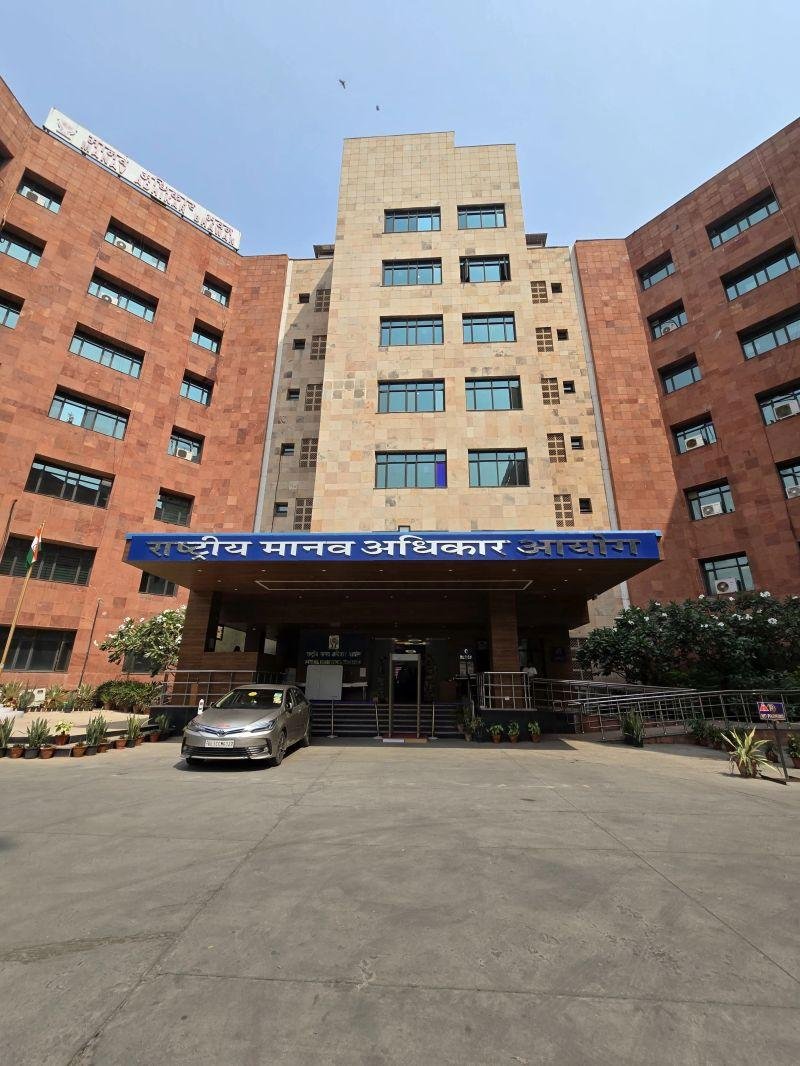
The National Human Rights Commission of India (NHRC) has an important role in cases involving alleged human-rights violations.
Its investigation division deals with matters including:
Custodial deaths
Custodial rape
Deaths during police action
Encounter deaths
Other alleged human-rights violations
The NHRC states that custodial deaths—whether in police or judicial custody—must be reported within 24 hours, while deaths during police action are subject to a 48-hour reporting requirement.
The Commission can investigate, seek reports, conduct inquiries and make recommendations to public authorities.
Its law division also handles complaints and official notifications relating to incidents such as custodial deaths and deaths resulting from police action or inaction.
📌 A Recent Example of How Police Cases Are Recorded
The NCRB’s 2022 data demonstrate how dramatically the numbers can differ between states.
For example, the 2022 table recorded:
Maharashtra – 375 registered cases
Andhra Pradesh – 221
Gujarat – 130
Kerala – 101
Karnataka – 60
Madhya Pradesh – 48
Haryana – 41
Tamil Nadu – 113
Telangana – 91
Rajasthan – 245
These figures should not automatically be interpreted as proof that police in one state are more criminal than police in another.
NCRB itself cautions that State/UT figures should not be compared purely on the basis of crime numbers.
Differences in reporting practices, population, policing structures, complaint mechanisms and registration practices can affect the numbers.
📈 What About 2023?
NCRB’s Crime in India 2023 dataset includes state/UT-wise cases registered against state police personnel and a separate dataset covering human-rights violations by police personnel. These datasets were published through the Government of India’s Open Government Data platform in February 2026.
This is important because it shows that official statistics are continuing to be updated rather than ending with the older NCRB reports.
⚠️ Why You Should Be Careful With 2024 Data
There is an interesting example showing why crime statistics need to be checked carefully.
The NCRB’s 2024 report reportedly recorded 4,069 cases against police personnel in Chandigarh.
However, Chandigarh Police publicly disputed the figure, saying it appeared incorrect and might have been a data-entry error. Previous NCRB figures for Chandigarh were only 2 cases in 2020, 6 in 2021, 4 in 2022 and 6 in 2023.
This is a powerful reminder:
Official statistics should be read carefully, especially when a number suddenly changes dramatically.
It also demonstrates why a responsible blog should mention disputes or corrections instead of presenting every database figure as unquestionable fact.
💰 Police Corruption Cases
Corruption is another major area in which public officials, including police personnel, may face investigation.
The NCRB’s 2023 datasets include information on cases handled by Anti-Corruption Bureaus, Vigilance organisations and Lokayuktas under the Prevention of Corruption Act and related provisions.
Allegations can involve:
Bribery
Illegal gratification
Misuse of official position
Abuse of authority
Unlawful financial benefits
A corruption allegation, however, still needs to be investigated and proved according to law.
🚔 Custodial Deaths: One of the Most Serious Issues
A custodial death is particularly sensitive because the individual is under the control or supervision of the State.
NCRB separately publishes data on deaths in police custody or lock-ups.
The causes can vary.
They may include:
Illness
Suicide
Injuries suffered before custody
Injuries during custody
Accidents
Other causes
Therefore, not every custodial death automatically means that a police officer committed murder or assault.
Each case requires investigation.
The NHRC specifically has procedures and guidelines for custodial deaths and police-action deaths.
⚖️ What Punishments Can a Guilty Police Officer Face?
There is no single punishment called a “police crime punishment.”
The punishment depends on:
What offence was committed
Which law applies
Evidence presented
Court’s findings
Whether the accused is convicted
The seriousness of the offence
Depending on the offence, punishment can include:
Imprisonment
Serious criminal offences can result in imprisonment.
Fine
Courts can impose fines where the applicable law provides for them.
Both imprisonment and fine
Some offences provide for both.
Departmental action
Separately from a criminal case, police personnel may face departmental proceedings.
Possible disciplinary consequences can include:
Warning or censure
Suspension
Reduction in rank
Compulsory retirement
Dismissal from service
The exact disciplinary rules differ according to the police organisation and applicable service regulations.
🧑⚖️ Criminal Punishment and Departmental Punishment Are Different
This distinction is very important.
Suppose a police officer is accused of accepting a bribe.
There can potentially be:
Criminal proceedings in court
and
Departmental proceedings by the police/service authority
These are not necessarily the same process.
A criminal court decides criminal guilt under the applicable criminal law.
The department can separately examine whether the officer violated service rules or professional conduct standards.
🇮🇳 What Changed After the New Criminal Laws?
India’s criminal-law framework underwent a major change on 1 July 2024.
The Bharatiya Nyaya Sanhita (BNS) replaced the Indian Penal Code (IPC) for offences under the new framework.
The Bharatiya Nagarik Suraksha Sanhita (BNSS) replaced the Code of Criminal Procedure (CrPC).
The Bharatiya Sakshya Adhiniyam (BSA) replaced the Indian Evidence Act.
BPR&D, under the Ministry of Home Affairs, provides official information and resources relating to the new criminal laws.
Therefore, an article covering 1947–2026 needs to remember that the legal provisions applicable to a case can depend on when the alleged offence occurred.
🕰️ Why Can’t We Give One Number for 1947–2026?
This is perhaps the most important part of the entire article.
There is no reliable single official number that can be presented as:
“Exactly X police officers were charged and Y were convicted between 1947 and 2026.”
Why?
Because:
Historical records were maintained differently.
Categories changed over time.
NCRB’s modern statistical framework does not provide a single uninterrupted series from 1947.
A complaint is different from a registered criminal case.
A criminal case can remain pending for years.
Police personnel can face departmental proceedings that are not identical to criminal cases.
Human-rights complaints before NHRC are not the same thing as criminal convictions.
Different agencies maintain different datasets.
For example, the Government of India’s Open Data platform has a dataset specifically covering complaints/cases registered against police personnel during 1995, demonstrating that older records exist, but that still does not create a single complete 1947–2026 series.
The available statistics tell us two things at the same time.
First:
There have been thousands of allegations and registered cases involving police personnel.
Second:
A registered case does not automatically mean the accused officer was guilty.
The 2022 NCRB figures are a good illustration.
6,164 cases were registered, but only 240 trials were recorded as completed, with 15 police personnel recorded as convicted and 225 acquitted/discharged in the table.
This shows why case registration, investigation and conviction must never be treated as the same thing.
🔍 Why Accountability Matters
Police officers have powers that ordinary citizens do not possess.
They can:
Register criminal cases
Arrest people under legal conditions
Investigate offences
Search premises under legal authority
Question suspects and witnesses
Maintain public order
Because these powers are significant, accountability is equally important.
A trustworthy police system needs both:
Strong policing
and
Strong accountability.
Neither one can replace the other.
🤝 Police and Public Trust
Public trust is one of the most important assets of any police organisation.
When citizens believe that police will act fairly, lawfully and professionally, they are more likely to cooperate with investigations and report crimes.
On the other hand, allegations of corruption, torture, illegal detention or abuse of power can seriously damage public confidence.
This is why investigations into police misconduct are important—not because all police officers are corrupt, but because a professional police system must be capable of identifying and dealing with misconduct when it occurs.
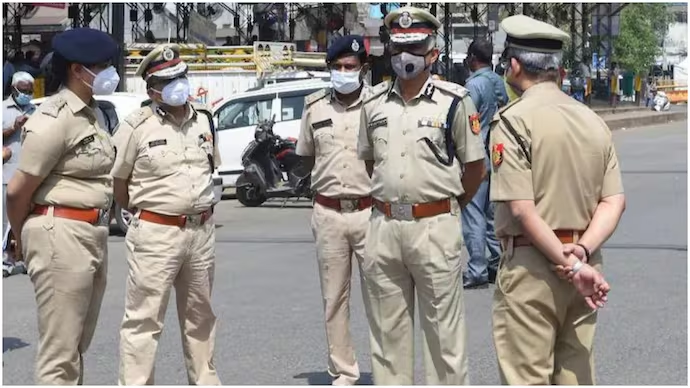
📷 IMAGE – POLICE AND ACCOUNTABILITY
📝 Final Conclusion
From independence in 1947 to 2026, India’s policing system has changed enormously.
Millions of police personnel have served the country, often under difficult and dangerous conditions.
At the same time, there have been cases and allegations involving some police personnel in matters such as corruption, custodial violence, illegal detention, abuse of authority and other criminal or human-rights violations.
The official data available today do not support giving one simple number for all cases against police personnel from 1947 to 2026.
However, recent NCRB statistics demonstrate that thousands of cases can be registered in a single year.
For example, 6,164 cases against State Police Personnel were recorded across India in 2022, while the same table recorded 15 convictions among police personnel in the relevant disposal figures.
The most important lesson is therefore not simply the number of cases.