Continuing our 18 Mahapuranas series, Part 9 is the Bhavishya Purana.
The name Bhavishya is derived from a Sanskrit word associated with what is to come or the future. The Purana contains discussions about Dharma, religious practices, festivals, rituals, sacred traditions and stories.
Image ALT: Ancient Sanskrit manuscript representing the Bhavishya Purana
What Is the Bhavishya Purana?
The Bhavishya Purana is traditionally counted among the 18 Mahapuranas.
It contains a wide variety of material concerning Hindu religious and cultural traditions.
Its subjects include:
- Dharma
- Religious observances
- Festivals
- Vratas
- Charity
- Rituals
- Sacred places
- Mythological stories
- Worship
- Social and religious duties


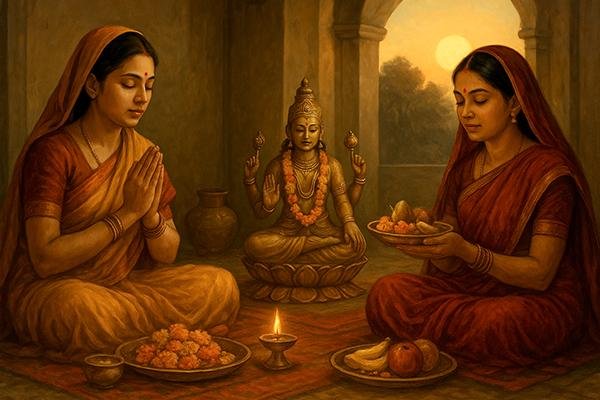
Image ALT: Hindu devotees performing traditional religious rituals representing themes of the Bhavishya Purana
Why Is It Called Bhavishya Purana?
The word Bhavishya is commonly connected with the idea of the future.
Because of this name, the Bhavishya Purana is often popularly described as a Purana containing accounts or discussions concerning future events.
However, it is important to understand that the text has a complicated transmission history, and different sections and manuscripts have been discussed extensively by scholars.


Image ALT: Ancient Indian sage representing traditional discussions of future events
The Structure of the Bhavishya Purana
The Bhavishya Purana is traditionally divided into several major sections.
The commonly described divisions include:
- Brahma Parva
- Madhyama Parva
- Pratisarga Parva
- Uttara Parva


Image ALT: Sanskrit manuscript representing the traditional divisions of the Bhavishya Purana
The contents of these sections vary considerably and cover religious, cultural and narrative material.
Brahma Parva
The Brahma Parva contains discussions concerning religious practices, Dharma and worship.


Image ALT: Lord Brahma representing the Brahma Parva tradition of the Bhavishya Purana
It also includes material concerning religious observances and sacred practices.
Madhyama Parva
The Madhyama Parva contains additional religious and cultural material.


Image ALT: Traditional Hindu religious ceremony representing ritual teachings associated with the Bhavishya Purana
The Purana contains many discussions concerning the performance of religious observances.
Pratisarga Parva
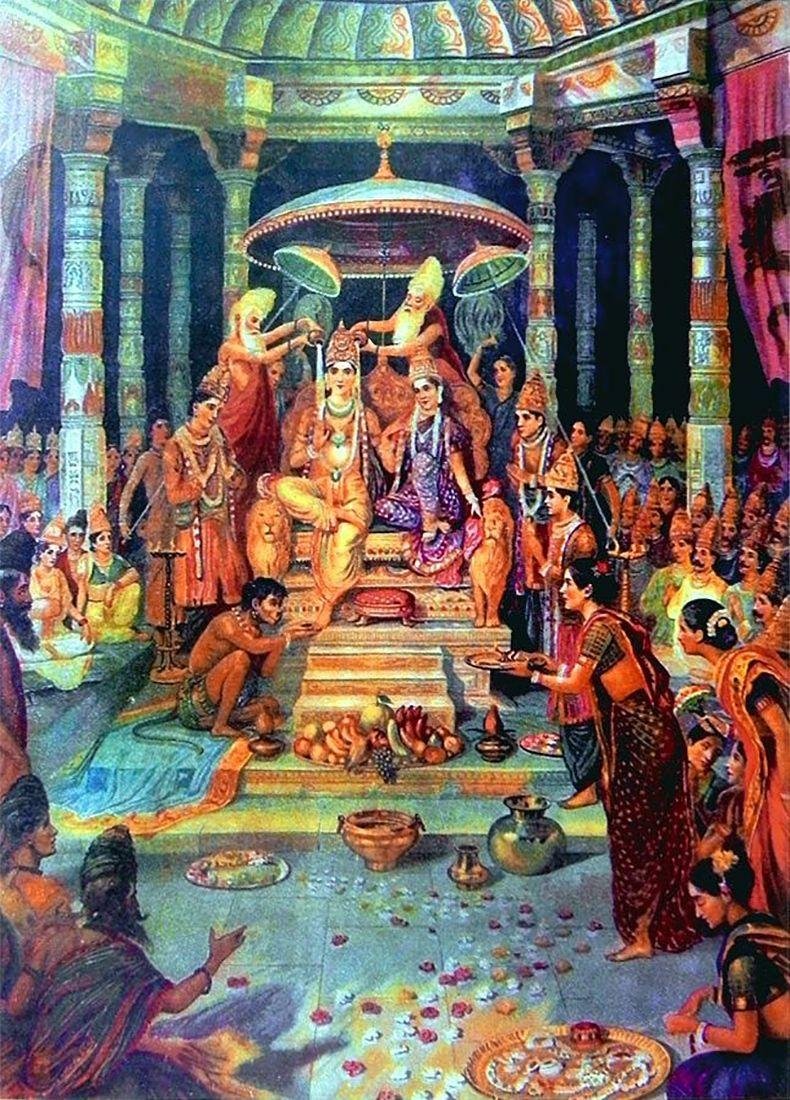
The Pratisarga Parva is particularly interesting because it contains historical-style narratives and accounts involving different rulers and periods.


Image ALT: Ancient Indian king and royal court representing historical-style narratives in the Pratisarga Parva
This section is one reason the Bhavishya Purana has attracted considerable scholarly attention.
Uttara Parva
The Uttara Parva contains religious teachings and discussions of practices and observances.


Image ALT: Devotees listening to spiritual teachings representing the Uttara Parva of the Bhavishya Purana
Dharma in the Bhavishya Purana
Dharma is an important theme throughout Puranic literature.
The Bhavishya Purana discusses duties and religious practices associated with living a righteous life.


Image ALT: Sage teaching Dharma and righteous conduct in traditional Indian art
The text connects Dharma with:
- Religious observance
- Charity
- Self-discipline
- Worship
- Duties
- Ethical conduct
Vrata and Religious Observances
A major feature of the Bhavishya Purana is its discussion of Vratas.
A vrata is a religious observance or vow undertaken with a particular spiritual intention.


Image ALT: Devotee performing a traditional Hindu vrata and puja
Vratas may involve:
- Fasting
- Prayer
- Puja
- Mantra recitation
- Charity
- Visiting temples
- Special observances on particular days
Festivals
The Bhavishya Purana contains material concerning various religious festivals and sacred days.


Image ALT: Hindu devotees celebrating a traditional religious festival
Festivals are important because they combine religious devotion with community and cultural traditions.
Charity and Dana
Dana, or charity, is an important concept in Hindu Dharma.
The Bhavishya Purana discusses the religious importance of giving.


Image ALT: Traditional representation of Dana or charity in Hindu religious culture
Charity can include giving:
- Food
- Clothing
- Knowledge
- Wealth
- Support to those in need
The underlying principle is generosity and compassion.
Worship of the Sun
One of the notable features associated with the Bhavishya Purana is material concerning Surya, the Sun deity.


Image ALT: Surya Deva riding a chariot drawn by seven horses in traditional Indian art
Surya worship has a very old place in Indian religious traditions.
The Sun is associated with:
- Light
- Energy
- Life
- Health
- Time
- Cosmic order
Surya and Religious Practice
Sun worship can involve offering Arghya, prayers and other devotional practices.


Image ALT: Devotee offering water to the rising Sun as part of traditional Surya worship
The rising Sun has a special significance in many Hindu practices.
Krishna and Other Deities
The Bhavishya Purana, like other Puranic texts, contains material connected with different deities and religious traditions.


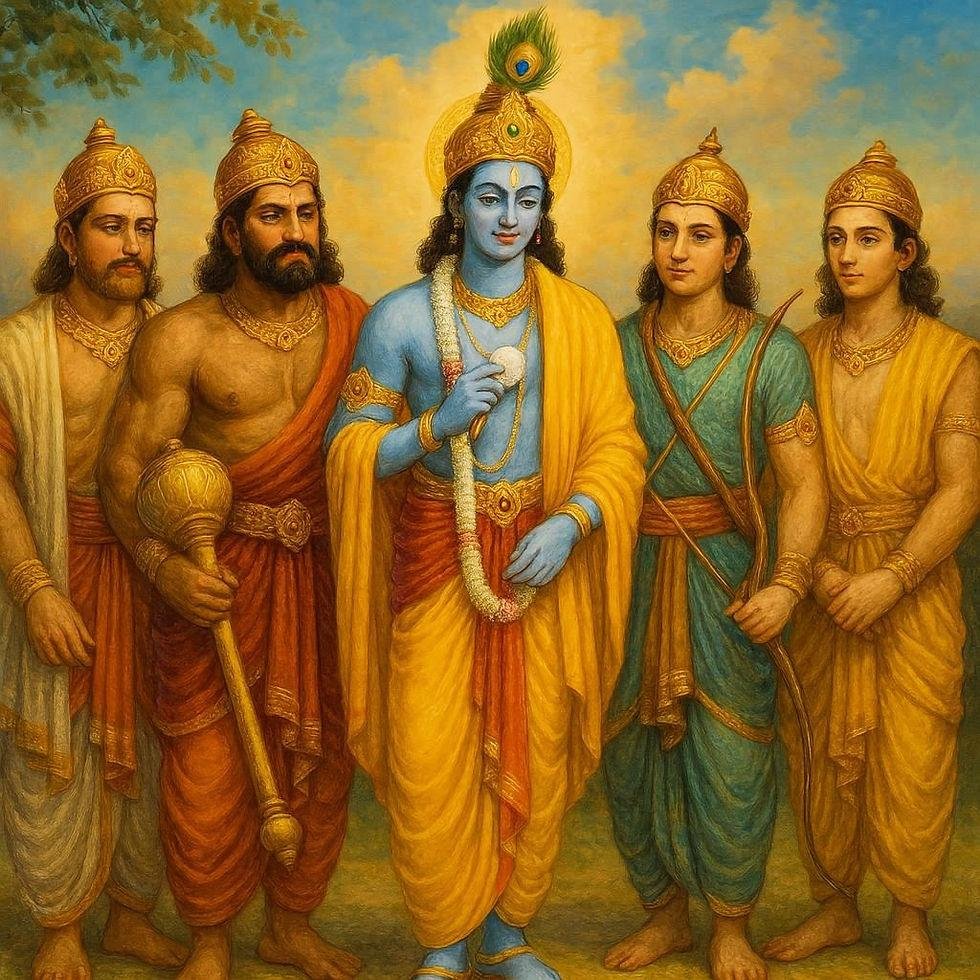
Image ALT: Krishna, Shiva and Durga representing different Hindu devotional traditions
Its broad religious scope reflects the diversity of Hindu traditions.
Sacred Places and Pilgrimage
Pilgrimage is another important theme in Puranic literature.


Image ALT: Hindu pilgrims visiting a sacred temple as part of traditional pilgrimage
Sacred places are believed to provide opportunities for:
- Worship
- Purification
- Prayer
- Charity
- Spiritual reflection
Stories and Legends
The Bhavishya Purana contains numerous stories and traditional narratives.


Image ALT: Traditional Puranic storyteller narrating Hindu religious stories
These stories communicate religious principles through memorable characters and events.
The Idea of the Future
The word Bhavishya naturally creates an association with the future.
This has led to many popular claims that the Bhavishya Purana predicted specific modern historical events.


Image ALT: Ancient sage and manuscript representing traditional discussions of the future
However, claims about specific modern predictions should be treated carefully. The surviving text has a complex history, and passages attributed to the Purana need to be considered in the context of its manuscript traditions and textual development.
Why Are the “Predictions” Controversial?
Various modern books and websites attribute predictions about later historical figures and events to the Bhavishya Purana.
But these claims are not all equally reliable.


Image ALT: Ancient Sanskrit manuscript illustrating the importance of examining historical textual traditions
When studying such claims, it is important to distinguish between:
Traditional Puranic material
and
Later interpretations or additions attributed to the Purana.
This makes the Bhavishya Purana particularly interesting from the perspective of textual history.
The Bhavishya Purana and History
The Purana is not a modern historical chronicle in the same sense as a contemporary history book.
Its narratives combine:
- Mythology
- Religious teachings
- Genealogies
- Stories
- Ritual instructions
- Cultural traditions
- Historical-style accounts


Image ALT: Ancient Indian manuscript and royal figures representing historical-style narratives
Therefore, its historical material should be studied alongside other textual and archaeological evidence.
Importance of Religious Calendar
The Bhavishya Purana’s discussions of observances and festivals are useful for understanding the importance of the Hindu religious calendar.


Image ALT: Traditional Hindu calendar representing religious festivals and sacred observances
Sacred days help structure devotional life throughout the year.
Fasting
Fasting is associated with many Hindu vratas and religious observances.


Image ALT: Hindu devotee observing a traditional religious fast and prayer
Fasting can be accompanied by prayer, meditation and charitable activities.
Puja and Devotion
Puja is another recurring aspect of Hindu religious practice.


Image ALT: Devotee performing puja with lamps and flowers in traditional Hindu worship
The ritual allows devotees to express reverence and devotion toward the chosen deity.
The Role of the Purana
The Puranas served many purposes within traditional Indian culture.
They could:
- Preserve stories
- Teach Dharma
- Explain religious practices
- Describe sacred places
- Inspire devotion
- Preserve cultural traditions


Image ALT: Traditional Puranic storytelling gathering representing the role of Puranas in Indian culture
The Bhavishya Purana is part of this larger tradition.
Why Is the Bhavishya Purana Important?
1. Religious Practices
It preserves discussions of vratas, festivals and rituals.
2. Dharma
It contains teachings about religious and ethical duties.
3. Surya Worship
It preserves traditions associated with worship of the Sun.
4. Cultural History
Its narratives provide material for studying Indian religious culture.
5. Textual History
Its complicated manuscript history makes it particularly interesting to scholars.
6. Puranic Tradition
It demonstrates the broad and changing nature of Puranic literature.
What Can We Learn From the Bhavishya Purana?
Discipline
Religious observances encourage self-control and dedication.
Charity
Dana teaches generosity and concern for others.
Devotion
Worship and prayer provide ways of expressing faith.
Respect for Tradition
Festivals and rituals preserve cultural practices across generations.
Critical Thinking
The discussion surrounding alleged predictions reminds us to examine historical claims carefully.
Bhavishya Purana – Quick Facts
Series: 18 Mahapuranas – Part 9
Name: Bhavishya Purana
Language: Sanskrit
Meaning of Name: Connected with the future
Traditional Divisions: Brahma Parva, Madhyama Parva, Pratisarga Parva and Uttara Parva
Major Themes: Dharma, Vrata, festivals, rituals, charity, pilgrimage and religious traditions
Notable Tradition: Surya worship
Special Feature: Complex textual and manuscript history
Frequently Asked Questions
What is the Bhavishya Purana?
The Bhavishya Purana is one of the traditional 18 Mahapuranas, containing religious teachings, stories, rituals, festivals and cultural traditions.
Why is it called Bhavishya Purana?
The name Bhavishya is associated with the idea of the future.
Does the Bhavishya Purana contain predictions?
It contains material framed around future-oriented accounts, but many modern claims about specific predictions require careful examination because of the complex textual history of the work.
What is a Vrata?
A Vrata is a religious observance or vow that may include fasting, prayer, worship and charity.
Does the Bhavishya Purana discuss Surya worship?
Yes. Traditions associated with Surya, the Sun deity, are among the notable religious subjects associated with the text.
Is the Bhavishya Purana a history book?
No. It is a Purana, combining religious teachings, mythology, stories, rituals and historical-style narratives.
Conclusion
The Bhavishya Purana – Part 9 is one of the more intriguing Mahapuranas because of both its religious content and its complex textual history.
It discusses Dharma, vratas, festivals, rituals, charity, pilgrimage and worship, while also containing narratives connected with different religious traditions.
Its association with the idea of the future has made it famous for alleged predictions, but those claims should be examined carefully rather than accepted automatically.
The Bhavishya Purana ultimately gives us another example of how the Puranic tradition combines religion, mythology, culture, ritual and social values.
This is Part 9 of our 18 Mahapuranas series.