India is home to many ancient monuments that tell the story of its rich history, culture and traditions. Among them, Sanchi Stupa in Madhya Pradesh holds a special place.
Located on a hill near Vidisha, Sanchi is one of the oldest and most important surviving Buddhist heritage sites in India. The monuments at Sanchi include stupas, temples, monasteries and stone pillars developed over many centuries.


📍 Where Is Sanchi Stupa Located?
Sanchi is located in Raisen district of Madhya Pradesh, near Vidisha and approximately 40–50 kilometres from Bhopal, depending on the route/reference point.
The monuments stand on a peaceful hill surrounded by the landscape of central India.
Today, Sanchi is an important heritage and Buddhist site visited by tourists, historians, researchers and pilgrims from different parts of the world.
📜 History of Sanchi Stupa
The history of Sanchi goes back to the 3rd century BCE, during the reign of Emperor Ashoka of the Mauryan Empire.
UNESCO attributes the beginning of Sanchi as a sacred centre to Ashoka. A brick stupa and an Ashokan pillar were among the early monuments associated with the site.
Over the following centuries, Sanchi was expanded and developed by different dynasties. The original stupa was enlarged and covered with stone, while additional architectural elements and beautifully carved gateways were added.
The Sunga and Satavahana periods were particularly important in the development of the Great Stupa and its famous gateways. Later, the Gupta period also contributed additional structures.


👑 Emperor Ashoka and Sanchi
Emperor Ashoka is one of the most important historical figures associated with Sanchi.
After the Kalinga War, Ashoka became closely associated with the spread of Buddhism. His reign played an important role in the expansion of Buddhist ideas across the Indian subcontinent.
At Sanchi, the Ashokan pillar and early stupa represent the site’s connection with the Mauryan period.
The Ashokan connection makes Sanchi especially important when studying the history of ancient India.
🏛️ The Great Stupa of Sanchi
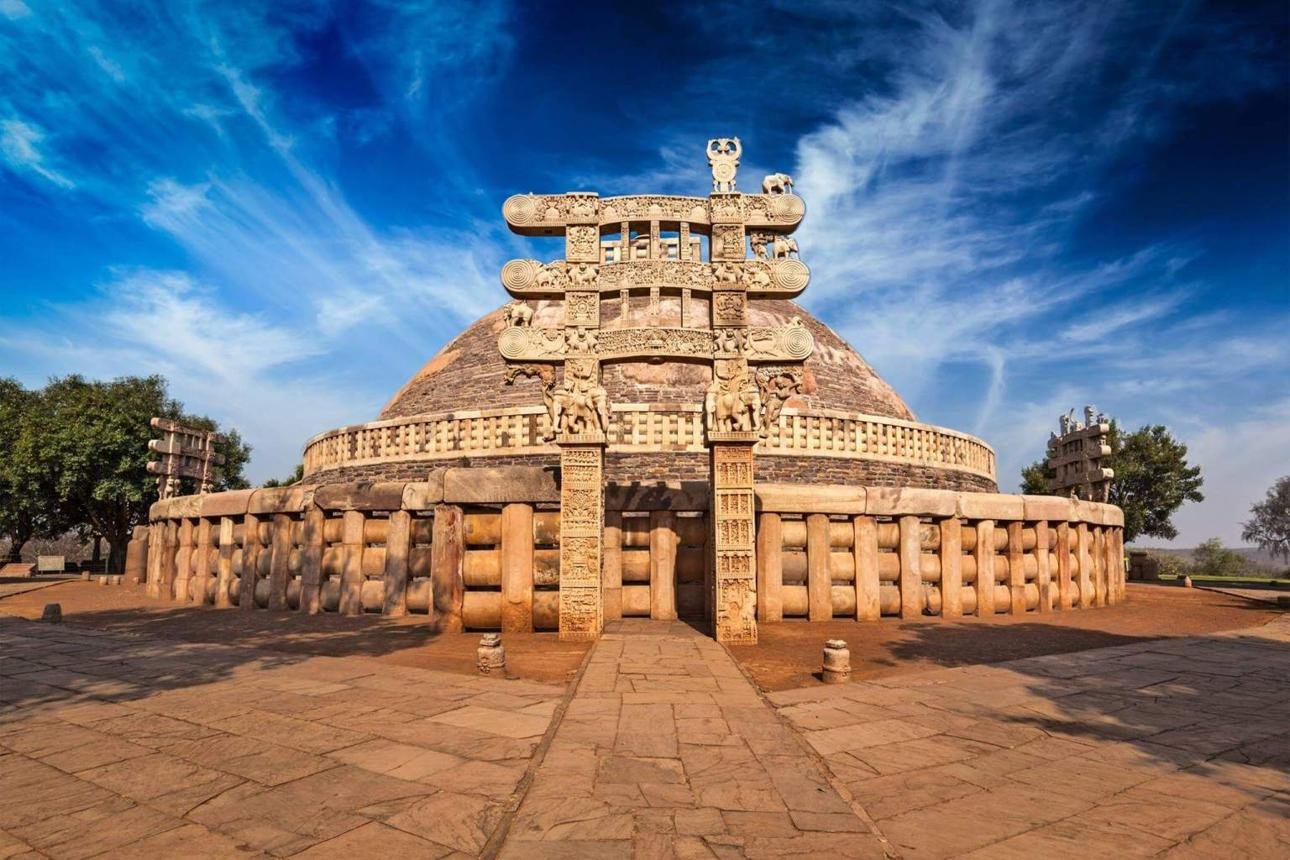
The Great Stupa, also known as Stupa 1, is the most famous monument at Sanchi.
The original structure was later enlarged and transformed into the magnificent monument that can be seen today.
The Great Stupa has a large hemispherical dome called the anda. Above it is the harmika, while the central mast and umbrellas form the upper portion.
A circular path around the stupa allowed devotees to perform pradakshina, or ceremonial circumambulation.


🚪 The Four Famous Toranas
One of the most beautiful features of Sanchi is its four monumental gateways, known as Toranas.
They are positioned in the four cardinal directions:
- East
- West
- North
- South
The gateways contain detailed stone carvings showing animals, plants, people and scenes associated with Buddhist traditions and Jataka stories.
UNESCO considers the sculptural decoration of the four gateways one of the outstanding artistic achievements of Stupa 1.


🐘 What Do the Carvings Show?
The carvings at Sanchi are one of the major reasons the site is so important.
They include representations of:
- 🐘 Elephants
- 🦁 Lions
- 🐎 Horses
- 🌳 Trees
- 👑 Royal figures
- 🙏 Devotees
- 🛕 Buddhist symbols
- 📖 Jataka stories
Interestingly, early Sanchi art often represented the Buddha through symbols rather than a direct human figure. UNESCO identifies this as part of the site’s important early Buddhist artistic tradition.


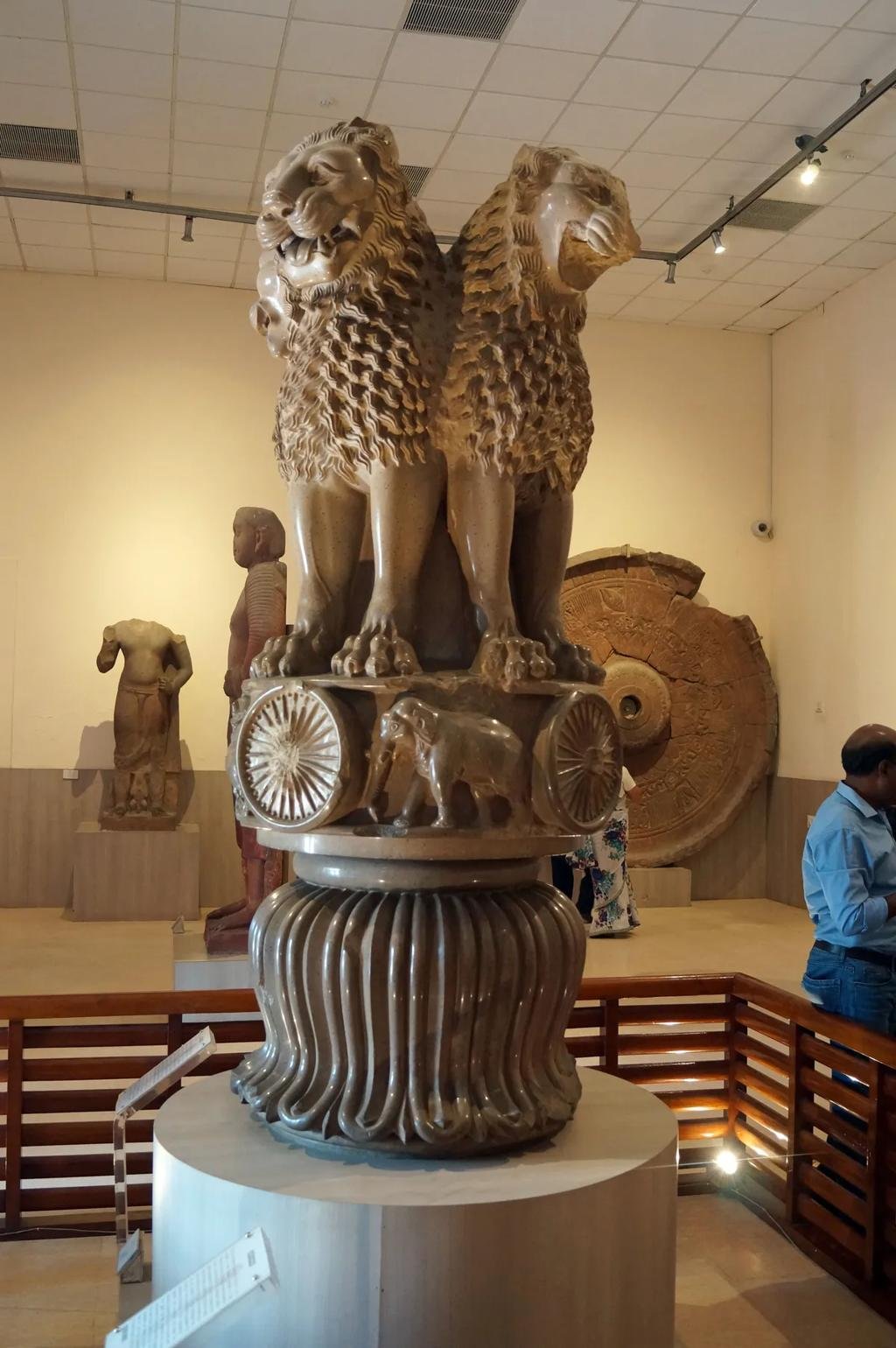
🦁 Ashoka Pillar at Sanchi
Another important monument at Sanchi is the Ashoka Pillar.
The pillar is associated with the Mauryan period and reflects the highly developed stone-working skills of ancient India.
The famous Lion Capital tradition associated with Ashokan pillars is also an important part of India’s historical heritage.


🛕 Other Monuments at Sanchi
Sanchi is not just one stupa.
The archaeological complex contains:
- Stupa 1
- Stupa 2
- Stupa 3
- Ancient temples
- Monasteries
- Pillars
- Shrines
- Archaeological remains
UNESCO notes that the monuments collectively document the development of Buddhist art and architecture from around the 3rd century BCE to the 12th century CE.


🌏 Sanchi as a Buddhist Centre
Sanchi became an important centre of Buddhism for many centuries.
The site contains monuments associated with Buddhist monastic life, worship and artistic traditions.
UNESCO describes Sanchi as one of the oldest Buddhist sanctuaries in existence and notes that it remained an important Buddhist centre into the medieval period.
🏆 UNESCO World Heritage Site
The Buddhist Monuments at Sanchi were inscribed on the UNESCO World Heritage List in 1989.
UNESCO recognizes Sanchi for its exceptional examples of Buddhist architecture, sculpture and artistic development.
The site is protected and managed by the Archaeological Survey of India under India’s heritage protection laws.


🔍 Interesting Facts About Sanchi Stupa
- 🏛️ Sanchi’s history goes back to the 3rd century BCE.
- 👑 Emperor Ashoka is closely associated with the foundation of the site.
- 🏛️ The Great Stupa is also known as Stupa 1.
- 🚪 The Great Stupa has four famous Toranas.
- 🐘 The gateways contain detailed carvings of animals, people and Buddhist stories.
- 🪨 Sanchi contains important ancient stone architecture.
- 🛕 The site includes stupas, temples and monasteries.
- 🌏 Sanchi became a UNESCO World Heritage Site in 1989.
🇮🇳 Why Is Sanchi Important to India?
Sanchi is important because it preserves a remarkable part of India’s ancient Buddhist history.
The site shows how architecture, sculpture, religion and storytelling developed together in ancient India.
The beautifully carved Toranas are particularly valuable because they preserve scenes and symbols from early Buddhist art.
Sanchi therefore gives us a window into India’s artistic and cultural development over many centuries.
🌸 Conclusion
The Sanchi Stupa is much more than an ancient monument.
It is a remarkable symbol of India’s Buddhist heritage, Mauryan history, ancient architecture and stone-carving traditions.
From Emperor Ashoka’s association with the site to the magnificent Great Stupa and its beautifully carved gateways, every part of Sanchi tells a story about India’s ancient past.
Today, Sanchi continues to attract visitors from India and around the world and remains one of the country’s most important heritage sites.


🇮🇳 MANA BHARATHAM
This article is published by MANA BHARATHAM on ALL INDIA PIN CODE SEARCH.
For more interesting stories about Indian history, ancient monuments, temples, culture and traditions, stay connected with MANA BHARATHAM.
Know India. Explore India. Celebrate India. 🇮🇳