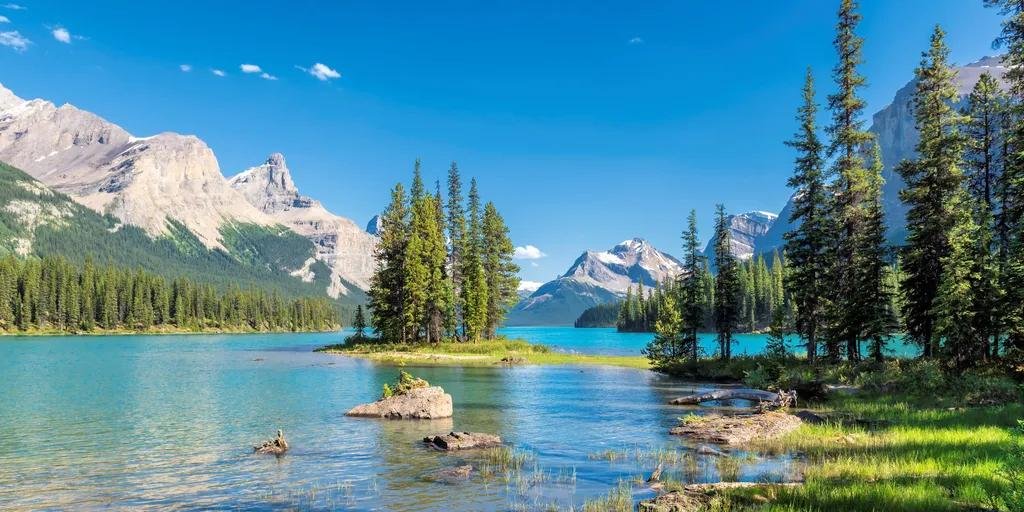
Canada is one of the largest and most fascinating countries in the world.
It is famous for vast forests, enormous lakes, snow-covered mountains, spectacular waterfalls, beautiful cities and incredible wildlife.
From the busy streets of Toronto to the peaceful Rocky Mountains, Canada offers an extraordinary combination of modern life and untouched nature.
Let’s explore this amazing country. 🌎


The Natural Beauty of Canada
Canada is famous for its enormous forests, lakes, mountains and spectacular natural landscapes.
🌍 Where Is Canada?
Canada is located in North America.
It stretches from the Atlantic Ocean in the east to the Pacific Ocean in the west, while its northern regions extend toward the Arctic.
Canada has 10 provinces and 3 territories.
The capital city is Ottawa.
Some of its best-known cities include:
- Toronto
- Vancouver
- Montreal
- Calgary
- Edmonton
- Quebec City
Because Canada is so large, its climate and landscapes vary greatly from region to region.
🗺️ Canada Is the Second-Largest Country in the World
Canada has an enormous land area.
Its territory includes:
🏔️ Mountains
🌲 Forests
🏞️ Prairies
❄️ Arctic regions
🌊 Coastlines
💧 Thousands of lakes
Its huge size is one of the country’s most remarkable characteristics.
💧 A Country Full of Lakes
Canada is famous for its lakes.
In fact, the country contains a huge share of the world’s freshwater lakes.
Some of the most famous include:
- Lake Superior
- Lake Huron
- Lake Erie
- Lake Ontario
- Great Bear Lake
- Great Slave Lake
The Great Lakes are particularly important because they form one of the largest freshwater systems on Earth.


Canada’s Famous Lakes
🏔️ The Canadian Rocky Mountains
The Canadian Rockies are among the country’s most spectacular natural features.
They stretch through parts of Alberta and British Columbia.
The region is famous for:
🏔️ Snow-covered peaks
💧 Turquoise lakes
🌲 Pine forests
🦌 Wildlife
🥾 Hiking trails
One of the most famous locations is Banff National Park.
💎 Lake Louise – A Natural Wonder
Lake Louise is one of Canada’s most photographed landscapes.
Its turquoise-colored water, surrounded by mountains and forests, creates a breathtaking scene.
The lake changes appearance depending on the season, weather and sunlight.
In winter, the area becomes a snowy destination for outdoor activities.


Lake Louise
🍁 Why Is the Maple Leaf Canada’s Symbol?
The maple leaf is one of the strongest symbols of Canada.
It appears prominently on the Canadian national flag.
Maple trees are especially famous during autumn when their leaves turn bright shades of yellow, orange and red.
The maple leaf has become closely connected with Canadian identity and nature.
🍁 Canadian Autumn Looks Like a Painting
Autumn is one of the most beautiful seasons in Canada.
Large areas of forests change color as temperatures fall.
The combination of:
🍂 Red leaves
🟡 Yellow forests
🟠 Orange trees
🏔️ Mountain backgrounds
creates spectacular landscapes.
Visitors often travel to places such as Quebec and Ontario to enjoy the autumn colors.


Canadian Autumn
🦌 Canada’s Incredible Wildlife
Canada’s huge natural areas provide habitats for many animals.
Some famous Canadian wildlife includes:
🫎 Moose
🐻 Grizzly bears
🐻❄️ Polar bears
🦫 Beavers
🦌 Caribou
🐺 Wolves
🦅 Bald eagles
The beaver is particularly important as a national symbol and is featured on Canada’s five-cent coin.
🐻 Polar Bears in Northern Canada
Northern Canada is one of the world’s important habitats for polar bears.
These magnificent animals depend heavily on Arctic sea ice for hunting and survival.
Climate change and shrinking sea ice are therefore major environmental concerns for polar bear populations.
Protecting Arctic ecosystems is important not only for wildlife but also for the wider environment.


Canadian Wildlife
💦 Niagara Falls
One of Canada’s most famous natural attractions is Niagara Falls, located on the border between Canada and the United States.
The falls are made up of three major sections:
- Horseshoe Falls
- American Falls
- Bridal Veil Falls
The enormous volume of water flowing over the falls makes the area one of the world’s most spectacular waterfalls.


Niagara Falls
🌊 Canada Has the Longest Coastline in the World
Canada is surrounded by three major oceans:
🌊 Atlantic Ocean
🌊 Pacific Ocean
🌊 Arctic Ocean
Because of its enormous coastline, Canada has thousands of coastal communities and islands.
The country’s northern coastline reaches deep into the Arctic.
❄️ Life in Canada’s Cold Winters
Many parts of Canada experience very cold winters.
In some regions, temperatures can fall dramatically below freezing.
People have adapted to the cold through:
🧥 Warm clothing
🏠 Well-insulated homes
🚆 Reliable transportation
❄️ Winter sports
🔥 Efficient heating systems
Snow and ice are an ordinary part of life in many Canadian communities.
🏒 Hockey – More Than Just a Sport
Ice hockey is deeply connected with Canadian culture.
It is one of the country’s most popular sports and has a long history in Canadian communities.
Many children grow up playing hockey at local ice rinks.
For many Canadians, hockey is not simply entertainment — it is part of the country’s sporting identity.
🏙️ Toronto – Canada’s Largest City
Toronto is Canada’s largest city and one of its most multicultural urban centers.
It is famous for:
🏙️ Modern skyscrapers
🌎 Cultural diversity
🍽️ International cuisine
🎭 Arts and entertainment
🏀 Sports
🛍️ Shopping
The CN Tower is one of Toronto’s most recognizable landmarks.


Toronto
🌊 Vancouver – City Between Mountains and Ocean
Vancouver is famous for its location between the Pacific Ocean and mountains.
It offers a unique combination of:
🏔️ Mountains
🌊 Ocean
🌲 Forests
🏙️ Modern city life
This makes Vancouver particularly attractive to people who enjoy both urban life and outdoor activities.
🏛️ Ottawa – The Capital of Canada
Ottawa is Canada’s national capital.
The city is known for government institutions, historic buildings, museums and the Parliament Hill area.
During winter, the Rideau Canal can become a famous skating destination when conditions are suitable.
🗣️ Canada Has Two Official Languages
Canada has two official federal languages:
🇬🇧 English
🇫🇷 French
French is particularly important in Quebec, where it is the main language of everyday life.
This bilingual heritage is an important part of Canada’s national identity.
🌎 A Multicultural Country
Canada is known for its cultural diversity.
People from many different countries and cultural backgrounds live across Canada.
Large cities such as Toronto, Vancouver and Montreal contain communities representing many parts of the world.
This diversity can be seen in:
🍛 Food
🎉 Festivals
🎵 Music
🗣️ Languages
🎨 Art
🧑🤝🧑 Indigenous Peoples of Canada
Canada’s history includes many Indigenous peoples with distinct cultures and traditions.
These include First Nations, Inuit and Métis peoples.
Their histories, languages, art, traditions and relationships with the land are an important part of Canada’s identity.
Learning about Canada also means recognizing these cultures and their continuing importance.
🌌 Canada’s Northern Lights
Canada’s northern regions are among the places where people can experience the Aurora Borealis, or Northern Lights.
During suitable conditions, colorful lights can appear across the night sky.
The phenomenon is particularly spectacular in remote areas where there is little artificial light.


Lights in Canada
🌲 Canada’s Vast Forests
Forests cover a huge part of Canada’s landscape.
They provide habitats for wildlife and play an important role in the environment.
Canada’s forests range from boreal forests in the north to temperate forests in other regions.
These forests are also important for industries such as timber and paper production.
💡 What Can We Learn From Canada?
1️⃣ Protect Nature
Canada shows how important forests, lakes and wildlife are to a country’s identity.
2️⃣ Respect Cultural Diversity
People from many backgrounds can contribute to one society.
3️⃣ Preserve Indigenous Heritage
Indigenous cultures and histories are an important part of Canada’s story.
4️⃣ Adapt to Climate
Canadians have developed ways to live and work in extremely different weather conditions.
5️⃣ Balance Development and Nature
Canada’s major cities exist alongside enormous natural landscapes.
🌟 10 Amazing Facts About Canada
1. Canada is the world’s second-largest country by total area.
2. Ottawa is the national capital.
3. Canada has the world’s longest coastline.
4. Canada is famous for its enormous number of lakes.
5. The maple leaf is a major national symbol.
6. The Canadian Rockies contain some of the country’s most spectacular scenery.
7. Niagara Falls is one of Canada’s best-known natural attractions.
8. Canada has two official federal languages: English and French.
9. Polar bears, moose, beavers and caribou are among its famous wildlife.
10. Canada’s northern regions are excellent places to experience the Northern Lights.
📝 Conclusion
Canada is a country of incredible contrasts.
It has modern cities and enormous wilderness, busy streets and peaceful lakes, warm summers and extremely cold winters.
Its mountains attract adventurers.
Its forests provide homes for remarkable wildlife.
Its lakes and waterfalls create spectacular scenery.
And its multicultural cities bring together people from many parts of the world.