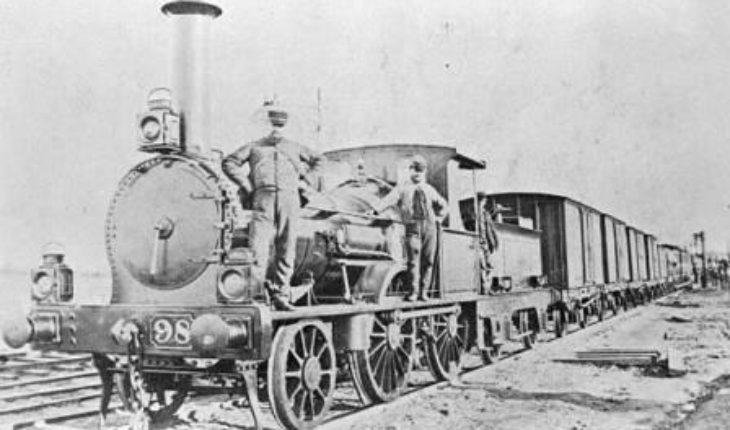
From the First Train in 1853 to Vande Bharat and the Future of Indian Railways


India’s railway system is one of the most remarkable transportation stories in the world.
What began with a 34-kilometre passenger railway between Bombay and Thane in 1853 eventually developed into an enormous railway network connecting cities, villages, ports, industrial centres and remote regions across the country. Indian Railways itself records the first passenger train as running on 16 April 1853, with 14 coaches and about 400 passengers.
Today, India’s railway journey has entered a completely different era—with electrification, digital ticketing, modern stations, semi-high-speed trains and Vande Bharat Express.
🚂 1. BEFORE THE FIRST TRAIN
Before railways, long-distance travel in India depended mainly on:
- 🐎 Horse-drawn vehicles
- 🐂 Bullock carts
- 🚶 Walking
- 🛶 Boats
- 🐘 Animal transport
- 🛞 Carriages
Travelling between distant towns could take days or even weeks.
The development of railways promised something revolutionary:
Move people and goods much faster over long distances.
🚂 2. INDIA’S FIRST PASSENGER TRAIN — 1853


📅 16 April 1853
This is one of the most important dates in India’s transport history.
The first passenger train officially ran from:
Bori Bunder, Bombay → Thane
The distance was approximately:
34 kilometres
According to Indian Railways, the train consisted of:
- 14 coaches
- Around 400 passengers
It was operated by the Great Indian Peninsula Railway.
The journey marked the beginning of passenger railway service in India.
🎺 3. THE FIRST JOURNEY WAS A GRAND EVENT
The first train was not an ordinary railway journey.
It was a major public event.
Historical records describe a formal ceremony at Bori Bunder, with a 21-gun salute accompanying the departure.
The train travelled towards Thane amid considerable public attention.
For people who had never seen a steam locomotive before, the sight must have been extraordinary.
Imagine seeing a huge machine producing smoke and steam while pulling fourteen coaches!
🚂 4. WHAT DID THE FIRST TRAIN LOOK LIKE?

The first passenger train was powered by steam locomotives.
Unlike today’s electric trains, these locomotives depended on:
🔥 Coal
💨 Steam
💧 Water
A steam locomotive heated water inside a boiler.
The resulting steam created pressure that moved pistons and ultimately turned the locomotive’s wheels.
It was a remarkable engineering technology for its time.
🏙️ 5. WHY WAS BOMBAY–THANE CHOSEN?
Bombay was becoming an important commercial centre.
Connecting Bombay with Thane by railway had several advantages.
It could help move:
- People
- Cotton
- Agricultural products
- Raw materials
- Manufactured goods
Railways would eventually become closely connected with India’s commercial and industrial development.
🚂 6. THE RAILWAY NETWORK QUICKLY EXPANDED
The Bombay–Thane line was only the beginning.
Indian Railways records that:
- The first eastern passenger service ran from Howrah to Hooghly in 1854.
- The first major railway line in the south opened in 1856, connecting the Madras region with Walajah Road.
- A line between Allahabad and Kanpur opened in 1859.
By 1880, the Indian railway system had approximately 9,000 route miles, according to Indian Railways historical material.
From a tiny beginning, the network was rapidly spreading across the subcontinent.
🚂 7. THE FIRST STEAM LOCOMOTIVE MADE IN INDIA


India eventually began manufacturing its own locomotives.
Indian Railways records that the first steam locomotive manufactured in India was F-734, built in 1895 at the Ajmer workshop of the Rajputana-Malwa Railway.
This represented an important step toward developing India’s own railway engineering capabilities.
🏭 8. RAILWAYS AND INDUSTRIAL DEVELOPMENT
Railways did much more than transport passengers.
They helped connect:
Farms → Markets
Mines → Factories
Ports → Cities
Villages → Towns
Industrial centres → Markets
Goods that previously took enormous amounts of time and effort to transport could be moved much more efficiently.
Railways therefore became an important part of India’s economic infrastructure.
🇮🇳 9. RAILWAYS DURING THE FREEDOM MOVEMENT
Railways also played an important role in India’s social and political history.
The railway network allowed people from different regions to travel and interact more easily.
Newspapers, political ideas and movements could spread across large distances.
During the freedom movement, railway stations and trains became part of India’s political landscape.
The railway therefore became more than transportation.
It became part of India’s national story.
🇮🇳 10. WHAT CHANGED AFTER INDEPENDENCE?
India became independent in 1947.
At that time, the railway system consisted of numerous companies and regional railway systems.
One major task of independent India was to bring these systems together.
The railway network was gradually reorganised into a unified national system.
Indian Railways became one of the country’s most important public institutions.
🚉 11. THE CREATION OF THE ZONAL RAILWAY SYSTEM
Over time, Indian Railways divided its enormous network into different zones and divisions to make administration easier.
This helped manage:
- Track infrastructure
- Trains
- Stations
- Staff
- Signalling
- Freight
- Passenger services
- Maintenance
Today, the railway network is administered through multiple zones and divisions across India.
🚂 12. FROM STEAM TO DIESEL


For decades, steam locomotives dominated Indian railways.
But eventually, diesel locomotives became increasingly important.
Diesel engines offered several advantages:
- Less dependence on coal
- Easier operation
- Faster turnaround
- Lower maintenance in many situations
- Greater operational flexibility
India gradually moved away from steam.
⚡ 13. THE ELECTRIC RAILWAY REVOLUTION


The next major transformation was electrification.
Electric locomotives could provide:
⚡ Powerful acceleration
⚡ High efficiency
⚡ Reduced dependence on diesel
⚡ Cleaner operation at the point of use
⚡ Better suitability for heavily used routes
Indian Railways has pursued large-scale electrification for decades, with the pace accelerating significantly in recent years.
🚉 14. RAILWAY STATIONS ALSO CHANGED
Old railway stations were very different from today’s modern terminals.
Over time, stations received:
- Larger platforms
- Foot overbridges
- Electronic displays
- Escalators
- Lifts
- Waiting halls
- Food outlets
- Digital ticketing
- CCTV
- Improved accessibility
Major stations are increasingly being redeveloped into modern transport hubs.
🎫 15. FROM PAPER TICKETS TO ONLINE BOOKING
One of the biggest changes passengers experienced was digital ticketing.
Earlier, passengers had to stand at railway reservation counters.
Today, passengers can use online systems to:
- Search trains
- Check availability
- Book tickets
- Cancel tickets
- Check PNR status
- Receive electronic tickets
Indian Railways records indicate that computerised reservation began at New Delhi in 1986, while online railway reservation developed later.
🚄 16. RAJDHANI EXPRESS


The Rajdhani Express represented a major improvement in long-distance passenger travel.
The trains were designed to connect Delhi with major state capitals and important cities.
They became known for:
- Faster journeys
- Air-conditioned coaches
- Better onboard services
- Premium passenger experience
The Rajdhani became one of India’s most recognisable premium train categories.
🚄 17. SHATABDI EXPRESS


The Shatabdi Express introduced another important concept:
Fast daytime intercity travel.
The first Shatabdi Express was introduced in 1988, according to Indian Railways material.
It became particularly popular for relatively shorter intercity journeys.
🚄 18. ENTER THE VANDE BHARAT EXPRESS


India’s railway technology has entered a new era with the Vande Bharat Express.
The train was originally developed as Train 18.
The first Vande Bharat service was launched in 2019, initially operating between New Delhi and Varanasi.
Unlike conventional locomotive-hauled trains, Vande Bharat uses a trainset design, where propulsion equipment is distributed through the train.
🚄 19. WHAT MAKES VANDE BHARAT DIFFERENT?
Vande Bharat introduced several modern features.
🚪 Automatic doors
Designed to improve passenger convenience and safety.
📺 Passenger information systems
Digital information systems help passengers during the journey.
📡 Wi-Fi and connectivity features
Modern onboard technology provides improved passenger experience on applicable services.
🚽 Bio-vacuum toilets
Designed to improve sanitation.
💺 Modern seating
Executive-class coaches include enhanced seating arrangements.
⚡ Faster acceleration
The trainset design allows strong acceleration and braking performance.
These features helped create a modern image for Indian passenger rail travel.
🛡️ 20. KAVACH — INDIA’S TRAIN SAFETY TECHNOLOGY


One of India’s major railway technology projects is Kavach, an indigenous automatic train-protection system.
Its purpose is to help reduce the risk of certain train collisions and signal-related accidents.
The system can assist with:
- Monitoring train movement
- Preventing overspeeding in relevant circumstances
- Enforcing restrictions
- Automatic braking under specified conditions
Kavach represents an important move toward increasingly technology-driven railway safety.
🌄 21. INDIAN RAILWAYS AND SCENIC JOURNEYS
Indian Railways is not only about commuting.
Some railway journeys are famous for their spectacular landscapes.
Examples include:
🏔️ Himalayan routes
🌴 Konkan Railway
🌿 Western Ghats
🏜️ Rajasthan desert routes
🌧️ Northeast India
🌊 Coastal railway sections
The Konkan Railway is particularly famous for its bridges, tunnels, mountains and monsoon scenery.
🏔️ 22. MOUNTAIN RAILWAYS OF INDIA


India’s mountain railways are among its most famous railway heritage treasures.
Three important examples are:
🚂 Darjeeling Himalayan Railway
West Bengal
🚂 Nilgiri Mountain Railway
Tamil Nadu
🚂 Kalka–Shimla Railway
Himachal Pradesh
These railway systems demonstrate how engineers built railways through difficult mountainous terrain.
📦 23. FREIGHT TRAINS — THE OTHER SIDE OF INDIAN RAILWAYS
Passenger trains receive most of the public attention.
But freight trains are equally important.
Indian Railways transports enormous quantities of:
- Coal
- Cement
- Food grains
- Steel
- Fertiliser
- Petroleum products
- Containers
- Industrial materials
Freight railways help connect India’s industries and markets.
🚆 24. THE FUTURE — HIGHER SPEEDS
India is also working toward faster railway services.
The Mumbai–Ahmedabad High-Speed Rail project is designed around Japanese Shinkansen technology.
It represents a fundamentally different category from conventional Indian Railways services.
Instead of simply improving existing trains, high-speed rail requires:
- Special tracks
- Advanced signalling
- Dedicated infrastructure
- High engineering standards
- Special rolling stock
🤖 25. THE FUTURE OF INDIAN RAILWAYS
The railway of the future could increasingly include:
⚡ More electrification
🚄 Faster trains
🤖 Automated safety systems
📱 Fully digital passenger services
🌱 Greater energy efficiency
🏢 Modernised stations
📦 Faster freight corridors
🚆 High-speed rail
Technology is changing almost every part of railway operations.
📊 INDIA’S RAILWAY JOURNEY — IMPORTANT MILESTONES
| Year | Major Development |
|---|---|
| 1843 | Railway connection idea for Bombay–Thane region recorded |
| 1853 | First passenger train: Bombay–Thane |
| 1854 | Howrah–Hooghly passenger service |
| 1856 | First railway line in southern India |
| 1859 | Allahabad–Kanpur railway section |
| 1880 | Indian railway system reaches about 9,000 route miles |
| 1895 | Steam locomotive F-734 built at Ajmer |
| 1947 | India becomes independent |
| 1986 | Computerised reservation introduced at New Delhi |
| 1988 | First Shatabdi Express |
| 1990s onward | Large-scale modernisation and electrification |
| 2019 | First Vande Bharat Express service |
| 2020s | Rapid expansion of electrification, modern trains and safety technology |
Historical milestones are based primarily on Indian Railways’ own published historical material.
🚂 THEN VS NOW
| Feature | 1853 | Modern Indian Railways |
|---|---|---|
| Power | Steam | Electric/diesel |
| Train | Basic steam coaches | Modern trainsets & coaches |
| Speed | Very limited by today’s standards | Much higher |
| Ticket | Paper/manual | Digital + paper options |
| Communication | Manual | Digital systems |
| Safety | Basic systems | Advanced signalling & protection |
| Passenger information | None | Digital displays/announcements |
| Stations | Basic | Modern terminals |
| Reservation | Manual | Online |
| Energy | Coal | Increasing electrification |
| Technology | Mechanical | Digital + automated systems |
🇮🇳 26. THE RAILWAY IS MORE THAN A TRAIN
For generations of Indians, railway travel has been connected with important moments in life.
A student travelling to a new city.
A worker travelling home for a festival.
A family taking its first long-distance trip.
A soldier travelling across the country.
A farmer sending goods to a distant market.
A pilgrim travelling to a sacred place.
For millions of people, the railway is not simply transportation.
It is part of everyday Indian life.
❤️ 27. WHY INDIAN RAILWAYS MATTERS
The history of Indian Railways can be seen as a journey through several technological eras:
Steam → Diesel → Electric → Digital → Semi-High-Speed → High-Speed
But behind every technological change is the same basic purpose:
Connecting people and places.
From the 34-kilometre Bombay–Thane journey of 1853 to today’s modern railway network, India’s railway story reflects more than 170 years of technological, economic and social change.
🇮🇳 CONCLUSION
On 16 April 1853, a steam train left Bori Bunder in Bombay for Thane.
There were only 14 coaches and about 400 passengers.
Nobody travelling that day could have imagined what Indian railways would eventually become.
Today, trains can travel with electric power, automatic doors, advanced signalling, digital passenger information and modern safety technology.
From the smoke of the steam locomotive to the sleek design of Vande Bharat, India’s railway journey is a story of technology, engineering, people and national development.
🚂 1853 started the journey. The future of Indian Railways is still being written. 🇮🇳


🇮🇳 MANA BHARATHAM
Stories, Facts & Wonders From India
✍️ Written by Pasupuleti Saida Rao