People Who Died in Police Custody — The Cases That Raised Questions About Human Rights and Accountability


India’s police force has an essential responsibility: protecting citizens, investigating crime and maintaining law and order.
But when a person dies while in police custody, the circumstances demand especially careful investigation.
A person who has been arrested is still entitled to dignity, medical care and protection under the law.
The National Human Rights Commission (NHRC) requires authorities to report custodial deaths within 24 hours. Deaths during police action, including encounters, are also subject to mandatory reporting and investigation procedures.
📊 How Many People Have Died in Police Custody?
There are different official datasets, so the numbers need to be understood correctly.
The NCRB’s Crime in India data records deaths in police custody/lock-up, including people who were on remand and those who were not.
For example:
| Year | Persons in remand | Persons not in remand | Total |
|---|---|---|---|
| 2022 | — | 41 | — |
| 2023 | 24 | 38 | 62 |
| 2024 | 25 | 40 | 65 |
The NCRB dataset covers 1999–2024.
The NHRC/MHA series is different because it counts cases registered with/received from the NHRC, rather than simply reproducing the NCRB death count.
According to the latest information placed before Parliament, NHRC-linked police-custody death cases were:
| Financial year | Cases |
|---|---|
| 2021–22 | 176 |
| 2022–23 | 163 |
| 2023–24 | 157 |
| 2024–25 | 140 |
| 2025–26, up to 15 March 2026 | 170 |
The 170 figure is for cases reported up to 15 March 2026, not a completed full-year figure.
⚠️ Why are these numbers different?
Because “NCRB deaths” and “NHRC cases” are not necessarily the same statistical series.
So an article should not add the two datasets together.
👨👦 1. Jeyaraj and Bennix — Sathankulam, Tamil Nadu


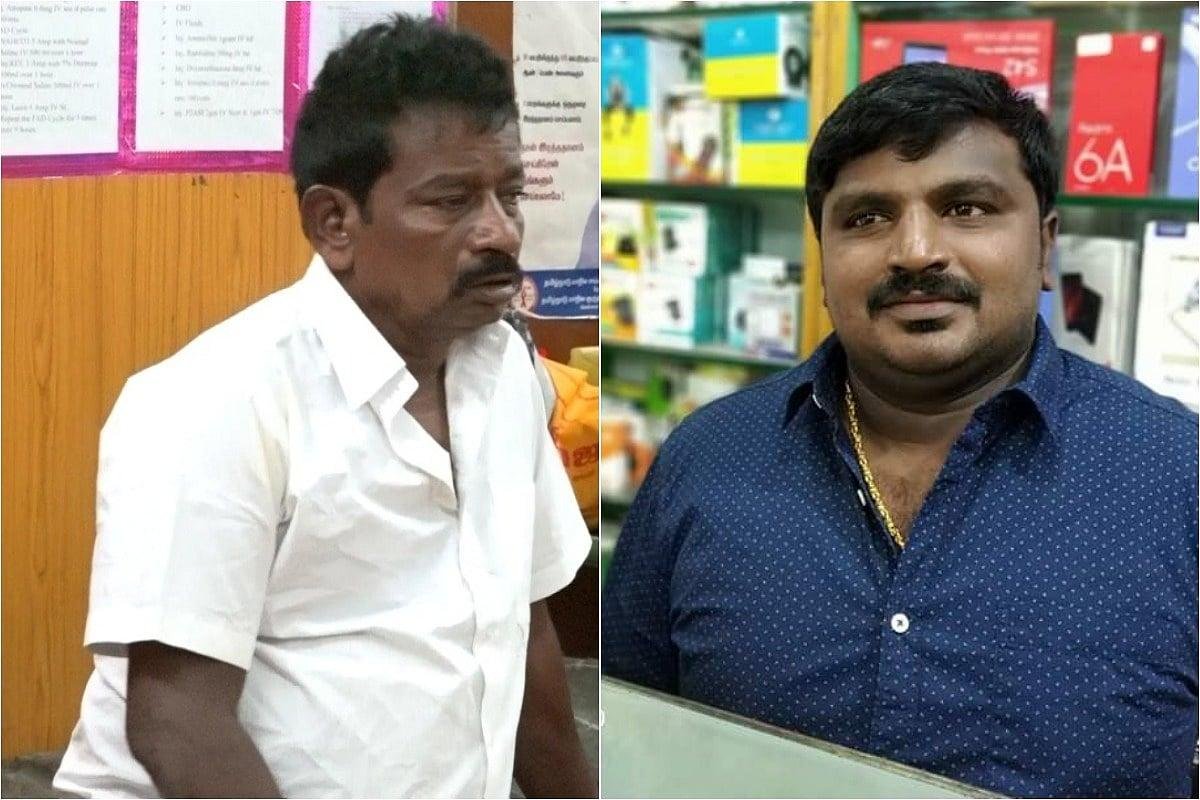
One of the most widely known custodial-death cases in India is the death of P. Jeyaraj and his son J. Bennix in Tamil Nadu.
In June 2020, during the COVID-19 lockdown, the father and son were taken into custody in Sathankulam after a dispute concerning the operation of their mobile-phone shop.
Both subsequently died after being detained.
The case triggered enormous public anger and became a major national discussion about custodial torture and police accountability.
The CBI investigated the case and charges were brought against police personnel.
In March 2026, a Madurai trial court convicted nine surviving police personnel. In April 2026, the court sentenced them to death and ordered compensation for the victims’ families.
Importantly, a Sessions Court death sentence is subject to the legally required confirmation and appellate process.
Why the case became historic
It demonstrated how a relatively ordinary dispute could become a major human-rights case when allegations of custodial violence arise.
🧑 2. Jayaraj / Bennix Case — Why It Changed the Conversation
The Sathankulam case was particularly significant because it involved:
- A father and son
- A police-station detention
- Allegations of custodial torture
- Medical evidence
- CBI investigation
- A long-running criminal trial
- Convictions and severe sentences
It also encouraged renewed discussion about safeguards for people inside police stations.
The lesson was clear:
Being arrested does not mean losing your human dignity.
🧑 3. Khwaja Yunus — Maharashtra


Khwaja Yunus was a young engineer who was arrested in connection with a criminal investigation in Maharashtra.
He disappeared after being taken into police custody in 2003 and was later reported dead.
The case became a long-running legal battle concerning alleged custodial violence and the conduct of police officers.
It became one of Maharashtra’s better-known cases concerning alleged custodial abuse and accountability.
👨 4. Pradeep Sharma / Other Custodial Cases
India has witnessed numerous other cases in which families have alleged that relatives died following detention, interrogation or police custody.
However, this is precisely where responsible reporting becomes important.
A person being arrested and later dying does not automatically establish that police caused the death.
Each case must be separated into:
Allegation → Investigation → Medical evidence → Chargesheet → Trial → Conviction/acquittal
That distinction is essential.
🏛️ Custodial Death Is Not the Same as Police Encounter Death
Another important distinction is between:
Police Custody Death
A person dies while detained in a police station or police lock-up.
Police Encounter Death
A person dies during police action/firing.
Judicial Custody Death
A person dies while in prison after being remanded by a court.
These are three different categories.
The NHRC separately monitors deaths in police firing/encounters and requires reporting of such deaths within 48 hours.
🔥 Police Encounters — Another Important Category


Deaths during police encounters are a separate and highly sensitive subject.
The NHRC requires police authorities to report deaths occurring during police action, including encounters, and expects detailed documentation such as post-mortem, forensic and magisterial inquiry reports.
Therefore, encounter deaths should not simply be added to police lock-up deaths.
📍 Which States Reported More Custodial Death Cases?
The latest MHA information shows significant differences between states.
For 2025–26 up to March 15, 2026:
| State | Reported cases |
|---|---|
| Bihar | 19 |
| Rajasthan | 18 |
| Uttar Pradesh | 15 |
| Gujarat | 14 |
| Maharashtra | 14 |
| Punjab | 14 |
| Tamil Nadu | 7 |
| West Bengal | 7 |
| Telangana | 5 |
| Karnataka | 3 |
| Kerala | 3 |
These are cases reported in the MHA/NHRC series up to 15 March 2026, not necessarily convictions or findings that police caused every death.
⚖️ What Happens After a Custodial Death?
When someone dies in police custody, several investigations can potentially become relevant.
1. Medical examination
The circumstances of death and medical evidence are documented.
2. Post-mortem examination
The cause and nature of injuries are investigated.
3. Magistrate/Judicial inquiry
A formal inquiry can examine the circumstances surrounding the death.
4. Police investigation
Criminal responsibility, if any, is investigated.
5. NHRC involvement
The NHRC can seek reports, conduct inquiries and recommend action or compensation where appropriate.
6. Court proceedings
If sufficient evidence exists, police personnel or other persons can face criminal prosecution.
💰 Compensation Does Not Automatically Mean Conviction
The NHRC sometimes recommends monetary relief in custodial-death cases.
For example, its November 2024 statistics record recommendations for monetary relief in several police-custody death matters.
But:
Compensation ≠ criminal conviction
A compensation recommendation and a criminal court’s finding of guilt are legally different matters.
This distinction is important when writing about victims and police personnel.
📜 Why India’s Custodial-Death Data Matters
Numbers tell only part of the story.
Behind every number is:
A person.
A family.
A livelihood.
Children, parents or relatives waiting for someone who never returned home.
That is why accurate reporting is essential.
A custodial death should never become merely another statistic.
🇮🇳 What Should Change?
Several safeguards can help reduce the possibility of abuse in custody:
📹 CCTV monitoring
Police stations should have functioning surveillance systems with proper preservation of footage.
🩺 Independent medical examinations
Medical examinations should be thorough and properly documented.
👨⚖️ Judicial oversight
Deaths in custody should receive independent scrutiny.
📋 Proper arrest records
The time, place and circumstances of arrest should be accurately recorded.
📞 Family notification
Families should be informed about arrests and serious medical developments.
⚖️ Accountability
Where evidence establishes criminal wrongdoing, responsible persons should face the legal process.
❤️ Remembering the Victims
It is impossible to create a responsible article naming every person who has died in police custody in India since 1947, because India does not have a single publicly available historical database containing every victim’s name and photograph.
The national statistical series itself begins much later; the NCRB dataset currently available covers 1999–2024.
Therefore, rather than inventing a “complete list,” this article distinguishes between:
official national statistics
and
individually documented cases.
That is the only responsible way to present the subject.
🇮🇳 The Larger Message
Police officers perform difficult and sometimes dangerous work.
At the same time, the power given to police comes with enormous responsibility.
A democratic society needs both:
Strong policing
and
Strong accountability.
Protecting the rights of people in custody does not weaken law enforcement.
It strengthens public trust in the law.
🇮🇳 Conclusion
India’s custodial-death statistics show that deaths in police custody remain a serious human-rights and accountability issue.
The latest NCRB data records 65 deaths in police custody/lock-up during 2024—25 people in remand and 40 not in remand.
The MHA/NHRC series separately recorded 140 custodial-death cases in 2024–25 and 170 cases between April 2025 and March 15, 2026.
But behind every statistic is a human story.
Cases such as Jeyaraj and Bennix demonstrate why those stories deserve careful investigation, accurate reporting and, where wrongdoing is proved, accountability.
A person may be in custody, but they never stop being a human being.
Justice, dignity and the rule of law must remain stronger than the power of any individual or institution. 🇮🇳
🇮🇳 MANA BHARATHAM
Stories, Facts & Wonders From India
✍️ Written by Pasupuleti Saida Rao