Tag: Laos Ramayana

  • Ramayana Part 47: Phra Lak Phra Lam | The Ramayana Tradition of Laos

    Ramayana Part 47: Phra Lak Phra Lam | The Ramayana Tradition of Laos

    In the next article, we’ll explore Laos’s unique Ramayana tradition, Phra Lak Phra Lam, the important roles of Rama and Lakshmana, how the epic became connected with Lao Buddhist culture, and how the story continues through Lao literature, temples, art and traditional performances.

    https://images.openai.com/static-rsc-4/_0xUJVzEDmiPyQMNiiptdUPYI-UP0AITzv3K5isIDNawi6MmzhIRFUnE6FgHLMx_fxb6ir0kmZit_atHV8_CEu1X36cD15KkyI9VuvRJ3MvLEV_zGhi9cDynMGudfZzEM3G7MuNEHXM0BhOvED4ry2wZvf5s1AnbBUjmhWDUQdrC3MPhfdPzp_gMfpifo-_A?purpose=fullsize
    https://images.openai.com/static-rsc-4/M0b4WH2wAaudzQdxyNmpTV8_SCkY0TnjyhEHIiWHM3m4W59MQcFor_0STwZ058Jfpfpfv8u1ClxwFCdtyl4xnWFLjQetze_bSCu92SGxHf1-h_QwKow84hfXd6IDfQpvYoTgfBIw81auwJMo-q5hmZNfpAnJPcMfu0-YEqcMSYTI8Lnz_CELY-P0O53ptA9_?purpose=fullsize
    https://images.openai.com/static-rsc-4/6QpFUf3M5pgYGtYiNQdFHMsOAF-Pl2caNqulchq3S7NiNlVh6_LxQzLuksdzQwN1hrlNcoZZYo1WVTmy82hZN4TO8oauzZu3qxbGykEQAlphPBlTtwacNNKOf3iF4ZS5IyciblE4z14fnk_Jw-H5XF736wkptk1AcgQu45YO1zFFJvb0UkaZQbUV9N7HBZml?purpose=fullsize

    What Is Phra Lak Phra Lam?

    Phra Lak Phra Lam is the Lao tradition based on the Ramayana.

    The name itself highlights two important characters:

    🏹 Phra Lam β€” Rama
    πŸ›‘οΈ Phra Lak β€” Lakshmana

    Unlike some other Southeast Asian traditions where Rama is emphasized primarily as the central figure, the Lao title places Rama and Lakshmana together at the heart of the story.


    How Did the Ramayana Become Part of Laos?

    The Ramayana travelled through the cultural networks of South and Southeast Asia.

    As the story entered Laos, it encountered a society with its own:

    πŸ“– Literary traditions
    πŸ›• Buddhist culture
    🎭 Performing arts
    🎨 Visual traditions
    πŸ—£οΈ Oral storytelling

    The epic was therefore adapted rather than simply copied.


    Phra Lam β€” Rama in Lao Tradition

    Phra Lam represents the heroic and noble figure at the center of the story.

    His journey includes familiar elements associated with the wider Ramayana tradition:

    🏹 Courage
    🌳 Exile and journeys
    ❀️ Love
    βš”οΈ Conflict
    πŸ‘‘ Kingship

    But the Lao telling places these themes within its own cultural environment.


    Phra Lak β€” Lakshmana’s Importance

    The title Phra Lak Phra Lam gives special prominence to Lakshmana.

    Lakshmana is traditionally known for his loyalty to Rama.

    He accompanies Rama through difficult situations and remains an important companion.

    The Lao title itself reminds readers that the relationship between the two brothers is central to the tradition.


    The Role of Buddhism

    One of the most interesting features of the Lao tradition is its connection with Buddhist culture.

    The Ramayana entered a region where Theravada Buddhism was deeply influential.

    As a result, the story was interpreted through a Lao Buddhist cultural framework.

    This is an important example of how an epic can change when it enters a new religious and cultural environment.


    A Story Told in Lao Literature

    The tradition survived through written and oral forms.

    Manuscripts preserved episodes of the story, while storytellers and performers helped keep it alive among communities.

    Before modern mass media, such traditions were important ways for people to encounter epic narratives.


    Phra Lak Phra Lam in Temple Art

    Ramayana-related stories can also be found in Lao visual traditions.

    Temples became important places where stories could be represented through:

    🎨 Murals
    πŸ–ΌοΈ Paintings
    πŸ›• Decorative art

    Visitors could encounter characters and scenes from traditional narratives in a religious setting.

    https://images.openai.com/static-rsc-4/_0xUJVzEDmiPyQMNiiptdUPYI-UP0AITzv3K5isIDNawi6MmzhIRFUnE6FgHLMx_fxb6ir0kmZit_atHV8_CEu1X36cD15KkyI9VuvRJ3MvLEV_zGhi9cDynMGudfZzEM3G7MuNEHXM0BhOvED4ry2wZvf5s1AnbBUjmhWDUQdrC3MPhfdPzp_gMfpifo-_A?purpose=fullsize
    https://images.openai.com/static-rsc-4/YAMq8-aZhe4M4VxwKOYp1zQWlW1ZW4IUOUgavHo3q9qPUrEI2iOTDcgKIUrlLSoMiUvB0fT3iZheq8Wvac4VibcVVY3YYMYwUc3qekSO4YPSSCoPXa1Vg3sYiF3VhDFHwd6etpGYeC5CEDqtkAqaEk9kOUl9O0E8gaullQubWKYGxVdnt_XfSAMWq5VJMl-x?purpose=fullsize
    https://images.openai.com/static-rsc-4/QuVwuJOguXrh_qv5MMW4gi3SY6FwB_oxWVrNWBdQ6en3t7wRsJbxZKNE-z_DFjkJSzdlc-izWaQo08mlR1Y2DjiSe4vTR1tTYFTKTs7yD_mmz3GcBytVIriVEBK5bFPXSN4dSG_Rwumb6FJ9FPh7h3VMRWzNMQLyoJdnxT8upI97LjE-qRgSiopJuLv7i1_Q?purpose=fullsize

    The Story Through Visual Art

    Just as Indian temples used sculpture and painting to communicate stories, Lao artists could use temple walls to make narratives visible.

    A single painted scene could communicate:

    🏹 A heroic moment
    🌳 A forest journey
    βš”οΈ A battle
    πŸ‘‘ A royal court
    ❀️ A relationship between characters

    The artwork becomes another form of storytelling.


    Southeast Asia’s Many Ramayanas

    By this point in our journey, we can see a fascinating pattern.

    India has the Ramayana.

    Thailand has the Ramakien.

    Cambodia has the Reamker.

    Laos has Phra Lak Phra Lam.

    Indonesia developed its own Javanese and Balinese traditions.

    The names and details differ, but the shared foundation remains recognizable.


    The Importance of Local Adaptation

    Why do these versions differ?

    Because stories change when they enter new cultures.

    Local writers and storytellers may introduce:

    πŸ—£οΈ New language
    🎭 New performance styles
    πŸ™ Local religious ideas
    🎨 New artistic forms
    πŸ‘‘ Local ideas about kingship

    This does not make one version less important.

    It demonstrates the creative power of storytelling.


    Rama and Lakshmana as Brothers

    The Lao title places an interesting emphasis on the relationship between the brothers.

    Their relationship represents:

    🀝 Loyalty
    ❀️ Brotherhood
    πŸ›‘οΈ Protection
    πŸ™ Duty

    Lakshmana’s willingness to accompany and support Rama makes their relationship one of the important emotional elements of the story.


    The Ramayana as a Moral Story

    Like other Ramayana traditions, Phra Lak Phra Lam can be understood through themes such as:

    βš–οΈ Good conduct
    πŸ™ Loyalty
    πŸ’ͺ Courage
    ❀️ Responsibility
    πŸ‘‘ Leadership

    These themes allowed the story to remain meaningful even after it entered a completely different cultural setting.


    From Manuscripts to Performance

    The Lao tradition demonstrates how stories can survive through multiple forms.

    πŸ“œ Manuscripts preserve the words.

    🎭 Performances preserve the dramatic tradition.

    🎨 Paintings preserve the visual memory.

    πŸ—£οΈ Storytelling preserves the oral tradition.

    Together, these forms help keep an epic alive.


    https://images.openai.com/static-rsc-4/ZV6Pcxs_5Kmf7aVdcNfoetUxMD03iv5CzJp33mjv5ATkjQQqUceRsGhTPa-WDRQpxnXQul0at9UuyE2yqjMsjgXghcqvvTy57XKdhORmveKbHM5cXxzpHzfMHCwwT0Q_HLar-r2IJh2Dr6yH4AHy3qXSOGjwh-jlGeArVeYY6yolZANa5YCFDIyjNS40fs-x?purpose=fullsize
    https://images.openai.com/static-rsc-4/DqTdrqSAWuJX54O6FPquLmTFpKBaxzSVyr24486LsiVXaaQ9finLK6cdrMUHl6YTsw4HpKRVA4DxOGWk4egXnJV9n8W6KlWflToUkmx96R7imB09cY7FapzXCccowoS1G0NrHIa65ypneDUJfS4kYuMpeDNSurznQ__kaGQhpwt8e00W8UaaGefyB37QeR8X?purpose=fullsize
    https://images.openai.com/static-rsc-4/N_2OdFEb33HS1MCKW1a1wsf_H2qM7Iw-9E364J8aoAnRBYmoPXybhIsH_2omiWnmRFwpKbRu3ChctcFpKDcPnulzwNwoXTI8y4UOcaOgNmDxlwdeJVSYjRjyFNBJEfwA-bQWEtbAW_vpvSBYN9w1UV5ZMAnxya-CmCIWP3Df2aQxuIeVwBvOwDk00Lh3bMp8?purpose=fullsize

    Why Phra Lak Phra Lam Matters

    Phra Lak Phra Lam is important because it demonstrates how far the Ramayana travelled.

    The story crossed geographical boundaries.

    It entered a different linguistic environment.

    It interacted with Buddhist culture.

    And it became part of Lao literary and artistic heritage.

    The result is a tradition that is connected to the wider Ramayana world while possessing its own identity.


    India and Laos: A Cultural Connection

    The Lao tradition reminds us that cultural history is rarely isolated.

    Ideas, stories and artistic traditions have moved between India and Southeast Asia for centuries.

    The Ramayana provides one of the clearest examples of this long history of cultural exchange.


    A Story With Many Voices

    The journey from India to Laos does not represent the disappearance of the original story.

    Instead, it created another voice.

    The same broad epic could be remembered through different languages and traditions.

    India β†’ Ramayana

    Thailand β†’ Ramakien

    Cambodia β†’ Reamker

    Laos β†’ Phra Lak Phra Lam

    Each version adds another chapter to the story’s remarkable cultural journey.


    Conclusion

    Phra Lak Phra Lam represents the Lao interpretation of the Ramayana tradition.

    Its title itself highlights the importance of Phra Lak and Phra Lam β€” Lakshmana and Rama.

    Through literature, storytelling, temple art and cultural traditions, the epic became part of Lao heritage.

    πŸ‡±πŸ‡¦ The Lao Ramayana shows that when a great story crosses a border, it can take on a new language, a new cultural setting and a new identity β€” while still carrying the memory of its ancient origins.

    In the next part, we will travel to Myanmar and explore Yama Zatdaw, the Burmese Ramayana tradition, and discover how Rama’s story became part of Myanmar’s theatre, dance, literature and traditional culture.
  • Ramayana Part 43: The Ramayana Beyond India | How Rama’s Story Travelled Across Asia

    Ramayana Part 43: The Ramayana Beyond India | How Rama’s Story Travelled Across Asia

    In the next article, we’ll explore how the Ramayana travelled beyond India, how countries such as Thailand, Indonesia, Cambodia, Laos and Myanmar developed their own traditions, how Rama’s story was adapted into local art and performance, and why the epic became a shared cultural heritage across Asia.

    https://images.openai.com/static-rsc-4/SzG6TrnahMU_OtsxaQkXZLNAtD8jvq0xb-KTDuQbeXU5YPQS2pPmR71NSkMQ6R0BFeuFRvcHiaeI_KJSQtlqA79lLySizftPQPAsj-DAkWOdPIti6yU04vKFQpprwLe60orDg-ilffn-fAI5LLBBCx5bVBgOA07oOBt5CS9UgAzKxMwvo3G6cqhI_vmfUJk8?purpose=fullsize
    https://images.openai.com/static-rsc-4/tMSjsWEw0LN5KPD1EAiRcUbe8tQrrREI-31EeegMoj4X4W2_hYFJ-y7qqJZYNzm3Kugss7k-CJgt7aHie5LOLyZfgi5U0gaFN52onYNNIShleayYuqs3kPY9mNe7_pkxE5f3Ft5kyUdOap8jI_3g3gRNJawPMR_lIWzmc7vrHCMNaiVFPagPI4-0fz3YP9Jm?purpose=fullsize
    https://images.openai.com/static-rsc-4/N2xqlPeSENpMlqAzzB9-s_I_Sz8Y7TVYTwLNJiaXDInxN-47e7TL2nK0AETAgG0YHMxkuUdHoSGLCHNnH7qJcCKaA3IWkUZ2WDAVHoKKOdxUnvyW9OhR0z7BlF5fyVGBhgN1JObd_YZULly_5m7lcr6sd-GHWpT4RfbmBKXqCo_uzj3gRH8tZuzTxIo9lbxt?purpose=fullsize

    The Ramayana Was Never Limited to India

    The Ramayana is one of the world’s great travelling stories.

    Over centuries, versions and adaptations of the story appeared across South and Southeast Asia.

    The names, characters and details sometimes changed.

    But familiar figures remained:

    🏹 Rama
    🌸 Sita
    πŸ’ Hanuman
    πŸ‘‘ Ravana
    🦁 Lakshmana
    πŸ‘‘ Sugriva

    Each culture gave the story its own artistic identity.


    How Did the Story Travel?

    The Ramayana spread through several historical channels.

    Among them were:

    🚒 Trade routes
    πŸ›• Religious traditions
    πŸ“– Literature
    πŸ‘‘ Royal courts
    🎭 Performing arts
    πŸ—£οΈ Storytelling

    Merchants, religious teachers, scholars and artists all contributed to cultural exchange across Asia.

    The result was not simply a translation of one Indian text.

    Instead, different societies created their own interpretations.


    The Ramayana in Thailand

    Thailand has one of the most famous Ramayana traditions outside India.

    The Thai version is known as the Ramakien.

    Rama is known as Phra Ram, while Ravana is known as Thotsakan.

    The story became deeply connected with Thai literature, art and royal culture.


    https://images.openai.com/static-rsc-4/gfKeF7qdQv-A-6bI48IVIyRzB3roFYrX0IyPPIKfE06LNcc0dihIRMyJYnXW1LGs1A_gPexbmUJ4eI9c3wvuH0YBu-R7xQdb5wCSo1hwx02ilVa6DWXHJVTLXQyj5vwbZ-RfyYVC1bMgGnGCrMRNVLIDnADDKRs_tI0TQNPu3SxZJ-KXFT52HqFdKSwvEBSv?purpose=fullsize
    https://images.openai.com/static-rsc-4/YHX7HFc_ccDJZ9Qj6GFfYZ2OxwTp2EIs_y_l-adMPgtor--hjUwE8hkSCnBf1fPcZ6YhB6AN5EUxJoVLH6sLboYh_yAOfsee6tOzcpvTzbFIdV1IsBUE9uv8lTkOQhavkOW_IcgRYqlbOZXmO_iiw76Oa_amWeOb8XIkeO7Bu1fE2A-bRve81J2HNMPofJ73?purpose=fullsize
    https://images.openai.com/static-rsc-4/pCNjoxMjUMqxBsAONUFgwtwWcj6k4OH6GKKb8oZP3Cn12kUho9mr-5iYnzoifxKPiHz65ZcwVm7X2jaSLSFByADqXZ7LcIc3J80H5LUWsgRJ_AF580K5lt3giEzqdhiCMUOPSlJ2yU-92zV9_f1qHP7L_eVtKNJ_JfV0jja-huAqG9_Iy86i9mhT9vGizJs7?purpose=fullsize

    Ramakien and Thai Art

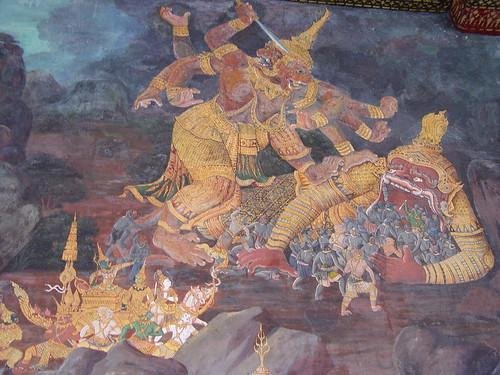
    One of the most famous places to see Ramakien scenes is the mural tradition associated with Wat Phra Kaew in Bangkok.

    The walls contain elaborate scenes depicting characters and events from the story.

    The artistic style is distinctly Thai.

    The clothing, architecture, landscapes and visual details reflect Thai culture.

    Yet the underlying narrative remains recognizable to someone familiar with the Ramayana.


    Khon: Thailand’s Masked Performance

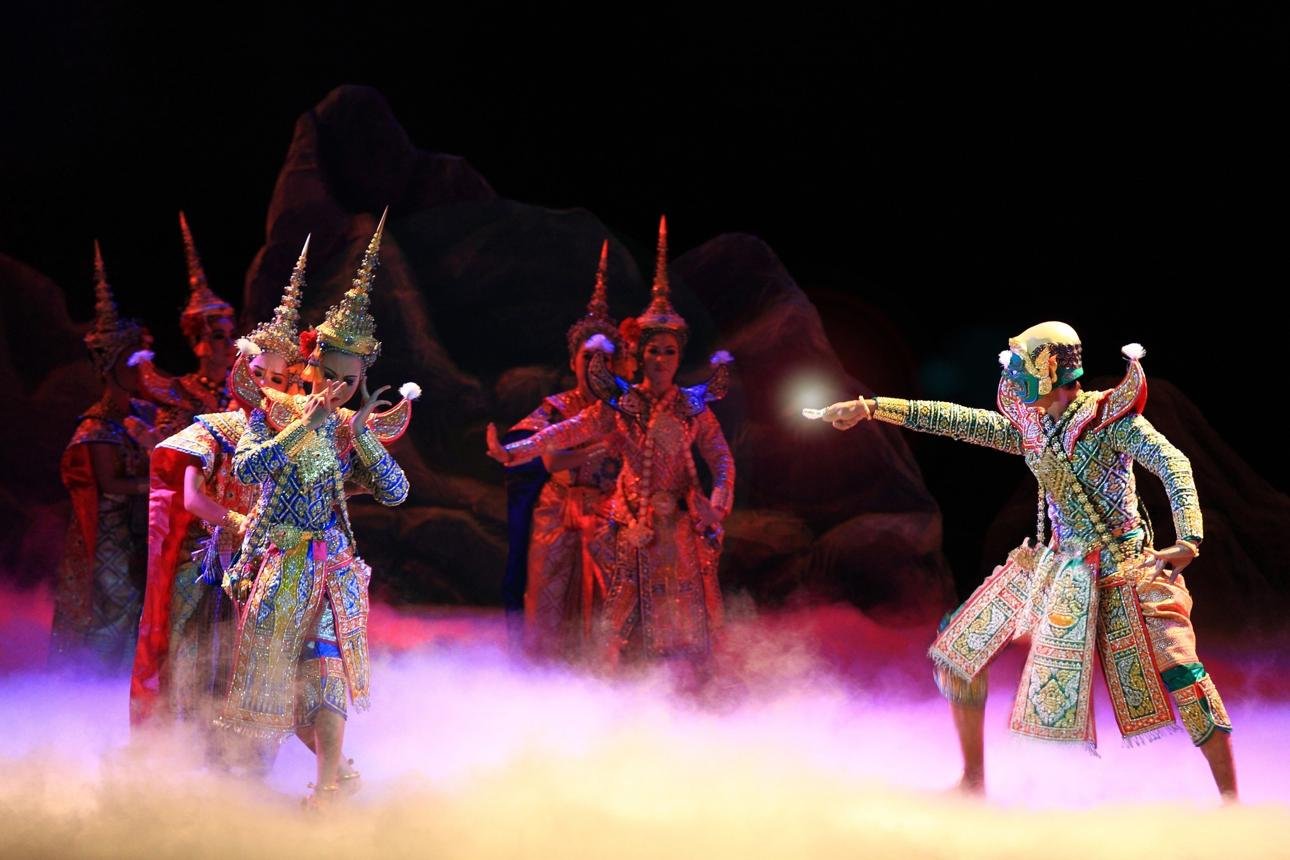
    Thailand also has Khon, a highly stylized masked performance tradition.

    Performers portray characters from the Ramakien using:

    🎭 Elaborate masks
    πŸ‘‘ Costumes
    🎡 Music
    πŸ₯ Percussion
    πŸ’ƒ Choreographed movement

    Hanuman is especially popular in Thai performances.


    https://images.openai.com/static-rsc-4/rnfB24R-54ErfuiYqQBqh10C24aGzp_lBmqYf8YYvNyJQLRyt4lsPkwZW7IxlgRzF6ICw7YIWWR1kXsfZcBLXgmM0ILuJV51ztlhyqR43Z9Lai80uxsXX5MRFuFygVyAF5maBQ6IH0piR76-UnH3p86tr3kAOncQEfgY7PJHyriai-wV_q4NE3r8cwt6K-nN?purpose=fullsize
    https://images.openai.com/static-rsc-4/yo9mFX2oabyaV_mMDZbf8WCIqNVeO6sfoPig8BZArKH7eDObIb2yua66HOgpDZgodRxOtoakOpG2O7i3QslCrJLNmFtDbpNL8-LQL7n9hgNNRwdgp1plUctdUmyqKF82ybDmFl8patfWJlrMx6m6muk4YmyNQtjw-cZTwgWWJ8Vur7f3b1Hxk_MkwPLDpWH9?purpose=fullsize
    https://images.openai.com/static-rsc-4/xGQU5N_rkYV8Qw3jkSWz5XrXXRJ2l4SbKA2Cb3QWOjKUyLGRayR6Y5t4VMC2wBljiM_sPBj0t0HytbMTjPs5Ni9nh4RdPuz6pinR-GBXlOlIE-vQOC2QED302AvtkWBeGRqJ4lSsF4sb_hze-iT1ausF6TKoPf7cswIDPFFwL31eforsW-YcrAJY7O0ZdHnX?purpose=fullsize

    The Ramayana in Indonesia

    Indonesia developed several important Ramayana traditions.

    The story became particularly influential on the islands of Java and Bali.

    Indonesian versions incorporated local cultural ideas, languages and artistic styles.

    The result is a distinctive Indonesian Ramayana tradition.


    Prambanan and the Ramayana

    The ancient Prambanan Temple complex in Java contains famous reliefs depicting episodes from the Ramayana.

    The stone carvings transform the epic into a visual narrative.

    Visitors can follow scenes through the sequence of reliefs.

    https://images.openai.com/static-rsc-4/pYvw1l10wdzFuFSkqihmC11agfZSJV8XNOpyZVpctMtLfIQQdwR_bSTbsnh3a_sXSiVuOMkCZAQfeFRzkTiSz-nupvinAmRThPPJheI-mNORXw4NpGjPprOny0ALSJqzlMya4TeaEA0-e6jqcUA9CG47ImCaPqHUFtpYZENdkhXT-hcjUi_GKE9m9CLCKdKk?purpose=fullsize
    https://images.openai.com/static-rsc-4/3pQ9Rk2YCxa-1NvlEVX68OczeVstMHhaJnM0AdnQHEfXPicHj8NiAs4r6ob6bIGZc47ULD_edr6YWAqMAOyZF_ZgPKy9LMBM9pq7Hl6qNKhIgHsGFCM9DSS1KHb7obMW3I5KhvKVSj6M5RxHmt8AQbkJ79OXkHhC9kU0Xc3-GIAWnOnGY1MprW47NLVMGez_?purpose=fullsize
    https://images.openai.com/static-rsc-4/TslmfhhtDOklW6EQO0sM13rzWFsxyeirgfEpXTnd-mq7R6DBDoCISFjpeS8VRhlitUigjaYzTkdo8sx8vckc8SvdvAczto9dznYynz7F5jsDrk_rv4IRuXE2bKZg_uN6LtiPuW3MiGOCyFieeMKvwD1JApITOQO8CF-XE2Tnitg6w7vVrnwDYjRrPruG7yc6?purpose=fullsize

    Ramayana Ballet in Indonesia

    Indonesia also has spectacular Ramayana dance performances.

    The Ramayana Ballet at Prambanan combines:

    🎭 Dance
    🎡 Music
    πŸ‘‘ Costumes
    πŸ”₯ Stage effects
    βš”οΈ Dramatic storytelling

    Performers bring the story of Rama and Sita to life against the spectacular background of the temple complex.


    Wayang and the Ramayana

    Indonesian Wayang traditions also incorporate stories from the Ramayana.

    In shadow-puppet performances, characters are represented through intricately designed puppets.

    The puppeteer controls the figures while narrating the story and coordinating music and dialogue.

    This creates an entirely different way of experiencing the epic.

    https://images.openai.com/static-rsc-4/kgQEHQEFJsgf0ZFTRec8VU7pYyGUOq0misLSUwOkyx8Ncj-0-Dl3f4GEOAWGLmGa5MO2PLvzrQzdoWd3LnkbmKfeUGoAn_8FVE0Hdr6sXddJf_VZTB5DMrkzamZaCJy7bbYd-iSHBM7MCPK0JPldpFt6qU5r_24B_NGmu3HDCQNX2_GtnOCTkhRyx3fnfEKE?purpose=fullsize
    https://images.openai.com/static-rsc-4/NSmxKnw95bPfhhJ9Bsfv4p1evPLuIxvTGn8fdcLRpw8lg-SpXTSExEuVbq1iQAWuOTNCMeheYOVNHENl0j6ar8Y5m5U9z9uqiVLkIf7fRioD3m37kIyEx7hU2JfAkTXK720wexdkAu-o0JbYJ1TuoyekGiuMOOJsg23GYPkUE0I6UtMwKmM8urZ2DjNu49zP?purpose=fullsize
    https://images.openai.com/static-rsc-4/Xi26jLu3CSXcGsEJfv825CrB-MjqQPCHFZC4bqIQQnQUz06BZY_61Q03GPo2BylfBwC-MEtR6JPEmB9wrGaR9G20wraniI5VFgYwxT5_Tn-h5fnSY8Y7k2SajD0ZZHSdJo8KS6mqiwzZ62F31KJyPTvpo4PC2WZFyoXSaXBh1G1o_6mIAdr_3dyE_2EV4SOx?purpose=fullsize

    The Ramayana in Cambodia

    Cambodia also has a strong Ramayana tradition known as the Reamker.

    The story became an important part of Cambodian literature, dance and visual art.

    Cambodian artists adapted the characters and scenes into their own artistic language.


    Ramayana at Angkor Wat

    One of the most remarkable examples can be found at Angkor Wat.

    The temple complex contains extensive bas-reliefs depicting scenes from Hindu epics and mythology.

    Ramayana scenes appear among the temple’s extraordinary stone carvings.

    https://images.openai.com/static-rsc-4/KipX8QNxSfbEFH996j_0Dz58XNxaPjQYFHWNnqdtUlVq1AZ4O9bgKtYidUdOCB8U1Sh0n6xqjdSgy3mOz9yHH4BvkHR0GRT8wnzAOIeczOBjHZaVlpKS7f48oSVALUKN560Rhhy-ieXNLyFzAcTak6hBt63h4-nWEB1L2RHtjMI3djIY9q8R5Moc-PbaLwEo?purpose=fullsize
    https://images.openai.com/static-rsc-4/DLgZ8md-ecuJNicmogrWMIww6GPqkpkygeX7_Ni0IO-Z4-CBJkxlwKzOSIyMmt5jLoQIICfTtGOx4zw6IJe9Ic4rM-G1ORQ60UHSV8JzEAaNeOmoOYkap_XSKs1d5QBwRMGiPVePgYNZxiKMfGwv2QOeZo_MGXJj9yUxvS9jrIHdSEyuGAWSNelclN85t3FT?purpose=fullsize
    https://images.openai.com/static-rsc-4/aujrFWam-XjhwOlz2qtXDO57artTjPtfgiO4Q6KOsvRObRiFbwtGolNF958ZoTwNSMvWvkNhKuwsLz6PweQ2iEdFpKpaGDSBQ_EPXOc9RV-eZwgpwOg6vb-b58gpkN8Ht9MLSY0SMMXpCy_50eF3jVW1MB-oqOaTQhg2tynxuVauA9QIe_33s9rt5p9BabwG?purpose=fullsize

    The Ramayana in Laos

    Laos has its own Ramayana tradition, commonly associated with the Phra Lak Phra Lam.

    The story was adapted into Lao literary and religious culture.

    As elsewhere in Southeast Asia, the characters and narrative were given local interpretations.

    This demonstrates how the Ramayana could enter a new cultural environment without losing its central identity.


    The Ramayana in Myanmar

    Myanmar also developed Ramayana traditions.

    The story is commonly associated with Yama Zatdaw.

    It became part of Burmese performing arts and storytelling.

    Rama and other characters were adapted into the artistic traditions of Myanmar.


    https://images.openai.com/static-rsc-4/v0KEACuEXDkPb5o7_rL671Vq8Rc0withhBTrwTFdhltdf0-2cOEvDTk9tKkZjNHk993ero0gooWs5IcaT4KiM5bH86ByRdyJPswXo6Cg8g44UtTTakU-_9h8-kitBgHRy9VXDTPY5tm14sAEzuZn_MffyY0zlfL3Gur_PiKgBxRiyXS4A9THGL2X-5izgN7i?purpose=fullsize
    https://images.openai.com/static-rsc-4/-B-_rBUri77aTq7_obqlsofCw8ZHDO7mYlEf0kQXkL-gbcL4wxsvCWjMXx2NPxy7SLI9qPns0qR6RsGXXsXHfMo78po-e3iRJ7Vzn2NLR1sOlMnh940Q2K1W8EHEbyJDvhVEM2Y4zJ-Bk1FE80a8PhQip0qnOprIWPMozLKqrsnsxGrbIHFvOyoSIqtAfXEW?purpose=fullsize
    https://images.openai.com/static-rsc-4/TQaZnw09NRydJaMyK-fibe99J-EBEnUnRq3c1IJ5A6ae5CBs46Gtz-jnfPTe5MYCAICCs8NpLHR0z4Bx2ZdmcKZTHCqt9Cvw73uQox-RXQigD0lJc1WlJIMTcbBtBPUiOHd90gRcQortEXonnzkr6IwDIfk4WvdDRpc3JNqYJIiXN0W5RHeeTrAEF9FRKyGO?purpose=fullsize

    The Same Story, Different Names

    One fascinating feature of these traditions is the change in names.

    For example:

    Indian TraditionThailandCambodia
    RamaPhra RamPreah Ream
    SitaSidaNeang Seda
    RavanaThotsakanKrong Reap
    LakshmanaPhra LakPreah Leak
    HanumanHanumanHanuman

    The names vary, but the connections between the traditions remain visible.


    Why Did These Cultures Adapt the Story?

    When the Ramayana entered another society, local artists and writers did not necessarily preserve every detail exactly.

    They adapted the story to their own:

    🎨 Artistic traditions
    πŸ‘‘ Royal culture
    πŸ›• Religious environment
    πŸ—£οΈ Languages
    🎭 Performance styles

    This process created unique versions rather than simple copies.


    Hanuman Becomes Especially Popular

    Hanuman is particularly popular in many Southeast Asian traditions.

    His combination of:

    πŸ’ͺ Strength
    🧠 Intelligence
    πŸ™ Loyalty
    πŸ˜„ Humor
    βš”οΈ Courage

    makes him an ideal character for dance, theatre and visual art.

    In some Southeast Asian performances, Hanuman receives a larger range of adventures and personality traits than audiences may be accustomed to from Indian versions.


    The Ramayana as Cultural Exchange

    The spread of the Ramayana demonstrates how cultures influence one another.

    A story can travel from one region to another and then develop new characteristics.

    The process does not necessarily mean one culture simply replaces another.

    Instead, the receiving culture can reshape the story according to its own traditions.


    More Than a Religious Story

    In Southeast Asia, Ramayana traditions became part of many forms of culture.

    They can be found in:

    πŸ›οΈ Architecture
    🎭 Theatre
    πŸ’ƒ Dance
    🎨 Painting
    πŸ“– Literature
    πŸ‘‘ Royal traditions
    πŸ—Ώ Sculpture

    This shows that the story became much more than a religious narrative.

    It became part of cultural identity and artistic heritage.


    India and Southeast Asia: A Shared Heritage

    The Ramayana provides a fascinating example of cultural connections between India and Southeast Asia.

    The story travelled across oceans and borders.

    Centuries later, people in different countries can still recognize the basic relationship between:

    Rama β†’ Sita β†’ Hanuman β†’ Ravana

    But each culture tells that story in its own voice.


    Why This Global Journey Matters

    Studying the Ramayana outside India helps us understand an important idea:

    Stories belong to the people who keep telling them.

    When a story travels, it changes.

    New languages reshape it.

    Artists reinterpret it.

    Performers give it new movements.

    Communities connect it with their own history.

    The Ramayana’s journey across Asia is therefore also a story about cultural exchange.


    Conclusion

    From India’s Sanskrit traditions to Thailand’s Ramakien, Indonesia’s Wayang and Prambanan traditions, Cambodia’s Reamker, Laos’s Phra Lak Phra Lam, and Myanmar’s Yama Zatdaw, the Ramayana has travelled remarkably far.

    Its characters have changed names.

    Its costumes have changed.

    Its music has changed.

    Its performance styles have changed.

    Yet the story continues to connect cultures across Asia.

    🌏 The Ramayana became more than an Indian epic β€” it became a shared Asian cultural tradition, with every country giving Rama’s story its own distinctive voice.

    In the next part, we will explore one of the most fascinating Ramayana traditions outside India in greater detail: the Thai Ramakien, its characters, murals, Khon performances and unique interpretation of Rama’s story