In the next article, we’ll explore why Hanuman became one of the most beloved figures in Indian culture, how his devotion to Rama became a symbol of faith and service, the different ways Hanuman is worshipped across India, and why his presence remains so powerful even today.


Hanuman – More Than a Character in the Ramayana
When people hear the name Hanuman, many immediately remember his extraordinary role in the Ramayana.
He crossed the ocean.
He searched for Sita.
He carried Rama’s message.
He fought powerful warriors.
He helped Rama’s army.
But Hanuman’s importance did not end with the epic.
Over centuries, he became one of the most widely worshipped figures in Indian religious and cultural traditions.
The Heart of Hanuman’s Character – Devotion
The most important quality associated with Hanuman is devotion to Rama.
Hanuman is traditionally remembered not simply because he was powerful, but because he used his strength in the service of Rama.
This gives his character a special meaning.
His story teaches that:
Strength becomes meaningful when it is used for a good purpose.
Hanuman as a Symbol of Service
Hanuman is often associated with seva, or selfless service.
He does not seek a kingdom for himself.
He does not demand wealth.
He does not ask for personal glory.
Instead, he dedicates his abilities to Rama and to the mission he believes is righteous.
This is one reason Hanuman became such a powerful symbol of humility and service.


Hanuman’s Strength
Hanuman is traditionally described as possessing extraordinary physical strength.
But his strength is only one part of his character.
He is also associated with:
💪 Courage
🧠 Intelligence
🙏 Devotion
⚡ Determination
🤝 Loyalty
🕉️ Spiritual discipline
The combination of physical power and wisdom makes Hanuman a unique figure in Indian mythology.
Hanuman and Intelligence
Hanuman is sometimes remembered mainly as a powerful warrior.
However, the Ramayana also presents him as intelligent and capable of making difficult decisions.
His journey to Lanka required more than physical strength.
He needed:
🧠 Planning
👀 Observation
🗣️ Communication
⚡ Quick decisions
🎯 Determination
This is why Hanuman is also respected as a figure of wisdom.
Hanuman as a Protector
In many devotional traditions, Hanuman is regarded as a protector.
People pray to him for:
🙏 Courage
💪 Strength
🧠 Confidence
🛡️ Protection
🎯 Focus
His image is therefore often found in homes, temples and places of worship.


Why Tuesday Is Associated With Hanuman
In many Indian traditions, Tuesday is considered an important day for Hanuman worship.
Devotees may visit Hanuman temples, offer prayers and recite devotional texts.
Another important day is Saturday, when Hanuman worship is also common in many communities.
These practices vary between regions and traditions.
Hanuman Chalisa
One of the most famous devotional compositions associated with Hanuman is the Hanuman Chalisa.
It consists of devotional verses praising Hanuman’s qualities and devotion.
It is traditionally attributed to Tulsidas.
For generations, people have recited it as part of their personal or community worship.
The Hanuman Chalisa helped make devotion to Hanuman an important part of everyday religious practice for millions of people.


Hanuman Across Different Parts of India
Hanuman worship is found across India, but local traditions can differ.
In some places, Hanuman is worshipped as:
🏹 A warrior
🛡️ A protector
🙏 A devotee of Rama
💪 A symbol of strength
🧘 A spiritual figure
Different temples may have different forms and traditions associated with Hanuman.
Hanuman in Village Traditions
Hanuman worship is not limited to large temples.
Small Hanuman shrines can be found in many villages and towns.
Sometimes a simple image of Hanuman beneath a tree becomes the center of a local place of worship.
This shows how deeply Hanuman became connected with everyday community life.


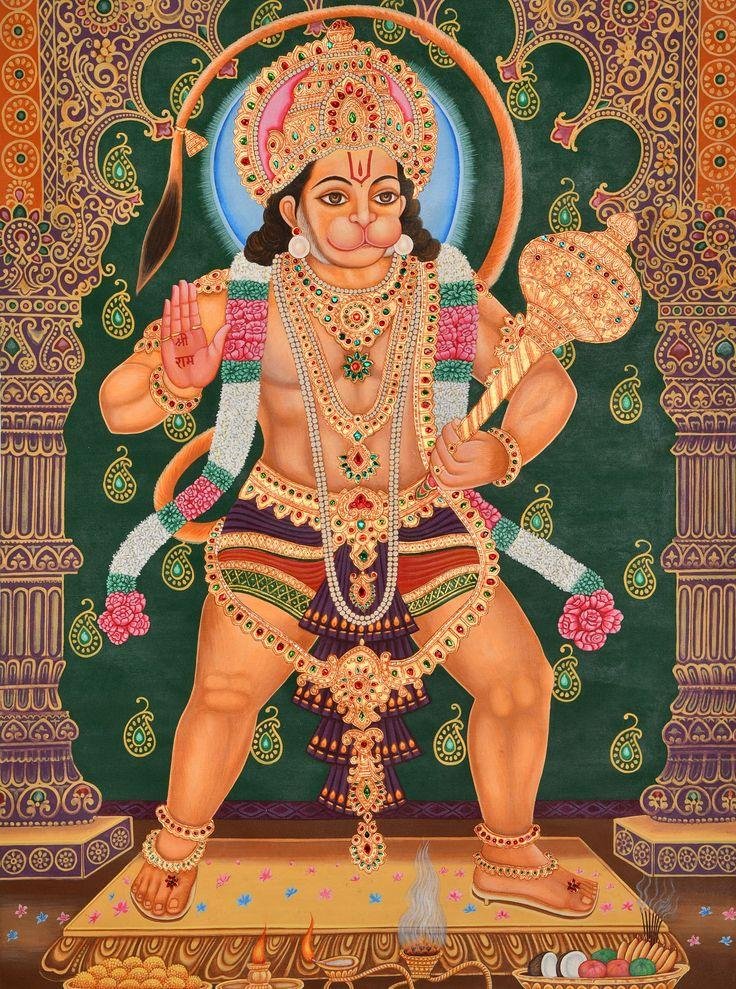
Hanuman in Art
Artists have represented Hanuman in many forms.
He may be shown:
🐒 Standing with his mace
🙏 Kneeling before Rama
🏔️ Carrying the Sanjeevani mountain
🔥 In Lanka
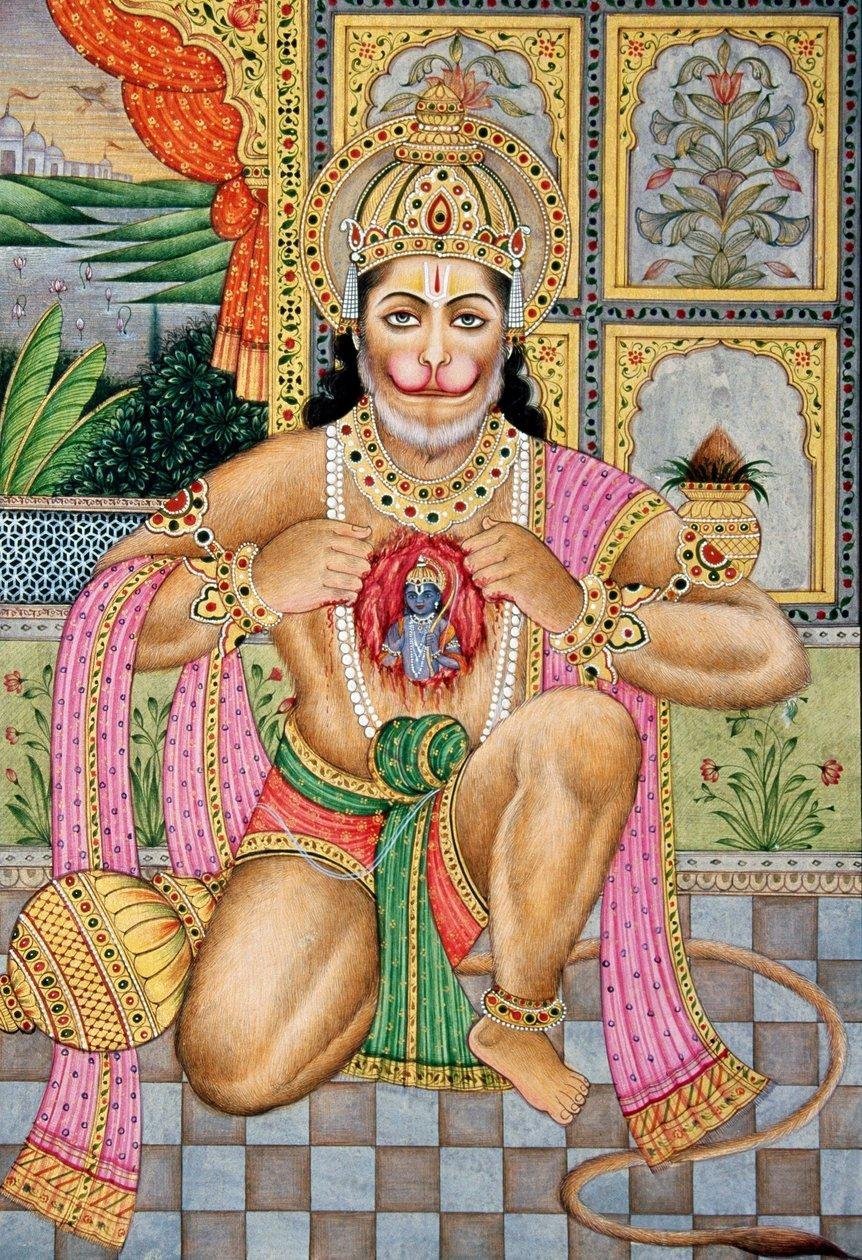
❤️ Opening his chest to reveal Rama and Sita
Each image highlights a different aspect of his character.
Hanuman Opening His Heart
One of the most famous devotional images shows Hanuman opening his chest and revealing Rama and Sita within his heart.
This image is symbolic.
It represents the idea that Rama is not merely someone Hanuman serves externally.
Rama has become the center of Hanuman’s entire being.


Hanuman in Festivals and Performances
Hanuman appears prominently in many Ramayana-related cultural performances.
During Ramlila, actors portray Hanuman’s role in Rama’s journey.
His energetic character often becomes one of the most memorable parts of the performance.
Children and adults alike are drawn to the combination of his:
💪 Strength
😄 Energy
🙏 Devotion
🧠 Intelligence
❤️ Loyalty
Hanuman in Modern India
Hanuman continues to appear in modern culture through:
📺 Television
🎬 Films
📚 Comics
🎨 Paintings
🛕 Temples
🎵 Devotional music
📱 Digital media
Even younger generations who may first encounter the Ramayana through television or the internet often become familiar with Hanuman.


Why Hanuman Remains So Popular
Hanuman combines qualities that people admire across generations.
💪 Strength
He represents physical and inner strength.
🧠 Intelligence
He knows when to think, when to act and when to remain humble.
🙏 Devotion
His dedication to Rama is central to his identity.
🤝 Loyalty
He remains committed even during the most difficult situations.
❤️ Humility
Despite his extraordinary abilities, he does not seek personal glory.
The Deeper Meaning of Hanuman
Hanuman’s story can be understood as more than a tale about supernatural powers.
It can also be read as a story about using one’s abilities in service of something greater than oneself.
His strength is not presented as an excuse for pride.
His intelligence is not used for selfish gain.
His courage is directed toward protecting others.
His devotion gives purpose to his abilities.
That combination is what makes Hanuman such an enduring figure.
Conclusion
Hanuman began as one of the great characters of the Ramayana.
But over centuries, he became much more than that.
He became a symbol of:
Strength without arrogance.
Intelligence without pride.
Courage without selfishness.
Power guided by devotion.
His image continues to appear in temples, homes, festivals, literature, art and everyday religious life across India.
🕉️ For millions of devotees, Hanuman represents the ideal of using one’s strength in the service of truth, devotion and dharma.
In the next part, we will explore the symbolism of the Ramayana — what Rama, Sita, Lakshmana, Hanuman, Ravana and other major characters can represent, and why their stories continue to carry deeper meanings.