Continuing our 18 Mahapuranas series, Part 10 is the Brahmavaivarta Purana.
The Brahmavaivarta Purana is especially known for its emphasis on Lord Krishna, Radha, devotion (Bhakti), creation and the divine nature of the Goddess. It is an important text within the Vaishnava and Krishna-centered traditions.


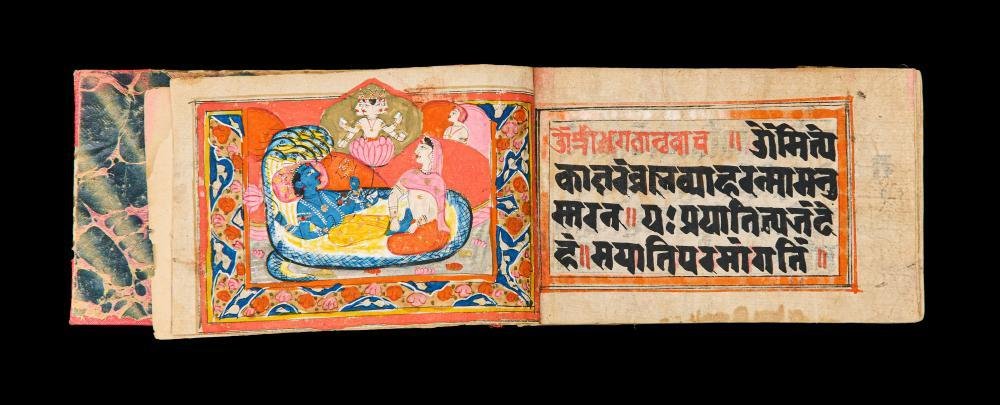
Image ALT: Ancient Sanskrit manuscript and Radha Krishna representing the Brahmavaivarta Purana
What Is the Brahmavaivarta Purana?
The Brahmavaivarta Purana is traditionally counted among the 18 Mahapuranas.
The name is generally understood in connection with Brahman and transformation or manifestation.
The Purana is particularly famous for its devotional presentation of Krishna and Radha.
Its subjects include:
- Lord Krishna
- Radha
- Creation
- Prakriti
- Bhakti
- Ganesha
- Goddess traditions
- Cosmology
- Religious practices
- Dharma


Image ALT: Radha and Krishna representing devotion and divine love in the Brahmavaivarta Purana
Four Major Parts
The Brahmavaivarta Purana is traditionally divided into four major sections:
- Brahma Khanda
- Prakriti Khanda
- Ganesha Khanda
- Krishna Janma Khanda
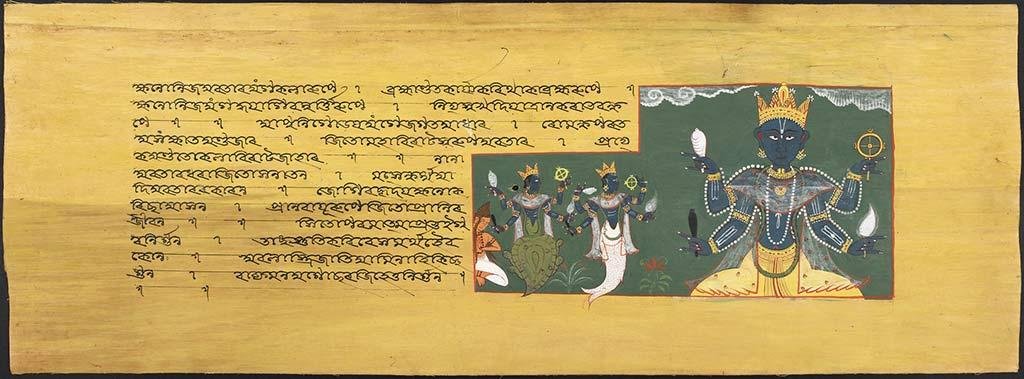
Image ALT: Sanskrit manuscript representing the four traditional sections of the Brahmavaivarta Purana
Each section focuses on different theological and mythological themes.
1. Brahma Khanda
The Brahma Khanda discusses creation and divine manifestations.


Image ALT: Lord Brahma associated with creation and the Brahma Khanda
Creation is presented within a larger theological framework involving the divine source of the universe.
2. Prakriti Khanda
The Prakriti Khanda focuses particularly on Prakriti, the divine feminine principle.


Image ALT: Divine feminine Prakriti represented through Goddess imagery in traditional Indian art
The section contains stories and descriptions associated with various forms of the Goddess.
The Divine Feminine
The Brahmavaivarta Purana gives considerable importance to the feminine divine.


Image ALT: Divine feminine Shakti representing Prakriti in Hindu tradition
Prakriti is connected with the power through which creation and manifestation take place.
3. Ganesha Khanda
The Ganesha Khanda is devoted largely to Lord Ganesha.


Image ALT: Lord Ganesha representing the Ganesha Khanda of the Brahmavaivarta Purana
Ganesha is traditionally worshipped as:
- Remover of obstacles
- Lord of beginnings
- Patron of wisdom
- Deity associated with intellect
Ganesha and His Importance
Ganesha is one of the most widely worshipped Hindu deities.


Image ALT: Lord Ganesha blessing devotees during traditional Hindu worship
The Ganesha Khanda contains stories explaining his divine nature, family and worship.
4. Krishna Janma Khanda
The Krishna Janma Khanda is the most distinctive section of the Brahmavaivarta Purana.


Image ALT: Birth of Lord Krishna representing the Krishna Janma Khanda
It focuses on Lord Krishna, his divine nature and his relationship with Radha.
Krishna as the Supreme Divine
A central feature of the Brahmavaivarta Purana is its presentation of Krishna as the supreme source of divinity.


Image ALT: Lord Krishna depicted as the supreme divine source in traditional Indian art
Other divine manifestations are understood within this Krishna-centered theological framework.
Radha and Krishna
The relationship between Radha and Krishna is one of the most important themes of the Purana.

Image ALT: Radha and Krishna in Vrindavan representing divine love and devotion
Radha is presented as an exceptionally important divine figure rather than simply as a character in Krishna’s earthly story.
Who Is Radha?
Radha is revered in many Krishna-centered devotional traditions as the embodiment of divine love and devotion.


Image ALT: Goddess Radha representing divine love and Bhakti in traditional Indian art
In the Brahmavaivarta Purana, Radha has an especially prominent theological position.
Radha as Krishna’s Divine Power
The Purana presents Radha and Krishna as deeply connected divine realities.


Image ALT: Radha and Krishna representing their divine spiritual relationship
Their relationship becomes a powerful expression of Bhakti and divine love.
Krishna and Vrindavan
Vrindavan occupies an important place in Krishna traditions.


Image ALT: Krishna playing the flute in Vrindavan with Radha in traditional Indian art
Vrindavan is traditionally associated with Krishna’s childhood and youthful pastimes.
Krishna’s Flute
The flute of Krishna is a powerful symbol in devotional literature.


Image ALT: Lord Krishna playing his flute representing divine attraction and devotion
The sound of Krishna’s flute is often interpreted as a call drawing devotees toward the Divine.
Bhakti – The Path of Devotion
One of the most important ideas associated with the Brahmavaivarta Purana is Bhakti.
Bhakti means loving devotion toward the Divine.


Image ALT: Krishna devotees expressing Bhakti through prayer and devotion
Bhakti emphasizes:
- Love
- Surrender
- Faith
- Prayer
- Remembrance
- Service
Divine Love
The relationship between Radha and Krishna is often understood symbolically as the relationship between the individual soul and the Divine.


Image ALT: Radha Krishna representing spiritual love and devotion
The devotee seeks closeness with the Divine through love rather than through knowledge alone.
Krishna’s Birth
The Krishna Janma tradition describes the birth of Krishna and the circumstances surrounding it.


Image ALT: Krishna’s birth to Devaki and Vasudeva in traditional Indian art
Krishna’s birth is celebrated annually as Krishna Janmashtami.
Krishna Janmashtami
Janmashtami celebrates the birth of Lord Krishna.


Image ALT: Krishna Janmashtami celebration with devotees and Krishna idol
Devotees commonly observe:
- Fasting
- Bhajans
- Puja
- Scripture recitation
- Midnight celebrations
- Krishna’s birth ceremony
Krishna and the Gopis
Krishna’s relationship with the Gopis is an important part of Krishna Bhakti traditions.


Image ALT: Krishna with the Gopis in Vrindavan representing devotional Bhakti traditions
These stories are traditionally interpreted spiritually as expressions of intense devotion toward Krishna.
The Rasa Tradition
The Rasa tradition associated with Krishna and the Gopis has become one of the most influential themes in devotional literature.


Image ALT: Krishna performing Rasa Lila with the Gopis in traditional Indian art
The Rasa imagery represents an intense relationship between the devotee and the Divine.
Krishna and Radha’s Spiritual Relationship
The Radha-Krishna relationship is often interpreted as a model of complete spiritual devotion.


Image ALT: Radha and Krishna representing complete spiritual devotion
Radha’s love for Krishna represents an ideal of selfless Bhakti.
Prakriti and Purusha
The Brahmavaivarta Purana also contains ideas concerning the relationship between divine consciousness and divine nature.


Image ALT: Divine masculine and feminine principles representing Prakriti and Purusha
These ideas connect the creation of the universe with divine power and consciousness.
Creation of the Universe
The Purana contains elaborate accounts of creation and divine manifestation.


Image ALT: Hindu cosmic creation representing the origin and manifestation of the universe
Creation is presented as part of a larger divine reality.
The Goddess and Creation
The feminine divine is closely connected with the process of manifestation.


Image ALT: Goddess Prakriti representing divine creative power
Prakriti is associated with the power through which the universe becomes manifest.
Ganesha’s Birth
The Ganesha Khanda contains traditions concerning the birth and divine nature of Ganesha.


Image ALT: Birth of Lord Ganesha from Goddess Parvati in traditional Indian art
The familiar story connects Ganesha with Parvati and Shiva.
Ganesha and Shiva
Ganesha is traditionally regarded as the son of Shiva and Parvati.


Image ALT: Shiva, Parvati and Ganesha representing the divine family in Hindu tradition
His stories emphasize wisdom, devotion and the importance of respecting parents and Dharma.
Ganesha as Remover of Obstacles
Ganesha is widely worshipped before important activities.


Image ALT: Lord Ganesha blessing devotees as the remover of obstacles
This is why many Hindu traditions begin ceremonies by invoking Ganesha.
Dharma
Although the Brahmavaivarta Purana is strongly Krishna-centered, Dharma remains an important theme.


Image ALT: Krishna imparting spiritual guidance representing Dharma and devotion
Righteous conduct, devotion and religious duties are connected throughout the text.
Why Is the Brahmavaivarta Purana Important?
1. Krishna Bhakti
It gives exceptional prominence to Lord Krishna.
2. Radha
It presents Radha with an important theological role.
3. Divine Feminine
Prakriti and Goddess traditions receive significant attention.
4. Ganesha
The Ganesha Khanda preserves extensive Ganesha traditions.
5. Bhakti
The Purana emphasizes loving devotion toward the Divine.
6. Krishna Janma
It preserves traditions surrounding Krishna’s birth and divine activities.
What Can We Learn From the Brahmavaivarta Purana?
Devotion
Bhakti teaches that sincere love toward the Divine is a powerful spiritual path.
Selfless Love
Radha’s devotion represents complete dedication.
Wisdom
Ganesha symbolizes knowledge and discernment.
Divine Feminine
Prakriti highlights the importance of divine creative power.
Faith
The stories encourage trust and surrender to the Divine.
Brahmavaivarta Purana – Quick Facts
Series: 18 Mahapuranas – Part 10
Name: Brahmavaivarta Purana
Language: Sanskrit
Traditional Sections: Brahma Khanda, Prakriti Khanda, Ganesha Khanda, Krishna Janma Khanda
Major Focus: Krishna and Radha
Important Deity: Lord Krishna
Important Divine Figure: Radha
Other Major Traditions: Prakriti, Devi and Ganesha
Major Themes: Bhakti, creation, divine love, Dharma and devotion
Frequently Asked Questions
What is the Brahmavaivarta Purana?
It is one of the traditional 18 Mahapuranas, especially known for its Krishna-centered theology and its stories of Radha, Krishna, Prakriti and Ganesha.
How many sections does it have?
It is traditionally divided into four major Khandas: Brahma, Prakriti, Ganesha and Krishna Janma.
Who is the main deity?
Lord Krishna receives particularly prominent theological status in the text.
Why is Radha important?
Radha is presented as a highly significant divine figure and as the embodiment of profound devotion toward Krishna.
What is the Krishna Janma Khanda?
It is the section primarily associated with Krishna’s birth and divine activities.
Does the Purana discuss Ganesha?
Yes. The Ganesha Khanda is dedicated largely to Ganesha traditions.
What is the main spiritual message?
One of its strongest themes is Bhakti — loving devotion and surrender to the Divine.
Conclusion
The Brahmavaivarta Purana – Part 10 occupies a special place among the Mahapuranas because of its strong emphasis on Krishna, Radha and Bhakti.
Its four major sections bring together traditions concerning Brahma, Prakriti, Ganesha and Krishna.
The relationship between Radha and Krishna gives the Purana a distinctive devotional character, while its discussions of Prakriti and Ganesha demonstrate the broader diversity of Hindu religious traditions.
Above all, the text emphasizes the spiritual power of love, devotion and surrender.
This is Part 10 of our 18 Mahapuranas series.