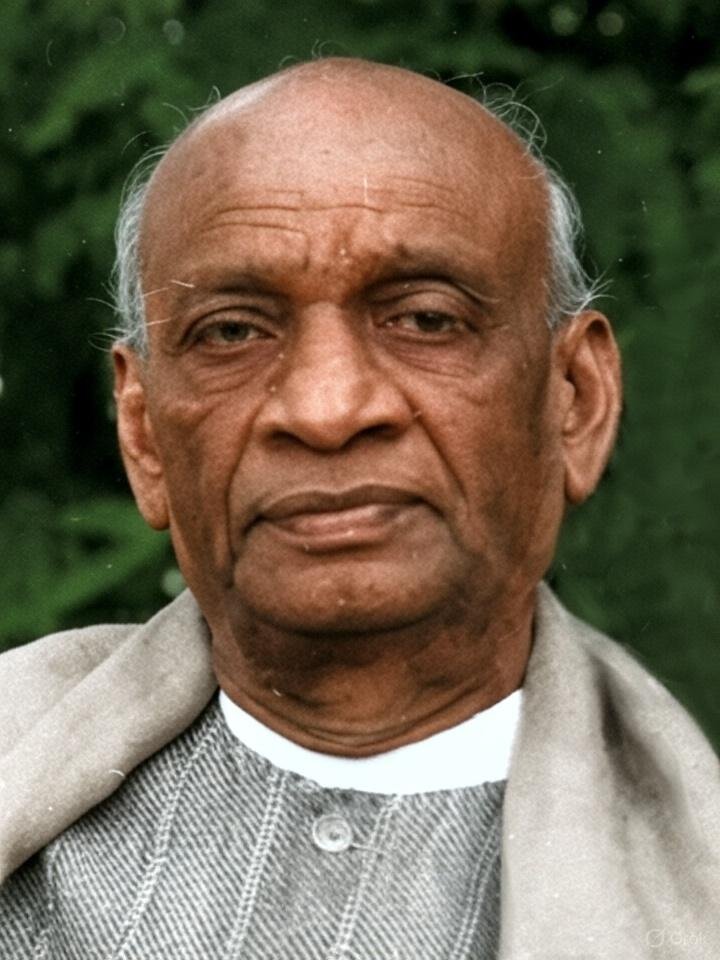


The Leader Who United India
When India became independent in 1947, the country was not the united political map we know today.
There were hundreds of princely states across the subcontinent. Bringing them into the Indian Union was one of the greatest challenges facing the new nation.
At the centre of this enormous task stood Sardar Vallabhbhai Patel.
A lawyer, freedom fighter, administrator and statesman, Patel became one of the most important leaders of India’s independence movement. As India’s first Deputy Prime Minister and Home Minister, he played a crucial role in integrating the princely states into the Indian Union.
That extraordinary contribution earned him a name that remains famous today:
🦁 The Iron Man of India
👤 Sardar Vallabhbhai Patel — Quick Facts
| Detail | Information |
|---|---|
| Full Name | Vallabhbhai Jhaverbhai Patel |
| Born | 31 October 1875 |
| Birthplace | Nadiad, Gujarat |
| Profession | Lawyer, Freedom Fighter, Statesman |
| Known As | Iron Man of India |
| Major Role | First Deputy Prime Minister & Home Minister of India |
| Major Contribution | Integration of princely states |
| Died | 15 December 1950 |
| Bharat Ratna | Awarded posthumously in 1991 |
| National Unity Day | 31 October |
👶 Early Life


Vallabhbhai Patel was born on 31 October 1875 in Nadiad, Gujarat.
He grew up in a farming family and was raised with strong values of discipline, courage and determination.
His childhood was not one of luxury.
The young Vallabhbhai developed a strong personality and an independent mind.
Those qualities later became central to his political career.
📚 Education & Law Career
Patel initially worked hard to establish himself as a lawyer.
He eventually travelled to England to study law and qualified as a barrister.
After returning to India, he established a successful legal career, particularly in Ahmedabad.
He could have continued living a comfortable professional life.
Instead, India’s freedom movement changed the direction of his life.
🇮🇳 Meeting Mahatma Gandhi


Patel became increasingly influenced by Mahatma Gandhi’s philosophy of mass political mobilisation and non-violent resistance.
He joined the freedom movement and quickly emerged as a highly effective organiser.
Unlike leaders who were primarily known for speeches, Patel had an extraordinary ability to:
- Organise people
- Manage campaigns
- Build political networks
- Negotiate
- Make difficult decisions
- Turn ideas into action
This practical leadership became one of his greatest strengths.
🌾 Kheda Satyagraha


One of Patel’s early major political achievements came during the Kheda Satyagraha of 1918.
Farmers in Kheda faced severe agricultural difficulties and argued that they should receive relief from land revenue demands.
Patel worked with Gandhi and local leaders to organise the farmers.
The campaign demonstrated his ability to organise ordinary people around a common cause.
It also established his reputation as a powerful grassroots leader.
🌱 Bardoli Satyagraha


One of the most important chapters of Patel’s freedom struggle was the Bardoli Satyagraha of 1928.
Farmers in Bardoli protested against increased land revenue.
Patel organised the movement with extraordinary discipline.
The campaign eventually achieved an important political victory.
It was during this struggle that the title “Sardar” became closely associated with him.
The word means leader or chief.
From then onward, Vallabhbhai Patel became popularly known as:
Sardar Patel
🕊️ A Leader of the Freedom Movement
Patel became one of the senior leaders of the Indian National Congress.
He participated in major phases of India’s independence movement, including the Non-Cooperation Movement, Civil Disobedience Movement and Quit India Movement.
He faced imprisonment under British rule.
His willingness to accept personal sacrifice strengthened his standing among India’s freedom fighters.
🇮🇳 Quit India Movement


In 1942, the Indian National Congress launched the Quit India Movement, demanding an end to British rule.
Patel was one of the senior leaders associated with the movement.
The British government arrested major Congress leaders.
Despite imprisonment and repression, the movement became a major turning point in India’s struggle for independence.
🇮🇳 Independence — A New Challenge


On 15 August 1947, India became independent.
But independence did not mean that all of India’s territory was automatically part of one political union.
There were hundreds of princely states.
Each ruler had to decide whether to join India, join Pakistan or attempt another arrangement within the complicated political circumstances of partition.
This presented an enormous challenge.
🗺️ The Unification of India


As Home Minister, Patel played a central role in bringing most princely states into the Indian Union.
He worked closely with V.P. Menon, a senior civil servant who became an important figure in the integration process.
Their strategy combined:
🤝 Negotiation
📜 Agreements
🧠 Political diplomacy
⚖️ Constitutional arrangements
💪 Firmness when necessary
The result was one of the most remarkable political integration processes of the twentieth century.
🏰 Junagadh


Junagadh became one of the difficult cases during integration.
Its ruler chose to accede to Pakistan even though the territory was surrounded largely by Indian territory and had a predominantly Hindu population.
The situation created serious political tensions.
Eventually, Junagadh was integrated into India following political developments and a plebiscite.
Patel played an important role in the government’s response.
🏔️ Hyderabad


The integration of Hyderabad was another major challenge.
The princely state was ruled by the Nizam and had not agreed to join India.
After negotiations failed to resolve the issue, the Government of India launched a military operation in September 1948 known as Operation Polo.
Hyderabad subsequently became part of the Indian Union.
Patel’s handling of the issue demonstrated the firmness for which he became famous.
🏜️ Rajasthan & Other Princely States


Many other princely states joined India through negotiations and agreements.
The integration process involved numerous rulers and territories.
It was not one single event.
It was a complex political process carried out over time.
Patel’s role was especially significant because he combined political authority with negotiation.
🦁 Why Was Patel Called the Iron Man?
Patel was known for his determination.
He could negotiate patiently when negotiation was useful.
But he could also take firm action when he believed national unity was at stake.
This combination of:
Practicality + Courage + Discipline + Firmness
gave him the reputation of being India’s Iron Man.
🏛️ India’s First Home Minister

Patel became independent India’s first Deputy Prime Minister and Home Minister.
His responsibilities included some of the most difficult tasks facing the new country:
- Internal security
- Integration of princely states
- Administration
- Refugee crisis
- National unity
- Building institutions
India was dealing with the enormous consequences of Partition.
The country needed strong administrative leadership.
Patel became one of the central figures in that effort.
🚔 Building India’s Administrative System
One of Patel’s lasting contributions was his support for a strong and professional civil service.
He believed that India needed an impartial administrative structure capable of serving the entire country.
He strongly supported the All India Services.
The modern Indian Administrative Service (IAS) and Indian Police Service (IPS) are part of this broader institutional legacy.
Patel famously described civil servants as the “steel frame” of India.
🇮🇳 Patel’s Vision of a United India
For Patel, political independence was only the beginning.
A successful nation also needed:
Unity
Security
Strong institutions
Efficient administration
National integration
He understood that a divided political structure could make the new country vulnerable.
Therefore, national integration became one of his central missions.
🤝 Patel & Gandhi


Patel and Gandhi shared a deep political relationship, although they did not agree on every issue.
Gandhi trusted Patel’s organisational abilities.
Patel respected Gandhi’s moral leadership.
Their personalities were very different.
Gandhi was widely associated with moral persuasion and mass mobilisation.
Patel was famous for practical administration and political organisation.
Together, they became an important part of India’s independence movement.
🤝 Patel & Nehru


Patel and Jawaharlal Nehru were both major leaders of independent India.
They sometimes disagreed over political and policy questions.
However, both played crucial roles in building the new Indian state.
Nehru became India’s first Prime Minister.
Patel became Deputy Prime Minister and Home Minister.
Their combined leadership helped India navigate the extremely difficult early years after independence.
🏛️ The Constitution & Nation Building
Patel also played a major role in India’s constitutional and political development.
He chaired important committees of the Constituent Assembly and was closely involved with questions surrounding:
- Fundamental rights
- Provincial constitutions
- Minorities
- Administrative structures
- Integration
His contribution went beyond political speeches.
He helped build the machinery of the new Indian Republic.
💔 The Death of Mahatma Gandhi
The assassination of Mahatma Gandhi on 30 January 1948 deeply affected Patel.
Gandhi had been an important influence in Patel’s political life.
The tragedy came at a particularly difficult time for India, when the country was still dealing with Partition, communal violence and refugee movements.
Patel continued his work in strengthening the new government.
🧠 Patel’s Leadership Style
Patel was not known for dramatic rhetoric.
His style was more practical.
He believed in:
Clear decisions.
Strong administration.
Negotiation when possible.
Firm action when necessary.
National unity above personal ambition.
This made him one of the most effective organisers in India’s political history.
🏆 Bharat Ratna


Sardar Patel was awarded the Bharat Ratna posthumously in 1991.
His contribution to India’s freedom struggle and national integration remains a major part of the country’s historical memory.
🗽 The Statue of Unity


One of the most famous modern monuments dedicated to Patel is the Statue of Unity in Gujarat.
Standing near the Narmada River, the monument was inaugurated on 31 October 2018, Patel’s birth anniversary.
At approximately 182 metres, it is one of the world’s tallest statues.
The monument symbolises Patel’s role in India’s political integration.
It has also become a major tourist destination in Gujarat.
🇮🇳 National Unity Day


India observes 31 October as National Unity Day, or Rashtriya Ekta Diwas.
The day commemorates Patel’s birth anniversary and highlights the importance of national unity.
Schools, government institutions and organisations conduct events to promote the message of unity.
🌍 Why Sardar Patel Matters Today
More than seven decades after his death, Patel’s work remains relevant.
India is a country of enormous diversity:
🗣️ Hundreds of languages and dialects
🛕 Many religious traditions
🏔️ Different geographical regions
🍛 Diverse cultures and cuisines
🎭 Numerous traditions
Keeping such a large and diverse country united requires strong institutions and a shared national identity.
Patel’s contribution to political integration therefore remains an essential chapter of Indian history.
🤯 Interesting Facts About Sardar Patel


🇮🇳 1.
He was born on 31 October 1875.
⚖️ 2.
He trained and worked as a lawyer.
🌾 3.
He played a major role in the Kheda Satyagraha.
🌱 4.
The Bardoli Satyagraha helped establish his reputation as a national leader.
🦁 5.
He became popularly known as the Iron Man of India.
🏛️ 6.
He was independent India’s first Deputy Prime Minister and Home Minister.
🗺️ 7.
He played a central role in integrating hundreds of princely states into India.
🏰 8.
Junagadh and Hyderabad were among the major integration challenges faced by the new government.
🏆 9.
He received the Bharat Ratna posthumously in 1991.
🗽 10.
The Statue of Unity in Gujarat commemorates his contribution to India’s unity.
🇮🇳 11.
His birthday, 31 October, is observed as National Unity Day.
👨💼 12.
He strongly supported professional All India Services and a strong administrative structure.
🧭 What We Can Learn From Sardar Patel
1. Unity Requires Effort
A nation does not become united automatically.
2. Leadership Requires Courage
Difficult decisions sometimes have to be made.
3. Negotiation Is Powerful
Many political problems can be solved through discussion and diplomacy.
4. Institutions Matter
Strong nations require strong institutions.
5. Discipline Creates Results
Organisation and preparation can turn a movement into a successful campaign.
6. National Interest Comes First
Patel repeatedly emphasised the importance of India’s unity and stability.
🇮🇳 The Man Who Helped Build Modern India
Sardar Vallabhbhai Patel did not live long enough to see many of the developments that modern India would experience.
He died on 15 December 1950, only a few years after independence.
But by then, he had already left an extraordinary mark on the new nation.
The India we see today—with its vast territory and political union—was shaped by many leaders, institutions and historical forces.
Among them, Patel’s contribution to national integration stands out.
🏁 Final Thoughts
Sardar Vallabhbhai Patel’s story is not simply the story of a freedom fighter.
It is the story of a man who helped transform independence into a functioning nation.
From:
🌾 Kheda
to
🌱 Bardoli
to
🇮🇳 India’s freedom struggle
to
🏛️ Independent India’s government
to
🗺️ The integration of princely states
Patel devoted his political life to building a united India.
His greatest legacy can be expressed in one simple idea:
🇮🇳 A strong India needs a united India.
And that is why, decades after his death, Sardar Vallabhbhai Patel continues to be remembered as:
🦁 The Iron Man of India
🇮🇳 The Architect of India’s Political Integration
🤝 A Leader Who Helped Unite a Nation
🇮🇳 MANA BHARATHAM
Stories, Facts & Wonders From India
✍️ Written by Pasupuleti Saida Rao
🌐 allpincodes.online