Tag: Reamker

  • Ramayana Part 49: The Ramayana Across Asia | How Ramaโ€™s Story Reached Beyond Southeast Asia

    Ramayana Part 49: The Ramayana Across Asia | How Ramaโ€™s Story Reached Beyond Southeast Asia

    In the next article, weโ€™ll explore how Ramayana traditions appeared in other parts of Asia, how the story travelled through cultural exchange, and how different societies adapted Rama, Sita, Hanuman and Ravana into their own literature, art and performance traditions.

    https://images.openai.com/static-rsc-4/GT1a4vzDCw9H-1jSRMJckHchAT_mfKS_A-ZuEmXlg_OPpAS-FDzuXfuW4ge0aWS_je03JLWWolZW_-2NXjNwLvop_73L9UOcJJPG2z7KxT1n7XO8aTmIfWrXGPu2IdgRIOB7Rgmm_8Ts2amVFFiRgQdTAxNVi5aG2IRprgGu_CDHoLlkvKsxTz7pl-5dDxCt?purpose=fullsize
    https://images.openai.com/static-rsc-4/A97eU0HN1Diw6w6-4vpY-2WFMhFa954SFoZ8vSo6R7RTXTVB8fjXux4LGw1HSVMwTHXn34wZgad2W_63XJEP1H1WTdfz1ruI6Q5xAomuH07QQAwbUin4j5Vf2A7zvBwvKVdGcr5nZxSm0R8HD_LRxlh5obSzlXqYbuY9qy1cvAeYUDychXITwBMREKEKvxOV?purpose=fullsize
    https://images.openai.com/static-rsc-4/kA0LllCN_vwR8Iym8MKiGmPuMbjG1K86AdcRTX4Ap27HTG7J3xFb9lkmMe7u_TyCZpI3UxiIEcY7PtDnOmPjGyFy9CtPzon6V_O52DDeUHZKdzmBk2QR0iayG34rRDa3iBEWZBJ9JQGEHa-1tOV8L3ak9cgvPAdW_zPayQd6bUK4HekSP34dPaM0gmIVPAQi?purpose=fullsize

    A Story That Kept Travelling

    Our journey has already taken us from India to:

    ๐Ÿ‡น๐Ÿ‡ญ Thailand
    ๐Ÿ‡ฎ๐Ÿ‡ฉ Indonesia
    ๐Ÿ‡ฐ๐Ÿ‡ญ Cambodia
    ๐Ÿ‡ฑ๐Ÿ‡ฆ Laos
    ๐Ÿ‡ฒ๐Ÿ‡ฒ Myanmar

    But the cultural journey of the Ramayana does not end there.

    Across Asia, the story has been adapted into different languages, literary traditions, religious settings and performing arts.

    The characters may receive different names.

    The details may change.

    But the basic story remains recognizable.


    How Can One Story Have So Many Versions?

    The answer lies in the nature of oral and literary traditions.

    When storytellers receive an old story, they often retell it in a way that makes sense to their own audience.

    A travelling epic can therefore acquire:

    ๐Ÿ—ฃ๏ธ A new language
    ๐ŸŽญ A new performance style
    ๐ŸŽจ A new artistic appearance
    ๐Ÿ™ New cultural meanings
    ๐Ÿ‘‘ New political associations

    The Ramayana is an excellent example of this process.


    Rama as a Cultural Hero

    Across different traditions, Rama is generally associated with qualities such as:

    โš–๏ธ Duty
    ๐Ÿ’ช Courage
    ๐Ÿ™ Loyalty
    ๐Ÿ‘‘ Leadership
    โค๏ธ Responsibility

    But different cultures may emphasize different qualities.

    One tradition may focus on Rama as a king.

    Another may emphasize him as a heroic warrior.

    Another may present him through dance and theatre.

    This creates different cultural interpretations of the same broad figure.


    Sita Across Different Traditions

    Sita’s character also changes in presentation as the story travels.

    She may appear as:

    ๐ŸŒธ A devoted wife
    ๐Ÿ‘‘ A queen
    ๐Ÿ’ช A strong woman
    ๐Ÿ™ A symbol of dignity
    โค๏ธ A central emotional figure

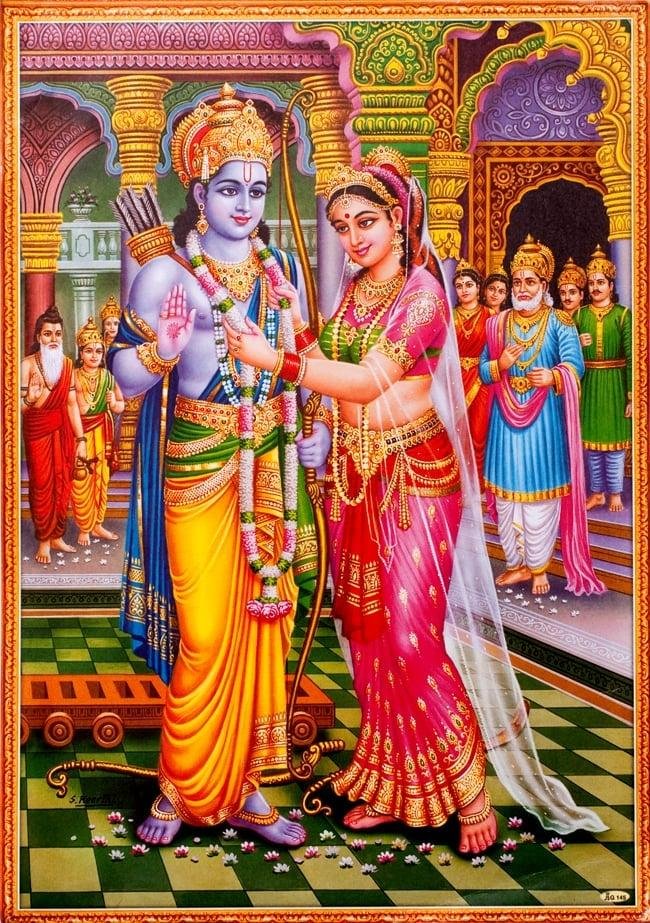
    Artists have represented her through paintings, sculpture, dance and theatre.

    Her story remains one of the most important parts of the Ramayana tradition.

    https://images.openai.com/static-rsc-4/J0rqjUEhetbVMyVSlYKU8oeMa7JjHSXkHJCgCWJpXuA0j08GeLmY5tsLIX0XoQKOtMLH79aNBS2rhb5gLtyide7ReK5ZaaiGbugN6wICb3c-676h8qQBaOpo3VGpQxPQnmjhvd7Nh6PW731SH8mtwzoam9c2qwVBPNGIhLjQxRlY4ey6W7QWAYDfV7Sc_EiH?purpose=fullsize
    https://images.openai.com/static-rsc-4/p9Tb4l45CZFpNBPK-MIMURqqlGjTCnuPo14KZIbofbldQRWu9gwrkEzGhiJdj43tnt5uW9RoIhA9vM-NTI6j28tyvxaoJOpbxpK2ZWaIAXgRjE3Y8GzZZBxVQzT8krxBT9NB5ezjKbiDCMDD0nQd8_k-EKUt-MUqGvQc1F3CgZJtP7xH1OOGoI1Kh9cFTqoW?purpose=fullsize
    https://images.openai.com/static-rsc-4/uP8OgP2aqtKX3qvnGAoYOCY05r9T4n_w9OFSFmHI17r0zxXK1zv2enDuknezwhdpoEYBNq8fY18NFujaS6SnapcL0OkU9SeCjknjvcLnJi6YaHW4h7phrxqpBIOL2l8SBH3rk3eQU54XhqAwpAkrSNeTKrrVzxRpnAwhcwZtPZiBbSkr72NGaOhMr5ObfOC_?purpose=fullsize

    Hanuman Travels Especially Well

    Hanuman may be one of the most successful Ramayana characters across Asia.

    Why?

    Because his personality combines several qualities that work extremely well in performance:

    ๐Ÿ’ A distinctive appearance
    ๐Ÿ’ช Extraordinary strength
    ๐Ÿง  Intelligence
    ๐Ÿ™ Devotion
    ๐Ÿ˜„ Humor
    โš”๏ธ Action

    A dancer can portray him.

    A puppeteer can create him.

    A sculptor can carve him.

    A painter can give him an entirely new appearance.


    Ravana in Different Cultures

    Ravana also changes visually as the story travels.

    His traditional image is dramatic enough to inspire artists across different cultures.

    He can be represented as:

    ๐Ÿ‘‘ A powerful ruler
    โš”๏ธ A formidable warrior
    ๐Ÿ”ฅ A dangerous antagonist
    ๐Ÿ“– A complex literary character

    The appearance may change, but his opposition to Rama remains central.


    The Ramayana Through Dance

    Dance became one of the most effective ways to preserve the story outside India.

    A dancer does not need a large amount of dialogue to communicate:

    ๐Ÿน A battle
    โค๏ธ Love
    ๐Ÿ˜ข Separation
    ๐Ÿ™ Devotion
    ๐Ÿ‘‘ Royalty

    Body movements, facial expressions, costumes and music can tell the story.


    https://images.openai.com/static-rsc-4/xYcna3mN-8jStTcZSIo__3AxGQyMizp0yKij8xbsdCDDkLgkZSk5vQ4H-0busYpllN0jGBoFfc1CQAS7dQBg2WMrOU1nv03PJfGHTI2EUQ0ieW0d_4N3YEumTLArTQ80xFUlmmG24gsMhfQMifSERwxagx7Plm3NvPhBGyGihRSTkuyP9-X0_KfDXCs9V705?purpose=fullsize
    https://images.openai.com/static-rsc-4/tGR1FnP0iZhld0kU5lz2IlzA7OHxxyy1VkiaqWaUJNh4Vs1RIWLGSFsbUw5sqoHoBZVSLM8yiDljRWN67SyjZ3Tx0O9QFcADb44TnP2D65dVi5hl7gkoLdh2NT2zohUAo2-RCv8VirO-lDVJVE_dRGmyS8myXDE_VBBbzvjoVo3G41Lx1u_GGTX61oBAuuUV?purpose=fullsize
    https://images.openai.com/static-rsc-4/tMSjsWEw0LN5KPD1EAiRcUbe8tQrrREI-31EeegMoj4X4W2_hYFJ-y7qqJZYNzm3Kugss7k-CJgt7aHie5LOLyZfgi5U0gaFN52onYNNIShleayYuqs3kPY9mNe7_pkxE5f3Ft5kyUdOap8jI_3g3gRNJawPMR_lIWzmc7vrHCMNaiVFPagPI4-0fz3YP9Jm?purpose=fullsize

    The Ramayana Through Puppetry

    Puppetry is another important storytelling tradition.

    Indonesia is especially famous for Wayang Kulit, but puppet traditions across Asia demonstrate how epic stories can be transformed into visual theatre.

    A puppet can become:

    ๐Ÿน Rama
    ๐ŸŒธ Sita
    ๐Ÿ’ Hanuman
    ๐Ÿ‘‘ Ravana

    The puppeteer then controls the characters while narrating the story.


    The Ramayana in Architecture

    The story also travelled into stone.

    Temples and monuments across Asia contain artistic representations of epic narratives.

    Some of the most famous examples include:

    ๐Ÿ›• Prambanan in Indonesia
    ๐Ÿ›• Angkor Wat in Cambodia
    ๐Ÿ›• Wat Phra Kaew traditions in Thailand

    These monuments demonstrate that the Ramayana became part of architectural and visual culture.

    https://images.openai.com/static-rsc-4/y5Q3LDu5KDweuzsD4XVLKUO2FIA9xYnKlHVoH4Y2mk6_4LONL1ywcxTpBVnHOq27rdxbivllojkjRdYs24yYu2almlk77BMB7ZgoPg9xKnldRBlqdsysejg_IDmUSSJGVNDvMpxBwZnoIj8tV_vPFfyNhbpG8Ew6S0aCNj1AhI071CzpkiShU3qU2XOyhbfA?purpose=fullsize
    https://images.openai.com/static-rsc-4/b7fyY4Usc4S46fWvue7cNjoiRR2Sc4rj5G7WeIBl6FyVVl65TxflC6dLKRlkId4aPh7giFmG5z8Jcl6YwMA740iXQC8NQ4XASf9NFNHd_qz_pEvl0Rk9vwwJJ7aiM5XgOvqirk8R8GmYB4kIGDI-rEmOkxrItLLgRlpLcWtA6JCLu17NtV7i7oBJEMUAuqJm?purpose=fullsize
    https://images.openai.com/static-rsc-4/yUDzNOdzB3zHMg4JvtmxwasDA3eXxM8kbNqkOWPMYW7LTStwqLyo6dNvYRy1jZf435HX8XfSiX5-QzcFpp58AG7q2cKwAV8nrarPsAo5fwk8x1aQj1MfCa9qBaJA7i3oqTYD0DzjVoyhWby5nL8FDpyr7JLgK9OkE8EIkg0QLnaCAchHj7b1DxMucPN7zK8z?purpose=fullsize

    From India to Southeast Asia

    The movement of the Ramayana was part of a much larger history of cultural exchange.

    Trade networks connected communities across the Indian Ocean.

    Religious traditions travelled with scholars and teachers.

    Royal courts exchanged ideas.

    Artists and storytellers adapted narratives.

    The Ramayana was one of the stories that moved through these networks.


    The Story Changes Without Disappearing

    This is one of the most important lessons from the Ramayana’s Asian journey.

    A story does not have to remain identical to remain recognizable.

    The Ramakien is not exactly the same as an Indian Ramayana.

    The Reamker is different again.

    Phra Lak Phra Lam has its own identity.

    Yama Zatdaw developed its own Burmese characteristics.

    Yet all remain connected to the larger Ramayana tradition.


    Why Cultural Differences Matter

    These differences should not simply be treated as mistakes or deviations.

    They show how communities make stories their own.

    A Thai artist paints the story according to Thai artistic traditions.

    A Cambodian dancer performs it according to Khmer movement traditions.

    An Indonesian puppeteer presents it through Wayang.

    A Lao storyteller presents it through Lao language and culture.

    The story becomes a meeting point between cultures.


    The Ramayana as a Cultural Bridge

    The epic therefore provides an extraordinary example of cultural connection.

    It connects:

    ๐Ÿ‡ฎ๐Ÿ‡ณ India
    ๐Ÿ‡น๐Ÿ‡ญ Thailand
    ๐Ÿ‡ฎ๐Ÿ‡ฉ Indonesia
    ๐Ÿ‡ฐ๐Ÿ‡ญ Cambodia
    ๐Ÿ‡ฑ๐Ÿ‡ฆ Laos
    ๐Ÿ‡ฒ๐Ÿ‡ฒ Myanmar

    And many other communities that encountered the story through literature, religion, art and performance.


    What Remains Common?

    Despite differences, certain themes appear repeatedly:

    โš–๏ธ Dharma and duty

    Characters face difficult moral choices.

    โค๏ธ Family and relationships

    The story places enormous importance on family bonds.

    ๐Ÿ™ Loyalty

    Hanuman and Lakshmana are powerful examples.

    ๐Ÿ’ช Courage

    The characters repeatedly face dangerous situations.

    ๐Ÿ‘‘ Leadership

    Rama’s role as a ruler remains an important theme.

    These ideas helped the story survive across cultural boundaries.


    The Ramayana in the Modern World

    The story’s journey continues today.

    Modern audiences can encounter Ramayana traditions through:

    ๐Ÿ“บ Television
    ๐ŸŽฌ Cinema
    ๐Ÿ“ฑ Digital media
    ๐ŸŽจ Contemporary art
    ๐ŸŽญ Theatre
    ๐Ÿ’ƒ Dance
    ๐Ÿ“š Books

    The ancient epic continues to find new ways to reach new generations.


    https://images.openai.com/static-rsc-4/BXbI_e3izJfHHGp4jYyC-TKc_8JYptkfHqvWy2-UKcmUQj4AA5jnxgYzW6f9NRwJR2bA04isj_ekIFE6B7kiwEZZTbzDuBruvaJXFIuLQWVjFaC1hG0N_mJBRGerZohLP3HvsHXJ8StXx7CtoUilCDHrQHdyS0HqkufLs9L8KVIDuje9VPcTCFlo2pivrzyz?purpose=fullsize
    https://images.openai.com/static-rsc-4/36C2QKI6gF7865uu-qIBAoqsQDUSbJjkwM0CO8DI2ounXfVUXU20r6DA5B6sOnDrriiA6ZrusbLibHfDvof_w0h63AQeneliOCeXp5n4mIHryKX6kqLsLWUavs8QzwZmVc1sUE7lePUUMgA4KtLkBd6JFFv4ttdAh3RqDIdZZH8g1JVbcS9_m1wOdbE-xLj8?purpose=fullsize
    https://images.openai.com/static-rsc-4/QCveuHoy1N9SwSWbpXZXtKjZgfXRpDNM4ySw7-zY4cnAio3RMz6d_KL-bFswMcSG6uPop3o3hFM2_jYQKpI4EoEuOENHG1k49127zKpST1VzZOS4bGfetefp2vzpydMNij608ojNBxM5bnzBozqnxsT7k5fiY1M7nLlYAqy-zs4IDXKn-PCpghC7F7gdohkX?purpose=fullsize

    One Epic, Many Cultural Voices

    Perhaps the most beautiful part of the Ramayana’s journey is that there is no single visual appearance that represents the entire Asian tradition.

    Rama can look different.

    Sita can wear different clothing.

    Hanuman can have different costumes.

    Ravana can appear in different artistic styles.

    And yet audiences can still recognize the story.


    Why This Journey Matters

    Studying the Ramayana across Asia helps us understand something bigger than the epic itself.

    It teaches us about:

    ๐ŸŒ Cultural exchange
    ๐ŸŽจ Artistic adaptation
    ๐Ÿ“– Literary traditions
    ๐ŸŽญ Performance
    ๐Ÿ›• Architecture
    ๐Ÿค Connections between societies

    The Ramayana becomes a lens through which we can understand Asian cultural history.


    Conclusion

    The Ramayana travelled far beyond the land where its earliest major literary traditions developed.

    As it moved across Asia, it encountered new languages, religions, artistic traditions and societies.

    It changed.

    But it did not disappear.

    Instead, it became:

    ๐Ÿ‡น๐Ÿ‡ญ Ramakien in Thailand
    ๐Ÿ‡ฐ๐Ÿ‡ญ Reamker in Cambodia
    ๐Ÿ‡ฑ๐Ÿ‡ฆ Phra Lak Phra Lam in Laos
    ๐Ÿ‡ฒ๐Ÿ‡ฒ Yama Zatdaw in Myanmar
    ๐Ÿ‡ฎ๐Ÿ‡ฉ Javanese and Balinese Ramayana traditions in Indonesia

    ๐ŸŒ The Ramayana’s journey across Asia is not simply the story of one epic travelling from one country to another โ€” it is the story of cultures meeting, adapting and preserving a shared narrative in their own unique voices.

    In the next part, we will return to India and explore another fascinating subject: the Ramayana in Indian regional languages โ€” how Tamil, Telugu, Kannada, Malayalam, Bengali and other traditions created their own powerful versions of Rama’s story.
  • Ramayana Part 46: The Reamker of Cambodia | Ramaโ€™s Story in Khmer Culture

    Ramayana Part 46: The Reamker of Cambodia | Ramaโ€™s Story in Khmer Culture

    In the next article, weโ€™ll explore Cambodiaโ€™s unique Ramayana tradition known as the Reamker, its connection with Angkor Wat, Khmer classical dance, the characters of Preah Ream, Neang Seda and Krong Reap, and how the ancient epic became part of Cambodiaโ€™s cultural heritage.

    https://images.openai.com/static-rsc-4/uBJU7aQraNJ1ZwWYOCEyfm--gQ05fyZTutM-Ss3XXzvToXFRGbZQ5XK8A_ooIaWgZILQhiveBL8okrahwGNW5tgdquqKC0nvTNzqTQq3u3_Ct12BDAzfaUswNMsdppPGKYnOeT36G3uNWV9DCu6eTdjm0T7Igh2lM2qsE5H5pvyaI0YCBshWv-cNodwwwxB0?purpose=fullsize
    https://images.openai.com/static-rsc-4/NuFFQA7P9dfIS8jockXaM_fPo4xLeOxPfOHjYQA8a12Hl2iJ8MEWNigNia_PTmrO-U9ZRytAPTPfn3FQ2VPh06kJt6xjPsJsNhh3JS5nZ9v3J0TINw9FykzC5U79AepaGSb_K7Bt5kSqJzvNEuneXw3x0Wlp7XAAFSKiZh5Z8oU3ZCrCzgOfNeA_ehRHj0HO?purpose=fullsize
    https://images.openai.com/static-rsc-4/4zZaotGKcCL2PAVRmByMijbWI4KVaPGQ2y6sn4OhOWwYR3vWIfPjap5A4Rlk6LSjrtscFeHa9wE6n6QPTlkxHDagDSoqT4Zf8hCA4MkxMdGD6w_W3VOUINxlg6MesjTuvk1i5TgWx-2T6Zbr1eQwDpl4GLdnwNsGWzggxf4Ipf2P4usvPU95uCWdneyZWFPF?purpose=fullsize

    What Is the Reamker?

    The Reamker is Cambodiaโ€™s Khmer adaptation of the Ramayana.

    The name is commonly understood in relation to Rama’s glory.

    Like the Indian Ramayana, the Reamker tells the story of:

    ๐Ÿน Rama
    ๐ŸŒธ Sita
    ๐Ÿ’ Hanuman
    ๐Ÿ‘‘ Ravana
    โš”๏ธ The struggle between the forces supporting Rama and those opposing him

    But Cambodia developed its own version through Khmer literature, sculpture, dance and theatre.


    Rama Becomes Preah Ream

    In the Cambodian tradition, Rama is known as Preah Ream.

    He remains a noble and heroic figure whose journey involves exile, separation from Sita and the struggle against the powerful ruler of Lanka.

    The themes of:

    โš–๏ธ Duty
    ๐Ÿ™ Loyalty
    โค๏ธ Love
    ๐Ÿ‘‘ Royal responsibility
    ๐Ÿ’ช Courage

    remain central to the story.


    Sita Becomes Neang Seda

    Sita is known as Neang Seda in the Khmer tradition.

    Her story remains closely connected with Preah Ream.

    She is portrayed as an important figure whose separation from Rama drives much of the narrative.

    Cambodian artistic traditions have represented Neang Seda through:

    ๐Ÿ’ƒ Classical dance
    ๐ŸŽจ Painting
    ๐Ÿ—ฟ Sculpture
    ๐ŸŽญ Theatre


    Ravana Becomes Krong Reap

    The antagonist Ravana is known as Krong Reap.

    His image in Cambodian art is powerful and highly decorative.

    He is often shown wearing elaborate royal costumes and crowns.

    Like Ravana in Indian traditions, Krong Reap represents enormous power, ambition and opposition to Rama.


    https://images.openai.com/static-rsc-4/d1X3M7ibXdtNiYD8_2UuSHNoOEb6hcROtk0KX65Giwq36gbfJr6yJRO_-TviazjIGdfIJnZ2EB3TpRziaF0DjiTgR_Qth7WePaVuW8R1yyqY6SaTpBoEld57XCVcjhSZ9l0SriJHsBiGBwCUoHv2Gh6sjxJ0IgZc4RAXSQoVX71ejDeUaW53dq-GdpndfZ5s?purpose=fullsize
    https://images.openai.com/static-rsc-4/l3CuXw4uCR7kuzRxzOl8ze5PWDDIPHFUanHfg6jd4ITWvWXX3OIff9OKy8cGiQs9tKPyngdGEPFrW92N0lSD7mYe9AWFTt3UHU0O5CI30Y4m9j4oFEg2EXmG7Mv-Lad1rpkl0N2685oMzkBAD0Umb2XBl0809ybdL3VmZ33iqvWrYDdvXE9HlTlEhFxq1NyS?purpose=fullsize
    https://images.openai.com/static-rsc-4/kmWtGVoALmCdDUJhM-aUy9v6xcTh0aHxFaKITFzILHYL3rpBgrhfPwLaAYBgoWu2OHU2Irz5FH_ZJhHsA_GfVnRKCtW8w19hjhLEnP2gISBMNMHdBfjMRuAutNb3gpmgLXqKlEWOI1XCFlDkwRAJQm07pfk3gLZwArsTetLgr1yy9BXg3_NInzbcfGShuQTS?purpose=fullsize

    Hanuman in the Reamker

    Hanuman is one of the most popular characters in Cambodian Ramayana traditions.

    He remains a loyal ally of Preah Ream.

    But Khmer storytelling gives Hanuman its own distinctive characteristics.

    He is presented as:

    ๐Ÿ’ Brave
    ๐Ÿ’ช Powerful
    ๐Ÿง  Intelligent
    ๐Ÿ™ Loyal
    โš”๏ธ Energetic

    His adventures provide some of the most exciting scenes in Cambodian performance traditions.


    The Famous Khmer Classical Dance

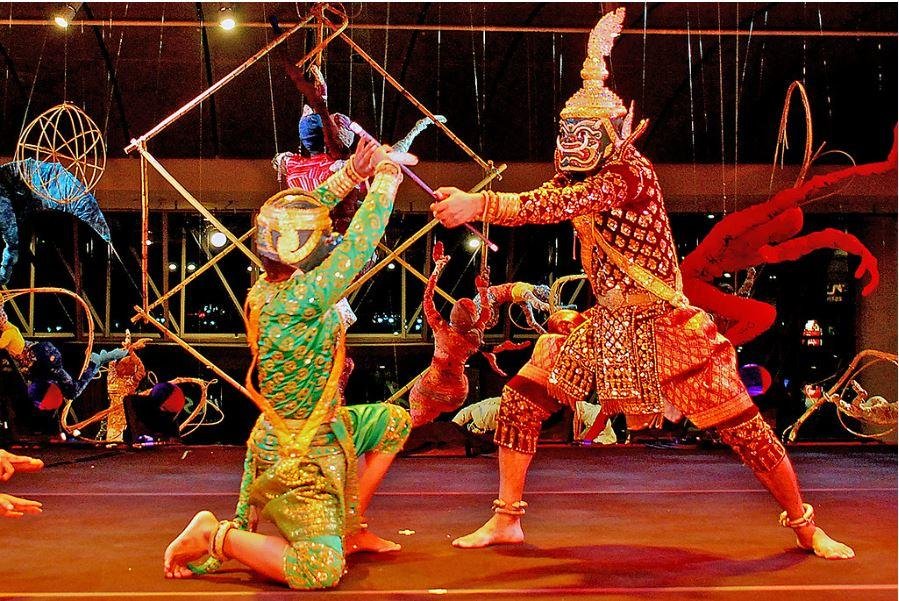
    The Reamker has been closely connected with Cambodia’s classical dance tradition.

    Khmer classical dance is known for its:

    ๐Ÿ’ƒ Controlled movements
    ๐Ÿคฒ Hand gestures
    ๐Ÿ‘‘ Elaborate costumes
    ๐ŸŽจ Detailed makeup
    ๐ŸŽต Traditional music

    Dancers can communicate entire scenes through carefully choreographed movements.

    https://images.openai.com/static-rsc-4/4zZaotGKcCL2PAVRmByMijbWI4KVaPGQ2y6sn4OhOWwYR3vWIfPjap5A4Rlk6LSjrtscFeHa9wE6n6QPTlkxHDagDSoqT4Zf8hCA4MkxMdGD6w_W3VOUINxlg6MesjTuvk1i5TgWx-2T6Zbr1eQwDpl4GLdnwNsGWzggxf4Ipf2P4usvPU95uCWdneyZWFPF?purpose=fullsize
    https://images.openai.com/static-rsc-4/9A0UxE3QO9XiTKGrzfmXYjNTxhGsDkFKHmTb5jvDf9UAfE9wiJWH6JPYiWpwwhIk7coGXPn3w7-x1EsDcA8WTZxiUYXAHyK0lcz4kBm-yPBm7vCnujtnX6dFOIMeCuWAxKT5ni0aGK7GYQcvMD1jaRPoVyDC1UMk55hCt9bqz3mo6wQ0l_fJeI5SP4fjX9HF?purpose=fullsize
    https://images.openai.com/static-rsc-4/RsviUUdfKIE44rXfzapjBCgXYoGzdabdi0xE-Xrg5xBbZhj47-5wrkii6YBM9sm2Fbvling7KA1F8lUDOamK9jSdtgeUHup77RXKHrIHX0FbbCWGpU1aQ_tsvBsPLzPzrX44T_Gh5Qfwjv8RRdyyGEkk31Cxo7hn5nNgdjrIJ5RONW1wMbhQ_DSVQ1ygRi30?purpose=fullsize

    Telling a Story Through Movement

    A Reamker performance does not depend only on spoken dialogue.

    A dancer’s:

    ๐Ÿ‘€ Eyes
    ๐Ÿคฒ Hands
    ๐Ÿ’ƒ Body position
    ๐Ÿ™‚ Facial expression

    can communicate emotions and actions.

    This allows the audience to understand the story through movement.


    Ramayana Scenes at Angkor Wat

    One of Cambodia’s greatest connections with the Ramayana can be seen at Angkor Wat.

    The enormous temple complex contains extensive bas-reliefs.

    Among the scenes represented are episodes connected with the Ramayana tradition.

    The stone walls therefore preserve part of the epic visually.

    https://images.openai.com/static-rsc-4/N2xqlPeSENpMlqAzzB9-s_I_Sz8Y7TVYTwLNJiaXDInxN-47e7TL2nK0AETAgG0YHMxkuUdHoSGLCHNnH7qJcCKaA3IWkUZ2WDAVHoKKOdxUnvyW9OhR0z7BlF5fyVGBhgN1JObd_YZULly_5m7lcr6sd-GHWpT4RfbmBKXqCo_uzj3gRH8tZuzTxIo9lbxt?purpose=fullsize
    https://images.openai.com/static-rsc-4/HiGH9gv2oNKKQZ_SKja22Q3nXwdsoEgDLS1Ve4Jec79dC2sgWGFpBIYut1Aq3I30z6JfeKf47CfhOLN9bXalZNrw92xZiHv-8k07H3JWOKvtQvB_QAyrC1n10HQcvJkqxhVDB0nhqB2T3tccdG1azcRwJ4A42iaPkp-XN1C3jLpZgM9HWjoNx1Op6EO_RF9R?purpose=fullsize
    https://images.openai.com/static-rsc-4/aujrFWam-XjhwOlz2qtXDO57artTjPtfgiO4Q6KOsvRObRiFbwtGolNF958ZoTwNSMvWvkNhKuwsLz6PweQ2iEdFpKpaGDSBQ_EPXOc9RV-eZwgpwOg6vb-b58gpkN8Ht9MLSY0SMMXpCy_50eF3jVW1MB-oqOaTQhg2tynxuVauA9QIe_33s9rt5p9BabwG?purpose=fullsize

    Stories Carved in Stone

    Imagine entering a monumental temple centuries ago and seeing epic stories carved directly into the walls.

    Instead of a printed book, the temple itself becomes a storytelling medium.

    Artists used:

    ๐Ÿชจ Stone
    ๐Ÿ“ Architecture
    ๐Ÿ‘‘ Royal imagery
    โš”๏ธ Battle scenes

    to preserve stories for future generations.


    The Reamker in Khmer Art

    Cambodian artists have portrayed the Reamker in many forms.

    These include:

    ๐Ÿ—ฟ Stone carvings
    ๐ŸŽจ Paintings
    ๐Ÿ›๏ธ Temple decoration
    ๐Ÿ’ƒ Dance
    ๐ŸŽญ Theatre

    The artistic style is unmistakably Khmer.

    Even when the story connects with the wider Ramayana tradition, the visual language reflects Cambodia.


    A Different Cultural Interpretation

    The Cambodian Reamker contains elements that distinguish it from Indian versions.

    Some episodes are developed differently.

    Some characters receive additional stories.

    The relationships between characters can also be interpreted differently.

    This is natural when an epic becomes part of another culture.


    Why Did Cambodia Embrace the Ramayana?

    The Ramayana became connected with Khmer ideas of:

    ๐Ÿ‘‘ Kingship
    โš–๏ธ Order
    ๐Ÿ™ Morality
    ๐ŸŒŸ Heroism
    ๐Ÿ›• Sacred traditions

    The story could therefore fit naturally into the artistic and political world of ancient Khmer civilization.


    The Temple as a Storytelling Space

    Khmer temples were not simply places of worship.

    They were also spaces filled with:

    ๐Ÿ—ฟ Sculpture
    ๐ŸŽจ Visual narratives
    ๐Ÿ“– Mythological stories
    ๐Ÿ›๏ธ Architecture

    The Ramayana became one of the stories that could be expressed through this enormous artistic environment.


    Hanuman and Cambodian Performance

    Hanuman is especially effective in dance and theatre because of his dramatic personality.

    His scenes can include:

    ๐Ÿ’ Leaping
    โš”๏ธ Fighting
    โค๏ธ Loyalty
    ๐Ÿ˜„ Playful moments
    ๐ŸŒŠ Journeys

    These qualities make him one of the most memorable figures in Reamker performances.

    https://images.openai.com/static-rsc-4/4a2LtHumSN59mjR1kgmr_DB-6PaHxW0UWksQkIwtK4wb61hiVLWUkq2xiDZfHsiFcHos8wn1fFonPOlaOZ7wd3S8oN3R2o2ELSU_4ITLEXoFU4W9KXMUCm889TG_iik1yUdEkhKf5u0ophADcMdRl-GMsYEFfnOylPalWh3z5GXOiHBB80dj3MkJYt4SAr0z?purpose=fullsize
    https://images.openai.com/static-rsc-4/Q7FGnDgu5nzMTGn3TfSn9VeDpM1VfjqDSFnUAC8PalPp2lYUCeiXYOjN0HGTlBfiqvVVGc-zZYzl4LLPjEE-cTQ4Q5xnCHYCYvT9mD1XclTQQJYlH_nenyku6Voh9q_rZcW-OOOrhovgQWbKQBaRyRUJejoSaSuP-gk4B8xC4d6sBk8LsTlw5mXtBwDcCJFY?purpose=fullsize
    https://images.openai.com/static-rsc-4/ClG7DNABME1l3BKvwrV4-lsFgw11kqcv6IbKH31cSWuboqgryKnvzuVTv6Bc-g_8k70-O4hivUwoRlCwglGxKBL0_gmKP3NszvSIMxIJDOneRlGIMc5HskBiMVYlhR3aEw8p8ynOoaNLPDaASRFgmV07aS8nOQHjIEKYKY67O6BN_x9dphaq-VxeWYU7sbO7?purpose=fullsize

    The Reamker Today

    The Reamker remains part of Cambodia’s cultural heritage.

    It continues to appear through:

    ๐ŸŽญ Traditional performances
    ๐Ÿ’ƒ Classical dance
    ๐ŸŽจ Art
    ๐Ÿ“š Literature
    ๐Ÿ›๏ธ Cultural heritage programs

    This allows younger generations to encounter a story that has been part of Khmer culture for centuries.


    India and Cambodia: Two Ramayana Traditions

    The Indian Ramayana and Cambodian Reamker share a recognizable foundation.

    Both feature:

    ๐Ÿน Rama
    ๐ŸŒธ Sita
    ๐Ÿ’ Hanuman
    ๐Ÿ‘‘ Ravana
    โš”๏ธ Lanka

    But their artistic forms are different.

    India has:

    ๐ŸŽจ Indian painting traditions
    ๐ŸŽญ Regional theatre
    ๐Ÿ›• Temple sculpture
    ๐Ÿ’ƒ Classical dance

    Cambodia has:

    ๐ŸŽจ Khmer murals and sculpture
    ๐Ÿ’ƒ Khmer classical dance
    ๐Ÿ—ฟ Angkorian reliefs
    ๐ŸŽญ Reamker performance

    The comparison shows how one epic can develop multiple cultural identities.


    A Story Preserved Across Centuries

    The survival of the Reamker demonstrates the power of cultural memory.

    Generations of:

    ๐Ÿ‘จโ€๐ŸŽจ Artists
    ๐Ÿ’ƒ Dancers
    ๐ŸŽญ Performers
    ๐Ÿ“š Writers
    ๐Ÿ—ฃ๏ธ Storytellers

    have helped preserve the tradition.

    Each generation receives the story and passes it forward.


    Why the Reamker Matters

    The Reamker is important not only because it is connected to the Ramayana.

    It also tells us about Cambodia itself.

    Through the Reamker, we can see:

    ๐ŸŽจ Khmer artistic creativity
    ๐Ÿ›๏ธ Ancient architecture
    ๐Ÿ’ƒ Dance traditions
    ๐Ÿ“– Literary culture
    ๐Ÿ‘‘ Historical ideas about kingship

    The epic became a window into Khmer civilization.


    Conclusion

    Cambodia transformed the Ramayana into the Reamker, giving the ancient story a distinctly Khmer identity.

    Rama became Preah Ream.

    Sita became Neang Seda.

    Ravana became Krong Reap.

    And Hanuman became one of the most exciting figures in Khmer performance.

    From the stone walls of Angkor Wat to the movements of Khmer classical dancers, the Ramayana continues to live within Cambodian culture.

    ๐Ÿ‡ฐ๐Ÿ‡ญ The Reamker shows how an ancient story can cross borders, enter a new civilization and become part of that civilization’s own cultural identity.

    In the next part, we will travel to Laos and explore the Lao Ramayana tradition, Phra Lak Phra Lam, and discover how Rama and Lakshmana became central figures in Lao literature, religion and storytelling.