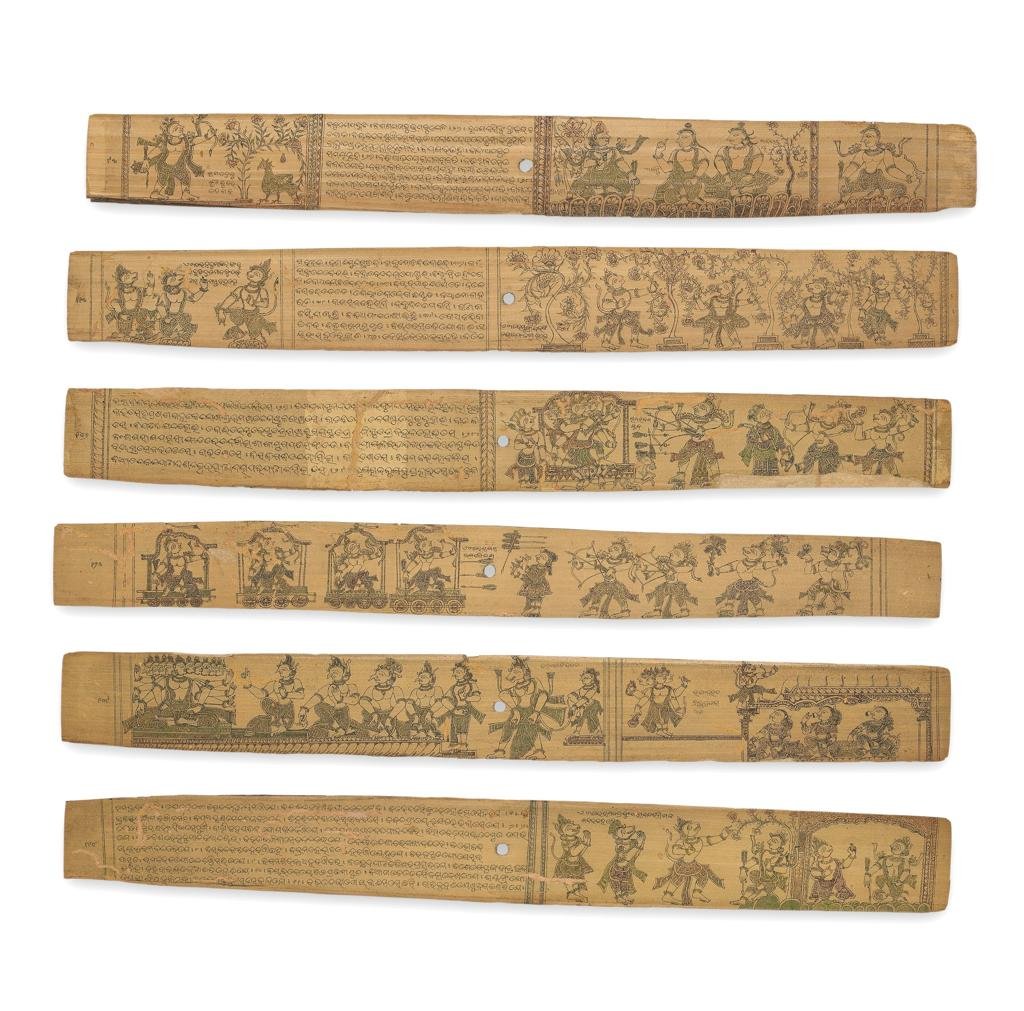
In the next article, we’ll explore how the Ramayana was retold across India in Tamil, Telugu, Kannada, Malayalam, Bengali, Assamese, Marathi and other regional languages, and how different poets and traditions gave Rama’s story their own literary and cultural identity.


One Story, Many Indian Languages
The Ramayana is not represented by only one text in India.
As the story travelled across the country, poets and scholars retold it in their own languages.
This created a remarkable literary tradition.
From:
🇮🇳 Tamil Nadu
🇮🇳 Andhra Pradesh and Telangana
🇮🇳 Karnataka
🇮🇳 Kerala
🇮🇳 Bengal
🇮🇳 Assam
🇮🇳 Maharashtra
🇮🇳 North India
the story of Rama received new literary voices.
Tamil: Kamba Ramayanam
One of the most celebrated Tamil versions is the Kamba Ramayanam, composed by the poet Kambar.
Kambar did not simply translate Valmiki’s Ramayana.
He recreated the story in the richness of Tamil poetry.
His work became an important part of Tamil literary culture.


The Beauty of Tamil Poetry
Kambar’s retelling is famous for its poetic richness.
Scenes of:
🌳 Forests
🌸 Nature
❤️ Love
⚔️ Battle
👑 Royal life
receive detailed poetic treatment.
The Ramayana therefore became not only a religious narrative but also a major work of Tamil literature.
Telugu: Ranganatha Ramayanam
The Ramayana also became deeply rooted in Telugu literary culture.
One important Telugu tradition is the Ranganatha Ramayanam.
Telugu poets and performers developed their own ways of presenting Rama’s story.
The epic became accessible through:
📖 Poetry
🎭 Harikatha
🎵 Musical storytelling
🛕 Temple traditions
Telugu Folk and Performance Traditions
In Andhra Pradesh and Telangana, stories from the Ramayana have traditionally appeared in many forms of storytelling and performance.
Characters such as:
🏹 Rama
🌸 Sita
🐒 Hanuman
👑 Ravana
became familiar figures in popular culture.
The story could therefore move beyond books and into public performance.


Kannada: Torave Ramayana
Kannada literature developed its own important Ramayana tradition through the Torave Ramayana, traditionally associated with Narahari.
It became one of the significant medieval Kannada retellings of the epic.
The story was expressed through the literary style and cultural environment of Karnataka.
Ramayana in Karnataka
The epic also entered Karnataka’s performance traditions.
It could be experienced through:
🎭 Yakshagana
🎵 Musical storytelling
🛕 Temple culture
📖 Kannada literature
This created a strong connection between the written epic and popular performance.


Malayalam: Adhyatma Ramayanam Kilippattu
Kerala has one of India’s most influential Malayalam Ramayana traditions: Adhyatma Ramayanam Kilippattu, associated with Thunchath Ezhuthachan.
The work became deeply connected with Kerala’s cultural and devotional life.
The Ramayana is traditionally associated with the month of Karkidakam, when many Malayali households read or listen to the text.
A Household Tradition in Kerala
The Ramayana in Kerala is not limited to temples or scholars.
It has traditionally been part of family and devotional life.
People may encounter the story through:
📖 Reading
🙏 Prayer
🗣️ Recitation
👨👩👧 Family traditions
This demonstrates how an epic can become part of everyday cultural life.


Bengali: Krittivasi Ramayana
In Bengal, the Ramayana became famous through the Krittivasi Ramayana, associated with the poet Krittibas Ojha.
The Bengali retelling became highly influential in the region.
It presented the Ramayana in a form accessible to Bengali-speaking audiences.
A Bengali Rama Tradition
The Krittivasi tradition contains distinctive Bengali cultural elements.
The story became part of:
📖 Bengali literature
🎭 Folk performance
🎨 Art
🙏 Devotional culture
Once again, the Ramayana became something more than a translated text.
It became part of regional identity.


Assam: Katha Ramayana
Assam also developed an important regional Ramayana tradition.
The Katha Ramayana, associated with Madhav Kandali, is among the earliest major vernacular Ramayana retellings in Assamese.
Its significance lies in bringing the epic into the Assamese literary world.
Ramayana and Assamese Culture
The story became connected with Assamese literary and devotional traditions.
Through regional language, the epic could reach audiences who might not have encountered the Sanskrit text directly.
This is one of the most important functions of vernacular literature.
It makes a great story accessible to a wider community.
Marathi: Bhavarth Ramayana
Maharashtra developed its own influential Ramayana tradition through Bhavarth Ramayana, associated with the saint-poet Eknath.
The work helped bring the story into Marathi literary and devotional culture.
It also demonstrates the important relationship between:
🙏 Bhakti
📖 Literature
🗣️ Popular language
North India: Ramcharitmanas
One of the most influential regional retellings is Ramcharitmanas by Tulsidas.
Written in Awadhi, it made the story of Rama accessible to a vast Hindi-speaking audience.
The work became enormously influential in North Indian devotional culture.


Ram Lila
The influence of Ramcharitmanas extends beyond literature.
It is closely connected with Ramlila, dramatic performances of Rama’s story held in many parts of North India.
During these performances, communities gather to watch episodes from the epic.
The story becomes a public cultural experience.
🎭 Drama
🎵 Music
🙏 Devotion
👨👩👧 Community participation
all come together.
Why Regional Versions Matter
At first glance, having many versions of the same story may seem confusing.
But these versions reveal something extraordinary.
India’s literary traditions are incredibly diverse.
The Ramayana could speak through:
Tamil poetry.
Telugu literature.
Kannada storytelling.
Malayalam devotional writing.
Bengali literature.
Assamese poetry.
Marathi bhakti.
Awadhi literature.
The story remained recognizable while the language and cultural expression changed.
Translation or Recreation?
It is important to understand that many regional Ramayanas are not simple translations of Valmiki’s Sanskrit epic.
Poets often:
✍️ Added new descriptions
📖 Expanded certain episodes
🙏 Emphasized devotional themes
🎭 Adapted characters
🌏 Reflected local culture
This process created genuinely independent literary works.
Different Languages, Different Emphases
One regional tradition may emphasize Rama’s divinity.
Another may focus strongly on his humanity.
Another may highlight Sita.
Another may celebrate Hanuman.
Another may give greater importance to devotion.
This variety makes the Ramayana tradition extraordinarily rich.
The Same Epic in Many Voices
Imagine Rama’s story being told in a village in Tamil Nadu.
Then imagine the same story being sung in Kerala.
Then performed in Karnataka.
Then recited in Bengal.
Then staged as Ramlila in North India.
The language changes.
The music changes.
The costumes change.
The artistic style changes.
Yet the basic story remains recognizable.
A Literary Map of India
The regional Ramayanas create a fascinating literary map.
| Region | Important Ramayana Tradition |
|---|---|
| Tamil Nadu | Kamba Ramayanam |
| Andhra/Telangana | Ranganatha Ramayanam |
| Karnataka | Torave Ramayana |
| Kerala | Adhyatma Ramayanam Kilippattu |
| Bengal | Krittivasi Ramayana |
| Assam | Katha Ramayana |
| Maharashtra | Bhavarth Ramayana |
| North India | Ramcharitmanas |
This is only a selection.
India contains many additional regional, folk and tribal Ramayana traditions.
The Ramayana Is Bigger Than One Book
This may be the most important lesson.
When people say “the Ramayana,” they may be referring to very different texts and traditions.
There is the Sanskrit tradition associated with Valmiki.
There are regional literary versions.
There are oral traditions.
There are folk performances.
There are temple traditions.
There are modern adaptations.
Together, they form a vast cultural universe.
Conclusion
The Ramayana did not remain confined to one language.
It became part of India’s enormous linguistic and cultural diversity.
From Kambar’s Tamil poetry to Ezhuthachan’s Malayalam devotional tradition, from Krittivasi’s Bengali retelling to Tulsidas’s Ramcharitmanas, generations of Indian poets gave Rama’s story new voices.
🇮🇳 The Ramayana is not just one book written in one language — it is a living Indian tradition that has been continuously recreated in hundreds of literary, artistic and cultural forms.
In the next part, we will explore the lesser-known folk and tribal Ramayana traditions of India — stories that exist outside the famous classical texts and reveal some fascinating alternative versions of Rama, Sita, Hanuman and Ravana.