Continuing our 18 Mahapuranas series, Part 12 is the Varaha Purana.
The Varaha Purana is traditionally counted among the 18 Mahapuranas and is closely associated with Lord Vishnu in his Varaha (boar) incarnation. It contains stories about Vishnu, Devi, Shiva, sacred places, pilgrimage, Dharma and religious practices.


Image ALT: Lord Varaha lifting Goddess Earth from the cosmic waters, representing the Varaha Purana
What Is the Varaha Purana?
The Varaha Purana gets its name from Varaha, the boar incarnation of Lord Vishnu.


Image ALT: Lord Varaha rescuing Bhudevi, the Earth Goddess, in traditional Indian art
According to Hindu tradition, Vishnu takes the form of Varaha to rescue the Earth from the cosmic waters.
The Purana contains a wide range of subjects, including:
- Varaha Avatar
- Lord Vishnu
- Bhudevi
- Devi traditions
- Shiva
- Creation
- Dharma
- Pilgrimage
- Sacred places
- Vratas
- Religious practices
- Hindu mythology
Why Is It Called Varaha Purana?
The name comes from Varaha, one of the important incarnations of Vishnu.


Image ALT: Varaha Avatar among the Dashavatara of Lord Vishnu
Varaha is traditionally regarded as the third avatar of Vishnu in the commonly known Dashavatara sequence.
The Story of Varaha Avatar
One of the most famous stories associated with the Varaha tradition is the rescue of the Earth.


Image ALT: Varaha lifting the Earth Goddess from the cosmic ocean
According to the traditional story, the Earth had become submerged in the cosmic waters.
Vishnu appeared as Varaha and entered the waters to rescue her.
Varaha and Bhudevi
The Earth is personified as Bhudevi, the Goddess of Earth.


Image ALT: Lord Varaha and Bhudevi representing Vishnu’s protection of the Earth
Varaha’s rescue of Bhudevi symbolizes the protection and restoration of the world.
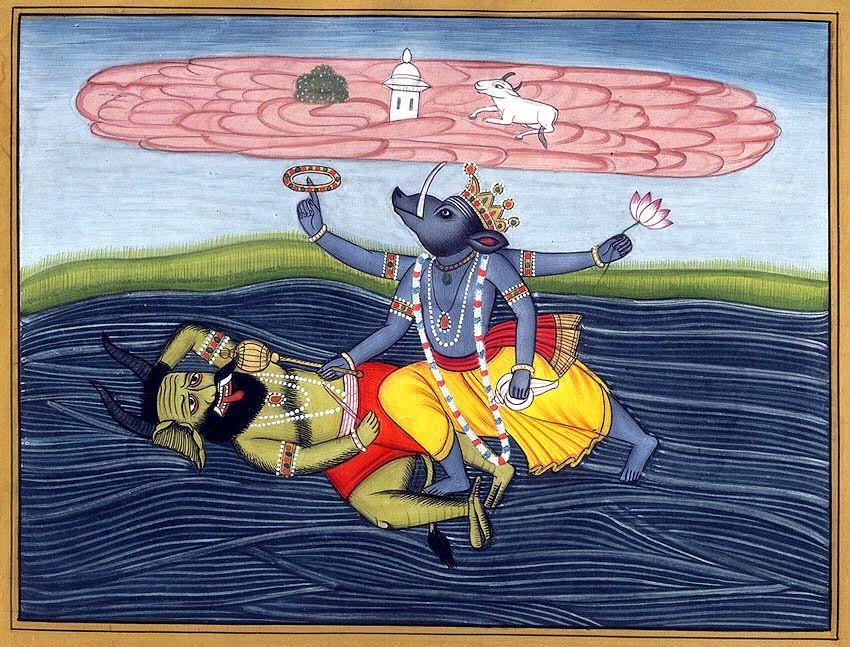
Varaha and Hiranyaksha
The Varaha story is traditionally connected with the demon Hiranyaksha.


Image ALT: Lord Varaha battling Hiranyaksha in traditional Hindu mythology
Hiranyaksha is described as a powerful Asura who caused the Earth to become submerged.
Varaha defeats him and restores the Earth.
The Symbolism of Varaha
The Varaha Avatar carries a powerful spiritual meaning.


Image ALT: Varaha Avatar symbolizing divine protection and restoration
Varaha can be understood as representing:
- Protection
- Courage
- Restoration
- Strength
- Preservation of Dharma
- Divine intervention
Vishnu as Protector
Vishnu is traditionally known as the preserver and protector of cosmic order.


Image ALT: Lord Vishnu holding the conch and discus as the protector of cosmic order
Whenever Dharma is threatened, Vishnu is traditionally believed to manifest in different forms to restore balance.
The Dashavatara
Varaha is one of Vishnu’s Dashavatara, or ten major incarnations.


Image ALT: Ten major incarnations of Lord Vishnu in traditional Indian art
The commonly known sequence includes:
- Matsya
- Kurma
- Varaha
- Narasimha
- Vamana
- Parashurama
- Rama
- Krishna
- Buddha or Balarama in different traditions
- Kalki
Varaha and the Earth
The image of Varaha raising the Earth is one of the most powerful images in Vaishnava mythology.


Image ALT: Varaha raising Bhudevi on his tusks in traditional Hindu art
It represents the idea that divine protection restores the world when cosmic order is disturbed.
Sacred Places
The Varaha Purana contains extensive material connected with Tirthas, or sacred pilgrimage places.


Image ALT: Hindu pilgrims visiting a sacred Tirtha representing pilgrimage traditions in the Varaha Purana
Pilgrimage is an important part of Hindu religious life.
Tirtha and Spiritual Practice
A Tirtha is traditionally understood as a sacred place that provides an opportunity for spiritual practice.


Image ALT: Hindu pilgrims visiting a sacred river as part of traditional Tirtha practice
Pilgrims may visit sacred places for:
- Prayer
- Worship
- Bathing in sacred rivers
- Charity
- Meditation
- Religious observances
Varanasi and Sacred Traditions
Puranic literature gives great importance to Varanasi, one of India’s most famous sacred cities.


Image ALT: Varanasi Ghats on the Ganga representing a major Hindu pilgrimage tradition
Varanasi is particularly associated with Lord Shiva, sacred bathing and spiritual liberation.
Prayaga
Prayaga, associated with the confluence of sacred rivers, is another important pilgrimage tradition in Puranic literature.


Image ALT: Pilgrims at the Triveni Sangam representing the sacred pilgrimage tradition of Prayaga
Sacred rivers and their meeting places hold a special position in Hindu tradition.
Gaya
Gaya is another sacred place associated with Hindu religious traditions.


Image ALT: Vishnupad Temple in Gaya representing Hindu pilgrimage traditions
Gaya is especially associated with ancestral rites and offerings for departed ancestors.
Puranic Descriptions of Sacred Geography
The Varaha Purana contributes to the broader Puranic tradition of describing India’s sacred geography.


Image ALT: Sacred Indian pilgrimage landscape representing Puranic descriptions of holy places
Through such descriptions, religious stories become connected with real places and pilgrimage traditions.
Devi and Goddess Traditions
Although Varaha is the central name of the Purana, the text also contains significant material concerning Devi and Goddess traditions.


Image ALT: Goddess Devi representing the divine feminine traditions found in Puranic literature
The Purana therefore reflects the diversity of Hindu devotional traditions.
Goddess and Shakti
The divine feminine is represented through different Goddess traditions.


Image ALT: Goddess Shakti representing divine feminine power
Shakti represents divine power and creative energy in Hindu traditions.
Shiva in the Varaha Purana
The Varaha Purana also contains material connected with Lord Shiva and Shaiva traditions.


Image ALT: Lord Shiva representing Shaiva traditions within the Varaha Purana
This is an important reminder that Puranic texts often contain material concerning multiple Hindu deities and traditions, even when one deity receives particular emphasis.
Vishnu and Shiva
Hindu Puranic traditions frequently contain stories involving both Vishnu and Shiva.


Image ALT: Vishnu and Shiva together representing the interconnected traditions of Hinduism
Different Puranas may emphasize different deities while still preserving a broad religious worldview.
Dharma
Dharma remains an important subject in the Varaha Purana.


Image ALT: Hindu sage teaching Dharma and righteous conduct in traditional Indian art
Dharma involves living according to righteous duties and ethical principles.
Vratas
The Purana contains traditions concerning Vratas, or religious vows and observances.


Image ALT: Devotee observing a traditional Hindu vrata and performing puja
Vratas can involve:
- Fasting
- Prayer
- Puja
- Charity
- Mantra recitation
- Special observances
Charity and Dana
Dana, or charitable giving, is an important part of Hindu religious practice.


Image ALT: Traditional Hindu practice of Dana or charitable giving
Charity is associated with compassion, generosity and Dharma.
Purification
Sacred bathing, prayer and pilgrimage are often associated with spiritual purification.


Image ALT: Hindu pilgrims performing sacred bathing in a river as a spiritual practice
The emphasis is not merely on physical cleanliness but also on spiritual renewal.
Stories of Vishnu
The Varaha Purana contains stories and teachings connected with Vishnu and his divine manifestations.


Image ALT: Lord Vishnu and his divine manifestations represented in traditional Indian art
These stories help explain the relationship between the Divine and the preservation of Dharma.
Protection of Dharma
The Varaha Avatar is an excellent example of the broader Hindu idea that the Divine protects the cosmic order.


Image ALT: Lord Vishnu restoring Dharma through divine intervention in traditional Indian art
When disorder threatens the world, divine intervention restores balance.
Creation and Cosmology
Like other Puranas, the Varaha Purana contains material concerning cosmology and creation.


Image ALT: Puranic depiction of Hindu cosmology and the creation of the universe
Puranic cosmology often describes enormous cycles of time and repeated creation and dissolution.
Time in Hindu Cosmology
Hindu cosmological traditions describe time through vast cycles.


Image ALT: Hindu cosmic cycles and Yugas representing Puranic concepts of time
These concepts include:
- Yugas
- Kalpas
- Manvantaras
- Cosmic creation
- Cosmic dissolution
Moksha
The ultimate spiritual goal in many Hindu traditions is Moksha, liberation from the cycle of birth and death.


Image ALT: Devotee meditating before Vishnu representing the pursuit of Moksha
Religious practice, devotion and righteous living are connected with the spiritual journey toward liberation.
Importance of Pilgrimage
One of the most valuable aspects of the Varaha Purana is its connection between religious stories and sacred geography.

Image ALT: Hindu pilgrims visiting sacred places in India
It helps show how sacred places became part of the religious imagination and devotional life of Hindu communities.
Why Is the Varaha Purana Important?
1. Varaha Avatar
It preserves traditions concerning Vishnu’s Varaha incarnation.
2. Vishnu Bhakti
It contains stories and teachings associated with Vishnu devotion.
3. Sacred Geography
It describes and celebrates numerous pilgrimage traditions.
4. Devi Traditions
It contains material concerning Goddess worship.
5. Shiva Traditions
It also preserves stories and religious teachings associated with Shiva.
6. Dharma and Vratas
It contains discussions of religious duties, vows and observances.
What Can We Learn From the Varaha Purana?
Protection
The Varaha story teaches the idea of divine protection.
Courage
Varaha’s battle with Hiranyaksha represents courage in the face of evil.
Restoration
The rescue of Earth symbolizes restoration of balance.
Devotion
Vishnu Bhakti encourages faith and surrender to the Divine.
Respect for Nature
The Earth represented as Bhudevi reminds us of the sacred importance of the world in Hindu thought.
Pilgrimage
Sacred places encourage spiritual reflection and religious practice.
Varaha Purana – Quick Facts
Series: 18 Mahapuranas – Part 12
Name: Varaha Purana
Language: Sanskrit
Main Association: Lord Vishnu
Central Avatar: Varaha
Varaha Meaning: Boar
Important Figure: Bhudevi, the Earth Goddess
Major Story: Varaha rescuing the Earth
Major Themes: Vishnu, Dharma, pilgrimage, sacred places, vratas, Devi traditions, Shiva traditions and religious practices
Frequently Asked Questions
What is the Varaha Purana?
The Varaha Purana is one of the traditional 18 Mahapuranas, named after the Varaha incarnation of Lord Vishnu.
Who is Varaha?
Varaha is the boar incarnation of Vishnu, traditionally regarded as the third avatar in the commonly known Dashavatara sequence.
Who is Bhudevi?
Bhudevi is the personification of the Earth Goddess in Hindu tradition.
Why does Varaha rescue the Earth?
According to the traditional story, the Earth had become submerged in the cosmic waters, and Vishnu appeared as Varaha to restore her.
Who is Hiranyaksha?
Hiranyaksha is an Asura associated with the Varaha story. Varaha defeats him and rescues the Earth.
Does the Varaha Purana discuss only Vishnu?
No. Although it is named after Varaha and has strong Vaishnava associations, it also contains material concerning Devi, Shiva, pilgrimage, Dharma and religious practices.
What is the main message of the Varaha story?
The story represents the protection of the Earth, restoration of Dharma and divine intervention when cosmic order is threatened.
Conclusion
The Varaha Purana – Part 12 presents a fascinating combination of Vishnu Bhakti, mythology, pilgrimage, Dharma and sacred traditions.
Its central story is the magnificent Varaha Avatar, in which Vishnu takes the form of a divine boar and rescues Bhudevi, the Earth, from the cosmic waters.
The story is more than an account of an avatar. It represents the powerful idea that Dharma can be restored and the world protected when cosmic order is threatened.
The Purana also connects religious stories with sacred places, pilgrimage, vratas, charity and devotion.
This is Part 12 of our 18 Mahapuranas series