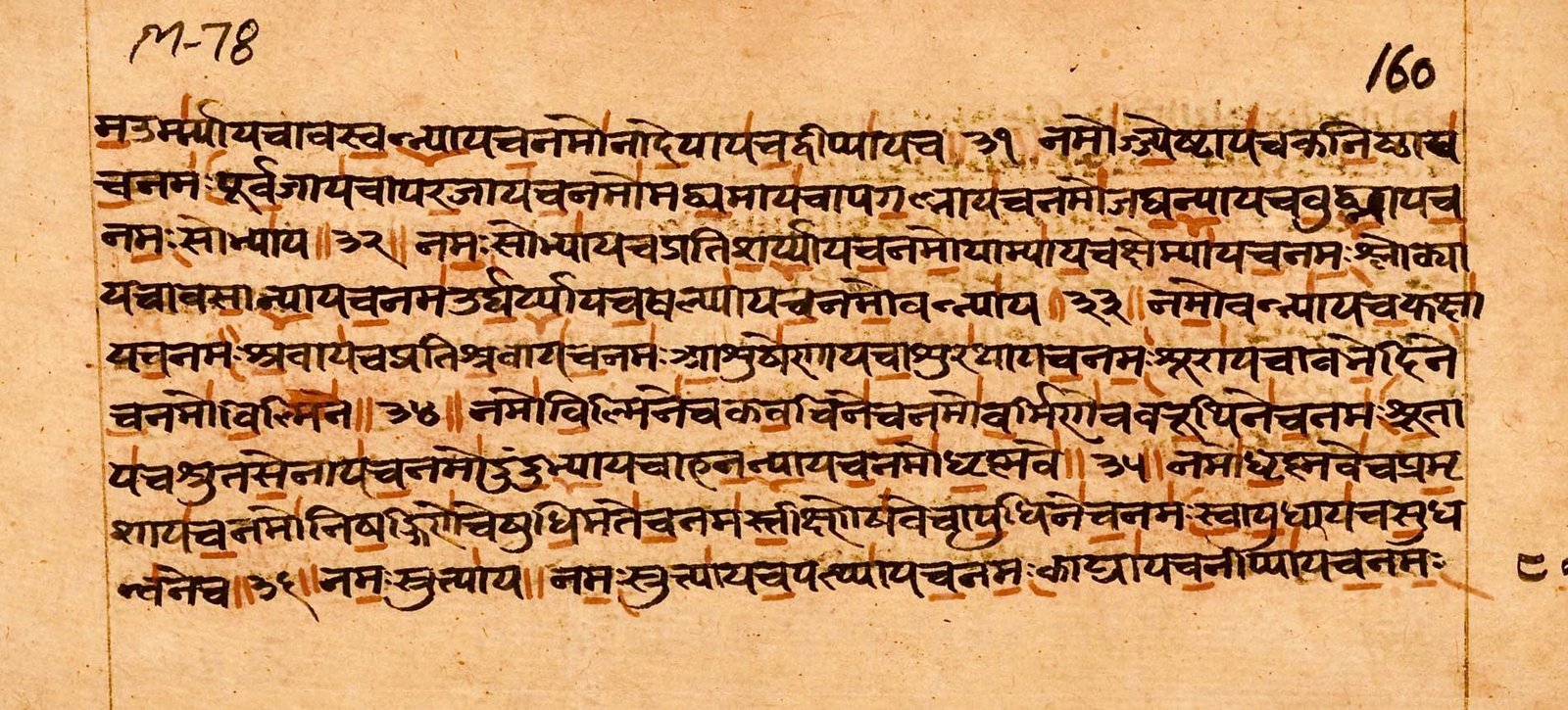
The Yajurveda is one of the four Vedas and is closely associated with Vedic rituals, yajnas and sacrificial ceremonies.
While the Rigveda is mainly known for its hymns and the Samaveda for its musical chanting, the Yajurveda is particularly connected with the practical performance of Vedic rituals.
The Yajurveda contains sacred formulas and ritual material used by priests during different Vedic ceremonies. It therefore gives us an important understanding of how rituals were organized and performed in the ancient Vedic tradition.


Image ALT: Ancient Yajurveda Sanskrit manuscript and Vedic ritual tradition
What Does the Word Yajurveda Mean?
The name Yajurveda is connected with the Sanskrit term Yajus, referring to formulas used in Vedic ritual practice.
Veda means knowledge.
Yajurveda can therefore be broadly understood as the knowledge associated with ritual formulas and sacrificial ceremonies.
It has a particularly strong connection with the practical side of Vedic rituals.
What Is Found in the Yajurveda?
The Yajurveda contains mantras, ritual formulas and material connected with Vedic ceremonies.
Its subject matter includes:
- Yajnas
- Ritual offerings
- Sacred formulas
- Priestly duties
- Ceremonial procedures
- Sacred fire rituals
- Soma-related ceremonies
- Religious observances

Image ALT: Yajurveda Sanskrit manuscript containing ancient Vedic ritual verses
The Yajurveda was especially important for the Adhvaryu, the priest associated with many of the practical actions of a Vedic sacrifice.
What Is a Yajna?
A Yajna is a traditional Vedic ritual involving offerings made in connection with a sacred fire.
Fire, known as Agni, had an important role in Vedic ceremonies.
Different offerings could be made during different rituals while appropriate sacred formulas were recited.


Image ALT: Traditional Vedic Yajna ceremony with priests performing a sacred fire ritual
A Yajna required careful preparation and organization.
The ritual could involve:
- Preparation
- Sacred formulas
- Correct materials
- Proper sequence
- Trained priests
- Careful execution
This practical and organized character is one of the important features of the Yajurveda.
Why Was the Yajna Important?
Yajnas had an important place in Vedic religious life.
Different ceremonies were performed for different purposes and occasions.
The ritual involved offerings, sacred words and carefully prescribed actions.
The Yajurveda is especially important because of its connection with the actual performance of these rituals.


Image ALT: Vedic priests performing a traditional yajna ceremony around sacred fire
Simple Way to Remember
Yajurveda = Yajna + Ritual Practice
Life Lesson
Yajurveda reminds us that important work requires preparation, discipline and responsibility.
The Four Main Priestly Roles
Large Vedic rituals traditionally involved different priests with different responsibilities.
Hotṛ
The Hotṛ was associated with reciting hymns from the Rigveda.
Udgātṛ
The Udgātṛ was associated with the musical chants of the Samaveda.
Adhvaryu
The Adhvaryu was closely associated with the Yajurveda and handled many practical actions of the sacrifice.
Brahman
The Brahman priest had a supervisory role in the ritual.


Image ALT: Vedic priests performing different roles during a traditional yajna
This division of responsibilities shows how organized major Vedic rituals could be.
What Makes Yajurveda Special?
The distinctive feature of the Yajurveda is its strong connection with the practical side of Vedic ritual.
While the other Vedas have their own distinctive functions, the Yajurveda provides important formulas and ritual material associated with the performance of ceremonies.
Simple Way to Remember
Rigveda → Hymns
Samaveda → Music and Chanting
Yajurveda → Rituals
Atharvaveda → Everyday Life and Prayers
Life Lesson from Yajurveda
Doing something correctly requires knowledge, preparation and discipline.
Shukla Yajurveda and Krishna Yajurveda
The Yajurveda has two major textual traditions:
Shukla Yajurveda
The Shukla Yajurveda, also known as the White Yajurveda, presents the mantra material and explanatory material in a more separated arrangement.
The Vajasaneyi Samhita is the best-known Samhita associated with this tradition.


Image ALT: Shukla Yajurveda Vajasaneyi Samhita Sanskrit manuscript
Krishna Yajurveda
The Krishna Yajurveda, also called the Black Yajurveda, contains mantra and explanatory prose material in a more mixed arrangement.
The Taittiriya Samhita is one of the major texts associated with this tradition.


Image ALT: Krishna Yajurveda Taittiriya Samhita Sanskrit manuscript
Both traditions are important parts of the Yajurvedic heritage.
Yajurveda and Agni
Agni, the sacred fire, plays an important role in Vedic ritual traditions.
During a Yajna, offerings were placed into the fire while appropriate mantras were recited.


Image ALT: Sacred Agni fire during a traditional Vedic yajna ceremony
The fire therefore became an important part of the relationship between offering, ritual action and sacred recitation.
Yajurveda and Soma
Soma also occupies an important position in Vedic ritual literature.
Certain major Vedic ceremonies involved the preparation and ritual use of Soma.
These ceremonies required carefully organized actions and appropriate sacred recitations.
The Yajurveda contains important ritual material connected with these practices.
Yajurveda and Discipline
One of the strongest lessons we can take from the Yajurvedic ritual tradition is discipline.
A complex ritual could involve many steps.
Each step had to be performed carefully and in the appropriate sequence.

Image ALT: Priests carefully performing a traditional Vedic Yajna ceremony
The correct:
- Mantra
- Action
- Offering
- Sequence
- Timing
were important.
Life Lesson
When we perform our responsibilities carefully, even difficult tasks become organized and meaningful.
How Was the Yajurveda Preserved?
Like the other Vedas, the Yajurveda was preserved through a highly developed oral tradition.
Teachers taught students the correct pronunciation and recitation of sacred formulas.
Students listened, repeated and practiced the material until they could reproduce it accurately.


Image ALT: Guru teaching students Vedic chanting in a traditional Indian Gurukul
The process can be remembered as:
Listening → Repetition → Memorization → Practice → Preservation
The Guru–Shishya Tradition
The Guru–Shishya tradition was an important part of traditional Vedic learning.
A teacher personally guided students and corrected their pronunciation and recitation.
Students needed patience and concentration to master the material.

Image ALT: Guru and students following the traditional Vedic education system
Life Lesson
Knowledge becomes stronger when it is learned carefully and passed responsibly to the next generation.
Yajurveda and Indian Culture
The Yajurveda is an important part of India’s ancient cultural and intellectual heritage.
Its ritual material helps us understand the organization of Vedic ceremonies and the responsibilities of different priests.

Image ALT: Vedic cultural heritage and traditional ritual ceremony in India
The Yajurveda therefore represents an important part of India’s ancient religious and cultural heritage.
Why Is Yajurveda Important Today?
The Yajurveda remains important for several reasons.
1. Understanding Vedic Rituals
It helps us understand the practical performance of Vedic ceremonies.
2. Ancient Indian Knowledge
It preserves an important part of India’s ancient textual and oral heritage.
3. Oral Tradition
Its preservation demonstrates the importance of memory, pronunciation and disciplined learning.
4. Cultural Heritage
Yajurvedic traditions remain part of India’s living Vedic heritage.
5. Historical Importance
It provides valuable material for understanding Vedic religious and cultural traditions.
What Can We Learn From Yajurveda?
Discipline
Important tasks require preparation and regular practice.
Responsibility
Every role has its own duties.
Precision
Careful work produces better results.
Teamwork
Large rituals involved people with different responsibilities.
Respect for Knowledge
Knowledge survives when every generation learns and preserves it.
Yajurveda – Quick Facts
Name: Yajurveda
Main Association: Vedic rituals and Yajnas
Language: Vedic Sanskrit
Major Divisions: Shukla Yajurveda and Krishna Yajurveda
Important Priest: Adhvaryu
Important Element: Agni / Sacred Fire
Main Character: Ritual formulas and practical ritual material
Preservation: Oral teacher–student tradition
Conclusion
The Yajurveda holds a special place among the four Vedas because of its close connection with Yajnas, rituals and ceremonial practice.
It gives us an important view of the practical side of the Vedic tradition.
The correct mantra, action, offering and sequence were important parts of ritual performance.
But the Yajurveda is not only about ancient rituals.
It also gives us timeless lessons about discipline, responsibility, precision and dedication.
For generations, teachers and students preserved this knowledge through careful oral learning.
Even today, Yajurvedic traditions remain an important part of India’s living cultural heritage.
Discipline, responsibility, knowledge and dedication — these are among the timeless values we can learn from the Yajurveda. 🇮🇳
Frequently Asked Questions
What is the Yajurveda?
The Yajurveda is one of the four Vedas and is particularly associated with Vedic rituals, Yajnas and ritual formulas.
What does Yajurveda mean?
The name is connected with Yajus, referring to formulas used in Vedic ritual practice, together with Veda, meaning knowledge.
What is a Yajna?
A Yajna is a Vedic ritual involving offerings, sacred fire, mantras and carefully organized ritual actions.
Which priest is associated with the Yajurveda?
The Adhvaryu is traditionally associated with the Yajurveda and with many practical aspects of the ritual.
What are the two major traditions of Yajurveda?
They are the Shukla Yajurveda and the Krishna Yajurveda.
Why is Agni important?
Agni, the sacred fire, is an important element in many Vedic rituals and receives offerings during the ceremony.
How was Yajurveda preserved?
It was preserved through highly disciplined oral transmission, with teachers training students through repeated recitation and practice.
Why is Yajurveda important?
It is important for understanding Vedic ritual traditions, ancient Indian culture, oral learning and Vedic literature.
Final Thought
The Yajurveda reminds us that knowledge becomes meaningful when it is put into practice.
The ancient Vedic tradition placed great importance on performing responsibilities carefully and maintaining discipline.
Its preservation through generations also demonstrates the importance of learning, memory and dedication.
Let us learn about our heritage, understand it with an open mind, and preserve its valuable traditions for future generations.
MANA BHARATHAM 🇮🇳 🇮🇳