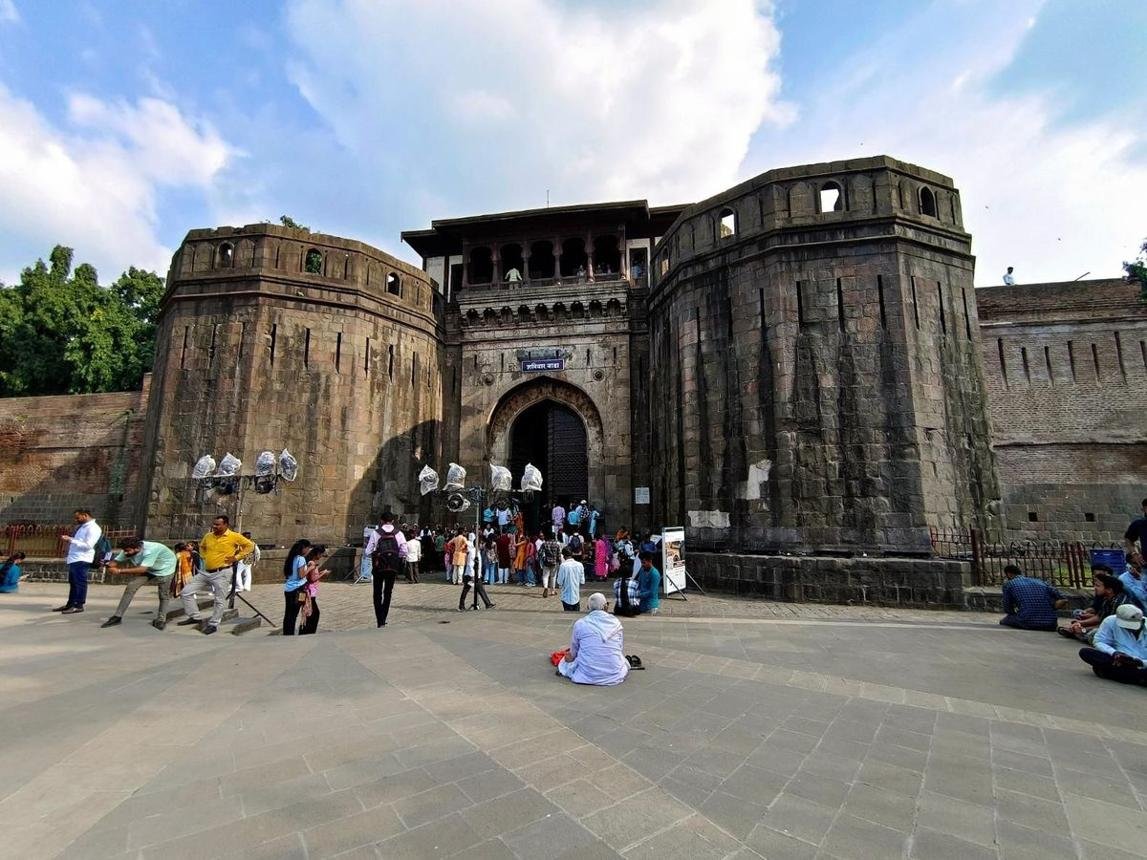
An original folklore-based horror story inspired by the tragic history and popular legends associated with Shaniwar Wada in Pune. This article does not present supernatural claims as scientifically proven facts.
🏰 The Fort That Remembers
Pune is home to many historic places, but few have a reputation as mysterious as Shaniwar Wada.
Built in the 18th century, the fort became an important centre of the Peshwa period. Today, its surviving walls and ruins attract visitors interested in history and architecture.
But after sunset, a different story begins.
According to popular folklore, people have reported hearing a young voice crying from within the old fort.
The words are often described as a desperate plea:
“Kaka, mala vachva…”
In Marathi, this is commonly understood as:
“Uncle, save me.”
Is it the voice of a ghost?
Or is the story a memory of a tragic event that became part of local folklore?
Shaniwar Wada


Shaniwar Wada historic fort in Pune
📜 The Tragedy Behind the Legend
To understand the ghost story, we first need to understand the history.
One of the most tragic episodes associated with Shaniwar Wada concerns Narayanrao Peshwa, who became Peshwa at a young age.
Historical accounts describe a violent political struggle surrounding him.
In 1773, Narayanrao was killed at Shaniwar Wada.
The circumstances surrounding his death became the subject of historical debate and later storytelling.
Over time, a haunting legend developed around the tragedy.
According to popular tradition, Narayanrao’s spirit is said to return to the fort and cry for help.
That is where the famous midnight story begins.
🌙 The Midnight Cry
Imagine standing outside the old fort late at night.
The streets are quiet.
The wind moves through the trees.
The stone walls are barely visible in the darkness.
Then, from somewhere inside the ruins, you hear:
“Kaka… mala vachva…”
You stop.
You listen.
Nothing.
Then the voice comes again.
“Kaka… mala vachva…”
You look toward the dark walls.
Nobody is there.
The voice seems to come from everywhere at once.
Fort at Night


Shaniwar Wada at night with mysterious atmosphere
👣 The Footsteps
The story becomes even darker in some versions.
Visitors and local storytellers sometimes describe hearing footsteps around the old fort.
At first:
Step…
Then:
Step… step…
And suddenly—
running footsteps.
It sounds as though someone is desperately trying to escape.
The footsteps seem to move across the old stone corridors.
Then they stop.
Silence returns.
No one appears.
This is one of the reasons the location has become associated with supernatural folklore.
But old historic structures can naturally produce echoes and unusual sounds.
Wind, animals, visitors, and surrounding activity can all create noises that sound mysterious at night.
🕯️ Why Is the Story So Powerful?
The legend is frightening because it is connected to a real historical tragedy.
This is different from a completely invented ghost story.
There really was a violent political conflict surrounding Narayanrao.
There really was a death inside the fort.
What cannot be established scientifically is the claim that his spirit continues to appear or speak from the ruins.
That part belongs to folklore.
Historic Interior


Historic stone architecture inside Shaniwar Wada Pune
👦 The Young Peshwa
Narayanrao was very young when he became Peshwa.
His position placed him in the middle of a complicated political environment.
The conflict surrounding him involved powerful people and competing interests.
His death therefore became much more than a personal tragedy.
It became an important part of the political history of the Peshwa period.
Later generations remembered the tragedy through stories, and supernatural elements gradually became associated with the location.
🌑 What Happens After Dark?
Popular stories describe the fort becoming especially mysterious after nightfall.
People imagine:
- Empty corridors
- Faint footsteps
- A distant cry
- Shadows moving across walls
- A child’s voice
- Sudden silence
These details have been repeated in various retellings.
But readers should remember that these are stories and beliefs, not verified paranormal observations.
🔥 The Most Famous Cry
The phrase associated with the legend is:
“Kaka, mala vachva!”
The words are often translated as:
“Uncle, save me!”
According to the legend, this is the desperate cry of Narayanrao.
Whether anyone actually hears such a voice today cannot be scientifically established.
But the phrase has become deeply connected with the popular identity of Shaniwar Wada.
Mysterious Corridor


Mysterious corridor inside an old Indian fort
👂 Why Do People Hear Voices in Old Buildings?
There are several possible explanations for unusual sounds.
Echoes
Stone walls can reflect sounds in unusual ways.
Wind
Air moving through openings can create tones that resemble voices.
Animals
Birds, bats, insects, and other animals can produce unexpected sounds.
Human activity
Distant conversations can become difficult to locate accurately.
Expectation
If someone already knows a place is supposed to be haunted, they may pay greater attention to ambiguous sounds.
These explanations don’t prove that every reported experience is false.
They simply show that there are alternative possibilities besides a supernatural explanation.
🕯️ The Empty Courtyard
Imagine an old courtyard surrounded by high stone walls.
There is no crowd.
No traffic.
Only the wind.
A dry leaf moves across the ground.
Then you hear something.
A child crying.
You look around.
Nothing.
The crying stops.
You take another step.
Then—
“Kaka…”
You freeze.
The sound seems to come from directly behind you.
You turn.
Nobody.
You look toward the wall.
Still nothing.
Then the sound disappears completely.
This is how the legend is often imagined.
Empty Courtyard


Empty courtyard inside Shaniwar Wada Pune
👻 Is Narayanrao’s Ghost Really There?
There is no scientific evidence proving that Narayanrao’s spirit remains at Shaniwar Wada.
The ghost story is best understood as historical folklore.
This distinction is important because the historical event and the supernatural story are two different things.
Historical fact:
Narayanrao was killed at Shaniwar Wada in 1773.
Folklore:
His spirit is said to cry for help.
Scientific evidence:
There is no established scientific evidence proving that his ghost appears at the fort.
🏛️ The Fort Today
Shaniwar Wada is now an important historical site in Pune.
Its remaining structures offer visitors an opportunity to learn about:
- Maratha history
- Peshwa-era architecture
- Pune’s heritage
- Political history
- Traditional construction
The ghost legend may attract curiosity, but the site’s historical importance is much greater.
🌧️ Why Rain Makes the Legend More Frightening
Imagine the old fort during a monsoon evening.
Rain hits the stone.
Wind passes through empty spaces.
Water drips from the roof.
The sky becomes dark.
Every sound echoes.
A distant noise can suddenly seem much closer.
In such an environment, an old tragedy can easily become the foundation for a powerful ghost story.
Shaniwar Wada in Rain


Shaniwar Wada during monsoon rain in Pune
The Difference Between History and Horror
This story teaches us something interesting.
Sometimes the strongest ghost stories begin with real historical events.
A tragedy happens.
People remember it.
Stories are told.
Each generation adds details.
Eventually, the original historical event becomes surrounded by supernatural folklore.
That may be what happened with the Shaniwar Wada legend.
We cannot prove the ghost.
But we can study the history that inspired the story.
🧠 Why Do People Believe the Legend?
Belief in supernatural stories can be influenced by:
- Family traditions
- Local storytelling
- Historical tragedies
- Personal experiences
- Cultural beliefs
- Movies and television
- Social media
Once a story becomes famous, people may visit a place expecting something unusual.
That expectation can make ordinary events feel extraordinary.
⚠️ Respect the Historical Site
If you visit Shaniwar Wada, remember that it is a heritage site.
Visitors should:
- Follow current entry rules.
- Respect the monument.
- Avoid damaging old structures.
- Keep the area clean.
- Avoid climbing restricted sections.
- Respect other visitors.
A historical monument should be treated as part of India’s cultural heritage—not simply as a haunted attraction.
Heritage of Pune


Shaniwar Wada heritage monument in Pune Maharashtra
Frequently Asked Questions
Is Shaniwar Wada really haunted?
There is no scientific evidence proving that the fort is haunted. The ghost stories are part of popular folklore connected with its tragic history.
Who is said to haunt Shaniwar Wada?
Popular legend associates the haunting with Narayanrao Peshwa, who was killed at the fort in 1773.
What does “Kaka, mala vachva” mean?
It is Marathi for “Uncle, save me.” The phrase is traditionally associated with the legend of Narayanrao’s final cries for help.
Did Narayanrao really die at Shaniwar Wada?
Yes. His death at Shaniwar Wada in 1773 is a historical event; the supernatural stories surrounding it are a separate matter.
Can visitors hear the ghost?
There is no scientifically verified evidence that visitors can hear Narayanrao’s ghost.
Why is Shaniwar Wada famous?
It is historically significant because of its association with the Peshwas and the political history of the Maratha period.
👻 Conclusion
Shaniwar Wada is a place where history and horror folklore meet.
The tragic death of Narayanrao Peshwa is part of documented history, while the story of his spirit crying “Kaka, mala vachva” belongs to the world of legend.
Perhaps that is why the story has survived for so long.
The old stone walls cannot tell us what happened after midnight.
They cannot confirm whether a voice ever echoed through the corridors.
They cannot tell us whether the footsteps were real.
But they do preserve the memory of a tragic chapter in Indian history.
And when the night becomes silent, the old legend still asks one frightening question:
Leave a Reply