Nowadays, whether we want to purchase an item, open a bank account, or submit an application for government services, the PIN code is one of the first details commonly asked for. Let us explore what a PIN code actually is, when and by whom it was introduced in India, the reasons behind its implementation, and its history.

What does ‘Pin code’ mean?
PIN stands for Postal Index Number. It is a six-digit code introduced by the postal department (India Post) in India. Every post office in the country has a unique PIN code; it is through this code that letters and parcels reach their respective addresses.
Why did the need for a pin code arise?
Before 1972, there was no PIN code system in India. The country was vast, comprising numerous towns and small villages. It was common for different places to share the same name. Furthermore, India is home to a multitude of languages—such as Telugu, Hindi, Urdu, Tamil, and Bengali. At that time, the use of letters was widespread and essential; however, because people wrote letters in their respective languages, postal staff faced significant confusion. Consequently, ensuring letters reached the correct recipients was difficult, and they often ended up at the wrong locations.
When was the PIN code introduced in India?
The PIN code system is a system devised by the Government of India after extensive planning and deliberation. It was officially launched by the government on August 15, 1972. The system was designed by Shri ram Bhikaji Velankar, an official of the Postal Department.

The meaning of the six digits in a PIN code
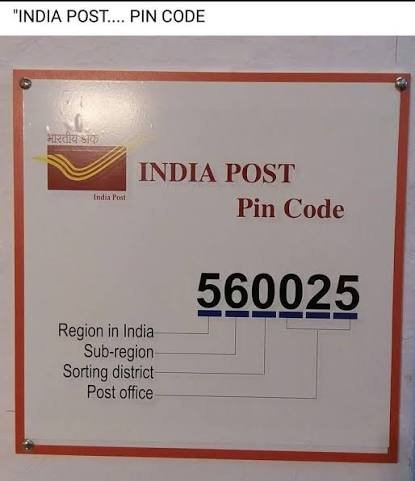
Each digit in a PIN code has a specific meaning.
First digit – Postal zone
Second digit – Sub-zone
Third digit – Sorting district
Digits 4, 5, and 6 – The specific post office
Leave a Reply