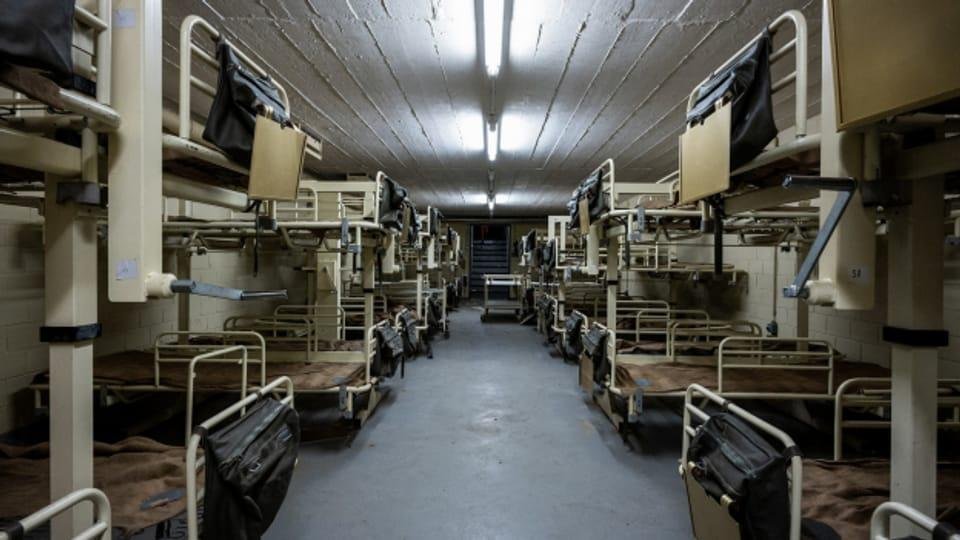
When people think about Switzerland, they usually imagine snow-covered Alps, beautiful lakes, luxury watches, chocolate and peaceful villages.
But Switzerland has another fascinating side that many people around the world do not know about.
For decades, Switzerland developed an extensive system of civil-defence shelters designed to protect people during major emergencies, including armed conflict and nuclear fallout.
This unusual preparedness policy became one of the most distinctive features of modern Switzerland.
🏔️ Why Does Switzerland Have So Many Shelters?
Switzerland is a neutral country, but neutrality does not mean that the country has historically ignored national security.
During the Cold War, the possibility of a large-scale conflict in Europe created serious concerns about the safety of civilians.
Switzerland therefore developed a national civil-protection strategy that included shelters for the population.
These shelters were constructed in many different places, including:
- Residential buildings
- Schools
- Hospitals
- Public buildings
- Underground facilities
- Parking structures
Some shelters were designed to protect people from the effects of conventional attacks, while others were designed with nuclear fallout protection in mind.
☢️ Switzerland’s Nuclear Shelter System
One of the most remarkable aspects of Switzerland’s civil-defence policy was its attempt to provide shelter capacity for a very large proportion of the population.
Swiss authorities have maintained a nationwide network of protected shelters, although the exact number of available spaces and their operational status can change over time.
The country’s federal civil-protection system explains that shelters remain an important part of Switzerland’s emergency-preparedness strategy.
The concept is simple:
If a major disaster happens, people should have a protected place to go.
This idea became particularly important during the Cold War.


🚪 Some Shelters Are Hidden Under Ordinary Buildings
One of the most surprising things about Switzerland’s shelters is that they do not always look like military bunkers.
A shelter can be located underneath an ordinary apartment building.
From the street, a building might look completely normal.
But below ground, it can contain:
- Reinforced walls
- Heavy doors
- Ventilation systems
- Emergency equipment
- Sleeping areas
- Sanitation facilities
This means that Switzerland’s civil-defence infrastructure can be almost invisible in everyday life.
🏠 Why Were Shelters Built Under Homes?
Switzerland’s approach was based partly on the idea that protection should be available close to where people live.
Instead of expecting millions of people to travel long distances during an emergency, shelters could be distributed throughout communities.
This created a decentralised civil-protection system.
In theory, that means:
Home → Nearby shelter → Protection
rather than:
Home → Long-distance evacuation → Emergency facility
That approach can be especially valuable when roads and transportation systems are disrupted.
🧱 What Makes a Nuclear Shelter Different?
A normal basement is not automatically a nuclear shelter.
A properly designed civil-defence shelter can include structural protection and specialised ventilation systems.
The purpose is not necessarily to make people completely immune to every danger.
Instead, the shelter is intended to reduce exposure to hazards such as:
- Radiation from fallout
- Debris
- Blast effects
- Contaminated air
- Other consequences of major emergencies
The exact capabilities depend on the design and condition of each facility.
🇨🇭 Switzerland’s Famous Preparedness Culture
The shelter system is part of a much broader Swiss approach to emergency preparedness.
Switzerland has traditionally placed considerable emphasis on:
Preparation before a crisis happens.
That philosophy can be seen in civil protection, emergency planning and infrastructure.
The underlying principle is straightforward:
It is better to prepare before a disaster than to improvise after it begins.
This idea has influenced Switzerland’s approach to several types of emergencies, not just military conflict.
🌍 Is Switzerland Preparing for a Nuclear War Today?
This needs an important clarification.
The existence of nuclear shelters does not mean Switzerland expects a nuclear war to happen.
Many of the shelters were developed during the Cold War, when nuclear confrontation was a major concern across Europe.
Today, Switzerland’s civil-protection system covers a much broader range of potential emergencies.
These can include:
- Natural disasters
- Major accidents
- Infrastructure failures
- Armed conflict
- Other large-scale emergencies
So the shelters are better understood as part of a national resilience system, rather than simply “nuclear war bunkers.”


🏔️ Why Switzerland’s Geography Also Matters
Switzerland’s geography has influenced its approach to civil protection.
The country has:
- High mountains
- Narrow valleys
- Dense urban areas
- Important transport routes
- Major tunnels
- Underground infrastructure
Underground construction is already a major part of Swiss engineering.
The same engineering expertise that helps build tunnels and infrastructure can also be used in civil protection.
🚇 Switzerland Has a Remarkable Underground World
Switzerland is famous for engineering projects beneath the mountains.
Railway tunnels, road tunnels, underground facilities and military installations are scattered throughout the country.
Some of these structures are connected with Switzerland’s long history of using mountains and underground spaces for strategic purposes.
This creates an interesting contrast:
Above ground:
Beautiful villages, lakes and mountains.
Below ground:
Tunnels, shelters and reinforced infrastructure.
That hidden side of Switzerland is rarely seen by tourists.
🤯 10 Fascinating Facts About Switzerland’s Shelters
1️⃣ Switzerland has one of the world’s best-known civil-defence shelter networks.
2️⃣ Many shelters were developed during the Cold War.
3️⃣ Some shelters are located underneath ordinary residential buildings.
4️⃣ Certain shelters were designed to provide protection against radioactive fallout.
5️⃣ Civil-protection shelters are not limited to military emergencies.
6️⃣ Switzerland’s emergency-preparedness system is closely connected with its broader civil-protection strategy.
7️⃣ Underground construction is an important part of Swiss engineering.
8️⃣ The country’s mountain geography has encouraged extensive underground infrastructure.
9️⃣ The shelters became especially important during the period of Cold War nuclear tension.
🔟 Switzerland’s shelter system demonstrates the country’s long-standing emphasis on preparedness and resilience.
🍫 Switzerland Is More Than Chocolate and Mountains
Switzerland is often marketed to the world through its beautiful landscapes and famous products.
People know it for:
Swiss chocolate 🍫
Swiss watches ⌚
The Alps 🏔️
Beautiful lakes 🌊
Ski resorts 🎿
But underneath this peaceful image is a country that spent decades preparing for some of the worst scenarios imaginable.
That contrast is what makes Switzerland so fascinating.
A peaceful country that built an enormous civil-defence system.
🌎 What Can Other Countries Learn From Switzerland?
Switzerland’s shelter system raises a much bigger question:
How should a country prepare for disasters before they happen?
Every country faces different risks.
One country may worry about earthquakes.
Another may face floods.
Another may face hurricanes.
Another may face wildfires.
Switzerland’s experience demonstrates the value of:
Planning + Infrastructure + Public Awareness + Emergency Preparedness
The exact system may not be suitable for every country, but the principle of preparing in advance is universal.
🇨🇭 The Hidden Side of Switzerland
Switzerland may look like one of the world’s quietest and most peaceful countries.
But beneath its towns and buildings lies a remarkable story of engineering, preparedness and Cold War history.
Its civil-defence shelters are a reminder that even countries known for peace and neutrality have historically prepared for extremely dangerous situations.
And perhaps that is the most surprising thing about Switzerland:
Leave a Reply