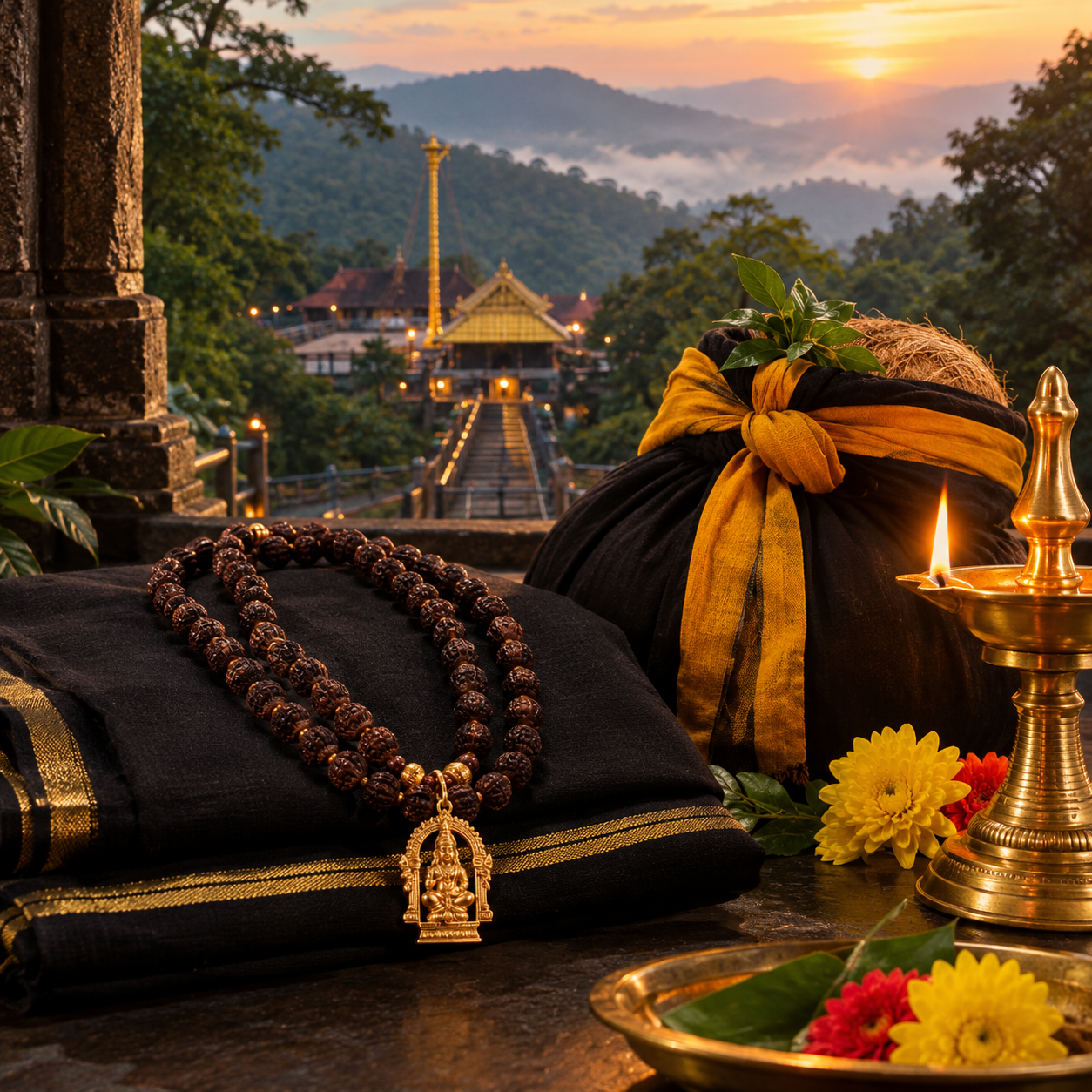
Sri Ayyappa Swamy Mala: The Sacred Journey of Faith, Discipline and Devotion
Introduction
India is a land of spirituality, devotion and ancient traditions. Among its many sacred religious practices, the Ayyappa Swamy Mala Deeksha holds a special place in the hearts of millions of devotees.
Every year, lakhs of devotees across India, particularly from Andhra Pradesh, Telangana, Kerala, Tamil Nadu and Karnataka, wear the sacred Ayyappa Mala and undertake a spiritual journey towards Sabarimala in Kerala.
For devotees, wearing the Ayyappa Mala is not simply a religious ritual. It represents a commitment to self-discipline, purity, humility, devotion and spiritual transformation.
The powerful chant “Swamiye Saranam Ayyappa” becomes a constant reminder of faith and surrender to Lord Ayyappa.
Who Is Lord Ayyappa?
Lord Ayyappa, also known as Dharma Sastha or Manikanta, is widely worshipped as a symbol of righteousness, courage, discipline and equality.
The famous Sabarimala temple in Kerala is dedicated to Lord Ayyappa. Situated amidst the beautiful Western Ghats, the temple attracts devotees from different states and communities.
The teachings associated with Lord Ayyappa inspire devotees to follow the path of truth, respect all human beings and practise self-control.
What Is Ayyappa Mala Deeksha?
Ayyappa Mala Deeksha is a sacred spiritual observance undertaken by devotees before visiting the Sabarimala temple.
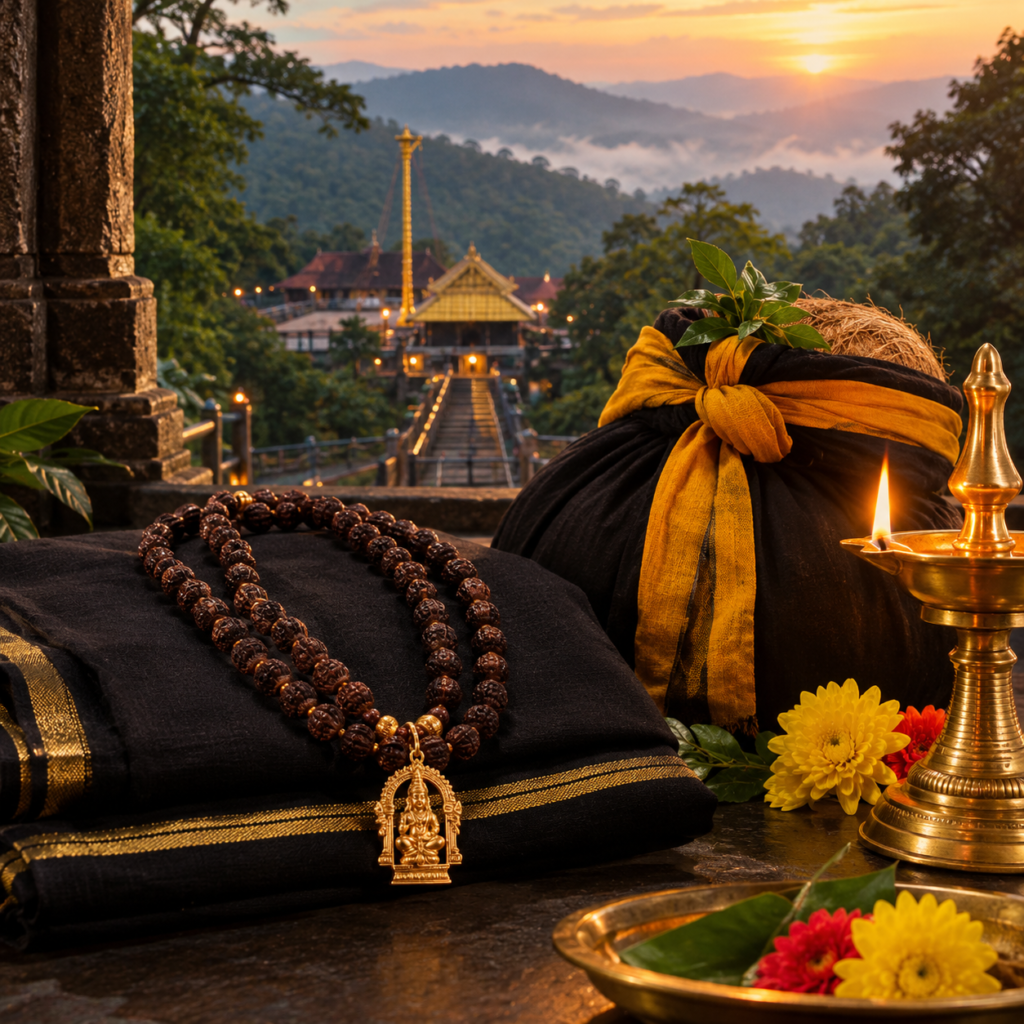
The devotee wears a holy necklace, traditionally made of Tulasi or Rudraksha beads, often containing a pendant of Lord Ayyappa.
The ritual of wearing the Mala is known as Mala Dharanam or Malayidal.
After wearing the Mala, the devotee begins a period of spiritual discipline called Vratham. Traditionally, this observance lasts for 41 days, known as Mandala Vratham.
During this period, devotees try to maintain purity in their thoughts, words and actions.
The Importance of the 41-Day Vratham
The 41-day Vratham is considered one of the most important aspects of Ayyappa Deeksha.
During this period, devotees traditionally follow certain spiritual disciplines:
- Wake up early in the morning and take a bath.
- Perform daily prayers and worship Lord Ayyappa.
- Follow a vegetarian diet.
- Practise Brahmacharyam and self-control.
- Avoid alcohol, smoking and other harmful habits.
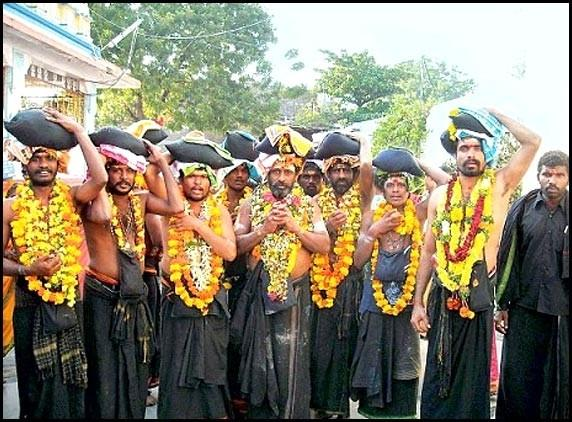
- Wear simple clothes, traditionally black, blue or saffron.
- Treat everyone with kindness, equality and respect.
- Chant “Swamiye Saranam Ayyappa” regularly.
- Avoid unnecessary luxury and practise a simple lifestyle.
- Develop patience, humility and positive thinking.
These practices help devotees develop discipline and strengthen their spiritual connection.
The Significance of Wearing Black Clothes
Black is traditionally associated with Ayyappa Deeksha.
Devotees wear black clothing as a symbol of simplicity, detachment from material pleasures and equality.
During the Deeksha period, everyone is addressed as “Swami”, regardless of their age, social status, profession or financial background.
This practice conveys an important message: every human being deserves equal respect.
The Role of Guru Swamy
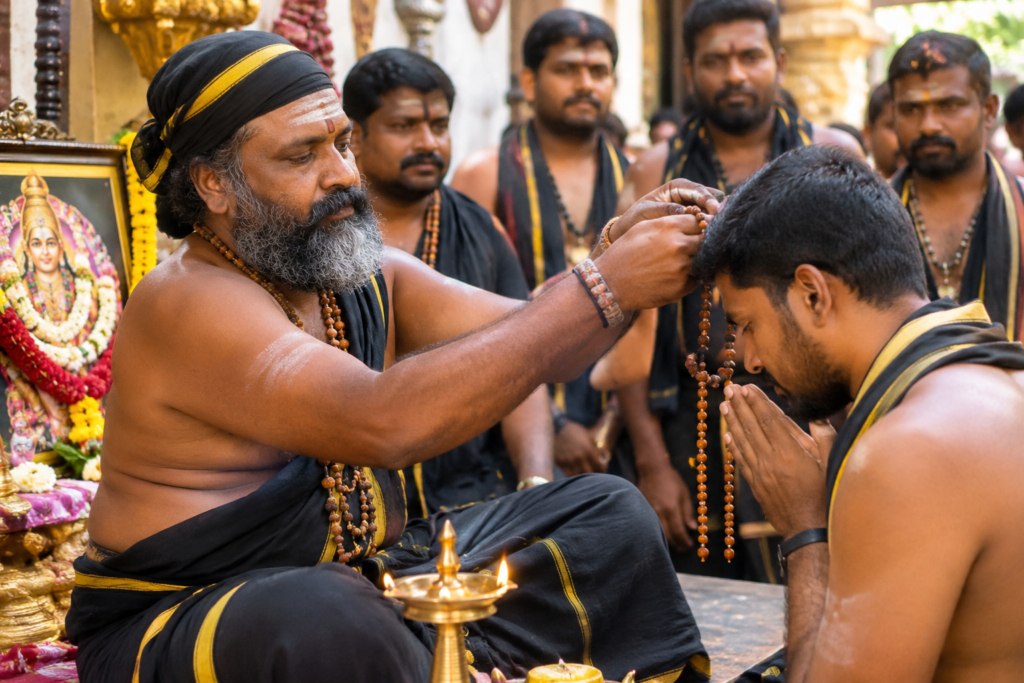
A Guru Swamy plays an important role in the Ayyappa pilgrimage tradition.
A Guru Swamy is an experienced devotee who guides other pilgrims in observing the Vratham and preparing for the Sabarimala journey.
Traditionally, devotees receive their Mala with the blessings and guidance of a Guru Swamy or temple priest.
First-time pilgrims, known as Kanni Swamis, particularly benefit from the guidance of an experienced Guru Swamy.
The Guru Swamy helps devotees understand the rituals, spiritual discipline and traditional procedures associated with the pilgrimage.
Irumudi Kettu – A Sacred Offering
Irumudi Kettu is an essential part of the traditional Sabarimala pilgrimage.
It is a sacred two-compartment bundle prepared by devotees under the guidance of a Guru Swamy.
The bundle contains offerings for Lord Ayyappa and other necessary items for the pilgrimage.
One of the most significant offerings is the coconut filled with ghee, which is used for Neyyabhishekam at the temple.
The preparation of Irumudi is known as Kettunira or Kettunirakkal.
For devotees, carrying the Irumudi on their heads represents dedication, faith and surrender to Lord Ayyappa.
The Sacred Journey to Sabarimala
After completing the prescribed Vratham, devotees prepare for their pilgrimage to Sabarimala.
The journey traditionally includes reaching Pamba, taking part in the sacred pilgrimage rituals and trekking towards the hilltop shrine.
The 18 sacred steps, known as Pathinettam Padi, hold great spiritual significance.
Devotees carrying the traditional Irumudi Kettu, subject to the temple’s prescribed conditions, ascend these sacred steps to seek the blessings of Lord Ayyappa.
The moment of having Darshan of Lord Ayyappa is deeply emotional and unforgettable for many pilgrims.
The Message of Ayyappa Deeksha
Ayyappa Deeksha teaches much more than religious rituals.
It encourages people to:
- Respect every human being.
- Control anger and negative thoughts.
- Help the poor and needy.
- Speak the truth.
- Follow a disciplined lifestyle.
- Develop patience and compassion.
- Maintain peace and harmony in society.
The greatest achievement of Deeksha is not merely completing 41 days of Vratham, but continuing the values of discipline, kindness and devotion throughout life.
Conclusion
Ayyappa Swamy Mala is a beautiful symbol of faith, devotion and spiritual transformation.
From Mala Dharanam to the completion of the Sabarimala pilgrimage, every step teaches devotees the importance of discipline, sacrifice, humility and surrender.
The sacred words “Swamiye Saranam Ayyappa” unite millions of devotees across India, reminding them that devotion is not just about prayer but also about leading a righteous and meaningful life.
May Lord Ayyappa bless everyone with good health, happiness, peace and prosperity.
Swamiye Saranam Ayyappa!
Leave a Reply