Sri Ayyappa Swamy Mala: The Sacred Journey of Faith, Discipline and Devotion
Introduction
India is a land of spirituality, devotion and ancient traditions. Among its many sacred religious practices, the Ayyappa Swamy Mala Deeksha holds a special place in the hearts of millions of devotees.
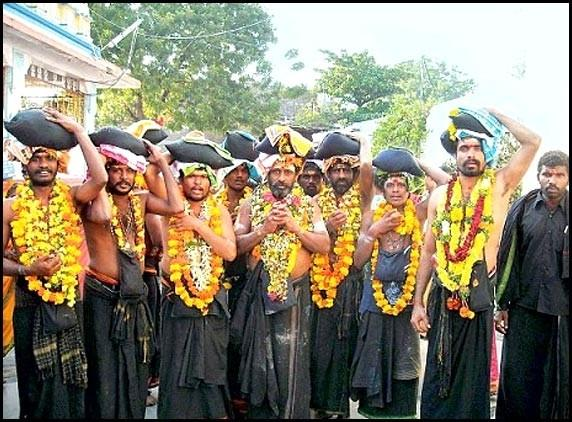
Every year, lakhs of devotees across India, particularly from Andhra Pradesh, Telangana, Kerala, Tamil Nadu and Karnataka, wear the sacred Ayyappa Mala and undertake a spiritual journey towards Sabarimala in Kerala.
For devotees, wearing the Ayyappa Mala is not simply a religious ritual. It represents a commitment to self-discipline, purity, humility, devotion and spiritual transformation.
The powerful chant “Swamiye Saranam Ayyappa” becomes a constant reminder of faith and surrender to Lord Ayyappa.
Who Is Lord Ayyappa?
Lord Ayyappa, also known as Dharma Sastha or Manikanta, is widely worshipped as a symbol of righteousness, courage, discipline and equality.
The famous Sabarimala temple in Kerala is dedicated to Lord Ayyappa. Situated amidst the beautiful Western Ghats, the temple attracts devotees from different states and communities.
The teachings associated with Lord Ayyappa inspire devotees to follow the path of truth, respect all human beings and practise self-control.
What Is Ayyappa Mala Deeksha?
Ayyappa Mala Deeksha is a sacred spiritual observance undertaken by devotees before visiting the Sabarimala temple.
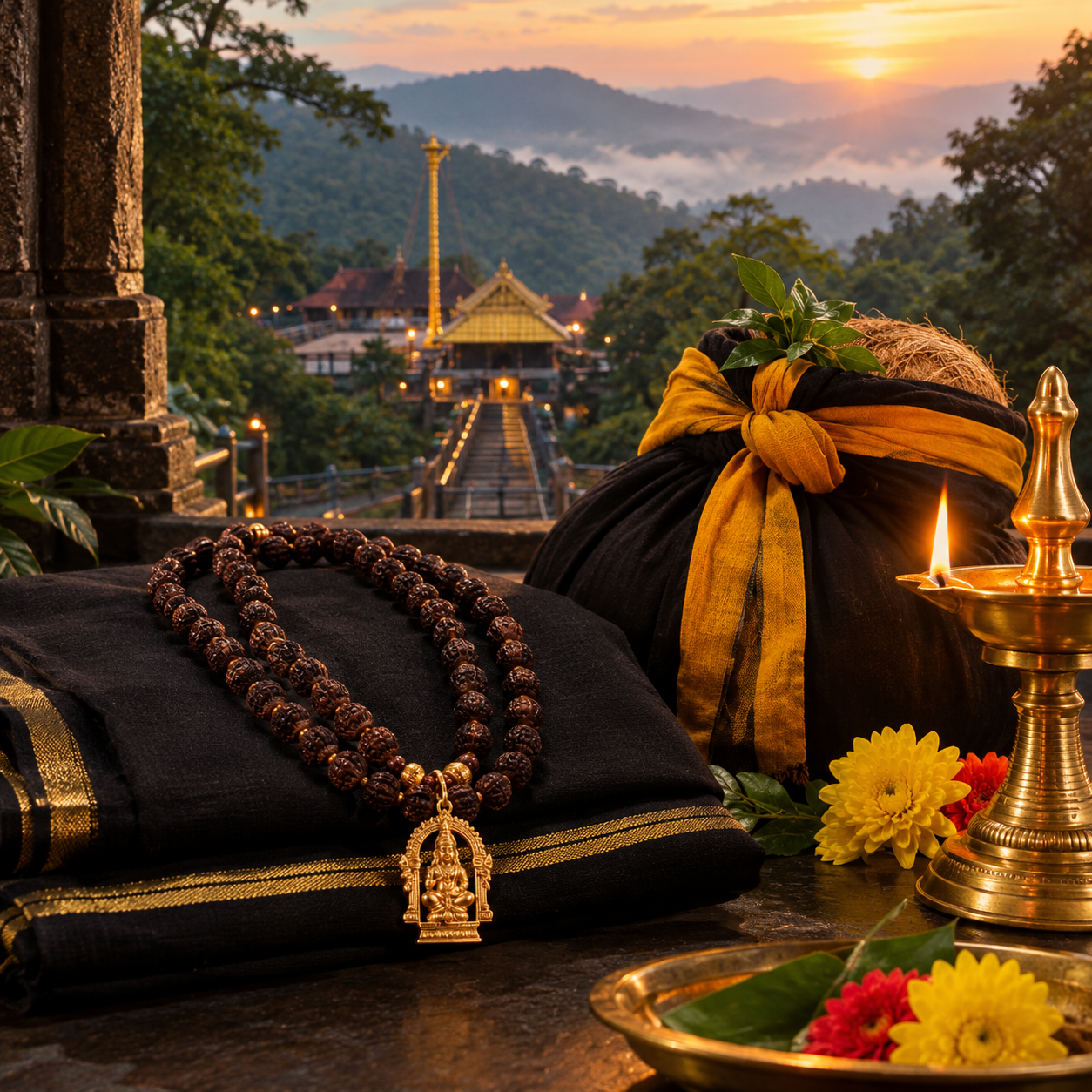
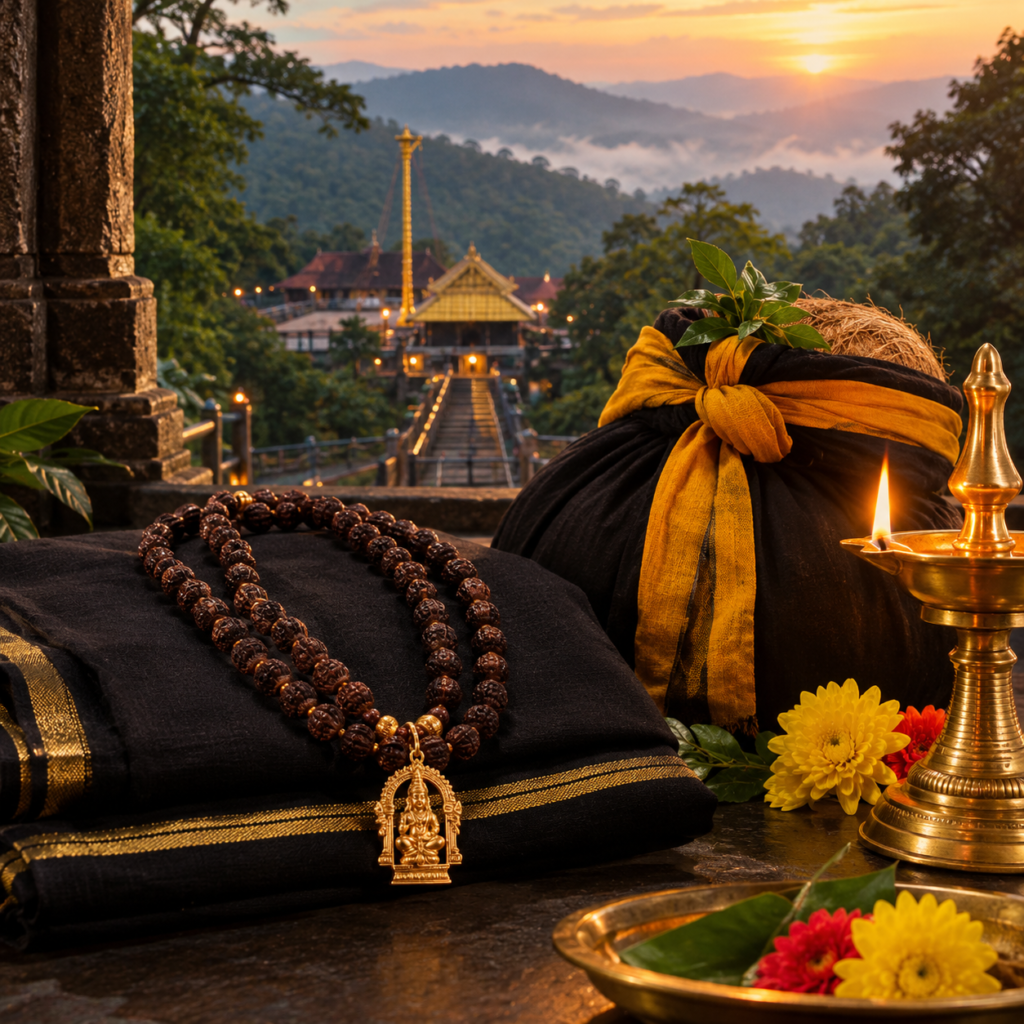
The devotee wears a holy necklace, traditionally made of Tulasi or Rudraksha beads, often containing a pendant of Lord Ayyappa.
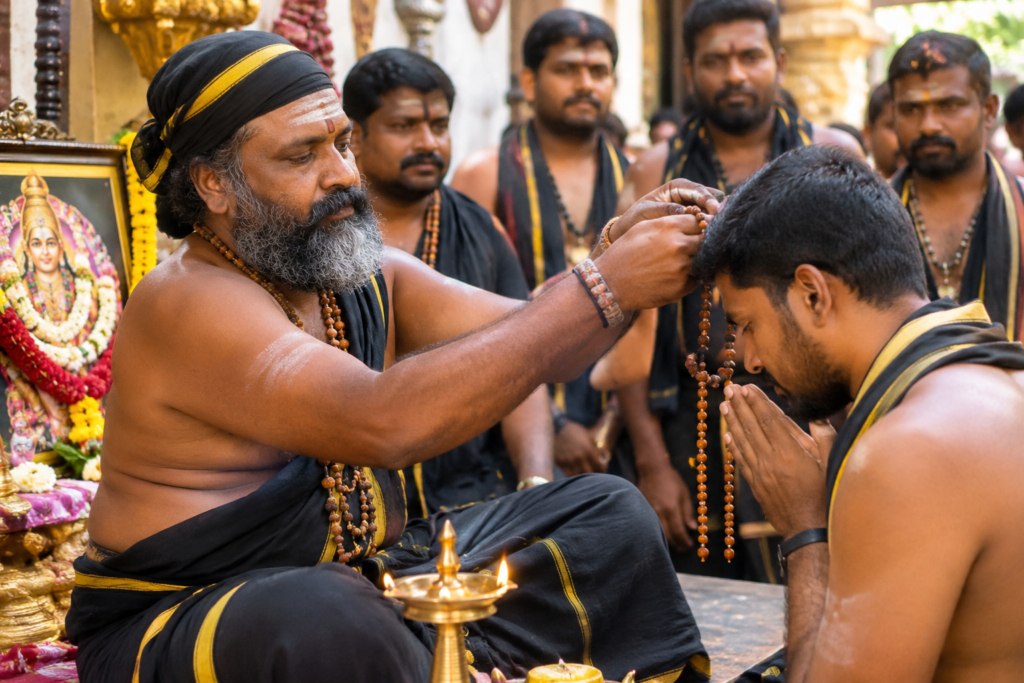
The ritual of wearing the Mala is known as Mala Dharanam or Malayidal.
After wearing the Mala, the devotee begins a period of spiritual discipline called Vratham. Traditionally, this observance lasts for 41 days, known as Mandala Vratham.
During this period, devotees try to maintain purity in their thoughts, words and actions.
The Importance of the 41-Day Vratham
The 41-day Vratham is considered one of the most important aspects of Ayyappa Deeksha.
During this period, devotees traditionally follow certain spiritual disciplines:
Wake up early in the morning and take a bath.
Perform daily prayers and worship Lord Ayyappa.
Follow a vegetarian diet.
Practise Brahmacharyam and self-control.
Avoid alcohol, smoking and other harmful habits.
Wear simple clothes, traditionally black, blue or saffron.
Treat everyone with kindness, equality and respect.
Chant “Swamiye Saranam Ayyappa” regularly.
Avoid unnecessary luxury and practise a simple lifestyle.
Develop patience, humility and positive thinking.
These practices help devotees develop discipline and strengthen their spiritual connection.
The Significance of Wearing Black Clothes
Black is traditionally associated with Ayyappa Deeksha.
Devotees wear black clothing as a symbol of simplicity, detachment from material pleasures and equality.
During the Deeksha period, everyone is addressed as “Swami”, regardless of their age, social status, profession or financial background.
This practice conveys an important message: every human being deserves equal respect.
The Role of Guru Swamy
A Guru Swamy plays an important role in the Ayyappa pilgrimage tradition.
A Guru Swamy is an experienced devotee who guides other pilgrims in observing the Vratham and preparing for the Sabarimala journey.
Traditionally, devotees receive their Mala with the blessings and guidance of a Guru Swamy or temple priest.
First-time pilgrims, known as Kanni Swamis, particularly benefit from the guidance of an experienced Guru Swamy.
The Guru Swamy helps devotees understand the rituals, spiritual discipline and traditional procedures associated with the pilgrimage.
Irumudi Kettu – A Sacred Offering
Irumudi Kettu is an essential part of the traditional Sabarimala pilgrimage.
It is a sacred two-compartment bundle prepared by devotees under the guidance of a Guru Swamy.
The bundle contains offerings for Lord Ayyappa and other necessary items for the pilgrimage.
One of the most significant offerings is the coconut filled with ghee, which is used for Neyyabhishekam at the temple.
The preparation of Irumudi is known as Kettunira or Kettunirakkal.
For devotees, carrying the Irumudi on their heads represents dedication, faith and surrender to Lord Ayyappa.
The Sacred Journey to Sabarimala
After completing the prescribed Vratham, devotees prepare for their pilgrimage to Sabarimala.
The journey traditionally includes reaching Pamba, taking part in the sacred pilgrimage rituals and trekking towards the hilltop shrine.
The 18 sacred steps, known as Pathinettam Padi, hold great spiritual significance.
Devotees carrying the traditional Irumudi Kettu, subject to the temple’s prescribed conditions, ascend these sacred steps to seek the blessings of Lord Ayyappa.
The moment of having Darshan of Lord Ayyappa is deeply emotional and unforgettable for many pilgrims.
The Message of Ayyappa Deeksha
Ayyappa Deeksha teaches much more than religious rituals.
It encourages people to:
Respect every human being.
Control anger and negative thoughts.
Help the poor and needy.
Speak the truth.
Follow a disciplined lifestyle.
Develop patience and compassion.
Maintain peace and harmony in society.
The greatest achievement of Deeksha is not merely completing 41 days of Vratham, but continuing the values of discipline, kindness and devotion throughout life.
Conclusion
Ayyappa Swamy Mala is a beautiful symbol of faith, devotion and spiritual transformation.
From Mala Dharanam to the completion of the Sabarimala pilgrimage, every step teaches devotees the importance of discipline, sacrifice, humility and surrender.
The sacred words “Swamiye Saranam Ayyappa” unite millions of devotees across India, reminding them that devotion is not just about prayer but also about leading a righteous and meaningful life.
May Lord Ayyappa bless everyone with good health, happiness, peace and prosperity.
Continuing our 18 Mahapuranas series, today we have reached the final part — Part 18: Brahmanda Purana.
The Brahmanda Purana is traditionally counted among the 18 Mahapuranas. Its name comes from Brahmanda, meaning the cosmic universe or cosmic egg. The Purana deals with subjects such as creation, cosmic time, dynasties, Dharma, sacred places, religious traditions and spiritual knowledge.
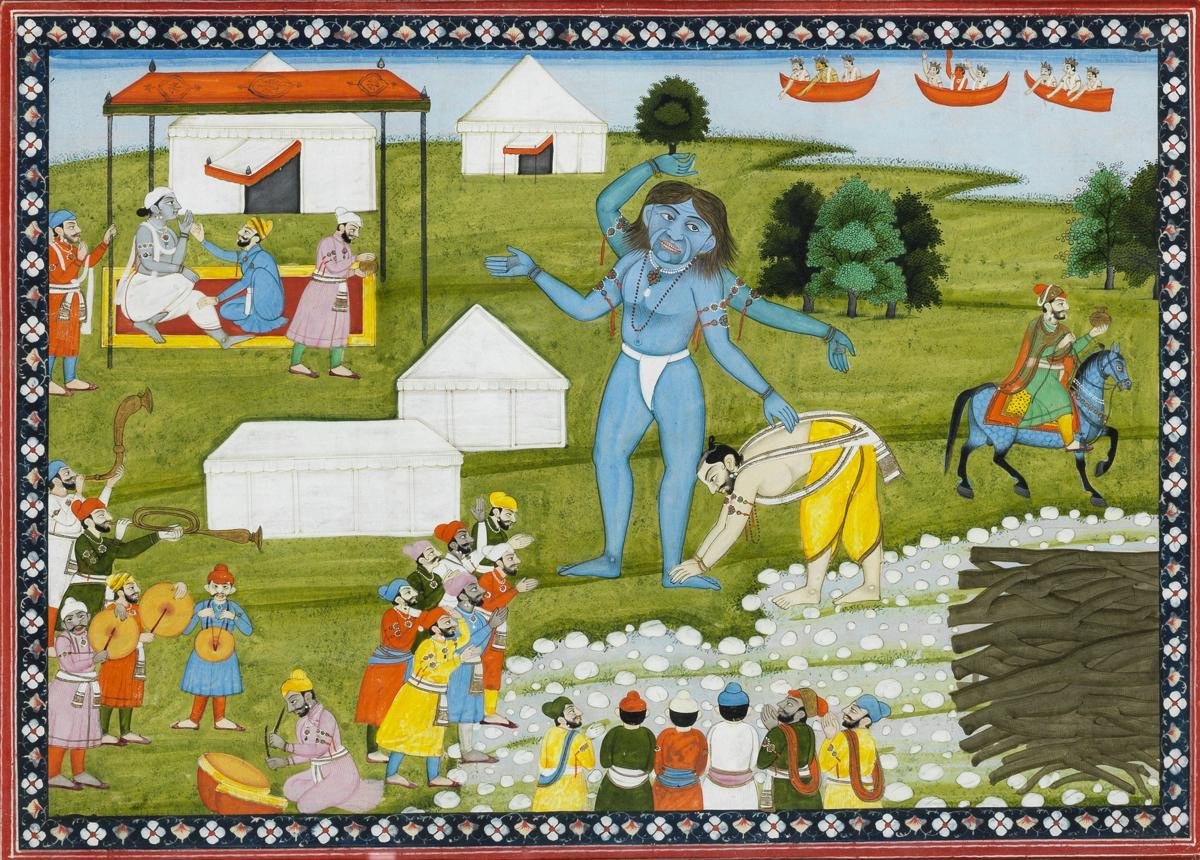
Image ALT: Brahmanda Purana and the Hindu concept of the cosmic universe represented as Brahmanda
What Is the Brahmanda Purana?
The Brahmanda Purana is traditionally regarded as the 18th and final Mahapurana in the commonly listed group of 18 Mahapuranas.
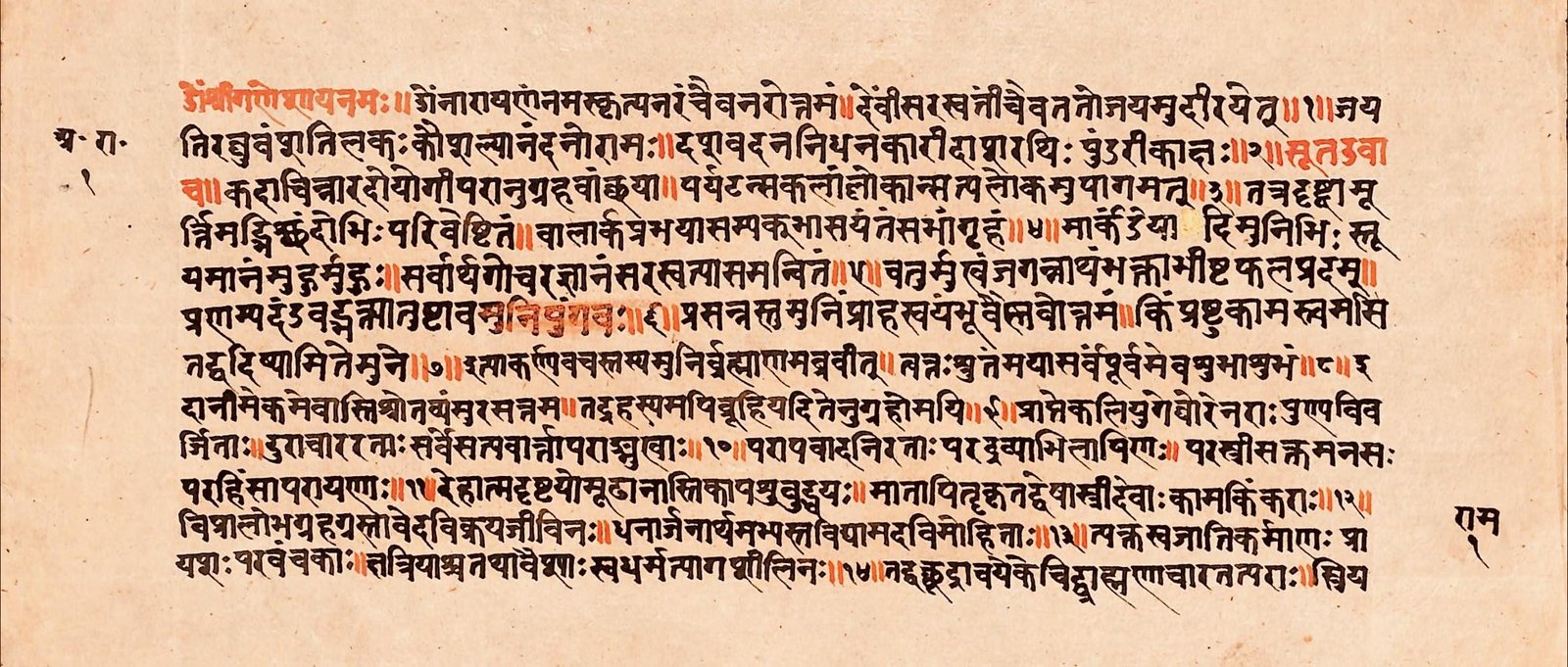
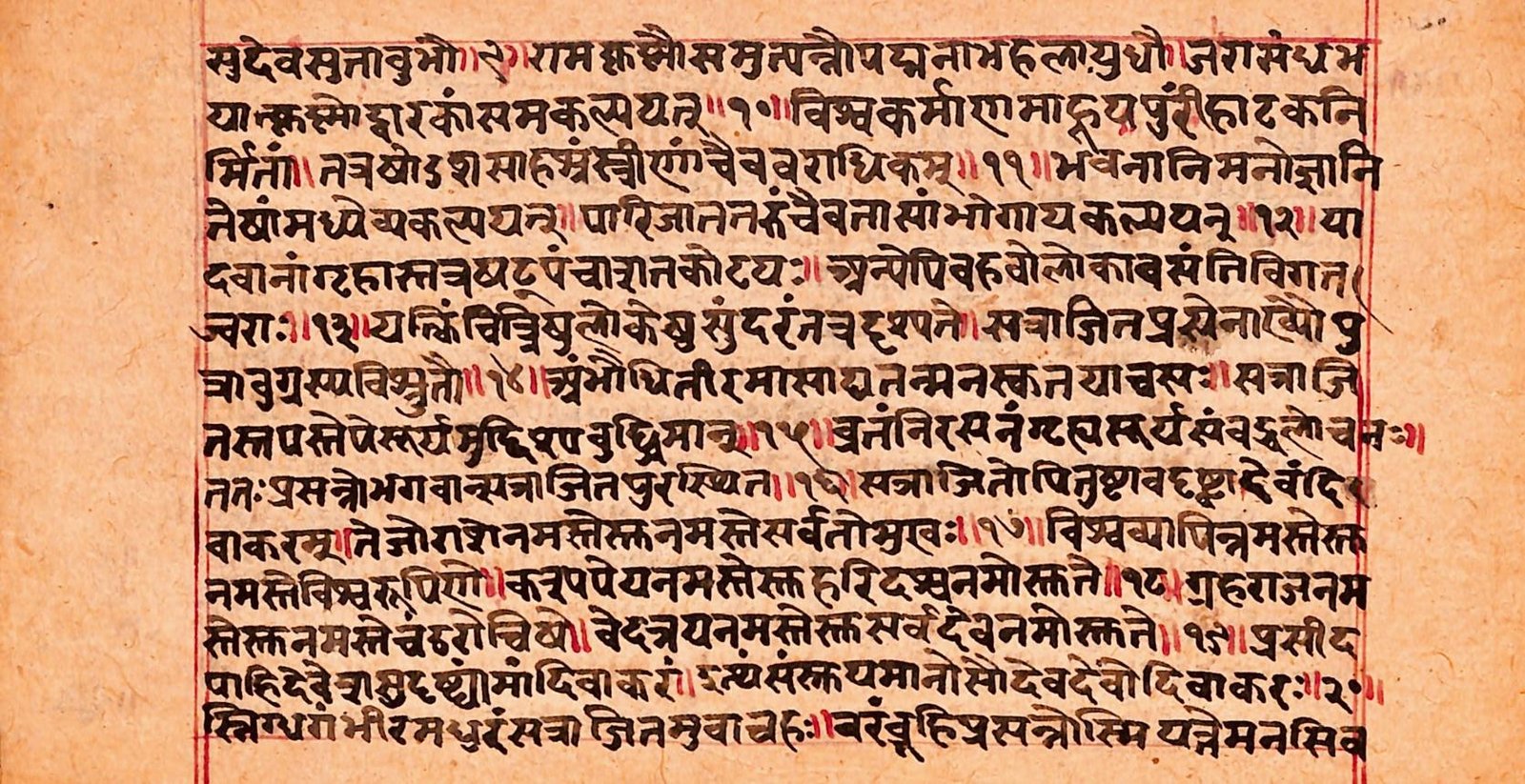
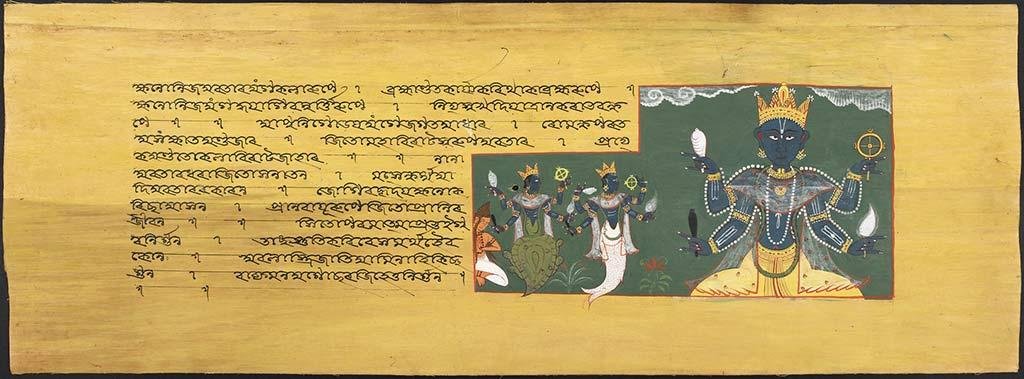
Image ALT: Ancient Sanskrit manuscript representing the Brahmanda Purana
The word Brahmanda is formed from:
Brahma – associated with the creator principle
Anda – egg
Thus, Brahmanda can be understood as the cosmic egg or universe.
The Cosmic Egg
The idea of the universe as a cosmic egg appears in Hindu cosmological traditions.
Image ALT: The cosmic egg or Brahmanda representing the universe in Hindu cosmology
The universe is imagined as an immense cosmic structure containing different levels of existence.
Creation of the Universe
The Brahmanda Purana contains traditions concerning creation and cosmic evolution.
Image ALT: Brahma and the creation of the universe in Hindu cosmological tradition
Creation is understood through a vast cosmic framework involving different beings, worlds and cycles of time.
Brahma
Brahma is traditionally associated with the creation of the universe.
Image ALT: Lord Brahma, the four-headed creator deity, in traditional Hindu art
Brahma is commonly depicted with four heads, symbolizing his connection with the four directions and sacred knowledge.
Vishnu and Shiva
Puranic literature frequently presents traditions concerning Vishnu and Shiva alongside Brahma.
Image ALT: Brahma Vishnu and Shiva representing the Trimurti in Hindu tradition
The three are commonly associated with:
Brahma – creation
Vishnu – preservation
Shiva – dissolution
Cosmic Time
One of the fascinating aspects of Puranic cosmology is its enormous scale of time.
Image ALT: Cycles of cosmic time and Yugas in Hindu cosmological tradition
Time is described through recurring cycles rather than as a single linear sequence.
The Four Yugas
Hindu traditions describe four major Yugas:
Satya Yuga
Treta Yuga
Dvapara Yuga
Kali Yuga
Image ALT: The four Yugas representing cycles of time in Hindu cosmology
Each Yuga is traditionally associated with a different condition of Dharma.
Manvantara
Another important concept in Puranic cosmology is the Manvantara.
Image ALT: Manvantara and Manu represented within Hindu cosmic time
A Manvantara is a major period of cosmic time associated with a particular Manu.
Kalpa
A Kalpa represents an immense period of cosmic time.
Image ALT: Vast cosmic cycle of time represented by a Kalpa in Hindu cosmology
These enormous periods illustrate the scale of time in Puranic thought.
Creation and Dissolution
Hindu cosmology presents creation and dissolution as recurring processes.
Image ALT: Hindu cosmic cycle of creation preservation and dissolution
The universe comes into manifestation, exists for a period and eventually undergoes dissolution before another cycle begins.
Pralaya
Pralaya refers to cosmic dissolution.
Image ALT: Cosmic dissolution or Pralaya in Hindu cosmological tradition
Pralaya is therefore part of the recurring cosmic cycle.
The Importance of Dharma
The Brahmanda Purana also belongs to the wider Puranic tradition of teaching Dharma.
Image ALT: Hindu sage teaching Dharma and righteous living
Dharma can involve:
Duty
Truth
Compassion
Self-control
Charity
Religious responsibility
Sacred Places
The Brahmanda Purana contains traditions connected with sacred geography and pilgrimage.
Image ALT: Hindu devotees visiting a sacred pilgrimage site
Sacred places are an important part of Hindu religious culture.
Tirtha
A Tirtha is a sacred place or pilgrimage destination.
Image ALT: Hindu pilgrims visiting a sacred Tirtha and river
Tirthas can include:
Rivers
Temples
Mountains
Lakes
Sacred cities
Lalita Tradition
One of the most important sections associated with the Brahmanda Purana is the Lalita tradition, especially the Lalita Sahasranama.
Image ALT: Goddess Lalita Tripurasundari representing the Lalita tradition associated with the Brahmanda Purana
Lalita Sahasranama is a celebrated devotional hymn consisting of a thousand names of Goddess Lalita.
Goddess Lalita
Lalita Tripurasundari is an important form of the Divine Mother in Shakta traditions.
Image ALT: Goddess Lalita Tripurasundari in traditional Shakta art
She is associated with:
Divine beauty
Shakti
Knowledge
Compassion
Cosmic power
Lalita Sahasranama
The Lalita Sahasranama is one of the most famous devotional works connected with the Brahmanda Purana tradition.
Image ALT: Lalita Sahasranama Sanskrit devotional text associated with Goddess Lalita
The name Sahasranama means thousand names.
Devotees recite these names as an act of devotion and worship.
Sri Vidya Tradition
The Lalita tradition is closely connected with Sri Vidya, an important Shakta spiritual tradition.
Image ALT: Sri Chakra associated with Lalita Tripurasundari and Sri Vidya tradition
The Sri Chakra is one of the most important sacred symbols associated with this tradition.
Sri Chakra
The Sri Chakra is a sacred geometric diagram used in Sri Vidya traditions.
Image ALT: Sri Chakra or Sri Yantra representing sacred geometry in the Sri Vidya tradition
It represents the interconnected relationship between Shakti and Shiva and the structure of the cosmos within the tradition.
Devi and Shakti
The Brahmanda Purana therefore has an important place in the history of Devi worship.
Image ALT: Goddess Shakti representing the Divine Feminine in Hindu tradition
Shakti represents divine power and cosmic energy.
Spiritual Knowledge
Like other Puranas, the Brahmanda Purana combines mythology with spiritual teachings.
Image ALT: Hindu sage teaching spiritual knowledge and wisdom
The purpose is not simply to tell stories but also to communicate ideas about Dharma, devotion and spiritual life.
Yoga and Meditation
Spiritual discipline and meditation are important themes in the wider Puranic tradition.
Image ALT: Hindu yogi practicing meditation and spiritual discipline
Meditation can help cultivate:
Concentration
Self-control
Inner peace
Spiritual awareness
Moksha
Moksha means liberation from the cycle of Samsara.
Image ALT: Hindu sage meditating toward Moksha or spiritual liberation
Liberation is one of the highest spiritual goals described in Hindu traditions.
The Human Place in the Universe
The cosmic vision of the Brahmanda Purana places human life within an enormous universe and an equally enormous cycle of time.
Image ALT: Human existence represented within the vast cosmic universe of Hindu cosmology
This perspective encourages reflection on the relationship between individual life and the larger cosmos.
Dynasties and Kings
Puranic texts also preserve traditions concerning ancient royal dynasties and rulers.
Image ALT: Ancient Indian king and royal court representing Puranic dynastic traditions
These accounts connect mythology, genealogy and cultural memory.
Genealogies
Genealogical traditions are an important feature of Puranic literature.
Image ALT: Ancient Indian royal genealogy representing Puranic dynastic traditions
They preserve lists and stories concerning different lineages and rulers.
Sacred Stories
The Brahmanda Purana contains stories that connect the human world with the divine and cosmic worlds.
Image ALT: Gods and sages appearing in sacred Puranic stories
These stories helped transmit religious ideas across generations.
Religious Practices
The Purana also belongs to the larger Puranic tradition of describing religious observances.
Image ALT: Hindu devotee performing traditional religious worship
Such practices can include:
Puja
Fasting
Charity
Prayer
Pilgrimage
Devotional recitation
Charity
Dana, or charity, is considered an important virtue.
Image ALT: Traditional Hindu practice of Dana or charitable giving
Charity encourages generosity and compassion.
Devotion
Bhakti, or devotion to the Divine, is central to many Puranic traditions.
Image ALT: Hindu devotee practicing Bhakti through prayer and worship
Devotion can take many forms, including prayer, chanting and worship.
Why Is the Brahmanda Purana Important?
1. Final Mahapurana
It is traditionally counted as the 18th of the 18 Mahapuranas.
2. Hindu Cosmology
Its name itself connects it with the Brahmanda, or cosmic universe.
3. Cosmic Time
It preserves traditions concerning Yugas, Manvantaras, Kalpas and cosmic cycles.
4. Lalita Tradition
It is especially important for the tradition surrounding Lalita Sahasranama.
5. Shakti Worship
It preserves important traditions concerning Devi and Shakti.
6. Dharma and Spirituality
It contains traditions concerning Dharma, devotion, pilgrimage and spiritual life.
What Can We Learn From the Brahmanda Purana?
Think Beyond Ourselves
Human life is part of a vast cosmic framework.
Respect Dharma
Righteous living remains an important foundation.
Understand Impermanence
Cosmic cycles remind us that everything in the material world changes.
Practice Devotion
Bhakti provides a path toward a deeper relationship with the Divine.
Seek Knowledge
Spiritual knowledge helps us understand our place in the universe.
Respect the Divine Feminine
The Lalita tradition highlights Shakti as an important expression of divine power.
Brahmanda Purana – Quick Facts
Series: 18 Mahapuranas – Part 18
Name: Brahmanda Purana
Language: Sanskrit
Meaning: Brahmanda – cosmic universe / cosmic egg
Position: 18th Mahapurana
Major Themes: Creation, cosmology, cosmic time, Dharma, pilgrimage, dynasties, spiritual knowledge and Devi traditions
Important Tradition: Lalita Sahasranama
Important Goddess: Lalita Tripurasundari
Associated Tradition: Sri Vidya
Important Symbol: Sri Chakra
Frequently Asked Questions
What is the Brahmanda Purana?
The Brahmanda Purana is traditionally regarded as the 18th of the 18 Mahapuranas.
What does Brahmanda mean?
Brahmanda can be translated as the cosmic egg or cosmic universe.
Why is the Brahmanda Purana important?
It is important for its material concerning cosmology, cosmic time, Dharma, pilgrimage, religious traditions and Devi worship.
What is Lalita Sahasranama?
Lalita Sahasranama is a famous devotional hymn consisting of one thousand names of Goddess Lalita.
Who is Lalita Tripurasundari?
She is an important form of the Divine Mother in Shakta and Sri Vidya traditions.
What is Sri Chakra?
Sri Chakra is a sacred geometric diagram closely associated with Sri Vidya and Lalita worship.
Is Brahmanda Purana the last Mahapurana?
Yes. In the commonly used traditional listing of the 18 Mahapuranas, Brahmanda Purana is listed as the 18th.
🌟 Conclusion – 18 Mahapuranas Series Complete
With Brahmanda Purana – Part 18, our journey through the 18 Mahapuranas comes to an end.
We started with the first Purana and travelled through stories of creation, avatars, gods, goddesses, Dharma, Karma, pilgrimage, sacred places, spiritual knowledge and cosmic mysteries.
The final Purana brings us back to the biggest subject of all — the universe itself.
The word Brahmanda reminds us that Hindu Puranic tradition views existence on an enormous cosmic scale, with cycles of creation, preservation and dissolution.
At the same time, the Brahmanda Purana brings spirituality close to everyday life through Dharma, devotion, pilgrimage and religious practice.
Its association with Lalita Sahasranama and the worship of Goddess Lalita also gives the Purana a particularly important place in Shakta traditions.
Continuing our 18 Mahapuranas series, Part 17 is the Garuda Purana.
The Garuda Purana is traditionally counted among the 18 Mahapuranas. It is named after Garuda, the divine eagle-like vehicle of Lord Vishnu, and is especially known for its teachings on Dharma, Karma, life after death, the soul, liberation, religious practices, ethics, sacred rituals and Vishnu devotion.
Image ALT: Lord Vishnu seated on Garuda representing the Garuda Purana
What Is the Garuda Purana?
The Garuda Purana is one of the traditional 18 Mahapuranas.
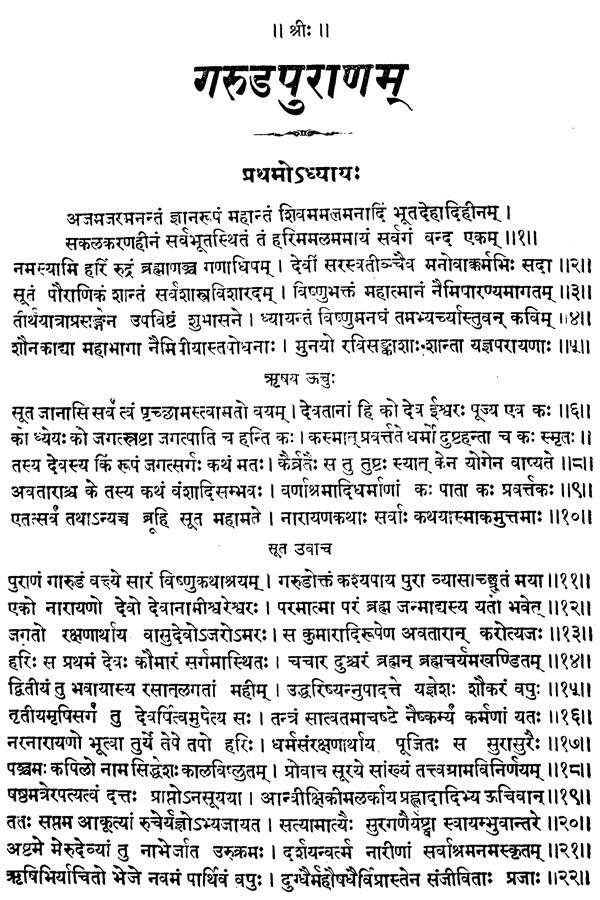
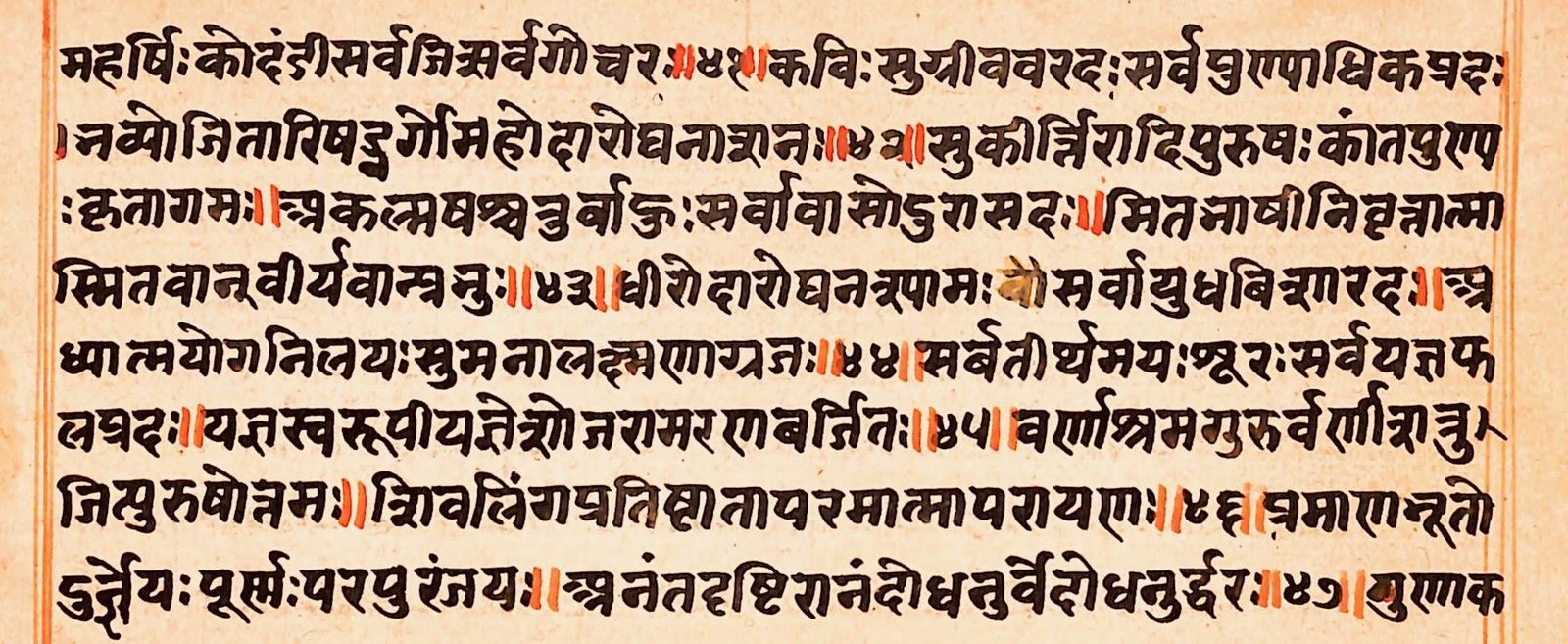
Image ALT: Ancient Garuda Purana manuscript associated with Lord Vishnu and Garuda
The text is traditionally presented as teachings given by Lord Vishnu to Garuda.
It covers a wide range of subjects, including:
Dharma
Karma
Soul
Death
Afterlife
Funeral traditions
Vishnu devotion
Yoga
Liberation
Charity
Religious observances
Sacred knowledge
Who Is Garuda?
Garuda is one of the most important divine beings associated with Lord Vishnu.
Image ALT: Garuda carrying Lord Vishnu as his divine Vahana
Garuda is traditionally known as the Vahana, or divine vehicle, of Vishnu.
He is usually depicted with the form of a powerful bird-like divine being.
Garuda and Vishnu
Garuda has a close relationship with Lord Vishnu.
Image ALT: Lord Vishnu riding Garuda in traditional Hindu art
Garuda represents:
Strength
Courage
Speed
Devotion
Protection
Garuda as a Devotee
Garuda is not merely Vishnu’s vehicle.
Image ALT: Garuda showing devotion to Lord Vishnu in traditional Indian art
He is also portrayed as a powerful devotee and servant of Vishnu.
Garuda and the Nagas
One of the famous traditions associated with Garuda concerns his conflict with the Nagas, or serpent beings.
Image ALT: Garuda confronting the Nagas in traditional Hindu mythology
Garuda’s relationship with the Nagas is an important part of his mythology.
Garuda’s Mother Vinata
Garuda’s mother is traditionally known as Vinata.
Image ALT: Garuda and his mother Vinata in traditional Hindu mythology
The story of Vinata and Garuda explains part of Garuda’s struggle against the Nagas.
Garuda and Amrita
One of the famous stories about Garuda involves his quest for Amrita, the nectar of immortality.
Image ALT: Garuda carrying the pot of Amrita in traditional Hindu mythology
Garuda undertakes this difficult mission to free his mother from bondage.
Garuda’s Strength
Garuda is traditionally described as possessing extraordinary strength.
Image ALT: Powerful Garuda represented as a divine warrior in traditional Indian art
His strength is often associated with his determination and devotion.
The Main Teachings of the Garuda Purana
The Garuda Purana is particularly famous for its teachings about life, death and the journey of the soul.
Image ALT: Symbolic representation of the soul’s journey after death in Hindu tradition
It explores questions such as:
What happens after death?
What is the role of Karma?
What happens to the soul?
Why are funeral rituals performed?
What is liberation?
How should a person live?
Life and Death
The Garuda Purana presents death as part of a larger spiritual journey.
Image ALT: Hindu representation of the soul moving through the cycle of life and death
According to Hindu traditions, physical death does not necessarily represent the end of existence.
The Soul
The Atman, or soul/self, is an important concept in Hindu philosophy.
Image ALT: Symbolic representation of the Atman or spiritual self
The body is temporary, while spiritual traditions emphasize the deeper nature of the self.
Karma
One of the most important concepts discussed in Hindu religious traditions is Karma.
Image ALT: Symbolic representation of Karma and the consequences of actions
Karma refers broadly to actions and their consequences.
The way a person lives and acts is traditionally understood to influence future experiences.
Samsara
The cycle of birth, death and rebirth is known as Samsara.
Image ALT: Hindu representation of Samsara, the cycle of birth death and rebirth
The ultimate spiritual goal is often described as freedom from this cycle.
Moksha
Moksha means spiritual liberation.
Image ALT: Hindu sage meditating toward Moksha or spiritual liberation
Moksha represents freedom from the cycle of Samsara and the attainment of spiritual realization.
The Journey After Death
The Garuda Purana is particularly well known for its descriptions of the soul’s journey after death.
Image ALT: Symbolic depiction of the soul’s journey after death in Garuda Purana traditions
These teachings are traditionally connected with Karma, judgment, ritual and spiritual consequences.
Why Funeral Rituals Matter
The Garuda Purana contains traditions concerning rituals performed after death.
Image ALT: Traditional Hindu funeral rites associated with remembrance and the journey of the departed
These practices are traditionally understood as helping the departed and supporting the family through the transition.
Antyeshti
The final rites are commonly known as Antyeshti, meaning the last rites.
Image ALT: Antyeshti, the traditional Hindu last rites ceremony
The specific customs vary according to region, family and tradition.
Shraddha
Shraddha refers to ritual practices performed in remembrance of deceased ancestors.
Image ALT: Hindu Shraddha ritual performed in remembrance of ancestors
Ancestor remembrance is an important part of many Hindu traditions.
Pindas
Pinda offerings are traditionally associated with ancestral rites.
Image ALT: Pinda offerings being prepared during a traditional Hindu Shraddha ritual
Such rituals express respect and remembrance for ancestors.
Pitru Tradition
Hindu traditions place importance on honoring one’s ancestors, often referred to as Pitru.
Image ALT: Traditional Hindu remembrance of ancestors or Pitru
The Garuda Purana provides an important textual context for these traditions.
Good and Bad Actions
The text emphasizes the consequences of actions.
Image ALT: Hindu representation of righteous actions and Karma
A person is encouraged to live with:
Truthfulness
Compassion
Self-control
Charity
Dharma
Devotion
Heaven and Difficult Realms
The Garuda Purana contains descriptions of different post-death states and consequences associated with Karma.
Image ALT: Traditional Hindu depiction of different post-death realms
These descriptions are intended within the religious framework to emphasize the consequences of one’s actions.
Naraka
Naraka refers to difficult or painful realms associated with negative Karma in Hindu traditions.
Image ALT: Symbolic representation of Naraka in Hindu Puranic tradition
The descriptions serve as moral teachings about the consequences of harmful actions.
Fear and Moral Responsibility
The descriptions of post-death consequences can be understood as encouraging people to take moral responsibility for their actions.
Image ALT: Hindu sage teaching moral responsibility and righteous conduct
The central message is not simply fear of punishment but the importance of living according to Dharma.
Vishnu Bhakti
The Garuda Purana has a strong connection with Lord Vishnu and devotion to Vishnu.
Image ALT: Devotee worshipping Lord Vishnu in a traditional Hindu temple
Bhakti provides a path of devotion and spiritual connection with the Divine.
Vishnu’s Divine Forms
Vishnu is traditionally worshipped through many forms and avatars.
Image ALT: Lord Vishnu and his divine avatars in traditional Hindu art
The avatar tradition emphasizes Vishnu’s role in preserving Dharma and cosmic order.
Dharma
The Garuda Purana repeatedly emphasizes righteous living.
Image ALT: Sage teaching Dharma and righteous living in traditional Indian art
Dharma includes:
Truth
Duty
Compassion
Charity
Self-control
Respect
Dana – Charity
Dana, or charity, is considered an important virtuous action.
Image ALT: Traditional Hindu practice of Dana or charitable giving
Giving to others is associated with generosity and religious merit.
Yoga
The Garuda Purana also contains material concerning Yoga and spiritual practice.
Image ALT: Hindu yogi practicing meditation and Yoga for spiritual realization
Yoga helps cultivate:
Concentration
Discipline
Self-control
Meditation
Spiritual awareness
Meditation
Meditation is an important spiritual practice.
Image ALT: Hindu sage practicing meditation as a path toward spiritual realization
Through meditation, the mind can become more focused and inwardly directed.
The Importance of a Righteous Life
The Garuda Purana encourages people to think about the consequences of their choices.
Image ALT: Family following righteous Dharma and ethical living in traditional Indian art
The basic lesson is simple:
Live well, act responsibly and follow Dharma.
Life Is Temporary
The teachings concerning death also remind us that physical life is temporary.
Image ALT: Hindu spiritual teaching about the temporary nature of physical life
This encourages people to look beyond material possessions and focus on spiritual values.
What Happens to Material Wealth?
The Garuda Purana’s teachings on death emphasize an important truth:
Material possessions do not accompany the soul.
Image ALT: Hindu sage teaching spiritual detachment from material possessions
What matters spiritually is the person’s actions, character and Karma.
Detachment
Detachment from excessive material attachment is an important spiritual idea.
Image ALT: Hindu sage practicing spiritual detachment and meditation
Detachment does not necessarily mean abandoning responsibilities; it can mean avoiding excessive attachment to temporary things.
Compassion
Compassion is an important quality in righteous living.
Image ALT: Hindu spiritual teaching emphasizing compassion and kindness
A life guided by compassion is consistent with the broader ideals of Dharma.
Why Is the Garuda Purana Important?
1. Teachings on Death
It is particularly famous for its discussion of death and the journey of the soul.
2. Karma
It emphasizes the consequences of actions.
3. Funeral Traditions
It provides an important Puranic context for Antyeshti and related rituals.
4. Ancestor Traditions
It discusses traditions connected with Shraddha and remembrance of ancestors.
5. Vishnu Bhakti
It preserves important devotional traditions associated with Vishnu.
6. Spiritual Liberation
It discusses Yoga, spiritual knowledge and Moksha.
What Can We Learn From the Garuda Purana?
Live Righteously
Our actions have consequences.
Remember Impermanence
Physical life and possessions are temporary.
Practice Charity
Dana encourages generosity and compassion.
Control the Mind
Yoga and meditation help cultivate discipline.
Respect Ancestors
Remembering and honoring ancestors is an important tradition.
Seek Spiritual Knowledge
Life can be understood as more than material existence.
Garuda Purana – Quick Facts
Series: 18 Mahapuranas – Part 17
Name: Garuda Purana
Language: Sanskrit
Named After: Garuda
Main Deity: Lord Vishnu
Important Figure: Garuda
Major Themes: Karma, Dharma, death, afterlife, soul, funeral rites, ancestor traditions, Yoga and Moksha
Important Practices: Antyeshti, Shraddha, Pinda offerings, Dana and religious observances
Major Spiritual Goal: Moksha
Frequently Asked Questions
What is the Garuda Purana?
The Garuda Purana is one of the traditional 18 Mahapuranas, traditionally presented as teachings of Lord Vishnu to Garuda.
Why is it called Garuda Purana?
It is named after Garuda, the divine Vahana and devotee of Lord Vishnu.
Why is the Garuda Purana associated with death?
The text contains extensive teachings concerning death, the soul’s journey, Karma, post-death states and funeral traditions.
What is Antyeshti?
Antyeshti refers to the last rites performed after a person’s death in Hindu traditions.
What is Shraddha?
Shraddha refers to ritual practices performed in remembrance and honor of deceased ancestors.
What is Karma?
Karma broadly refers to actions and their consequences.
What is Moksha?
Moksha is spiritual liberation, traditionally understood as freedom from Samsara.
Is the Garuda Purana only about death?
No. It also contains teachings on Vishnu devotion, Dharma, Yoga, charity, ethics, spiritual knowledge and religious practices.
Conclusion
The Garuda Purana – Part 17 takes us into some of the deepest questions of Hindu spiritual thought: What is life? What happens after death? What is Karma? What happens to the soul? And how can a person attain liberation?
Through the dialogue between Lord Vishnu and Garuda, the Purana explores Dharma, Karma, spiritual discipline, funeral traditions and the journey of the soul.
Its teachings remind us that life is temporary, actions have consequences, material possessions do not last, and righteous living has lasting spiritual importance.
The Garuda Purana is therefore not simply a text about death. It is also a text about how to live a meaningful, ethical and spiritually conscious life.
Continuing our 18 Mahapuranas series, Part 16 is the Matsya Purana.
The Matsya Purana is traditionally counted among the 18 Mahapuranas. It takes its name from Matsya, the fish incarnation of Lord Vishnu, and contains traditions concerning creation, Manu, the great flood, Vishnu, Shiva, Devi, Dharma, pilgrimage, temples, architecture and religious practices.
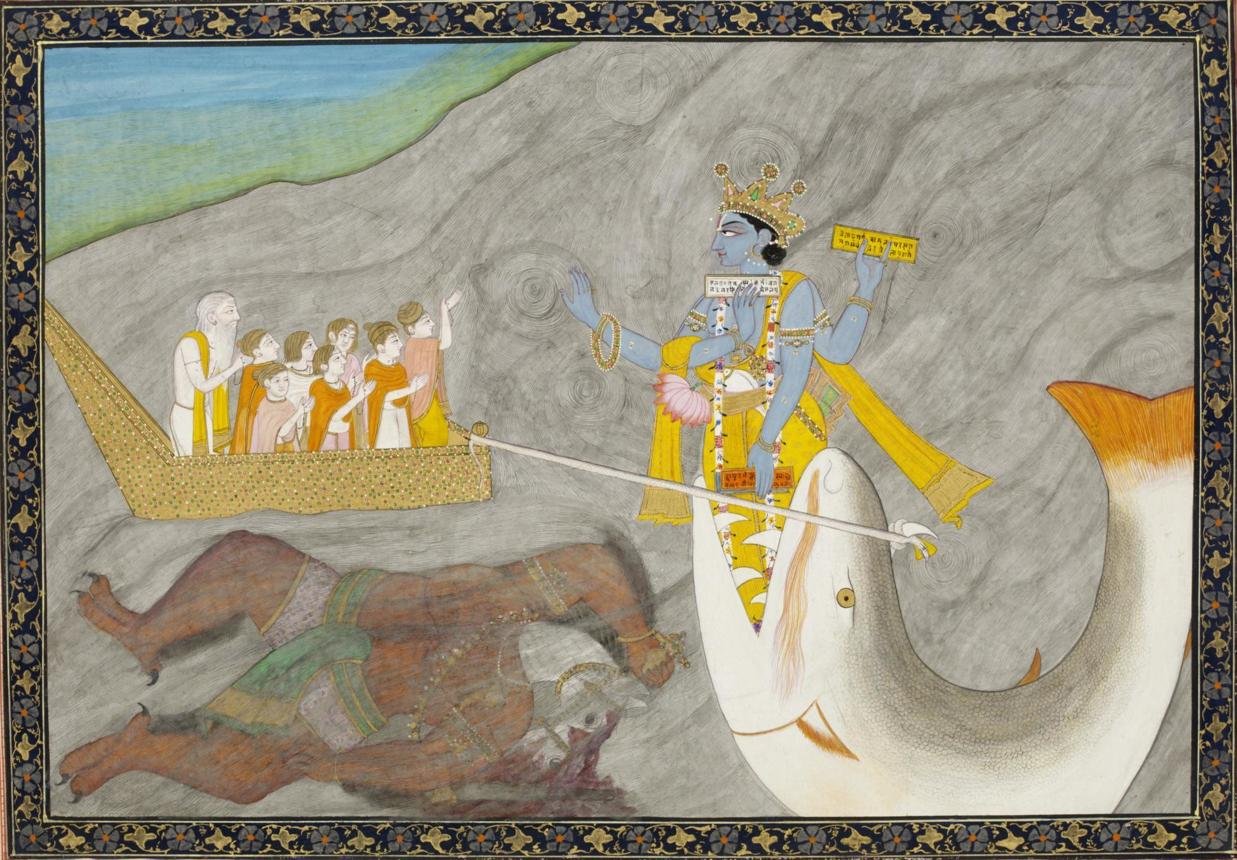
Image ALT: Lord Vishnu as Matsya guiding Manu’s boat during the great flood, representing the Matsya Purana
What Is the Matsya Purana?
The Matsya Purana gets its name from Matsya, the fish incarnation of Lord Vishnu.
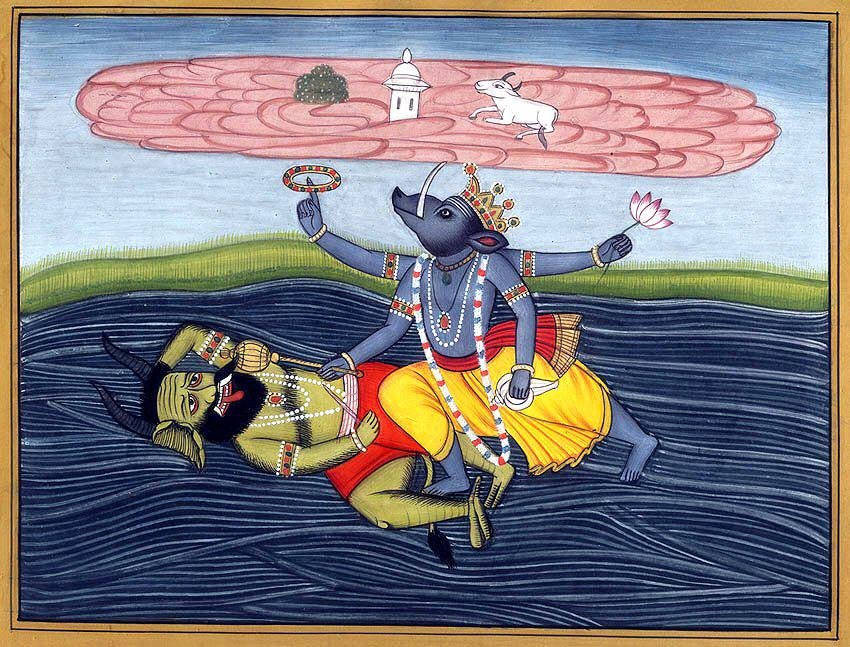
Image ALT: Lord Vishnu appearing as the Matsya fish Avatar in traditional Hindu art
It is one of the traditional 18 Mahapuranas and covers a wide range of subjects.
Major themes include:
Matsya Avatar
Manu
The great flood
Creation
Cosmic cycles
Dharma
Vishnu
Shiva
Devi
Pilgrimage
Temples
Architecture
Religious observances
Who Is Matsya?
Matsya means fish.
Image ALT: Matsya, the fish incarnation of Lord Vishnu, in traditional Indian art
Matsya is traditionally regarded as the first avatar of Vishnu in the commonly known Dashavatara sequence.
The Story of Manu
The Matsya story is closely connected with Manu, the primordial human and lawgiver figure in Hindu tradition.
Image ALT: Manu meeting the divine Matsya fish in traditional Hindu mythology
The story begins when Manu encounters a small fish.
The Little Fish
According to the famous tradition, the small fish asks Manu for protection.
Image ALT: Manu protecting the small divine fish that later reveals itself as Matsya
Manu protects the fish and moves it into larger and larger containers as it grows.
Eventually, the fish becomes enormous.
The Divine Revelation
The fish reveals that it is Lord Vishnu.
Image ALT: Lord Vishnu revealing himself as Matsya to Manu
Matsya then warns Manu about an approaching great flood.
The Great Flood
The flood is one of the central themes associated with the Matsya story.
Image ALT: Matsya guiding Manu’s boat through the great flood
Manu is instructed to prepare for the coming catastrophe.
Manu’s Boat
Manu builds a boat to survive the flood.
Image ALT: Matsya guiding Manu’s boat safely through the cosmic flood
The boat becomes a symbol of preservation and survival.
Matsya Guides the Boat
Matsya guides Manu’s boat through the flood.
Image ALT: Matsya guiding Manu’s boat through the flood using a divine rope
In traditional depictions, the boat is connected to Matsya while the divine fish guides it through the waters.
The Seven Sages
The flood story is also associated with the Seven Sages, or Saptarishis.
Image ALT: Manu and the Seven Sages traveling in the boat guided by Matsya
The sages represent the preservation of knowledge and spiritual tradition.
Preservation of Life
The story is not only about surviving a flood.
Image ALT: Manu preserving life and knowledge during the great flood with the help of Matsya
It represents the preservation of life, knowledge and Dharma through a cosmic catastrophe.
The Meaning of the Flood
The great flood can be understood as a story of destruction followed by renewal.
Image ALT: Matsya flood representing destruction followed by renewal in Hindu cosmology
The old order is destroyed, while the seeds of a new order are preserved.
Matsya as Protector
Matsya represents Vishnu’s role as the preserver and protector.
Image ALT: Matsya Avatar protecting Manu and preserving Dharma
The avatar appears when preservation becomes necessary.
Dashavatara
Matsya is traditionally the first avatar in the commonly known Dashavatara sequence:
Matsya
Kurma
Varaha
Narasimha
Vamana
Parashurama
Rama
Krishna
Buddha or Balarama in different traditions
Kalki
Image ALT: Dashavatara of Lord Vishnu beginning with Matsya Avatar
Matsya and Cosmic Cycles
The Matsya Purana contains traditions concerning cosmic time and cycles of creation.
Image ALT: Puranic representation of cosmic cycles of creation and dissolution
Hindu cosmology traditionally describes creation as a process involving recurring cycles rather than a single permanent beginning.
Creation
The Purana discusses traditions concerning creation and the structure of the universe.
Image ALT: Puranic depiction of cosmic creation and the universe
Creation, preservation and dissolution form an important framework in Puranic thought.
Pralaya
The concept of Pralaya, or cosmic dissolution, is important in Hindu cosmology.
Image ALT: Cosmic dissolution and flood representing Pralaya in Hindu cosmology
The Matsya story connects a great flood with the preservation of life and the beginning of a new cycle.
Manu and Humanity
Manu occupies an important position in Hindu traditions concerning humanity and Dharma.
Image ALT: Manu representing the ancient progenitor and lawgiver in Hindu tradition
Manu is associated with the continuation of human civilization after the flood.
Dharma
The Matsya Purana also contains teachings concerning Dharma.
Image ALT: Ancient sage teaching Dharma and righteous conduct in traditional Indian art
Dharma involves living according to righteousness, duty and ethical principles.
Charity
Dana, or charitable giving, is an important religious practice in Puranic traditions.
Image ALT: Traditional Hindu practice of Dana or charitable giving
Giving is associated with generosity, compassion and religious merit.
Vratas and Religious Observances
The Matsya Purana also discusses religious observances and vows.
Image ALT: Hindu devotee observing a religious vrata through fasting and prayer
Such observances can include:
Fasting
Puja
Prayer
Charity
Sacred bathing
Mantra recitation
Pilgrimage
Pilgrimage, or visiting sacred places, is another important theme.
Image ALT: Hindu devotees undertaking pilgrimage to a sacred temple
Sacred journeys are traditionally understood as opportunities for devotion and spiritual purification.
Tirthas
A Tirtha is a sacred place associated with religious significance.
Image ALT: Hindu pilgrims visiting a sacred Tirtha and river
Tirthas may include:
Rivers
Temples
Mountains
Lakes
Sacred cities
Temple Traditions
One of the interesting features of the Matsya Purana is its material concerning temples and religious architecture.
Image ALT: Traditional Hindu temple architecture representing temple-building traditions
The text is therefore valuable not only for mythology but also for understanding traditional ideas about sacred architecture.
Temple Construction
Traditional temple construction involves careful consideration of:
Location
Measurements
Design
Proportions
Sacred spaces
Images of deities
Ritual requirements
Image ALT: Traditional Hindu temple architecture and planning based on sacred proportions
Deity Images
The Purana also belongs to a broader tradition that discusses the proper representation of divine forms.
Image ALT: Traditional Hindu deity sculpture representing sacred image-making traditions
Sacred images are connected with temple worship and religious practice.
Architecture and Indian Heritage
The architectural traditions preserved in Puranic literature have influenced the development of Hindu temple culture.
Image ALT: Traditional Indian Hindu temple architecture representing India’s cultural heritage
This makes the Matsya Purana interesting from both a religious and cultural perspective.
Shiva Traditions
Although the Purana is named after Vishnu’s Matsya incarnation, it also contains traditions concerning Lord Shiva.
Image ALT: Lord Shiva representing Shaiva traditions within the Matsya Purana
This reflects the broad nature of Puranic literature.
Devi and Shakti
The Matsya Purana also includes traditions connected with Devi and Shakti.
Image ALT: Goddess Devi representing Shakti traditions in Puranic Hinduism
The Goddess is worshipped through numerous forms throughout Hindu traditions.
Vishnu Worship
Vishnu remains an important figure because of the Matsya incarnation.
Image ALT: Lord Vishnu holding the conch and discus in traditional Indian art
The Matsya Avatar demonstrates Vishnu’s role as the preserver of cosmic order.
The Boat as a Symbol
The boat in the Matsya story carries a powerful symbolic meaning.
Image ALT: Manu’s boat guided by Matsya as a symbol of preservation during the great flood
It can be understood as representing:
Protection
Preservation
Hope
Faith
Continuity
The Flood as a Spiritual Lesson
The flood story can also be interpreted as a reminder that worldly conditions can change dramatically.
Image ALT: Matsya protecting Manu during the flood as a spiritual lesson about faith and preservation
The story emphasizes the importance of wisdom, preparation and trust in the Divine.
Preservation of Knowledge
The presence of sages in the flood story has another important meaning.
Image ALT: Saptarishis representing preservation of ancient spiritual knowledge
The sages symbolize the continuity of knowledge and spiritual tradition even after catastrophe.
Why Is the Matsya Purana Important?
1. Matsya Avatar
It preserves the famous story of Vishnu’s fish incarnation.
2. Manu and the Flood
It is closely associated with the great flood and Manu’s survival.
3. Cosmic Cycles
It contains traditions concerning creation, dissolution and cosmic time.
4. Temple Architecture
It includes important material related to temples and sacred architecture.
5. Dharma
It discusses religious duties and righteous living.
6. Pilgrimage
It preserves traditions concerning sacred places and religious journeys.
What Can We Learn From the Matsya Purana?
Preparation
Manu prepares for the coming flood rather than ignoring the warning.
Preservation
The story emphasizes protecting life and knowledge.
Faith
Manu trusts the divine guidance of Matsya.
Wisdom
Knowledge becomes essential for surviving great changes.
Renewal
Destruction can be followed by a new beginning.
Dharma
Human civilization is expected to continue according to righteous principles.
Matsya Purana – Quick Facts
Series: 18 Mahapuranas – Part 16
Name: Matsya Purana
Language: Sanskrit
Named After: Matsya Avatar
Main Deity: Lord Vishnu
Avatar: Matsya
Important Figure: Manu
Major Story: Manu and the Great Flood
Important Figures: Matsya, Manu, Saptarishis
Major Themes: Creation, Pralaya, Dharma, pilgrimage, temples, architecture, religious practices and mythology
Frequently Asked Questions
What is the Matsya Purana?
The Matsya Purana is one of the traditional 18 Mahapuranas, named after the Matsya or fish incarnation of Lord Vishnu.
Who is Matsya?
Matsya is the fish incarnation of Lord Vishnu and is traditionally considered the first avatar in the commonly known Dashavatara sequence.
Who is Manu?
Manu is a primordial human and lawgiver figure who is central to the traditional story of the great flood.
What is the Matsya Purana flood story?
Matsya warns Manu about a great flood and guides his boat to safety, helping preserve life, sages and the continuity of civilization.
What is Pralaya?
Pralaya refers to cosmic dissolution in Hindu cosmological traditions.
Does the Matsya Purana discuss temples?
Yes. It contains material concerning temple construction, sacred architecture and religious images, making it significant beyond mythology alone.
Is the Matsya Purana only about Vishnu?
No. It also contains traditions concerning Shiva, Devi, Dharma, pilgrimage, religious observances and sacred architecture.
Conclusion
The Matsya Purana – Part 16 takes us back to one of the oldest and most memorable stories connected with Lord Vishnu.
The story of Matsya and Manu is much more than a tale about a great flood. It is a story about preservation, wisdom, faith and renewal.
When the world faces destruction, Matsya guides Manu and helps preserve the foundations of future life and civilization.
The Matsya Purana also goes far beyond the flood story. Its traditions cover creation, cosmic cycles, Dharma, pilgrimage, temple construction, sacred architecture, Vishnu, Shiva and Devi.
This makes the Matsya Purana an important part of the wider Puranic tradition and an interesting source for understanding both Hindu mythology and India’s religious-cultural heritage.
Continuing our 18 Mahapuranas series, Part 15 is the Kurma Purana.
The Kurma Purana is traditionally counted among the 18 Mahapuranas. It takes its name from Kurma, the tortoise incarnation of Lord Vishnu. The text contains teachings and stories connected with Vishnu, Shiva, Devi, Dharma, Yoga, pilgrimage, sacred places and spiritual knowledge.
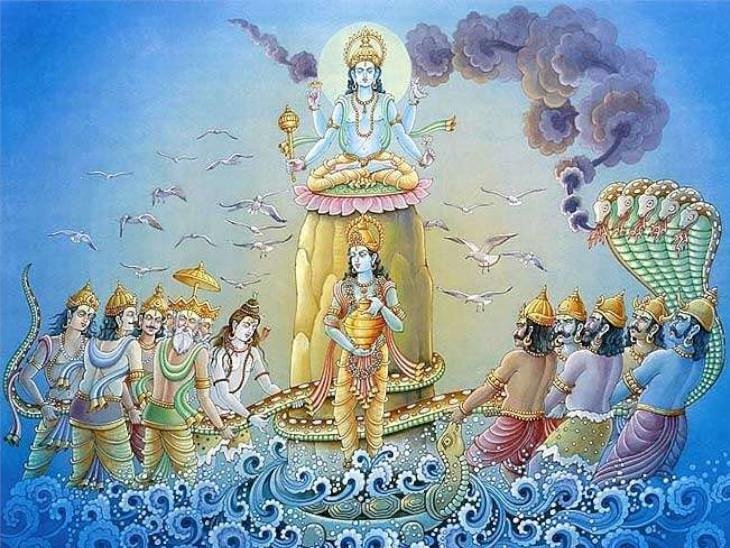
Image ALT: Lord Vishnu as Kurma supporting Mount Mandara during the churning of the cosmic ocean
What Is the Kurma Purana?
The Kurma Purana gets its name from Kurma, the tortoise incarnation of Lord Vishnu.
Image ALT: Kurma Avatar of Lord Vishnu supporting Mount Mandara during Samudra Manthan
The Purana presents a broad range of Hindu religious ideas, including:
Kurma Avatar
Samudra Manthan
Lord Vishnu
Lord Shiva
Goddess Devi
Dharma
Yoga
Sacred places
Pilgrimage
Religious practices
Spiritual knowledge
Who Is Kurma?
Kurma means tortoise.
Image ALT: Lord Vishnu appearing as the Kurma tortoise Avatar in traditional Indian art
Kurma is traditionally regarded as the second avatar of Vishnu in the commonly known Dashavatara sequence.
The Story of Samudra Manthan
The most famous story associated with Kurma is the Samudra Manthan, or churning of the cosmic ocean.
Image ALT: Devas and Asuras churning the cosmic ocean with Mount Mandara and Vasuki while Vishnu appears as Kurma
The Devas and Asuras join together to churn the cosmic ocean in search of Amrita, the nectar of immortality.
Mount Mandara
The churning requires Mount Mandara to serve as the churning rod.
Image ALT: Mount Mandara being used as the churning rod during Samudra Manthan
But the mountain begins to sink into the cosmic ocean.
That is when Vishnu takes the form of Kurma.
Kurma Supports Mount Mandara
Vishnu becomes the enormous tortoise and supports Mount Mandara on his back.
Image ALT: Kurma Avatar supporting Mount Mandara on his back during the churning of the ocean
Without Kurma’s support, the churning cannot continue.
This makes Kurma a powerful symbol of stability and support.
Vasuki – The Cosmic Serpent
The serpent Vasuki is traditionally used as the rope for churning Mount Mandara.
Image ALT: Vasuki serpent being used as the churning rope during Samudra Manthan
The Devas and Asuras pull the serpent from opposite sides.
Devas and Asuras
The Samudra Manthan story brings the Devas and Asuras together for a common purpose.
Image ALT: Devas and Asuras participating together in the cosmic churning of the ocean
Although they are usually portrayed as opposing forces, they temporarily cooperate to obtain Amrita.
Amrita – Nectar of Immortality
The ultimate goal of the churning is Amrita, traditionally described as the nectar of immortality.
Image ALT: Dhanvantari emerging with the pot of Amrita during Samudra Manthan
The appearance of Amrita becomes one of the major events in the story.
The Treasures of the Ocean
The churning of the ocean is said to produce numerous extraordinary beings and treasures.
Image ALT: Divine treasures emerging from the cosmic ocean during Samudra Manthan
Different traditions list different treasures, including:
Goddess Lakshmi
Airavata
Kamadhenu
Kaustubha
Dhanvantari
Amrita
Goddess Lakshmi Emerges
One of the most famous events is the appearance of Goddess Lakshmi from the cosmic ocean.
Image ALT: Goddess Lakshmi emerging from the cosmic ocean during Samudra Manthan
Lakshmi is associated with:
Prosperity
Fortune
Beauty
Auspiciousness
Abundance
Shiva and Halahala Poison
The churning also produces the terrible Halahala poison.
Image ALT: Lord Shiva drinking the Halahala poison during Samudra Manthan
The poison threatens all existence.
Lord Shiva consumes the poison to protect the universe.
Neelakantha
Because Shiva holds the poison in his throat, his throat becomes blue.
Image ALT: Neelakantha Shiva with the blue throat after consuming Halahala poison
He therefore becomes famous as Neelakantha, meaning the blue-throated one.
The Meaning of Kurma
The Kurma Avatar has a deep symbolic meaning.
Image ALT: Kurma Avatar symbolizing stability, support and divine protection
The tortoise can symbolize:
Stability
Kurma provides the foundation necessary for the cosmic process.
Patience
The churning is a long and difficult process.
Support
The Divine provides support when the world becomes unstable.
Perseverance
Great results require sustained effort.
Vishnu as the Preserver
Kurma is another example of Vishnu taking an appropriate form to protect cosmic order.
Image ALT: Lord Vishnu preserving cosmic order through his divine manifestations
The avatar tradition illustrates the idea of divine intervention whenever Dharma and cosmic balance are threatened.
The Dashavatara
Kurma is traditionally the second avatar in the commonly known Dashavatara sequence:
Matsya
Kurma
Varaha
Narasimha
Vamana
Parashurama
Rama
Krishna
Buddha or Balarama in different traditions
Kalki
Image ALT: Dashavatara of Lord Vishnu including Kurma Avatar
Shiva in the Kurma Purana
The Kurma Purana is not limited to Vishnu traditions.
Image ALT: Lord Shiva representing Shaiva traditions within the Kurma Purana
It contains significant material associated with Lord Shiva and Shaiva traditions.
Shiva and Vishnu
The text reflects the broader Puranic tradition in which stories and teachings concerning both Shiva and Vishnu can appear within the same work.
Image ALT: Shiva and Vishnu together representing the interconnected traditions of Hinduism
This illustrates the diversity of Hindu devotional traditions.
Devi Traditions
The Kurma Purana also contains material connected with Devi and Shakti.
Image ALT: Goddess Devi representing Shakti and divine feminine traditions
The Divine Feminine is represented through different Goddess traditions.
Yoga
The Kurma Purana contains teachings associated with Yoga and spiritual discipline.
Image ALT: Hindu yogi meditating as a representation of spiritual Yoga practice
Yoga traditions emphasize practices such as:
Meditation
Concentration
Self-control
Discipline
Spiritual knowledge
Meditation
Meditation is an important element of spiritual practice.
Image ALT: Hindu sage practicing meditation for spiritual realization
Through meditation, the mind is directed inward toward spiritual awareness.
Dharma
The Kurma Purana also discusses Dharma and righteous living.
Image ALT: Hindu sage teaching Dharma and righteous conduct
Dharma can include:
Duty
Truthfulness
Compassion
Self-discipline
Religious responsibility
Respect for others
Sacred Places
Pilgrimage and sacred geography are important themes in Puranic literature, including the Kurma Purana.
Image ALT: Hindu pilgrims visiting a sacred place in India
Sacred places are connected with stories, worship and spiritual practices.
Tirtha
A Tirtha is a sacred place associated with spiritual practice.
Image ALT: Hindu pilgrims visiting a sacred Tirtha and river
Tirthas can include:
Rivers
Temples
Mountains
Lakes
Sacred cities
Sacred Rivers
Rivers have an important place in Hindu religious traditions.
Image ALT: Hindu devotees visiting a sacred river during pilgrimage
Sacred bathing is traditionally associated with purification and spiritual renewal.
Religious Observances
Puranic traditions include various forms of religious observance.
Image ALT: Hindu devotee performing traditional puja as a religious observance
These can include:
Puja
Fasting
Charity
Mantra recitation
Pilgrimage
Meditation
Vrata
Vrata refers to a religious vow or observance.
Image ALT: Hindu devotee observing a religious vrata through fasting and prayer
Vratas are traditionally undertaken with devotion and discipline.
Dana
Dana, or charitable giving, is another important religious practice.
Image ALT: Traditional Hindu practice of Dana or charitable giving
Charity is associated with generosity, compassion and Dharma.
Spiritual Knowledge
The Kurma Purana combines stories with spiritual teachings.
Image ALT: Hindu sage teaching spiritual knowledge and wisdom
The larger purpose of such teachings is to encourage people to move beyond purely material concerns.
Moksha
Moksha, or liberation, is an important goal in Hindu spiritual traditions.
Image ALT: Yogi meditating toward spiritual liberation or Moksha
Yoga, devotion, knowledge and disciplined living are traditionally connected with the path toward liberation.
The Tortoise as a Spiritual Symbol
The tortoise has another interesting symbolic association.
Image ALT: Kurma the divine tortoise representing stability and control of the senses
A tortoise can withdraw its limbs into its shell.
This is often used as an image for withdrawing the senses and controlling the mind.
Patience and Perseverance
The Samudra Manthan story also reminds us that important goals require patience.
Image ALT: Cosmic churning represented as a symbol of patience and perseverance
The nectar of immortality is obtained only after an extraordinary process of effort and struggle.
Cooperation
An interesting aspect of the Samudra Manthan story is that Devas and Asuras cooperate for a common objective.
Image ALT: Devas and Asuras working together during the churning of the cosmic ocean
The story can therefore also be viewed as an example of how cooperation can be necessary to accomplish a difficult task.
Why Is the Kurma Purana Important?
1. Kurma Avatar
It preserves the famous story of Vishnu’s tortoise incarnation.
2. Samudra Manthan
It is associated with one of Hindu mythology’s greatest cosmic stories.
3. Vishnu Tradition
It contains teachings and stories connected with Vishnu.
4. Shiva Tradition
It also includes significant Shaiva material.
5. Yoga and Spirituality
It contains teachings related to Yoga and spiritual discipline.
6. Sacred Geography
It includes traditions concerning pilgrimage and sacred places.
What Can We Learn From the Kurma Purana?
Stability
Kurma teaches the importance of having a strong foundation.
Patience
Great results often require sustained effort.
Cooperation
Difficult tasks can sometimes require cooperation even among opposing groups.
Self-Control
The tortoise provides a powerful image of withdrawing the senses.
Protection
Vishnu’s Kurma form protects the cosmic process.
Spiritual Growth
The struggle and churning can be understood as a metaphor for spiritual transformation.
Kurma Purana – Quick Facts
Series: 18 Mahapuranas – Part 15
Name: Kurma Purana
Language: Sanskrit
Named After: Kurma Avatar
Main Deity: Lord Vishnu
Kurma Meaning: Tortoise
Important Story: Samudra Manthan
Important Figures: Vishnu, Shiva, Lakshmi, Devas and Asuras
Major Themes: Dharma, Yoga, pilgrimage, sacred places, devotion, religious observances and spiritual knowledge
Frequently Asked Questions
What is the Kurma Purana?
The Kurma Purana is one of the traditional 18 Mahapuranas, named after the Kurma, or tortoise, incarnation of Lord Vishnu.
Who is Kurma?
Kurma is the tortoise incarnation of Vishnu, traditionally counted as the second avatar in the commonly known Dashavatara sequence.
Why did Vishnu become Kurma?
Vishnu became Kurma to support Mount Mandara during the churning of the cosmic ocean.
What is Samudra Manthan?
Samudra Manthan is the famous churning of the cosmic ocean by the Devas and Asuras to obtain Amrita.
What is Amrita?
Amrita is traditionally described as the nectar of immortality.
What happened to the Halahala poison?
The terrible poison produced during the churning was consumed by Lord Shiva, who became known as Neelakantha, the blue-throated one.
Does the Kurma Purana discuss only Vishnu?
No. It also contains material concerning Shiva, Devi, Dharma, Yoga, pilgrimage and spiritual teachings.
Conclusion
The Kurma Purana – Part 15 takes us into one of the most fascinating stories in Hindu mythology: the Samudra Manthan, the cosmic churning of the ocean.
When Mount Mandara begins to sink, Lord Vishnu appears as Kurma, the divine tortoise, and provides the foundation necessary for the great churning to continue.
The story gives us powerful lessons about stability, patience, perseverance, cooperation and divine protection.
The Kurma Purana also goes beyond the famous avatar story, bringing together traditions concerning Vishnu, Shiva, Devi, Dharma, Yoga, pilgrimage and spiritual knowledge.
Continuing our 18 Mahapuranas series, Part 14 is the Vamana Purana.
The Vamana Purana is traditionally counted among the 18 Mahapuranas. It is named after Vamana, the dwarf incarnation of Lord Vishnu, and contains stories and teachings connected with Vishnu, Shiva, Devi, Dharma, sacred places, pilgrimage and Hindu religious traditions.
Image ALT: Lord Vamana approaching King Bali and later becoming Trivikrama, representing the Vamana Purana
What Is the Vamana Purana?
The Vamana Purana takes its name from Vamana, one of the important incarnations of Lord Vishnu.
Image ALT: Vamana Avatar of Lord Vishnu asking King Bali for three steps of land
The central story is connected with King Bali, Vamana and the famous transformation of Vamana into Trivikrama, the cosmic form who measures the universe in three steps.
The Purana also contains material concerning:
Vishnu
Shiva
Devi
Creation
Dharma
Sacred places
Pilgrimage
Religious observances
Hindu mythology
Who Is Vamana?
Vamana is traditionally regarded as the fifth avatar of Vishnu in the commonly known Dashavatara sequence.
Image ALT: Lord Vamana carrying an umbrella and water pot in traditional Indian art
He appears in the form of a young Brahmin dwarf and approaches the powerful Asura king Bali.
King Bali
King Bali is one of the most important figures in the Vamana story.
Image ALT: King Mahabali meeting Lord Vamana in traditional Hindu mythology
Bali is portrayed as a powerful and generous ruler who had gained control over the three worlds.
His generosity and commitment to giving become central to the story.
The Three Steps
Vamana asks Bali for a seemingly small gift: three steps of land.
Image ALT: Vamana asking King Bali for three steps of land
Bali agrees to the request.
Then something extraordinary happens.
Vamana Becomes Trivikrama
Vamana expands into a gigantic cosmic form known as Trivikrama.
Image ALT: Lord Vishnu as Trivikrama measuring the universe with his three cosmic steps
With his first step, he covers the Earth.
With his second step, he covers the heavens.
There is no place remaining for the third step.
Bali’s Surrender
Bali then offers his own head for the third step.
Image ALT: King Bali offering his head to Lord Vamana for the third step
This is one of the most powerful moments of the story.
Bali’s humility and willingness to keep his promise become central to his character.
What Does the Story Teach?
The Vamana story contains several important ideas.
Humility
Even a powerful king must recognize a greater cosmic reality.
Generosity
Bali is remembered for his willingness to give.
Keeping One’s Word
Bali remains committed to his promise even when the consequences become extraordinary.
Divine Protection
Vishnu appears to restore cosmic balance.
Surrender
Bali ultimately offers himself to the Divine.
Vamana and Dharma
The story is closely connected with the idea of Dharma.
Image ALT: Vamana Avatar representing Dharma and restoration of cosmic order
The story shows the tension between power, righteousness, promises and cosmic order.
Vishnu as Protector
Vamana represents another example of Vishnu appearing in a form suited to a particular situation.
Image ALT: Lord Vishnu protecting cosmic order through his divine avatars
The avatars of Vishnu are traditionally understood as manifestations that help preserve Dharma and cosmic balance.
Dashavatara
Vamana is traditionally the fifth avatar in the commonly known sequence:
Matsya
Kurma
Varaha
Narasimha
Vamana
Parashurama
Rama
Krishna
Buddha or Balarama in different traditions
Kalki
Image ALT: Dashavatara of Lord Vishnu including the Vamana incarnation
Vamana and Trivikrama
The two forms represent different stages of the same divine manifestation.
Image ALT: Vamana and Trivikrama forms of Lord Vishnu in traditional Indian art
Vamana appears as the small Brahmin.
Trivikrama becomes the cosmic being whose three steps encompass the universe.
The Cosmic Three Steps
The three steps have become an enduring symbol in Vaishnava traditions.
Image ALT: Trivikrama Vishnu taking three cosmic steps across Earth and heaven
The story illustrates the immense cosmic scale of Vishnu.
King Bali and Devotion
Interestingly, Bali is not simply remembered as a defeated Asura.
Image ALT: King Bali showing devotion and surrender to Lord Vamana
His generosity, truthfulness and surrender have made him an important figure in Hindu tradition.
Mahabali Tradition
King Bali is particularly important in Kerala, where the story is associated with the festival of Onam.
Image ALT: King Mahabali and Vamana associated with the Kerala festival of Onam
Onam celebrates the traditional annual return of Mahabali to Kerala.
Onam and Vamana
The story of Vamana and Bali has therefore become part of living cultural traditions beyond the Purana itself.
Image ALT: Traditional Onam celebration in Kerala associated with King Mahabali
This shows how Puranic stories continue to influence festivals, culture and community traditions.
Shiva in the Vamana Purana
Although Vamana is the central name, the Purana also contains significant Shaiva material.
Image ALT: Lord Shiva representing Shaiva traditions within the Vamana Purana
Stories connected with Shiva and sacred places form an important part of the broader text.
Shiva and Parvati
The traditions surrounding Shiva and Parvati also appear in Puranic literature.
Image ALT: Lord Shiva and Goddess Parvati representing Shaiva traditions
Their stories represent themes of:
Divine partnership
Shakti
Devotion
Family
Spiritual power
Devi Traditions
The Vamana Purana also preserves traditions concerning Devi and Shakti.
Image ALT: Goddess Devi representing Shakti traditions in Puranic Hinduism
The Goddess is understood through many forms and manifestations across Hindu traditions.
Sacred Places
Pilgrimage and sacred geography are important themes in the Vamana Purana.
Image ALT: Hindu pilgrims visiting a sacred temple representing pilgrimage traditions
Sacred places are connected with stories, rituals and spiritual practices.
Tirtha
A Tirtha is a sacred place visited for religious and spiritual purposes.
Image ALT: Hindu pilgrims visiting a sacred Tirtha and river
A pilgrimage can include:
Temple worship
Sacred bathing
Prayer
Charity
Fasting
Meditation
Sacred Rivers
Rivers have an important place in Hindu sacred geography.
Image ALT: Hindu devotees visiting the sacred Ganga River during pilgrimage
Sacred rivers are traditionally associated with purification and spiritual renewal.
Dharma and Religious Duties
The Purana also deals with Dharma and religious observances.
Image ALT: Sage teaching Dharma and righteous conduct in traditional Indian art
Dharma involves living with:
Righteousness
Responsibility
Self-control
Compassion
Truthfulness
Devotion
Dana – Charity
Charity, or Dana, is an important aspect of Hindu religious life.
Image ALT: Traditional Hindu practice of Dana or charitable giving
Giving to others is traditionally considered a meritorious act when performed with sincerity.
Vratas
Religious vows known as Vratas are also part of Puranic religious traditions.
Image ALT: Hindu devotee performing a traditional vrata and puja
Vratas may involve:
Fasting
Prayer
Puja
Mantra
Charity
Special observances
Puranic Cosmology
Like other Mahapuranas, the Vamana Purana contains material concerning the cosmos and creation.
Image ALT: Puranic depiction of cosmic creation and the Hindu universe
Puranic cosmology often describes vast cycles of creation, preservation and dissolution.
The Universe and Vishnu
The Trivikrama story gives a particularly dramatic image of the relationship between Vishnu and the cosmos.
Image ALT: Trivikrama Vishnu encompassing the cosmos in his cosmic form
The three strides symbolize the extraordinary cosmic reach of the Divine.
Spiritual Meaning of Surrender
Bali’s final act of offering himself carries a deep devotional meaning.
Image ALT: King Bali surrendering himself to Lord Vamana as an expression of devotion
The story can be understood as a lesson in humility, surrender and keeping one’s promise.
Power and Humility
Bali possesses enormous worldly power, but Vamana demonstrates that cosmic power is beyond ordinary human or royal authority.
Image ALT: Vamana and King Bali illustrating the spiritual lesson of power and humility
The story therefore teaches that true greatness is not simply measured by worldly power.
The Importance of Keeping a Promise
Bali’s character is strongly associated with his commitment to his word.
Image ALT: King Bali keeping his promise to Lord Vamana in traditional Indian art
Even when the request becomes extraordinary, Bali does not withdraw his promise.
Why Is the Vamana Purana Important?
1. Vamana Avatar
It is associated with one of Vishnu’s most famous incarnations.
2. King Bali
It preserves the celebrated story of Bali and his encounter with Vamana.
3. Trivikrama
It presents the famous cosmic three-step manifestation of Vishnu.
4. Dharma
It connects mythology with ideas of righteousness and religious duty.
5. Sacred Geography
It contains traditions concerning sacred places and pilgrimage.
6. Shiva and Devi
It also preserves important material concerning other major Hindu traditions.
What Can We Learn From the Vamana Purana?
Humility
Worldly power does not make a person greater than the Divine.
Generosity
Bali’s willingness to give is remembered as a great virtue.
Truthfulness
Keeping one’s word is presented as an important quality.
Surrender
Bali’s final offering demonstrates complete surrender.
Dharma
The story emphasizes the restoration of cosmic order.
Divine Protection
Vishnu’s manifestation shows the traditional idea of divine intervention when Dharma is threatened.
Vamana Purana – Quick Facts
Series: 18 Mahapuranas – Part 14
Name: Vamana Purana
Language: Sanskrit
Named After: Vamana Avatar
Main Deity: Lord Vishnu
Important Figure: King Bali / Mahabali
Important Form: Trivikrama
Major Story: Vamana and the three steps
Major Themes: Vishnu, Shiva, Devi, Dharma, pilgrimage, sacred places, vratas and religious traditions
Cultural Connection: Mahabali and Onam traditions
Frequently Asked Questions
What is the Vamana Purana?
The Vamana Purana is one of the traditional 18 Mahapuranas, named after the Vamana incarnation of Lord Vishnu.
Who is Vamana?
Vamana is the dwarf incarnation of Vishnu, traditionally counted as the fifth avatar in the commonly known Dashavatara sequence.
Who is King Bali?
King Bali, or Mahabali, is a powerful ruler associated with the famous Vamana story and is remembered for his generosity and commitment to his promise.
What are the three steps of Vamana?
Vamana expands into the cosmic form of Trivikrama and takes three steps that encompass the worlds. Bali offers his own head for the final step.
What is Trivikrama?
Trivikrama is the cosmic form of Vishnu associated with the three strides of the Vamana story.
Is Vamana connected with Onam?
Yes. The story of Mahabali and Vamana is deeply connected with the traditional cultural story behind Kerala’s Onam festival.
Conclusion
The Vamana Purana – Part 14 brings us one of the most memorable stories in Hindu Puranic tradition: the meeting of Lord Vamana and King Bali.
What begins with a request for just three steps of land becomes a cosmic event when Vamana reveals himself as Trivikrama.
The story teaches powerful lessons about humility, generosity, truthfulness, Dharma and surrender.
At the same time, the Vamana Purana goes beyond the Vamana story and includes traditions concerning Vishnu, Shiva, Devi, sacred places, pilgrimage and religious observances.
Continuing our 18 Mahapuranas series, Part 13 is the Skanda Purana.
The Skanda Purana is traditionally counted among the 18 Mahapuranas and is especially known for its extensive material on Lord Shiva, Skanda (Kartikeya), sacred places, pilgrimage, temples, festivals, Dharma and religious traditions.
Image ALT: Ancient Skanda Purana manuscript, Lord Kartikeya and Lord Shiva representing the Skanda Purana
What Is the Skanda Purana?
The Skanda Purana is one of the traditional 18 Mahapuranas.
It takes its name from Skanda, also known as Kartikeya, Murugan and Subrahmanya.
Image ALT: Lord Skanda Kartikeya riding a peacock in traditional Indian art
However, despite its name, the surviving Skanda Purana contains a very large amount of material concerning Shiva, Shakti, Vishnu, pilgrimage and sacred geography.
Who Is Skanda?
Skanda is one of the most important deities in Hindu traditions.
He is also known by several names:
Kartikeya
Murugan
Subrahmanya
Kumara
Shanmukha
Guha
Image ALT: Lord Kartikeya also known as Murugan, Subrahmanya and Shanmukha
He is traditionally associated with courage, divine wisdom and the destruction of evil forces.
Skanda and Shiva
Skanda is traditionally described as the son of Lord Shiva and Goddess Parvati.
Image ALT: Shiva, Parvati and Kartikeya representing the divine family in Hindu tradition
His divine family traditionally includes:
Shiva + Parvati → Ganesha and Skanda
Skanda and the Peacock
One of the most recognizable symbols of Kartikeya is the peacock.
Image ALT: Lord Kartikeya riding his peacock Vahana in traditional Indian art
The peacock is traditionally regarded as Skanda’s Vahana, or divine vehicle.
Skanda and the Vel
Another important symbol associated with Murugan is the Vel, the divine spear.
Image ALT: Lord Murugan holding the sacred Vel spear in traditional Indian art
The Vel is associated with divine power, courage and the destruction of evil.
The Birth of Skanda
The birth of Skanda is one of the famous stories associated with him.
Image ALT: Birth of Skanda Kartikeya and the six Krittika mothers in traditional Indian art
Different Hindu traditions tell the story in different ways, but Skanda’s birth is connected with a divine purpose: defeating powerful forces that threaten the cosmic order.
The Six Faces of Shanmukha
Skanda is also called Shanmukha, meaning the six-faced one.
Image ALT: Six-faced Shanmukha Kartikeya represented in traditional Indian art
The six-faced form is one of the most distinctive representations of Murugan.
Skanda and the Devas
Skanda is traditionally connected with the Devas and their struggle against powerful Asuras.
Image ALT: Kartikeya leading the Devas against Asuras in traditional Hindu mythology
He is therefore strongly associated with divine protection and victory over evil.
Skanda as a Warrior Deity
Kartikeya is often portrayed as a divine warrior.
Image ALT: Lord Kartikeya as a divine warrior holding the Vel
His warrior imagery represents:
Courage
Discipline
Strength
Protection
Victory over negative forces
Shiva Traditions
The Skanda Purana contains extensive material connected with Lord Shiva.
Image ALT: Lord Shiva representing the Shaiva traditions found in the Skanda Purana
Shiva worship, sacred places and stories connected with Shiva form a major part of the text’s wider tradition.
Shiva Linga
The Shiva Linga is an important object of worship in Shaiva traditions.
Image ALT: Shiva Linga being worshipped in a traditional Hindu temple
Devotees traditionally offer:
Water
Milk
Flowers
Bilva leaves
Lamps
Incense
Sacred Geography
One of the most important features of the Skanda Purana is its extensive material concerning sacred places and pilgrimage.
Image ALT: Hindu pilgrims visiting a sacred place in India
The text is particularly valuable for understanding the traditional concept of Tirtha.
What Is Tirtha?
A Tirtha is a sacred place associated with spiritual practice and pilgrimage.
Image ALT: Hindu pilgrims visiting a sacred Tirtha and bathing in a holy river
Tirthas can include:
Temples
Rivers
Mountains
Lakes
Sacred forests
Holy cities
Kashi
The Skanda Purana is particularly famous for its extensive Kashi Khanda.
Image ALT: Sacred Kashi Varanasi and the Ganga representing the Kashi tradition of the Skanda Purana
Kashi, or Varanasi, is one of the most sacred cities in Hindu tradition.
It is especially associated with Lord Shiva and spiritual liberation.
Kashi Khanda
The Kashi Khanda describes the sacred geography, temples and religious importance of Kashi.
Image ALT: Kashi Varanasi and Shiva temples representing the Kashi Khanda
It contains stories explaining why different locations in Kashi are considered sacred.
Ganga in Kashi
The river Ganga is central to the sacred identity of Kashi.
Image ALT: Ganga River and Varanasi Ghats representing sacred Kashi
Bathing in the Ganga and visiting sacred temples are important parts of the traditional pilgrimage experience.
Kedara Khanda
Another well-known section is associated with Kedara and the Himalayan sacred landscape.
Image ALT: Kedarnath Temple in the Himalayas representing the sacred Kedara tradition
Kedarnath is one of the most important Shiva pilgrimage sites.
Himalayan Sacred Places
The Himalayas have an especially important place in Shiva traditions.
Image ALT: Himalayan landscape associated with Lord Shiva and sacred pilgrimage traditions
Mountains are often portrayed as places of:
Meditation
Tapas
Spiritual knowledge
Pilgrimage
Divine presence
Prabhasa and Other Sacred Places
The Skanda Purana contains traditions associated with numerous sacred locations.
Image ALT: Somnath Temple representing the sacred Prabhasa pilgrimage tradition
Such descriptions helped connect local temples and pilgrimage sites with the larger Puranic religious world.
Pilgrimage in the Skanda Purana
Pilgrimage is not presented merely as travel.
Image ALT: Hindu devotees undertaking a sacred pilgrimage
It can involve:
Prayer
Fasting
Sacred bathing
Temple worship
Charity
Listening to sacred stories
Meditation
Sacred Rivers
The Skanda Purana gives importance to sacred rivers and water bodies.
Image ALT: Hindu devotees visiting a sacred river during pilgrimage
Rivers are traditionally understood as sources of spiritual purification and blessing.
Devi and Shakti
The Skanda Purana also contains important traditions concerning Devi and Shakti.
Image ALT: Goddess Shakti representing divine feminine traditions in the Skanda Purana
The Goddess is worshipped in many different forms throughout Hindu traditions.
Goddess Worship
Devi traditions connect the Divine Feminine with:
Power
Protection
Compassion
Creation
Transformation
Image ALT: Goddess Durga representing Shakti and divine protection
Vishnu Traditions
The Skanda Purana also contains material concerning Lord Vishnu and Vaishnava traditions.
Image ALT: Lord Vishnu representing Vaishnava traditions within Puranic literature
This illustrates how Puranic texts frequently preserve traditions concerning multiple major Hindu deities.
Dharma
Dharma is another important theme.
Image ALT: Hindu sage teaching Dharma and righteous conduct in traditional Indian art
Religious life is connected with:
Righteous conduct
Duty
Devotion
Charity
Self-discipline
Respect for sacred traditions
Vratas
The Skanda Purana contains traditions concerning Vratas, religious vows and observances.
Image ALT: Hindu devotee observing a religious vrata with prayer and puja
Vratas can involve fasting, worship, prayer and charitable acts.
Festivals
The text’s religious traditions are connected with numerous Hindu festivals and sacred days.
Image ALT: Hindu devotees celebrating a traditional religious festival at a temple
Festivals bring together devotion, ritual and community life.
Mahashivaratri
Because of the strong Shiva traditions associated with the Skanda Purana, Mahashivaratri is especially relevant to its devotional world.
Image ALT: Devotees worshipping Lord Shiva during Mahashivaratri
Devotees commonly observe fasting, night-long worship, Abhishekam and mantra chanting.
Murugan Worship
In South India, Skanda is especially famous as Murugan.
Image ALT: Devotees worshipping Lord Murugan at a South Indian temple
Murugan worship is particularly prominent in Tamil religious traditions.
Important Murugan Forms
Murugan is worshipped under several names and forms.
Image ALT: Different traditional forms of Lord Murugan including Subrahmanya and Shanmukha
Some well-known names include:
Murugan
Subrahmanya
Kartikeya
Shanmukha
Skanda
Kumara
Murugan and Tamil Tradition
Murugan has a particularly deep connection with Tamil culture and religious tradition.
Image ALT: Tamil devotees celebrating a Murugan temple festival
His temples and festivals continue to play an important role in South Indian devotional life.
Thaipusam
Thaipusam is a major festival associated with Murugan in several Hindu communities.
Image ALT: Devotees celebrating the Murugan festival of Thaipusam
The festival is associated with devotion, vows and offerings to Murugan.
Kavadi
Kavadi is an important devotional practice associated with Murugan worship.
Image ALT: Murugan devotees carrying Kavadi as an act of religious devotion
Devotees may undertake Kavadi as an expression of faith, discipline and devotion.
The Warrior and the Devotee
Murugan represents both divine strength and devotion.
Image ALT: Lord Murugan representing both divine courage and spiritual devotion
His stories show that strength is ideally used for the protection of Dharma.
Sacred Temples
The Skanda Purana’s emphasis on sacred geography makes temples especially important.
Image ALT: Ancient Hindu temple representing sacred pilgrimage traditions in the Skanda Purana
Temples become places where mythology, worship and geography come together.
Why Is the Skanda Purana Important?
1. Skanda Tradition
It preserves traditions connected with Skanda, Kartikeya and Murugan.
2. Shiva Bhakti
It contains extensive Shiva-centered material.
3. Sacred Geography
Its pilgrimage sections are among its most important features.
4. Kashi
The Kashi Khanda gives extensive attention to the sacred city of Varanasi.
5. Pilgrimage
It explains the religious significance of many Tirthas.
6. Dharma
It contains teachings concerning religious duties and observances.
What Can We Learn From the Skanda Purana?
Courage
Skanda represents courage in the protection of Dharma.
Devotion
Bhakti connects the devotee with the Divine.
Discipline
Vratas and pilgrimage require dedication and self-control.
Respect for Sacred Places
Tirthas remind devotees of the spiritual importance attached to sacred geography.
Spiritual Strength
The stories of Shiva and Skanda encourage inner strength as well as physical courage.
Unity of Traditions
The Purana contains material concerning Shiva, Skanda, Devi and Vishnu, reflecting the broad nature of Puranic Hinduism.
Skanda Purana – Quick Facts
Series: 18 Mahapuranas – Part 13
Name: Skanda Purana
Language: Sanskrit
Named After: Skanda / Kartikeya / Murugan
Major Tradition: Shaiva and Skanda traditions
Important Deities: Shiva, Skanda, Devi and Vishnu
Major Themes: Pilgrimage, sacred places, Dharma, temples, vratas, festivals and mythology
Famous Section: Kashi Khanda
Important Sacred Region: Kashi / Varanasi
Important Deity in South India: Murugan
Frequently Asked Questions
What is the Skanda Purana?
The Skanda Purana is one of the traditional 18 Mahapuranas, known for its extensive material on Shiva, Skanda, pilgrimage and sacred places.
Who is Skanda?
Skanda is another name for Kartikeya, Murugan and Subrahmanya, traditionally described as the son of Shiva and Parvati.
What is the Kashi Khanda?
The Kashi Khanda is a famous section associated with the sacred city of Kashi/Varanasi and its temples, stories and pilgrimage traditions.
Is the Skanda Purana only about Kartikeya?
No. Despite its name, the text contains extensive traditions concerning Shiva, Devi, Vishnu, pilgrimage and sacred geography.
Why is Murugan important?
Murugan is particularly important in South Indian and Tamil traditions, where he is worshipped as a powerful and compassionate divine figure.
What is the Vel?
The Vel is the sacred spear associated with Murugan and is an important symbol of divine power and victory over evil.
Conclusion
The Skanda Purana – Part 13 is one of the most extensive and fascinating works in the Puranic tradition.
Although it carries the name of Skanda, its scope extends far beyond the stories of Kartikeya. It brings together traditions connected with Shiva, Skanda, Devi, Vishnu, Dharma, temples and pilgrimage.
Its descriptions of sacred places—especially Kashi—show how Puranic literature connected mythology with the physical landscape of India.
The story and symbolism of Skanda/Murugan, with his Vel and peacock, represent courage, devotion and the protection of Dharma.
Above all, the Skanda Purana reminds us that pilgrimage is not simply a journey to a place; it can also be a journey of devotion and spiritual transformation.
Continuing our 18 Mahapuranas series, Part 12 is the Varaha Purana.
The Varaha Purana is traditionally counted among the 18 Mahapuranas and is closely associated with Lord Vishnu in his Varaha (boar) incarnation. It contains stories about Vishnu, Devi, Shiva, sacred places, pilgrimage, Dharma and religious practices.
Image ALT: Lord Varaha lifting Goddess Earth from the cosmic waters, representing the Varaha Purana
What Is the Varaha Purana?
The Varaha Purana gets its name from Varaha, the boar incarnation of Lord Vishnu.
Image ALT: Lord Varaha rescuing Bhudevi, the Earth Goddess, in traditional Indian art
According to Hindu tradition, Vishnu takes the form of Varaha to rescue the Earth from the cosmic waters.
The Purana contains a wide range of subjects, including:
Varaha Avatar
Lord Vishnu
Bhudevi
Devi traditions
Shiva
Creation
Dharma
Pilgrimage
Sacred places
Vratas
Religious practices
Hindu mythology
Why Is It Called Varaha Purana?
The name comes from Varaha, one of the important incarnations of Vishnu.
Image ALT: Varaha Avatar among the Dashavatara of Lord Vishnu
Varaha is traditionally regarded as the third avatar of Vishnu in the commonly known Dashavatara sequence.
The Story of Varaha Avatar
One of the most famous stories associated with the Varaha tradition is the rescue of the Earth.
Image ALT: Varaha lifting the Earth Goddess from the cosmic ocean
According to the traditional story, the Earth had become submerged in the cosmic waters.
Vishnu appeared as Varaha and entered the waters to rescue her.
Varaha and Bhudevi
The Earth is personified as Bhudevi, the Goddess of Earth.
Image ALT: Lord Varaha and Bhudevi representing Vishnu’s protection of the Earth
Varaha’s rescue of Bhudevi symbolizes the protection and restoration of the world.
Varaha and Hiranyaksha
The Varaha story is traditionally connected with the demon Hiranyaksha.
Image ALT: Lord Varaha battling Hiranyaksha in traditional Hindu mythology
Hiranyaksha is described as a powerful Asura who caused the Earth to become submerged.
Varaha defeats him and restores the Earth.
The Symbolism of Varaha
The Varaha Avatar carries a powerful spiritual meaning.
Image ALT: Varaha Avatar symbolizing divine protection and restoration
Varaha can be understood as representing:
Protection
Courage
Restoration
Strength
Preservation of Dharma
Divine intervention
Vishnu as Protector
Vishnu is traditionally known as the preserver and protector of cosmic order.
Image ALT: Lord Vishnu holding the conch and discus as the protector of cosmic order
Whenever Dharma is threatened, Vishnu is traditionally believed to manifest in different forms to restore balance.
The Dashavatara
Varaha is one of Vishnu’s Dashavatara, or ten major incarnations.
Image ALT: Ten major incarnations of Lord Vishnu in traditional Indian art
The commonly known sequence includes:
Matsya
Kurma
Varaha
Narasimha
Vamana
Parashurama
Rama
Krishna
Buddha or Balarama in different traditions
Kalki
Varaha and the Earth
The image of Varaha raising the Earth is one of the most powerful images in Vaishnava mythology.
Image ALT: Varaha raising Bhudevi on his tusks in traditional Hindu art
It represents the idea that divine protection restores the world when cosmic order is disturbed.
Sacred Places
The Varaha Purana contains extensive material connected with Tirthas, or sacred pilgrimage places.
Image ALT: Hindu pilgrims visiting a sacred Tirtha representing pilgrimage traditions in the Varaha Purana
Pilgrimage is an important part of Hindu religious life.
Tirtha and Spiritual Practice
A Tirtha is traditionally understood as a sacred place that provides an opportunity for spiritual practice.
Image ALT: Hindu pilgrims visiting a sacred river as part of traditional Tirtha practice
Pilgrims may visit sacred places for:
Prayer
Worship
Bathing in sacred rivers
Charity
Meditation
Religious observances
Varanasi and Sacred Traditions
Puranic literature gives great importance to Varanasi, one of India’s most famous sacred cities.
Image ALT: Varanasi Ghats on the Ganga representing a major Hindu pilgrimage tradition
Varanasi is particularly associated with Lord Shiva, sacred bathing and spiritual liberation.
Prayaga
Prayaga, associated with the confluence of sacred rivers, is another important pilgrimage tradition in Puranic literature.
Image ALT: Pilgrims at the Triveni Sangam representing the sacred pilgrimage tradition of Prayaga
Sacred rivers and their meeting places hold a special position in Hindu tradition.
Gaya
Gaya is another sacred place associated with Hindu religious traditions.
Image ALT: Vishnupad Temple in Gaya representing Hindu pilgrimage traditions
Gaya is especially associated with ancestral rites and offerings for departed ancestors.
Puranic Descriptions of Sacred Geography
The Varaha Purana contributes to the broader Puranic tradition of describing India’s sacred geography.
Image ALT: Sacred Indian pilgrimage landscape representing Puranic descriptions of holy places
Through such descriptions, religious stories become connected with real places and pilgrimage traditions.
Devi and Goddess Traditions
Although Varaha is the central name of the Purana, the text also contains significant material concerning Devi and Goddess traditions.
Image ALT: Goddess Devi representing the divine feminine traditions found in Puranic literature
The Purana therefore reflects the diversity of Hindu devotional traditions.
Goddess and Shakti
The divine feminine is represented through different Goddess traditions.
Image ALT: Goddess Shakti representing divine feminine power
Shakti represents divine power and creative energy in Hindu traditions.
Shiva in the Varaha Purana
The Varaha Purana also contains material connected with Lord Shiva and Shaiva traditions.
Image ALT: Lord Shiva representing Shaiva traditions within the Varaha Purana
This is an important reminder that Puranic texts often contain material concerning multiple Hindu deities and traditions, even when one deity receives particular emphasis.
Vishnu and Shiva
Hindu Puranic traditions frequently contain stories involving both Vishnu and Shiva.
Image ALT: Vishnu and Shiva together representing the interconnected traditions of Hinduism
Different Puranas may emphasize different deities while still preserving a broad religious worldview.
Dharma
Dharma remains an important subject in the Varaha Purana.
Image ALT: Hindu sage teaching Dharma and righteous conduct in traditional Indian art
Dharma involves living according to righteous duties and ethical principles.
Vratas
The Purana contains traditions concerning Vratas, or religious vows and observances.
Image ALT: Devotee observing a traditional Hindu vrata and performing puja
Vratas can involve:
Fasting
Prayer
Puja
Charity
Mantra recitation
Special observances
Charity and Dana
Dana, or charitable giving, is an important part of Hindu religious practice.
Image ALT: Traditional Hindu practice of Dana or charitable giving
Charity is associated with compassion, generosity and Dharma.
Purification
Sacred bathing, prayer and pilgrimage are often associated with spiritual purification.
Image ALT: Hindu pilgrims performing sacred bathing in a river as a spiritual practice
The emphasis is not merely on physical cleanliness but also on spiritual renewal.
Stories of Vishnu
The Varaha Purana contains stories and teachings connected with Vishnu and his divine manifestations.
Image ALT: Lord Vishnu and his divine manifestations represented in traditional Indian art
These stories help explain the relationship between the Divine and the preservation of Dharma.
Protection of Dharma
The Varaha Avatar is an excellent example of the broader Hindu idea that the Divine protects the cosmic order.
Image ALT: Lord Vishnu restoring Dharma through divine intervention in traditional Indian art
When disorder threatens the world, divine intervention restores balance.
Creation and Cosmology
Like other Puranas, the Varaha Purana contains material concerning cosmology and creation.
Image ALT: Puranic depiction of Hindu cosmology and the creation of the universe
Puranic cosmology often describes enormous cycles of time and repeated creation and dissolution.
Time in Hindu Cosmology
Hindu cosmological traditions describe time through vast cycles.
Image ALT: Hindu cosmic cycles and Yugas representing Puranic concepts of time
These concepts include:
Yugas
Kalpas
Manvantaras
Cosmic creation
Cosmic dissolution
Moksha
The ultimate spiritual goal in many Hindu traditions is Moksha, liberation from the cycle of birth and death.
Image ALT: Devotee meditating before Vishnu representing the pursuit of Moksha
Religious practice, devotion and righteous living are connected with the spiritual journey toward liberation.
Importance of Pilgrimage
One of the most valuable aspects of the Varaha Purana is its connection between religious stories and sacred geography.
Image ALT: Hindu pilgrims visiting sacred places in India
It helps show how sacred places became part of the religious imagination and devotional life of Hindu communities.
Why Is the Varaha Purana Important?
1. Varaha Avatar
It preserves traditions concerning Vishnu’s Varaha incarnation.
2. Vishnu Bhakti
It contains stories and teachings associated with Vishnu devotion.
3. Sacred Geography
It describes and celebrates numerous pilgrimage traditions.
4. Devi Traditions
It contains material concerning Goddess worship.
5. Shiva Traditions
It also preserves stories and religious teachings associated with Shiva.
6. Dharma and Vratas
It contains discussions of religious duties, vows and observances.
What Can We Learn From the Varaha Purana?
Protection
The Varaha story teaches the idea of divine protection.
Courage
Varaha’s battle with Hiranyaksha represents courage in the face of evil.
Restoration
The rescue of Earth symbolizes restoration of balance.
Devotion
Vishnu Bhakti encourages faith and surrender to the Divine.
Respect for Nature
The Earth represented as Bhudevi reminds us of the sacred importance of the world in Hindu thought.
Pilgrimage
Sacred places encourage spiritual reflection and religious practice.
Varaha Purana – Quick Facts
Series: 18 Mahapuranas – Part 12
Name: Varaha Purana
Language: Sanskrit
Main Association: Lord Vishnu
Central Avatar: Varaha
Varaha Meaning: Boar
Important Figure: Bhudevi, the Earth Goddess
Major Story: Varaha rescuing the Earth
Major Themes: Vishnu, Dharma, pilgrimage, sacred places, vratas, Devi traditions, Shiva traditions and religious practices
Frequently Asked Questions
What is the Varaha Purana?
The Varaha Purana is one of the traditional 18 Mahapuranas, named after the Varaha incarnation of Lord Vishnu.
Who is Varaha?
Varaha is the boar incarnation of Vishnu, traditionally regarded as the third avatar in the commonly known Dashavatara sequence.
Who is Bhudevi?
Bhudevi is the personification of the Earth Goddess in Hindu tradition.
Why does Varaha rescue the Earth?
According to the traditional story, the Earth had become submerged in the cosmic waters, and Vishnu appeared as Varaha to restore her.
Who is Hiranyaksha?
Hiranyaksha is an Asura associated with the Varaha story. Varaha defeats him and rescues the Earth.
Does the Varaha Purana discuss only Vishnu?
No. Although it is named after Varaha and has strong Vaishnava associations, it also contains material concerning Devi, Shiva, pilgrimage, Dharma and religious practices.
What is the main message of the Varaha story?
The story represents the protection of the Earth, restoration of Dharma and divine intervention when cosmic order is threatened.
Conclusion
The Varaha Purana – Part 12 presents a fascinating combination of Vishnu Bhakti, mythology, pilgrimage, Dharma and sacred traditions.
Its central story is the magnificent Varaha Avatar, in which Vishnu takes the form of a divine boar and rescues Bhudevi, the Earth, from the cosmic waters.
The story is more than an account of an avatar. It represents the powerful idea that Dharma can be restored and the world protected when cosmic order is threatened.
The Purana also connects religious stories with sacred places, pilgrimage, vratas, charity and devotion.
Continuing our 18 Mahapuranas series, Part 11 is the Linga Purana.
The Linga Purana is an important Shaiva Purana that focuses especially on Lord Shiva, the Shiva Linga, creation, cosmology, religious practices, pilgrimage and Shiva Bhakti.
Image ALT: Ancient Linga Purana manuscript, Shiva Linga and Lord Shiva representing the Linga Purana
What Is the Linga Purana?
The Linga Purana is traditionally counted among the 18 Mahapuranas.
The word Linga refers to the sacred symbol associated with Lord Shiva.
The Purana explains the spiritual significance of the Linga and presents numerous stories and teachings connected with Shiva.
Its major themes include:
Lord Shiva
Shiva Linga
Creation
Cosmology
Shiva Bhakti
Worship
Vratas
Pilgrimage
Sacred places
Shiva’s manifestations
Religious practices
Image ALT: Shiva Linga being worshipped in a traditional Hindu temple
Why Is It Called Linga Purana?
The Purana takes its name from the Linga, one of the most important symbols of Shiva worship.
Image ALT: Sacred Shiva Linga representing the central theme of the Linga Purana
The Linga is not simply treated as an ordinary physical object. In Shaiva traditions, it represents the divine presence and cosmic nature of Shiva.
The Meaning of Shiva Linga
The Shiva Linga is one of the most widely recognized symbols of Hinduism.
Image ALT: Shiva Linga decorated with flowers and Bilva leaves during traditional worship
Devotees worship the Linga with offerings such as:
Water
Milk
Flowers
Bilva leaves
Sandalwood
Incense
Lamps
This worship is commonly called Linga Puja.
The Infinite Linga
One of the most famous Shiva stories concerns the appearance of an infinite pillar of light.
Image ALT: Shiva appearing as an infinite pillar of light before Brahma and Vishnu
According to the traditional story, Brahma and Vishnu encounter an extraordinary pillar of light whose beginning and end cannot be found.
Brahma searches upward while Vishnu searches downward.
Neither can discover its limits.
The infinite pillar is revealed as a manifestation of Shiva.
Lingodbhava
This famous manifestation is known as Lingodbhava.
Image ALT: Lingodbhava form of Shiva emerging from the infinite Linga
The story symbolizes the limitless and immeasurable nature of Shiva.
It teaches that the ultimate divine reality cannot easily be measured or comprehended through ordinary means.
Shiva as the Supreme Reality
The Linga Purana presents Shiva with great theological importance.
Image ALT: Lord Shiva depicted as a cosmic divine presence
Within Shaiva traditions, Shiva is understood as the supreme divine reality and the source of creation, preservation and dissolution.
Shiva and Creation
The Purana contains accounts concerning creation and cosmic cycles.
Image ALT: Shiva and the Hindu cosmic creation representing the cosmological teachings of the Linga Purana
Jyotirlingas are sacred manifestations of Shiva associated with different pilgrimage sites across India.
Shiva Temples
The Linga Purana is significant for understanding traditions surrounding Shiva temples and worship.
Image ALT: Ancient Shiva temple representing Shaiva religious architecture and worship
Shiva temples can be found throughout India, each with distinctive architectural and devotional traditions.
Shiva and Parvati
The relationship between Shiva and Parvati is another major theme in Hindu mythology.
Image ALT: Lord Shiva and Goddess Parvati representing the divine couple in Hindu tradition
Parvati represents the divine feminine power associated with Shiva.
Ardhanarishvara
One of the most profound forms of Shiva is Ardhanarishvara.
Image ALT: Ardhanarishvara depicting Shiva and Parvati as one divine form
Ardhanarishvara combines Shiva and Parvati into a single form.
It represents the unity and complementarity of Shiva and Shakti.
Shiva and Ganesha
Ganesha is traditionally regarded as the son of Shiva and Parvati.
Image ALT: Shiva, Parvati and Ganesha representing the divine family
Ganesha is widely worshipped before beginning important activities.
Shiva and Kartikeya
Kartikeya, also known as Skanda or Murugan, is traditionally associated with Shiva and Parvati.
Image ALT: Shiva, Parvati and Kartikeya representing the divine family
Kartikeya is particularly important in South Indian traditions, where he is widely worshipped as Murugan.
Shiva’s Many Forms
Puranic literature describes Shiva through many forms and manifestations.
Image ALT: Different manifestations of Lord Shiva in traditional Indian art
These include forms such as:
Mahadeva
Nataraja
Ardhanarishvara
Bhairava
Dakshinamurti
Lingodbhava
Dakshinamurti
Dakshinamurti is a form of Shiva associated with wisdom and spiritual teaching.
Image ALT: Shiva as Dakshinamurti teaching sages under a sacred tree
This form represents Shiva as the divine teacher and source of spiritual knowledge.
Bhairava
Bhairava is a fierce form of Shiva.
Image ALT: Lord Bhairava, a fierce manifestation of Shiva, in traditional Indian art
Bhairava traditions are associated with protection, transformation and the destruction of negative forces.
Shiva and Meditation
Shiva is frequently depicted in deep meditation.
Image ALT: Lord Shiva meditating in the Himalayas representing Yoga and spiritual awareness
This image has made Shiva one of the most recognizable symbols of Yoga and meditation.
Yoga and Spiritual Practice
The Shiva tradition connects devotion with spiritual disciplines such as:
Meditation
Mantra
Yoga
Self-control
Concentration
Knowledge
Image ALT: Shiva associated with Yoga and meditation in traditional Indian art
These practices aim toward spiritual realization and liberation.
Pilgrimage
The Purana also reflects the importance of Tirtha, or sacred pilgrimage.
Image ALT: Shiva devotees travelling to a sacred pilgrimage site in India
Pilgrimage provides devotees with an opportunity for worship, reflection and spiritual practice.
Sacred Rivers
Rivers hold an important place in Hindu religious traditions.
Image ALT: Goddess Ganga descending through Shiva’s hair in traditional Indian art
The famous story of Ganga descending to Earth through Shiva’s matted hair is one of the most beloved Shiva traditions.
Shiva and Ganga
According to the traditional story, the descent of the mighty Ganga required Shiva to receive the river through his hair.
Image ALT: Shiva receiving the descending Ganga through his matted hair in traditional Indian art
This story represents Shiva’s extraordinary power and compassion.
Dharma
The Linga Purana also contains discussions concerning Dharma and religious duties.
Image ALT: Sage teaching Dharma and spiritual principles in traditional Indian art
Devotion is combined with righteous conduct and disciplined living.
Liberation – Moksha
A central goal of Hindu spiritual traditions is Moksha, or liberation.
Image ALT: Shiva meditation representing spiritual liberation and Moksha
Shiva Bhakti, Yoga, meditation and spiritual knowledge are all connected with the pursuit of higher realization.
Why Is the Linga Purana Important?
1. Shiva Worship
It is one of the important Puranic texts associated with Shaiva traditions.
2. Shiva Linga
It explains religious traditions surrounding the sacred Linga.
3. Shiva Bhakti
It emphasizes devotion and worship of Lord Shiva.
4. Cosmology
It contains accounts concerning creation and cosmic cycles.
5. Sacred Practices
It discusses worship, vratas, pilgrimage and religious observances.
6. Shiva’s Forms
It preserves traditions concerning different manifestations of Shiva.
What Can We Learn From the Linga Purana?
Devotion
Sincere devotion is presented as an important path toward the Divine.
Humility
The story of the infinite Linga reminds us that ultimate reality cannot easily be measured.
Spiritual Discipline
Meditation, mantra and worship encourage concentration and inner development.
Unity
Ardhanarishvara symbolizes the unity of Shiva and Shakti.
Transformation
Shiva’s association with dissolution reminds us that endings can also lead to transformation.
Linga Purana – Quick Facts
Series: 18 Mahapuranas – Part 11
Name: Linga Purana
Language: Sanskrit
Primary Tradition: Shaiva
Central Deity: Lord Shiva
Central Symbol: Shiva Linga
Major Themes: Shiva Bhakti, Linga worship, creation, cosmology, rituals, pilgrimage and spiritual knowledge
Important Forms: Lingodbhava, Nataraja, Ardhanarishvara, Dakshinamurti and Bhairava
Important Festival: Mahashivaratri
Frequently Asked Questions
What is the Linga Purana?
The Linga Purana is one of the traditional 18 Mahapuranas, with a strong emphasis on Lord Shiva and the spiritual significance of the Shiva Linga.
Why is it called Linga Purana?
It takes its name from the Linga, the sacred symbol associated with Shiva.
What is Lingodbhava?
Lingodbhava is the famous manifestation of Shiva as an infinite pillar of light.
What is Ardhanarishvara?
Ardhanarishvara is the combined form of Shiva and Parvati, symbolizing the unity of Shiva and Shakti.
What is the Panchakshari Mantra?
Namah Shivaya is traditionally known as the five-syllable Panchakshari Mantra; it is commonly recited as Om Namah Shivaya.
Why is Mahashivaratri important?
Mahashivaratri is a major festival dedicated to Lord Shiva and is observed through practices such as fasting, worship, Abhishekam and mantra chanting.
Conclusion
The Linga Purana – Part 11 is a major text within the Shaiva Puranic tradition.
Its central theme is Lord Shiva and the sacred Linga, but the text also explores creation, cosmology, devotion, pilgrimage, religious observances and spiritual practices.
The story of the infinite Linga, the form of Nataraja, the unity represented by Ardhanarishvara, and the wisdom of Dakshinamurti all reveal different dimensions of Shiva.
Above all, the Linga Purana reminds devotees of the importance of Bhakti, humility, spiritual discipline and the search for ultimate reality.
Continuing our 18 Mahapuranas series, Part 10 is the Brahmavaivarta Purana.
The Brahmavaivarta Purana is especially known for its emphasis on Lord Krishna, Radha, devotion (Bhakti), creation and the divine nature of the Goddess. It is an important text within the Vaishnava and Krishna-centered traditions.
Image ALT: Ancient Sanskrit manuscript and Radha Krishna representing the Brahmavaivarta Purana
What Is the Brahmavaivarta Purana?
The Brahmavaivarta Purana is traditionally counted among the 18 Mahapuranas.
The name is generally understood in connection with Brahman and transformation or manifestation.
The Purana is particularly famous for its devotional presentation of Krishna and Radha.
Its subjects include:
Lord Krishna
Radha
Creation
Prakriti
Bhakti
Ganesha
Goddess traditions
Cosmology
Religious practices
Dharma
Image ALT: Radha and Krishna representing devotion and divine love in the Brahmavaivarta Purana
Four Major Parts
The Brahmavaivarta Purana is traditionally divided into four major sections:
Brahma Khanda
Prakriti Khanda
Ganesha Khanda
Krishna Janma Khanda
Image ALT: Sanskrit manuscript representing the four traditional sections of the Brahmavaivarta Purana
Each section focuses on different theological and mythological themes.
1. Brahma Khanda
The Brahma Khanda discusses creation and divine manifestations.
Image ALT: Lord Brahma associated with creation and the Brahma Khanda
Creation is presented within a larger theological framework involving the divine source of the universe.
2. Prakriti Khanda
The Prakriti Khanda focuses particularly on Prakriti, the divine feminine principle.
Image ALT: Divine feminine Prakriti represented through Goddess imagery in traditional Indian art
The section contains stories and descriptions associated with various forms of the Goddess.
The Divine Feminine
The Brahmavaivarta Purana gives considerable importance to the feminine divine.
Image ALT: Divine feminine Shakti representing Prakriti in Hindu tradition
Prakriti is connected with the power through which creation and manifestation take place.
3. Ganesha Khanda
The Ganesha Khanda is devoted largely to Lord Ganesha.
Image ALT: Lord Ganesha representing the Ganesha Khanda of the Brahmavaivarta Purana
Ganesha is traditionally worshipped as:
Remover of obstacles
Lord of beginnings
Patron of wisdom
Deity associated with intellect
Ganesha and His Importance
Ganesha is one of the most widely worshipped Hindu deities.
Image ALT: Lord Ganesha blessing devotees during traditional Hindu worship
The Ganesha Khanda contains stories explaining his divine nature, family and worship.
4. Krishna Janma Khanda
The Krishna Janma Khanda is the most distinctive section of the Brahmavaivarta Purana.
Image ALT: Birth of Lord Krishna representing the Krishna Janma Khanda
It focuses on Lord Krishna, his divine nature and his relationship with Radha.
Krishna as the Supreme Divine
A central feature of the Brahmavaivarta Purana is its presentation of Krishna as the supreme source of divinity.
Image ALT: Lord Krishna depicted as the supreme divine source in traditional Indian art
Other divine manifestations are understood within this Krishna-centered theological framework.
Radha and Krishna
The relationship between Radha and Krishna is one of the most important themes of the Purana.
Image ALT: Radha and Krishna in Vrindavan representing divine love and devotion
Radha is presented as an exceptionally important divine figure rather than simply as a character in Krishna’s earthly story.
Who Is Radha?
Radha is revered in many Krishna-centered devotional traditions as the embodiment of divine love and devotion.
Image ALT: Goddess Radha representing divine love and Bhakti in traditional Indian art
In the Brahmavaivarta Purana, Radha has an especially prominent theological position.
Radha as Krishna’s Divine Power
The Purana presents Radha and Krishna as deeply connected divine realities.
Image ALT: Radha and Krishna representing their divine spiritual relationship
Their relationship becomes a powerful expression of Bhakti and divine love.
Krishna and Vrindavan
Vrindavan occupies an important place in Krishna traditions.
Image ALT: Krishna playing the flute in Vrindavan with Radha in traditional Indian art
Vrindavan is traditionally associated with Krishna’s childhood and youthful pastimes.
Krishna’s Flute
The flute of Krishna is a powerful symbol in devotional literature.
Image ALT: Lord Krishna playing his flute representing divine attraction and devotion
The sound of Krishna’s flute is often interpreted as a call drawing devotees toward the Divine.
Bhakti – The Path of Devotion
One of the most important ideas associated with the Brahmavaivarta Purana is Bhakti.
Bhakti means loving devotion toward the Divine.
Image ALT: Krishna devotees expressing Bhakti through prayer and devotion
Bhakti emphasizes:
Love
Surrender
Faith
Prayer
Remembrance
Service
Divine Love
The relationship between Radha and Krishna is often understood symbolically as the relationship between the individual soul and the Divine.
Image ALT: Radha Krishna representing spiritual love and devotion
The devotee seeks closeness with the Divine through love rather than through knowledge alone.
Krishna’s Birth
The Krishna Janma tradition describes the birth of Krishna and the circumstances surrounding it.
Image ALT: Krishna’s birth to Devaki and Vasudeva in traditional Indian art
Krishna’s birth is celebrated annually as Krishna Janmashtami.
Krishna Janmashtami
Janmashtami celebrates the birth of Lord Krishna.
Image ALT: Krishna Janmashtami celebration with devotees and Krishna idol
Devotees commonly observe:
Fasting
Bhajans
Puja
Scripture recitation
Midnight celebrations
Krishna’s birth ceremony
Krishna and the Gopis
Krishna’s relationship with the Gopis is an important part of Krishna Bhakti traditions.
Image ALT: Krishna with the Gopis in Vrindavan representing devotional Bhakti traditions
These stories are traditionally interpreted spiritually as expressions of intense devotion toward Krishna.
The Rasa Tradition
The Rasa tradition associated with Krishna and the Gopis has become one of the most influential themes in devotional literature.
Image ALT: Krishna performing Rasa Lila with the Gopis in traditional Indian art
The Rasa imagery represents an intense relationship between the devotee and the Divine.
Krishna and Radha’s Spiritual Relationship
The Radha-Krishna relationship is often interpreted as a model of complete spiritual devotion.
Image ALT: Radha and Krishna representing complete spiritual devotion
Radha’s love for Krishna represents an ideal of selfless Bhakti.
Prakriti and Purusha
The Brahmavaivarta Purana also contains ideas concerning the relationship between divine consciousness and divine nature.
Image ALT: Divine masculine and feminine principles representing Prakriti and Purusha
These ideas connect the creation of the universe with divine power and consciousness.
Creation of the Universe
The Purana contains elaborate accounts of creation and divine manifestation.
Image ALT: Hindu cosmic creation representing the origin and manifestation of the universe
Creation is presented as part of a larger divine reality.
The Goddess and Creation
The feminine divine is closely connected with the process of manifestation.
Image ALT: Goddess Prakriti representing divine creative power
Prakriti is associated with the power through which the universe becomes manifest.
Ganesha’s Birth
The Ganesha Khanda contains traditions concerning the birth and divine nature of Ganesha.
Image ALT: Birth of Lord Ganesha from Goddess Parvati in traditional Indian art
The familiar story connects Ganesha with Parvati and Shiva.
Ganesha and Shiva
Ganesha is traditionally regarded as the son of Shiva and Parvati.
Image ALT: Shiva, Parvati and Ganesha representing the divine family in Hindu tradition
His stories emphasize wisdom, devotion and the importance of respecting parents and Dharma.
Ganesha as Remover of Obstacles
Ganesha is widely worshipped before important activities.
Image ALT: Lord Ganesha blessing devotees as the remover of obstacles
This is why many Hindu traditions begin ceremonies by invoking Ganesha.
Dharma
Although the Brahmavaivarta Purana is strongly Krishna-centered, Dharma remains an important theme.
Image ALT: Krishna imparting spiritual guidance representing Dharma and devotion
Righteous conduct, devotion and religious duties are connected throughout the text.
Why Is the Brahmavaivarta Purana Important?
1. Krishna Bhakti
It gives exceptional prominence to Lord Krishna.
2. Radha
It presents Radha with an important theological role.
3. Divine Feminine
Prakriti and Goddess traditions receive significant attention.
4. Ganesha
The Ganesha Khanda preserves extensive Ganesha traditions.
5. Bhakti
The Purana emphasizes loving devotion toward the Divine.
6. Krishna Janma
It preserves traditions surrounding Krishna’s birth and divine activities.
What Can We Learn From the Brahmavaivarta Purana?
Devotion
Bhakti teaches that sincere love toward the Divine is a powerful spiritual path.
Selfless Love
Radha’s devotion represents complete dedication.
Wisdom
Ganesha symbolizes knowledge and discernment.
Divine Feminine
Prakriti highlights the importance of divine creative power.
Faith
The stories encourage trust and surrender to the Divine.
Other Major Traditions: Prakriti, Devi and Ganesha
Major Themes: Bhakti, creation, divine love, Dharma and devotion
Frequently Asked Questions
What is the Brahmavaivarta Purana?
It is one of the traditional 18 Mahapuranas, especially known for its Krishna-centered theology and its stories of Radha, Krishna, Prakriti and Ganesha.
How many sections does it have?
It is traditionally divided into four major Khandas: Brahma, Prakriti, Ganesha and Krishna Janma.
Who is the main deity?
Lord Krishna receives particularly prominent theological status in the text.
Why is Radha important?
Radha is presented as a highly significant divine figure and as the embodiment of profound devotion toward Krishna.
What is the Krishna Janma Khanda?
It is the section primarily associated with Krishna’s birth and divine activities.
Does the Purana discuss Ganesha?
Yes. The Ganesha Khanda is dedicated largely to Ganesha traditions.
What is the main spiritual message?
One of its strongest themes is Bhakti — loving devotion and surrender to the Divine.
Conclusion
The Brahmavaivarta Purana – Part 10 occupies a special place among the Mahapuranas because of its strong emphasis on Krishna, Radha and Bhakti.
Its four major sections bring together traditions concerning Brahma, Prakriti, Ganesha and Krishna.
The relationship between Radha and Krishna gives the Purana a distinctive devotional character, while its discussions of Prakriti and Ganesha demonstrate the broader diversity of Hindu religious traditions.
Above all, the text emphasizes the spiritual power of love, devotion and surrender.