In the next article, we’ll explore how Rama is remembered by different names and traditions across India, the meaning behind some of his important names, how different regions celebrate Rama, and why his image and story have become deeply connected with Indian culture.


Rama – A Name Known Across India
Few characters in Indian tradition are as widely recognized as Rama.
From the northern plains to the southern states, from large temples to small village shrines, Rama’s name has been remembered for generations.
People may pronounce his name differently or follow different regional traditions, but the central image of Rama remains connected with:
🙏 Dharma
⚖️ Justice
❤️ Compassion
💪 Courage
👑 Ideal leadership
The Meaning Behind Rama’s Names
Rama is known by many names.
Each name reflects a particular quality, relationship or aspect of his life.
Raghava
Rama is called Raghava because he belongs to the Raghu dynasty.
This name connects Rama with his royal lineage and ancestors.
Raghunatha
Raghunatha means the lord or leader of the Raghu lineage.
It is commonly found in devotional traditions.
Dasharathi
Rama is also known as Dasharathi, meaning the son of King Dasharatha.
This name emphasizes his relationship with his father.
Kaushalya Nandana
Rama is lovingly associated with his mother Kaushalya through names such as Kaushalya Nandana, meaning the joy or son of Kaushalya.
Maryada Purushottama
One of the most famous descriptions of Rama is Maryada Purushottama.
It is generally understood as referring to Rama as an ideal person who lives according to moral boundaries, duty and righteous conduct.
This concept is an important reason why Rama is regarded as an ideal figure in many Hindu traditions.


Rama in North India
In North India, Rama has a particularly strong connection with Ayodhya, the traditional birthplace associated with him.
The city has become one of the most important centers of Rama devotion.
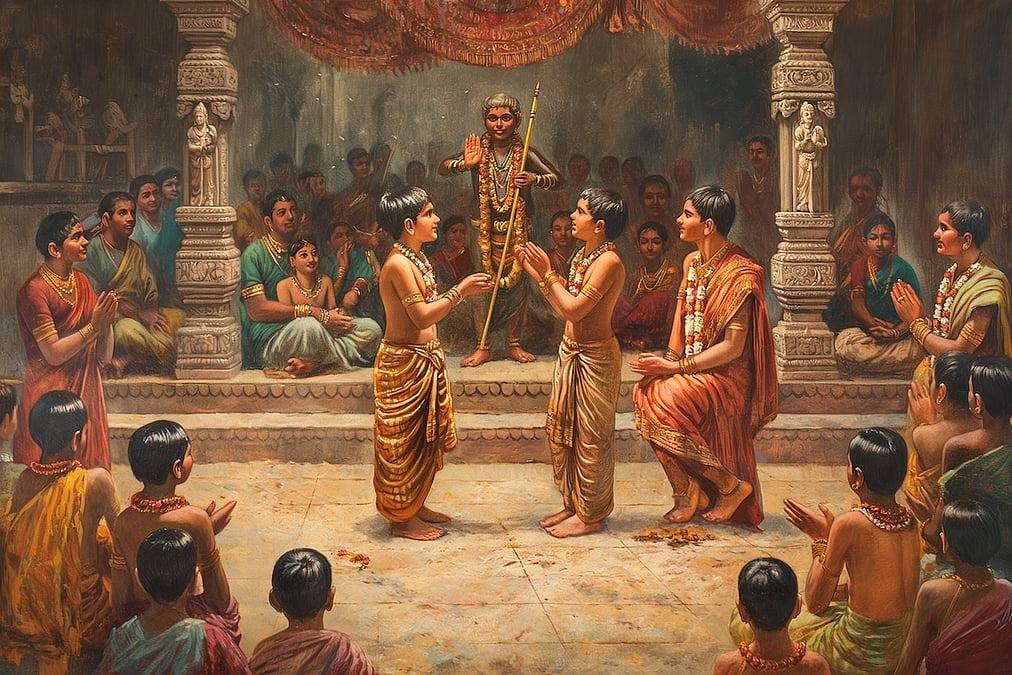
Rama’s story is also strongly connected with Ramlila, traditional performances depicting episodes from the Ramayana.
During these performances, communities come together to watch scenes from Rama’s life.
Rama in South India
Rama is also deeply respected throughout South India.
Temples, literature, music and devotional traditions have preserved his story for centuries.
In different regions, Rama appears in local artistic styles and literary traditions.
The language may change, but the central themes of the Ramayana remain recognizable.


Rama in Telugu Tradition
In Telugu culture, the Ramayana has a long literary and devotional history.
The story has been retold through poetry, Harikatha, performances, songs and religious traditions.
Rama temples and celebrations can be found throughout Telugu-speaking regions.
The Ramayana has therefore become more than a literary epic—it has also become part of everyday cultural memory.
Rama in Tamil Tradition
Tamil literature has its own magnificent Ramayana tradition.
The Kamba Ramayanam, composed by Kambar, is one of the most famous Tamil retellings.
Kambar presented the story through the richness of Tamil poetry, giving the epic a distinctive literary identity.
Rama in Kannada and Malayalam Traditions
Kannada and Malayalam literary traditions have also preserved and retold the Ramayana.
Poets and storytellers adapted the epic to their own languages and cultural environments.
This shows something remarkable:
The Ramayana could travel from one language to another without losing its central emotional power.


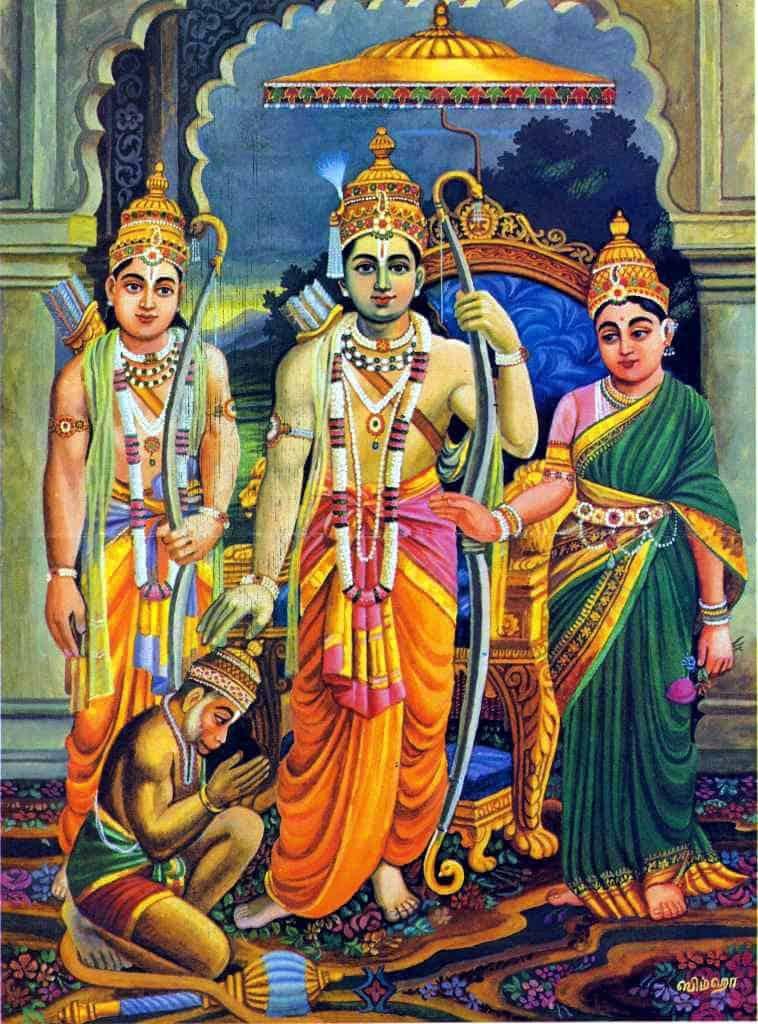
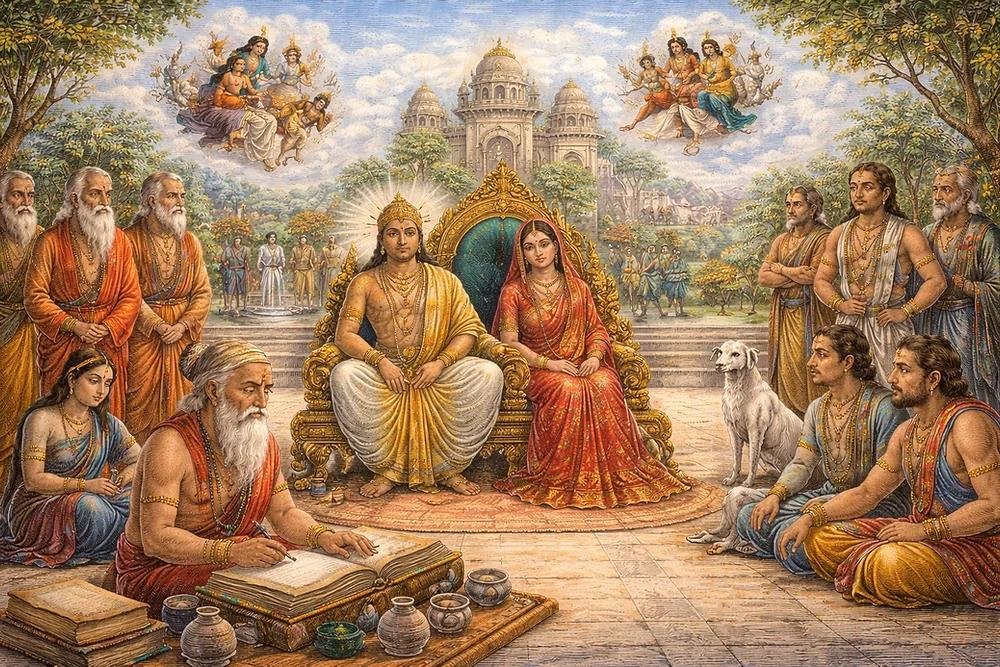
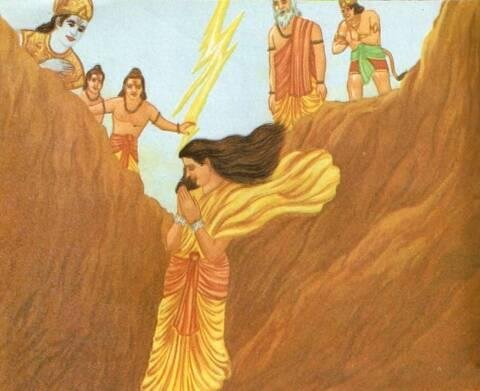
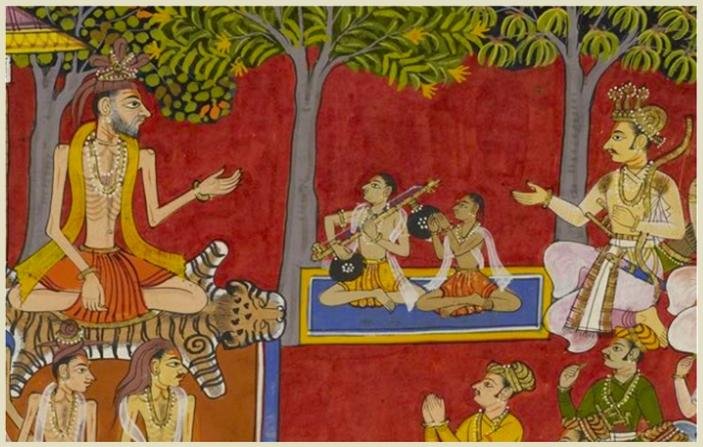
Rama in Art
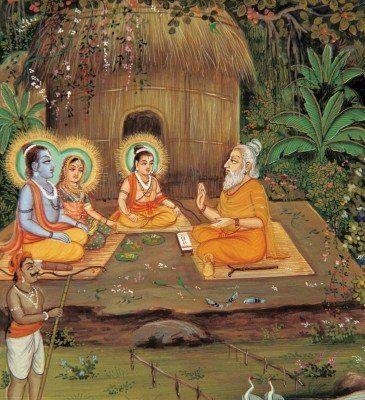
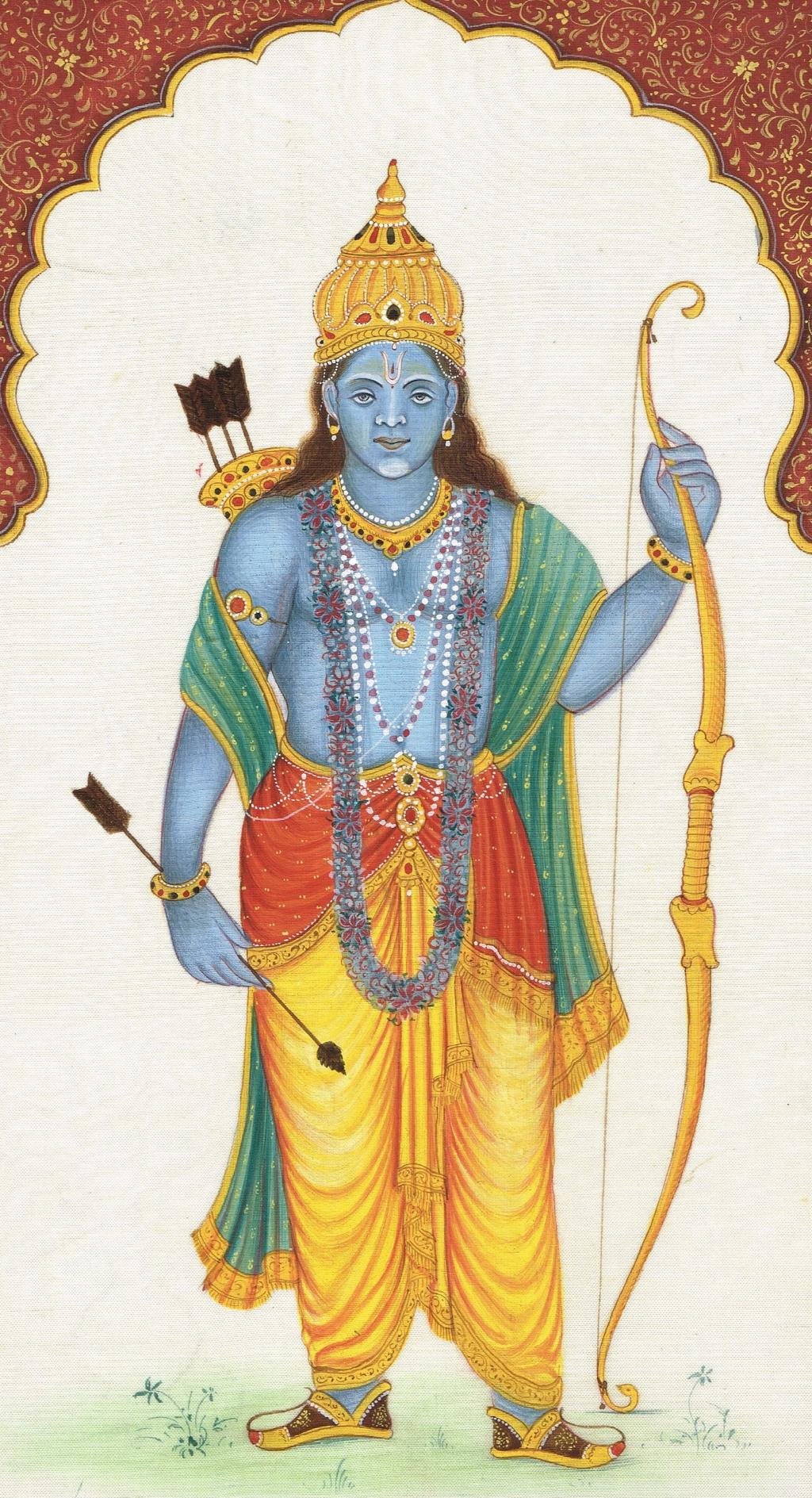
Indian artists have represented Rama in many different ways.
He may be shown:
🏹 Holding a bow
👑 Wearing royal clothing
🌿 Living in the forest
❤️ Standing beside Sita
🐒 With Hanuman
👨👦 With Lava and Kusha
Regional artistic styles can be very different.
Yet the familiar symbols make Rama immediately recognizable.
Rama in Temple Traditions
Rama temples can be found in many parts of India.
Some temples focus particularly on:
🙏 Rama and Sita
🏹 Rama as a warrior
👑 Rama as king
🐒 Rama with Hanuman
👨👩👦 Rama with his family
Temple architecture and sculpture have helped preserve the visual memory of the Ramayana.


Why Does Rama Have So Many Names?
The many names of Rama reflect the many dimensions of his story.
He is:
👑 A King
→ Rama
👨 A Son
→ Dasharathi
🏹 A Warrior
→ Raghava
🙏 A Divine Figure
→ Shri Rama
⚖️ An Ideal of Conduct
→ Maryada Purushottama
Each name allows devotees and storytellers to focus on a different part of his character.
Rama Beyond One Region
One of the most fascinating aspects of Indian culture is that the same character can be understood differently across different regions.
A person in Uttar Pradesh may connect Rama strongly with Ayodhya and Ramlila.
A devotee in Tamil Nadu may connect Rama with Kamba Ramayanam.
A Telugu-speaking family may know Rama through Telugu literature, songs and storytelling.
Yet all of these traditions remain connected to the larger Ramayana tradition.
A Shared Cultural Memory
The many forms of Rama demonstrate how stories can become part of a civilization’s cultural memory.
The story can be:
📖 Read
🎵 Sung
🎭 Performed
🛕 Worshipped
🎨 Painted
🗣️ Retold
And each generation can discover the story in its own way.
Rama in Modern India
Even today, Rama remains an important cultural and religious figure.
His name appears in:
🛕 Temples
📚 Books
🎬 Films
📺 Television
🎭 Theatre
🎵 Devotional music
🎨 Art
Modern technology has created even more ways for people to encounter the Ramayana.
The Enduring Image of Rama
Perhaps the most powerful reason Rama continues to be remembered is that his story combines several different roles.
He is simultaneously remembered as:
A son who respects his parents.
A husband connected with Sita.
A brother loved by his family.
A warrior who faces Ravana.
A king responsible for his people.
A figure associated with dharma.
That combination has allowed Rama’s story to remain relevant for generations.
Conclusion
Rama is not remembered in only one form.
Across India, different languages, regions, artistic traditions and communities have developed their own ways of celebrating and remembering him.
His many names reflect the many dimensions of his character.
From Raghava and Dasharathi to Raghunatha and Maryada Purushottama, each name carries a connection to Rama’s life and legacy.
🕉️ Different regions may tell the story differently, but Rama remains one of the most enduring figures in Indian cultural tradition.
In the next part, we will explore Hanuman in Indian culture beyond the main Ramayana story — why millions of people worship him, how his image appears across India, and why his devotion to Rama became such a powerful symbol.