The 2020 Tragedy That Raised Serious Questions About Police Power, Human Rights and Justice


In June 2020, during the COVID-19 lockdown, a tragic incident in Sathankulam, Thoothukudi district, Tamil Nadu, shocked the country.
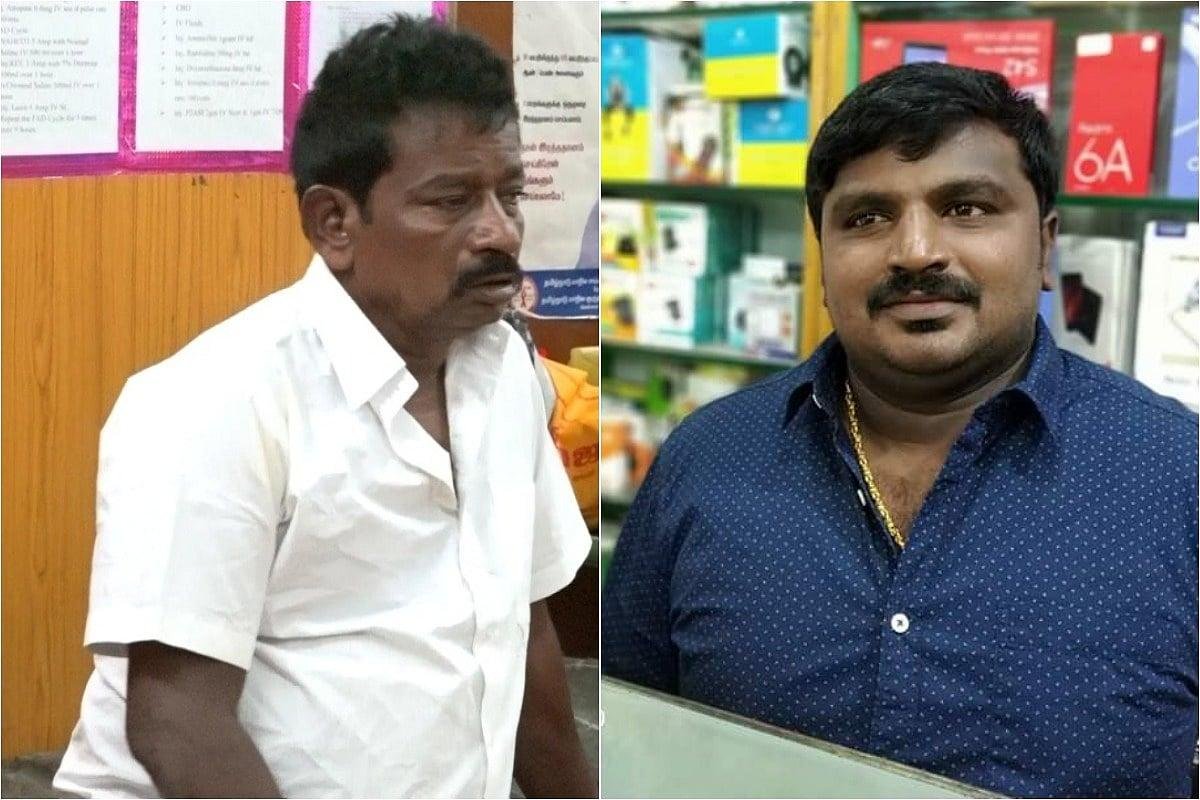
A father and his son, P. Jeyaraj and J. Bennix, were taken into police custody after an alleged violation of lockdown-related shop-closing restrictions. Both men later died after being detained.
The case became one of India’s most closely watched custodial-death cases and raised serious questions about police accountability, custodial violence and the protection of human rights.
🏪 How Did the Incident Begin?
Jeyaraj and Bennix were traders who operated a mobile-phone business in Sathankulam.
On June 19, 2020, police took Jeyaraj to the Sathankulam police station over an allegation that the shop had remained open beyond the permitted COVID-19 curfew hours.
When Bennix went to the station concerning his father, the situation escalated.
According to the prosecution case accepted by the trial court, the father and son were subjected to sustained assault while in custody.
What began as a dispute over lockdown regulations ultimately became a case involving allegations of severe custodial violence and two deaths.
👨👦 A Father and Son Never Returned Home


After their detention, Jeyaraj and Bennix were remanded to judicial custody and taken to Kovilpatti sub-jail.
Their physical condition deteriorated.
Bennix died on June 22, 2020. Jeyaraj died the following day, June 23.
The deaths caused widespread public anger.
People began asking a fundamental question:
How can two men who entered police custody over a lockdown-related allegation end up dead within days?
🔎 What Did the Investigation Find?
The case was initially investigated by the Tamil Nadu Crime Branch-CID and was subsequently transferred to the Central Bureau of Investigation (CBI).
The CBI filed a chargesheet against police personnel accused in the case.
The prosecution alleged that the father and son were brutally assaulted in police custody.
The case went through a lengthy judicial process, with the trial eventually reaching its verdict nearly six years after the deaths.
🩺 The Medical Evidence
The injuries documented during the investigation became an important part of the case.
According to The New Indian Express, the postmortem report recorded 13 external injuries on Bennix and 17 on Jeyaraj.
The trial court ultimately accepted the prosecution’s case that the deaths resulted from custodial assault.
This evidence became central to the court’s findings concerning the accused police personnel.
👮 Police Personnel Were Arrested
Following the deaths, police personnel connected to the Sathankulam station were arrested.
The accused included the then Inspector S. Sridhar, Sub-Inspectors P. Ragu Ganesh and K. Balakrishnan, Head Constables S. Murugan and A. Samidurai, and Constables M. Muthuraja, S. Veilumuthu, S. Chelladurai and X. Thomas Francis.
One other arrested police officer, Special Sub-Inspector Paul Durai, subsequently died after contracting COVID-19.
🕯️ Public Anger Spread Across India


The deaths sparked protests in Tamil Nadu and elsewhere.
Civil-society groups, political leaders, activists and members of the public demanded an independent investigation and accountability.
The case also became part of a larger national conversation about deaths in police custody.
For many people, the central concern was not simply what happened to one family.
It was the broader question:
Who watches the people who are given the power to enforce the law?
⚖️ The 2026 Court Verdict
After years of investigation and trial, a major development came in March 2026.
On March 23, 2026, the First Additional District and Sessions Court in Madurai convicted all nine surviving accused police personnel in the case.
The court found them guilty in connection with the deaths of Jeyaraj and Bennix.
The sentencing was taken up separately.
🏛️ Death Sentences in April 2026
On April 6, 2026, the Madurai court sentenced all nine convicted police personnel to death, describing the case as exceptionally serious.
The court also directed the convicted personnel to collectively pay ₹1.40 crore in compensation to the victims’ families.
This was an extraordinary development in a case that had begun with a relatively ordinary lockdown-related dispute.
Important legal point
A Sessions Court death sentence is not automatically the final stage of the case. Under Indian law, a death sentence awarded by a trial court is subject to the required High Court confirmation process and other available legal remedies.
Therefore, the April 2026 sentence should be understood as the trial-court sentencing decision, rather than assuming that the sentence has already become final or been carried out.
👮 Why Custodial Deaths Are So Serious
When a person is arrested and placed in custody, the state assumes responsibility for that person’s safety.
A person does not lose their fundamental dignity simply because they have been arrested.
The normal legal process is:
Arrest
⬇️
Investigation
⬇️
Evidence
⬇️
Prosecution
⬇️
Trial
⬇️
Judgment
The police investigate alleged offences.
The courts determine guilt and punishment.
Custodial violence cannot replace the judicial process.
👨👩👦 Six Years of Waiting


For the family of Jeyaraj and Bennix, the legal proceedings lasted for years.
Their relatives had to live with the loss of both a husband and a son while waiting for the court process to reach its conclusion.
In March 2026, family members spoke publicly about the long wait for justice. Reports described the emotional toll the case had taken on the family.
For them, the case was never simply a headline.
It was the loss of two people they loved.
🕊️ Why This Case Will Be Remembered
The Sathankulam case became significant for several reasons.
1. It involved a father and son
Two members of the same family died within days of each other.
2. It involved alleged custodial violence
The central allegations concerned what happened while the men were under police control.
3. It raised questions about accountability
The case asked whether police personnel could be held responsible when people die in custody.
4. It lasted for years
The incident happened in 2020, while the major trial-court verdict and sentencing came in 2026.
5. It became a national human-rights issue
The case triggered discussions about police reform, custodial safeguards and the need for accountability.
🇮🇳 What Can India Learn From Sathankulam?
The role of the police in a democracy is extremely important.
Police officers protect citizens, investigate crimes and maintain public order.
But with that authority comes responsibility.
Power must always be accompanied by accountability.
A strong democracy needs:
- Professional policing
- Proper arrest procedures
- Independent investigations
- Medical examination of detainees
- CCTV and other safeguards
- Judicial oversight
- Accountability for misconduct
- Protection of human dignity
These safeguards are not designed to protect criminals.
They protect everyone from the misuse of state power.
❤️ Remembering Jeyaraj and Bennix
Jeyaraj and Bennix were not merely names in a criminal case.
They were:
A father.
A son.
Members of a family.
People with a livelihood and a future.
Their deaths became a painful reminder that every person entering police custody remains a human being with rights.
The case also demonstrates why investigations into custodial deaths must be transparent, independent and thorough.
🇮🇳 Conclusion
The Sathankulam father-son custodial death case began with a lockdown-related dispute in June 2020 and developed into a major national discussion about police accountability and human rights.
After a lengthy legal process, the Madurai trial court convicted nine police personnel in March 2026 and sentenced them to death in April 2026. The court also ordered ₹1.40 crore in compensation for the victims’ families.
The case reminds India of a fundamental principle:
Nobody should be above the law—not even those whose duty is to enforce it.
And perhaps the most important lesson is this:
A person in custody is still a human being. Their dignity, safety and rights must never be forgotten. 🇮🇳
🇮🇳 MANA BHARATHAM
Stories, Facts & Wonders From India
✍️ Written by Pasupuleti Saida Rao