Tag: Indian Railways History

  • ๐Ÿ‡ฎ๐Ÿ‡ณ INDIAโ€™S RAILWAY JOURNEY

    ๐Ÿ‡ฎ๐Ÿ‡ณ INDIAโ€™S RAILWAY JOURNEY

    From the First Train in 1853 to Vande Bharat and the Future of Indian Railways

    https://images.openai.com/static-rsc-4/lWLqI1wwdwSlEeMlfA6uR7HSbNyMr0Ss-H9QEmNadGDPeetDGlmgccrPMT6d628Hzdedp2ww8h6NXj62YZpRmZixCnKbe01unVwwhObYncIkV0hDSd1mYbo1jZWIfR98h0woOCb_WcrvFCQkZOooqZfcbQqMSq0lY4FpiUw0JZn-s0O1NcEpWWnP1nxzc0Sr?purpose=fullsize
    https://images.openai.com/static-rsc-4/gZs0Gi1f-YOFvY3HjbfZ406k6k_iO1Po75Yj-8sHhu8H9u3ucx7106rTauGBUvNLeMJFNEu9cT-ak83UX89mqg1Cx-AFmkwN3ZLkDJbO3T0kM6ucnPtTmYXwd5VKvITb-ig5nLI0oQgveTwWANkSahvI4hUKHznZ1imE6XBRxOolU01Oa_-yP6RwBxhe2Mcr?purpose=fullsize
    https://images.openai.com/static-rsc-4/6mJZkKu7S7F27BSm3CZz3jZb6hS3KH96tEJ0VmOXbenEyWoN2uGzgyK1tMmWoruCiIqH0hSM2qcHiOmdB0DrLsrS7s39wBWXnLZhP42iU1wfvVgCVDu9ll28pdN3SXQqtFCInuIsfB2FpTomFl1LZeoOTu0l7d5ajyrtdLwKp8dWzTEB5ytPDWeoocNB9tbc?purpose=fullsize

    India’s railway system is one of the most remarkable transportation stories in the world.

    What began with a 34-kilometre passenger railway between Bombay and Thane in 1853 eventually developed into an enormous railway network connecting cities, villages, ports, industrial centres and remote regions across the country. Indian Railways itself records the first passenger train as running on 16 April 1853, with 14 coaches and about 400 passengers.

    Today, India’s railway journey has entered a completely different eraโ€”with electrification, digital ticketing, modern stations, semi-high-speed trains and Vande Bharat Express.


    ๐Ÿš‚ 1. BEFORE THE FIRST TRAIN

    Before railways, long-distance travel in India depended mainly on:

    • ๐ŸŽ Horse-drawn vehicles
    • ๐Ÿ‚ Bullock carts
    • ๐Ÿšถ Walking
    • ๐Ÿ›ถ Boats
    • ๐Ÿ˜ Animal transport
    • ๐Ÿ›ž Carriages

    Travelling between distant towns could take days or even weeks.

    The development of railways promised something revolutionary:

    Move people and goods much faster over long distances.


    ๐Ÿš‚ 2. INDIA’S FIRST PASSENGER TRAIN โ€” 1853

    https://images.openai.com/static-rsc-4/lWLqI1wwdwSlEeMlfA6uR7HSbNyMr0Ss-H9QEmNadGDPeetDGlmgccrPMT6d628Hzdedp2ww8h6NXj62YZpRmZixCnKbe01unVwwhObYncIkV0hDSd1mYbo1jZWIfR98h0woOCb_WcrvFCQkZOooqZfcbQqMSq0lY4FpiUw0JZn-s0O1NcEpWWnP1nxzc0Sr?purpose=fullsize
    https://images.openai.com/static-rsc-4/39SsKBIEU4XxtnxFiocHb6u7KCY1ankvfTsaMlmy_agUwbhfmVRBNh4JHG0a4R2SZfN7k3WWmYo7XBb-BicnFvjAj39Y-NzUMHuz0xEV7SyU0skFOg9KNQ6L8F60q_12K5ZKX9nGJoIMysehs5-SbfjZC408aT2eqkitBxKtD8dfNjz9hZi-AIhBHNQxtPUq?purpose=fullsize
    https://images.openai.com/static-rsc-4/k-xIjE9PKlS_TKLifyP4T-9cRyxopSwxjilZQyqxqIurVfkNS5jSC3EEuv377ka4_YBJc_ze5d7rEp8VROsPyA2s9A37_EpllHsQhhiLUhf4K9Jr_sdVQe5JRlgbaCqqxT7Qtm3MEntdiyDHVSvBRjPl85tUl7ZSd1B7_FTEeshbahKj5lirzI7VmECrk9yG?purpose=fullsize

    ๐Ÿ“… 16 April 1853

    This is one of the most important dates in India’s transport history.

    The first passenger train officially ran from:

    Bori Bunder, Bombay โ†’ Thane

    The distance was approximately:

    34 kilometres

    According to Indian Railways, the train consisted of:

    • 14 coaches
    • Around 400 passengers

    It was operated by the Great Indian Peninsula Railway.

    The journey marked the beginning of passenger railway service in India.


    ๐ŸŽบ 3. THE FIRST JOURNEY WAS A GRAND EVENT

    The first train was not an ordinary railway journey.

    It was a major public event.

    Historical records describe a formal ceremony at Bori Bunder, with a 21-gun salute accompanying the departure.

    The train travelled towards Thane amid considerable public attention.

    For people who had never seen a steam locomotive before, the sight must have been extraordinary.

    Imagine seeing a huge machine producing smoke and steam while pulling fourteen coaches!


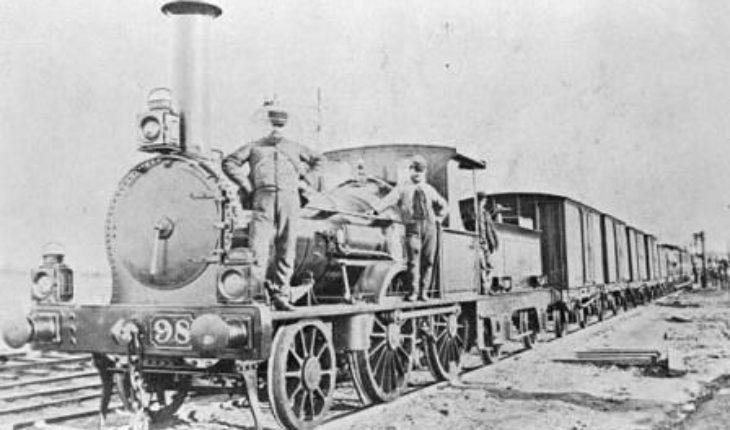
    ๐Ÿš‚ 4. WHAT DID THE FIRST TRAIN LOOK LIKE?

    https://images.openai.com/static-rsc-4/lWLqI1wwdwSlEeMlfA6uR7HSbNyMr0Ss-H9QEmNadGDPeetDGlmgccrPMT6d628Hzdedp2ww8h6NXj62YZpRmZixCnKbe01unVwwhObYncIkV0hDSd1mYbo1jZWIfR98h0woOCb_WcrvFCQkZOooqZfcbQqMSq0lY4FpiUw0JZn-s0O1NcEpWWnP1nxzc0Sr?purpose=fullsize
    https://images.openai.com/static-rsc-4/k-xIjE9PKlS_TKLifyP4T-9cRyxopSwxjilZQyqxqIurVfkNS5jSC3EEuv377ka4_YBJc_ze5d7rEp8VROsPyA2s9A37_EpllHsQhhiLUhf4K9Jr_sdVQe5JRlgbaCqqxT7Qtm3MEntdiyDHVSvBRjPl85tUl7ZSd1B7_FTEeshbahKj5lirzI7VmECrk9yG?purpose=fullsize
    https://images.openai.com/static-rsc-4/TdlsQZGR-5yqhG3o7rUVx0VfJ1lT5c4k6OXwredlkWHM4PW9F3ZLwkifxq6gnuUMZqRo9YOgf9pNTcIyZkumGis63FeoFmNXUkBShwynzQ-e8UOC9JW20AEeDzrAHhWhJ0Q76yLphC3tzfp1KKGqDC9clMtCCXO7YHimFhKsv6WsX2RJ0I3hpGO5DpBzs9E6?purpose=fullsize

    The first passenger train was powered by steam locomotives.

    Unlike today’s electric trains, these locomotives depended on:

    ๐Ÿ”ฅ Coal
    ๐Ÿ’จ Steam
    ๐Ÿ’ง Water

    A steam locomotive heated water inside a boiler.

    The resulting steam created pressure that moved pistons and ultimately turned the locomotive’s wheels.

    It was a remarkable engineering technology for its time.


    ๐Ÿ™๏ธ 5. WHY WAS BOMBAYโ€“THANE CHOSEN?

    Bombay was becoming an important commercial centre.

    Connecting Bombay with Thane by railway had several advantages.

    It could help move:

    • People
    • Cotton
    • Agricultural products
    • Raw materials
    • Manufactured goods
    • Mail

    Railways would eventually become closely connected with India’s commercial and industrial development.


    ๐Ÿš‚ 6. THE RAILWAY NETWORK QUICKLY EXPANDED

    The Bombayโ€“Thane line was only the beginning.

    Indian Railways records that:

    • The first eastern passenger service ran from Howrah to Hooghly in 1854.
    • The first major railway line in the south opened in 1856, connecting the Madras region with Walajah Road.
    • A line between Allahabad and Kanpur opened in 1859.

    By 1880, the Indian railway system had approximately 9,000 route miles, according to Indian Railways historical material.

    From a tiny beginning, the network was rapidly spreading across the subcontinent.


    ๐Ÿš‚ 7. THE FIRST STEAM LOCOMOTIVE MADE IN INDIA

    https://images.openai.com/static-rsc-4/PTTwVCBKRRdiuFOhkbaiY8s03An-zn0Rh3IT8h7AfLe95-VOOC1cHD7ZYykq5HsV2eUeLiahrmaj2xB3uQCfDC9aq6_m0riO7ePX4SVRZd8igvYNvjGU9lAfXFs6SH__3iTmYRUsxVoRk-NN-QEowILBHVxfPNH3DZx8KmOmfV9_pScW8f3mq3dS0zWcaRNd?purpose=fullsize
    https://images.openai.com/static-rsc-4/MOtTgAvOEeY4r10JDbkmvRNUfgBiPosfrar_Uc-E9jW5uzlT1jhlmyqvm4gf1qb0pcct71f0dQ4AlljKx3j7PfhrmZoNyGs9jqLXXkbmaAuSbBmBFoWggmS4qn7NvNJRbdCAIxVYnCo3YmIC_La1S0vLfJPwWw62wFATvUnftBKIw65ZYflx8HTq-PEfhKi_?purpose=fullsize
    https://images.openai.com/static-rsc-4/G-s-2qHWd7PryHD4RgeAxfk8uramx-Hgoki_TWQB5YxPthq9XvC2L5abvsB1-1jf2oSrmE4ZX9d80XWWxbQUyC57nZlCc4XEM7OOeTn8R2Y2dT4KPCDsl5b-HrnbwwG1U1x1F_j3BXNnf3UKpASwmiFpPY-VwAnt7abMo9ioVTZePjGv4Lrs7F09rpQVGg3h?purpose=fullsize

    India eventually began manufacturing its own locomotives.

    Indian Railways records that the first steam locomotive manufactured in India was F-734, built in 1895 at the Ajmer workshop of the Rajputana-Malwa Railway.

    This represented an important step toward developing India’s own railway engineering capabilities.


    ๐Ÿญ 8. RAILWAYS AND INDUSTRIAL DEVELOPMENT

    Railways did much more than transport passengers.

    They helped connect:

    Farms โ†’ Markets

    Mines โ†’ Factories

    Ports โ†’ Cities

    Villages โ†’ Towns

    Industrial centres โ†’ Markets

    Goods that previously took enormous amounts of time and effort to transport could be moved much more efficiently.

    Railways therefore became an important part of India’s economic infrastructure.


    ๐Ÿ‡ฎ๐Ÿ‡ณ 9. RAILWAYS DURING THE FREEDOM MOVEMENT

    Railways also played an important role in India’s social and political history.

    The railway network allowed people from different regions to travel and interact more easily.

    Newspapers, political ideas and movements could spread across large distances.

    During the freedom movement, railway stations and trains became part of India’s political landscape.

    The railway therefore became more than transportation.

    It became part of India’s national story.


    ๐Ÿ‡ฎ๐Ÿ‡ณ 10. WHAT CHANGED AFTER INDEPENDENCE?

    India became independent in 1947.

    At that time, the railway system consisted of numerous companies and regional railway systems.

    One major task of independent India was to bring these systems together.

    The railway network was gradually reorganised into a unified national system.

    Indian Railways became one of the country’s most important public institutions.


    ๐Ÿš‰ 11. THE CREATION OF THE ZONAL RAILWAY SYSTEM

    Over time, Indian Railways divided its enormous network into different zones and divisions to make administration easier.

    This helped manage:

    • Track infrastructure
    • Trains
    • Stations
    • Staff
    • Signalling
    • Freight
    • Passenger services
    • Maintenance

    Today, the railway network is administered through multiple zones and divisions across India.


    ๐Ÿš‚ 12. FROM STEAM TO DIESEL

    https://images.openai.com/static-rsc-4/UezUYhCZ6kV2VrA9Td63ue2bVWJTI9c10LUYPuE3QwgKb0L1NFzcJfUIba_cnLMsNU-AM8t6io0JB-qrZpfsauz5D3cL_TRH2p9tdL-KP3RZb2JVzRdyflrbQ6zLgz4A7oH372S7H5efF4goLnl-uVey1__lkQRyzHAVNkN-eVXlVBqHeil-H5MyDql5PF_i?purpose=fullsize
    https://images.openai.com/static-rsc-4/11JKG1cL7kvQAYQuxEd3By-qU_xChUzU_CbyZXZkLQ-kTXExWcBH4x-l9cqsFHQQY_ERAzYymwB41KAduJQcsHnR_P6Mloa3ReiemAO2C-5JHEyCXZaQOwt3x49R4-Kmn4aTRJfGBypriatd4Qb5PZnG4PiuzmhMXrvbIq3vDS_1-7-3rQ8lNEtM_dZOaR6A?purpose=fullsize
    https://images.openai.com/static-rsc-4/sByD39fwccOZBWppuLFp9zbRpSZWsj1GLmiPBoBWMR72360EhOpQWby6G-ey6mxIQWfqaIkWg4rI_0W73hVj3LYWJylgXmp9oUWKppwFyarw1iFjm5bVkQjVyYuuCsbzL_0nvo2Pc0Lwr6YQZZDsUy92xWYeEivQO5FD-lKMPqqqbLjI9SLWgitRg10EEfAy?purpose=fullsize

    For decades, steam locomotives dominated Indian railways.

    But eventually, diesel locomotives became increasingly important.

    Diesel engines offered several advantages:

    • Less dependence on coal
    • Easier operation
    • Faster turnaround
    • Lower maintenance in many situations
    • Greater operational flexibility

    India gradually moved away from steam.


    โšก 13. THE ELECTRIC RAILWAY REVOLUTION

    https://images.openai.com/static-rsc-4/p-8oUw0VYPb_wP_hQ-ntzbSmbL338wVMJdkp5oMeHX33wQtjealzddu8uLX2jr31ONiiMzIxCN-WUxC2Dwc0Wwe97LcuWJWn_yPUvunqwDKMS8ii7FYFBqyCqjnnKsh758DGPHlZ6WecJ2kGq1t-qOisM_fZ_qEh2bVdPBgCkcEbA1WoiAR76TC2-Intxppl?purpose=fullsize
    https://images.openai.com/static-rsc-4/lSpiNlC5vVVkwuUfIRNU3AcCdY1FygP-Ixbx2ZOcwPDUmYSrckcLWHXjhMiqHEXuUlE6dR0dSL9IyJvsX9gRVwlgR2yRoSc4qA_-8leuyWM51-gkHVT3BJ4fyKFM_WkRS3gEnMXPbLvH6hrMxBdJ0OLSAAQquIHuUiZ2bFy9rW-Kz3Ux7h8L4LkDOsI3JQir?purpose=fullsize
    https://images.openai.com/static-rsc-4/D0up55CLCPoasEuI9PlPHX63v_UpC1QRok_MXxFChe47MGGTlIuQM-Yvbfv-rN46athjIoXd4VcJ_MNguhn97zn4Q8T1L6mhHRQalpQM3tKimeL1Ua5JWOwkIBfSAxOxmA7lp-NUAJQvLkfoHFxDe-FCQIdN795YO25b5S2gPuCqGFk12B5oWr8rydKWovyc?purpose=fullsize

    The next major transformation was electrification.

    Electric locomotives could provide:

    โšก Powerful acceleration
    โšก High efficiency
    โšก Reduced dependence on diesel
    โšก Cleaner operation at the point of use
    โšก Better suitability for heavily used routes

    Indian Railways has pursued large-scale electrification for decades, with the pace accelerating significantly in recent years.


    ๐Ÿš‰ 14. RAILWAY STATIONS ALSO CHANGED

    Old railway stations were very different from today’s modern terminals.

    Over time, stations received:

    • Larger platforms
    • Foot overbridges
    • Electronic displays
    • Escalators
    • Lifts
    • Waiting halls
    • Food outlets
    • Digital ticketing
    • CCTV
    • Improved accessibility

    Major stations are increasingly being redeveloped into modern transport hubs.


    ๐ŸŽซ 15. FROM PAPER TICKETS TO ONLINE BOOKING

    One of the biggest changes passengers experienced was digital ticketing.

    Earlier, passengers had to stand at railway reservation counters.

    Today, passengers can use online systems to:

    • Search trains
    • Check availability
    • Book tickets
    • Cancel tickets
    • Check PNR status
    • Receive electronic tickets

    Indian Railways records indicate that computerised reservation began at New Delhi in 1986, while online railway reservation developed later.


    ๐Ÿš„ 16. RAJDHANI EXPRESS

    https://images.openai.com/static-rsc-4/xNfPqEJVDH_IojMHrXZ-hO__6q41aJqMWYdarf-KOyuILCxLEJQhbKiQ7teHGfW2dNr5iGpGaS4IA8NsuVLbecoo031LMEtvnPE_Y5m1Oz7rFBOztb2MrjnbCZbvRDnQrk38xXkN9cJtaxP4HtKAjqULeuV7tmkHSUiRI7WbiaOGg9klK123s2bEIoxk6dD8?purpose=fullsize
    https://images.openai.com/static-rsc-4/TZIbflVKMVHBRxLNQvbzwKGj5fknTvuvwdVKXBhnmbvB5fTbpXivpg2gjM-qF36qveTSWxbqlvzCPZXWzUi6fHnqNMHuEUXwYoyeaw0xRcyVXu8HBSWQ8ewmR7lklJAGFBWo55CjivCgDXLhXp3fZDDTz0PtLu6BWABg0hOAQoMdrdcfE6CQr4gNXJDXHgHm?purpose=fullsize
    https://images.openai.com/static-rsc-4/7bHNPvOqat9mMRxR1wPtUz1bKbQX-NPVrccKGICg_zU8LOH58xII9PxoTayGBzM-c4Im8mzmpMo8Wv8MdCpOqOMyglkacl97PFr7t6sjGZeDY2KltWrRvIIUMjTwQXcXfkJWV7rQ0t__KB-AsseSBNME9pwqihGYePTH-m8pc6uD4LvDj5Gkie6RjafnF65U?purpose=fullsize

    The Rajdhani Express represented a major improvement in long-distance passenger travel.

    The trains were designed to connect Delhi with major state capitals and important cities.

    They became known for:

    • Faster journeys
    • Air-conditioned coaches
    • Better onboard services
    • Premium passenger experience

    The Rajdhani became one of India’s most recognisable premium train categories.


    ๐Ÿš„ 17. SHATABDI EXPRESS

    https://images.openai.com/static-rsc-4/v42Y8Dz6m8umHEeTq5NCvO8mmJrEkzGCvq1tUFsqO8KOqdpBHpHvCZ1KLcKuyuZ3BGyhziOiVaLqTmj3SCqgpPFLFS2tiVm6kAEP9LTPPx2uNreMwE9MXEVFtLzryLubAn8uiOJew7gAVmkzsu-6mSR9B5lmO-epQpM3VJaycBLF7iOUGQLUy1r1t9ZLTuaR?purpose=fullsize
    https://images.openai.com/static-rsc-4/7Pndg7vkfle_tgsdfzBdI8qrxH0hzhx0jDZThHSQbNp5pQOuOJPFlhuETCCJyuGSy0WKVikwlMhHKgauh8Wp5lTC-OjzK-Ba2iWxImvMY-Gu2UmFJLisqeTPhzeDXo3os4zFighXyKfZ7VuM2n_yokb1HPx439GBrTowRON372PJYH-aSROVI-Uiil0e1cXQ?purpose=fullsize
    https://images.openai.com/static-rsc-4/VxR8GEtmZ75t4e3UspGypjMcLDwaLetWyBRIQp9yHoEEgDCqIp8SZYhQqdDewTpcbUWs03BkwMCbCk8_-ayLy5JlAEJXVd7I9Ow7-eH1dtW2jrPhfDNR_lGEPICg26iSarLF4-9yt1ylGWr2-TQI_yzsapXES9oRl_N0suLxDmUBC77gavBkj3wwMiL6o_BG?purpose=fullsize

    The Shatabdi Express introduced another important concept:

    Fast daytime intercity travel.

    The first Shatabdi Express was introduced in 1988, according to Indian Railways material.

    It became particularly popular for relatively shorter intercity journeys.


    ๐Ÿš„ 18. ENTER THE VANDE BHARAT EXPRESS

    https://images.openai.com/static-rsc-4/DG9zw9wrescI1vGOyt1td1qsRkR7wLWXAWH1SQUC3kkMNrzg3rTnO_j9H6MBdmOYlv0Jc7tUqPJh9pqD424mWXeeTMgdsel2Nc5pbXFH8vsquVL54NNyfhsLN6Jrb7WnczdeW-IL2VVIfpNLraO29NLlBZndj9A679xXjarxGexI3VXmv4R4o52ABxS-ED8E?purpose=fullsize
    https://images.openai.com/static-rsc-4/zETEzpmo7XLrg0jhMhTAC4gaIMRH8sbzcdvdWzmMJsoXiFszC2_2aUCuUg3voOF7DvuEcUed7xrBqj3ZByj5MaLOEQXr69R57aOFVuzGnK8SeOn9qZwiUV1zZkdzsCiZ4-WYWdLG5m1qFmOQJBvc2GcbyAcI8ibh2LSCs1lTjOKJx1MkVtlk0jSBGUT3LC5G?purpose=fullsize
    https://images.openai.com/static-rsc-4/TMsfQlWs370NcX4l5Fml3tLKrDaGfDGYvx4NmW31ATHbrigznE9PaYMxcJTpwdInymBUkF5sBO-GTpn43YCsR0o6HrPmbgAc5pGaHMGhO8LkjLAW0F-SW7aedsB5jEVOFVmad3Hw9NlT9GBsn-k-JcajSZWyX3WKL8R2ypg-O_lOsF7BGxWdqbEiqde3i2Ah?purpose=fullsize

    India’s railway technology has entered a new era with the Vande Bharat Express.

    The train was originally developed as Train 18.

    The first Vande Bharat service was launched in 2019, initially operating between New Delhi and Varanasi.

    Unlike conventional locomotive-hauled trains, Vande Bharat uses a trainset design, where propulsion equipment is distributed through the train.


    ๐Ÿš„ 19. WHAT MAKES VANDE BHARAT DIFFERENT?

    Vande Bharat introduced several modern features.

    ๐Ÿšช Automatic doors

    Designed to improve passenger convenience and safety.

    ๐Ÿ“บ Passenger information systems

    Digital information systems help passengers during the journey.

    ๐Ÿ“ก Wi-Fi and connectivity features

    Modern onboard technology provides improved passenger experience on applicable services.

    ๐Ÿšฝ Bio-vacuum toilets

    Designed to improve sanitation.

    ๐Ÿ’บ Modern seating

    Executive-class coaches include enhanced seating arrangements.

    โšก Faster acceleration

    The trainset design allows strong acceleration and braking performance.

    These features helped create a modern image for Indian passenger rail travel.


    ๐Ÿ›ก๏ธ 20. KAVACH โ€” INDIA’S TRAIN SAFETY TECHNOLOGY

    https://images.openai.com/static-rsc-4/wITKYRPTAXU9VNZEHbuR_kwh5Wh6DFHUrSsQaW8k1fjKm2BFhFMQmvaj5aN-OgdhSXnbAg7UdLJJaDf5VQTHESs5EVUzQab8Go4Bx8sBG6Luexi9vnZWXuNPXYAA4doSr17HpWg3RHd3MJqVRbhdyDWFLVDyn0A-i7IdoS8CqJH_x-qz5kWLvqoFDT5uQF1s?purpose=fullsize
    https://images.openai.com/static-rsc-4/pvyV9FlT0Ufb8qvAKRRH-Hq91H8BOZyn8HoLoXKFgOBFjv01rcV_bJEjTMgn3grB8vuVuLfc_tY7B1AOJmX1T4Rc9nh-ti8_AQDx0XdaEBwlJJGA5kqMdG0U1N56XfEOiRN0u-N48n3-jaLslWMsU_J5rkPqUa80FBO4TflplHw-yHThDXaNlzjpCMV92Qfh?purpose=fullsize
    https://images.openai.com/static-rsc-4/zGZL-PSMopdAVV7y-f12eHbxQe0D9umDooXSzjac1sHCqwG0fAFnf4Pw34x5l8AbQPTriBmM9jaMn27Z7kBIxtgbai62FZs68UKqI1b36Y4KAxe7f6qtpDcPKX1xbEmyZ2jngaG6O3Ni02q39wxvoGSx6UY8TiOn4zZEtdTG7L3t1nWRz0XD2UlG-dd7NR8n?purpose=fullsize

    One of India’s major railway technology projects is Kavach, an indigenous automatic train-protection system.

    Its purpose is to help reduce the risk of certain train collisions and signal-related accidents.

    The system can assist with:

    • Monitoring train movement
    • Preventing overspeeding in relevant circumstances
    • Enforcing restrictions
    • Automatic braking under specified conditions

    Kavach represents an important move toward increasingly technology-driven railway safety.


    ๐ŸŒ„ 21. INDIAN RAILWAYS AND SCENIC JOURNEYS

    Indian Railways is not only about commuting.

    Some railway journeys are famous for their spectacular landscapes.

    Examples include:

    ๐Ÿ”๏ธ Himalayan routes
    ๐ŸŒด Konkan Railway
    ๐ŸŒฟ Western Ghats
    ๐Ÿœ๏ธ Rajasthan desert routes
    ๐ŸŒง๏ธ Northeast India
    ๐ŸŒŠ Coastal railway sections

    The Konkan Railway is particularly famous for its bridges, tunnels, mountains and monsoon scenery.


    ๐Ÿ”๏ธ 22. MOUNTAIN RAILWAYS OF INDIA

    https://images.openai.com/static-rsc-4/76p4jeO0KV64UzcYmdGn-Cff-0_AwiV-zlk18vvDU31rlumpbW2jF6o0Br6hHNmbyVi83UKz2CVyfAExfEfJTddZpAdNzFBDSmkD9iC3FNRjAkjlAMvhq7TZGdTlCiqb6zMifx3QadRD4YENNIZQcP6Sel5l6LB_1CAEWE5XunBfQ1X3awm0qYur64DSoupw?purpose=fullsize
    https://images.openai.com/static-rsc-4/-Ndn8qJh8tsDN3WtGz9hNMl-x1gK5S9OBtDOxcIHS89Ur63XVNGa_GNgJebrb1FUISdi3cPu4OwmxbNS_fycFwbO_ya7NU6wbWJHLpI5Zyi_8qzKINz83MCFL4ozhoNkeLnO0Qbg2VmuX_L7WGW5EtzdKtAzAVlqIdTXo2vyj1EthhL2JD9Zgio_kNVzdFrv?purpose=fullsize
    https://images.openai.com/static-rsc-4/xf0zRRBssi7ZIgTZlNoV1kcnre3WVN2ddGBpBb6Sg1YbZndkWXiTwQ1YycFbmeTOE15QMlK6wphu0EBMyQurb_G6BWE5ueP6vuT22O8M4fI_NdR-INv0ULKzTJXYVaqyGu4zCyC2IFyjf2lodfIvc9hSlaNjMWaMnaCTHT_PAMaPtuQ01bVpxVlt78VVa_iX?purpose=fullsize

    India’s mountain railways are among its most famous railway heritage treasures.

    Three important examples are:

    ๐Ÿš‚ Darjeeling Himalayan Railway

    West Bengal

    ๐Ÿš‚ Nilgiri Mountain Railway

    Tamil Nadu

    ๐Ÿš‚ Kalkaโ€“Shimla Railway

    Himachal Pradesh

    These railway systems demonstrate how engineers built railways through difficult mountainous terrain.


    ๐Ÿ“ฆ 23. FREIGHT TRAINS โ€” THE OTHER SIDE OF INDIAN RAILWAYS

    Passenger trains receive most of the public attention.

    But freight trains are equally important.

    Indian Railways transports enormous quantities of:

    • Coal
    • Cement
    • Food grains
    • Steel
    • Fertiliser
    • Petroleum products
    • Containers
    • Industrial materials

    Freight railways help connect India’s industries and markets.


    ๐Ÿš† 24. THE FUTURE โ€” HIGHER SPEEDS

    India is also working toward faster railway services.

    The Mumbaiโ€“Ahmedabad High-Speed Rail project is designed around Japanese Shinkansen technology.

    It represents a fundamentally different category from conventional Indian Railways services.

    Instead of simply improving existing trains, high-speed rail requires:

    • Special tracks
    • Advanced signalling
    • Dedicated infrastructure
    • High engineering standards
    • Special rolling stock

    ๐Ÿค– 25. THE FUTURE OF INDIAN RAILWAYS

    The railway of the future could increasingly include:

    โšก More electrification

    ๐Ÿš„ Faster trains

    ๐Ÿค– Automated safety systems

    ๐Ÿ“ฑ Fully digital passenger services

    ๐ŸŒฑ Greater energy efficiency

    ๐Ÿข Modernised stations

    ๐Ÿ“ฆ Faster freight corridors

    ๐Ÿš† High-speed rail

    Technology is changing almost every part of railway operations.


    ๐Ÿ“Š INDIA’S RAILWAY JOURNEY โ€” IMPORTANT MILESTONES

    YearMajor Development
    1843Railway connection idea for Bombayโ€“Thane region recorded
    1853First passenger train: Bombayโ€“Thane
    1854Howrahโ€“Hooghly passenger service
    1856First railway line in southern India
    1859Allahabadโ€“Kanpur railway section
    1880Indian railway system reaches about 9,000 route miles
    1895Steam locomotive F-734 built at Ajmer
    1947India becomes independent
    1986Computerised reservation introduced at New Delhi
    1988First Shatabdi Express
    1990s onwardLarge-scale modernisation and electrification
    2019First Vande Bharat Express service
    2020sRapid expansion of electrification, modern trains and safety technology

    Historical milestones are based primarily on Indian Railways’ own published historical material.


    ๐Ÿš‚ THEN VS NOW

    Feature1853Modern Indian Railways
    PowerSteamElectric/diesel
    TrainBasic steam coachesModern trainsets & coaches
    SpeedVery limited by today’s standardsMuch higher
    TicketPaper/manualDigital + paper options
    CommunicationManualDigital systems
    SafetyBasic systemsAdvanced signalling & protection
    Passenger informationNoneDigital displays/announcements
    StationsBasicModern terminals
    ReservationManualOnline
    EnergyCoalIncreasing electrification
    TechnologyMechanicalDigital + automated systems

    ๐Ÿ‡ฎ๐Ÿ‡ณ 26. THE RAILWAY IS MORE THAN A TRAIN

    For generations of Indians, railway travel has been connected with important moments in life.

    A student travelling to a new city.

    A worker travelling home for a festival.

    A family taking its first long-distance trip.

    A soldier travelling across the country.

    A farmer sending goods to a distant market.

    A pilgrim travelling to a sacred place.

    For millions of people, the railway is not simply transportation.

    It is part of everyday Indian life.


    โค๏ธ 27. WHY INDIAN RAILWAYS MATTERS

    The history of Indian Railways can be seen as a journey through several technological eras:

    Steam โ†’ Diesel โ†’ Electric โ†’ Digital โ†’ Semi-High-Speed โ†’ High-Speed

    But behind every technological change is the same basic purpose:

    Connecting people and places.

    From the 34-kilometre Bombayโ€“Thane journey of 1853 to today’s modern railway network, India’s railway story reflects more than 170 years of technological, economic and social change.


    ๐Ÿ‡ฎ๐Ÿ‡ณ CONCLUSION

    On 16 April 1853, a steam train left Bori Bunder in Bombay for Thane.

    There were only 14 coaches and about 400 passengers.

    Nobody travelling that day could have imagined what Indian railways would eventually become.

    Today, trains can travel with electric power, automatic doors, advanced signalling, digital passenger information and modern safety technology.

    From the smoke of the steam locomotive to the sleek design of Vande Bharat, India’s railway journey is a story of technology, engineering, people and national development.

    ๐Ÿš‚ 1853 started the journey. The future of Indian Railways is still being written. ๐Ÿ‡ฎ๐Ÿ‡ณ

    https://images.openai.com/static-rsc-4/vIRdi6wbnHEwuSLVJ0G9OdR63iwZDQhYtlE0yPEJwCVjstr0db6kqufqBreXeF-dF6P3nxoFgmH_2uIKzBwDHLyWGj0yNKmzEhywh0coWfC4Xez6M9MwD2njw34W5Q1ccbUq8iayuNCQxh0eb6DzlIiHGKwPPhyr5KXLiEfZN1rt7X3uRLY7m8EB5pJOuybG?purpose=fullsize
    https://images.openai.com/static-rsc-4/l--6yTkAYvfwH8aBRh4guZtnN2iGKOGHb5_A6gDCcF_xJ38ym7wYI8CC0CgC7FoXyTk4hVyOv6Lxqt_b4oPj-OB1wc-LDDq-DcMF2H4x4iiH57mA_yypRZ36TEIOU2Vpe0b2hJr1qcvGp3sCntqoS5U_TcZDlEp2kOBFtd4vUhWWjvuiynKNovqYGC0KH2xY?purpose=fullsize
    https://images.openai.com/static-rsc-4/znJRYTlXg7kJTK8s2U-q7dph2xIwv7fTbL9FmkjQrXZERKdQmm_B3RcaAsjdUGSE0xnahMitHau55I8bg9yr3Vfx1fKLataV6tyoETBFKW2n3JPMONlqdLQhUPTpVRoLZdvsvAB7MUG6QEFrr5WnqcEA-d5CKHJj1bTh6jAzT0RtgDtH_3ojTyZ-CoO2MKmf?purpose=fullsize

    ๐Ÿ‡ฎ๐Ÿ‡ณ MANA BHARATHAM

    Stories, Facts & Wonders From India

    โœ๏ธ Written by Pasupuleti Saida Rao

    Know India. Explore India. Celebrate India. ๐Ÿ‡ฎ๐Ÿ‡ณ

  • ๐ŸŒŠ Dhanushkodi: The Ghost Town Where the Sea Changed Everything

    ๐ŸŒŠ Dhanushkodi: The Ghost Town Where the Sea Changed Everything

    Imagine travelling to the southern tip of India and suddenly finding yourself surrounded by sea, sand, ruins and silence.

    There are remains of old buildings.

    A forgotten railway story.

    A church standing among the ruins.

    And a road that seems to disappear into the horizon.

    This is Dhanushkodi, a remarkable place on Rameswaram Island in Tamil Nadu.

    Today, it is famous as a hauntingly beautiful destination. But decades ago, it was a functioning town connected to India’s railway and maritime routes. The story of how that town disappeared is one of the most dramatic chapters in India’s coastal history.

    https://images.openai.com/static-rsc-4/NJg3DnBDtUjWX-cEPEE_Tki_CmEuOG2k-c79GC74sujN8cucxHbn3jP3UsXgiwdG8WlnlE1fTXnKgVI4-yguuNHjTTCIRPwQeKUGrgvof0rJc_8w4YCc-3_RKPzbpCgA8qfmM579BYkXtXYWargczKkVxa641h9WAFbToJZE6oKBrNO5DHp03kgBR9xeI1q4?purpose=fullsize
    https://images.openai.com/static-rsc-4/mtf0DI5IgnSkL0voOSJNm0UNZpoVQswwAvjVxTubEo4_jXAmzoeF870Zo9wDxQhOHEUfeFss-Otg1AYhHt7Lv5IZAhlRG9fEK5I1kwhNOrd9uxz0SOgogSjYzCYVQt44zX7ReTEzXJj7QpizZYaBhaI8b22gI-onhOge6zPzTXthXx9m8-cxnzenRMNki3yp?purpose=fullsize
    https://images.openai.com/static-rsc-4/6Luea7XoBivVr-wwF4WBWdx4jmQ-17CXG3l2-bmRyhaAp-UBlFwCI9L8wdkHJ3kouUeKHeyaGynjYqWIfMHUPRPckid2vHL4zFK-dvpPB4IS74DDq5y1k-FF8Aku0WLKVzoJlRGeRxVIbTTi4X0Juf5nUyYNXwEnlV-MWRHhzOEF_2Nfo-_E_4FgczliUFf_?purpose=fullsize

    ๐Ÿ˜๏ธ Dhanushkodi Was Once a Busy Town

    It is difficult to imagine Dhanushkodi as a busy settlement when you see its ruins today.

    Before the disaster of 1964, Dhanushkodi had important railway and maritime connections.

    It served as a gateway for travel between India and Ceylon, now Sri Lanka. Railway services connected the area with the wider network, while ferry and steamer services connected Dhanushkodi with Talaimannar in Sri Lanka.

    The town had facilities such as a railway station, post office, customs and port-related offices.

    It was not simply an isolated village.

    It was an important transport point between two countries.

    https://images.openai.com/static-rsc-4/2ttvw9FflkrXXNOu3sQMxTxDXM1mPBKBIKF4aieYxTGEInQUvPEetEVDKEZdLfOpNdtuI9F8vRa0FESK7V2n33zYh6MYrd5VEcFEqkmWJMAuL2ec2nj8nkBYbWnsKHMRFnTpsjlXezofLmvm6MNGwqyVx3iXbBwXqVLxSrLTWZ-Y3DSBg8HxUYsCX4o6yoT_?purpose=fullsize
    https://images.openai.com/static-rsc-4/niHDC2WiFOGtj4X1vZMCdVOP3jbMqBIP-YhS_hMjKyjyIWS7th0SU_ZZaqi6D_09qPiI78_llwU2M-ADuc0aj1HO9xGij_v_e1EiaNkIw2xRSK1EdYX9ikxaZrS_0_2G-Fm0TmrASsZCnum9K_UYtY_Iz7oqAAgHQPdXbVfVrjEXz9hBFkD7S4yOwGfnk1Tm?purpose=fullsize
    https://images.openai.com/static-rsc-4/8Q8NbGum3KYtTiByNjcgIHftAY3sQQyhX7hqLLel0DEB2MVEX3_deR19LcuRcM-xdlG9J2ukY06ReHpi6Zf6lgq2z3EWmeJphvwDpCPbw3rWh41zU7mYr1kHxXWGcVWbnFhR7FdYoWE1vUc6k_5-wY2AjuzH5qfQmNIR_dFXSTcXAd0S7Rgtl-016I7Dtphi?purpose=fullsize

    ๐Ÿš‚ The Railway That Connected India and Sri Lanka

    One of the most fascinating parts of Dhanushkodi’s history is its railway connection.

    Passengers could travel towards Dhanushkodi and then continue their journey by sea towards Sri Lanka.

    The route formed part of an important India-Ceylon connection during the pre-1964 period.

    For travellers of that era, Dhanushkodi was therefore much more than a beach destination.

    It was a gateway.

    ๐ŸŒช๏ธ Then Came the Disaster of 1964

    Everything changed in December 1964.

    A powerful cyclone and huge waves struck the Rameswaram-Dhanushkodi region.

    The destruction was enormous.

    Buildings were damaged or swept away, railway infrastructure was destroyed and large areas of Dhanushkodi were devastated. The town was subsequently left largely uninhabited.

    https://images.openai.com/static-rsc-4/7mObIGUm7-x7Tjv2qP-r_eN9Zorxr88h0iCqeeOutu4puxvaZ2XgE45lVBgqG3p2i7WkxJNLF1ONB5vYo2PCKt8n_UBn4VmqKI2tB28IH43D-O9S6enh4t3NXsUTLx4aEzKhqR1_C5GpeRwA60i4qqBOSdytYYWfijiEdpL8IiBboGZuqi0jlYadb_q7RE6F?purpose=fullsize
    https://images.openai.com/static-rsc-4/-jR_QpzwJL8OIbGMnXTOxl0FVy-ldRgMm6c2CjDt67Meo05y0uTP2ESBaIYCpFUGV9TY0CfvPDyzgeXDjidYGYCSGAWupUDi3FAeD4FZm2cZGeIP9cw_e6hpWJp7hokyucQ5BcnY0c7TDue2MFiJps8_pkyqI9Aw0h2YKIuN2dDntaWb2D_xshbfN_nSITUk?purpose=fullsize
    https://images.openai.com/static-rsc-4/tSI9EqH55YJfLtnHvtXDDZXDpfR9tzz9EGIm5rvyilPu30wR0OiQ5byCqqQiPCk0S9wNU9IvNO9VmfKLx0eVhym-ZILHSikAyDpuxDudRJzHcduHD4t-osh7H_mX1aAzoLNbkhuM1gzfu4eIXAjy3gy5m9Mn14p6UTwgUtioeEbHxOUHThLzP9UHA_n-BxvS?purpose=fullsize

    ๐Ÿš† The Train Tragedy

    Perhaps the most heartbreaking part of the disaster involved the Pamban-Dhanushkodi Passenger train.

    On the night of December 22โ€“23, 1964, the train was travelling towards Dhanushkodi during extremely dangerous weather.

    A huge wave struck the train near Dhanushkodi.

    The train was swept away, and everyone aboard was lost. Contemporary reporting based on railway records says the exact death toll is uncertain, with estimates varying; one railway safety account recorded around 100โ€“110 passengers along with railway staff.

    This tragedy remains one of the most unforgettable stories associated with Dhanushkodi.

    A railway journey that was supposed to end at a station ended in the sea.

    ๐ŸŒŠ A Town Lost to the Sea

    The cyclone did not merely damage Dhanushkodi.

    It transformed the place completely.

    The railway station, railway line, houses and other structures were destroyed.

    The destruction was so severe that Dhanushkodi was not rebuilt as the town it once was. Government tourism and municipal sources today describe the area as largely uninhabited since the disaster.

    https://images.openai.com/static-rsc-4/bz-wRitOdZTawuVp_g4Ty6PPNILQcSWC50Z5cMh2XgXpi9RGZ0waBpTUZk_EHkZaCqX6wjh-28r83f-z_V_jydvUO5AROhThds4VrjuophlNb9ttCL2lQ0kWqZNxgUucvSecAKmqtx_FvGBjdZ6cqQzvUfoTJbwGZPuvYGemVF_To8K6tJki0RAkk3r6Uy3P?purpose=fullsize
    https://images.openai.com/static-rsc-4/hVFx4SoRO0zFChsckr9tvxzEW6w9AMVtP_2cT6l_KctMxBm3g6QDv--6cKqCE59jUJ_SNZf2Yq5KqaenMVM_Z_77mO6RJVkTd4QEko8Q1lgqLGkS0x0RoZA0WNdG8YqW7lquHWa2JQqIlItQmZhqb9AtlC9Gtz-XfReT_TdfVSO2dvjPc0N_FCiqhNJmdiWI?purpose=fullsize
    https://images.openai.com/static-rsc-4/-jR_QpzwJL8OIbGMnXTOxl0FVy-ldRgMm6c2CjDt67Meo05y0uTP2ESBaIYCpFUGV9TY0CfvPDyzgeXDjidYGYCSGAWupUDi3FAeD4FZm2cZGeIP9cw_e6hpWJp7hokyucQ5BcnY0c7TDue2MFiJps8_pkyqI9Aw0h2YKIuN2dDntaWb2D_xshbfN_nSITUk?purpose=fullsize

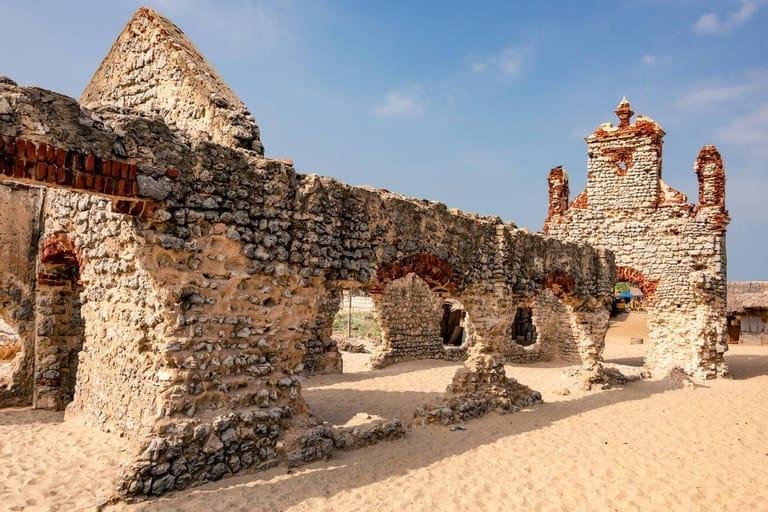
    โ›ช The Ruins That Remain

    Today, visitors can see remnants of the old settlement.

    Among the most recognizable sights are the old church ruins and railway-related remains.

    These structures are powerful reminders of what once existed here.

    The official Incredible India tourism site specifically notes the dilapidated railway station and church as reminders of the 1964 cyclone.

    Standing beside these ruins and looking at the sea makes the history feel remarkably real.

    ๐ŸŒ… Where Two Seas Meet

    Dhanushkodi is also famous for its extraordinary geographical setting.

    At the tip of the island, the Bay of Bengal and the Indian Ocean meet around the Arichal Munai area. Government tourism information describes Dhanushkodi as being flanked by these waters.

    https://images.openai.com/static-rsc-4/mqd505_0dIhfUNuAilk81ij_nucyBzRI8OsBsB7zna5mb-cGmozCautD5tlNg1328kGY-18kxpGqGDe1wl9K8zCyfDyOLbJ8pakhnfoPtU91oYqkwjmN82dqDwXReCS9NRJE3v0ZQPaZbt6p5rarfnyuekqpWY8L2qyPVxlON-1G5d7dVIZD0EHHCPCf5ObM?purpose=fullsize
    https://images.openai.com/static-rsc-4/Wco7gcRgEjUr6dP-Jl4TgTdEgFvoUVSEkSilSni21g1wNjtyIfhFA00Lese6h8Vz7TDbejDbTEDmQEn-DC4HUaa1OHel6hZiYkrzlgoqXclj2sN_IgTliaG55lRqO2bXlRIQviFDJ-sJxAyHohI9yyIWiXHNc_QaUleEleah6IegAsnv0Nge_pyqL033sSMc?purpose=fullsize
    https://images.openai.com/static-rsc-4/xNMFRqsu0llkliORPNFRxWyE1V3FIuJO8e8IcmSfUXl_raqSffY5CxyDCHZNyteLBflX7NasJW4uWu6FNaUVlgipD5Zk73yuN2OYF-L0jqmbWuEx5oL_EUvrfEVAcxQ40neXyO_IHjSYBu9XB8tu9A5ksYS0E18nxXMjJzM4CvHccHmqqlPmaqf5zv7b-J6p?purpose=fullsize

    This creates a dramatic landscape of:

    • ๐ŸŒŠ Blue water
    • ๐Ÿ–๏ธ Long beaches
    • ๐ŸŒด Sparse vegetation
    • ๐Ÿœ๏ธ Sand
    • โ˜€๏ธ Open skies
    • ๐Ÿš๏ธ Historic ruins

    It is one of those landscapes that looks almost unreal.

    ๐Ÿ•‰๏ธ Dhanushkodi and the Ramayana

    Dhanushkodi also has an important place in Hindu tradition.

    According to religious tradition, the name is associated with Lord Rama’s bow, and the region is connected with stories surrounding the journey to Lanka.

    The nearby Kothandaramaswamy Temple is also associated with the Ramayana tradition. Incredible India notes that the temple survived the 1964 cyclone and remains an important historical and religious site.

    It is important to distinguish between religious tradition and historical evidenceโ€”the Ramayana associations are part of the region’s cultural and spiritual heritage.

    ๐Ÿ๏ธ Dhanushkodi Today

    The Dhanushkodi of today is very different from the town that existed before 1964.

    Instead of a busy railway settlement, visitors encounter a destination known for:

    history + ruins + beaches + spirituality + dramatic scenery.

    Tourism has given the area a new identity.

    People come to see the remains, experience the coastline and understand the story of the vanished town.

    https://images.openai.com/static-rsc-4/cIS1dAonJJuC2v89e-SLtOiXJzuvwdWfwECAApq_hrYB-9nr7zSiCmdM0is-fTbLhr2c3CgDDjtCfUHTiE2ulp_A13pYRBvNjpZsCqdD3NF74SN-qd8I6VbSObfLBJ3tfRPl56g1Y-2uTE0WQEC8f8Dn8d2cSGvfiwoiYCr8aFnLs4qC9mc9BYBOx5wrb-De?purpose=fullsize
    https://images.openai.com/static-rsc-4/592DxvOwwSLBHIKJZ46L82zrn98FfeoNfAgtCPnKj9A6Cq9S54k7tOQyrOimk84D04PhAxK_rjwcAVPse_I_Q6rIRKm1D4N-yXAA1tS8UHyEOkBv2eCdf4_GtJ9dBRfAIkBZGPkw9klg0PSdUvDjYtjX14bcCI93wJPmERrExkAZuQJ9nxhpRt8W5-U8j-Cn?purpose=fullsize
    https://images.openai.com/static-rsc-4/vLPp6G9qlWSCswA_ZF56W3BuaxLJhMeT9eURS6lNsuKQmUiIteZgg8Veyk6QbY7l391LfhvGRPerf5x-W3yZDA-bivDPGHxg8W2bkwQ1RSTXfZrYryjrlogWDUV_cSDhcz-7KJy77ixc1LfTLGjz28BiqPoE3sljhU3paCyzD2HiMFE80SIG0d_Ounfere7Y?purpose=fullsize

    ๐Ÿงญ Why Is Dhanushkodi So Fascinating?

    There are many beautiful beaches in India.

    There are many historic towns.

    There are many religious destinations.

    But Dhanushkodi combines all three with a powerful disaster story.

    You can stand on the same island where:

    • ๐Ÿš‚ trains once carried passengers
    • ๐Ÿšข ships connected India and Sri Lanka
    • ๐Ÿ˜๏ธ a town once flourished
    • ๐ŸŒช๏ธ a devastating cyclone changed everything
    • ๐Ÿš๏ธ ruins remained behind
    • ๐ŸŒŠ the sea became part of the town’s history

    That combination makes Dhanushkodi unforgettable.

    ๐Ÿ“ธ A Photographer’s Dream

    Dhanushkodi has become popular among travellers and photographers because of its unusual scenery.

    The contrast is striking:

    ancient-looking ruins against a bright blue sea.

    empty roads against an enormous horizon.

    old structures surrounded by sand.

    https://images.openai.com/static-rsc-4/8mKCvp_j9dcwJRAv-cJUYjkB5Qfw2ZIhhPwdnjqSO-OjqJQZvwi7q8YMQkDCWSjrUZvWhjHwL6gjTyMmuXgCS67s6oSK2FXcf3dZZoZ96k-_3njJ4HehVlVVIfkht6TjSE4-d1kcSC42AOeKwDTcpYX1uB7PM_Y2FL7nRQxccRlAJRJOyWmDZQZ-DkQQFWVh?purpose=fullsize
    https://images.openai.com/static-rsc-4/JtwQWCzQ4O8P8gwh3FMFBBouW_kZdALlTSRndqrNyxC-PQHG1Zc_ypqv7idGB8uZh273IkP0IT4ecN34lQ1J-t3mNgReFDPZsNHCaZwpSSnJppGGG4ZNkMHt9HQLae7lLs8WUmXOnct2SICFaK2BN0f43u3qjEzid5fRrPYkAGumc19Tf9-TbZQttqt_Zqg6?purpose=fullsize
    https://images.openai.com/static-rsc-4/muk4F3N27yHrFNdeHS81qLLdWr571MXFchQOmt6f4sx7feynsyHokMzK7p66oWen2uLh1YmZ5Yz3yO95hzRcV7z1biBObYhOerhu4z6dRN6ALN8lEYOlncYm4yzIg8kw3YrXPAWNLLGVFFi8V3bpp2DxgsngkjeeauXIPY3i7PYQPcSoWLmBQ1Whho6BVNFh?purpose=fullsize

    The best photographs, however, should also remind us that these ruins are connected to a real human tragedy.

    โš ๏ธ Respect the Place

    Dhanushkodi is beautiful, but visitors should remember its history.

    The ruins are not simply photo backgrounds.

    They are remnants of a town destroyed by a catastrophic natural disaster.

    Visitors should follow local instructions, avoid dangerous areas and respect religious and historic sites.

    Coastal weather can also change quickly, so travellers should check local conditions before visiting.

    ๐Ÿค” What Can Dhanushkodi Teach Us?

    ๐ŸŒŠ Nature Can Change Everything

    Human settlements can disappear when confronted with extreme natural forces.

    ๐Ÿš‚ Infrastructure Has a Story

    A railway line can represent much more than transportationโ€”it can connect communities and countries.

    ๐Ÿš๏ธ Ruins Preserve Memory

    Even when buildings disappear, the remaining structures can keep history alive.

    ๐Ÿ‡ฎ๐Ÿ‡ณ History Exists Beyond Famous Monuments

    India’s history isn’t limited to palaces and forts.

    Sometimes it can be found in abandoned railway stations and coastal ruins.

    โ“ Frequently Asked Questions

    Where is Dhanushkodi?

    Dhanushkodi is located at the southeastern end of Rameswaram Island in Tamil Nadu.

    Why is Dhanushkodi called a ghost town?

    The former town was devastated by the 1964 cyclone and was subsequently left largely uninhabited.

    What happened in Dhanushkodi in 1964?

    A powerful cyclone and associated waves devastated the area, destroying much of the town and its railway infrastructure.

    Is Dhanushkodi a tourist destination today?

    Yes. It is visited for its beaches, ruins, scenery, cultural significance and historical connections.

    What can visitors see there?

    Visitors can see coastal landscapes, historic ruins, remnants of the old settlement and nearby religious sites.

    ๐ŸŒŸ Final Thoughts

    Dhanushkodi is not simply a place where a town disappeared.

    It is a place where history, nature and memory meet.

    Once, trains arrived here.

    Passengers crossed the sea towards Sri Lanka.

    Families lived here.

    Businesses operated here.

    Then, in one terrible night, the sea and the storm changed everything.

    Today, the ruins stand quietly beside the ocean.

    The railway is gone.

    The old town is gone.

    But its story remains.

    Dhanushkodi reminds us that sometimes the most powerful historical monuments are not grand buildingsโ€”they are the ruins that survived long enough to tell us what happened. ๐ŸŒŠ๐Ÿ‡ฎ๐Ÿ‡ณ

    https://images.openai.com/static-rsc-4/JtwQWCzQ4O8P8gwh3FMFBBouW_kZdALlTSRndqrNyxC-PQHG1Zc_ypqv7idGB8uZh273IkP0IT4ecN34lQ1J-t3mNgReFDPZsNHCaZwpSSnJppGGG4ZNkMHt9HQLae7lLs8WUmXOnct2SICFaK2BN0f43u3qjEzid5fRrPYkAGumc19Tf9-TbZQttqt_Zqg6?purpose=fullsize
    https://images.openai.com/static-rsc-4/Sjjb6JQMF0DYvMXkY0GZwoQCwkk9XTkjbCtV3dM2zJ2MFvp7kc0wGsigzIjEHuhfWWSeCzqsC_r9forueUQL31xmeXlZs235j-_bQVMErZPQ8zgCh5WpUFHY2JQ-cwOigJbABwh1oH8GVybzSo-BVkGK8GdXn1OZ4VCzdGUccUURaDJ8hVJTN0u2MO4AGDae?purpose=fullsize

    ๐Ÿ‡ฎ๐Ÿ‡ณ MANA BHARATHAM

    Stories, Facts & Wonders From India

    ๐ŸŒ Website: allpincodes.online

    ๐Ÿ“– Blog: MANA BHARATHAM

    Know India. Explore India. Celebrate India. ๐Ÿ‡ฎ๐Ÿ‡ณ