Tag: Japan Facts

  • 🕉️ The Ramayana – Part 8: Rama Enters Deeper Into the Forest | The Life of Exile Begins

    🕉️ The Ramayana – Part 8: Rama Enters Deeper Into the Forest | The Life of Exile Begins

    In Part 7, Bharata returned to Ayodhya, learned about Rama’s exile and was devastated by the death of King Dasharatha.

    He travelled to Chitrakuta and begged Rama to return.

    But Rama refused because he had promised to complete the fourteen years of exile.

    Rama gave Bharata his padukas, or sandals, as a symbol of his authority.

    Bharata returned to Ayodhya.

    Now Rama, Sita and Lakshmana continue their journey.

    🌳 The peaceful days at Chitrakuta are coming to an end.


    https://images.openai.com/static-rsc-4/Zgti1Z5wiPdn61r1z44HRf6hGXpsFUPiF62vuoqctrlHwTcOkIgpym_VTgQebFg1kzz5cooXzzb-tTJAmsqIL_BbBXh7H-_gcqQreMyXVmX2NnUgxVbOADWkUy8blYMcb0kkiUAK7vUFDDyLtynF5XgEuD7677_prXYZ2nogZ-pI2GUlgDLYokMItraBFx1C?purpose=fullsize
    https://images.openai.com/static-rsc-4/w3vYQcJdHqTVgKZ8bjagfYSbJ8EZaXl0qtf1Mtl2J2xzqSEHorhsqIBL8NYgy2bRqSIzw8UPVcElVYbzwBJtb4sKYHGwOOA4b57Kt1fgFwLRM9FZ73bwZEfzZA02C0Y8oz_YKkq-EppWhJPnWjhQvdfS17MrqO1DcKioKbVCnjknYryBkAFa3GVv6lhw4CFJ?purpose=fullsize
    https://images.openai.com/static-rsc-4/G3b539cxU-hxdX4Z_DLZfw6xFbgjvtkUtFeNED4PMf8zQb7I55FtAZlAARR8nn8jYvMgE7O4GgYDIDRUJF-utYNY3Eg3KjVLUs9oJBo5zcB0jYzFTWKtHQzm-o7MPH8GfHS5a5L7ZufCLsI6BDuBeB3rvbUth6Zi8xTB0uN3h0Mw_FtG5o721KqmVz9tRIIa?purpose=fullsize

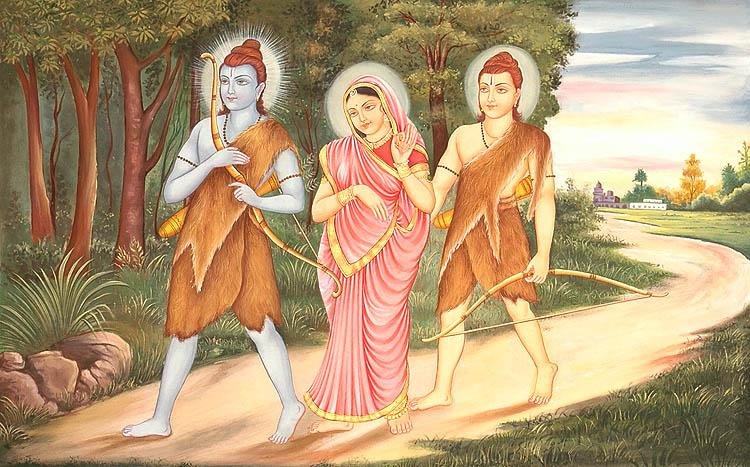
    Rama, Sita and Lakshmana in the Forest

    Suggested image: respectful traditional artwork showing the three travelling through a forest.


    🌳 Why Did Rama Leave Chitrakuta?

    Chitrakuta had become an important place for Rama, Sita and Lakshmana.

    But after Bharata’s visit, Rama began considering whether remaining there was appropriate.

    The forest had also become associated with the movements of many people who came to see him.

    Rama wanted to continue his exile peacefully.

    He therefore decided to travel farther into the forest.

    The three began moving toward regions where many sages lived.


    🧘 Meeting the Forest Sages

    During their travels, Rama encountered several sages and hermits.

    These spiritual communities lived away from the cities and maintained their religious practices in forest surroundings.

    The sages welcomed Rama.

    But they also told him about the difficulties they were experiencing.

    According to the traditional Ramayana account, some hermitages were being disturbed by rakshasas.

    The sages asked Rama for protection.


    🛡️ Rama Promises to Protect the Sages

    Rama listened carefully to their concerns.

    He understood that his role during exile was not simply to live in the forest.

    He also had a responsibility to protect those who sought his help.

    Rama therefore promised to defend the sages and their hermitages.

    This becomes an important part of his forest journey.

    His exile was becoming a mission of protection.


    https://images.openai.com/static-rsc-4/dJa-MGX3d4X-TlKGF-slAhLmLfG6AFUFKBOluSzlBX7OlPyVfvKJT1c55Y2v5DoSr-cxSDYvpYvPdZ1VJM5zBPIIHuGnt1RzQ0I6FgURUvoPVc4BpskDPtGg9roKMClxs8k-L4hZwzN5u9Pvqj54530R_SjZqx9UUJ9jscQI7JoSajRkjFqL7XBEgJNX5ISx?purpose=fullsize
    https://images.openai.com/static-rsc-4/fzw2V__kVhotAe96UrdCtZzLxhqeG4TK193BCuVOfvwcZSu1FBd0matliWwmfQVQF4sgSLCnReOEz8EPX_UKYgeWt3Dmk00c--qN22NH2MI1gSmJuYHpXxeHlwzPGpWOc4huoHCzI79tNKismv-QV-N6MTlrel17gt9-L1AmjqmyBwaLQAD0qwR21btLS4qc?purpose=fullsize
    https://images.openai.com/static-rsc-4/cjoef3I-s-ev2c34BWs_uPGpIN_R4JSvPk9e4iOfxttXzMxEgHAilxbAUlibnG5x-75a0fWHCpcltrHAwsZ1obGc7aio9CBoNj0eSTKNxlIjgWNl-UDd8s6IhK5GE-xXWHxUChVZ4g9lzAKdCwYg5QCt_u4jns9Twrj-Ij-uoCZHQOlQRC5ooLpbuNux4J_k?purpose=fullsize

    Rama Meets the Sages

    Suggested image: traditional artwork showing Rama, Sita and Lakshmana visiting forest sages.


    🏹 Rama as Protector of the Forest Hermitages

    Rama was a skilled warrior.

    He carried weapons during his exile.

    The sages believed that his presence could provide protection against those who disturbed their peaceful life.

    Lakshmana also remained beside Rama.

    Together, the brothers travelled through the forest and protected the communities they encountered.

    Sita, meanwhile, remained with Rama throughout the journey.


    ❤️ Sita’s Concerns

    Sita was deeply devoted to Rama.

    But she also understood that forest life was dangerous.

    In traditional accounts, she expressed concern about Rama becoming involved in unnecessary conflicts.

    She reminded him that they had entered the forest as exiles.

    Rama explained his responsibility toward those who depended on his protection.

    This conversation highlights an important aspect of their relationship.

    Sita could express her concerns openly, while Rama remained committed to his understanding of duty.


    🏹 The Forest Becomes More Dangerous

    As Rama travels deeper into the wilderness, the story begins to introduce increasingly dangerous encounters.

    The peaceful life of the hermitages exists alongside threats from powerful beings.

    Rama and Lakshmana face several challenges.

    Their experiences in the forest prepare them for the much larger events that are still ahead.


    https://images.openai.com/static-rsc-4/VXhC62nHoFdFsvdbvS7-_7zw8v_JRwgDr7nPchIc-2tgvNdMuBvvjUTW8wpugzN9AV4VTlVcVSipH36IhUgu9znn8D5NU0qepgQugEag5wukbg2tOKf269_HIYhINUqujGCCAhOJMC_85XSszvt8nzYmRudFQXALWMi_J1ZVEaZAkCscLLZYghjHkV85R9dd?purpose=fullsize
    https://images.openai.com/static-rsc-4/Xf9sWVZ_2ZkKb1tS7_IuUYDodXC3djaK5sMF1cKVKec3TLz7I9N0PxBs9Oox-9zbWBk6LhCkYpRnwKD5fgHwzztBmh00aFQwEjQAjAf5aaKvs_Syr2Rl4Y42dRPk13Ycl5QmJniiBj1NoADrFEh1WEGO79jKfdeDuVj889RaWvLaDn4KPk88H0ROa1TPNMgU?purpose=fullsize
    https://images.openai.com/static-rsc-4/dJa-MGX3d4X-TlKGF-slAhLmLfG6AFUFKBOluSzlBX7OlPyVfvKJT1c55Y2v5DoSr-cxSDYvpYvPdZ1VJM5zBPIIHuGnt1RzQ0I6FgURUvoPVc4BpskDPtGg9roKMClxs8k-L4hZwzN5u9Pvqj54530R_SjZqx9UUJ9jscQI7JoSajRkjFqL7XBEgJNX5ISx?purpose=fullsize

    Rama and Lakshmana Protect the Hermitages


    🧘 Sage Agastya Enters the Story

    One of the most important sages Rama encounters during his forest journey is Sage Agastya.

    Agastya is a highly respected figure in Indian traditions and appears in several ancient texts.

    Rama visits his hermitage and receives guidance.

    The meeting becomes significant because Agastya advises Rama about where he could establish a dwelling during the remaining period of exile.


    🏹 Rama Receives Divine Weapons

    Traditional versions of the Ramayana describe Agastya giving Rama powerful weapons and explaining their significance.

    These weapons are associated with divine powers and become part of Rama’s preparation for future battles.

    The encounter therefore has both spiritual and practical importance.

    Rama is being prepared for challenges that he does not yet fully understand.


    https://images.openai.com/static-rsc-4/m4Xzg_uZ9Q3Uj-WlV81tBS5k7MhtvDyMLplyUHGGSSTQASHDxYpRTQrOnHNB0vkQBTTekWgif9ygHQCVgB-fd_8TNuiNGPPryHfuuqoLko8t5SdWROkJb55LUxC7qrN27CGmd3K8tKYoOYQ_MElRzDUO--vBmkXDn-WEhVeA1GtUZc2u5NBJ1wHqcWvEX1sl?purpose=fullsize
    https://images.openai.com/static-rsc-4/JBJfjJNyA1uUfzO1-RbLHdQXWdeuRJL5LrQ-UsK5M9t5Nm5-R6Mb0yoUqIwa5LHElf2z3030buADIU-wqS66VnjfL73L7j7tNlmrd-P4Y0iW3moo2kBC9P6aNsTZGJuQx5H8CREwAN6zTebLdtLaRkPRGG-jhxlkeIqZpD-sXNYUnLonl3Lh4XG2G1TpsMg7?purpose=fullsize
    https://images.openai.com/static-rsc-4/PKAUtl3ApHesHipDbxKnvJPPAGanBFCS6m9AEtsrAThfPVc78Bvmho97msphRlcDG7C9yV7ZbZ7pR9sMWuRsNkJ4UuN4g4EqbF3sfh355WsGciOUhRzXlFDQ7OpIZyT24kdxEsix9qgmVlUwB8INU46Uk4PqtGhcItM6FO0q7Dq49Gp25R1TMJXZm7gt0flg?purpose=fullsize

    Rama Meets Sage Agastya

    Suggested image: respectful traditional artwork showing Rama receiving guidance from Sage Agastya.


    🏡 Agastya Suggests Panchavati

    Sage Agastya advises Rama to make his dwelling in a beautiful forest region known as:

    🌿 Panchavati

    The name Panchavati is traditionally associated with a location near the Godavari River.

    Rama, Sita and Lakshmana travel there.

    Lakshmana once again prepares a simple dwelling for them.

    This becomes one of the most important locations in the entire Ramayana.

    Because Panchavati is where the story is about to change dramatically.


    🌊 Life at Panchavati

    Panchavati is described in traditional accounts as a beautiful natural environment.

    There are trees, rivers, animals and peaceful surroundings.

    Rama and Sita enjoy the beauty of the forest.

    Lakshmana remains responsible for their protection.

    For a short time, their life appears peaceful.

    But the peace will not last.


    https://images.openai.com/static-rsc-4/io8_lbnUezomnocmCbn0MCqQ69gI61tdZa30rGqM08o8akuFWxmQ3WMwQv2vTGnwirgtN7wYoEenZVfxKygTSJxRlCffc0tQxtXp2DSzn_K84UkEmewXWDMcnv5j2oz273TtOHpbteip74Y5YxOPJR5sSNja2sQ7anUWRIwgqh0SN-BnX2iBAD-xux908Ne3?purpose=fullsize
    https://images.openai.com/static-rsc-4/d2jekKjgIDfTic_L9KWKhrIvA5x7VrdSrVDkZi1gm58FNHxIsn-Lt5NhEIJ5E6JiHJy-ypM3RcA4CNKrCejHzKe_Ek1gCY-l9RyxPQGTefy9xjOQeMCK6ecSCADDUNDZ3UFimFuZEf8OGqqQ-sS7n81gZyoSmyT-_1OG-2NQ58Rfn0pxx9I7wNyaF1mX0VZw?purpose=fullsize
    https://images.openai.com/static-rsc-4/0fAcMYYDiVoN68QpBKpjJMyRHKqiTZqOikhZUen6TxG58DqUJiAszlpaMiYLOIy6DmZ93vpRS34TaF_028cUfJbzjKHQmP448yTQFK-jiPs8_Yeb9OVmpZf6-1sGfMta21dQxhlaBlWY76hVGpRYXhR1Rup-Wc7nmlygwkXWP3rViv-5t_qPFPbqklk1MtDL?purpose=fullsize

    Rama, Sita and Lakshmana at Panchavati

    Suggested image: traditional artwork showing the three living near Panchavati.


    🌺 A New Character Appears: Shurpanakha

    While Rama, Sita and Lakshmana are living at Panchavati, a new character enters the story.

    Her name is:

    Shurpanakha

    She is traditionally described as a rakshasi and is connected with the family of Ravana, the ruler of Lanka.

    Her arrival at Panchavati will set off a chain of events that eventually leads toward the central conflict of the Ramayana.


    👀 Shurpanakha Meets Rama

    Shurpanakha sees Rama and becomes interested in him.

    She approaches Rama and expresses her desire to marry him.

    Rama tells her that he is already married to Sita.

    He then directs her toward Lakshmana.

    The encounter becomes increasingly tense.

    Shurpanakha becomes angry after being rejected.

    She turns her attention toward Sita.

    Lakshmana intervenes.

    And the situation escalates.


    https://images.openai.com/static-rsc-4/YaD1nC0mCcQ6MKL7P8WS1Ikm3_ViuxgOphZcu-2S-AmGx5CVmfsa72J_kpGx803qPh4dmADzUgMRTNG8dRzY47khWtnFFPpoFqE2yJUXYTwX2lF64Uj_1i76pq7sfEd5hLAFEC0jS8bAXUvmC_Y_8ZqPuzrvYeB3r1laGQETiKXS26271UlycpbNpSO7CAqY?purpose=fullsize
    https://images.openai.com/static-rsc-4/X_sCWX5rUys0dfLG3SgrvZComUal2JQOal3Sdr5LJR5p1DC8wRP7GdDUQugIYmi2WgDCkIYsTugZtWzEiWk1hQxb9BuaxYTsdkdjfrAV01HstkOP48lMfwdkdZ9YoTPB2BjHrRcgK6srwFWO_E3J0jziT5rnMaPK_1VKpcXPUfvm4LAyY1-ceJuaqleg29yX?purpose=fullsize
    https://images.openai.com/static-rsc-4/JNkeTvfrCbLJ3MWO_xZlB1czbYKTjWVaDWVg5d6Lewo2ev6zjbLcBnEBX1mVtCx7kVl6eXCz6DRBSoczoKhlmjpSmLGibQW4XP9e_r2XkFTCBtSksyn7Oy8eTJiUK5YsMQEmSk1bW4MJbozr4ubT5QyjLUzTAfof-Mk_-WH044hf2jsQthn0-WwM0xtVzhHH?purpose=fullsize

    Shurpanakha at Panchavati

    Suggested image: traditional artwork depicting Shurpanakha’s encounter with Rama, Sita and Lakshmana.


    ⚔️ The Conflict With Shurpanakha

    According to the traditional narrative, the encounter ends with Lakshmana disfiguring Shurpanakha.

    Humiliated and furious, she seeks revenge.

    She goes to her relatives in the region and tells them about what happened.

    This eventually brings Khara and Dushana into the story.

    They are powerful warriors associated with the forest region.


    ⚔️ Khara and Dushana Attack Rama

    Shurpanakha’s complaint leads to a confrontation.

    Khara and Dushana come with a large force to attack Rama.

    Rama faces them.

    Despite being heavily outnumbered, Rama fights the attackers.

    According to the traditional account, Rama defeats Khara, Dushana and their forces.

    This victory makes Rama’s presence in the forest known to powerful enemies.


    https://images.openai.com/static-rsc-4/AK6jmVWkSzpJxD-iZcrDL8YxWb7lPkKXm7IjWO807jz7aC5-J1Bx8_FweVJvdsYQ_TpsW7liECkFnA4s2Izeyy46nINHCEZN-rXl2tRMHtoXNQcHKf9CjaM9LtX5eegBMKqsGRxMSg1ZMMSUAVw9wFXSFapp5fcRwkA18Vb31BDAPZm8GgVQvdY6SM7GYL0u?purpose=fullsize
    https://images.openai.com/static-rsc-4/VXhC62nHoFdFsvdbvS7-_7zw8v_JRwgDr7nPchIc-2tgvNdMuBvvjUTW8wpugzN9AV4VTlVcVSipH36IhUgu9znn8D5NU0qepgQugEag5wukbg2tOKf269_HIYhINUqujGCCAhOJMC_85XSszvt8nzYmRudFQXALWMi_J1ZVEaZAkCscLLZYghjHkV85R9dd?purpose=fullsize
    https://images.openai.com/static-rsc-4/_ex2WPdxiXDf_7KHSUAkGgnmrSfdCK0PGPALCe24XQ7sr9lPq_ywHJy4dRqYHh4SkhVfmnyOhdGfvr5SegdiwnU3vFQqMqMql_piSLvqxqjoM-bkoOBbvr2yUcTXqMR9-iqM2I6KQFnZmnTTtFg_YpkrEx6RtbCRuN6oCbTSCi4kUweunRKElJU9Ql5CJq16?purpose=fullsize

    Rama Battles Khara and Dushana

    Suggested image: traditional artwork showing Rama defending Panchavati.


    😈 Why Is This Battle So Important?

    The battle at Panchavati has consequences far beyond the immediate conflict.

    Shurpanakha is connected to the wider family of Ravana.

    After the defeat of Khara and Dushana, the story moves toward Lanka.

    Information about Rama reaches Ravana.

    And Ravana becomes interested in Sita.

    This is the beginning of the chain of events that will eventually lead to Sita’s abduction.


    🦌 The Golden Deer Is Coming…

    The next chapter will introduce one of the most famous episodes in the Ramayana.

    A mysterious golden deer appears near Rama and Sita’s dwelling.

    Sita sees the extraordinary animal and becomes fascinated by it.

    She asks Rama to capture it.

    Rama follows the deer.

    But the animal is not what it appears to be.

    🦌 It is connected to Maricha.

    And this deception will change the lives of Rama, Sita and Lakshmana forever.


    🕉️ Conclusion

    Rama’s forest journey has now entered a new phase.

    He leaves Chitrakuta.

    He meets sages.

    He visits Sage Agastya.

    He receives guidance and powerful weapons.

    He settles at Panchavati.

    Then Shurpanakha arrives.

    Her encounter with Rama and Sita leads to the battle with Khara and Dushana.

    And those events eventually attract the attention of Ravana.
    The peaceful days at Panchavati are coming to an end.

    🦌 To be continued in Part 9: The Golden Deer, Maricha and Sita’s Abduction

  • 🇯🇵 Japan’s Mysterious Underwater Ruins: The Ancient Monument Beneath the Sea

    🇯🇵 Japan’s Mysterious Underwater Ruins: The Ancient Monument Beneath the Sea

    Imagine diving into the ocean and suddenly finding enormous stone terraces, straight walls and steps beneath the water.

    At first glance, they look like the remains of an ancient city.

    But there is a mystery:

    Did humans build them — or did nature create them?

    Near Japan’s Yonaguni Island, divers discovered a huge underwater rock formation that has fascinated researchers, archaeologists and explorers for decades.

    Some people believe the structures could be ancient human-made monuments.

    Others argue that the unusual shapes were created naturally by geological processes.

    The truth remains controversial.

    And that is exactly what makes Yonaguni Monument one of the most fascinating underwater mysteries in the world.


    https://images.openai.com/static-rsc-4/iywtfrLOEManXF72-v9P9dlI0nDKK9W6oXrzCx84aPC_Hyp7xtJ9Q9HYjSIkwhG0w6Qz9sh5JO79gNVC5QLhOLvhV0HtnSiVwvdn1LyTad3vo1BS61-W0ZXQi519oDXzdFc0ffYGFi0bWWVZM3l7uR7t0Lyx1Tw2It9mMuAaMKfyWq6iFKi4I_pIwyvhAKGf?purpose=fullsize
    https://images.openai.com/static-rsc-4/xG8Cv6XRcgZcD-0P8o8pM2_Bvdy1T9m8biUWEiIvzsM3O2uY7hks4TTSzAcTEJnlxJ8fSZjBOVV08YS7juEQW6rVw3YdvqdhBImzdvRfwq3KPHqDHPmCqFS2uTh7RzeNK7spFBaofNBvAZ7ccgWYIZnJzujl0IlU1FwOtHTQrLLFfCpQlqelcuRNjEE39TRu?purpose=fullsize
    https://images.openai.com/static-rsc-4/9cHCfBlorfY3TG-XorIakNl3-50NVUPGBwFU3yoyriyDUUyEd_T3ID_usXzX171WG89Mn_vhlWhjwVNTec7ffpHZj3Pl6SZUxmTZ_miMqUNVpw64MZQu7ajs7x8Qv8nfqW0GaI9roRIFG3vtGFvsLASVuMfzciNQZe3MYfNj85WiJ9rnVr23kvp6M4IDE90i?purpose=fullsize

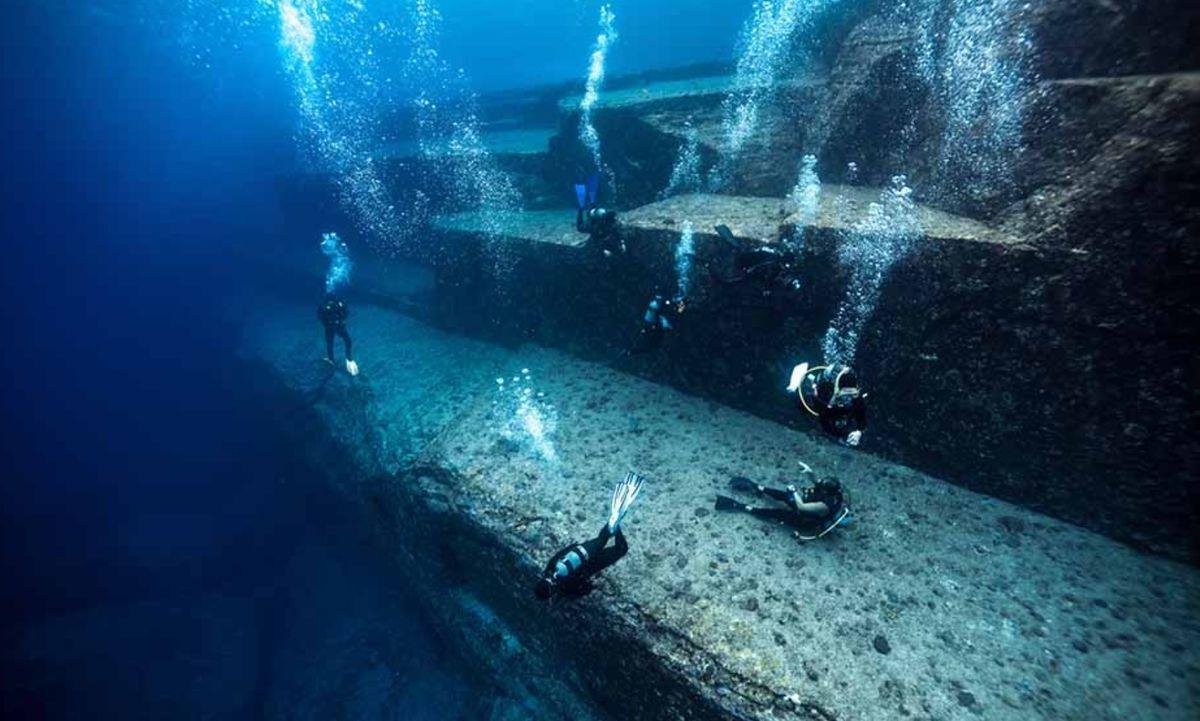
    Yonaguni Monument Underwater
    An underwater view of the massive stone terraces and geometric rock formations near Yonaguni Island, Japan.


    🌊 1. Where Is Yonaguni Monument?

    Yonaguni Island is located in Okinawa Prefecture, in the southwestern part of Japan.

    It is one of Japan’s westernmost inhabited islands.

    The island is surrounded by the waters of the East China Sea.

    Below the surface, divers can encounter the mysterious rock formation that became known as the Yonaguni Monument.

    The structure is enormous compared with an ordinary underwater rock.

    Its broad flat surfaces, terraces and steep edges make it look surprisingly architectural.


    🤿 2. How Was the Underwater Structure Discovered?

    The formation became widely known after divers explored the waters around Yonaguni in the 1980s.

    Local diving instructor Kihachiro Aratake is generally credited with bringing attention to the unusual underwater formation.

    What he encountered was unlike an ordinary underwater landscape.

    There appeared to be:

    • Large flat platforms
    • Straight edges
    • Stair-like formations
    • Terraces
    • Deep grooves
    • Large stone blocks

    The discovery immediately raised a fascinating question.

    Was this simply an unusual geological formation?

    Or was it something built by ancient people?


    https://images.openai.com/static-rsc-4/LxtdEjqxG5SyTyDRbIqlGHpsaFJc4KrL5CWvT-0h0F-49hLltbp47P2yp6rCRBOOjp9lpoU_E4hbIE1su3CgEw6mHZL24wUghJ9tLOMzHKDM7FxFAL7m_JIQd2NVaOUUH9qAvHbYC6FYnL29TlqADE8O0OuNq-HHvDfNjWNo-nSH6krKQbBZDBN9bkbbCJA2?purpose=fullsize
    https://images.openai.com/static-rsc-4/4Fn7XKi0dRtWSHpsLOujuhlVDZMSrkejFqKgNZ5OSJrUXIp44Qs6vV72xrWcxX9Qm5IgMTk6t3_QgWHPEqgQ2sNPiIzHB4XB43cY16bVxU1le4xas3W-6Di16mL6O2R7LILK01JRluPbaMxeJWM8mCKAYflc-A522avdhARJRzlCvQGoU5WckyJM4OwAe7SP?purpose=fullsize
    https://images.openai.com/static-rsc-4/O72b7nTbSmXgv8Ra1I_QthiO4Aj0zCLd5YxTbz8YeIa90y22HCPaVcygWtAgdzszPf2OVk9vTlbgux5t2WKJ-8X-8eXxO1DnnHXWsfyHr5tRVLLE-Yhtr2a94k355iAt1KZZcpb2bLI5XYjJsjO5QCEoGzw1zhb2akSLAiRvERxPvqZP13iUPxucWJbA5Zn6?purpose=fullsize

    Diver Exploring Yonaguni
    A scuba diver exploring the massive underwater rock formations, showing the enormous scale of the structure.


    🪨 3. Why Does It Look Man-Made?

    This is the part that makes Yonaguni so interesting.

    Some sections have remarkably straight edges.

    There are also formations that resemble:

    • Staircases
    • Platforms
    • Walls
    • Roads
    • Channels
    • Large rectangular blocks

    To some observers, these features look too organised to be purely natural.

    Supporters of the ancient-structure theory suggest that humans may have shaped the rock before the area was submerged.

    But there is an important problem.

    There is no universally accepted archaeological evidence proving that humans built Yonaguni Monument.


    🌋 4. The Natural Explanation

    Geologists who study the formation argue that natural geological processes can produce surprisingly straight lines and flat surfaces.

    The rocks around Yonaguni are largely sandstone and mudstone.

    These types of rocks can develop fractures and layers.

    Over long periods, erosion and tectonic activity can create:

    • Straight cracks
    • Flat surfaces
    • Sharp corners
    • Stepped formations

    In other words, nature can sometimes create structures that look surprisingly artificial.


    https://images.openai.com/static-rsc-4/1MVNLCiNoxrbOErpTXd43B1HelpdLdfrJ7mBsGRtYS3BdcFw-KSNyFIDmDNyaRwTIewFDoXHY4C9HQS7Tu9OHXWVOvWJngemqGw_tKi0uvxRl7uYn1i9v4iRmG-64TX0IrSrUq0VJnGccJxv0Wmx2r6IKdEyfqvkdGOb_zpbewHyH9tS2pSSKYhCV0Ycagk6?purpose=fullsize
    https://images.openai.com/static-rsc-4/aBGKmP0v-7GVD_y3UMtkY63gwB-RUg5xbFwtRIBpZ41U0xfV_L2EMHEnG4R-Wur_j4PdQujngXiu_8I6rGAqAIjIjdMpR2BDMptzJnI7nA4tKw0FtvYIm5cR2As6h_EYO66_mSMX7AnSnINLWgHuSWo9AIsiSRPBt9wSpLtSexk-wONaVmLNUWiynYwpCNOl?purpose=fullsize
    https://images.openai.com/static-rsc-4/w3r0y9w5UFF67f8x8F_og3Auk-yFgHLfGW7rQSrZGqTLv8VOCs9jLkHtSaOfR9GN25cHDoVpPSoPsdGpl33teJOjievLnHMs5i2eONPClLvkMhOOMaDmFBWNn_qoUvrXFTR2agXmkWxZuAxrSPJVCRu57jkxZvdBlOkG_HeAXjGwAQ3a_XLCaGNavZrpYIlq?purpose=fullsize

    The Geological Structure
    A close underwater view showing the rock layers, cracks and sharply angled surfaces of the Yonaguni formation


    🏛️ 5. Could It Really Be an Ancient City?

    Some researchers and enthusiasts believe that the formation may have been modified by humans.

    One theory suggests that ancient people could have shaped parts of the rock when the area was above sea level.

    If that were proven, it would completely change the historical significance of Yonaguni.

    But this remains a hypothesis, not an established archaeological fact.

    Researchers would need stronger evidence such as:

    • Clearly identifiable human-made structures
    • Tools
    • Artefacts
    • Inscriptions
    • Evidence of construction
    • Archaeological material associated with human occupation

    Without such evidence, the debate remains open.


    🕰️ 6. Was Yonaguni Once Above Sea Level?

    This question is important.

    The geological history of the region is complex.

    Sea levels have changed dramatically over thousands of years, especially during and after the last Ice Age.

    However, determining exactly when and how particular parts of Yonaguni became submerged requires detailed geological evidence.

    Therefore, claims that the monument is definitely the remains of a prehistoric city should be treated cautiously.


    🧩 7. Why Do People Compare It to Atlantis?

    Because of its mysterious appearance, Yonaguni has sometimes been connected with stories about lost civilisations and Atlantis.

    The comparison makes for a fascinating story.

    But there is no accepted evidence showing that Yonaguni is Atlantis or that it belonged to a lost global civilisation.

    The Atlantis connection is largely part of popular culture and speculation.

    The real scientific mystery is much more interesting:

    How did such an unusual underwater landscape form?


    🐠 8. Yonaguni Is Also Famous for Marine Life

    The area around Yonaguni is not famous only because of the mysterious monument.

    Its surrounding waters are also known for marine life and diving.

    Divers may encounter large schools of fish and, during the appropriate season, hammerhead sharks.

    This makes Yonaguni attractive to experienced divers even without the archaeological mystery.

    The combination of:

    Underwater rock formations + deep ocean + marine life

    creates an unforgettable diving environment.


    https://images.openai.com/static-rsc-4/Tl2_JhiwpkToA8F3dRWMbUnR1b65L3xA8TrXO9wwEdoorkbgZqs0MAlgvJRL7T_jAX6ISulGiWlrc4RfanWq94z6wtejWvz0Z0QcXXwGc_hk4EvnE-06Ygzsl7EK5yTGFdnyI-cNSJEmCQOt8gb52blkSICtHls2QD1-7nFee9toaX9b6oOxYhf8r5JtTIAA?purpose=fullsize
    https://images.openai.com/static-rsc-4/1B7_wXgH9nrAMyw6H9zVLy7EaE_TxVRkTWAEIG6Rt8Ol_j4Iz1SHM4gS4LNNlSR59bE_SXQc_j02oN7gv32Fnwjt-EN92TSc3BXhZcLlEnpweHNUsk44mU0pzu4a98f_B_bOaryck5Jxb_tSClDsZ6bjZqBYRc5408ILDAHcSHjK31r6zK58t88tEq1LmxXZ?purpose=fullsize
    https://images.openai.com/static-rsc-4/PLu0LcjLmS7rsPaiA1zscysxBIGMQasqt0M4b6v9vz0c2jxKxxZJSkyDwfj12Dcp0RZ9AMsAAlYuILg4Mxr9SkQsyrVizqhTjTRy2yIiauu-AWQdPDtoMhy7SKkiEcH-4_WjgQMfIz38fl2hnvsw6thM-NMCoI3nBcIuTwSOvhtihryDCF_1kNfMr7jVD36L?purpose=fullsize

    Yonaguni Underwater World
    A dramatic underwater photograph of divers or hammerhead sharks around Yonaguni Island.


    🗿 9. Are There Ancient Inscriptions?

    Over the years, photographs of unusual marks and shapes near the formation have led to claims about possible carvings.

    But interpreting underwater rock markings is extremely difficult.

    Natural cracks, erosion and rock fractures can sometimes resemble deliberate symbols.

    Without clear archaeological evidence, these markings cannot automatically be identified as writing or human-made inscriptions.

    This is one reason scientists remain cautious about calling the site an ancient city.


    🔬 10. Why Scientists Are Careful

    It is easy to look at a photograph and say:

    “That looks like a staircase.”

    But archaeology requires much more than appearance.

    Researchers need to determine:

    • Who made it?
    • When was it made?
    • How was it made?
    • What tools were used?
    • What was the structure used for?
    • Is there evidence of human settlement nearby?

    Until those questions can be answered, the safest conclusion is:

    Yonaguni is an extraordinary geological and archaeological mystery whose exact origin remains debated.


    🌏 11. Why This Mystery Is So Popular

    Yonaguni combines several things that naturally attract human curiosity:

    🌊 A mysterious underwater world
    🗿 Structures that resemble ancient architecture
    🤿 Deep-sea exploration
    🌋 Powerful geological forces
    🏛️ Questions about prehistoric humans
    ❓ No universally accepted final answer

    It is the kind of mystery that makes people want to learn more.

    And unlike many internet myths, Yonaguni is a real physical location that divers can actually explore.


    🤯 10 Amazing Facts About Yonaguni Monument

    1️⃣ Yonaguni Monument is located near Yonaguni Island in Japan’s Okinawa Prefecture.

    2️⃣ The underwater formation became widely known after exploration in the 1980s.

    3️⃣ Some sections contain remarkably straight and flat surfaces.

    4️⃣ Some people believe parts of it may have been shaped by humans.

    5️⃣ Many geologists argue that natural geological processes can explain its appearance.

    6️⃣ There is no universally accepted proof that Yonaguni is a man-made ancient city.

    7️⃣ The formation is a popular destination for experienced divers.

    8️⃣ The surrounding waters are known for marine life, including seasonal hammerhead shark sightings.

    9️⃣ Yonaguni has been connected to various lost-civilisation theories, although these claims remain unproven.

    🔟 The true origin of the unusual formation continues to attract scientific and public interest.


    🌊 The Biggest Mystery

    Perhaps the most exciting part of Yonaguni is that we don’t have a simple answer.

    If it is completely natural, then nature has created a landscape that looks astonishingly similar to human architecture.

    If humans modified it, then an important chapter of prehistoric history may still be waiting to be understood.

    Either possibility is fascinating.

    And that is why Yonaguni continues to capture the imagination of people around the world.


    🇯🇵 Final Thoughts

    Deep beneath the waters near a remote Japanese island lies a massive formation of rock that looks strangely like the remains of an ancient monument.

    Straight edges.

    Terraces.

    Steps.

    Huge platforms.

    Deep underwater walls.

    Yet science has not established that humans built it.

    Perhaps Yonaguni is an ancient monument.

    Perhaps it is an extraordinary creation of geology.

    Or perhaps future research will reveal something in between.

    For now, one thing is certain:

    The Yonaguni Monument remains one of Earth’s most fascinating underwater mysteries.

    And sometimes, the most interesting stories are not the ones with definite answers.

    🌊 They are the mysteries that make us keep asking questions

  • 🇯🇵 Japan: The Country That Learned to Live With Earthquakes

    🇯🇵 Japan: The Country That Learned to Live With Earthquakes

    Imagine living in a country where the ground can suddenly shake beneath your feet.

    For millions of people in Japan, earthquakes are not something that belongs only in history books. They are a natural hazard that has influenced architecture, technology, emergency planning and everyday life.

    Japan has therefore developed some of the world’s most advanced approaches to earthquake-resistant construction.

    But the fascinating story isn’t simply about strong buildings.

    It is about how an entire society has learned to prepare before an earthquake happens.


    https://images.openai.com/static-rsc-4/VCT3YrIpF_cbpQSWQzyzzsTSvHvw8KBHktUn2eBtm5Jyrf0dGn48kdWIw7uHD5HMUT02ziupdZfuO4_BWnv-M_y8VLy01UH-P_Kvynx6wiJhmos6NCGjGPruiSRiOCaFZnnhWlL2-TtsNpejoz5IhV3fafR8pEpUEaiTyBFzhD-uHxWM8va8i_OEzDcWj28V?purpose=fullsize
    https://images.openai.com/static-rsc-4/wGzuaaVNSY7Rid5w6WpjCJN00nJ-QCPlp-yDjWmAZEefO5DUAwXom86bp0h8C2KHECabx_Ontrnqd-WWLjYYdvt0jAkPPG2-zVFOFdE8wRsq-iucT984ErNWyqWaENOrRB8SOTp3ww5YODXhYv_D4Beg6zQI2Adk9vmTom5Qfj__5LVAIAXg30FWcXHQHjhi?purpose=fullsize
    https://images.openai.com/static-rsc-4/qfSuO4WkX-PCVQ5YHrgAwC-7Yt7yjNMMRR-gimLR65O0ss92uMMkbe8FjiS7JY5lY1fI5n2rBTOEiK1D3_rzzkgwz14UC3dJ8po314AJKmFgtNQCdqOJ_TGsxEV6Ax9YRFXR3HtQi-xzIuLOe6t6Xclc6fkuNRIvQZZSCKBoZJY9iHZhGfuZbJwnR48bLv_J?purpose=fullsize

    🌏 Why Does Japan Experience So Many Earthquakes?

    Japan lies in one of the world’s most geologically active regions.

    Several tectonic plates meet around the Japanese archipelago.

    When these enormous plates move against one another, energy can accumulate underground.

    When that energy is suddenly released, the ground shakes.

    This is why earthquakes are a recurring natural hazard in Japan.

    The country has experienced some extremely powerful earthquakes throughout its history, including the devastating Great East Japan Earthquake of 2011.


    🏢 How Can Tall Buildings Survive Earthquakes?

    One of the most impressive aspects of modern Japanese engineering is the way buildings are designed to respond to ground movement.

    A traditional building might try to resist an earthquake by simply being extremely strong.

    Modern earthquake engineering takes a different approach.

    The building is designed to move safely.

    Engineers may use systems such as:

    • Flexible structural elements
    • Shock absorbers
    • Dampers
    • Base-isolation systems
    • Special foundations
    • Reinforced structural frames

    Instead of trying to completely prevent movement, engineers can control how the building moves.


    https://images.openai.com/static-rsc-4/Nf4sdCb6U81PfVp7t-epEbJyaS7yazmNf2EEXoyJduVWcXwO8faq2ebJYL0ivqDwZqgnZVobavEZQkQkx6P4JFTSoi1waonAeYJBz1FKeE9Zoxak0jFAxvVreY93U-M1esqZVu8x3DCH_dTyTnED89mmtYHYswQ_IjN77Ipm6NuMF5glFBZHqa_t23D7NavC?purpose=fullsize
    https://images.openai.com/static-rsc-4/1zmeSLgZhRNkIvX5gQthARlYX8qFtiGALCGLDX-rcEwxATOyQ3nzrtnZLShf00wEDRW_Uvl_LmM1OgQsnAgS3i_QoO-VC5jSqpPyPg5cxTAvhkPXdDX5a_RY5CLgNSPlbRNSa0v-HXm6YaPSEhrqrubAWjIBqXUFe-f980wak54q6AqiOXa_wP1nzhnr6CH6?purpose=fullsize
    https://images.openai.com/static-rsc-4/Wt34VayvVmFpsxUEZYADR1cogm42kva9bpt3YMtreIRSWlQP1ZNOpd_VUYbQsWAeZoB5T3x6d9YRWWk23BBW1ckuMlZ5-nWblB3jyKPl_SyZNpfiZwWb9YocDYIbhdpSahzB8iR9ynKqrjU5L2nJj2u_nrj4zAXSzh9VVz5cJtuo2kfkQd6kDvOO4C_x_rrH?purpose=fullsize

    🏗️ What Is Base Isolation?

    One fascinating technology is called:

    Base Isolation

    The basic concept is relatively simple.

    Instead of connecting the building rigidly to the ground, special isolation devices can be placed between the building and its foundation.

    When the ground moves during an earthquake, these devices can reduce the amount of movement transferred directly into the structure.

    Think of it somewhat like putting a protective cushion between the building and the shaking ground.

    The actual engineering is far more complicated, but the goal is straightforward:

    Reduce the force transmitted into the building.


    🌊 Japan Also Has a Powerful Earthquake Warning System

    Japan has developed an advanced Earthquake Early Warning system.

    The system detects earthquake waves and can send warnings before stronger shaking reaches some locations.

    The warning time may be very short — sometimes only seconds.

    But even a few seconds can be valuable.

    For example, warnings can potentially allow:

    • Trains to slow or stop
    • Elevators to take protective action
    • Factories to shut down machinery
    • People to move away from dangerous objects
    • Emergency systems to activate

    It is important to understand that earthquake early warning is not earthquake prediction.

    It does not tell people days or hours before an earthquake that one will happen.

    Instead, it detects an earthquake that has already started and rapidly estimates where stronger shaking may arrive.


    🚄 Japan’s Trains Are Also Designed With Earthquakes in Mind

    Japan is famous for its high-speed Shinkansen railway network.

    Because trains can be travelling at very high speeds, earthquake safety is extremely important.

    Japan uses earthquake detection technology and railway safety systems designed to reduce risk during significant seismic events.

    When strong earthquake signals are detected, railway systems can automatically take protective action.

    This is another example of how earthquake preparedness has become integrated into everyday technology.


    https://images.openai.com/static-rsc-4/HR8o3F4aO0cobP_jMFH1bZttkBtROL19jfxTTTiOPI19D-bU2SdXQVRjzo7j3OpabpKxImX9EkB5AfYHgTBXH-Sp7o71wl-dCCVKMeaUcTO1QBawBZ5WELS3Oz9iL6vRuJoDPWMivtAxqMNTVzQ6gG-fch-Q9AwI1KNmcMvce42OV_tY8SSh2t2iAO0Tsg8T?purpose=fullsize
    https://images.openai.com/static-rsc-4/v1egHJT6sPI1YYCvLeCQ042yIARPCI7rrCeJK-taPl20QGTnaUiuejesvo_kEIVyqL-N_1w6ep3-8b3_nfhAumP9lGGKTuRcBQXx9VcdcOn6D8hbIPGdD80BhVkh6W_JU2zKMZ-BJnKlh6o_I39CAxIgULZauTCsnbrwlKTou_DT0ZsSh92eL4B5krXG884O?purpose=fullsize
    https://images.openai.com/static-rsc-4/qP0akTHAz07AacJFUaYLVTRY9r187sCq0XVdOS63tPFpHr2YRBm4TVlf_cCzsv3JaUxK2LQWHDMKfm3sG-Qm-RspY6xBodJj158zRO_fL-CXoBuTFxm42xTia1xVFOzkhkuJam3qILvUcyW5tbFhK1gYRSp8172USjm4PG3SMAHe-azK_KKV4fsLhbgIMju2?purpose=fullsize

    🏠 Earthquake Preparedness Starts at Home

    Earthquake safety in Japan is not limited to skyscrapers and trains.

    Ordinary households also prepare.

    People may keep emergency supplies such as:

    • Drinking water
    • Food
    • Flashlights
    • Batteries
    • First-aid supplies
    • Portable radios
    • Emergency toilets
    • Important documents

    Furniture can also be secured to reduce the chance of injuries.

    This creates an important lesson:

    A safe country needs prepared people as well as strong buildings.


    🎒 Japanese Schools Teach Disaster Preparedness

    Children in Japan can participate in earthquake and disaster-preparedness drills.

    Students may practise:

    • How to protect their heads
    • How to evacuate buildings
    • Where to gather
    • How to respond to emergency instructions
    • How to remain calm during disasters

    Regular drills help turn emergency procedures into familiar actions.

    This is particularly important because panic can make disasters more dangerous.


    🌊 The 2011 Earthquake Changed Japan Forever

    On March 11, 2011, one of the most powerful earthquakes ever recorded struck off Japan’s northeastern coast.

    The earthquake triggered a devastating tsunami.

    The disaster caused enormous loss of life and widespread destruction.

    It also resulted in the Fukushima Daiichi nuclear accident.

    The event became one of the most significant natural and technological disasters of modern times.


    https://images.openai.com/static-rsc-4/tv17BZ2dxT8FSJ24BN2QXoR6r_AArWN3QNMS1GyF3OXFfM3P-_I0GfqmlgBauM1thjDHe_zDCl17Y0DmGoMI9UPA4a1ewlaOvDjPTr0-pkVK1fW8jHDWr0updNmiUn406zMViYhjAh3AiyrGF0MLLm7A-FJxc2WekME28kazMfjPCq_CZEEO0lDRqUPO0ZTl?purpose=fullsize
    https://images.openai.com/static-rsc-4/iAonZJMPZE9qUiejRPZubhH1AcJCYgFdWc45v3D9hlOLKSJ86KI0A_-wm6I9zLQ8Igb6-Tn6waV-hvUeDU-9p5frzGJt368fERk_WqmnC2lc2nXqdLInqSyf_Z6bMrw9xrDNKONNduw98QcTQEbzDr8Zlm0x2f-bx3zE-hC7Ejri952MMAeh_mfTO5MDrkuL?purpose=fullsize
    https://images.openai.com/static-rsc-4/3rEjWlv_NKKm-xqMD1GdMXF3AGqW7LRUy6MfY7Q3KEJrt2NNBobSZej77EMgR25nqhhFGZXRtmtsT3wdtov5773z2uA2_Lu5IcRkf8xxwV3NDpYHjR9fSMoukNCBz7dv4GzGsJlsEgz1oUsjp2ZXjGQQBcLII7sEx5ucRJASdV5FTsmj3Lht6jWo9VQXB-OR?purpose=fullsize

    🌊 Why Was the Tsunami So Dangerous?

    An earthquake beneath or near the ocean can suddenly displace a huge volume of water.

    That can generate a series of powerful waves known as a tsunami.

    Unlike ordinary wind-generated waves, tsunami waves involve movement of a massive amount of water.

    When they reach shallow coastal areas, their height and destructive power can increase dramatically.

    The 2011 tsunami caused catastrophic damage along Japan’s northeastern coast.


    🧠 Japan’s Biggest Lesson: Preparation Saves Lives

    Japan’s experience demonstrates an important principle.

    You cannot stop an earthquake.

    You cannot completely eliminate natural hazards.

    But you can reduce their consequences through:

    Engineering + Education + Early Warning + Emergency Planning + Public Awareness

    This philosophy has influenced disaster-management practices around the world.


    🏙️ Why Does Tokyo Continue to Grow Despite Earthquake Risk?

    Tokyo is one of the world’s largest metropolitan areas.

    It contains:

    • Skyscrapers
    • Railway networks
    • Underground infrastructure
    • High-density neighbourhoods
    • Millions of residents
    • Major businesses

    Yet it continues to function in a region where earthquakes are a known risk.

    The answer is not that Tokyo is earthquake-proof.

    It isn’t.

    Instead, the city continuously invests in building standards, infrastructure resilience, emergency planning and disaster preparedness.


    🔬 Japan’s Earthquake Technology Keeps Evolving

    Japanese researchers and engineers continue working on technologies that can improve earthquake resilience.

    Research includes:

    • Structural monitoring
    • Seismic isolation
    • Vibration control
    • Earthquake-resistant materials
    • Early-warning systems
    • Disaster simulation
    • Infrastructure resilience

    The goal is not to build a world where earthquakes never cause damage.

    The goal is:

    Make society more capable of surviving them.


    🤯 10 Interesting Facts About Japan and Earthquakes

    1️⃣ Japan is located in one of the world’s most seismically active regions.

    2️⃣ Several tectonic plates interact around the Japanese archipelago.

    3️⃣ Japan has developed sophisticated earthquake-resistant building technologies.

    4️⃣ Base isolation can reduce the transfer of ground motion into buildings.

    5️⃣ Japan operates an earthquake early-warning system.

    6️⃣ Railway systems use earthquake detection and safety technologies.

    7️⃣ Disaster drills are an important part of preparedness.

    8️⃣ Households are encouraged to prepare emergency supplies.

    9️⃣ The 2011 earthquake triggered a devastating tsunami.

    🔟 Japan’s experience has made disaster preparedness an important part of modern Japanese society.


    🇯🇵 What Can India and Other Countries Learn From Japan?

    Every country has different natural hazards.

    India faces risks including:

    • Earthquakes
    • Floods
    • Cyclones
    • Landslides
    • Heatwaves

    Japan’s experience offers a valuable lesson:

    Disaster management should begin long before the disaster happens.

    Building codes, public education, emergency communication and resilient infrastructure can make a huge difference.

    Technology alone cannot protect a population.

    People need to know what to do, where to go and how to respond.


    🌟 The Real Secret Behind Japan’s Earthquake Resilience

    The secret isn’t one magical building material.

    It isn’t one warning system.

    And it isn’t one piece of technology.

    Japan’s strength comes from combining many things:

    🏗️ Strong engineering

    📡 Early warning

    🚄 Safe infrastructure

    🎒 Emergency preparation

    🏫 Public education

    🚨 Regular drills

    🔬 Scientific research

    Together, these create a society that is better prepared for one of nature’s most unpredictable forces.


    🇯🇵 Final Thoughts

    Japan cannot prevent earthquakes.

    But instead of simply accepting them as unavoidable disasters, the country has spent decades learning how to design, prepare and respond.

    From skyscrapers and bullet trains to schools and ordinary homes, earthquake preparedness has become part of Japanese life.

    And perhaps the biggest lesson from Japan is this:

    We cannot always control nature — but we can control how prepared we are when nature strikes.

    That is what makes Japan one of the most fascinating countries in the world.

  • 🇯🇵 Japan’s “Blue” Traffic Lights: Why Does Japan Call Green “Blue”?

    🇯🇵 Japan’s “Blue” Traffic Lights: Why Does Japan Call Green “Blue”?

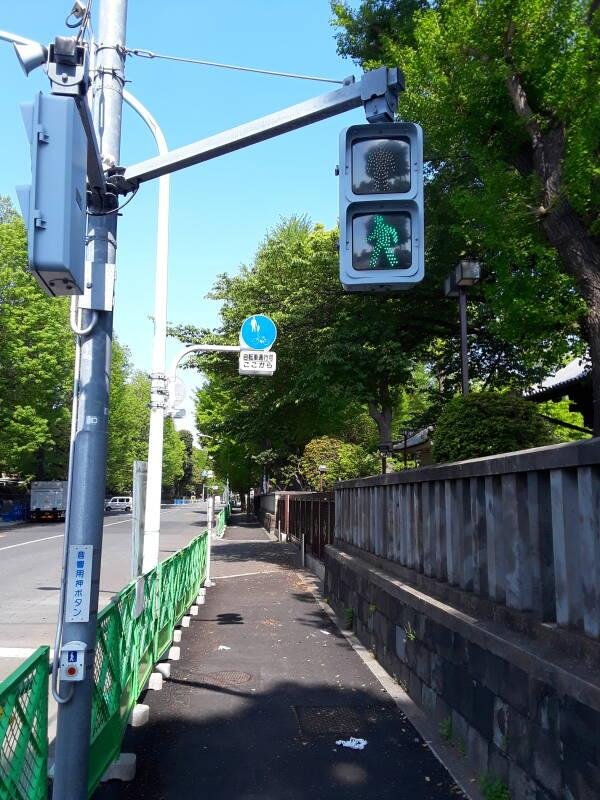
    If you look at a traffic signal in Japan, you may notice something surprising.

    The light that most of the world calls green is commonly referred to in Japanese as “ao” (青) — a word usually translated as blue.

    So, does Japan really have blue traffic lights?

    The answer is much more interesting than a simple yes or no.


    https://images.openai.com/static-rsc-4/zTN_tVkHPGIoCrA_NbZ6OeMlq_4RJnwKLjVVVMhRzy40k9_MNVbRXZyR9grY-vM0JxCcxtF1Xq0kAUpbACBpScX4-K3HLVZsQMscyA7K94RaJwlLZn9WFdmPP7hUok43ODNgw4tsPEUUuCZf2lPtngeo9k209ZgpQlVxkqMAALW26W4OH1Bgg3jktkb0i057?purpose=fullsize
    https://images.openai.com/static-rsc-4/zgRP2wrx_n10qkDEMafkPaa9ZmQXRnL4VAmaki55W0cNauY41Q2e-NE3JeoXrgSfoVebY-BKsxES68yu1YXNg3ZSLpnd-zbZcZzSDVy5lvDQnjzGc4JqqD1yGBwgNJ8EOqLfuVZD_fXQeauhz4uuEU3s9LmPRvE_RwFbWWMnzj_-F3Mg4KV9B-4w1k4BY8ZM?purpose=fullsize
    https://images.openai.com/static-rsc-4/ux0RUWssDzQYU76wy7p5YvSrYJWpVWlqSmiLPj65xB7n84tdTVbqg09ShsyLquHu_g7xR7Yu7Hq7Z1MvHUha1dOIin0jgWrGz5vCK3FSx_7UqdUuAz2PATjJ3VCY076gi7O9n9AbHaxhijXgP7iwIbXxxmjDtlGGXqiL3DDJpAdHIsexhzLp4ThODbPPglc6?purpose=fullsize

    🚦 A Green Light That Is Called “Blue”

    In English, traffic signals are normally described as:

    Red → Yellow → Green

    But in Japan, the green signal is traditionally called:

    青信号 (Ao-shingō)

    Here, ao means blue, while shingō means signal.

    So, literally, ao-shingō means “blue signal.”

    For someone visiting Japan for the first time, this can sound strange. After all, the signal looks green to most people.

    But the explanation goes back much further than modern traffic lights.

    It is connected to the history of the Japanese language and the way colour words developed over centuries.


    🎨 The Japanese Words “Ao” and “Midori”

    Modern Japanese has a commonly used word for green:

    Midori (緑)

    It is used for many things we would clearly describe as green, including vegetation and other green objects.

    There is also:

    Ao (青)

    which is normally associated with blue.

    However, historically, ao covered a broader range of colours than the modern English word “blue.”

    It could be used for colours that were blue, blue-green or vividly green in particular contexts.

    This is why some traditional Japanese expressions can sound unusual when translated directly into English.

    For example, Japanese still has familiar words and expressions containing ao that refer to things that appear green to English speakers.

    https://images.openai.com/static-rsc-4/IWp6obnySbmK1vyoh3Ut5OyU6pT3qQ57UUX5SBaftVXmBBTyV04Xf8Cfs86QWwISBx0gaIU1PNFfuDNp-X5E5SSNiKxq6cE9HsngJ7oV53C4X-HQMHYR-TWjbmDLnlMj_Jb49k14qIwgYl16l6JrdG6WYN_1rueD55AV0Hu7O2b6zlB89CVqQSI1MtLtB1KM?purpose=fullsize
    https://images.openai.com/static-rsc-4/ZQgXI3LdGjK0G_lDL9twUvs9i2TrC_X37EV7GeasYKQIHj5Wnqjne7w29nQ6MsHftZIyS_Bef9xc-b-MLOnFvrZsWXK6Ti1vkXvxy3U2wFUHlTQUPPHRQz73sgh5MVcFwc2aJkjxwSzuZQGJDvrhEm5Z8Q7_QHMLvZ1nYBuj0lN_qngHGaEYPPVBggeg5ajx?purpose=fullsize
    https://images.openai.com/static-rsc-4/umG8g0R63lwAarqyLa8DXyk6sJgACirfhdLaq1jZD_5lGiNY5AprPRUiqv6jd2MLOfc_ieUOnOOUS6hOJ24pNYo-mlJ8HH25j-d2GSfoYZiYJKzqeizN2hiTBbTxCDGLadepRjUjFdlGIux2v7VqRZJN8-O1rbEcttgJ8YzapKYc3ZD0-uuoAzCOM249jbLQ?purpose=fullsize

    📜 The Story Goes Back Centuries

    The unusual use of ao is not something that was invented for traffic signals.

    The word has a very long history in Japanese.

    Historically, Japanese colour terminology did not always divide the visible colour spectrum into exactly the same categories used in modern English.

    Over time, midori became strongly associated with green, especially natural greenery.

    But ao continued to survive in older expressions and everyday language.

    That history eventually became connected to one of the world’s most recognisable road signals.


    🚥 When Did Japan Get Traffic Lights?

    Japan’s first electric traffic light was installed in Hibiya, Tokyo, in 1930.

    It was imported from the United States and used the familiar three-colour system.

    Interestingly, the original Japanese legislation referred to the “go” colour as midori, meaning green.

    But ordinary people continued to call the signal ao.

    The popular terminology eventually became so established that in 1947, ao-shingō was adopted in Japanese law as the official name for the “go” signal.

    That means the strange-sounding expression has a genuine historical and legal background.


    💚 So, Is Japan’s Traffic Light Actually Blue?

    Not exactly.

    Japanese traffic signals generally serve the same three basic functions as traffic signals elsewhere:

    🔴 Red — Stop

    🟡 Yellow — Caution

    🟢 Green — Go

    The “blue” mystery is mainly about the name, not about Japan changing the basic meaning of the signal.

    However, there is another interesting detail.

    Some Japanese green traffic signals can appear somewhat blue-green or cyan rather than the deeper green many people expect.

    This helps explain why the traditional terminology does not always feel completely disconnected from what people see.

    But the main reason remains language and history, not a completely different traffic-light system.


    https://images.openai.com/static-rsc-4/COC12_VbQeZk0tVsCU7c5GMN-IN7uRQpBASSiBBdBC4L1Cc_xpFv7T0XmLTwPOof0KS5zcFNTXjp5R3o1jn0GR30SK6bwvnYqt4ln5h24ARrC5axxrFt2tEbiM0iZQv3efIlk4t158GnHBt6A6yyAw_btAIdzLnYznw4lr7LtwtBqrWsEtbrM3x3zTkkIukN?purpose=fullsize
    https://images.openai.com/static-rsc-4/JOfOuq8Lgce1A5Utn-5rnZRphIG8I8XiAIEz9Oifuv6eknQFwWshdpL_LII9C6fX4AuHJ3iz_fG3Qtlbjrm66vQUiSF7PSgJUPMOAyBTaH1uh-gOsOhQZnkv10RI9IniCHMGTdRnsZJJuDFH4KxwcF8Nc3Y6gWBDcta0SyN6TAlCgx5nQ-q3ZUftC47rM7eZ?purpose=fullsize
    https://images.openai.com/static-rsc-4/Ie9wT0sWFCF72_r_O7S2v6R_i0tBzD4qI5J3kqxfbD3MkmExtd9-P5LaqqbtrlfjMxp2KMbcsWUEKwHXVa83s5LgWfX298pYrfXvn-miYUiSNVxd899nAmvMTtAFOMatlXU_d38wJasrHfe2hZfdme_0W1ZMcARItbn6Fr1VsANpLPgKyWLRFsOQnMkeU-UX?purpose=fullsize

    💡 Why Do Some Japanese Signals Look Blue-Green?

    Modern LED technology has made traffic signals brighter and more precisely controlled.

    Japan has also played an important role in LED technology. Japanese researchers Akasaki Isamu, Amano Hiroshi and Nakamura Shuji were awarded the 2014 Nobel Prize in Physics for work related to efficient blue LEDs. Blue LEDs later became important in displays, lighting and traffic signals.

    But it would be incorrect to say that Japan uses blue traffic lights simply because of blue-LED technology.

    The name “ao-shingō” existed long before modern LED traffic signals.

    The language came first; the technology came later.


    🗣️ Why Didn’t Japan Simply Change the Name to “Midori”?

    This is where language becomes fascinating.

    Once a word becomes deeply established in everyday speech, changing it can be surprisingly difficult.

    Millions of people already understood ao-shingō to mean the signal that tells traffic it can proceed.

    Changing the name would create little practical benefit while breaking a familiar linguistic tradition.

    In 1947, the term was officially incorporated into Japanese law, helping preserve the expression.

    So today, Japanese speakers can understand:

    Ao = traditionally blue, but also used in certain green-related expressions

    and

    Midori = modern word strongly associated with green

    without seeing this as the contradiction it may appear to be to an English speaker.


    🌿 This Is Not the Only Japanese “Blue-Green” Mystery

    The relationship between ao and green appears in other Japanese vocabulary too.

    For example, expressions involving fresh foliage and green vegetables can use ao.

    One famous example is:

    Aoba (青葉)

    which refers to fresh green leaves.

    Another is:

    Aomame (青豆)

    used for green soybeans.

    These expressions show that the historical meaning of ao was broader than the modern English definition of “blue.”


    🗻 Even “Aomori” Has an Interesting Connection

    Japan’s Aomori Prefecture provides another interesting example of the old association.

    The name Aomori is commonly explained as referring historically to green vegetation or trees associated with the area.

    The exact historical interpretation of place names can be complex, but it provides another illustration of how ao has long been connected with the natural world and greenery in Japanese language and culture.


    https://images.openai.com/static-rsc-4/Mkdg3_7WmSH3RyYyibD9LKsdL9R_RJA8m5Dv_dX2hO6fOUNayErFGPcRmQ5H3vR4EsrK37BsLi8fRkRD4-dZF5btmV5FSgrMhFR55eqUkdkGsINJ_x416k7s0nlkVSb7ugen_ZOVlPf7d3V1Yg3JkizGfc8fnj_j2gun1XAhbTeHh_g9fSCjuah8IRXOi-q5?purpose=fullsize
    https://images.openai.com/static-rsc-4/moEDDsw3apiFAkFGNDapqdLcRlTc2-RMo_CO1v01NR40ipzlvGMzPndeQhu5f9ztGPxRvh2I8jNIEQoCJUMgqRGS653wroMolkZmWF-zxAIsPmiUNx7oQoVoxnccoSTem2c3qEZyaFvumQVyK1lWd6lU2_IeDBlDxU_OVOySXgyKsIIej61lCdKVHQPAKMmh?purpose=fullsize
    https://images.openai.com/static-rsc-4/y4QLSIa3ndYO_XwqbhE4M1R_eEzu24rcjwtPghgHMrRQTnr3zy-0G3I770PfVePeU0-xG4nf3YB8phdvjIT-q8ZYuF-njZ9ef9XiUDqo5LlbQiHuP957EWFDqtvjHC0Ewq3OB07X9GhNhP0aVgIOZIi0AXOtnIGQhOa5ysqn99XxIWXc57M79QC4NhdGJbRg?purpose=fullsize

    🌏 What Does This Teach Us About Language?

    The Japanese traffic-light story demonstrates something important:

    Colours are not understood through exactly the same linguistic categories in every culture.

    We often assume that colours have universal names.

    Red is red.

    Blue is blue.

    Green is green.

    But languages divide and describe colours differently.

    A word that traditionally covers a wider range of shades in one language may have a much narrower translation in another.

    That is why translating ao = blue and stopping there can create a misleading impression.

    Language is not simply a dictionary of one-to-one replacements.

    It carries history, culture and everyday habits.


    🤯 Why Does This Fact Surprise Tourists?

    Imagine learning Japanese and memorising:

    Midori = Green

    Ao = Blue

    Then you arrive in Tokyo and see a green traffic signal.

    Someone tells you:

    “Ao-shingō.”

    You might immediately think:

    “Wait… isn’t that green?”

    That moment is exactly what makes this one of Japan’s most fascinating everyday cultural facts.

    It looks like a simple traffic signal.

    But behind it are:

    Language + History + Culture + Technology


    🇯🇵 Japan’s Traffic Lights Are a Lesson in Cultural Differences

    Japan is known for its advanced technology, extremely organised transport systems and attention to detail.

    Yet this particular curiosity has nothing to do with Japan being technologically different.

    Instead, it shows how an old linguistic tradition can survive inside a modern technological system.

    A traffic light introduced in the early twentieth century became part of a language tradition that was already centuries old.

    That combination makes the Japanese ao-shingō story particularly fascinating.


    🔍 Quick Facts About Japan’s “Blue” Traffic Light

    QuestionAnswer
    What does ao usually mean?Blue, but historically it can cover blue-green/green shades
    What does midori mean?Green
    What is a Japanese green traffic signal called?Ao-shingō (青信号)
    When was Japan’s first electric traffic light installed?1930
    Where?Hibiya, Tokyo
    When was ao-shingō adopted in law?1947
    Does “blue signal” mean the light is literally blue?No
    Why is it called blue?Historical Japanese colour terminology and established usage

    The historical details above are documented in research on Japanese colour terminology and the history of the traffic signal term.


    🌟 The Fascinating Conclusion

    Japan’s so-called “blue traffic lights” are not really a story about a country using a completely different traffic system.

    They are a story about how language survives through time.

    A colour word that once covered a wider range of shades remained part of everyday Japanese vocabulary. When traffic lights arrived, people used the familiar word ao for the green “go” signal. Eventually, ao-shingō became officially established.

    So the next time you see a Japanese traffic signal described as blue, remember:

    💙 It is not simply a mistake in translation.

    💚 It is a piece of Japanese linguistic history.

    And that is what makes an ordinary traffic light one of the most interesting little cultural mysteries in Japan.