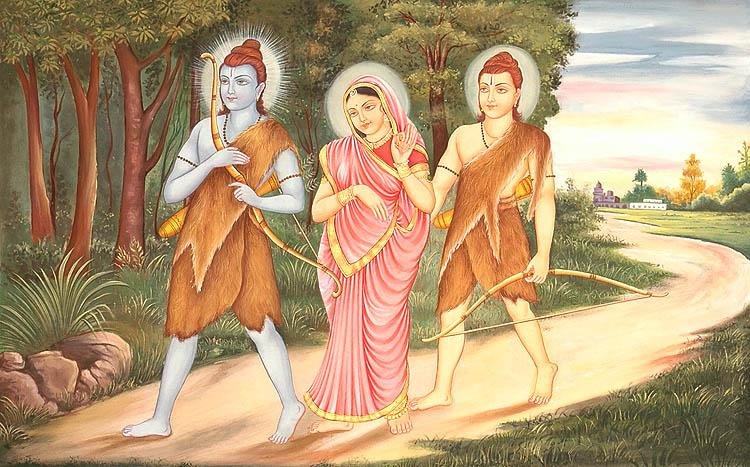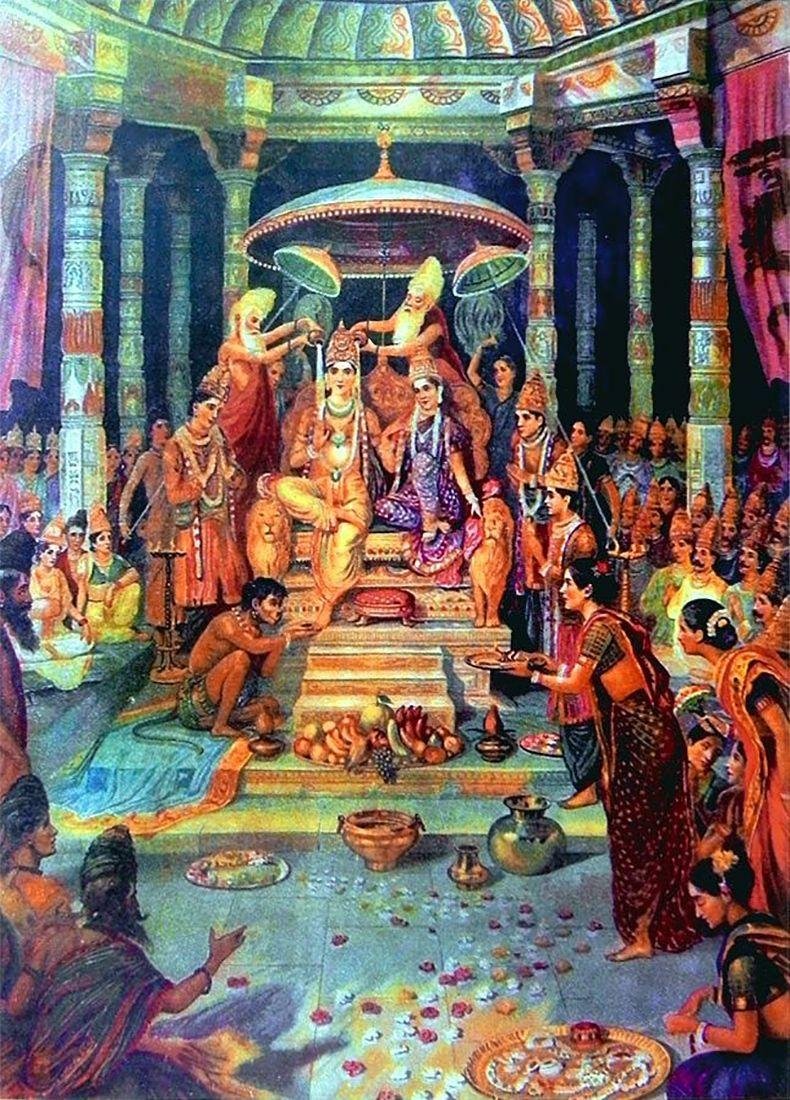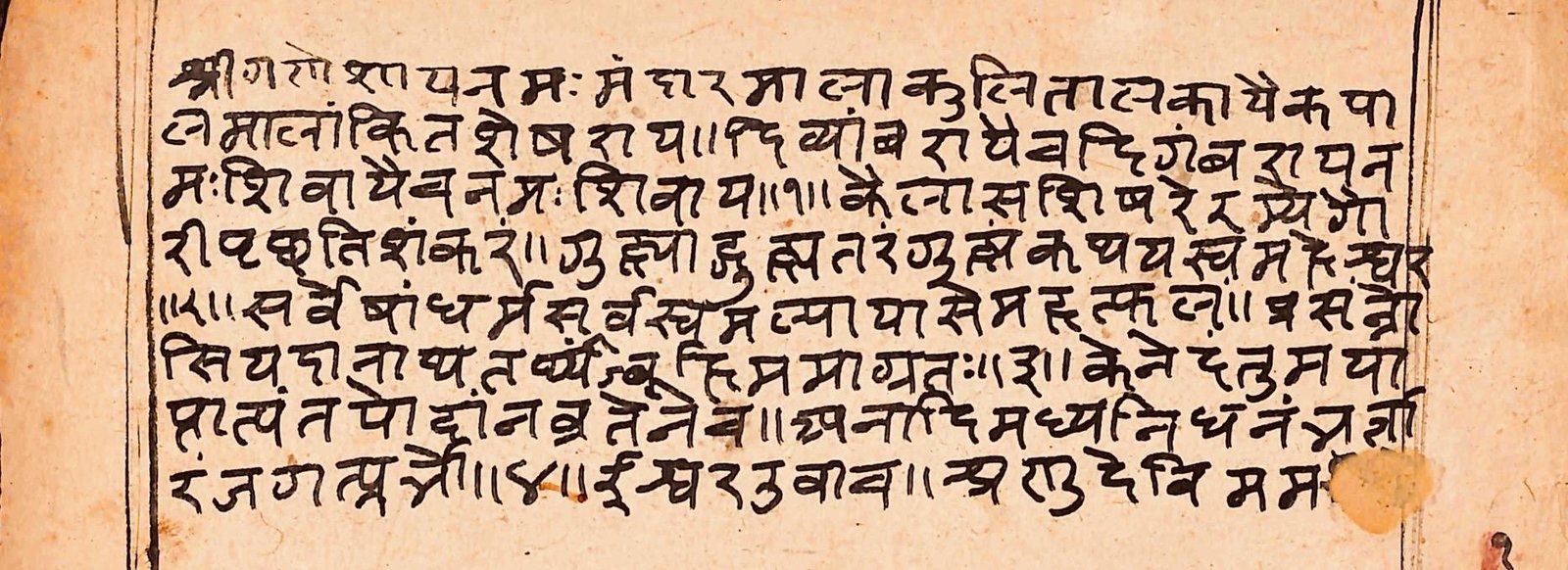
Tag: Lord Rama

  • 18 Mahapuranas – Part 2: Padma Purana

    18 Mahapuranas – Part 2: Padma Purana

    The Padma Purana is traditionally counted among the 18 Mahapuranas and is the second Purana in our series. It is a vast Sanskrit text dealing with creation, sacred places, dharma, devotion, pilgrimage, festivals, religious practices and stories of gods and sages.

    The name Padma means lotus, an important symbol in Indian spiritual traditions. The Purana contains material connected with different forms of Hindu devotion, while Vishnu and his worship receive particular attention in several sections.

    Image ALT: Lotus flower symbolizing the Padma Purana and the sacred lotus tradition in Indian culture


    What Is the Padma Purana?

    The Padma Purana is one of the traditional 18 Mahapuranas.

    Like other Puranas, it is not limited to one subject. It brings together mythology, religious teachings, pilgrimage traditions, sacred geography and stories designed to communicate ideas about dharma and devotion.

    Traditional accounts divide the Padma Purana into several major sections, including:

    • Srishti Khanda
    • Bhumi Khanda
    • Svarga Khanda
    • Brahma Khanda
    • Patala Khanda
    • Uttara Khanda

    Different manuscripts and editions can vary in their organization and contents.

    https://images.openai.com/static-rsc-4/8VRsk2i3iPwAy__Q5P-oR346SU3fZnNYEd7l4jYyPBXkAHnnB4GqQ4BOe76x99nCusb5e0aVPuuTVavz0-BAZ_4xmEceSL-o-wpvzJgY8BUGkyTTZjYzAoiYn_6es8ergePkVaqNLYkbHNBUKxyPNC1SCFOswBz-96U2FYII7p8OCV4ntWgVhFMfPo0_hKQ2?purpose=fullsize
    https://images.openai.com/static-rsc-4/LNASIfI-jxGx7Wl-OiIv_3j8s-Dcy7HCQBz1Su8y3SSP5SmMC6mld3-wg8OwYK4yj8SIui2D6zA9GDaFXue5EozshSLD-UBDxblY8qhfTTrkXHuUnbAMa8fMGDGCy-3UC7W_XlhhhYABY13q8TDPUn3BAy2R55aKVPTuIxgLQdqnMEAt74CyokaxcF9Y2SZc?purpose=fullsize
    https://images.openai.com/static-rsc-4/tzzv8iYxOU5zE-zi1vQORfxD5MoWZxxnR-DjcAvbzzlzM7VSCmmDAbLaH5jI5EKJq0L57GTEtOZIuHDaf3KKFk2WQTZA2oJUlJFjJdBgetW4xSBTSUm0f31-Zkhu3jaMg-qKamMYe84KEsRYaGr-FWA6RGgsWuopJpNlixHqvzghfLTJCAu0vEKes-V0Ix_o?purpose=fullsize

    Image ALT: Ancient Sanskrit manuscript representing the Padma Purana and the Puranic literary tradition


    Why Is It Called Padma Purana?

    The word Padma means lotus.

    The lotus has a special place in Indian religious symbolism. It is associated with purity, beauty and spiritual growth.

    The lotus also appears in traditional creation imagery associated with Brahma, who is often depicted emerging from a lotus connected with Vishnu.

    https://images.openai.com/static-rsc-4/90ypE-JfYFFNQRLRlBDjBYLRySfUsqZeu1gM5Q-h0yrGYOWx49q1t-rZ04rZ6wEJIESyQsGT1kLfbioNhQkc_QW8qW0v5X3wO2JcjB1sRZxdTRaEM8NFKY_AZdExh1wX0qxtVRhw011Ij2zfpGDRfGGHglDfxSVT7kJKQcmA9i-NzZjSteM49RtJeWrEtj3m?purpose=fullsize
    https://images.openai.com/static-rsc-4/k7vvZ2zQ8yiFKbA9JG6eyG0-NEAErfxwURs9nz2Bcl28MpVh2x4BPL5zK3Nu8MdJ7Zt8pe5zUj5Ii_mQOe5Ank7bciVOhuW3XG_MSvomzAAvgiCdaXxVSQEGUV51KVMLf8ZvBpE0EHzbej3oKdtUdKO92Ngfxp742nLy4rNMYuvtzRInZ2BbpTNfQLK833Pt?purpose=fullsize
    https://images.openai.com/static-rsc-4/l-ZSDSZyEagwg5XH-gJlLpCBtfnczFVO1i2ylgLBMLM_Uzwj4qHe6Wuy1aUSwGQ0rF3s3eX4dTK7WKywH-vsZXDR0TIJEATd4P1E_NKUHmfXlnTDDqiwoblTw9GVr_VXbFbVq-YSWeumCefSJ8j5V5Mz3aGdosUtYE-cs_x7Tfo3xMeXJo4ig7shiGK5ZBPA?purpose=fullsize

    Image ALT: Lord Brahma emerging from a lotus associated with Lord Vishnu in traditional Indian art


    The Main Sections of the Padma Purana

    The Padma Purana is traditionally divided into several large sections.

    1. Srishti Khanda

    Srishti means creation.

    This section discusses creation, gods, sages, religious teachings and various Puranic narratives.

    https://images.openai.com/static-rsc-4/kf5o5nKQj6Nkme-chIrdcRjEaGupX6cIaWb36Ov0Hgesm9v0zEIA19OL-v7aqME2QAqi6w9AiB8SJllKRtKPYgTt49NctW42Mh2HJ8bfJYqy4N92lkKp9VClLc2QceJisRXxLDvGVOF_yRxckYjq1a9r-83XaMysiga-yl2q4KCmeId8lxTVZ0Bkxol589AM?purpose=fullsize
    https://images.openai.com/static-rsc-4/nX-F9nehDCnGUki-0Vwe5cJTpi2BeaemyZpH2v-s6SOaBzew8M5mBa92_Coh_9cHqCWAoJjxU1VCZ9HhpDJa2zPg7haG0NQuaI9xK4l5lW-FqLoUwfRk5cBpgA-bYXXAoUu5H_ZT7ApoLkAAJXuY_JhXPUg68PtbcighmN9QIVJLKDOhOodgAUgWZtd1LwYw?purpose=fullsize
    https://images.openai.com/static-rsc-4/lYbIr1bWGCXTx1Px8qyLEmyRRzdqpZq6hzv3CauCoof7VMEWpxyiI1Imo1dOZSEEKbnP72QciT-33uVJy1NdeavMkOMSKefUzPnobqWaDjSN4MSP98MxmcXUpIoiNlHJY_7yNMTcgVPAlPzvJxF43Oxdtr_AbSqpYo39ZxEkJpqa8nv67OBFeQoy1gIp5c9w?purpose=fullsize

    Image ALT: Lord Brahma representing creation and the Srishti Khanda of the Padma Purana


    2. Bhumi Khanda

    Bhumi means Earth.

    This section contains stories concerning kings, sages, people and events connected with the earthly world.

    Puranic stories often use the lives of kings and devotees to communicate ideas about dharma, responsibility and devotion.

    https://images.openai.com/static-rsc-4/hU72A0x5q7bJy5Tcyeb6GbDUboL_R-j00w3w38K0fa_bDrp3snOMZJ4l_8jU6Fq4-BeaHeHoCcovdARUz1kVjKyTcd5ICb_VTTUZz9MFSK-D-z-CgIdvxUaB274fum6NL2dAllqcFPXM8hDwOsGIxwXF7nthsq1pS_6LOfsipOcsZwYPd_D7Is0_rHV8qkvB?purpose=fullsize
    https://images.openai.com/static-rsc-4/FU6DLqNmCNcN2gGuYtvQ6b-oAcqs_WjY2z2B6yWXdNNpCFPefMay48Q7eZAMp3sYAk2-_EdIp81ESlyK0un8v4PIh0ZDmej6RufP8E8jQx_5lKpvQbRYMLLYlhZ4BoWJ0Q8SXXNPwacfGQRC12PfA3nE9vMHPRgCPnjb8rDyIbps8Rh8Udb5RZ4gdzv2rpZk?purpose=fullsize
    https://images.openai.com/static-rsc-4/IZREunCxEsJ3id1hVc3C-eB0lWixIUyXiHAJQ7686iSnN4CTz-4gHx3X-IFBOKG-8KV3bZ8sJOWRovCcrb7Bjpqo7wY88_W1rvFml4xu9PNP-dAqtR7lfh-QPmuSiEdtkDiZaJgWb5Ovb30tkXbMdI8syW1mBqjsK_5LG2dMBMw-Dx1252lx9aSDBv9L2zf0?purpose=fullsize

    Image ALT: Traditional Indian depiction of an ancient king and sage representing the Bhumi Khanda


    3. Svarga Khanda

    Svarga refers to the heavenly realm.

    The Svarga Khanda contains descriptions and stories connected with sacred geography, pilgrimage and the spiritual significance of different places.

    https://images.openai.com/static-rsc-4/myUpyJCY0K8PAkQgZj_l45BBd4VnqlIHzTAI0hQvsN95r2OnfKvDUe71cXg_r7QVbxH4jFSq2LDZh6SGRKKBWs4EVxj4lPFRQRLmYhiU6FtkoR8bNeCxCIMvAQWQpZZqVmF5l8T4yYa7hhZ_K-otWEjuJ7iVnAP4vWDDLUEWxpFsgKbbTLiPtTBVxpXuWugr?purpose=fullsize
    https://images.openai.com/static-rsc-4/z-fOmGkp5kV4jSnfh4It91W4XlKSULyJEnkk4Ofb_dYYqrJsV24b4xz9MtkcgvN2d4EEFAr7-aq0_gklIq6PoIqVFdjeeMvypJGduJK5IFdaiRgd7geuy9Uz6zgMu_uyxvgWYmDU-lQNyEjhXVa5jB7t6Uas2ZQrxJE6d-WywlrDr-iQp6VBn3iEEp6fy82x?purpose=fullsize
    https://images.openai.com/static-rsc-4/ItbJsCRw2l_J3VlevSZRxNMQzm-USzdaCAJt5P1S3fszAv1ezB4gBYExDYf-Nmn6j3Mdy_FPO9LjhSY0HWdjzsEmFjtQhEkYcWjqpdl5U58dMnHY3_gJ1848YGNZzsfgs3AyA7KyVK9dP_qRPdfNBvfnQb4xtUjZ4IuzWb9Mub_JOEmJIdLkO0Zhwcphfb5E?purpose=fullsize

    Image ALT: Traditional Indian representation of Svarga, the heavenly realm described in Puranic literature


    Sacred Rivers and Pilgrimage

    One of the important features of the Padma Purana is its interest in Tirthas, or sacred pilgrimage places.

    Indian sacred geography includes rivers, temples, forests, mountains and cities that became associated with stories of gods, sages and devotees.

    The Padma Purana gives importance to pilgrimage and describes the religious significance of sacred locations.

    https://images.openai.com/static-rsc-4/s2n5_6kvN3wqCbAsQGRWh2JfK84I5ySy8Cl-ZhQci4q-930fdQZnrVNauRbT2Kg9SiC4n-OPAhBfCerbSuJ1T5Gb-nswCu7bfJ3yFk1Li3dLWPHPYnYKgbtdq8yj3CIvpEgGN4bq91mStPNFn_rlI_sWMFYu67LEtgQPL3_FhrEo6n79qcCzZJg9jnKdNk4z?purpose=fullsize
    https://images.openai.com/static-rsc-4/S-dIfJ71CVCe9P7OMSO2XDjTUfDRvl7e1DGbBbXoXRCXE2EBw5c3SPJsGvyPdAEOY0AQlbHUgCtkGS8v_imklsi7CIdPIsxUFzr8KXL3md29E0VTQDJ5KXUwGwb0neNnnfUoDvCzrjnky_QFTxeyQ_ZVPHLaJ67fBR8_ngoqTkX_EbK8SCfdyO41qTUME8Go?purpose=fullsize
    https://images.openai.com/static-rsc-4/ltguBxl-pMP2sMh3kakuKRszz-qXFwiF5a7fMk04k-b2iWW7Ocmo-5BgduscdAwZmF78S82fYvrNT2HLy8Rl8J-1UFXwFch8eBKL8L9ppGWttoKfZF8OZFqA-i9aYALfMvdAlQMI3a0W38gpO19_eiO114KCzEkVOmhK2M8yV023dfI8hopFfMMQXHMXuZcE?purpose=fullsize

    Image ALT: Sacred river and pilgrimage tradition representing the Tirtha teachings of the Padma Purana

    For devotees, pilgrimage is traditionally understood not simply as travelling to a place, but as an opportunity for worship, remembrance and spiritual purification.


    4. Brahma Khanda

    The Brahma Khanda contains narratives and teachings involving gods, sages and religious traditions.

    Brahma, Vishnu and Shiva appear throughout Puranic literature in different stories and theological contexts.

    https://images.openai.com/static-rsc-4/wRuFP3dQX6BlA7blB4v_Uqikzw0G20JAEfaVBT5cYe0PWBit4pgBhs3ep-xTDpFVn1qeOplmadVtGbVH6PxhRiqbVGPlkmw29df_B1RE0z8UDoDjD5baNT59Tbk0KszrVOb79xtVzVm13_dseS4zfP24Dpoi033HCLFtEvRSmA2UtuseT8206FeES3CFT0Yy?purpose=fullsize
    https://images.openai.com/static-rsc-4/CZP-qWXRLo2mexq35cPbt34TdvQgpL4-DF8A12ptLvhtjakMCtgtl3upmmh4ZwerLznTbVVTJ1hjnCQkeGgNufP84B441HtdDyAVFbHV4uTB83EOWL3MyEyLYp6MQCmow59WJRnLPW3QCdrgEgKBrXfKB7AMZjOAAeanZl7X5e5nbF_zYIDGZd8tBnqpzgfV?purpose=fullsize
    https://images.openai.com/static-rsc-4/ERSMGxCIgRnxsUI3lF87QV5eHe9cbmbtlXjz4Au9RpsW9Dr5pl8c5T3ay6tk4tlrwlLPn9hgjnxLQgHclgnY3__38kT6aJgxPBb6yVFwxXBZdd2hpj38bbqBM_4Amn3BuIkkjKnB4_g5N1j4s00ps60J1hTTmVzITNCOiS-7i4xdzAKysJAwrI9xjPanUt_w?purpose=fullsize

    Image ALT: Brahma, Vishnu and Shiva representing the major divine traditions of Puranic literature

    The Padma Purana therefore provides a broad picture of Hindu religious traditions rather than focusing exclusively on a single deity.


    5. Patala Khanda

    Patala refers to the lower worlds in traditional Hindu cosmology.

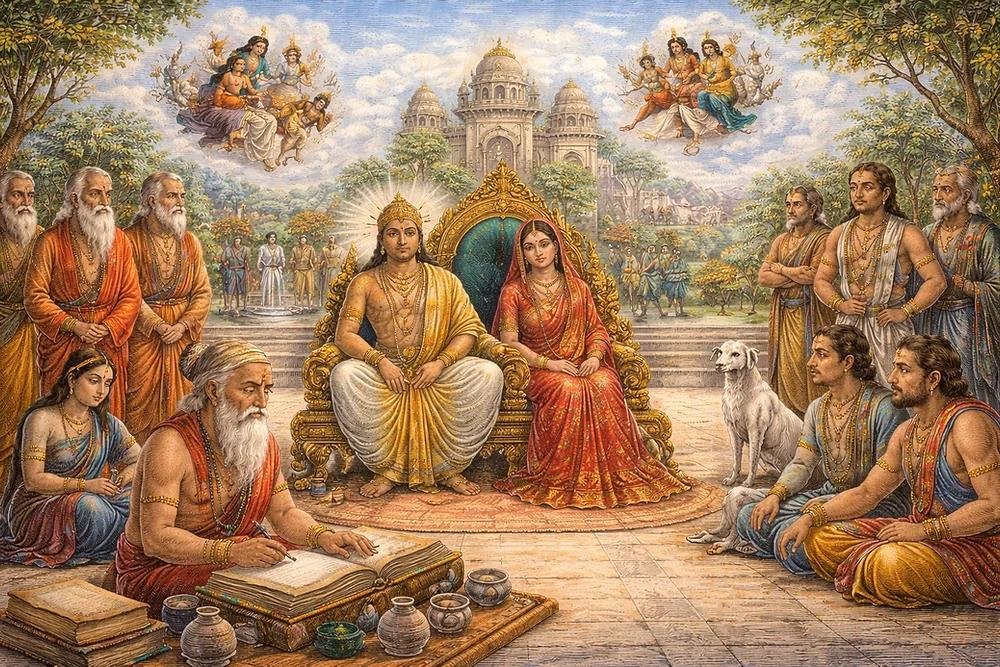
    The Patala Khanda contains several famous stories, including narratives connected with Rama, Sita, Lava and Kusha.

    https://images.openai.com/static-rsc-4/YLKxrVIy1JpZbHOpZiqqkUG6cge8VU1tL9aOXUBPdCqLW0lx8Ri2N2Y0RObK57Ub4X5KlhI49qBOt-pp_i1QhgGct_GqgLNqZQHzzD0GLYBGiKjvudcL0zNQdRHP2NbLuqDoAO41CYOjBDS71ufMpZcPdGpDWC5rN6mLpCLGLTGlzfEl1cWgoJAztRk2bIkR?purpose=fullsize
    https://images.openai.com/static-rsc-4/36arWTKRjWaVff2UIgP0Imjs-YlWaa0ApaYlr6r2Evvps9BHv32QlYL4LJ72bXlrGzzjprD_ORplXSzXxYThAF5lXD_zX7_bmH7StL7L0jqMqBTHBO3ag5-YotjxPRpITwN0NDt25tW3GX8_vGI6hXbCu15tEbiU5-yzrbeRzAFXtL-gqHaRsumkkLOzBudL?purpose=fullsize
    https://images.openai.com/static-rsc-4/LOv-15hw151TPinv8KkMAp8jTJQNg7lSdO6V1QL1jOv1Y3fUN1GQdM8AHLkQudnSkiQ83DwthC1SseGRUpYQX0jEYPkTvvVsSUa5pkBdyGQVxKBhewiwdS-u6xYVSbHgFkFsIDYBcj3JaNMQQk3l_ZLa3UGJgNFaClfMUVvwEsGXZIwhczrWJsf2oU4_cFT0?purpose=fullsize

    Image ALT: Rama, Sita and Lava Kusha representing Ramayana stories associated with the Patala Khanda

    The section demonstrates how Puranic literature often preserves and retells stories connected with the wider Indian epic tradition.


    Stories of Lord Rama

    The Padma Purana contains material connected with Lord Rama and the Ramayana tradition.

    Stories concerning Rama, Sita and their family became an important part of Indian religious and cultural storytelling.

    https://images.openai.com/static-rsc-4/qnMaK2CaoDqFX_I_Pb4mMtp2Whqj0pXYXHhNgGhnZUrbOGcWFKB6qdfd1FVvQIOIMGBXlBzK4N8MUGo9KJndZ7id2TDXUHgMnMbbozpVIDFTsOpM-xDh5FpR9mjGYMG8nd1O66M4ppiFhW_o83j1d8Zxqf8nY5PK3-OxDPDTEzBf7m7B4HpMRyi2PoXJBYXq?purpose=fullsize
    https://images.openai.com/static-rsc-4/yzSoYm2v6ZPotdpONeKg6CTdjeHySMgdWuclXg-bzMI-vZ6B5Yb37ucEXcwrolffEuN0aTA-UVfjEhsWrwWmhpxfMnN6DiowRY7zyAnrgs8uX3PUGVNB7xsRGMaRyIUs873SfNd7f_-tLNWqYxd2hgmdL-sCzySddrTC_iJBA6dlw4vbF7pnjIrrQ2Ajjeno?purpose=fullsize
    https://images.openai.com/static-rsc-4/VXTAqMzARRbl4qV11aPL69qFzQ64zQNhM3TGFTBr9y-ACFnNYFHtfc7Yufvvlz5YX3TKgbCP_O-4EmcFIuBogrYYYIN1LXFl7tkqzYFMdV0IB_-82J-MSu9CuxqLNc92ImYj9ZqU-IT2b57Cf_2DY_r6uLSrWXF9cqslN8u0KzUSGDkRHk1xHS9yGPgciBha?purpose=fullsize

    Image ALT: Lord Rama, Sita and Hanuman representing the Ramayana tradition in the Padma Purana

    These stories communicate values such as:

    • Dharma
    • Loyalty
    • Courage
    • Devotion
    • Sacrifice
    • Responsibility

    6. Uttara Khanda

    The Uttara Khanda is one of the major sections of the Padma Purana.

    It contains extensive discussions of devotion, religious observances, sacred places, festivals and the worship of Vishnu.

    https://images.openai.com/static-rsc-4/MghHY_3JexaE2aaeyUtxTDUTE87Xcyq_Qck9A2USiQkmOf6n2YdB0v-j2_BOLMsWB2Ppouf7TkzA_jlOJQrDGQ4ISJGcQdx6n-OaGyZ77pJXxdLYQHTE36l6ZkL2-IEqLGf0FE-VcLdal9nBGLc_fYql7VAUcLmF96eoknHLi7pXQ89MaNwTuWjYwZ3veY_0?purpose=fullsize
    https://images.openai.com/static-rsc-4/FTJeDqNc04d4zCA6YreCSdpQ3KLfn7Yg07tUQB9u222K2QEGwDOx7sdgyxFjeZ0wWtK4Xo3QzDeM5SXh5JzWzu8lXvg-hNGjbJURBss0FUE0IpA7rZA1TOqHZY0dRh-RrNLIv16DdV68jfJrQhxAigYERUYVToroIQec6hoef5VXTExx4jU5oraiW7Wq5nOv?purpose=fullsize
    https://images.openai.com/static-rsc-4/j86HfTYa7Ol2L_-wuqx3ndPu_dInu3kCfzpBbNPw_t5NAcAILS9SrFUtjnvYn3H47IP60oVQnscKIrHeK1vkWNtORuBIDG89r15oI0v2jfGdtX_pgHGpNiyG7mor_rXImV9W1uEtfIOCEocO76RXkr4KeAWrnCZCj5jz3WUNI3UaKGbBmbLwgeydzSDylBw7?purpose=fullsize

    Image ALT: Lord Vishnu and Goddess Lakshmi representing the devotional traditions of the Padma Purana


    Padma Purana and Bhakti

    One of the most important themes associated with the Padma Purana is Bhakti, or devotion.

    Bhakti means developing a loving and dedicated relationship with the divine.

    The Purana presents devotion through stories, worship practices and discussions of sacred observances.

    https://images.openai.com/static-rsc-4/jdD6ml7Z1qyu85USG_Ai2NJG7duqDtkIvMRqCUGQi5eGLf14KbRn2H85knVjqY0fmifxEwbW-7MiFRDtZaAO3g-dy1NIeEmuH_7rFeeVXxg4-95jWFY-FmRj338MhY9K6bp3JHi9r4kvZE_qC9GQKGZ2uPkuDP-kpg53gcREXYQvEq3hPUhVkTien1QRDiLo?purpose=fullsize
    https://images.openai.com/static-rsc-4/yg8W_3bbMj-gkREtGT_dkSjbsvgiN_XyXRW62eOkEd7IT0NAmHy-bolXlrpBTBvuZ7i5Mx85ysUoZOQZCuOP3T_xyZOu99wqhpfKm-eELZAjou6J798NHp_f-whdDmJhf2HgspvBEF18MPcoMswKg9NlkXbOfjxujFDDwHnE3-CkbhOQ0UC8e5_r-4IqY0OY?purpose=fullsize
    https://images.openai.com/static-rsc-4/Ciwl4mg2rfXRl-KEuHqjTVylJHJNEKxxUbO6nWfB5M1M7_1G8KFTZblX7noiF6vt9xkATb3cVlTJ1SKgGPkRFWncu1-scALjcmnsLz45DPabAeMNBFx65nKa4ZZnAaoUuDhI41cEZDx2OSRie-dF1MuOmr2I-Z0ekdJIaYsPJt9Sp8sT_DIjefpvxSVGzCpb?purpose=fullsize

    Image ALT: Devotee worshipping Lord Vishnu representing Bhakti in the Padma Purana

    The emphasis on devotion helped Puranic literature communicate spiritual ideas in a way that could be understood through stories and everyday religious practices.


    Padma Purana and Lord Vishnu

    The Padma Purana contains significant Vaishnava material.

    Lord Vishnu and devotion toward Vishnu are prominent in several portions of the text.

    https://images.openai.com/static-rsc-4/lhLDnlbGH0VfSz3Bc3o68kOsEUusdRXhgqzxUcN9zvZyO9uneOJQfHY0yrK-4GlM75eKFh95GdnxltLZQsSAM6GzMHc9bV7bCSsX62xxnyqQ8wLaFCPXw7wdfZuSFk2f_JatEq7atSgX4uL0SDmEZkkLZa8HYc5syjo9n51xxHmbUJ4eXuOseqxvFAN5AwUc?purpose=fullsize
    https://images.openai.com/static-rsc-4/MMGrC5yy6a0BaJQ855atzw-sn2IXkrdqVBDR1i5TwGKtXvdcfIU6K18YrOiTTmEDXl47U_HZl79xdXm2C4at59dtAK3oRV7ZZ24NzZMMjcdIU1YyrMYpMnphPd_GQEpZe155Gj79REpcPZtYx4cPZDyDTN1j9XhKPsVKrV_ztQomk_KD4myVWlQE7yAMQ3bn?purpose=fullsize
    https://images.openai.com/static-rsc-4/NviB9tgrDw3N1ChGojRVFDYU4KMyzMbkHcoddwrUjqxOBz_KCPv3cJFnrZpGsL0Iwm96vPEwHYnNJlnOYXcQo4AbUPTq8QDGLeoFiS1hGblWGH3hrOrirfsM1f3emUaKnXJScFo4lUp7pPl9cJ28or7Z8A3txtq3z0zkAXYgLDYl8eAbd5Xhx41iTiGKvj3W?purpose=fullsize

    Image ALT: Lord Vishnu reclining on Shesha representing Vaishnava traditions in the Padma Purana

    The Purana discusses forms of worship, religious observances and the spiritual importance of devotion.


    Tulasi and the Padma Purana

    The Tulasi plant has a highly respected place in Vaishnava traditions.

    Puranic literature contains stories and teachings concerning Tulasi and her connection with devotion and worship.

    https://images.openai.com/static-rsc-4/L2eDXDljax8Cb77ZJKOL8as7DKPDp_svj4E5kkvQUF0i41DzHQEzRPNff2PZfYOfevUzWdF4aujY6MA15E4yvH1tmXy1wgWI9VMU_RKXXVQW9UrkcskTIfkLkNTnmKuBVi_xCNO9q4CfG6rqa8D8_ySUEKsPBKXIZInSzEPUcvty8w3Ng_DpYPI77YOGcB2u?purpose=fullsize
    https://images.openai.com/static-rsc-4/prfxsczFuSWCvPgTiCM259WnlY-zUgErx5x1qoq3XVBRNt4FIDGjUWszy4RghsZ3xO22F3T6pGY7-XjCWAxkjVlHPib3Linme9M339jyYclxrggUv74Y2GXLxjLVH3TafSN4Z9cssXpqdWWnj1r1ZLz1vVBItXLKqZu64StF9_zIASHLADQH-EDr28cEEIDj?purpose=fullsize
    https://images.openai.com/static-rsc-4/wkXq_CRmcHtoQNK6bNMpTNAHGAoMuGH8bnrwnu9D8N6FTo_CQuHGmRXoSos-ZESqJlU8yNq59BWFxUx-rTZD8Qx-zgCCv3trTqqqwtbGOWHVSnURvKZ-YdNRljBE9Tp0HfZGHEod65XJKLuxg42lwZvKpT3wrHJHbjmv4uWTqiIN8ZF3rlURo7S3J_k18OZA?purpose=fullsize

    Image ALT: Tulasi plant used in Hindu worship and associated with Vaishnava devotional traditions

    Tulasi leaves are traditionally offered during the worship of Vishnu and Krishna.


    Ekadashi and Religious Observances

    The Padma Purana is also associated with discussions concerning Ekadashi, an important Vaishnava observance.

    Ekadashi occurs on the 11th lunar day of each fortnight.

    Devotees traditionally observe Ekadashi through fasting, prayer, worship and remembrance of God.

    https://images.openai.com/static-rsc-4/7pL07PCnGgDuVUcFwq-I1K8kVoyPYZUZq6uLGPz_4-fyfL-KZMSocrggUCJXmoWQ-PC6MPtyx4q8J-8wFEEmK3g4DpzwO8HoeuEzI-xgzE3USnu2kHTgV6laaGpPH9I5M7W60SrguDULcNkjeeJdFbgjSQ7y7qK2I75LeF_2bWVoVb3xU3MtdfSoVXuh0h_D?purpose=fullsize
    https://images.openai.com/static-rsc-4/LK_Ja3pLRKyM-1epbSHpvzVdOBXnxMY86ES4NwgqDyoDuAMO9xIFp5QsYIfHLDAK21IIlLIGG_0zu3tpDsqfVCcHcSp43sNYQ43pjouu7Rg02zpXgYB6h3WJRGjaDUePICrO6RHzmIlY0kyHA7JwfVGIgP-gLWY64hmJmaIVZhIG14BeTrVwWaPSqKBqIgqE?purpose=fullsize
    https://images.openai.com/static-rsc-4/4-5xMZRvKOM3Y8KSXtEMzeC1a87GbI2-q-AyNUQPjo1FcAn6jOgWu0Gl257iA8ymE5AapjitpisVs2-rCnVLiUCgug2m8423RL6gk-NKDn0QVH6XAIk5VooO_jgoiHd4aPZ8n4UqduLgBytI0B4tB9vsXgDOrRBR_-HIhHrznREzL6eRYXGvhCvFlFbctxDV?purpose=fullsize

    Image ALT: Vishnu worship representing the traditional Ekadashi observance described in Puranic literature

    The emphasis is not simply on fasting but on discipline, devotion and spiritual focus.


    Padma Purana and Vrindavan

    The Padma Purana contains material concerning Vrindavan and sacred places associated with Krishna.

    https://images.openai.com/static-rsc-4/oe-u8_c8ehvd2iks6AJwa_9NOsfZw7otdru3tEslsn2n6I-utDHiy11am43hjqVjC7E3LI83OlpzPrUe1y6QJ3uRHm2Q6ILUaLrkYlUdjlH-D6K9H2brJyRHn4tSLyDfDfLSl8o2hSliKO79PLaKlfnDP4LL69clcdZwWpXvnijrJfZgMKPbWytrOhmyHh0h?purpose=fullsize
    https://images.openai.com/static-rsc-4/wnh6EurbtPk8UQr4KcVoi3DnYBaV11O5LzMCJrWEaS6c5G0bMi6RWmmA4aoDMNCHNy36kkHlJ4p8i1kW7yAp_oKzk8NfmuF36a5UY2OH4Rtykg3UMla5-mxjAY-fEvOce4hdLWFQ2KI0RSEJAwKPbZZYc6oh81YWzVsT0i56YtUkTuUZpEh_ldGV7V8m8bJy?purpose=fullsize
    https://images.openai.com/static-rsc-4/yRr8wYdJuxIoSF6H48acMHB-FeAtG29vo-zpqOe0nylhIAa-iqFjanZGJUwrly30dJqBljgJypwuUSgIKjoQho0lkRWyEK5tSRp49PlRNIfGbgumIRmmwwAoKilnIGHlnWg4M8KEJ6S3KlHSykpIcmDu1-Kgo1V4C7a-OA47tMca5VvYqRrP6vze9vh5WVOR?purpose=fullsize

    Image ALT: Vrindavan Krishna temple representing the sacred geography associated with Krishna devotion

    Vrindavan became one of the most important pilgrimage centres connected with Krishna traditions.

    Its association with Krishna, Radha and the stories of divine love made it especially important in later devotional traditions.


    Padma Purana and Sacred Geography

    The Purana gives importance to many sacred locations.

    These include:

    • Rivers
    • Forests
    • Temples
    • Pilgrimage centres
    • Sacred mountains
    • Holy cities
    https://images.openai.com/static-rsc-4/TPKmq1yeQ9_oxl49EepBmKA1zp2HVocXydIcnr_2Dx4qvN-Qd7kQ9HwosBrIxdU2k3Rui0nqEJH4oqo8_uAP5dpuVWtjjF0TX2-LqrwwvJacapHZS0uvJTCPGuj4xyHLNIHUHrHI1Gujcm7OMcq3YI7F4JHzKDXtGfCkkLMAqXDtrc34qXBzmrP0cjc4dmRf?purpose=fullsize
    https://images.openai.com/static-rsc-4/EIaO35x87_d_FiNHAz3ijbs3u_luelIL5dpYfvo3GFCAmhzS9M2zi9qc0ZAJu11-GNcKCU2DUA0nPNorl3-Mu0elrmssfAObeuCnyJ1Qspp0jOQfoeGteLW42-MjEdrpKy8o8v6nrQW7oxbhH9MYhKe7xrd6yI1pVRgd4tcL5pYIJ3vOrbLcH2I_ywex4QWg?purpose=fullsize
    https://images.openai.com/static-rsc-4/sjxbBNLoeQJsaZhqUJt51yFTxG5rrO69B99lrtV-QKvYtewAyJejsAgDEzrClzRe2KKrPFkIVKa_DGIVfDeeRL3X6Zk46k9Cw3zVQGIbecnVZhwXA-T_pG4Q-Ce4lcetjSOKn2AmovMwqehuW43dkNr4w4vP2T2rqprgcNHEHQNpdEurGjT3W3r8J0TmDHaR?purpose=fullsize

    Image ALT: Indian temples and sacred landscapes representing the pilgrimage traditions of the Padma Purana

    Through such descriptions, religious stories become connected with real places and pilgrimage traditions.


    Padma Purana and Dharma

    The Padma Purana also discusses Dharma, or righteous living.

    Dharma can include:

    • Truthfulness
    • Compassion
    • Charity
    • Respect
    • Devotion
    • Self-discipline
    • Religious duties
    • Service to others

    These principles are often taught through stories rather than through rules alone.


    Padma Purana and Festivals

    Puranic literature played an important role in explaining the religious significance of many vratas, festivals and observances.

    The Padma Purana contains discussions of religious practices that connect worship with particular days, stories and traditions.

    https://images.openai.com/static-rsc-4/-P6lBN49ni78nRDdH1ejiZbTVh3KNqMs_UX9d3d5E3orsb1nq8BHQbCo2VFZfATgaem7OdOuMvGXIGikTX80hOzKFkQHBMfTIyiNVZXHK9y55pWui7w1-vKcP3xUVm4iprwe6j3c-i6NpneBlpsrjX26cKW1HaTb9u7c76xKFEHa-aAxp63lz5BAGb4l0Bw4?purpose=fullsize
    https://images.openai.com/static-rsc-4/8Cc7pCVomq774fOY7wlKV2pXn2OZCdhD08UIoUq52OUyOAY50y-sQP_PGgejbWA40FzzfNmdBrWW24BHj7G8SYCckhbemdLWxl4_YW0wjdxm6RpROSIw5EAHTP5KrP3bxiwUI4A40S416WwHkRLrqx2HvYoOM38qM5-MaFcKgfmhuT2wowU4zxXxvBjZAE36?purpose=fullsize
    https://images.openai.com/static-rsc-4/CB70DM-FHmma3WtlNEqfHajBmBUfSbyKMCX9y40cF8XrrP7NCQgrQ96q5Y4pmwy3uL5geYr0dqpHnw-mp5LkgmyiuxZiJuOPaiuW6TTQi7dED_7cYPfnjO7a2q-LGOEJ4qMapk5xjnNRx7QVNnXJuz0FxgD9SutBDuYGAxW_uJkxbwkNC8dBJzFMs6nVnbD2?purpose=fullsize

    Image ALT: Hindu devotional festival representing religious observances described in Puranic traditions

    These traditions helped preserve religious practices across generations.


    Why Is the Padma Purana Important?

    The Padma Purana is important because it brings together many different aspects of Indian religious culture.

    1. Devotion

    It gives significant attention to Bhakti and worship.

    2. Sacred Places

    It preserves traditions associated with pilgrimage.

    3. Mythology

    It contains stories of gods, sages, kings and devotees.

    4. Dharma

    It discusses righteous living and religious duties.

    5. Festivals

    It preserves traditions concerning religious observances.

    6. Cultural Heritage

    Its stories influenced Indian religious and cultural traditions.


    What Can We Learn From the Padma Purana?

    The Padma Purana gives us several important ideas.

    Devotion

    Faith and dedication are repeatedly presented as powerful spiritual paths.

    Discipline

    Religious observances encourage self-control and concentration.

    Respect for Sacred Places

    Pilgrimage traditions connect people with India’s sacred geography.

    Dharma

    The stories emphasize the importance of responsible and righteous conduct.

    Preservation of Tradition

    Stories and rituals helped transmit cultural knowledge from one generation to another.


    Padma Purana – Quick Facts

    Series: 18 Mahapuranas – Part 2

    Name: Padma Purana

    Meaning of Padma: Lotus

    Language: Sanskrit

    Traditional Classification: One of the 18 Mahapuranas

    Major Sections: Srishti Khanda, Bhumi Khanda, Svarga Khanda, Brahma Khanda, Patala Khanda and Uttara Khanda

    Major Themes: Creation, dharma, pilgrimage, devotion, mythology and sacred geography

    Important Traditions: Vishnu, Rama, Krishna and other divine traditions

    Important Concept: Bhakti


    Frequently Asked Questions

    What is the Padma Purana?

    The Padma Purana is one of the traditional 18 Mahapuranas and contains mythology, religious teachings, pilgrimage traditions, sacred geography and devotional material.

    Why is it called Padma Purana?

    Padma means lotus, a major symbol in Indian religious traditions.

    How many sections does the Padma Purana have?

    It is traditionally divided into major sections including Srishti, Bhumi, Svarga, Brahma, Patala and Uttara Khanda.

    Is Vishnu important in the Padma Purana?

    Yes. Vishnu and Vaishnava devotional traditions receive significant attention in several portions of the text.

    Does the Padma Purana contain stories about Rama?

    Yes. The Patala Khanda contains narratives connected with Rama, Sita, Lava and Kusha.

    Does the Padma Purana discuss Ekadashi?

    Yes. The text is associated with traditions and discussions concerning Ekadashi observance.

    What is the main message of the Padma Purana?

    Among its many themes, dharma, devotion, pilgrimage, religious practice and spiritual discipline are particularly important.


    Conclusion

    The Padma Purana – Part 2 takes us deeper into the world of the 18 Mahapuranas.

    From creation and sacred geography to stories of Rama and Krishna, from Vishnu devotion to Ekadashi and pilgrimage traditions, the text covers a remarkably wide range of subjects.

    Its different sections preserve stories and teachings that helped shape India’s religious and cultural traditions.

    The lotus, represented by the name Padma, is also a beautiful symbol for spiritual growth — rising above the water while remaining pure.

    The Padma Purana reminds us that devotion, dharma, discipline and knowledge can become part of everyday life.

    This is Part 2 of our 18 Mahapuranas series.
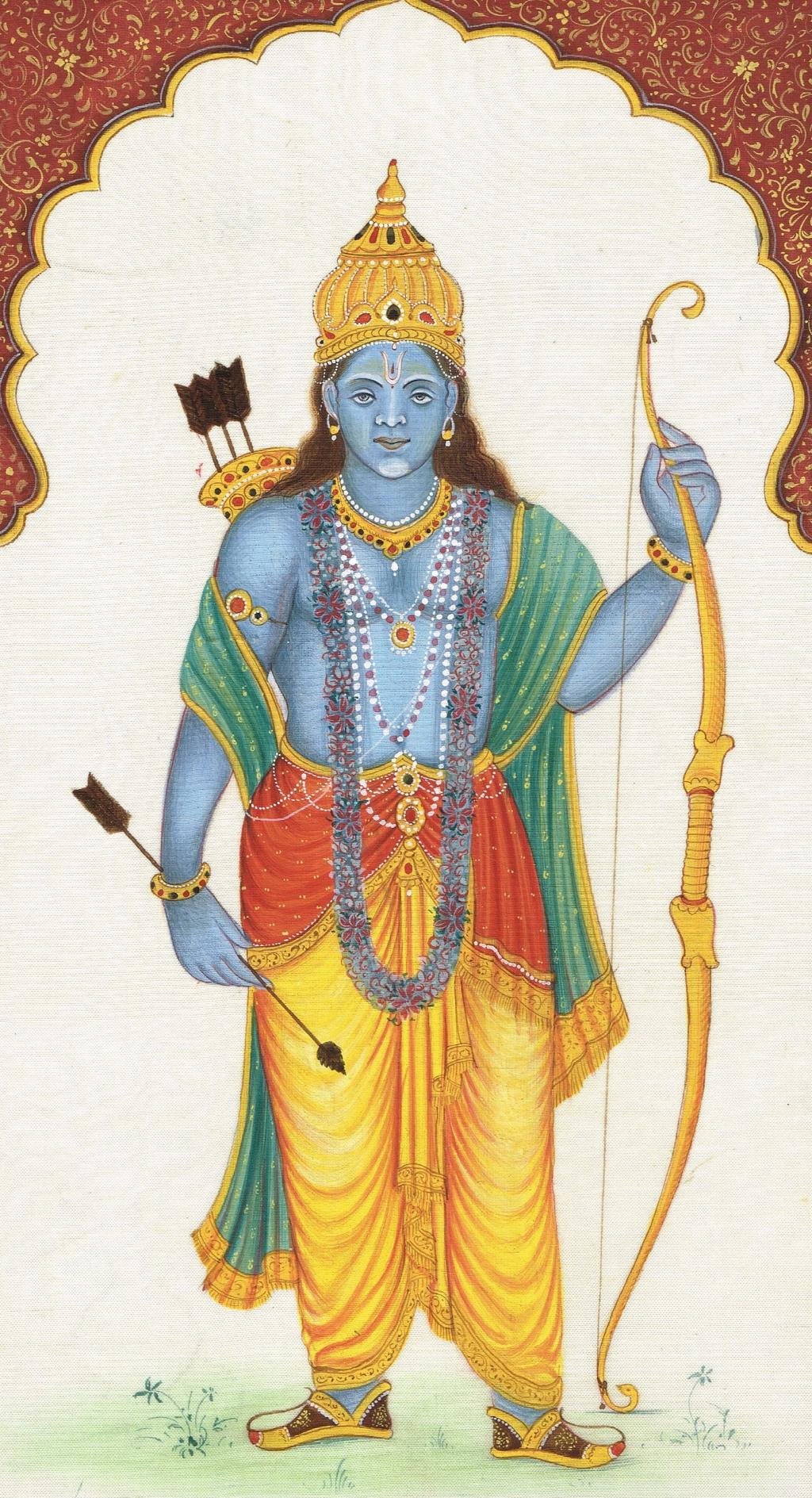
  • Ramayana Part 30: The Many Names and Forms of Rama Across India

    Ramayana Part 30: The Many Names and Forms of Rama Across India

    In the next article, we’ll explore how Rama is remembered by different names and traditions across India, the meaning behind some of his important names, how different regions celebrate Rama, and why his image and story have become deeply connected with Indian culture.

    https://images.openai.com/static-rsc-4/mVppZFzes3Bs9nOfsOk7C5qtwcL6EREuCkKyPL6M48i7kBC1F2rwge54lrWNj6izNHFb6gpuh2YumRL0k3LmUTPobPg3-fpR7AM6YM2D9dpLZDfzz3f76b1cI0NQEaTeeO4gwM0kYZ1Hjwa5MkTnX8JXPfPWwRpPTNfKVx5diNNg6ZFHXqeM5MqQ1aZZpEUH?purpose=fullsize
    https://images.openai.com/static-rsc-4/HgeI3D0qzf-34lVPDpc25UGF9rRqmfPkhh5xJVMZbHxlmTyhKG8fHDxUPvaCNBXPWa0s8HlIkv4cs5iVbbb88QUQYwMKiCyKn-0rtD5okZimCQfmHCH0SzOJQx2TZpkDPQJtZqllZvlxK-C-kY_wJXepWsl_VwFjfoWAm4Bk7IiiuSqj0AyCE5D65f1LhRNu?purpose=fullsize
    https://images.openai.com/static-rsc-4/_ShG0eSABG87b7Xvy-nKbOulY2y-vbVD5Lq9e5_pu14QWyQGg1wZiM3wyBAHdGU7l6oJ5CD5WqS6eA_V2tMr7hLgcBZ0sv0Ct_zS05Ki7MO7Z-QePjxE0uoNwRGdCNBU2gRirSK94p8TrpiZikffR8TgdsSW59KIP9wd6yXdKH_OAhbZO1V7t6zllK4VtUk4?purpose=fullsize

    Rama – A Name Known Across India

    Few characters in Indian tradition are as widely recognized as Rama.

    From the northern plains to the southern states, from large temples to small village shrines, Rama’s name has been remembered for generations.

    People may pronounce his name differently or follow different regional traditions, but the central image of Rama remains connected with:

    🙏 Dharma
    ⚖️ Justice
    ❤️ Compassion
    💪 Courage
    👑 Ideal leadership


    The Meaning Behind Rama’s Names

    Rama is known by many names.

    Each name reflects a particular quality, relationship or aspect of his life.

    Raghava

    Rama is called Raghava because he belongs to the Raghu dynasty.

    This name connects Rama with his royal lineage and ancestors.


    Raghunatha

    Raghunatha means the lord or leader of the Raghu lineage.

    It is commonly found in devotional traditions.


    Dasharathi

    Rama is also known as Dasharathi, meaning the son of King Dasharatha.

    This name emphasizes his relationship with his father.


    Kaushalya Nandana

    Rama is lovingly associated with his mother Kaushalya through names such as Kaushalya Nandana, meaning the joy or son of Kaushalya.


    Maryada Purushottama

    One of the most famous descriptions of Rama is Maryada Purushottama.

    It is generally understood as referring to Rama as an ideal person who lives according to moral boundaries, duty and righteous conduct.

    This concept is an important reason why Rama is regarded as an ideal figure in many Hindu traditions.


    https://images.openai.com/static-rsc-4/vsr5u6TbWBNUANirh4dpV9wpLG0D58FG1gWRDiSujZ1IWC70zno4sp12ccSvnuooWCAEdEcTtHNecQXLCw45MjnsRgfEZ3rhZe91q0NGog7NP-mw3y1_HwP-2VT7H64I4F-LZwBZe1KtqAvdRxHK5ncRXfXnT0g1WAV2VZYACuypJPLud3V14xSYNpbL19o-?purpose=fullsize
    https://images.openai.com/static-rsc-4/zp8lD2rEXEwKvgJD2VpUnB4x4-lOzlP6eLB3vjTawMRpOfvLwVjHeFJk6pwsjCy3EgUbVKNhoKeBXO6nd7bCiDzb_XZNmv5Om6Drdh7TdWAEP6vtqRY8NI5007eBg0qwnvDS3VF-s0GHVRcoVlrNh2HKm8nyhcrJvyAnAN4P_ua8R23Cdj4pMR502Xt2MWJ7?purpose=fullsize
    https://images.openai.com/static-rsc-4/nday0AMbuMtmvTs0VM-MPUheYYXseX5FUoehCB33EnTYDROhnQrayeS1bOKWw8EOEn5l0dTx3v-a6Q-6cw84GoHfBO-wxNtFwRVH76QAiPQ9c7OU2Gr0uJlnQA64keBhmeTpoylgT24X_zRrpo14jicF-lm-I-fDUScSwOuESHmu60SJXUTLJ17YghUSyMyj?purpose=fullsize

    Rama in North India

    In North India, Rama has a particularly strong connection with Ayodhya, the traditional birthplace associated with him.

    The city has become one of the most important centers of Rama devotion.

    Rama’s story is also strongly connected with Ramlila, traditional performances depicting episodes from the Ramayana.

    During these performances, communities come together to watch scenes from Rama’s life.


    Rama in South India

    Rama is also deeply respected throughout South India.

    Temples, literature, music and devotional traditions have preserved his story for centuries.
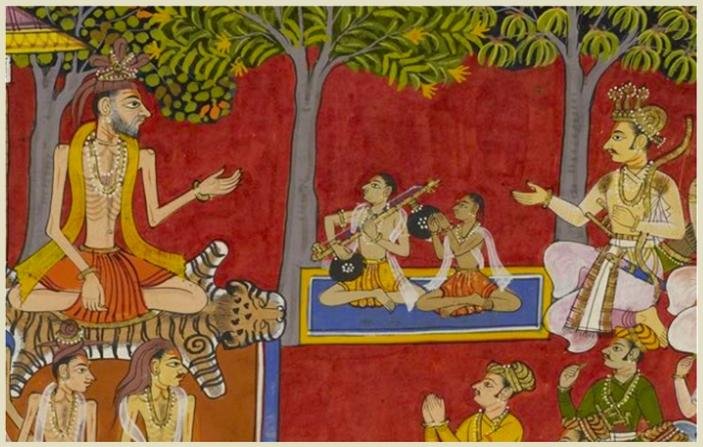
    In different regions, Rama appears in local artistic styles and literary traditions.

    The language may change, but the central themes of the Ramayana remain recognizable.


    https://images.openai.com/static-rsc-4/LfddKH9MYMP4qM_1TapDl63CywNT2vK1a5mdy407dAh3LPVGRikkNfkVcjzSCuTLR2jm-VmoUsG05fyfFc6p2jHZMEdpGkgDOv5d9f-kwbiZOpo7-OoKRNkQK4DTjwsmnOUifzl6F-VdPMmCGh6AK5mvZJCCsnV6yMkjf_8_QNI0sK5XEy3hZ2nHaIlHvk8p?purpose=fullsize
    https://images.openai.com/static-rsc-4/CyWGk_4WsmBYcUSjkLRO6Si0kwzW992ZeaBjezwqNgpuPvrXTaZVnjGviF3aGS2hZ-57puCeaOLJ9zXr7YlngtkzJE-E57Wz5ChEJv0dvFh3sw229Yxhp-UaPWmrcvBe4i8nKvaWwJuNJWUIjZm6Qk1SRgHQHhfZRoZTKFDpZU60TVJNQI8TIzQcmS5yUEnX?purpose=fullsize
    https://images.openai.com/static-rsc-4/s7qXQf1k1CN6n_OQDJn89BhlICr_z08MnwuO3I3w_Un8pow6PegupVZ04G1d3A7IBob1Y2s-PUiORXqtPpKwlaPEkVACLpyKymwk5EKE0QdajKXgvi-P5styKthLiAw0BIXJWDi3ZVAuCicsoMDwypCdf1KxdqXGfbyOVZ0-49IZAZXgAGTaWntsK0e2AkzH?purpose=fullsize

    Rama in Telugu Tradition

    In Telugu culture, the Ramayana has a long literary and devotional history.

    The story has been retold through poetry, Harikatha, performances, songs and religious traditions.

    Rama temples and celebrations can be found throughout Telugu-speaking regions.

    The Ramayana has therefore become more than a literary epic—it has also become part of everyday cultural memory.


    Rama in Tamil Tradition

    Tamil literature has its own magnificent Ramayana tradition.

    The Kamba Ramayanam, composed by Kambar, is one of the most famous Tamil retellings.

    Kambar presented the story through the richness of Tamil poetry, giving the epic a distinctive literary identity.


    Rama in Kannada and Malayalam Traditions

    Kannada and Malayalam literary traditions have also preserved and retold the Ramayana.

    Poets and storytellers adapted the epic to their own languages and cultural environments.

    This shows something remarkable:

    The Ramayana could travel from one language to another without losing its central emotional power.


    https://images.openai.com/static-rsc-4/2QeuQ3S6xlD6yq9dwwNb5WZQ6Z5rG5HvqjMP51sg1nO_Oysu2bNmPmbr87pR8-gITD_9mccMFYbMghNmeyvBBBwLoWLYwa7QGMPBZ7FA949sS4XyWVZ1TC58eg0sV8wcfQ0JRaMpm9KOz80U0y7EH4TWVvvZoVmrNSKR4-I8HDZ35-ccXAXnbFhNoSzErF9H?purpose=fullsize
    https://images.openai.com/static-rsc-4/uy9pDsMsnMiXLZXhJUegL2AaZ5-UGcGl3ckX6Ew10GTD79_vALPSenDI65vXgDu9WhITjnwO0YmN4hehVXqvbfM3Qj5gu49XeUCP4PK53u3lXtVXrDb_1koe0TSdYfR347Re1bNoOPftgIeUD19_p5er_-1bA4TfQkzQu3r1U8OXdKJDil-qu8F6GJwMH_LU?purpose=fullsize
    https://images.openai.com/static-rsc-4/C2JCOpsjSyLaSfvQIVJxmItUDjrn97EBV3CrdBkQfZz0jXzSGXkcs9ZebA2gfuRwGrYsC4BbAg2Pak7UHaISBQw_w6ZmSwx1xCVSx_AFsGttRRLPJHDl8mAMpytowd-Cz2--IDMtqvr7bcZwT2Zpg7LcoshD0I5ArUlISz1TGQwuBAr3ESmB7m9lJ_u6V_RI?purpose=fullsize

    Rama in Art

    Indian artists have represented Rama in many different ways.

    He may be shown:

    🏹 Holding a bow
    👑 Wearing royal clothing
    🌿 Living in the forest
    ❤️ Standing beside Sita
    🐒 With Hanuman
    👨‍👦 With Lava and Kusha

    Regional artistic styles can be very different.

    Yet the familiar symbols make Rama immediately recognizable.


    Rama in Temple Traditions

    Rama temples can be found in many parts of India.

    Some temples focus particularly on:

    🙏 Rama and Sita
    🏹 Rama as a warrior
    👑 Rama as king
    🐒 Rama with Hanuman
    👨‍👩‍👦 Rama with his family

    Temple architecture and sculpture have helped preserve the visual memory of the Ramayana.


    https://images.openai.com/static-rsc-4/bNLlW0X2XmtjvOubMj44_f-_DKqyZhMLIjdL9d-3L3BjIzxCYYpzm2nZ2YIddmwo2ikPV2nwd9vM3uZq_oX2fHi3tk_n3xdIzXN1lpYGzrrAJy980GDTu2BztqI9Uw4JiOvvsERgbevMRXecluvZddTjoyogzhqtNrRdKYJaOYZR6jlmxgLgBZcRv8dRdE_o?purpose=fullsize
    https://images.openai.com/static-rsc-4/k4zcVqBxFP--xPteBypn757rqOKwY4aIdSLGOBYAjWz9jP0TUDFrMx_sokj26EXvy6N9_16LpyR89h8ke62PRqDg0Oio-sAyDcUp84OnnjM_bp3QFJFKs5up6IYeY4QwI-16jmLc6mlGqhBrV7gPymwI5tuCYM116s_gsZ6dc9tXkyZf_Z0D3-4eaNtdoLpK?purpose=fullsize
    https://images.openai.com/static-rsc-4/Q2hfE92xAn_vwkFusZYelTon-byXfOWEfVyLqcM0PG4zd_-nzt_mde3COCr9cdbjFjufwh1o5cHrFqbcAIs68QkQ173AUhDdUx58NE6V26VLozF5v6MZpGE_lAqHoV8UsxIeONqzNoS5b8B5s25hWJ_qg4UdaLmYVOkX1FPk0pw7kIPFSXPBbHn1yu9nsjNy?purpose=fullsize

    Why Does Rama Have So Many Names?

    The many names of Rama reflect the many dimensions of his story.

    He is:

    👑 A King
    → Rama

    👨 A Son
    → Dasharathi

    🏹 A Warrior
    → Raghava

    🙏 A Divine Figure
    → Shri Rama

    ⚖️ An Ideal of Conduct
    → Maryada Purushottama

    Each name allows devotees and storytellers to focus on a different part of his character.


    Rama Beyond One Region

    One of the most fascinating aspects of Indian culture is that the same character can be understood differently across different regions.

    A person in Uttar Pradesh may connect Rama strongly with Ayodhya and Ramlila.

    A devotee in Tamil Nadu may connect Rama with Kamba Ramayanam.

    A Telugu-speaking family may know Rama through Telugu literature, songs and storytelling.

    Yet all of these traditions remain connected to the larger Ramayana tradition.


    A Shared Cultural Memory

    The many forms of Rama demonstrate how stories can become part of a civilization’s cultural memory.

    The story can be:

    📖 Read
    🎵 Sung
    🎭 Performed
    🛕 Worshipped
    🎨 Painted
    🗣️ Retold

    And each generation can discover the story in its own way.


    Rama in Modern India

    Even today, Rama remains an important cultural and religious figure.

    His name appears in:

    🛕 Temples
    📚 Books
    🎬 Films
    📺 Television
    🎭 Theatre
    🎵 Devotional music
    🎨 Art

    Modern technology has created even more ways for people to encounter the Ramayana.


    The Enduring Image of Rama

    Perhaps the most powerful reason Rama continues to be remembered is that his story combines several different roles.

    He is simultaneously remembered as:

    A son who respects his parents.

    A husband connected with Sita.

    A brother loved by his family.

    A warrior who faces Ravana.

    A king responsible for his people.

    A figure associated with dharma.

    That combination has allowed Rama’s story to remain relevant for generations.


    Conclusion

    Rama is not remembered in only one form.

    Across India, different languages, regions, artistic traditions and communities have developed their own ways of celebrating and remembering him.

    His many names reflect the many dimensions of his character.

    From Raghava and Dasharathi to Raghunatha and Maryada Purushottama, each name carries a connection to Rama’s life and legacy.

    🕉️ Different regions may tell the story differently, but Rama remains one of the most enduring figures in Indian cultural tradition.

    In the next part, we will explore Hanuman in Indian culture beyond the main Ramayana story — why millions of people worship him, how his image appears across India, and why his devotion to Rama became such a powerful symbol.

  • Ramayana Part 28: Rama’s Final Years | The Last Chapter of Rama’s Journey

    Ramayana Part 28: Rama’s Final Years | The Last Chapter of Rama’s Journey

    In the next article, we’ll explore Rama’s later years as king, the continuing role of Lava and Kusha, the final events of Rama’s earthly life, and the traditional account of his return to the divine realm.

    https://images.openai.com/static-rsc-4/KxGmcgY7fLsZ2A1afzeGCx91jTofHE-R1LFb1NybUbJipkLVPRMq08skCv62H7Cw0Fq2B12lvY5ymA9YfQS8FDbTTTJr-ENqMqje9_ygAT9s6u9jyqYxFLOYwl9SLg4SEdHKU6lKUh8zoE3V1XhHgh78D7z0Yh8U1pOLwf_O_0DkY4rppitcAbrzPu81rjwK?purpose=fullsize
    https://images.openai.com/static-rsc-4/d47Nb8qDqZkmppLYZqPM_8EeRE7CA-2zSoH5eq15PSjwg8o0HtJFOEmgl10oyKcX6OwhvNo1CbFw9lJgmsi_oIQf6GKnv46rK9_JQ6HTn7GfSeQc7palG365Cr_qXhjZ9F51oIcYs00tMRkCZS4IuGahAt2OZDt-RthYdEZTw9g-uAAKOu_quyu_-66rd2h0?purpose=fullsize
    https://images.openai.com/static-rsc-4/CXHrn7h79FIoeGmsNmqaMpOzmRlGp3cG--Uh6xYGErq03gkcytrNfLN5Ozz9mzn-YxoXY2mrbvgzKdXNGPVjhmFupT2SBZLYMj-JPrT-mcG3H-spKpPDwfB_Jc1jopSS4gWluXkVdqLafOolnL0qCFuWJAFAbPuo-c1GDggc3-pCuGhWC-YI61TuDaRDv-pI?purpose=fullsize

    Rama Continues to Rule Ayodhya

    After the events surrounding Sita, Rama continued his responsibilities as king of Ayodhya.

    His reign was remembered in tradition as a period associated with:

    ⚖️ Justice
    🌾 Prosperity
    🕊️ Peace
    🙏 Dharma
    👑 Responsible leadership

    The idea of Rama Rajya continued to represent an ideal kingdom in which the ruler placed the welfare of the people at the center of his duties.


    Lava and Kusha Continue Their Journey

    Lava and Kusha had now become important members of Rama’s family.

    They had received their education from Sage Valmiki and had learned the Ramayana.

    Their story represented the continuation of Rama and Sita’s legacy into a new generation.

    The boys who had once lived quietly in Valmiki’s ashram were now connected with the royal family of Ayodhya.


    Rama’s Responsibility as King

    Rama continued to place great importance on his responsibilities.

    The traditional image of Rama as a ruler emphasizes that a king should:

    ⚖️ Protect justice
    🤝 Care for the people
    🕉️ Follow dharma
    🏛️ Maintain order
    ❤️ Put the kingdom before personal comfort

    This is one of the reasons the expression Rama Rajya became so influential in Indian cultural and political thought.


    The Final Chapter Approaches

    As the years passed, Rama’s earthly journey gradually moved toward its conclusion.

    The Ramayana tradition describes a final period in which Rama prepared to leave the world.

    The circumstances surrounding his departure are described in the later portions of the epic tradition.


    The Arrival of Kala

    In the traditional account, Kala, representing Time, came to Rama.

    Rama understood that the time had come for his earthly mission to reach its conclusion.

    This moment reminds us of one of the central ideas found in Indian philosophical traditions:

    Everything that begins eventually reaches an end.

    Even a great king’s earthly life could not continue forever.


    https://images.openai.com/static-rsc-4/2FKIII9Rr7aveJzWVBWCFJSbI8-VDn7yCqIYmYCz9q3rzGMFQfR7ns4rE6v0iAT3_XWJ8-DDxlMwtLYuL_lQ2JdA2smOcC_cLtnQMDab81yLvylcgQ9xp8CeH0cqvrZkTCuEnLrKi8p02ShyG7ELPJ-M7fxUJsHlHCvISOrpbuzjchk7uAQnwoVQam-LcYo0?purpose=fullsize
    https://images.openai.com/static-rsc-4/9sUtQ49qY4lCiFNhWpLFtn65Vp4YNMZ747o2gVuhn0lIqyTLZVBcKVRpFLy3yYhBoPdBIyuuOMEoFdHTXvtoLw_Jq7wfnBj4dadrSL5IlqPTPPqIgdElRKJcQCPHqPjlpspXOjKxcbB3XHNhexS1CQXUMxxFjOhEq_imFgk0eEdwBWDn9cjrZV4kBFmPShiT?purpose=fullsize
    https://images.openai.com/static-rsc-4/ALr3zLtup-_v42JTuzeF1G-4AlsDVvQRTG2v4xw5e7rUtEpk-6My5wSgBlNUgWLyff8CEqzDwwLwzNpmIoUi82RGWeFl13eZNSLyDpX_btrLR4OA4BYcjmfmannGgKiiQyXm-MW6u6W9xtcCSQA41jPdjdJ6DM86BbSGrRCH0XBj39QjvqtSf4nEbUBfVzL0?purpose=fullsize

    Rama’s Final Journey

    Rama eventually went toward the Sarayu River.

    According to the traditional account, his final departure was accompanied by many people from Ayodhya.

    The river became the setting for the conclusion of Rama’s earthly journey.

    For the people of Ayodhya, it was an emotional farewell to the king they had loved and respected.


    Rama Returns to the Divine Realm

    The traditional Ramayana describes Rama’s final departure as a return to his divine nature.

    Rama is understood in Hindu tradition as an incarnation of Lord Vishnu.

    His earthly journey had included:

    👑 Becoming king
    🌳 Living in exile
    💍 Marrying Sita
    ⚔️ Defeating Ravana
    🏰 Returning to Ayodhya
    ⚖️ Ruling according to dharma

    His departure therefore represents the completion of his earthly mission.


    https://images.openai.com/static-rsc-4/9sUtQ49qY4lCiFNhWpLFtn65Vp4YNMZ747o2gVuhn0lIqyTLZVBcKVRpFLy3yYhBoPdBIyuuOMEoFdHTXvtoLw_Jq7wfnBj4dadrSL5IlqPTPPqIgdElRKJcQCPHqPjlpspXOjKxcbB3XHNhexS1CQXUMxxFjOhEq_imFgk0eEdwBWDn9cjrZV4kBFmPShiT?purpose=fullsize
    https://images.openai.com/static-rsc-4/ALr3zLtup-_v42JTuzeF1G-4AlsDVvQRTG2v4xw5e7rUtEpk-6My5wSgBlNUgWLyff8CEqzDwwLwzNpmIoUi82RGWeFl13eZNSLyDpX_btrLR4OA4BYcjmfmannGgKiiQyXm-MW6u6W9xtcCSQA41jPdjdJ6DM86BbSGrRCH0XBj39QjvqtSf4nEbUBfVzL0?purpose=fullsize
    https://images.openai.com/static-rsc-4/E-GJylwBugfyj_JqE9147e1nMMulyd7hUfz1XFf-VLs2M-hzefnWKjAvGP62IyOgsSqFTOBrAa6Qu1LKTqajv3z3Ip-SkXmZXLFlx4OlDG3CBfw9UDIE8XKhIn-0TlioK_uFQ7KH8rN2Flt6gqOcBRAaBMW0PQ7Xog9eYo50-A9BOLzLD4iqpq3WNEJbycDI?purpose=fullsize

    The End of Rama’s Earthly Story

    With Rama’s departure, the central story of the Ramayana reaches its conclusion.

    But the influence of the Ramayana does not end there.

    The story continued to spread through:

    📖 Literature
    🎭 Theatre
    🎵 Music
    🛕 Religious traditions
    🎨 Art
    📺 Television and cinema
    🗣️ Oral storytelling

    Different regions and traditions have preserved and retold the story in their own ways.


    Why Rama’s Story Remains Important

    The Ramayana has survived for centuries because its characters face problems that people can still understand.

    ⚖️ Dharma

    How should we act when difficult choices are placed before us?

    ❤️ Family

    How important are love, loyalty and responsibility within a family?

    👑 Leadership

    What qualities should an ideal ruler possess?

    💪 Courage

    How should we respond when life becomes difficult?

    🙏 Truth

    Why does truth remain an important value even during hardship?


    Rama Rajya – An Ideal of Governance

    The idea of Rama Rajya continued to have a powerful place in Indian thought.

    It is commonly associated with an ideal society based on:

    ⚖️ Justice
    🕊️ Peace
    🌾 Prosperity
    🤝 Social welfare
    🙏 Ethical leadership

    The concept has been interpreted differently by different people and movements over time.

    But its central image remains that of a ruler who governs according to principles of justice and responsibility.


    A Story That Never Truly Ends

    The story of Rama may reach its traditional conclusion, but the Ramayana continues to live.

    Parents tell it to children.

    Artists paint its scenes.

    Performers bring its characters to the stage.

    Poets write new versions.

    Devotees remember Rama and Sita.

    And readers continue to find new meanings in the ancient story.


    Conclusion

    Rama’s earthly journey finally reaches its conclusion.

    From his birth in Ayodhya to his exile, his journey to Lanka, his return as king and finally his departure from the world, Rama’s life became one of the most influential stories in Indian civilization.

    His story continues to represent ideas of dharma, courage, sacrifice, leadership and responsibility.

    🕉️ The journey of Rama ends, but the story of the Ramayana continues through generations.

    In the next part, we will explore how the Ramayana continued to spread across India and Asia, the different versions of the epic, and how Rama’s story became a part of cultures far beyond Ayodhya.

  • Ramayana Part 26: Lava and Kusha Meet Rama | The Ashwamedha and the Unexpected Encounter

    Ramayana Part 26: Lava and Kusha Meet Rama | The Ashwamedha and the Unexpected Encounter

    Ashwamedha and the Unexpected Encounter

    In the next article, we’ll explore Rama’s Ashwamedha ceremony, the arrival of Lava and Kusha, their powerful recitation of the Ramayana, their meeting with Rama’s royal court, and the beginning of a remarkable revelation about their true identity.

    https://images.openai.com/static-rsc-4/od2mDLB0EznKoXYlwEiYEy6VcGyCvjyp2ptWe5_vQOqQf30DCakox4lTihW_M10-SogZ7G5HWLomG25UMx5MFYBlzk13HNTE9fgyDPvv9IB901PtHKu4ljn2bCIxRtv_tV64_6HsgtJ7ZFUNg0a_WBF8IMVvrclhpAq60hF_ogzgbX9rEI1ArVV4tiOF0AGr?purpose=fullsize
    https://images.openai.com/static-rsc-4/TBe82e2pZ0eoFTVApUNH_UGsDKgPlMlkW8eMxD283J6CFIBIN6VtO510mb-p5fitVwpQvLPzrGjD3X_pM7G9RLcdXxFwjblZ8thLOp1460Gt8ITWhex5V0EED73rjqpOVhGvNEd9wAen0UiQQtSnJU93465qRt4-wal5-GFdEM26epB1gLg6m0OTgzAbop6_?purpose=fullsize
    https://images.openai.com/static-rsc-4/ZHoYCMPgwMHehEQxUtw6d6e93KrKUplDs97PUu_MGx2G1dGbRwlFJkCNX-cHfbbG70ixIcUXaWKl3cWzjkImVEKiu5TExbeYNyus7o6oXsZw0_R1xwn2RiBw_OcYSjQsLNu07NvKnoPMEEozQ5dfX0VKTEvunHllwSqEkb91qenLsNJm5F6JF0SB6k_kCgJz?purpose=fullsize

    The Ashwamedha Ceremony

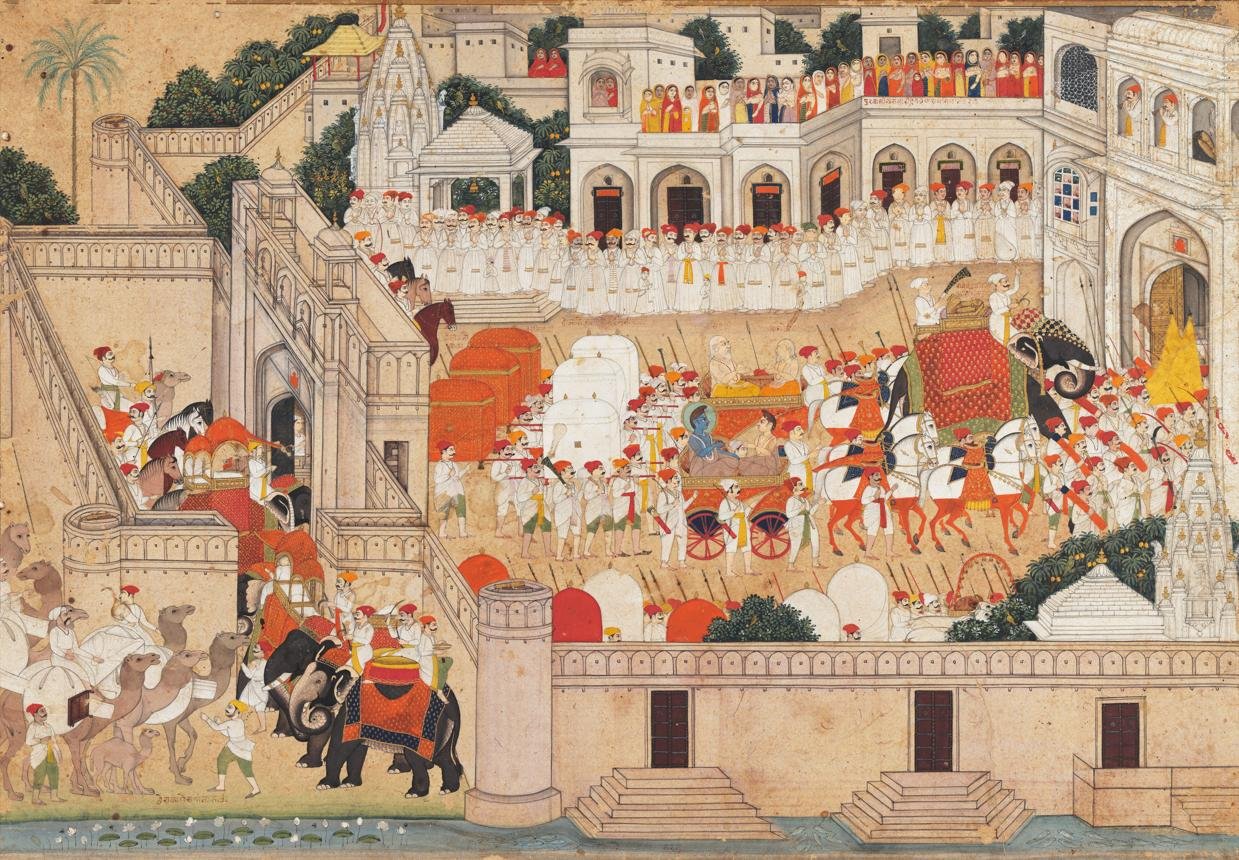
    After establishing his rule in Ayodhya, Rama decided to perform the Ashwamedha ceremony, an important royal ritual described in the later tradition of the Ramayana.

    The ceremony was associated with royal authority and the prosperity of the kingdom.

    A specially prepared horse was allowed to travel through different territories.

    Wherever the horse travelled, rulers had to accept Rama’s authority or challenge it.


    Lava and Kusha Hear About the Ceremony

    Meanwhile, Lava and Kusha were still living at Sage Valmiki’s ashram.

    They had become highly skilled in reciting the Ramayana.

    Valmiki had taught them the verses of the epic, and the brothers could sing the story with remarkable confidence.

    As the royal horse and its accompanying warriors travelled through the region, the lives of Lava and Kusha were about to intersect with Rama’s kingdom.


    https://images.openai.com/static-rsc-4/G88kUet-ZbJWCOiSVrNP779leCndd_1Mn7Z7vNwLIO0vQVjrHqn1pyZHRhlvTgHa_CpvhZ630UFr2OGyak_d-TA1BK0Aj6UKjc7fM6XMoX7EKZN9JeKJp6Fmmox1-V5p9gh2LvOxcMZS3OEEQIAE-xPBO8gpQjZ0KEgJ6jtzsCAyZNnqxNm6AWwXdVNpoJZM?purpose=fullsize
    https://images.openai.com/static-rsc-4/ivoEBsAdvLUtGq_zVBEHhpBiVqnuHR0uuMVS2KRNnQzBP3yArStMUDbEv7rHTNQeuh_qyFe_n71Zfe06Si8I53piwfeseq17bAyftbxVYlknOoo2dSYVsc9YqUqbZ910pCDELIBnFnKn3UYMtHB2JhB7D20Z1ei5z1upy01H5CS0Z1zBLW3LwRtPxrZTGBGI?purpose=fullsize
    https://images.openai.com/static-rsc-4/ZYpgC_xZ35eCXoG5kaW_8MCwO9486Y0PpjoYRgmyZe64OmOzjtpDy8Cqp1bA4XOu-cV5jWR3zPpLnGSRWg4l5Vnwo4DGyDnwqkSxhuqyVgg-fIYmhaghojCUmDR1mwPenzcMeBjiOaFQD9FRu-eU3FUM66ScY3WpQIXcjA2kvzIOtS-T-cbdUbVqgDQlJnLW?purpose=fullsize

    The Two Young Warriors

    Lava and Kusha were young, but they had been trained in archery and martial skills.

    They were not afraid to stand up for what they believed was right.

    Their courage and confidence surprised those who encountered them.

    The events surrounding the Ashwamedha horse would soon bring them into conflict with powerful warriors connected to Rama’s kingdom.


    A Remarkable Encounter

    The young brothers demonstrated extraordinary skill.

    They were able to face experienced warriors despite their young age.

    Their courage attracted attention, and word of the two talented boys eventually reached the royal side.

    But there was something nobody fully understood yet.

    The two young warriors were not ordinary children.

    They were Lava and Kusha, the sons of Rama and Sita.


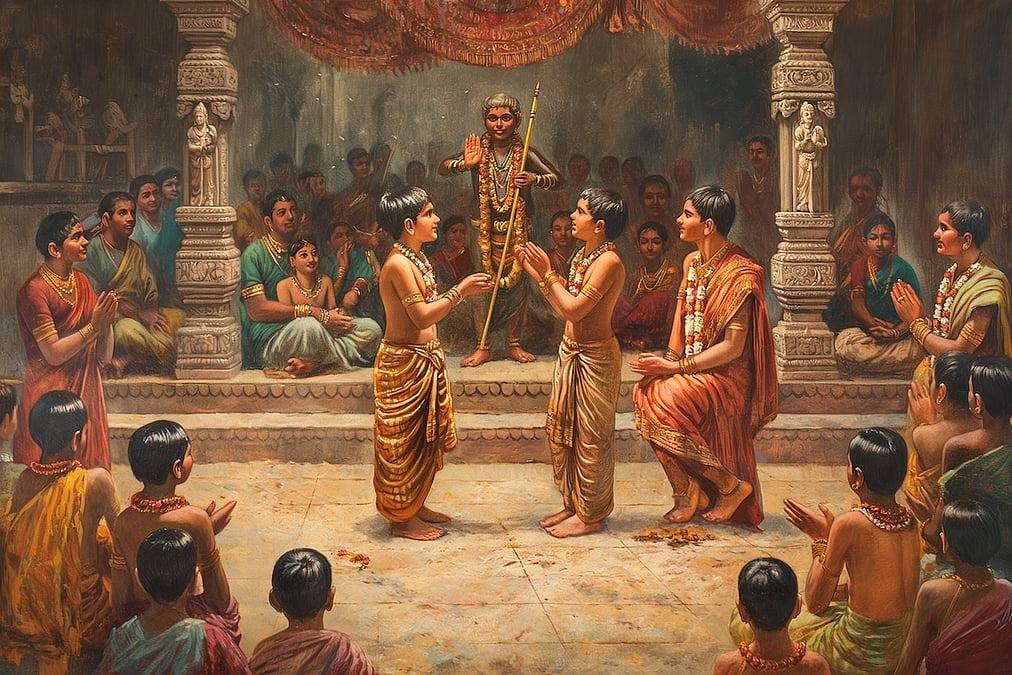
    Lava and Kusha Sing the Ramayana

    Eventually, Lava and Kusha came before Rama’s court.

    Instead of immediately revealing their identity, they began singing the story of the Ramayana.

    They described:

    📖 Rama’s birth
    👑 His life in Ayodhya
    🌳 His exile
    💍 His marriage to Sita
    🦅 The search for Sita
    🌊 The journey to Lanka
    ⚔️ The battle with Ravana
    🏰 Rama’s return to Ayodhya

    Rama listened carefully.

    The story they were singing was his own life.


    https://images.openai.com/static-rsc-4/4jd5Uw7e_9y1SfTd5u7vHubq5LM2pyS3N2NAABTEUluSnHFbNQvzbJC6Pefe_uEU5JJ98YL0a2uKzCFmQ57oEjqbBL0nVa3PyvPrWvcQa39_wmZLSMW0QIxEMtabR19B8R9d3AoXos9qRHwXS9jvBDifm3Ul8c1V0QSGl1NxYEhMaX-8EolWNuroeHT0x0Sc?purpose=fullsize
    https://images.openai.com/static-rsc-4/LOv-15hw151TPinv8KkMAp8jTJQNg7lSdO6V1QL1jOv1Y3fUN1GQdM8AHLkQudnSkiQ83DwthC1SseGRUpYQX0jEYPkTvvVsSUa5pkBdyGQVxKBhewiwdS-u6xYVSbHgFkFsIDYBcj3JaNMQQk3l_ZLa3UGJgNFaClfMUVvwEsGXZIwhczrWJsf2oU4_cFT0?purpose=fullsize
    https://images.openai.com/static-rsc-4/TBe82e2pZ0eoFTVApUNH_UGsDKgPlMlkW8eMxD283J6CFIBIN6VtO510mb-p5fitVwpQvLPzrGjD3X_pM7G9RLcdXxFwjblZ8thLOp1460Gt8ITWhex5V0EED73rjqpOVhGvNEd9wAen0UiQQtSnJU93465qRt4-wal5-GFdEM26epB1gLg6m0OTgzAbop6_?purpose=fullsize

    Rama Is Deeply Moved

    As Rama listened to the boys’ recitation, he was deeply moved by the story.

    The brothers sang with great confidence and emotion.

    The people around Rama were also amazed by their talent.

    Their performance raised an important question:

    Who were these extraordinary young boys?


    The Hidden Truth

    The answer was one of the most emotional revelations in the later Ramayana tradition.

    Lava and Kusha were the sons of Rama and Sita.

    They had grown up away from the royal palace and had never lived as ordinary princes of Ayodhya.

    Their connection to Rama was finally becoming clear.


    A Father Meets His Sons

    For Rama, the encounter carried deep emotional meaning.

    He was hearing his own life story from the voices of his sons.

    Lava and Kusha had inherited courage and talent from their parents, while their education under Valmiki had made them accomplished young men.

    The meeting brought together two generations of the Ramayana.


    https://images.openai.com/static-rsc-4/TBe82e2pZ0eoFTVApUNH_UGsDKgPlMlkW8eMxD283J6CFIBIN6VtO510mb-p5fitVwpQvLPzrGjD3X_pM7G9RLcdXxFwjblZ8thLOp1460Gt8ITWhex5V0EED73rjqpOVhGvNEd9wAen0UiQQtSnJU93465qRt4-wal5-GFdEM26epB1gLg6m0OTgzAbop6_?purpose=fullsize
    https://images.openai.com/static-rsc-4/grSB00iu9s6cGsfSCM2vpi9AeZEMw-2c0aS7zLp6TmpyzR7uKNO1af3P28lS5u0aRPOAhGJrgXDfzsI6RqBS1XeafROddeHoUaZeFms_21XYHkQ4i_L4GtuZaed70CJB7-e-MXUYiBZRus-LgbbVCvfHId1GbLDnuTyZU39W_G495Gt1X92jcSASpJ3YPKnP?purpose=fullsize
    https://images.openai.com/static-rsc-4/T_TWaXaXiV2a7Le3uee7MxCyYnPK6zhJcKeWAdkBYVdgL0hZjYFeyE1kGqo6rWBd7jj-c3Z95St157M3W3TadVKKJL84C4tH2MCvub0dzh9F3peR-A39jUNr8J5w9_kish2c_hUcRBaNK30UcgE1jLbmIz_1gd93hW-Buz_k40y7eGR339uunBe5U5KjEBxb?purpose=fullsize

    The Importance of This Meeting

    The meeting between Rama and Lava-Kusha is important because it connects several major parts of the Ramayana.

    👑 Rama’s Kingdom

    The story returns to Ayodhya and the royal court.

    👩 Sita’s Life

    Sita’s sons, raised away from Ayodhya, finally enter the story of their father’s kingdom.

    📖 Valmiki’s Ramayana

    The epic is being performed by the very children whose lives are connected to its central characters.

    👨‍👦 Father and Sons

    Rama finally encounters the sons he had been separated from.


    A Story Passed From One Generation to Another

    The story of Lava and Kusha also reminds us about the importance of preserving history through storytelling.

    Before written books became widely available, stories were often remembered and passed from generation to generation through:

    🎵 Songs
    📖 Poetry
    🗣️ Oral storytelling
    🎭 Performances

    The Ramayana itself has survived through many such traditions.


    Conclusion

    The arrival of Lava and Kusha brings a major turning point in the later Ramayana.

    Two young boys from Valmiki’s ashram enter the world of Ayodhya and amaze everyone with their courage and their beautiful recitation of the Ramayana.

    Most importantly, their encounter with Rama begins to reveal the truth about their identity.

    They are the sons of Rama and Sita.

    But the story is not yet complete.

    In the next part, we will explore Sita’s return to the story, the final meeting of Rama and Sita, and one of the most emotional moments in the entire Ramayana.

  • Part 25: Lava and Kusha | The Sons of Rama and Sita

    Part 25: Lava and Kusha | The Sons of Rama and Sita

    In the next article, we’ll explore the childhood of Lava and Kusha, their education under Sage Valmiki, their knowledge of the Ramayana, their remarkable skills, and how the two brothers eventually enter the story of Ayodhya and their father Rama.

    https://images.openai.com/static-rsc-4/vx6D4y_vjGIYiLV0T_Eb6RktiZfgWrATn4vkAqNskLt19R4NuaE_OfnBxmqksouYyZRD8GhjK0gUDEbrKuCYc_7YO6lCEUPMFcorDRkO1P-x4aeinKnWnCJhtjATpt0AmkFdc8ShhPMNFF93ResAzY2yBq96a3QtvmwaKX-wGNFfzO-wXhwmWvTsjI8ZMGCa?purpose=fullsize
    https://images.openai.com/static-rsc-4/jsmpM659MtaCYrKAWwsaIqnI0dpxjz39JA-rhaB6Nr-YL8L6MZ8yUhonc8Ysbd6M-EbfuTC6IFUfnNzcyxxcCkLCdyY0YhZ_ZTi2IwBhfGslvSTBdiCHUxfYG5WoY8T-ZRuEMqFRczC5g-WCbLGbkj9DMYLZmDW1uYABOrCtYtwaclt3fGNiOgN_U2dzG9yH?purpose=fullsize
    https://images.openai.com/static-rsc-4/DIQKEt35KYcXvol5NPayH2yTD4S8wCYlnZklKRCCZlBN3dPkOoL7shLLtoq6Z7X2v3-smmHbKugFY7nZWBwmgibQrVYOcnzDsRgYpidqCrpPUrkDbuIQXHSIsRaoRtIOedHm5yHaX6QduAPhtPGlCDSUMu1Rl3Ka9-vvaEiu8SPg2ynefIVTA8kdKW61poK6?purpose=fullsize

    The Birth of Lava and Kusha

    After Sita found shelter at Sage Valmiki’s ashram, she began a new chapter of her life.

    There, she gave birth to twin sons.

    Their names were Lava and Kusha.

    The two boys grew up in the peaceful surroundings of the ashram, far away from the royal palace of Ayodhya.

    Although they were born into a royal family, their childhood was simple and closely connected with nature.


    Growing Up at Valmiki’s Ashram

    Lava and Kusha spent their early years surrounded by sages, forests and the peaceful atmosphere of the ashram.

    They learned to appreciate:

    🌿 Nature
    🙏 Discipline
    📚 Knowledge
    🕉️ Spiritual teachings
    🤝 Respect for others

    Their mother Sita taught them important values, while Sage Valmiki guided their education.


    https://images.openai.com/static-rsc-4/a9MvVVmcCA-TBUDGmoG-8u_TB2bNcpzkUE7-W5ApCZ4ZkxfKOBf4nMaKNUkx7m8iv0OL1mtJW09xhn31mK-9EzmVPJeYgzEtt8RKp5Mw7xTsHEqciMreD3WtGwH2EMqMOdXm7bmnFOZuxRLLOYijMLZ-PoS3MrF2wh-XwY5sDFtczQdgwLd4XlMI7LqAzruI?purpose=fullsize
    https://images.openai.com/static-rsc-4/ic-CIN74NUbspg2kZHH7nDQGn8pdw-1vjGXesAUhJM1RV2AEEQNRZClqMC6lI6kBIJzSlGJNvfDQe70ILba5vLam4_A4IASySqMcZJ7cdc5jay1CYTDdo8RiWPYKtdvSUkOSYytlqxVa0yQrHU7DpiOvkVHlw0A6sswOlgkNcoWasae8-aM9VrCRubpNsXZD?purpose=fullsize
    https://images.openai.com/static-rsc-4/DIQKEt35KYcXvol5NPayH2yTD4S8wCYlnZklKRCCZlBN3dPkOoL7shLLtoq6Z7X2v3-smmHbKugFY7nZWBwmgibQrVYOcnzDsRgYpidqCrpPUrkDbuIQXHSIsRaoRtIOedHm5yHaX6QduAPhtPGlCDSUMu1Rl3Ka9-vvaEiu8SPg2ynefIVTA8kdKW61poK6?purpose=fullsize

    Education Under Sage Valmiki

    Valmiki was not only a sage but also the great poet associated with the composition of the Ramayana.

    Under his guidance, Lava and Kusha received a broad education.

    They learned:

    📖 Scriptures and knowledge
    🏹 Archery
    🎵 Music
    🗣️ Recitation
    ⚔️ Martial skills
    🧘 Discipline

    They gradually became talented young men.


    Learning the Ramayana

    One of the most remarkable parts of their upbringing was learning the story of the Ramayana itself.

    Valmiki taught the brothers how to recite the epic through poetry and music.

    Lava and Kusha became excellent singers and storytellers.

    They learned the story of:

    Rama’s birth,

    his childhood,

    his marriage to Sita,

    his exile,

    the search for Sita,

    the battle in Lanka,

    and Rama’s return to Ayodhya.

    But there was something they did not fully understand at first.

    The hero of the story they were singing was also their own father.


    Young Warriors

    Lava and Kusha were not only skilled in music and storytelling.

    They were also trained in martial arts and archery.

    They developed courage, discipline and confidence.

    Their training reflected the qualities expected of young princes.

    Although they lived in an ashram rather than a palace, their abilities showed that they had inherited a remarkable heritage.


    https://images.openai.com/static-rsc-4/KzIYcFICkXAtiBuvtN_mo9tmvM2vcLWyrdptENy_uyoeHFTd5aTJg28iN34QfiOozWkwBEQw5aMs9GoB3xTWjJ65SuHdFo5QD7z8FbJOvilAUQfIx8720xVB9nUvXvaq-uZsa8QiHDQcLI3uGBPCl561BKO-gP6bX0MbJ1DCm4cNQVIm3kUdaRT7IqDTu_uj?purpose=fullsize
    https://images.openai.com/static-rsc-4/-8WSs260cX9n26SH19FyfZyRrW5nv-bEiVZViUIWxFAAXwGPXkiTv8_jEWvL8QDm_oDvzkD5RaND51umTE7MVpN2KDXj1H3bQ1FaFIvWqykV5S4lkmesWDvL56eftOEbCyfGUcTPKG8M_lWDeQqb5RDNcpqULJ5tVJ2onmH1YoruO5635av7uDIbxh0BToHI?purpose=fullsize
    https://images.openai.com/static-rsc-4/0A4IGM1gO8FExsOLfDYfrtdeM_O7ogSzcxVT0ClrtnLR3IVn6O9-f0pEJTXvCQo29qeum3WetL9TXFsxAgx0vITV1sA8BTguHcqoHmq7GzJXtJYnco-C86ie6fzQzeCT5dFnZvGK-3sMGCWWXnjOgHR9D2dG_JuESlmiGHK3BAN5sFjaMOi65H7yqAwtmthg?purpose=fullsize

    The Ramayana Reaches a New Generation

    Through Lava and Kusha, the story of Rama was passed to a new generation.

    They did not simply memorize the verses.

    They learned to sing and perform the story with expression.

    Their recitation helped bring the events of the Ramayana to life for listeners.

    This is an important part of the tradition surrounding the epic.


    A Story They Did Not Know Was Their Own

    There is a touching irony in the story.

    Lava and Kusha were singing about Rama without initially understanding the complete truth about their relationship with him.

    They knew the story of a great king named Rama.

    They knew about his virtues, his exile and his journey.

    But they were unaware that the hero of those verses was their own father.

    This would eventually lead to a remarkable meeting.


    The Journey Toward Ayodhya

    As the story moves forward, Lava and Kusha’s lives become connected with Rama’s kingdom.

    Rama was still ruling Ayodhya.

    Meanwhile, the two boys continued learning and growing under Valmiki’s guidance.

    Their destiny was slowly bringing them toward the royal court.


    https://images.openai.com/static-rsc-4/4jd5Uw7e_9y1SfTd5u7vHubq5LM2pyS3N2NAABTEUluSnHFbNQvzbJC6Pefe_uEU5JJ98YL0a2uKzCFmQ57oEjqbBL0nVa3PyvPrWvcQa39_wmZLSMW0QIxEMtabR19B8R9d3AoXos9qRHwXS9jvBDifm3Ul8c1V0QSGl1NxYEhMaX-8EolWNuroeHT0x0Sc?purpose=fullsize
    https://images.openai.com/static-rsc-4/LOv-15hw151TPinv8KkMAp8jTJQNg7lSdO6V1QL1jOv1Y3fUN1GQdM8AHLkQudnSkiQ83DwthC1SseGRUpYQX0jEYPkTvvVsSUa5pkBdyGQVxKBhewiwdS-u6xYVSbHgFkFsIDYBcj3JaNMQQk3l_ZLa3UGJgNFaClfMUVvwEsGXZIwhczrWJsf2oU4_cFT0?purpose=fullsize
    https://images.openai.com/static-rsc-4/TBe82e2pZ0eoFTVApUNH_UGsDKgPlMlkW8eMxD283J6CFIBIN6VtO510mb-p5fitVwpQvLPzrGjD3X_pM7G9RLcdXxFwjblZ8thLOp1460Gt8ITWhex5V0EED73rjqpOVhGvNEd9wAen0UiQQtSnJU93465qRt4-wal5-GFdEM26epB1gLg6m0OTgzAbop6_?purpose=fullsize

    The Importance of Lava and Kusha

    The story of Lava and Kusha is important for several reasons.

    📖 Preserving the Story

    They become associated with the oral recitation of the Ramayana.

    🏹 Courage

    Their training makes them capable young warriors.

    🙏 Values

    Their upbringing emphasizes discipline, respect and knowledge.

    👩‍👦 Sita’s Strength

    Sita raises her sons despite living away from the royal palace.

    🕉️ The Next Generation

    Their story continues the Ramayana beyond Rama’s return to Ayodhya.


    The Story Is About to Change

    Lava and Kusha are no longer simply children living in Valmiki’s ashram.

    They are now talented young men who can:

    🏹 Fight with weapons
    🎵 Sing beautifully
    📖 Recite the Ramayana
    🧠 Understand difficult teachings
    💪 Face challenging situations

    Their abilities will soon bring them into direct contact with Rama.

    And that meeting will become one of the most memorable moments in the later Ramayana.


    Conclusion

    Lava and Kusha grow up under the loving care of Sita and the guidance of Sage Valmiki.

    They receive an education in knowledge, discipline, music, archery and the Ramayana itself.

    They become talented young warriors and remarkable storytellers.

    But the greatest revelation is still waiting for them.

    In the next part, we will explore the Ashwamedha ceremony, how Lava and Kusha encounter Rama’s royal procession, and how their extraordinary abilities bring them closer to their father.

  • Part 24: Sita’s Exile | The Difficult Decision That Changed Rama’s Life

    Part 24: Sita’s Exile | The Difficult Decision That Changed Rama’s Life

    In the next article, we’ll explore Sita’s life after Rama’s coronation, the doubts that arose among some people of Ayodhya, Rama’s painful decision, Sita’s departure from the kingdom, her life in Sage Valmiki’s ashram, and the beginning of a new chapter in the Ramayana.

    https://images.openai.com/static-rsc-4/y92z90-trwrvSsJVjSk-95Fy-1T8A_nqaG7TtaVzXU4NSM1_ypakNPXS5SkC_x69XaSL1vSjrUmuuLCOcofrp_BaxgR7yOBC_vp9eh-rNDMq7xxJ-j9hDkCF8ZvdmXK9igfJh784xTygUL_dnxMepaeQDHJguoqlpiE5uV8df-3RgwxloWGE2A45_M3JSwls?purpose=fullsize
    https://images.openai.com/static-rsc-4/9bY5yMAZukr9hSsWpPE0xaZgILmcYLxf6oE5zC5ff9zVGyslm6w0R5j7hq4OVLA99QQJcq2t0tQsKye5vHHJukZCXZ3c9KZzQbbvUsHM1Xa9IXpq9FmUEHpyp_KvkKrsBO-lTJUeuT_P2myuUkBID8qq96S-C5g559joRkqYek_XYgzkQ5B8f4Ru5B-7TLND?purpose=fullsize
    https://images.openai.com/static-rsc-4/kctvlHeehdQ_qGdo9Qn8TQwwOd6fxdEbryg8iNjARkwepPdjlOJ_Fr3K_EgtEcF4jTP0q0s3ydFRWr3K51qLR6OoxzC2yWSyIxMDwWD28Fstmom5DVKp75cjeUMzNmu3ywBO3TpDVz4gjpVQUIhZ2u0Z_gN5NZuy_4oTuhfn_sZsleFEIzGsqLA8I6XaBjzN?purpose=fullsize

    Sita’s Life After Rama’s Coronation

    After Rama returned to Ayodhya and became king, the kingdom entered a period of peace and prosperity.

    Rama and Sita lived as king and queen of Ayodhya.

    The people respected Rama for his commitment to dharma, justice and truth, while Sita was admired for her strength, patience and devotion.

    However, a difficult situation would soon arise.


    Questions Among the People

    According to the traditional account in the Uttara Kanda, some people in Ayodhya began questioning Sita’s time in Lanka.

    Although Sita had already demonstrated her purity, rumours and doubts continued among certain people.

    Rama was deeply troubled.

    As king, he believed that he had to protect the trust that the people placed in their ruler.

    This created an extremely painful conflict between his responsibilities as a husband and his responsibilities as king.


    Rama’s Painful Decision

    Rama was devastated by the situation.

    He loved Sita deeply, but he believed that a king had to place the welfare and confidence of the kingdom above his personal happiness.

    Eventually, Rama made the heartbreaking decision that Sita should leave Ayodhya.

    This became one of the most tragic episodes in the later part of the Ramayana.


    https://images.openai.com/static-rsc-4/PJt7FoJ5AAz6IzFhxvHMM2vi2qNSmiiiLrW1C_qfu_i6DX0jUwL_VV3FT2SCh8MVy1U4HOMO-Rcagg2cv-326R0BRnFdn2Xh0l5mulC9W9bmE3R8g_iCj20kpucTL89KsiQJRga5TOiM3JOd4pumXqaKwntkeadToT08Gq439bVcmltpDwQ0I2_6kZtDhtNV?purpose=fullsize
    https://images.openai.com/static-rsc-4/9bY5yMAZukr9hSsWpPE0xaZgILmcYLxf6oE5zC5ff9zVGyslm6w0R5j7hq4OVLA99QQJcq2t0tQsKye5vHHJukZCXZ3c9KZzQbbvUsHM1Xa9IXpq9FmUEHpyp_KvkKrsBO-lTJUeuT_P2myuUkBID8qq96S-C5g559joRkqYek_XYgzkQ5B8f4Ru5B-7TLND?purpose=fullsize
    https://images.openai.com/static-rsc-4/DiL2yEkuLseW_KhuSHe5VTYJ5KA92Iij0ot7zB0jhGsLYCOuLTaWxChbZEg9eYb_ejsuzFA9RGE8PF4YRYyRHs1mN9Za97Kj7yPtvjELJDadZYdoaODC7u61YMWuGfUH_5CQG0J18nlHQKPVYIUnEp8HInYF1WM3meBQUBonAndwyK_8VuX_AaKLoFjYUdUL?purpose=fullsize

    Sita Goes to the Forest

    Sita was taken toward the forest.

    She did not know at first that she would not return to Ayodhya.

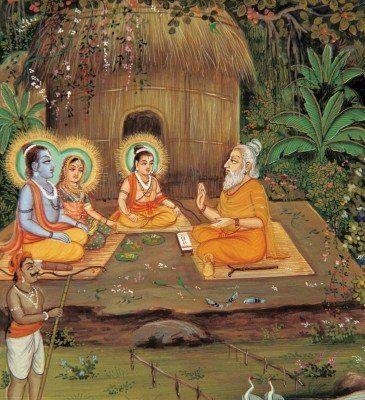
    The journey eventually brought her to the hermitage of Sage Valmiki.

    Valmiki welcomed Sita and gave her protection.

    The forest once again became an important part of Sita’s life.


    Sita Finds Shelter in Valmiki’s Ashram

    At Valmiki’s ashram, Sita lived a simple and peaceful life.

    She was surrounded by sages and nature rather than the luxury of the royal palace.

    Despite the suffering she had experienced, Sita remained strong.

    Her story shows extraordinary courage in the face of loneliness and hardship.


    https://images.openai.com/static-rsc-4/y92z90-trwrvSsJVjSk-95Fy-1T8A_nqaG7TtaVzXU4NSM1_ypakNPXS5SkC_x69XaSL1vSjrUmuuLCOcofrp_BaxgR7yOBC_vp9eh-rNDMq7xxJ-j9hDkCF8ZvdmXK9igfJh784xTygUL_dnxMepaeQDHJguoqlpiE5uV8df-3RgwxloWGE2A45_M3JSwls?purpose=fullsize
    https://images.openai.com/static-rsc-4/87duDoS7w-m1YdMSsHzglwcs102xNB316_A7p2-zU8fb0G-ER1khXpBN3zC-9J-aA0i0SrCVpVM6M-TXw9_BiOzSK7lTAPnxeWYy2_oqQntWxC8kD5y54qd2t8B0oll33tcdSJ8KfW2lwiHuVJi2rfXHOWMvnng1pjUe5v8ZPQcoxZHKRdGbVOG-dBmGjYZH?purpose=fullsize
    https://images.openai.com/static-rsc-4/s0-SlJiBggIISfxUqHxeAR6dFkKV6JFcHglniQCq-3AqN7rUQGJdiiJOR7YGfYpHe2weFY7jnAzX0xed5IntsmxPZOUQqatdKu8rg_xyXtspOeEGY5JNYi5yrks7k4DoOeRJdScMYcyoeTG8LDzSkgJ9GGzXEVNxYKGoIteYIew82bSY51svCPJsBmZ9qAst?purpose=fullsize

    A New Chapter Begins

    During her time at Valmiki’s ashram, Sita gave birth to twin sons.

    Their names were:

    Lava

    Kusha

    The two boys would eventually become important figures in the later story of the Ramayana.

    They grew up under the care and guidance of Sage Valmiki and their mother Sita.


    Lava and Kusha

    Lava and Kusha were raised away from the royal palace.

    They learned:

    🏹 Archery
    📚 Knowledge
    🎵 Music
    🕉️ Spiritual teachings
    📖 The story of Rama

    Valmiki played an important role in their education.

    He also composed and taught them the story of the Ramayana.


    https://images.openai.com/static-rsc-4/od2mDLB0EznKoXYlwEiYEy6VcGyCvjyp2ptWe5_vQOqQf30DCakox4lTihW_M10-SogZ7G5HWLomG25UMx5MFYBlzk13HNTE9fgyDPvv9IB901PtHKu4ljn2bCIxRtv_tV64_6HsgtJ7ZFUNg0a_WBF8IMVvrclhpAq60hF_ogzgbX9rEI1ArVV4tiOF0AGr?purpose=fullsize
    https://images.openai.com/static-rsc-4/-8WSs260cX9n26SH19FyfZyRrW5nv-bEiVZViUIWxFAAXwGPXkiTv8_jEWvL8QDm_oDvzkD5RaND51umTE7MVpN2KDXj1H3bQ1FaFIvWqykV5S4lkmesWDvL56eftOEbCyfGUcTPKG8M_lWDeQqb5RDNcpqULJ5tVJ2onmH1YoruO5635av7uDIbxh0BToHI?purpose=fullsize
    https://images.openai.com/static-rsc-4/TBe82e2pZ0eoFTVApUNH_UGsDKgPlMlkW8eMxD283J6CFIBIN6VtO510mb-p5fitVwpQvLPzrGjD3X_pM7G9RLcdXxFwjblZ8thLOp1460Gt8ITWhex5V0EED73rjqpOVhGvNEd9wAen0UiQQtSnJU93465qRt4-wal5-GFdEM26epB1gLg6m0OTgzAbop6_?purpose=fullsize

    The Boys Who Knew the Story of Rama

    One of the most interesting parts of the later Ramayana is that Lava and Kusha learned the story of Rama without initially knowing the complete truth about their own connection to him.

    They became skilled singers and storytellers.

    Under Valmiki’s guidance, they learned to recite the Ramayana beautifully.

    Their voices would eventually carry the story back toward Ayodhya.


    Meanwhile, Rama Continued His Rule

    Back in Ayodhya, Rama continued to rule the kingdom.

    The ideal of Rama Rajya remained associated with justice, order and prosperity.

    But despite the success of his kingdom, Rama continued to carry personal sorrow.

    His separation from Sita was a deep emotional burden.


    The Ashwamedha Sacrifice

    In the traditional account, Rama later performed the Ashwamedha sacrifice, an important royal ritual.

    During this period, Lava and Kusha would become connected with Rama’s court in an unexpected way.

    Their knowledge of the Ramayana would eventually lead to a remarkable meeting.


    https://images.openai.com/static-rsc-4/OXtyJtdA-p9sQsvRpKmh2rca2m6-ExPPW--PmhcKiJgMigZs8a19e51lZzOY0WtgI8J1_LC_O3lTPwX7zGXswEjqxAmfaAF-wyNqWT4SaqKUmn2pm1eaKL4wJke35RrymLNygQyiMsiBI69YFglTttBgSkKI4mcJAt9Ca5GQxSKKNjk-vkqXq3e665b1eZ-h?purpose=fullsize
    https://images.openai.com/static-rsc-4/TBe82e2pZ0eoFTVApUNH_UGsDKgPlMlkW8eMxD283J6CFIBIN6VtO510mb-p5fitVwpQvLPzrGjD3X_pM7G9RLcdXxFwjblZ8thLOp1460Gt8ITWhex5V0EED73rjqpOVhGvNEd9wAen0UiQQtSnJU93465qRt4-wal5-GFdEM26epB1gLg6m0OTgzAbop6_?purpose=fullsize
    https://images.openai.com/static-rsc-4/gxrdl9hXcymMzFzbZ7oYuMNx16oL_23KOR5wIYF9tXP4vZUBmhWGB-XPIcHdhlLn9tk-T2zb-aAThMCT8qQNDgnmBfiIlIPbsVDvjIiqvTBDL1dc0WQs-HFcJeUNpFs-7CxVkgEIrpQR-RDMptUxjRdmv48jkfcSnEFgggAt3lBejnPpot4lCb2gLji_J7_q?purpose=fullsize

    Why This Part Is Important

    The story of Sita’s exile raises difficult questions about:

    ⚖️ Duty and Personal Happiness

    Rama faces a conflict between his responsibilities as king and his relationship with Sita.

    👑 Responsibility of a King

    The story presents the ancient idea that a ruler must consider the trust and expectations of the people.

    ❤️ Sita’s Strength

    Despite facing another painful separation, Sita remains strong and continues raising her children.

    📖 The Power of Storytelling

    Lava and Kusha become important carriers of the Ramayana through their recitation of the epic.


    A New Generation

    Until this point, much of the Ramayana has focused on Rama, Sita and Lakshmana.

    Now the story begins to move toward a new generation.

    Lava and Kusha will become central to the next chapter.

    Their journey will eventually bring them face-to-face with the kingdom of Ayodhya and with Rama himself.


    Conclusion

    Sita’s exile is one of the most emotional episodes in the later Ramayana tradition.

    After experiencing the hardships of the forest, the dangers of Lanka and the return to Ayodhya, Sita once again finds herself away from the kingdom.

    At Valmiki’s ashram, however, a new chapter begins.

    She becomes the mother of Lava and Kusha, two boys who will grow up to play an important role in the continuation of the Ramayana.

    In the next part, we will explore the story of Lava and Kusha, their education under Sage Valmiki, and how they eventually come to sing the Ramayana before Rama

  • 🕉️ Ramayana – Part 21: Rama’s Exile Begins – The Journey from Ayodhya

    🌿 The Beginning of a Difficult Journey

    The news that Lord Rama had to leave Ayodhya for fourteen years brought great sorrow to the kingdom.

    Rama, however, remained calm.

    He did not blame Kaikeyi or argue with his father. He believed that keeping his father’s word was more important than his own comfort.

    Rama prepared himself to leave the palace and begin his life in the forest.

    But he would not be alone.

    Sita and Lakshmana decided to accompany him.


    👑 Rama Accepts His Father’s Promise

    King Dasharatha was heartbroken.

    He loved Rama deeply and could not imagine his eldest son leaving Ayodhya.

    But Rama understood that Dasharatha had given Kaikeyi two promises.

    Rama told his father that he would fulfill the promise without hesitation.

    For Rama, a father’s word was sacred.

    His decision showed his commitment to dharma, duty and truth.


    🌸 Sita Decides to Follow Rama

    When Sita learned that Rama was going to the forest, she wanted to accompany him.

    Rama initially wanted Sita to remain safely in Ayodhya.

    He explained that life in the forest would be difficult.

    There would be:

    🌲 Dense forests
    🐅 Wild animals
    🌧️ Difficult weather
    🥣 Simple food
    🏕️ No royal comforts

    But Sita did not change her decision.

    She believed that her place was beside Rama, whether life brought happiness or hardship.

    Her determination became one of the important moments in the Ramayana.


    🏹 Lakshmana Also Joins Them

    Lakshmana could not accept the idea of Rama travelling alone.

    He decided to accompany Rama and Sita into the forest.

    Lakshmana was ready to leave behind the comforts of palace life and serve his brother.

    He wanted to protect Rama and Sita throughout their journey.

    Thus, the three began preparing for their departure:

    Rama, Sita and Lakshmana.


    👘 Leaving Behind Royal Life

    Before leaving Ayodhya, Rama gave up the appearance of a prince.

    He prepared to live like a forest-dweller.

    The luxurious life of the palace was now behind him.

    Instead of royal comfort, Rama would face:

    🌳 Forest life
    🥾 Long journeys
    🏹 Challenges
    🌧️ Hardships
    🙏 Spiritual discipline

    This transformation represented a major turning point in the story.


    😢 The People of Ayodhya Follow Rama

    When the people of Ayodhya learned that Rama was leaving, they were devastated.

    Rama was deeply loved by the citizens.

    Many people followed him because they could not bear to see him leave.

    They wanted Rama to return to Ayodhya.

    But Rama knew that he had to continue his journey.

    He had accepted the fourteen-year exile and did not want to break his father’s promise.


    🚗 The Journey Begins

    Rama, Sita and Lakshmana finally left Ayodhya.

    Their departure was filled with sorrow.

    The citizens watched their beloved prince disappear from the city.

    For Ayodhya, this was not an ordinary departure.

    It was the beginning of a fourteen-year separation from the prince they loved.


    🌊 Crossing the River

    As their journey continued, Rama and his companions travelled farther away from Ayodhya.

    They eventually reached the banks of the Ganga River.

    The river represented an important stage in their journey.

    Crossing it meant moving farther away from their former royal life and deeper toward the forest.


    🚣 Guha and the Nishadas

    During the journey, Rama met Guha, the king of the Nishadas.

    Guha had great affection and respect for Rama.

    He welcomed Rama, Sita and Lakshmana and offered them assistance.

    This meeting shows an important idea found throughout the Ramayana:

    True friendship and respect are not determined by wealth, royal status or social position.

    Guha’s devotion toward Rama came from genuine affection.


    🌳 Entering the Forest

    After crossing the river, Rama, Sita and Lakshmana continued toward the forest.

    The peaceful palace life of Ayodhya was now far behind them.

    The forest became their new home.

    They would spend years travelling through forests, meeting sages, facing challenges and learning more about the world beyond Ayodhya.

    But their greatest challenges were still ahead.


    ⭐ Why This Part of the Ramayana Is Important

    Rama’s departure from Ayodhya teaches several important values.

    🙏 Duty

    Rama chooses duty even when it causes personal suffering.

    ❤️ Family

    Sita and Lakshmana willingly leave their comfortable lives to remain with Rama.

    🤝 Friendship

    Guha’s relationship with Rama demonstrates sincere friendship and devotion.

    🕉️ Dharma

    Rama’s decision is guided by his understanding of dharma and his father’s promise.

    💪 Courage

    The three accept an uncertain future without turning away from their responsibilities.


    🌟 A Powerful Lesson

    Sometimes life does not give us the path we want.

    Rama could have fought against the decision and remained in Ayodhya.

    Instead, he accepted the difficult situation and chose to follow what he believed was right.

    The story reminds us that character is often revealed when a person faces difficulties, not when everything is going well.


    📝 Conclusion

    Rama’s exile marks one of the most important turning points in the Ramayana.

    He leaves behind the palace, his position as prince and the comforts of Ayodhya.

    Sita and Lakshmana choose to accompany him.

    Together, they begin a new life in the forest.

    Their journey has only just begun.

    In the next part, we will continue with Rama, Sita and Lakshmana’s life in the forest and their meeting with important sages and people along the way.

  • 🕉️ The Ramayana – Part 7: Bharata Returns to Ayodhya | Dasharatha’s Death and the Meeting at Chitrakuta

    🕉️ The Ramayana – Part 7: Bharata Returns to Ayodhya | Dasharatha’s Death and the Meeting at Chitrakuta

    In Part 6, Rama, Sita and Lakshmana left Ayodhya and reached Chitrakuta after meeting Guha and Sage Bharadwaja.

    While Rama was beginning his forest life, a terrible tragedy was unfolding in Ayodhya.

    Bharata returned to the kingdom.

    But what he discovered shocked him.

    His father, King Dasharatha, was in great distress, and Rama was already far away in the forest.

    Bharata now had to face a painful truth:

    His mother Kaikeyi had asked for Rama’s exile and Bharata’s coronation.

    But Bharata did not want the throne.


    https://images.openai.com/static-rsc-4/jbf57z7uBnGp7-XnzFv5rAJK78A8Oiv6D6NaYhrEyZl2hNogAGSJTHsV7do8cHRcLuLI7XVQdqGQq6fduLtEnSMqN_dGB5rDEs0AmFMes55KhOnXEqitESXKcXl2FjQ8bR4MKLMTXgJp_WvH24cyFfpnybrVUszt7Ff4iMrUvdApT7h8MHXQK_-lcKuefDIh?purpose=fullsize
    https://images.openai.com/static-rsc-4/3WkNBk_N7kP64O8sw5G6UfUiDkIJS7pL18qiexwqPkt3ZU_j78-5GiDsNFnH_vOWbauR9ZNQISF8Owwxyw_u8tuN_z2ouEm_MbMdR0AqPIxerKcB9ftqOdVOmKBEJS78pla99R-Xwqrm_ShrKzrky0NlZ5MscYsUGN0MnMFbSZDkx0QWlvc4Xd6wPwLXyKD-?purpose=fullsize
    https://images.openai.com/static-rsc-4/J-64K56t8m-xQzik69i4H98KvcHG4-wfmCb46kd3ueFwrzkW0NtB5wQXNO7njCZmE8Tm1-z2O7hn_oMBFEPSxzmmdUhXgN3o6vs2UQ_Sfa0J3dh4Fd7q9YxSy_6mQC86NPOqwYtT7cTfLVugylFQ5LU8sQ2KFHWhFpvBRXfT8O6zWkfDvGCcfK9gbH45l2iP?purpose=fullsize

    Bharata Returns to Ayodhya

    Suggested image: traditional Indian artwork showing Bharata returning to Ayodhya and learning about Rama’s exile.


    👑 Bharata Returns to Ayodhya

    Bharata had been away from Ayodhya when the events surrounding Rama’s exile took place.

    When he finally returned, he noticed that the city looked completely different.

    There was no celebration.

    The people were sorrowful.

    The palace was filled with grief.

    Bharata immediately became concerned.

    He asked about Rama.

    But the answer he received was devastating.

    Rama had been sent into the forest for fourteen years.


    😔 Bharata Learns the Truth

    Bharata soon learned everything.

    Rama had been chosen to become heir.

    Kaikeyi had then demanded her two promised boons from Dasharatha.

    The first was for Bharata to become king.

    The second was for Rama to spend fourteen years in exile.

    Bharata was horrified.

    He had never asked for the throne.

    He had never wanted Rama to be exiled.

    And he strongly rejected the idea that he should benefit from Rama’s suffering.

    Bharata was angry with the decision, even though it had been made by his own mother.


    💔 Bharata Confronts Kaikeyi

    Bharata confronted Kaikeyi about what had happened.

    He could not accept that her actions had caused Rama to leave Ayodhya.

    The traditional story portrays Bharata as deeply upset by the situation.

    He did not celebrate his new position.

    Instead, he wanted Rama back.

    This is one of the most powerful aspects of Bharata’s character.

    He had an opportunity to become king.

    But he did not consider the throne more important than his brother.


    https://images.openai.com/static-rsc-4/aE3KiFyAcJwW1Slam-2ep_ktoJoCSQdDq25zmZg1rszkRjABWk-yKAiFm7K6TJXcaS2eKkcr2gRIUnrUPN_RrLqgpBzuN_WWYFMz_3ONO4PV0N1D59Nj4MQeDL2V9TdhGbr-yW741GgQC-svl2Whxt0XurtDQfCAOuODQCaFJxFpVUs18M5VQzACFkSbDBtd?purpose=fullsize
    https://images.openai.com/static-rsc-4/7Cwj8M3O1Y-xFWNd2P_1MyY_tDVcZbAt-0HXYhULK3-mNlw72vlLESiCzPVOkKPSaTXrgDcctyOYySumQRvoeN3ZkYoFODwXcNut86sP-IaZkNef81ZvN8PNMBwipXAve2xnmrbJQR6McoN5t2zZIhPaqQaKm8K3ySRrIwjU8U4qoFvT-lCs8bnB9-VMZDOf?purpose=fullsize
    https://images.openai.com/static-rsc-4/k2Qk_vPh9-9RGyo88GDnJttGBKRCDlPRES6VKDVg_gil51uoSQa7YLoMqJ99hsb1BeBf3oJuBKCvPeisgTOnYL9ms8cB2mzONFZ6Xnal9RRsezioB54EDwaOAZJuEN_sOnfMbVYn0BoOWExNJLJ3KIxDg57fzhXYqOmFXhiZlDHILencwMqRRxhapgmvsuOX?purpose=fullsize

    Bharata Confronts Kaikeyi

    Suggested image: traditional artwork showing Bharata questioning Kaikeyi about Rama’s exile.


    🕯️ The Death of King Dasharatha

    By the time Bharata returned, King Dasharatha had already died.

    Dasharatha’s final days were filled with grief over Rama’s departure.

    The traditional Ramayana connects his death with the intense sorrow he experienced after being separated from his beloved son.

    Bharata was devastated.

    He had lost his father.

    And his elder brother was living in the forest.

    The kingdom was now without its rightful ruler.


    👑 What Would Happen to Ayodhya?

    The kingdom needed leadership.

    The ministers and elders considered the situation carefully.

    Bharata was expected to take the throne.

    But Bharata refused to accept kingship while Rama was alive and in exile.

    Instead, he made a decision:

    He would go to the forest and ask Rama to return.


    https://images.openai.com/static-rsc-4/DntU9w0J2HO16Ih46Rn_u2yZn5VeUPRHfJqofE7lBdC15k1ePWccrc7KdkflBja4DyLHYTJmjTE2eQP-fXWvgg0g-czTTo4k2TZBqOwheKelmcnmEPlCutcCK8Dr94odQ5JjdvN2_T6Mx9mX92r_8CtP4QRceEEN4M52Jk3cqCsnYSHUSsqlrUFhygNMUpgK?purpose=fullsize
    https://images.openai.com/static-rsc-4/J-64K56t8m-xQzik69i4H98KvcHG4-wfmCb46kd3ueFwrzkW0NtB5wQXNO7njCZmE8Tm1-z2O7hn_oMBFEPSxzmmdUhXgN3o6vs2UQ_Sfa0J3dh4Fd7q9YxSy_6mQC86NPOqwYtT7cTfLVugylFQ5LU8sQ2KFHWhFpvBRXfT8O6zWkfDvGCcfK9gbH45l2iP?purpose=fullsize
    https://images.openai.com/static-rsc-4/jz8FbpU62cfn7HOl32kgl4GCmIvd13d1EIgg1RTlLx6RdlPfxv0RI8W9Z5k_wm-vT1Jw-QoU6XIgIdOM0q0JZe5rSUz3_V1AiI8l2Ma7sF9cOCNEsXZgyvqwMlAMFsOzAn_pMt9gIC4VlNY70dLEzDhvNjCEnzavR3C0uyll5xoNh9RpSPAjels6Qf1QCfcl?purpose=fullsize

    Bharata Travels Toward Chitrakuta

    Suggested image: traditional artwork depicting Bharata and his companions travelling toward the forest.


    🌳 Bharata Goes to Chitrakuta

    Bharata did not travel alone.

    Members of the royal family, ministers and other people accompanied him.

    Their destination was Chitrakuta, where Rama was living with Sita and Lakshmana.

    Bharata wanted to meet Rama face-to-face.

    His purpose was clear:

    He wanted Rama to return to Ayodhya and become king.


    ❤️ The Emotional Meeting of the Brothers

    When Bharata finally saw Rama, the meeting was deeply emotional.

    The brothers had been separated under painful circumstances.

    Bharata explained what had happened in Ayodhya.

    He told Rama about the death of Dasharatha.

    Rama was deeply saddened.

    The brothers mourned their father together.

    But Bharata had another request.

    He begged Rama to return to Ayodhya.


    👑 Bharata Asks Rama to Return

    Bharata explained that he did not want the kingdom.

    He believed Rama was the rightful person to rule Ayodhya.

    He wanted Rama to end his exile and return to the kingdom.

    But Rama gave an answer that Bharata did not want to hear.

    Rama refused to break his father’s promise.

    Rama believed that Dasharatha had given his word to Kaikeyi.

    Therefore, Rama had to complete the fourteen years of exile.


    https://images.openai.com/static-rsc-4/m1MW2at0jgXj_ih13Lq0r_LT3zm82kAciagAhsfxcV0eOiM4ywEUfvGvvrrPD8BnrCgJ1ygSc3w8WsmHWhH9AOO0CKqxktrGTN9A4qOquy5rW_lt-BxZh8cPDqBm6Qw8N8P5r1oNz659TRrRIwKta_OpNT7dRc91XChwFcP-81b-hIMed3JpOTxXdYVZu80w?purpose=fullsize
    https://images.openai.com/static-rsc-4/Thm7EZNRnTe8tUBW2sDDHsJ0PuekiHIcxajhKYO69DCZNqNK3MgRVyMgrq-QoB0AN8_7z6MoAjCDH_NxpIylZqTkj6_PK8uat6hBsmrPi-jkplRvEKppqbhPsM9cRkVieXqnrVHiD3eUofhiBQhqkBVQ_Qep8I8EvSLFX56-sZOA3Db5n_JZYODDzPTzrWta?purpose=fullsize
    https://images.openai.com/static-rsc-4/tKG9AnIyIkN4PBEpH9JdfoqGB5M3b2qDmzMoBl7eMzAbi93MyVD2DJlkGg1iACOHeEJgDoN29_duc0aaR4L0L3j5jGcwwZDyru_T6COGPDvrYdqBeTYoK1Q2sWyeVlQDNWfZp9soZzwRDYDNnkglr8GM-gqQoQe_hQNCwsVmcoRYPHpfj4CrHfYhpGGGtFYB?purpose=fullsize

    Rama and Bharata at Chitrakuta

    Suggested image: traditional artwork showing the emotional meeting between Rama and Bharata.


    🕉️ Rama Explains Dharma

    Rama explains that a person’s word carries great importance.

    Dasharatha had promised Kaikeyi the two boons.

    Rama had accepted the consequences.

    Therefore, he could not simply return because the situation had become painful.

    For Rama:

    Keeping a difficult promise was more important than gaining the throne.

    This becomes one of the central moral ideas of the Ramayana.


    👑 Bharata’s Extraordinary Decision

    Bharata still did not want to become king in Rama’s absence.

    So he asked Rama for something that would symbolise his authority.

    Rama gave Bharata his padukas, or sandals.

    Bharata accepted them.

    According to the traditional story, Bharata placed Rama’s sandals on the throne and ruled Ayodhya as Rama’s representative until Rama’s return.

    This is one of the most memorable examples of Bharata’s devotion to Rama.


    https://images.openai.com/static-rsc-4/gDHIKHN1dv-cJUQERFikYbMx_VpnC437enN_HSxLjVpZXCfrGF91156WUOXTTlrlCdYAcWUjSPf2Sj-V1CCXk-prJ8B6JW6JAztrWA9j11WBgVv7jCCtCWBb3SScifTIFSXrcHp_WeS0JhCXOrGFdEhbvAX8ZLwO9pmhGlT5qpeiLm0o7ihX6TTFWiIRtRz0?purpose=fullsize
    https://images.openai.com/static-rsc-4/GTIxPW9n9ZnuCT6ISqETMIPS_RBr_56WIB8akslEmh0jh7u1RQRHrNCPOWezGHjQqVY4--WV-ZJbo9yn4febkknfF0-Q6hdSrtZPLEyKQpsErnMqEUbgzOtBlYResY7UhJlN064iuajKXbVBdCTLsM01LnzZU3x2GycZrM5zkSXm6KAC4L88KXs0LyiQT3UC?purpose=fullsize
    https://images.openai.com/static-rsc-4/5ys1BeJIRaaE8cAoi1HKhefaXwpItEvLY0SLIDrwRDFu_wtADFusk8IKqug5SFlXfzo4XC5zcLfkKrp7TfhF03DrkICQ13yRMTWZw1Rebzdu_KKQ3Ulnmt3dhhNY8ex5tqZufIiMWz8r5Aa0Z2Sujqzzemi9HHQPatRJzj7viOMEHPAneBUx4rMcYyJlQCzP?purpose=fullsize

    Rama Gives His Sandals to Bharata

    Suggested image: respectful traditional artwork depicting Rama giving his padukas to Bharata.


    🩴 The Significance of Rama’s Padukas

    The Rama Paduka episode is deeply meaningful in the Ramayana tradition.

    The sandals represented Rama’s authority.

    Bharata did not see himself as the true king.

    Instead, he considered himself a caretaker of the kingdom until Rama returned.

    This idea highlights Bharata’s:

    • Loyalty
    • Humility
    • Love for Rama
    • Respect for dharma
    • Rejection of personal ambition

    He had the opportunity to enjoy royal power, but he chose to remain devoted to his brother.


    🏡 Bharata’s Life During Rama’s Exile

    Bharata returned toward Ayodhya with Rama’s sandals.

    According to the traditional account, he did not live as a king enjoying royal luxury.

    He waited for Rama’s return and governed as his representative.

    The fourteen-year period therefore became a test not only for Rama, but also for Bharata.

    Rama lived in the forest.

    Bharata lived without claiming the throne as his own.

    Both brothers followed what they believed to be their duty.


    🌟 Why Is Bharata So Important in the Ramayana?

    When people discuss the Ramayana, Rama, Sita, Lakshmana and Ravana are often the first characters that come to mind.

    But Bharata is equally important to understanding the epic’s ideas about family and duty.

    Bharata demonstrates that:

    True love does not always demand possession.

    He could have accepted the kingdom.

    Instead, he waited for Rama.

    He could have blamed Rama.

    Instead, he respected him.

    He could have enjoyed royal power.

    Instead, he treated the throne as belonging to Rama.


    🌳 Rama Continues His Exile

    After Bharata’s departure, Rama, Sita and Lakshmana continue their forest life.

    But Chitrakuta will not remain their permanent home.

    Rama eventually decides to travel deeper into the forest.

    They will visit the hermitages of several sages.

    They will encounter different communities.

    And the story will gradually move toward a much more dangerous phase.

    Rama’s fourteen-year exile has only just begun.


    🕉️ Conclusion

    Bharata’s return to Ayodhya marks one of the most emotional chapters of the Ramayana.

    He discovers Rama’s exile.

    He learns about his father’s death.

    He rejects the throne.

    He travels to Chitrakuta.

    He asks Rama to return.

    But Rama refuses because he wants to honour Dasharatha’s promise.

    Finally, Rama gives Bharata his sandals.

    Bharata accepts them and returns to Ayodhya, determined to wait for Rama.

    ❤️ The brothers separate once again.

    But their bond has become stronger than ever.

    🕉️ To be continued in Part 8: Rama Enters Deeper Into the Forest | Sages, Rakshasas and the Life of Exile

  • 🕉️ The Ramayana – Part 6: Rama, Sita and Lakshmana Leave Ayodhya | Guha, the Ganga and Chitrakuta

    🕉️ The Ramayana – Part 6: Rama, Sita and Lakshmana Leave Ayodhya | Guha, the Ganga and Chitrakuta

    In Part 5, Rama’s coronation was cancelled after Queen Kaikeyi asked King Dasharatha for two boons.

    Rama accepted fourteen years of exile.

    Sita decided to accompany him.

    Lakshmana also refused to leave his brother alone.

    Now the three have left the royal life of Ayodhya behind.

    Their journey into the forest has truly begun.


    https://images.openai.com/static-rsc-4/Zgti1Z5wiPdn61r1z44HRf6hGXpsFUPiF62vuoqctrlHwTcOkIgpym_VTgQebFg1kzz5cooXzzb-tTJAmsqIL_BbBXh7H-_gcqQreMyXVmX2NnUgxVbOADWkUy8blYMcb0kkiUAK7vUFDDyLtynF5XgEuD7677_prXYZ2nogZ-pI2GUlgDLYokMItraBFx1C?purpose=fullsize
    https://images.openai.com/static-rsc-4/ftrwgvfIzTlo8id79i6-p1GD7F3JdNkBiHh97tDsl-GARJGpVmBeQUR1FYXnyOkiE60ssxTcbri_DBQtY2aed5ESrknubjzJMOQrh453veHKxBAsEWVezj3XIvxX1COQka46Z5x3MTWvcO26wIJJbNLzkXIygnyO9Q9rU9Ybez5r36hioVypxUKrtbpSneFx?purpose=fullsize
    https://images.openai.com/static-rsc-4/IbBV7wXKHse3_d4rEuWSb9qTVnJH2RtvkErVRDfrU_nNlXRD-DBNyAkvq9BUYWgWHeJukCEntYyy5NPT3THaO7VFiVOWmd2VPpaRbSSeukk0w6FrWc_racKLiuj4iLIlWrn4ZjHDzyDP8Kv8xnn9AGsvcED9uegxNwb4ih5dzJ8XjDokTWZDZ4douJxj6YGI?purpose=fullsize

    Rama, Sita and Lakshmana Begin Their Exile

    Suggested image: a respectful traditional depiction of Rama, Sita and Lakshmana leaving Ayodhya.


    🚶 The Journey Away From Ayodhya

    Rama, Sita and Lakshmana travelled away from the city.

    The people of Ayodhya were deeply attached to Rama.

    Many citizens followed them because they could not accept that their beloved prince was leaving.

    Rama understood their feelings.

    But he also knew that returning to Ayodhya would mean breaking his father’s promise.

    So he continued the journey.

    Rama had chosen duty over comfort.


    🌙 The People Follow Rama

    As the journey continued, many people remained determined to stay near Rama.

    They were tired and emotional.

    Rama did not want them to suffer because of his exile.

    According to the traditional account, he eventually continued his journey in a way that allowed the citizens to return to Ayodhya.

    The separation was painful.

    The people returned home.

    Rama, Sita and Lakshmana continued toward the forests.


    🛶 Meeting Guha

    The journey eventually brought Rama to the region associated with the River Ganga.

    There they met Guha, the chief of the Nishadas.

    Guha had great affection and respect for Rama.

    When he learned that Rama was going into exile, he welcomed him warmly.

    Guha offered assistance and made arrangements for the travellers.

    This meeting is remembered as an example of friendship that went beyond differences in social position.

    Rama was a prince.

    Guha was a forest-region chief.

    Yet their friendship was based on mutual respect.


    https://images.openai.com/static-rsc-4/mJC54kcf6_3C569PgT42TNqiD6dvb4ZDyhnUJQctuh53aNSWIvKu4wTIkrh-knGHB5uiC9zujJai90QIejYW0Ckm2AXk6pJhtZ1HMIHOYs3Hnt57mprcbA1xR6PRR8TM3Qwtqr6lgoHb5yr40VnQvdmRuog2an75sCOnotlIIXGLkGTSMkmzgR1uZE4BTc6b?purpose=fullsize
    https://images.openai.com/static-rsc-4/um8T8paW_Mi59Fy3g4VrtOgfIw8nhLYkjYKvsfuWwStBuwDSk__C6JubDji_8UHUtgOeu1vChSTtVzfMdFJp_Ga0WKQmX_BabUiVIvFLRZVdqM5VpT4CsI2MU7Q1-oZRjSrVD0lsNA8BcJTBZEoyMr72Q4cFjpB6c3VRIBxcv8kdZcPjplvHQ_MglyWgePGH?purpose=fullsize
    https://images.openai.com/static-rsc-4/eyUeGGN0ftILqm17CIWVymFBzE4DNqyNzMerP6T9-jigXPKbk3yComPEdlYGHrF30uB-z5ohQbuPRxqxE03VGxh1aU3jOPAH5FXORGR_ZrDRSEi_peC0YGJzsJLbrQ3goEbh5OdyD2LOxaGQP9-LEkCds4QIBpfyWIDHdi1KLpnWv3rtR7GA1EVsTFhS7e2F?purpose=fullsize

    Rama Meets Guha

    Suggested image: traditional artwork showing Guha welcoming Rama, Sita and Lakshmana.


    🌊 Crossing the River Ganga

    Guha arranged a boat for Rama, Sita and Lakshmana.

    The three crossed the river and continued their journey.

    The crossing of the Ganga is an important symbolic moment in the story.

    They were moving farther away from the world of royal life.

    Behind them were:

    • Ayodhya
    • The palace
    • Royal comforts
    • The possibility of immediate kingship

    Ahead of them was:

    • The forest
    • Uncertainty
    • A completely different way of life

    🧘 Meeting Sage Bharadwaja

    After crossing the river, Rama and his companions continued toward the hermitage of Sage Bharadwaja.

    The sage welcomed them.

    Rama explained the reason for their journey and his decision to spend fourteen years in exile.

    Bharadwaja advised Rama about a suitable place where they could stay.

    He suggested Chitrakuta, a beautiful region surrounded by forests.

    Rama accepted the advice.


    https://images.openai.com/static-rsc-4/QeS8PU9uilgL7-gOf335qQT0yDpud6sYJUDcbkhDMBq5yszmpARvTFm2MA8_t1YylZzWJ95z9RjRrrp0Y20PlHbcxl-AQEIH7hg6BKTbXAC6EfVkKqunWtwjdoKjSmDuzRzo6hZiyeZfku9Zb8FbfbYlvwNnHfQcgYmKyr-LbE0_txS8jnuhS3LxfC5rk2ub?purpose=fullsize
    https://images.openai.com/static-rsc-4/D_z4GMt30zWGbvn_Apg9974lSHsVazhDg7rsduSlCORRxRqCXCyOddD_cE74oBkt7oPrjZ2wmTvsKP2jy9OtcqUIs3W0UHN2M87GysFa01ZXWMrhVjgvS1WEWSadJWywnoBG8dfDi0wEhlqPMG8lWeVerM74fGFQKDZZfiu8-BiI00-qg5ogVPRQNQ-kAK5l?purpose=fullsize
    https://images.openai.com/static-rsc-4/PpZYqfpcLPlha5dE-aB9t5nwMfVb7YRg10g9jhx74-1WYIMZeAmLqkMD2ofIPAN9cdyeid_lwKrT4N23yJfIneYiofP_3nPKr7cooncWtTYzhtjZzOnCRtxK1adfTcu9yQzqibNYSVKZ9YoCMXrGxgPHN9fkCUWAx8o1WsFXLjbSW7DsKHmOQYduiKvHZ9kA?purpose=fullsize

    Rama at Bharadwaja’s Ashram

    Suggested image: traditional artwork showing Rama, Sita and Lakshmana meeting Sage Bharadwaja.


    🏞️ Journey to Chitrakuta

    Rama, Sita and Lakshmana continued toward Chitrakuta.

    The area was known for its natural beauty.

    It had forests, rivers and hills.

    For people accustomed to palace life, the forest environment was completely different.

    But Rama accepted it peacefully.

    Lakshmana began preparing a place where the three could stay.

    He built a simple dwelling suitable for their forest life.


    🛖 A New Home in the Forest

    Lakshmana worked to create a small parnashala, or forest dwelling.

    It was very different from the palace of Ayodhya.

    There were no royal rooms.

    No luxurious furniture.

    No servants.

    No royal celebrations.

    But Rama, Sita and Lakshmana accepted their new life.

    Their home was now the forest.

    And Chitrakuta became an important place during the early years of Rama’s exile.


    https://images.openai.com/static-rsc-4/0f4CEzmkv_HWV9LJhWis1Wwbqtvb5vtq454VlQlfcbbjEn8nnDkM_gwmrx4u4id1WpW_iz4fH-wFS0PzJZeke3V8W5Qo57v2IljhsimEYjt_o1UYzG9U4VxjrlHrPBAN-LNYLRhNimwvSJnsFJW-7hV1x6CEAgJgNc8XSfj52_iaPkBqAIdj6RZZdytVuo9y?purpose=fullsize
    https://images.openai.com/static-rsc-4/Uin7_zdUqXuss1nrj5aPjj6rRFVU7hkuAsWphUJbaNzoXGCMaw_S2GLUTb8q485N60ZOUjEPxrt7yIZJXpzFwoYSH0X_L8g8m8P7wYEpl7VQ61a3Zh0Y5qsBnwtGj8TDSmn4fmt5o4l5ztFGVk9qpw7mAE1qKzuyNAmzjL6sVjHzr9EYmNdN9I-l7OntUWjp?purpose=fullsize
    https://images.openai.com/static-rsc-4/hHBeI2sZMNSAq16wtKgq-_mKWLoY6giAD5_WKSe_2A3cxtBdbA2MiUTMk7zKLSb7UISW0d8G8O5WXVNVDTnTnGtFvdDCvmqW2u2Su4UEyyMGigh0YoeqiplxL73p8L3073Vf-WpHuDsKGwSY6Hwz2q2SsdPZUwSScut3Jotojc45wJqHuyEmioAdzBs7o3x0?purpose=fullsize

    Rama’s Forest Dwelling at Chitrakuta

    Suggested image: traditional artwork showing Rama, Sita and Lakshmana living in a simple forest hut.


    🌿 Life at Chitrakuta

    At Chitrakuta, the three began adapting to forest life.

    Rama spent time with sages and explored the surroundings.

    Lakshmana remained devoted to protecting Rama and Sita.

    Sita adapted to the simplicity of their new environment.

    Although they had lost the comforts of royalty, their relationship remained strong.

    This part of the story shows an important idea:

    A home is not always a palace.

    For Rama, Sita and Lakshmana, their bond was more important than material comfort.


    😔 What Was Happening in Ayodhya?

    While Rama, Sita and Lakshmana were beginning their new life, Ayodhya was experiencing great sorrow.

    King Dasharatha was devastated by Rama’s departure.

    The king had loved Rama deeply.

    Although he had given Kaikeyi the promised boons, he struggled emotionally with the consequences.

    The palace that had been preparing for Rama’s coronation was now filled with grief.


    💔 Dasharatha and the Pain of Separation

    Dasharatha’s grief became increasingly severe.

    He remembered Rama and the happy years they had shared.

    The king realised that he might never see his son again.

    His emotional suffering became one of the saddest episodes in the story.

    The traditional Ramayana connects this suffering with an earlier event in Dasharatha’s life — an incident involving a young man named Shravan Kumar.

    That story explains why Dasharatha believed he was experiencing the consequence of an old curse.

    We will explore that story in a later part so that the main sequence of Rama’s journey remains clear.


    👑 What About Bharata?

    At this time, Bharata was away from Ayodhya.

    He had been staying with his maternal relatives.

    He did not know what had happened.

    He had no role in Kaikeyi’s demand for Rama’s exile.

    When Bharata eventually returned and discovered what had happened, he was shocked.

    He was deeply distressed that Rama had been sent away.

    Bharata’s response will become one of the most important examples of loyalty in the Ramayana.


    🕉️ Why Is Chitrakuta Important?

    Chitrakuta is an important location in the traditional story because it becomes one of Rama’s first major places of residence during exile.

    It represents the transition between two worlds.

    🏰 Ayodhya

    Royal life, family and responsibility.

    🌳 Chitrakuta

    Forest life, simplicity and spiritual surroundings.

    Rama is beginning to experience the reality of exile.

    But the peace of Chitrakuta will not last forever.


    🌟 The Next Great Turning Point

    Bharata is returning to Ayodhya.

    He will learn the truth about Rama’s exile.

    He will confront the situation created by Kaikeyi.

    And instead of celebrating his unexpected opportunity to become king, Bharata will make a very different choice.

    He will decide that Rama must return.

    Bharata will travel to the forest to meet his brother.

    And what happens when the two brothers meet at Chitrakuta is one of the most emotional episodes of the Ramayana.


    🕉️ Conclusion

    Rama’s journey has taken him far from the palace of Ayodhya.

    He has met Guha.

    He has crossed the Ganga.

    He has received guidance from Sage Bharadwaja.

    And he has established a simple home at Chitrakuta with Sita and Lakshmana.

    But while Rama is adapting to forest life, Ayodhya is drowning in sorrow.

    Bharata is about to discover the truth.

    And his reaction will show just how deeply he loves and respects his elder brother.

    🕉️ To be continued in Part 7: Bharata Returns to Ayodhya | Dasharatha’s Death and the Journey to Chitrakuta

  • 🕉️ The Ramayana – Part 5: Rama’s Coronation, Kaikeyi’s Two Boons and the Beginning of Exile

    🕉️ The Ramayana – Part 5: Rama’s Coronation, Kaikeyi’s Two Boons and the Beginning of Exile

    In the previous part, Rama and Sita were married in Mithila after Rama successfully completed the great bow challenge.

    The royal families of Ayodhya and Mithila were united, and Rama returned to Ayodhya with Sita.

    Everything seemed peaceful.

    But the greatest turning point in Rama’s life was approaching.

    King Dasharatha was growing older, and he began thinking about the future of Ayodhya.

    His decision would make the people of the kingdom extremely happy.

    👑 Dasharatha decided to prepare Rama for the throne.

    But inside the palace, an old promise was about to change everything.


    https://images.openai.com/static-rsc-4/d47Nb8qDqZkmppLYZqPM_8EeRE7CA-2zSoH5eq15PSjwg8o0HtJFOEmgl10oyKcX6OwhvNo1CbFw9lJgmsi_oIQf6GKnv46rK9_JQ6HTn7GfSeQc7palG365Cr_qXhjZ9F51oIcYs00tMRkCZS4IuGahAt2OZDt-RthYdEZTw9g-uAAKOu_quyu_-66rd2h0?purpose=fullsize
    https://images.openai.com/static-rsc-4/E0DCVhvoQiCaw1-q_p4EnXow9ThSdmpI_aRbTSlsWQThUfyt9uJxJ7mwR3UyYndUvLHfloTHQAyRe4LT6t1W78cG5oHKxAKnguLvFFL1XRFH5rwu9gw2SsJ6psFE0Rrddrfa8lm7Pjb1ywG1W84ZuaweUfEczWWLMZn4TH76MmxYAMLZTmmjQAKbCjlsPysO?purpose=fullsize
    https://images.openai.com/static-rsc-4/CrIP-Hqj0_oh0oE0n7hWiGOYqwDxY-lS8dd0Wo2IJjNAA22zJjSrZYTYP38-1Y4SmbvtR-B8-ES92SheIBpb8RuVejn3m0LUHYiFJP5YeSOieLAPum7OVrhT1jokER7nZjCjep9JKJAM7cHLSStFoMa5Xxxli3OoGVr2zHTTiPhUqYBi8joZsVZurxgoTEbw?purpose=fullsize

    Rama and King Dasharatha in Ayodhya

    Suggested image: respectful traditional artwork showing Rama with King Dasharatha in the royal court.


    👑 Dasharatha Chooses Rama as Heir

    King Dasharatha had ruled Ayodhya for many years.

    As he grew older, he wanted to ensure that the kingdom would have a capable successor.

    Among his sons, Rama was deeply respected.

    The people of Ayodhya admired him for his character, discipline and sense of duty.

    Dasharatha therefore decided that Rama should be made Yuvaraja, or heir apparent.

    When the news spread through Ayodhya, people celebrated.

    The city began preparing for the ceremony.


    🎉 Ayodhya Prepares for Rama’s Coronation

    The people were filled with happiness.

    The streets were decorated.

    The royal palace was prepared.

    People looked forward to seeing Rama take his place as the future ruler of Ayodhya.

    For Rama, however, the announcement was not simply a moment of personal achievement.

    He understood that becoming heir meant accepting a greater responsibility toward the kingdom.

    Sita also prepared for the important occasion.

    Everything seemed to be moving toward a joyful coronation.

    But then someone heard the news.

    Manthara.


    https://images.openai.com/static-rsc-4/7YXZ2DxWgEIEyvBBy1JHVomMh2rP_wm0lqnl6DDrRWmCz4MbqFYf7Yr4g3U-AtqsMY12CHiePPyMUdOPrHZp8SuC-3fuhu1SeNTkECyVSrWZ6LvRgyZ5gu2ZbDqtxDu6PVS5PtrA0tet70PiNLJFnFaifZN1DTWRsJCDDaR-aIGg54MSDurr6jkAEWlPm4Yk?purpose=fullsize
    https://images.openai.com/static-rsc-4/egCMESBJvSIpWgQhGaWeyJ_h5c0DC0dJVF_afU4LG4bDzw-F8YxgAxsj750mh3W6Ff6jagw5F11HNw2UWqNatc6JxcYloITKkKKXvUgWLvY_dsr0di2AqFfDT_UtiN7C_eyixpnwx9U-ksmfkiB7pG8rRY7QMgLCH5kTzZYUBKAGAsTjO2hfdpSNd7FVcyLT?purpose=fullsize
    https://images.openai.com/static-rsc-4/Xbc4LhaqdHRl3uND1HfQ6v0SzK39gDuYKfCK2RI-vVoKAP9668JJ_OxLVfGcBILoIQ6ujhgDtp2Hxy0vFxgMvr_Sjv0yaoZtp4tf4rK5UEF6Jp9lZivGxhncbNMKitMFdZizRPzAgGAwp8aH3pGlKfk26fX2YB3KvwR4dx6HGtzlZxUKevLe9RrKgP1YOpTR?purpose=fullsize

    Manthara and Queen Kaikeyi

    Suggested image: traditional Indian artwork showing Manthara speaking with Queen Kaikeyi.


    👸 Who Was Manthara?

    Manthara was associated with Queen Kaikeyi’s household.

    When she learned that Rama was going to be made heir, she became deeply concerned about what this might mean for Kaikeyi and her son Bharata.

    She approached Kaikeyi and began speaking about the future.

    According to the traditional story, Manthara convinced Kaikeyi that Bharata’s position would be weakened if Rama became king.

    At first, Kaikeyi was happy about Rama’s coronation.

    But Manthara’s words changed her thinking.


    🧠 Kaikeyi Remembers Two Boons

    This is one of the most important moments in the entire Ramayana.

    Years earlier, Kaikeyi had helped Dasharatha during a difficult situation.

    Dasharatha had been grateful to her and had promised to grant her two boons whenever she wished.

    Kaikeyi had not used them at that time.

    Now she remembered those promises.

    And she decided to use them.


    😔 The Two Boons

    Kaikeyi asked Dasharatha for two things.

    First boon:

    She wanted Bharata to become king instead of Rama.

    Second boon:

    She wanted Rama to spend fourteen years in exile in the forest.

    For Dasharatha, the request was devastating.

    He could not believe what Kaikeyi was asking.

    The king had been preparing for Rama’s coronation.

    Now he was being forced to choose between:

    His love for Rama

    and

    His promise to Kaikeyi.


    https://images.openai.com/static-rsc-4/3WkNBk_N7kP64O8sw5G6UfUiDkIJS7pL18qiexwqPkt3ZU_j78-5GiDsNFnH_vOWbauR9ZNQISF8Owwxyw_u8tuN_z2ouEm_MbMdR0AqPIxerKcB9ftqOdVOmKBEJS78pla99R-Xwqrm_ShrKzrky0NlZ5MscYsUGN0MnMFbSZDkx0QWlvc4Xd6wPwLXyKD-?purpose=fullsize
    https://images.openai.com/static-rsc-4/Zi_FdW08CHzGMgnKIPCDPCZ_7mQOB_jXQUZRrVUW_EAHBz7xToGhaX7AmyFTELbtYkrTXS2zdeUDE21D0l6dS06Hj5sJWJ4o0WSOpvIf4HZzOuAqN5rc4Pti7kB9_fM2ia98tA34B3FJNfDsJnQG0qmAyOx1GJE2ieEDMUnpI1tMANLUCom5VMJQQSOG6Tfw?purpose=fullsize
    https://images.openai.com/static-rsc-4/4xE_lphws8oAssKj8q5HxB0QkVfM6jUm-qjQdr67f-k8KGBMx3923foe15gXySHzsqzIm-78AzjI7MYWI75ZEQVXS234D9dDsdb2nxingsUR5VAb8iNBxpy0kCCyJu4s-9eFdlnj83nm91-4dqSjUan_t82NxdaMMg-NfJtuDGFdgPlJVPTrjtBND4GMtSiO?purpose=fullsize

    Kaikeyi Asks for the Two Boons

    Suggested image: traditional artwork showing the emotional conversation between Dasharatha and Kaikeyi.


    💔 Dasharatha Is Heartbroken

    Dasharatha was devastated.

    He loved Rama deeply.

    He had spent years preparing for Rama’s future.

    Now Kaikeyi was demanding that Rama leave Ayodhya.

    Dasharatha tried to reason with her.

    But Kaikeyi remained firm.

    The king was trapped by his own promise.

    He had given his word.

    And in the traditional understanding of dharma, a king’s promise carried enormous importance.

    Dasharatha eventually had to accept the consequences.


    🕉️ Rama Hears the News

    When Rama learned what had happened, he did not react with anger.

    Instead, he accepted the decision.

    For Rama, his father’s promise was more important than his own desire to become king.

    He did not fight for the throne.

    He did not blame Kaikeyi.

    He did not attempt to create a political struggle.

    Instead, he decided to leave Ayodhya for fourteen years.

    This is one of the most important examples of Rama’s commitment to duty in the epic.


    https://images.openai.com/static-rsc-4/ha8mRWNISCwkzbm_cRAPlyiRtg4-4CcnTj0BS7M4XrW8S8r4XhljV5JiGWCvKzec2jYTHHMJC0JPuh6TuJRPigAHm1xqCLTwF70BytpbeJWJ1xGvImBSPmUZQcc57BITSvDENkkILezkuBqHRFcsbzbJ25G0xgnv19gvk5Bi_D6sk5vWTrAQUBEwPy_eulnW?purpose=fullsize
    https://images.openai.com/static-rsc-4/crKWDN7lixbCEgV81W7Ukmujlq570izhMrSsuC6TKpPk0sM1T00I1Ge1fK3Lgi_ko9SrxxzK7V1YHNWRLjmFMkveDUbMoXVSZBpKEDFqKcZqY3cOGV3Ril_X9K1m3_A4i-W8dTlW4W_Z6qDpIwdP_-0swiRHG-TaUuMl61FtL4j7eAAax4TbqNBPiCsY_4UR?purpose=fullsize
    https://images.openai.com/static-rsc-4/I5H36gQnk30DZt2BBNjSf89c58UvVTwMww5fTlna2mJWUjjFHpdBiFpsi9FXV6ng_f4Kvz4C0e_aee7ZDGkOwDpDPqrR-CWnJFIGSoNpcqT1yFi3rtMbkl1koMZ6qWTyybAFjQwCoVRsRueS8Jlg9TSBVPZqe8I8-Iadlc0nVMASAjvqn3_enJLpLfUJiy9B?purpose=fullsize

    Rama Accepts Exile

    Suggested image: respectful traditional artwork showing Rama calmly accepting the decision to go into exile.


    👸 Sita Refuses to Stay Behind

    When Sita learned that Rama was going to the forest, she made an important decision.

    She wanted to accompany her husband.

    Rama initially tried to explain the difficulties of forest life.

    The forest would not be like palace life.

    There would be no royal comforts.

    There could be dangerous animals, difficult weather and uncertain living conditions.

    But Sita remained determined.

    She chose to share Rama’s life, whatever difficulties came with it.

    Her decision became one of the defining moments of her character in the Ramayana.


    🏹 Lakshmana Also Chooses Exile

    Lakshmana also refuses to remain in Ayodhya.

    He wants to accompany Rama and protect him and Sita.

    Thus, the three prepare to leave:

    Rama + Sita + Lakshmana

    They are leaving behind:

    • The royal palace
    • Wealth
    • Comfort
    • Power
    • The throne of Ayodhya

    And they are entering the forest.


    https://images.openai.com/static-rsc-4/cOGvliOfVQmURj9bbAjt7Dai3GEDRm0Gb2_h_Ut2W3LSY7CDnPawXPnDgO5jEGNPrQm8KIg133Zx92EOAh009IhFe7-D5cimyZYKDJkLZLy1Eawg59Y_YiCImGqQvLTZWKJINfEgnC8I6v5sqPPabDPIPR38rWVASmmrIAIIMwTucn81tOLcAaMOJcG8UVgp?purpose=fullsize
    https://images.openai.com/static-rsc-4/sVouZDMsihN1tdagNy8u_4lBAM5V5qTfU5axnshtcwnf4Doo1Pp8Xao2k3wTpyLNu2bFzCY4GJA_iwBLyg3XB5loqaf8LEbH4NV6k2e_9M3eEXI7HR8kP8SQAjIZP8-e_sZc6ZFVNka8EMhHuGTFxs5Ym7F6I8e6q2DyZ_abhDrAg4i2VLtTEjeCOK_vMC0u?purpose=fullsize
    https://images.openai.com/static-rsc-4/kctvlHeehdQ_qGdo9Qn8TQwwOd6fxdEbryg8iNjARkwepPdjlOJ_Fr3K_EgtEcF4jTP0q0s3ydFRWr3K51qLR6OoxzC2yWSyIxMDwWD28Fstmom5DVKp75cjeUMzNmu3ywBO3TpDVz4gjpVQUIhZ2u0Z_gN5NZuy_4oTuhfn_sZsleFEIzGsqLA8I6XaBjzN?purpose=fullsize

    Rama, Sita and Lakshmana Leave Ayodhya

    Suggested image: traditional artwork showing the three beginning their journey into exile.


    😭 Ayodhya Says Goodbye to Rama

    The news of Rama’s exile spreads throughout Ayodhya.

    The people are heartbroken.

    They had been preparing to celebrate his coronation.

    Instead, they are watching their beloved prince leave the city.

    Many people follow Rama because they cannot accept his departure.

    The atmosphere changes completely.

    A city that had been preparing for a celebration becomes a city filled with sorrow.


    💔 Dasharatha Cannot Bear the Separation

    For Dasharatha, the departure of Rama is almost unbearable.

    He knows that he is losing his beloved son for fourteen years.

    The king’s grief becomes overwhelming.

    The relationship between Dasharatha and Rama is one of the emotional centres of this part of the Ramayana.

    The king’s earlier promise has now produced a consequence he never imagined.


    🚶 The Journey Begins

    Rama, Sita and Lakshmana begin their journey away from Ayodhya.

    They travel toward the forest.

    Their lives are changing completely.

    Rama is no longer travelling as a prince preparing for a coronation.

    He is now living as an exile.

    Sita has left the palace to share his fate.

    Lakshmana has chosen to remain beside his brother.

    The royal family has been separated.

    But Rama’s great journey has only just begun.


    🌟 Why Is This Chapter So Important?

    This part of the Ramayana contains several powerful themes.

    🕉️ Dharma

    Rama accepts a painful duty rather than breaking his father’s promise.

    ❤️ Love

    Sita chooses to share Rama’s hardships.

    👬 Brotherhood

    Lakshmana refuses to abandon Rama.

    👑 Power and Responsibility

    Rama gives up a throne rather than creating conflict.

    😔 The Consequences of Promises

    Dasharatha’s old promise to Kaikeyi changes the future of the entire kingdom.


    🤔 What Happens Next?

    Rama, Sita and Lakshmana are now travelling away from Ayodhya.

    Their next journey will bring them to the River Ganga.

    There they will meet an important figure named Guha, the chief of the Nishadas.

    They will also encounter the sage Bharadwaja and eventually settle at Chitrakuta.

    Meanwhile, events in Ayodhya will take a tragic turn.

    King Dasharatha’s grief will become unbearable.


    🕉️ Conclusion

    Rama’s coronation was supposed to be one of the happiest days in Ayodhya.

    Instead, an old promise changed everything.

    Kaikeyi asked for two boons.

    Bharata was to become king.

    Rama was to spend fourteen years in the forest.

    Rama accepted the decision.

    Sita chose to accompany him.

    Lakshmana followed his brother.

    And the prince who was supposed to become king walked out of Ayodhya as an exile.

    The journey into the forest has begun.

    🕉️ To be continued in Part 6: Rama, Sita and Lakshmana Enter the Forest | Guha, the Ganga and Bharadwaja