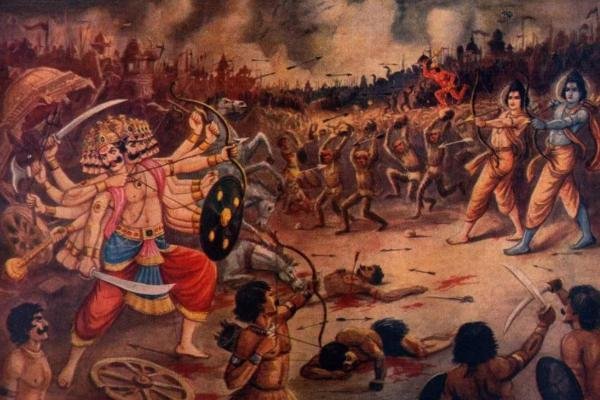
In Part 22, we saw the great war of Lanka, the defeat of Ravana, the reunion of Rama and Sita, and their journey back to Ayodhya.
Now a new chapter begins.
Rama returns to his kingdom after fourteen years of exile.
But what happened after his return?
How was Rama crowned?
What does Rama Rajya actually mean?
And why is the idea of Rama’s rule still remembered today?
Let’s explore.


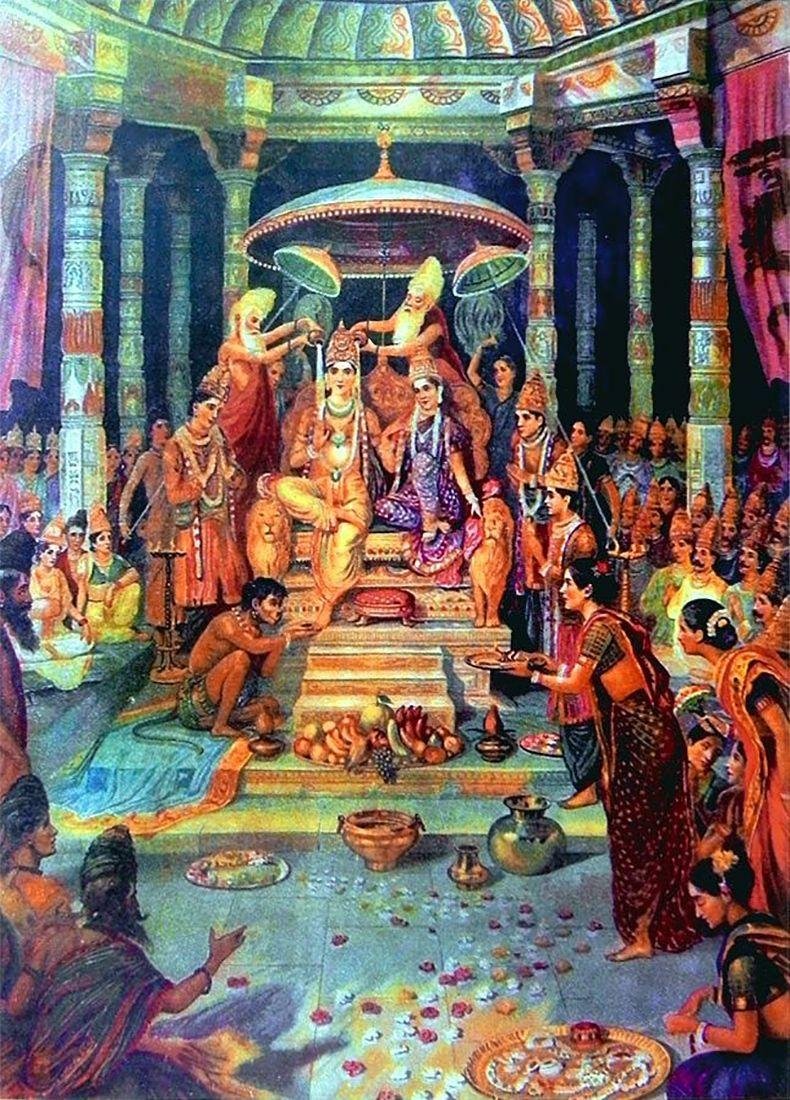
Rama’s Coronation
Suggested image: traditional Indian artwork of Rama’s coronation with Sita, Lakshmana and Hanuman.
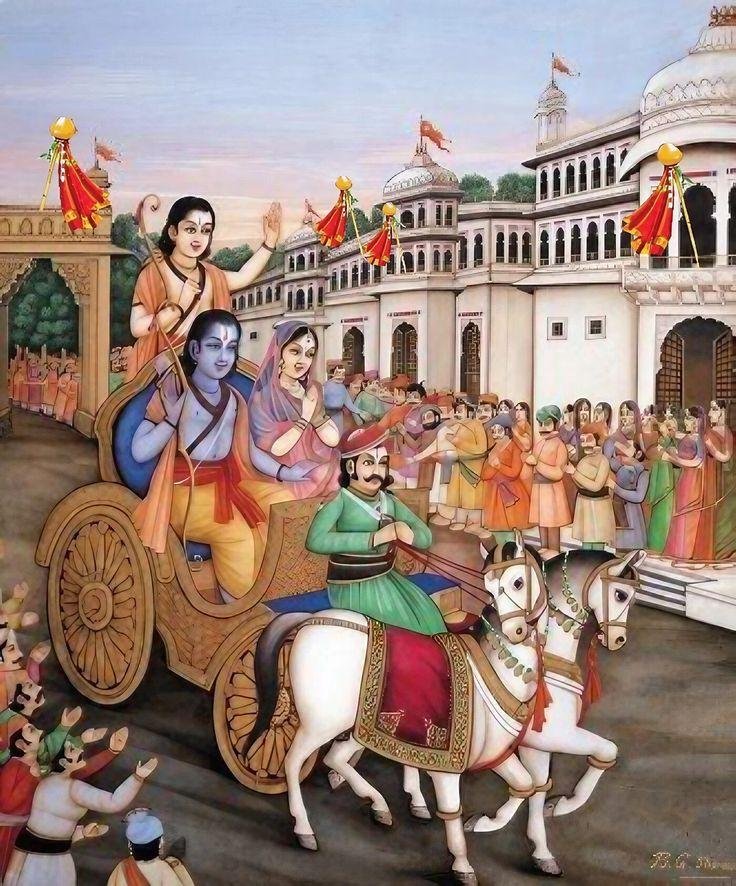
🏠 Rama Returns to Ayodhya
After defeating Ravana and rescuing Sita, Rama begins his journey back to Ayodhya.
He is accompanied by Sita and his loyal companions.
The people of Ayodhya eagerly wait for his return.
For fourteen years, Rama has been away from the kingdom.
Now the long wait is finally over.
🪔 The Joyful Return
Rama’s return becomes a moment of celebration.
The people welcome him with happiness.
The story of Rama’s return is traditionally associated with the festival of Diwali in many Indian traditions.
Homes are decorated with lamps.
The darkness is replaced with light.
The return of Rama becomes a symbol of hope and victory.


Rama’s Return to Ayodhya
👑 Rama’s Coronation
Rama is crowned king of Ayodhya.
This event is traditionally known as Rama Pattabhishekam.
Sita becomes queen.
Lakshmana continues to remain close to Rama.
Hanuman and the other allies who helped Rama also become part of this memorable occasion.
For Rama, the coronation is not simply a royal celebration.
It marks the beginning of his responsibility as a ruler.
⚖️ What Is Rama Rajya?
The term Rama Rajya is traditionally associated with the ideal rule of Rama.
The basic idea is that a kingdom should be governed with:
- Justice
- Responsibility
- Compassion
- Honesty
- Good administration
- Protection of people
- Respect for dharma
Rama is remembered as a ruler who placed great importance on his responsibilities.
🌟 Why Is Rama Rajya Considered an Ideal?
Rama’s life is filled with difficult decisions.
Even before becoming king, he accepts exile because of his commitment to his father’s word.
Later, as king, he understands that ruling a kingdom involves responsibilities beyond personal happiness.
This creates an important idea:
A ruler’s responsibility is greater than personal comfort.
👨👩👧👦 The Welfare of the People
Traditional descriptions of Rama’s reign portray Ayodhya as a prosperous and peaceful kingdom.
The people are described as living without major fear and suffering.
The ideal ruler is expected to listen to the concerns of the people and work for their welfare.
This idea becomes an important part of the traditional image of Rama Rajya.


Ayodhya Under Rama’s Rule
🧑⚖️ Dharma and Kingship
One of the central ideas associated with Rama is Dharma.
Dharma can have different meanings depending on context, including duty, righteousness, moral responsibility and proper conduct.
For a king, dharma means taking responsibility for the kingdom and its people.
Rama’s story repeatedly places this responsibility at the centre of his decisions.
🛕 Rama as an Ideal King
Rama is traditionally described as Maryada Purushottama.
The phrase is generally understood as referring to Rama as an ideal person who follows righteous conduct and moral boundaries.
His kingship therefore becomes more than political leadership.
It becomes an example of how a ruler should behave.
❤️ Rama and His People
The traditional ideal of Rama Rajya emphasises a strong relationship between ruler and people.
The king is not supposed to rule merely for personal benefit.
Instead, he is expected to protect the kingdom and work for the welfare of society.
This principle is one reason the concept has remained influential for centuries.
🕊️ Peace and Prosperity
Traditional descriptions of Rama Rajya present Ayodhya as a prosperous kingdom.
People are described as living peacefully.
Agriculture and trade are associated with prosperity.
Families are able to live safely.
The kingdom is presented as orderly and stable.
These descriptions form part of the idealised image of Rama’s reign in later retellings and traditions.
🌳 A Kingdom Connected With Nature
The traditional vision of a prosperous kingdom also includes healthy surroundings and abundant natural resources.
Rivers, forests, farms and animals form part of the wider world of Ayodhya.
A successful kingdom is not only about wealth.
It is also about the wellbeing of people and the environment around them.
🧠 Rama Rajya and Leadership
The idea of Rama Rajya provides several lessons about leadership.
1️⃣ Responsibility
A leader must accept responsibility for decisions.
2️⃣ Justice
People should be treated fairly.
3️⃣ Self-control
Personal emotions should not completely control important decisions.
4️⃣ Service
Leadership should involve service rather than selfishness.
5️⃣ Trust
A kingdom depends on trust between its ruler and people.
🌺 Sita as Queen
Sita’s return to Ayodhya marks another important part of the story.
She becomes queen alongside Rama.
Her own journey has been extraordinary.
From Mithila to the forest, from Lanka back to Ayodhya, Sita has experienced some of the most difficult events in the epic.
Her strength remains an important part of the Ramayana tradition.
🐒 Hanuman’s Place in Rama’s Life
Hanuman remains one of Rama’s most loyal companions.
His devotion is one of the most celebrated relationships in the epic.
Hanuman does not seek the throne.
He does not seek wealth.
His greatest happiness is traditionally presented as being in Rama’s service.
That is why Hanuman’s devotion remains so important in Indian culture.


Rama, Sita and Hanuman
📖 Why Is Rama Rajya Still Discussed?
The idea of Rama Rajya has continued to influence Indian thought and culture.
People have used the phrase to describe an ideal society based on justice, honesty, welfare and responsible leadership.
Its meaning has also been interpreted differently by different people and traditions.
For some, it represents a spiritual ideal.
For others, it represents ethical governance.
For many, it simply means a society where people can live with dignity and security.
🌟 Rama Rajya Is More Than a Kingdom
The deeper message is not simply about one ancient city.
It is about an ideal.
A society where:
Justice matters.
People’s welfare matters.
Leaders accept responsibility.
Power is combined with morality.
Dharma is valued.
That is why the concept has survived for generations.
🪔 From Darkness to Light
There is also a beautiful symbolic connection between Rama’s return and the lighting of lamps.
Light can represent:
✨ Hope
✨ Knowledge
✨ Goodness
✨ Victory
✨ A new beginning
Rama’s return to Ayodhya is therefore remembered not only as the return of a king but also as the beginning of a new chapter.
⚠️ The Difficult Side of Rama’s Rule
The Ramayana is not a simple story where everything becomes perfect after Rama becomes king.
The later story includes difficult events involving Sita and public opinion.
Rama faces painful choices between his personal relationship with Sita and what he understands as his responsibility as king.
These episodes have been interpreted in many different ways.
It is important to recognise that different Ramayana traditions tell and understand these events differently.
🌺 Rama’s Legacy
Rama’s influence extends far beyond the story itself.
His character appears in:
- Indian literature
- Temple traditions
- Classical and folk theatre
- Dance
- Music
- Paintings
- Festivals
- Regional Ramayana traditions
- Popular storytelling
The story has also travelled beyond India and influenced cultures across Asia.
🌏 Rama Around the World
Versions and adaptations of the Ramayana have been found across South and Southeast Asia.
Stories connected with Rama appear in countries and cultural traditions including:
🇮🇳 India
🇳🇵 Nepal
🇱🇰 Sri Lanka
🇮🇩 Indonesia
🇹🇭 Thailand
🇰🇭 Cambodia
🇱🇦 Laos
🇲🇲 Myanmar
Each tradition can have its own style, characters, details and interpretations.
This makes the Ramayana one of the world’s most influential epic traditions.


Ramayana Beyond India
🧭 What Can We Learn From Rama Rajya?
The idea of Rama Rajya can be understood as a reminder that leadership is a responsibility.
A good leader should not ask only:
“What can I gain?”
Instead:
“What can I do for the people?”
This simple idea is one of the reasons Rama’s story continues to inspire people.
🌟 7 Lessons From Rama Rajya
🏹 1. Duty Comes With Power
Leadership brings responsibility.
⚖️ 2. Justice Matters
A society needs fairness and order.
❤️ 3. People Matter
A kingdom exists for its people.
🧠 4. Decisions Need Wisdom
Difficult situations require careful thinking.
🙏 5. Humility Is Important
A ruler should not allow power to become arrogance.
🕊️ 6. Peace Is Valuable
A prosperous society needs stability.
🌱 7. The Future Matters
Good governance should protect the wellbeing of future generations.
🕉️ Conclusion
Rama’s return to Ayodhya marks the beginning of a new chapter in the Ramayana.
After fourteen years of exile, Rama becomes king.
His reign becomes associated with the ideal of Rama Rajya — a vision of governance based on dharma, justice, responsibility and the welfare of the people.
But the story also reminds us that leadership is not easy.
A king must make difficult choices.
A ruler must balance personal feelings with public responsibility.
That complexity is one reason the Ramayana continues to be discussed even today.
👑 Rama is remembered not simply because he became a king.
❤️ He is remembered because of the ideals associated with the way a king should live and rule.
🌟 NEXT PART
Part 24: Lava and Kusha | The Story of Rama’s Sons and Their Connection to the Ramayana
In the next part, we’ll explore the fascinating story of Lava and Kusha — their birth, life in Valmiki’s ashram, education, learning the Ramayana, meeting Rama and the emotional events that followed.