Ashoka is a symbol of peace and righteousness in Indian history.
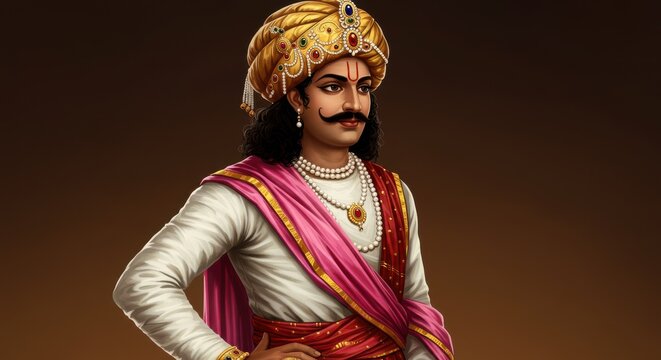
Many kings have ruled India throughout its history, but there is no doubt that Ashoka stands out as one of the greatest emperors among them. He was not merely a ruler of the Mauryan Empire; he is also recognized globally for championing and practicing the principles of peace, non-violence, and righteousness. Although his life began with military conquests—during which he annexed numerous kingdoms—he ultimately gifted the world a message of peace; it is for this reason that he is known as “Ashoka the Great.”

Ashoka was born around 304 BC. His father was Bindusara, and his grandfather was Chandragupta Maurya; Bindusara had further expanded the Mauryan Empire established by Chandragupta. From a young age, Ashoka was brave and intelligent, and he acquired great proficiency in the art of warfare. After Bindusara’s death, a struggle for power arose among the princes. Overcoming numerous challenges, Ashoka emerged victorious and was crowned Emperor of the Mauryan Empire in 268 BC.
An incident that changed Ashoka’s life
The Kalinga War was the most significant turning point in Ashoka’s life. Indeed, hundreds of thousands of people perished in this war, and thousands more were wounded. Countless families were left destitute, and many lives were ruined. Witnessing the immense destruction and devastation firsthand, Ashoka was deeply pained and filled with profound remorse. Vowing never to wage war again, he dedicated himself to ruling for the welfare of his people.

After the Kalinga War, Ashoka abandoned the path of warfare and embraced Buddhism. He was deeply influenced by the teachings of Gautama Buddha and subsequently dedicated his life to principles such as Dharma, non-violence, kindness, compassion, and equality. He also implemented measures to ensure that the people of his empire lived in peace.

Ashoka taught the people some important values: 1. Practice non-violence. 2. Love one’s parents. 3. Respect teachers. 4. Treat all religions equally. 5. Help the poor. 6. Show compassion towards animals. 7. Live honestly.

Ashoka undertook numerous welfare measures for the people. He constructed roads across the country, planted trees for travelers, dug wells, and built hospitals. He provided care for both humans and animals and appointed officials to address the people’s grievances. Ashoka had his teachings on *Dhamma* inscribed on rock edicts and pillars.
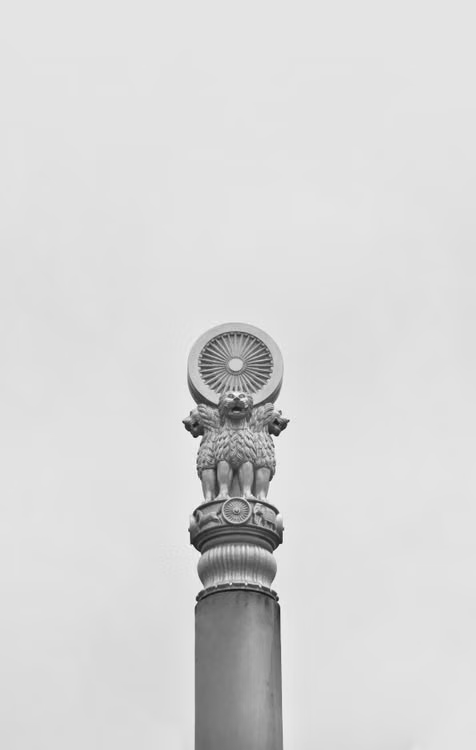
The Lion Capital of Sarnath is the most significant among the pillars erected by Ashoka; the four lions atop this pillar serve as India’s national emblem today. The blue-colored wheel with 24 spokes, located in the center of the Indian national flag, is known as the Ashoka Chakra; it symbolizes righteousness, justice, discipline, and continuous progress. Ashoka propagated Buddhism not only within India but also to countries such as Sri Lanka, Nepal, Myanmar, and Thailand. He sent his son, Mahendra, and daughter, Sanghamitra, to Sri Lanka to spread the Buddhist faith. Ashoka placed great importance on the welfare of his people, promoted peace and non-violence, and advocated the message that all religions are essentially the same. He transformed India into a magnificent empire on the global stage.


Ashoka passed away in 232 BC. Even after his death, the values he propagated—such as peace, righteousness, and non-violence—remain ideals for the world today. He was a great emperor in Indian history whose legacy is unforgettable. Ashoka was a visionary leader who chose the path of peace after realizing that war yields nothing but the loss of life and destruction. That is why he is remembered in history as the “Emperor of Peace.”

Leave a Reply