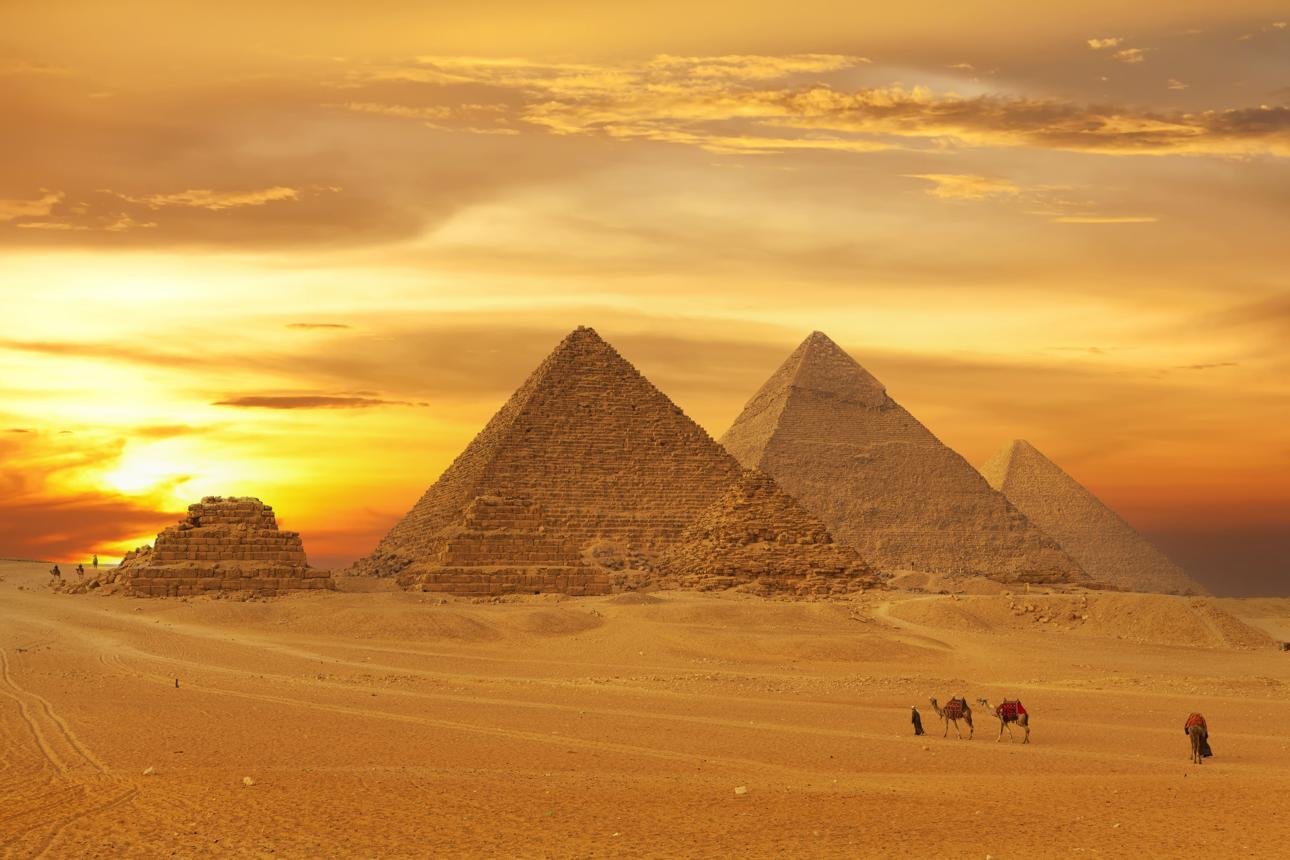
Egypt is one of the most fascinating countries in the world.
It is famous for its ancient pyramids, pharaohs, temples, the River Nile, mysterious tombs, deserts and thousands of years of history.
Egypt is a place where an ancient civilization that flourished thousands of years ago still captures the imagination of people around the world.
Let’s explore this incredible country. 🇪🇬🌍


The Beauty of Egypt
Egypt combines ancient monuments, the Nile River, vast deserts, historic cities and beautiful coastal regions.
🌍 Where Is Egypt?
Egypt is located mainly in North Africa.
A small part of Egypt, the Sinai Peninsula, lies in Asia.
Egypt borders:
🇱🇾 Libya
🇸🇩 Sudan
🇮🇱 Israel
It also has coastlines along the:
🌊 Mediterranean Sea
🌊 Red Sea
The capital city is Cairo.
🏙️ Cairo – The Heart of Egypt
Cairo is Egypt’s capital and one of the largest cities in Africa.
The city sits beside the River Nile and has a fascinating combination of ancient history and modern life.
Cairo is famous for:
🏛️ Museums
🕌 Historic mosques
🛍️ Busy markets
🌆 Modern neighborhoods
🏺 Ancient Egyptian treasures
The Giza pyramid complex is located just outside the main urban area of Cairo.


Cairo
🔺 The Great Pyramid of Giza
The Great Pyramid of Giza is one of the most famous structures ever built.
It was constructed as a tomb for Pharaoh Khufu during Egypt’s Old Kingdom.
For thousands of years, it was the tallest human-made structure in the world.
It is also the only surviving wonder of the Seven Wonders of the Ancient World.
The engineering required to build such a huge monument remains one of the most impressive achievements of the ancient world.


Pyramids of Giza
🗿 The Great Sphinx
Near the pyramids stands the enormous Great Sphinx of Giza.
It has:
🦁 A lion’s body
👤 A human head
The monument was carved from limestone and is one of the most recognizable symbols of ancient Egypt.
Its exact original purpose and symbolism have been debated by historians and archaeologists.
🌊 The Nile – The Lifeline of Egypt
The Nile River has played a central role in Egyptian civilization for thousands of years.
Ancient communities depended on the river for:
💧 Water
🌾 Agriculture
🐟 Food
🚤 Transportation
The river also helped create fertile agricultural land in an otherwise extremely dry region.
Even today, much of Egypt’s population lives near the Nile Valley and Delta.


River Nile
🏺 Ancient Egyptian Civilization
Ancient Egypt was one of the world’s great early civilizations.
It developed a sophisticated society with achievements in:
📐 Mathematics
🌌 Astronomy
🏗️ Architecture
✍️ Writing
🌾 Agriculture
🩺 Medicine
Ancient Egyptians developed hieroglyphic writing, an elaborate system of symbols used for religious and administrative purposes.
👑 The Pharaohs
The rulers of ancient Egypt are commonly known as pharaohs.
They held enormous political and religious authority.
Some famous pharaohs include:
👑 Ramses II
👑 Tutankhamun
👑 Hatshepsut
👑 Khufu
Their monuments and tombs continue to provide valuable information about ancient Egyptian civilization.
👑 Tutankhamun – The Boy King
Tutankhamun, often called King Tut, became pharaoh while still a child.
His tomb was discovered in the Valley of the Kings in 1922 by archaeologist Howard Carter and his team.
The discovery attracted worldwide attention because the tomb contained an extraordinary collection of artifacts.
The famous golden burial mask became one of the most recognizable objects associated with ancient Egypt.


Tutankhamun’s Golden Mask
🏺 Valley of the Kings
Near the ancient city of Thebes, now Luxor, lies the Valley of the Kings.
It contains numerous ancient tombs carved into the rock.
Many pharaohs of Egypt’s New Kingdom were buried there.
The tombs contain:
🎨 Wall paintings
✍️ Hieroglyphs
🏺 Burial objects
⚱️ Ancient chambers
The site provides extraordinary insight into ancient Egyptian beliefs about death and the afterlife.


Valley of the Kings
🏛️ Temples of Luxor
Luxor is sometimes described as an open-air museum because of the extraordinary number of ancient monuments in and around the city.
Famous sites include:
🏛️ Karnak Temple
🏛️ Luxor Temple
🏛️ Valley of the Kings
🏛️ Valley of the Queens
The monumental columns, statues and inscriptions show the incredible scale of ancient Egyptian architecture.
🐈 Cats in Ancient Egypt
Cats had an important place in ancient Egyptian culture.
They were associated with the goddess Bastet, who was connected with protection, fertility and the home.
Cats were valued for their ability to control pests and also became important religious symbols.
Archaeological discoveries have revealed large numbers of cat mummies and cat-related artifacts.
🪲 Ancient Egyptian Symbols
Ancient Egyptian culture used many fascinating symbols.
Some famous examples include:
☥ Ankh – associated with life
🪲 Scarab – associated with rebirth and protection
👁️ Eye of Horus – associated with protection and healing
🦅 Horus – represented as a falcon or with a falcon’s head
These symbols appear throughout Egyptian art and architecture.
🏜️ The Egyptian Desert
Much of Egypt is covered by desert.
The Sahara Desert occupies a huge area of the country.
Despite the harsh environment, Egypt’s deserts contain remarkable landscapes including:
🏜️ Sand dunes
🪨 Rock formations
⛰️ Mountains
🏺 Ancient archaeological sites
The contrast between the green Nile Valley and surrounding desert is particularly striking.


Egypt’s Desert Landscape
🤍 The White Desert
Egypt’s White Desert is famous for its unusual white limestone formations.
Wind erosion has shaped the rocks into strange forms that can resemble:
🍄 Mushrooms
🐔 Animals
🏔️ Snow-covered rocks
The landscape looks almost otherworldly.
🌊 The Red Sea
Egypt also has a beautiful coastline along the Red Sea.
The region is famous for:
🤿 Diving
🐠 Coral reefs
🏖️ Beaches
🐬 Marine life
Popular destinations include Hurghada and Sharm El-Sheikh.
The Red Sea is especially important for its coral reef ecosystems.


Red Sea
🚢 The Suez Canal
The Suez Canal is one of the world’s most important shipping routes.
It connects the Mediterranean Sea with the Red Sea.
This allows ships traveling between Europe and Asia to avoid sailing around the southern tip of Africa.
The canal therefore plays a major role in global trade.
🏺 Egyptian Museums
Egypt has some of the world’s most important collections of ancient Egyptian artifacts.
Museums contain:
👑 Royal treasures
🏺 Statues
📜 Ancient writings
🪲 Jewelry
⚱️ Mummies
🗿 Sculptures
These collections help visitors understand the extraordinary civilization that developed along the Nile.
🍞 Egyptian Food
Egyptian cuisine has a long history and includes many traditional dishes.
Popular foods include:
🍲 Koshari
🫘 Ful medames
🥙 Falafel
🍆 Baba ghanoush
🍞 Aish baladi
Koshari, made with ingredients such as rice, pasta, lentils, chickpeas and tomato sauce, is one of Egypt’s best-known everyday dishes.


Egyptian Cuisine
🌟 10 Amazing Facts About Egypt
1. Egypt is mainly located in North Africa, with the Sinai Peninsula in Asia.
2. Cairo is the capital city.
3. The Great Pyramid of Giza is the only surviving Wonder of the Ancient World.
4. The Nile has been central to Egyptian civilization for thousands of years.
5. Ancient Egyptians used hieroglyphic writing.
6. Tutankhamun’s tomb was discovered in 1922.
7. Luxor contains some of Egypt’s most famous ancient temples and tombs.
8. The Sahara covers much of Egypt’s territory.
9. The Suez Canal is a major international shipping route.
10. Egypt’s Red Sea coast is famous for coral reefs and marine life.
💡 What Can We Learn From Egypt?
1️⃣ Protect Ancient Heritage
Egypt’s monuments demonstrate why archaeological treasures must be preserved for future generations.
2️⃣ Learn From the Past
Ancient Egyptian achievements in architecture, mathematics, writing and engineering continue to inspire people today.
3️⃣ Respect Nature
The Nile and surrounding desert show how human civilization can develop around limited water resources.
4️⃣ Protect Marine Ecosystems
Egypt’s Red Sea coral reefs are valuable natural ecosystems that need protection.
5️⃣ Remember Human Achievement
The pyramids remind us how much ancient societies could accomplish with knowledge, organization and determination.
📝 Conclusion
Egypt is much more than the land of pyramids.
It is a country where the Nile, desert, ancient temples, tombs, museums and modern cities come together to create one of the world’s most fascinating destinations.
From the Great Pyramid and Sphinx to the temples of Luxor, from the Sahara Desert to the colorful underwater world of the Red Sea, Egypt offers extraordinary history and natural beauty.
Leave a Reply