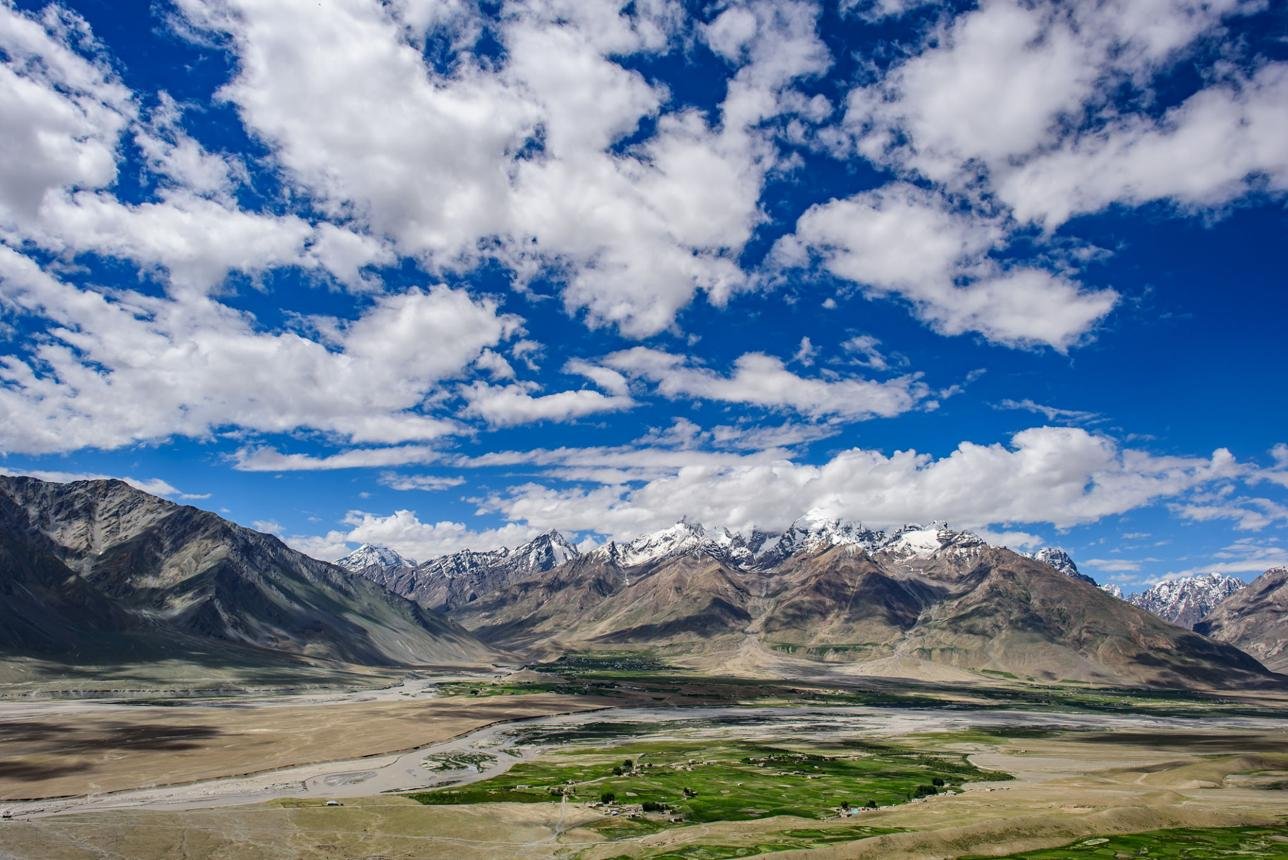
India is home to some extraordinary landscapes, but few are as remote and dramatic as Zanskar Valley in Ladakh.
Surrounded by enormous Himalayan mountains, deep gorges and remote villages, Zanskar offers a fascinating combination of natural beauty, ancient Buddhist culture and a lifestyle shaped by extreme weather.
One of the most remarkable features of the region is the Zanskar River, which can freeze during the harsh winter months. This creates the famous landscape associated with the Chadar Trek.


📍 Where Is Zanskar Valley?
Zanskar is a remote region of Ladakh in northern India. It is surrounded by high mountains and has historically been difficult to access.
For centuries, the geographical isolation of the region influenced the development of local communities, traditions and trade routes.
Today, roads and transportation have improved, but many parts of Zanskar still retain a remote and peaceful character.
🏔️ A Landscape of Giant Mountains
The first thing that catches a visitor’s attention in Zanskar is the scale of its mountains.
Rocky peaks rise dramatically around narrow valleys, while small settlements appear between enormous stretches of barren terrain.
The landscape may look harsh at first, but there is an incredible beauty in the contrast between the rocky mountains, blue sky and flowing rivers.


🌊 The Zanskar River
The Zanskar River is one of the defining natural features of the region.
During warmer months, the river flows through deep valleys surrounded by mountains.
Its route through the landscape has historically been important for local travel and communication.
In winter, extremely low temperatures can cause parts of the river to freeze. This transformation creates one of the most unusual landscapes in the Himalayas.


❄️ The Famous Chadar Trek
When temperatures fall dramatically in winter, sections of the Zanskar River can develop a thick layer of ice.
The frozen river route became known as the Chadar Trek.
Instead of walking along a normal mountain trail, trekkers travel through a frozen river valley surrounded by towering cliffs.
The experience is extraordinary, but it is also physically demanding. Extreme cold, high altitude and changing ice conditions make proper preparation essential.


🥶 Life During the Harsh Winter
Winter completely changes the appearance of Zanskar.
Snow covers the mountains and temperatures can become extremely low. Roads and mountain routes may become difficult or impossible to travel through.
For local communities, winter has traditionally required careful preparation.
Food, fuel and other essential supplies have to be planned in advance because severe weather can restrict movement.
This seasonal rhythm has played an important role in shaping life in the valley.
🏛️ Ancient Buddhist Heritage
Zanskar is also known for its Buddhist cultural heritage.
Monasteries are often located in spectacular mountain settings, surrounded by cliffs and valleys.
Their architecture, prayer flags, murals and religious traditions provide a glimpse into the spiritual history of the region.
Many monasteries have been connected with local communities for generations.


🏔️ Phugtal Monastery
One of the most remarkable monasteries in the region is Phugtal Monastery.
It is built into a dramatic mountainside and has a distinctive cave-like appearance.
The location itself is extraordinary. The monastery seems to emerge from the cliff, making it look almost like part of the natural mountain.
Reaching such remote places can require long journeys on mountain trails, but the scenery along the way makes the experience memorable.


🏘️ Traditional Villages of Zanskar
Zanskar’s villages provide another interesting side of the region.
Small settlements are often surrounded by huge mountains, giving them a dramatic appearance.
Traditional houses are generally designed to cope with the local climate, while agricultural fields are found wherever suitable land is available.
The contrast between tiny villages and enormous Himalayan peaks makes these settlements particularly beautiful.


🌾 How Do People Live Here?
Living in a high-altitude environment requires adaptation.
The agricultural season is relatively short, so communities make careful use of the warmer months.
Crops such as barley have traditionally been important, while livestock also contributes to local livelihoods.
Community cooperation is especially valuable in remote mountain environments, where weather can make everyday activities more difficult.
📸 Why Photographers Love Zanskar
Zanskar offers an incredible variety of landscapes.
A single journey can include:
- 🏔️ Giant Himalayan mountains
- 🌊 Deep river valleys
- ❄️ Frozen landscapes
- 🏘️ Traditional villages
- 🏛️ Ancient monasteries
- 🎏 Buddhist prayer flags
- 🌅 Dramatic sunrises and sunsets
The landscape changes dramatically depending on the season and weather.


🌿 Protecting Zanskar’s Environment
Zanskar’s remote location does not mean it is free from environmental challenges.
As tourism increases, waste management, plastic pollution and pressure on fragile mountain ecosystems can become important concerns.
Visitors can help protect the region by carrying their waste, avoiding unnecessary plastic, respecting local customs and following environmental guidelines.
Responsible tourism is particularly important in places where natural resources are limited.
🧭 What Can You Experience in Zanskar?
Depending on the season and route, travelers can experience:
- The spectacular Zanskar River
- High-altitude mountain scenery
- Frozen winter landscapes
- Chadar Trek routes
- Ancient Buddhist monasteries
- Traditional villages
- Local food and culture
- Mountain photography
- Remote Himalayan trails
Zanskar is not a destination where everything is immediately accessible. Part of its attraction comes from the journey itself.


🌄 The Magic of Zanskar
What makes Zanskar truly fascinating is the way different worlds exist together.
There are ancient monasteries surrounded by modern travelers.
There are villages that have survived for generations in an extremely difficult environment.
There is a river that flows through the valley during warmer months and can transform into a frozen pathway during winter.
And above everything are the enormous Himalayan mountains.
This combination makes Zanskar much more than a beautiful tourist destination.
❓ Frequently Asked Questions
Where is Zanskar Valley?
Zanskar Valley is a remote Himalayan region in Ladakh, India.
Why is Zanskar famous?
Zanskar is famous for its mountains, Zanskar River, frozen winter landscapes, Chadar Trek, Buddhist monasteries and remote villages.
What is the Chadar Trek?
The Chadar Trek is a challenging winter trek associated with the frozen Zanskar River.
What is special about Phugtal Monastery?
Phugtal Monastery is famous for its spectacular location built into a mountain cliff with a distinctive cave-like appearance.
Is Zanskar suitable for everyone?
Not necessarily. High altitude, remote terrain and severe winter weather can make some journeys challenging. Travelers should check current conditions and prepare appropriately.
🌟 Final Thoughts
Zanskar Valley is one of India’s most fascinating Himalayan destinations.
Its enormous mountains, ancient monasteries, traditional villages and remarkable Zanskar River create a landscape that feels completely different from everyday India.
During winter, the frozen river creates the extraordinary world of the Chadar Trek. During warmer months, the valley reveals flowing water, mountain trails and settlements surrounded by rugged landscapes.
But beyond its scenery, Zanskar tells a deeper story — a story about communities adapting to extreme conditions and preserving their culture in one of the world’s most challenging environments.
Zanskar is not simply a place to visit. It is a place to experience the power of nature, the richness of Himalayan culture and the remarkable resilience of the people who call these mountains home. 🇮🇳
🇮🇳 MANA BHARATHAM
Explore more fascinating stories about India’s hidden places, history, culture, nature and heritage on MANA BHARATHAM – ALL INDIA PIN CODE SEARCH.
Know India. Explore India. Celebrate India. 🇮🇳
Leave a Reply