In the next article, we’ll explore how the Ramayana continued beyond the story of Rama, how the epic spread across India, the different regional traditions of the story, and how Rama’s journey became an important part of cultures across Asia.


The Story Did Not End With Rama
The traditional story of Rama may have reached its conclusion, but the Ramayana itself continued to live through generations.
People remembered the story through:
📖 Books
🎭 Theatre
🎵 Songs
🕉️ Religious traditions
🎨 Paintings
🗿 Temple sculptures
🗣️ Oral storytelling
As the story travelled from one region to another, different communities developed their own ways of telling it.
The Ramayana Across India
The Ramayana became deeply connected with Indian culture.
Different parts of India developed their own versions, languages and storytelling traditions.
The story has been told in:
🇮🇳 Sanskrit
🇮🇳 Hindi
🇮🇳 Tamil
🇮🇳 Telugu
🇮🇳 Kannada
🇮🇳 Malayalam
🇮🇳 Bengali
🇮🇳 Marathi
🇮🇳 Assamese
🇮🇳 Many other languages
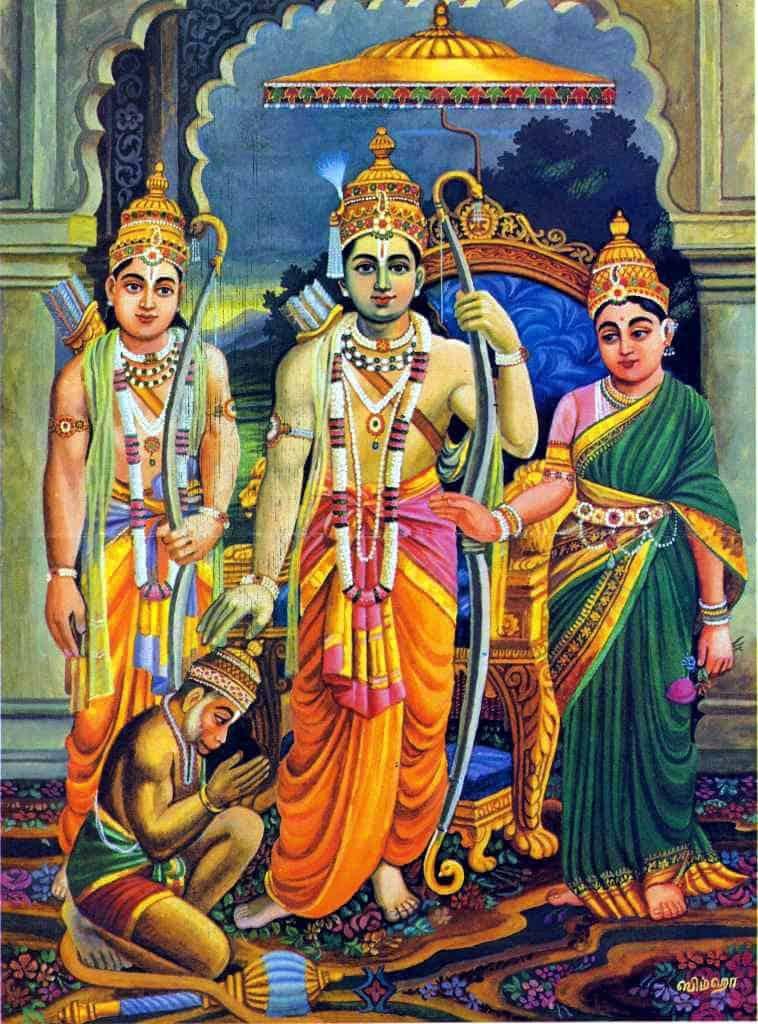
Although the details can vary, Rama, Sita, Lakshmana, Hanuman and Ravana remain central characters in many traditions.


Different Versions of the Ramayana
One fascinating aspect of the Ramayana is that there is not just one way of telling the story.
The Valmiki Ramayana is traditionally regarded as the earliest major Sanskrit version.
Later poets and authors created important retellings in different languages.
These versions sometimes emphasize different characters, events and philosophical ideas.
This diversity has helped the Ramayana remain relevant to many communities.
Ramcharitmanas
One of the most influential retellings is Ramcharitmanas, composed by the poet Tulsidas in the Awadhi language.
It became extremely influential in North India.
Through poetry and devotional storytelling, the work brought the story of Rama to a wide audience.
Kamba Ramayanam
In Tamil tradition, Kamba Ramayanam, composed by the poet Kambar, became one of the great literary works associated with the Ramayana.
It presents the story through the richness of Tamil poetry and culture.
Ramayana in Telugu Tradition
The Ramayana also has a long and important history in Telugu literature and devotional traditions.
Different poets and storytellers have retold the story for Telugu-speaking audiences.
The epic has therefore become deeply connected with Telugu culture as well.
The Ramayana Travels Beyond India
The influence of the Ramayana did not stop at India’s borders.
The story travelled across parts of Southeast Asia, where local cultures adapted it in their own ways.
Ramayana traditions can be found in countries including:
🇮🇩 Indonesia
🇹🇭 Thailand
🇰🇭 Cambodia
🇱🇦 Laos
🇲🇲 Myanmar
🇲🇾 Malaysia
🇵🇭 Philippines
The stories are sometimes significantly different from the Indian versions, but many familiar characters and themes remain.


Ramakien – Thailand’s Ramayana Tradition
In Thailand, the Ramayana became known as the Ramakien.
The story was adapted into Thai culture and became an important part of literature, art and traditional performance.
The Thai tradition includes familiar figures such as:
👑 Rama
👸 Sita
🐒 Hanuman
👹 Ravana
But the storytelling, names and details can differ from Indian traditions.
Ramayana in Indonesia
Indonesia has its own rich Ramayana traditions.
The story appears in:
🛕 Temple architecture
🎭 Traditional dance
🎵 Music
📖 Literature
🎬 Cultural performances
The Ramayana Ballet of Java is one example of how the ancient story continues to be performed through dance and theatre.


Ramayana and Ancient Temple Art
The Ramayana has also been preserved in stone.
Ancient temples across South and Southeast Asia contain sculptures and reliefs depicting scenes from the epic.
These artworks show:
🏹 Rama’s adventures
🐒 Hanuman’s journey
⚔️ Battles with Ravana
🌳 Forest scenes
👑 Royal life
Such artworks demonstrate how storytelling and architecture became connected.
Why Does the Story Travel So Well?
The Ramayana contains themes that people across different cultures can understand.
❤️ Love
Rama and Sita’s relationship is central to the story.
👨👩👦 Family
The epic contains powerful stories about parents, children and brothers.
⚖️ Duty
Characters constantly face difficult choices about responsibility and dharma.
💪 Courage
Rama, Lakshmana and Hanuman face enormous challenges.
🤝 Loyalty
Hanuman’s devotion to Rama is one of the most famous examples of loyalty in Indian storytelling.


The Ramayana in Modern Times
Even today, the Ramayana continues to appear in:
📺 Television series
🎬 Films
📚 Children’s books
🎭 Stage performances
🎨 Digital artwork
📱 Social media
🏫 Educational programs
Modern technology has given the ancient story new ways to reach younger generations.
Festivals Inspired by the Ramayana
Many Indian festivals and cultural celebrations are connected with the Ramayana tradition.
One of the most famous is Dussehra, which is associated with Rama’s victory over Ravana in many traditions.
Diwali is also traditionally associated with Rama’s return to Ayodhya in several popular versions of the story.
During these celebrations, people may create:
🔥 Ravana effigies
🪔 Lamps
🎭 Performances
🎵 Devotional programs


A Story That Belongs to Many Cultures
The Ramayana has become something larger than a single book.
Different communities have interpreted its characters and lessons in their own ways.
Some emphasize:
🙏 Devotion
⚖️ Dharma
👑 Leadership
❤️ Family
💪 Courage
🕉️ Spirituality
This ability to inspire different interpretations is one reason the Ramayana has survived for so many generations.
10 Interesting Facts About the Ramayana’s Global Influence
1. The Valmiki Ramayana is the foundational Sanskrit epic traditionally attributed to Sage Valmiki.
2. The Ramayana has been retold in many Indian languages.
3. Tulsidas’s Ramcharitmanas became highly influential in North India.
4. Kambar created a major Tamil retelling known as Kamba Ramayanam.
5. Thailand has its own important Ramayana tradition called the Ramakien.
6. Indonesia has rich Ramayana traditions expressed through dance, theatre and art.
7. Cambodia contains important Ramayana-related temple art.
8. Ramayana traditions can be found across several parts of Southeast Asia.
9. The epic continues to inspire modern films, television, books and performances.
10. Rama, Sita, Hanuman and other characters remain important cultural figures across generations.
Conclusion
The journey of the Ramayana did not end with Rama’s departure.
The story continued travelling through languages, countries, temples, performances, literature and generations of storytellers.
From India to Southeast Asia, different cultures adapted the epic while preserving many of its central characters and themes.
🕉️ The Ramayana is not only an ancient story. It is a living tradition that continues to connect people with ideas of courage, duty, devotion, family and righteousness.
In the next part, we will explore the character of Hanuman in greater depth — his birth, extraordinary powers, devotion to Rama, journey to Lanka, and why he remains one of the most beloved figures in the Ramayana.
Leave a Reply