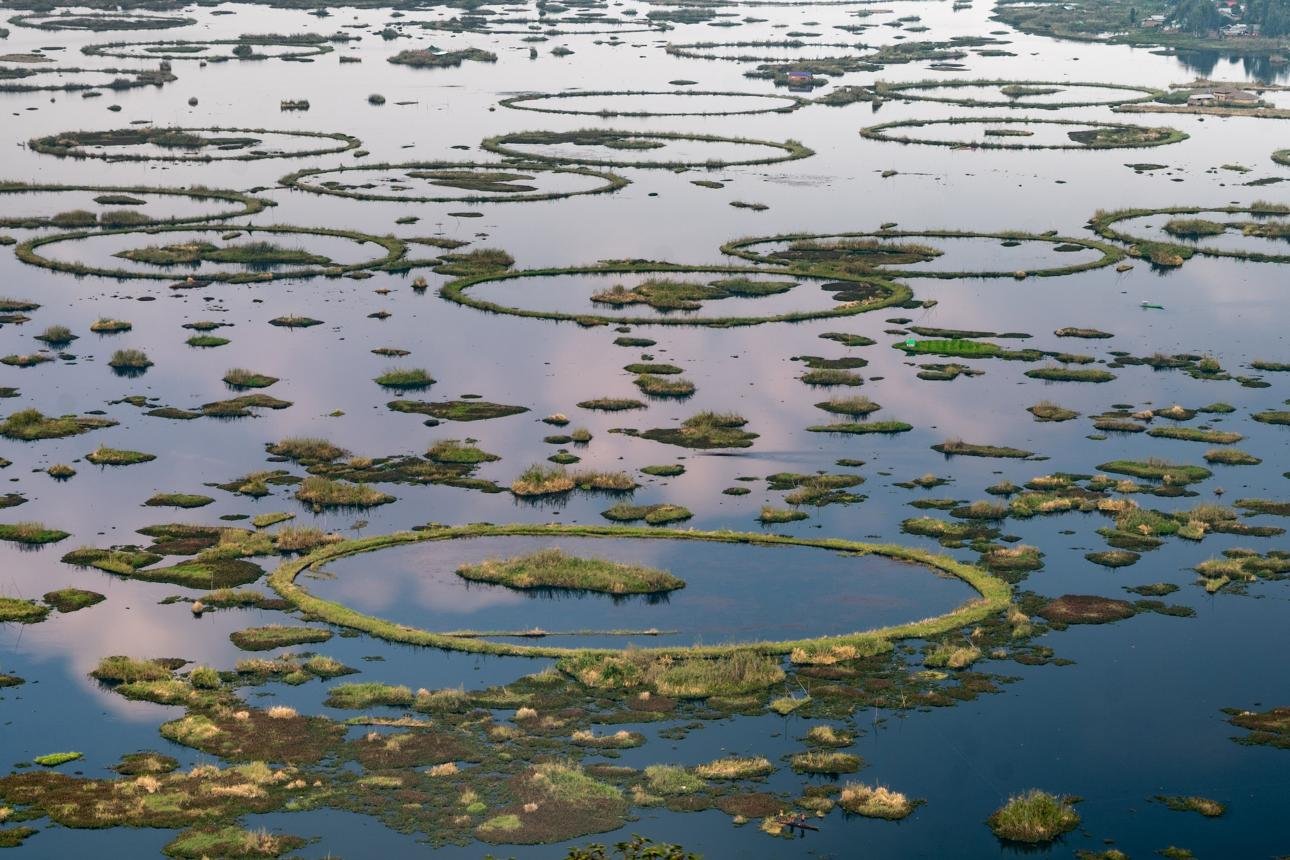
India is home to countless natural wonders, but some places are so unusual that they seem almost unreal. Loktak Lake in Manipur is one such destination.
The lake is famous for its floating masses of vegetation, soil and organic matter known as phumdis. These floating formations create a landscape where green patches appear to drift across the water.
Loktak is also closely connected with Keibul Lamjao National Park and the endangered Sangai deer, making it important not only for tourism but also for wildlife conservation.
ACT IMAGE 1 – Loktak Lake


Where Is Loktak Lake?
Loktak Lake is located in Manipur in northeastern India, near Moirang and within the wider Imphal region.
The lake is surrounded by green hills and wetlands, creating a peaceful landscape that is very different from India’s crowded urban destinations.
For local communities, however, Loktak is much more than a scenic attraction. The lake has traditionally supported fishing and other livelihoods.
What Are Phumdis?
The most fascinating feature of Loktak is its phumdis.
Phumdis are floating masses made from vegetation, soil and organic material at different stages of decomposition. They can form unusual shapes and vary considerably in size.
When viewed from above, some of these formations look like small green islands scattered across the water.
ACT IMAGE 2 – Floating Phumdis


The phumdis are an important part of the lake’s ecosystem. They provide habitat for plants and animals and contribute to the distinctive environment that makes Loktak so special.
A Lake That Looks Like It Has Floating Land
Imagine standing beside a lake and seeing pieces of green land apparently floating on the water.
That is what makes Loktak so memorable.
Small waterways run between the floating formations, and traditional boats can be seen moving through the lake. The surrounding hills complete the scenery.
It is a place where the difference between land and water appears surprisingly blurred.
Keibul Lamjao National Park
One of the most remarkable places associated with Loktak is Keibul Lamjao National Park.
It is widely recognized as the world’s only floating national park because it is situated on the phumdi ecosystem of Loktak Lake.
The park is especially important because it provides habitat for the Sangai, the endangered brow-antlered deer of Manipur.
ACT IMAGE 3 – Keibul Lamjao National Park


The Rare Sangai Deer
The Sangai is one of Manipur’s most important wildlife symbols.
Also known as the brow-antlered deer, it has a distinctive appearance and is closely associated with the wetland environment of Keibul Lamjao.
The unusual terrain of the park means that the deer lives in a habitat unlike the typical forests where many other deer species are found.
Protecting the Sangai therefore means protecting the larger ecosystem on which it depends.
ACT IMAGE 4 – Sangai Deer


Life Around Loktak Lake
Loktak is also an important part of everyday life for communities around the lake.
Fishing has traditionally been one of the important activities connected with the lake. Wooden boats can be seen moving through the water while fishermen work among the floating vegetation.
The relationship between people and the lake is an important part of Loktak’s story.
ACT IMAGE 5 – Fishermen and Boats


Traditional fishing scenes show how local communities have adapted their lives to the unusual geography of the lake. Wikimedia Commons also has Loktak photographs with specific Creative Commons licenses, including CC BY and CC BY-SA files.
The Beauty of Loktak
Loktak is beautiful throughout the day, but sunrise and sunset can make the landscape particularly impressive.
The hills reflect on the water while the floating vegetation creates patterns across the lake.
At sunset, the water can take on golden and orange shades, producing spectacular scenery.
ACT IMAGE 6 – Loktak Lake at Sunset


Wikimedia Commons’ Loktak Lake collection includes photographs specifically identified as sunset scenes as well as many different views of the floating formations.
Why Is Loktak Lake Important?
Loktak is important for several reasons.
Natural importance:
Its floating phumdis form a distinctive wetland ecosystem.
Wildlife importance:
The lake supports the habitat associated with the Sangai deer.
Cultural importance:
Local communities have developed traditional ways of living and working around the lake.
Tourism importance:
Its unusual landscape attracts visitors interested in nature, photography and northeastern India.
The lake also has wider economic importance, including connections with water supply, irrigation and hydropower.
Environmental Challenges
Loktak’s ecosystem is delicate.
Changes in water conditions, pollution, waste and other human pressures can affect the health of the wetland.
Because the lake supports both wildlife and human communities, conservation is not simply about protecting scenery. It is about maintaining an ecosystem that many different forms of life depend upon.
Responsible tourism can help by encouraging visitors to keep the lake clean, avoid disturbing wildlife and respect local communities.
Things to Experience at Loktak
A visit to Loktak can include:
- Seeing the floating phumdis
- Exploring the lake by boat
- Visiting viewpoints around the lake
- Learning about the Sangai deer
- Observing traditional fishing
- Photographing the surrounding hills
- Enjoying sunrise or sunset
- Learning about the culture of Manipur
ACT IMAGE 7 – Boats on Loktak Lake


Wikimedia Commons has a substantial collection of Loktak photographs showing boats, canoes, floating vegetation and different parts of the lake.
Why You Should Know About Loktak
India has many famous lakes, but Loktak stands out because its landscape is not simply water surrounded by land.
Here, floating vegetation creates an unusual world of moving green formations, waterways and wildlife.
The combination of phumdis, Sangai deer, Keibul Lamjao National Park and traditional fishing communities makes Loktak one of India’s most distinctive natural destinations.
Final Thoughts
Loktak Lake is much more than a beautiful place in Manipur.
It is an extraordinary wetland where floating formations create a unique landscape, local communities depend on the lake and rare wildlife finds refuge in the surrounding ecosystem.
For travelers looking for lesser-known destinations in India, Loktak offers something genuinely different.
It is a place where nature, wildlife, culture and human life come together on the same stretch of water.
Discover more fascinating stories about India’s hidden places, natural wonders, history and culture on MANA BHARATHAM – All India Pin Code Search
Leave a Reply