
Author: pasupuleti saidarao

  • Types of Crimes in India – Part 5

    Types of Crimes in India – Part 5

    leagle system

    Introduction

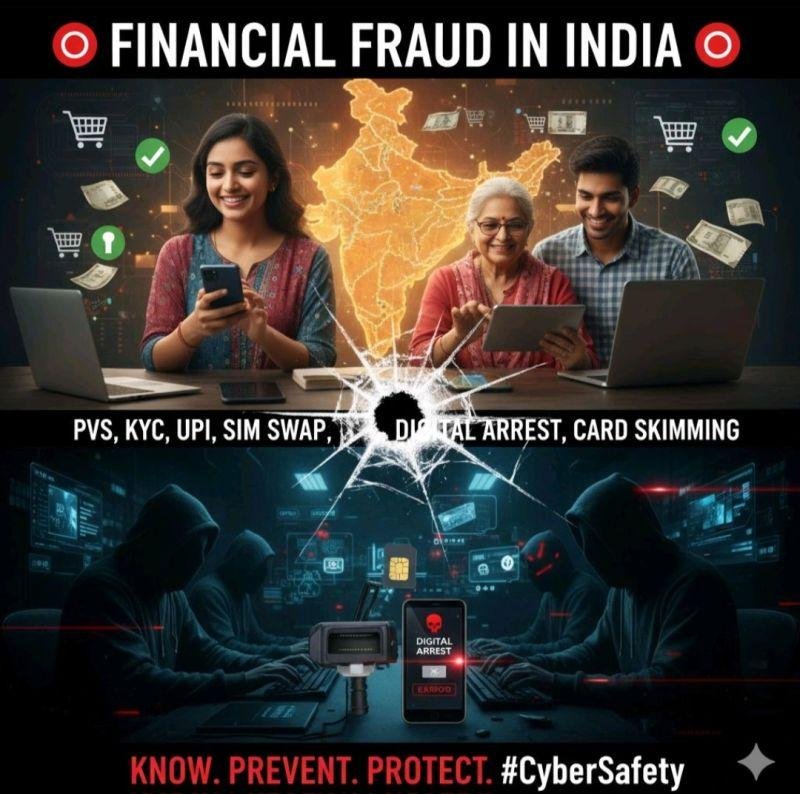
    Money is an important part of everyday life. People use banks, digital payments, credit cards, online shopping platforms, investment services, and other financial systems almost every day.

    As financial services have become more digital, criminals have also developed new ways of attempting to obtain money or financial information through deception, manipulation, unauthorized transactions, and other unlawful activities.

    Financial crime is a broad term that can include different offences involving money, property, financial accounts, fraudulent transactions, or financial systems. These offences can affect individuals, families, businesses, banks, investors, and the wider economy.

    Understanding common financial crimes is one of the best ways to recognize warning signs and make safer financial decisions.


    https://images.openai.com/static-rsc-4/mgDXJ2jas7IEfjDrUra_NO7H5CDRqfY071PEHLOXBSG0hOJNj_mSwiEMmMZa1gHhe51lRtN6uiTfei8q6NLhbxLWXsFX_6QxbXeStaduxMzSIQf4Me4BQmRSqJqnW2dybi5eAn3oULRVv7TVp8mBpgunJkj5URb5ZGZ4MZ3zq9HOtYi7NuDmcDxYhZ3ny4F7?purpose=fullsize
    https://images.openai.com/static-rsc-4/zo4idoaLjCV24ADpmXvZ4q1wz8iEuO2dQJE1pKZl0ePcvNrfoH5jR7rlluVTl5Koe-y-Hihl3WdTDDRnyKTbXNMQ0D6ZVENw94Spp78EtHCdFEvsfd6kgiRAAaMx81WHeQ1DIcfPyXgT__ekjac0RSUQOt32baPMWiFnkjE5fQBl5aVCQyng4vf8ePTi1_9Q?purpose=fullsize
    https://images.openai.com/static-rsc-4/I0c4veJnxjm7T5r5xK0LEPuRziR5HdBxdGZ7HQPUQv7sztj-vab4s1mahL783TSxThaJGM5naeCrkCGH__6u_anQdKBzhpaDlvMM54ltY7alyO7xTHyCbLVte0EZeW3r72t7tJTBfxhTIHOPon6F9ehXhsmdLOdBXHr1LS66511cn-A7MQ4eMHg-gEOvNu1X?purpose=fullsize

    Financial awareness and careful decision-making can help people reduce the risk of financial fraud.


    What Are Financial Crimes?

    Financial crimes are unlawful activities connected with money, financial assets, property, financial information, or financial transactions.

    Depending on the circumstances, examples can include:

    • Cheating and financial deception
    • Banking fraud
    • Investment scams
    • Loan-related fraud
    • Identity-related financial fraud
    • Unauthorized digital transactions
    • Forgery
    • Money laundering
    • Ponzi and pyramid-style schemes
    • Insurance-related fraud
    • Misuse of entrusted funds

    The exact offence and applicable law depend on the facts of each case.

    Under the current criminal-law framework, the Bharatiya Nyaya Sanhita, 2023 includes offences such as cheating, criminal breach of trust, forgery, and several offences affecting property.


    1. Banking Fraud

    Banking fraud generally involves dishonest activity intended to obtain money, financial information, or an unauthorized financial benefit.

    Criminals may attempt to deceive customers by pretending to be representatives of banks or financial institutions.

    Common warning signs can include:

    • Unexpected calls about account problems
    • Fake KYC update requests
    • Suspicious links
    • Unusual payment requests
    • Requests for confidential banking information

    How to Stay Safe

    Never share your OTP, PIN, CVV, password, or other confidential authentication information with another person.

    The Reserve Bank of India has repeatedly emphasized awareness around protecting critical payment information such as PINs, OTPs, and passwords.


    2. Digital Payment Fraud

    Digital payments have made transactions fast and convenient, but users can also be targeted by fraudulent requests.

    Scammers may use:

    • Fake payment requests
    • False refund claims
    • Fake customer-support contacts
    • Impersonation
    • Deceptive messages
    • Social engineering

    Important Rule

    Receiving money and sending money are different actions.

    Be careful if someone unexpectedly asks you to approve a payment, scan a QR code, or enter confidential information.

    Always verify the purpose of a transaction before confirming it.


    https://images.openai.com/static-rsc-4/lY-KeX1vjrYxcBHrB9xK1tOkNaQjUOjDf2HWcvVvQV4vOQBg9As4kB1ctmceO_t_e8oU5Auo1RJTQQG2a8Mr2RMsirLdqQQqrYAG3cgEExIrkYN7wZNFXTmbYAUDfXX40TrW6My-Cm1NsjT8kaE8ZlU5CqHp--nXtWKGcWla9Piyb8u6HBPVWxQTbWj9CZFi?purpose=fullsize
    https://images.openai.com/static-rsc-4/cuWVYYCMcAG9Um5gGpfVZCy0FfWtemOzvTr_o06h80IO6WCUQXw27rzlH-kHdr10xBNKUKqwdnz8nX7FJ6hofknyQAIPbKEfs16O2WqvI_L3kZSEfjXGsiBfULstNesc7VK0PRAMTlVuUbNaBDYGZZh3FbiOFInn0pf8SLYkN-1YPnfDrMLD1sT_aRh_QyXk?purpose=fullsize
    https://images.openai.com/static-rsc-4/XlFWm1ySdBRlyhQib1GkHmd1vriZ7Gr7ijTa-WhCcOkUESdcE0zcAXpgYBBOrcZw0KfK5kxoq6lfZUbOfs6yMxnS-VTMXo4BYRNXPuQsNBDlY_OB2Bu5cRC1uDnyX3-pM4XGU_F99pVVtFE2BvqlkmDVCslFqDRkMN0DmcakUlPoUdzrcftDeIfnkYjdnkMc?purpose=fullsize

    3. Investment Scams

    Investment scams attempt to convince people to put money into a fake or misleading investment opportunity.

    A scammer may promise:

    • Very high returns
    • Guaranteed profits
    • No risk
    • Exclusive investment opportunities
    • Quick wealth

    Warning Sign

    A promise of unusually high returns with little or no risk should be treated with caution.

    Before investing, verify the organization, understand the product, and check whether the person or entity is authorized to provide the relevant financial service.

    Do not make investment decisions solely because someone creates urgency.


    4. Ponzi-Style Schemes

    A Ponzi-style scheme generally involves using money from newer participants to provide apparent returns to earlier participants rather than generating legitimate investment returns as claimed.

    Such schemes can appear successful for a period of time, but they may collapse when new money is insufficient.

    Common Warning Signs

    • Guaranteed high returns
    • Pressure to recruit others
    • Lack of clear information
    • Unexplained investment strategy
    • Difficulty withdrawing money
    • Pressure to invest immediately

    Always independently verify an investment opportunity before transferring money.


    5. Loan Fraud

    Loan-related scams can target people who are looking for personal, business, or emergency loans.

    Fraudsters may advertise:

    • Very easy loans
    • Guaranteed approval
    • No documentation
    • Extremely low interest
    • Immediate loan disbursement

    They may then demand money or personal information under false pretences.

    Safety Tips

    Before dealing with a lender:

    1. Verify the lender independently.
    2. Check the official website or app.
    3. Read the terms carefully.
    4. Avoid unknown payment links.
    5. Never provide confidential information to unverified contacts.

    https://images.openai.com/static-rsc-4/shGuA8xrUyjWq2Gv6VFDOdS-xgKolX72bgncG3wJudoQKFb8JQ_lUR0ltEBO_b80SYdEI5W4ydp4ATyfzGQWSmTEXZCfM06U2k-TMzo9eYbwc25vcl8MzmWC8hgvdGdh3AF1xzgVK3g1RpAvcxCbvakx5OqvuciaT3T7HbtSdHemTP9f8NzCK_C3FYk6eUUQ?purpose=fullsize
    https://images.openai.com/static-rsc-4/HhpYVQNU-iJMOzANAcwE_W0JHj2XzCxoffzKquHQYlWl6b0M2twusRU2_y_wAx8KUvftYECDbku2s7SgJt7GJVfHE5dQUKsxYQ1ySqIlCvv4U1puat6FPLpGNeKRktHWKIsAa4nxrx5PWXPkheAC_3V734tKm8s9iyEjM5OLsBziLF3ztKCRNUs1iQdnp6PZ?purpose=fullsize
    https://images.openai.com/static-rsc-4/i_Oxa6uT5ppl5DtQCBsHw_ApJxyVO6BMIH_7BOovXjhwc-haYUo3B0UcJMnOatDGhyYCqMYTQAe0GMSdz40nuwXT7cJvx0mBX4cNf81UrV3YYsIs9LqORr-jKFwdHw2uvYKuKlO2D9rf-nkxG8qbzEGafGOjHF-uttiXqcIlHWd84wgMCG7Le65E-e9_Dmg4?purpose=fullsize

    6. Credit Card Fraud

    Credit card fraud can involve unauthorized use of card information or fraudulent transactions.

    People should regularly check their account statements and transaction notifications.

    Good Practices

    • Keep card information private.
    • Use transaction alerts.
    • Report suspicious transactions quickly.
    • Avoid entering card details on suspicious websites.
    • Do not share your PIN or OTP.

    Regularly reviewing transactions can help identify suspicious activity early.


    7. Identity-Related Financial Fraud

    Personal information can sometimes be misused to attempt financial fraud.

    Information such as:

    • Name
    • Phone number
    • Address
    • Identification information
    • Bank details
    • Account credentials

    may be targeted.

    People should avoid sharing sensitive documents publicly or sending them to unknown individuals.


    8. Forgery and Fake Financial Documents

    Forgery can involve creating or altering a document or electronic record with fraudulent intent.

    Under Section 336 of the Bharatiya Nyaya Sanhita, 2023, forgery includes making a false document or false electronic record with specified fraudulent or harmful intent.

    Financial document fraud can involve attempts to misuse documents for obtaining money, property, services, or other benefits.

    Prevention

    Organizations should verify important documents carefully and maintain appropriate record-checking procedures.


    https://images.openai.com/static-rsc-4/EvAwEnF165kHRpPrEmODr5euGShLaE7JpWF9mGKFsmiEvzoviFFyhGgIuhMGimk2_cGX_odlkF7C6yZAeDFZfCrcCKyvnb7GYHW86DjKTUwy5jUtR5OFS4bN45JrpMhHLMJPVkcg0zVNWsGk9Bg4O7UIwKQKJB9vQvWV-aHjqExx_ZTpK85J-qKb0HHFVDxJ?purpose=fullsize
    https://images.openai.com/static-rsc-4/Nlb2hSlSTh0cJYCf29o2mFoYnxmgqsOOEuQpaCZrGxg2E-aY7meZ_Tk2uBRBPkvPdb11WL72Ir_dGTuiBeHAPULfcCnrSe_zc89he_lrfBU7UT9H5O8_OQqQTE0Y87TKStZgIIrL6jz8KllX45BBfgQXoh-fZ9rD_fxDRyvDf_FgiPNXu1ZJGkdb17VKeBao?purpose=fullsize
    https://images.openai.com/static-rsc-4/FplHB2LZmph7UN_xiyChOwmRD6T5AwQQc3X2sT896BwKAwMoaCuKF32PUxMZXyPXgqP2hVs-6ijHxo-SCkbzzohnTOP6nATd0Bu4yWruSPGPHyVx-NPAA5pLq9qV1C6NhACnI-_szEmdw9QPMPTNVT2ExwAo7yH3NL5WPNrLWEVBpfAeueR1QjnQXSIJrQFk?purpose=fullsize

    9. Insurance Fraud

    Insurance-related fraud can involve deliberately providing false information or making dishonest claims for financial benefit.

    Insurance companies use verification procedures to identify suspicious claims.

    Customers should always provide accurate information when applying for insurance or making a claim.

    False information can create serious legal and financial consequences.


    10. Criminal Breach of Trust

    Financial wrongdoing can sometimes occur when money or property is entrusted to a person who then dishonestly misuses or converts it contrary to the applicable legal or contractual obligation.

    The Bharatiya Nyaya Sanhita, 2023 contains provisions relating to criminal breach of trust.

    Examples can arise in different professional or personal circumstances, depending on the facts.


    11. Cheating and Financial Deception

    Cheating involves deception that may cause a person to act in a way that results in wrongful loss or another unlawful benefit.

    Financial deception can take many forms, including false promises, misleading representations, or dishonest inducement.

    The Bharatiya Nyaya Sanhita, 2023 contains provisions dealing with cheating and dishonest inducement relating to property.

    How to Reduce Risk

    Before sending money:

    • Verify the person’s identity.
    • Check the organization independently.
    • Read agreements carefully.
    • Avoid making decisions under pressure.
    • Keep transaction records.

    12. Money Laundering

    Money laundering generally refers to processes through which proceeds connected with criminal activity are dealt with in ways intended to conceal or project them as legitimate.

    India has a specific law called the Prevention of Money-Laundering Act, 2002 (PMLA). The Act provides for prevention of money-laundering and for attachment, adjudication, and confiscation of property derived from or involved in money-laundering, subject to the law.

    Money laundering is a serious financial crime because it can allow proceeds of crime to enter or move through legitimate financial systems.


    https://images.openai.com/static-rsc-4/7UqXjH-VBVBbglr_bie8oXlHckCmaCFr6t-obvL168W6BcY0fRh3VHF8VGEMTpxwozv9w9KyJe3smZqVGqY3o46cZUrxshzApKaA2lAA95V1J2GgjEwrihr3BT9mCG_gGyEYI3oMeZN-kzzXtc_zUgd_DQT-sKkIF4zStZOiMLuZm_bQaKC4uQS_daJ28knV?purpose=fullsize
    https://images.openai.com/static-rsc-4/vIEZ5yy5lZyGEmxG5EQb552sHQQyvAESCiDydbwSi5he4SLMEmfe_itpYHWfU2XE7NdvzDUn0lW5ut9pJUOOyydr2-siskuxLRsxyxRWUCLdagnwjaoxJojghlUXskoi427wcNnO44SFkjPQKyVKWZmhg30utFkJkMledFkYHWiZlOpB_tisRw2cbqp7bShT?purpose=fullsize
    https://images.openai.com/static-rsc-4/7aLR7_1nVtQ7MEBjZImaVEM8Mgb3F1kvSM9nRMSr_IR5UN6-xMrl1ON2HbPBImUTlgj8qzBxPKop5B60uytvye1ZbSLsEWHXR0BGSDfyzh5Wj1q5HM_70q3pUg9nHcmoMsIuGSCZmBKYx4gIToW9wuA31UNCh4F3WXwSHRosEOv6xJxdHNfjMSqauauhm5FB?purpose=fullsize

    13. Fake Customer-Care Scams

    Fraudsters may create fake customer-support numbers or social-media accounts.

    A person searching for customer support may accidentally contact an unofficial number and be asked to:

    • Share sensitive information
    • Install software
    • Transfer money
    • Provide account credentials

    Safety Tip

    When you need customer support, find the contact information through the organization’s official website or official application, rather than trusting an unknown search result or social-media message.


    14. Employment and Work-from-Home Scams

    Some fake job advertisements promise easy work and high income.

    Victims may be asked to pay:

    • Registration fees
    • Training fees
    • Security deposits
    • Processing charges

    before receiving a promised job.

    Warning Sign

    A genuine employment opportunity should be independently verified before you send money or sensitive personal documents.

    Be especially cautious about offers that promise large earnings for very little work.


    https://images.openai.com/static-rsc-4/DEnuchkP1GbNDD9MgGuvX6l44BQMhO9jgwR58Ijo_SDpkpf6u6dnr8rbx_DgOqjfN6gZA6YQzsgkeIzMhnJ38c2OMAcI3kvlPWpTEQjMAO2QfmI8mvInE6wI95bWn3jD_-XDf6IdNz8I2D1SBU3SLYhYe5UKmmuA2xPkN0WxkXnxHO8St-7LflErOXCFSAx6?purpose=fullsize
    https://images.openai.com/static-rsc-4/8SBa6L6rnbjghdBjtIA9cJXYIKX1JrGKg85rxCvXFMg99w_bYhgMAZyUU_Aw2MtKNTS8hP3z6q5bz5wXdokVZus9XhBIJLtD5_ROkw4WSo-hS_08kVqcyGvIXWBSojX1GzdwFITfVIv1puFqx6rU3Te8N8xB29QVWk48ixL3v6DSUeG-5C2tIJBre-_yy6k8?purpose=fullsize
    https://images.openai.com/static-rsc-4/ALX0SuA1_o8FGiF-Cx2_CsQHH_x2bAWYU0lokSw_fAAmKvmNPPCcyqLuM-1o0vf58fGBcFyhLTq1wMHl08SuE4WCdy-0OoA70R0Qic35f6Hn8bANV3ewvCgp22hYz4n2PUEzdU6mYlQbUYzlovaT8cxb86MZbqrD1ws2vl87Gk7udVaeToRiP-LOPUEvC3vQ?purpose=fullsize

    Common Warning Signs of Financial Fraud

    Be cautious when you encounter:

    🚩 Guaranteed profits

    No legitimate investment can simply guarantee large returns without risk.

    🚩 Extreme urgency

    Scammers may tell you to act immediately.

    🚩 Requests for confidential information

    Never casually share passwords, OTPs, PINs, or similar security credentials.

    🚩 Unknown payment links

    Do not blindly click payment links sent through unexpected messages.

    🚩 Unverified organizations

    Always independently check who you are dealing with.

    🚩 Pressure to recruit others

    This can be a warning sign in certain investment or earning schemes.


    What Should You Do If You Lose Money to Online Financial Fraud?

    Act quickly.

    If the fraud involves an online financial transaction in India, the National Cyber Crime Reporting Portal states that financial cyber fraud can be reported through 1930 for immediate reporting.

    You should also:

    1. Contact your bank or relevant payment service immediately.
    2. Preserve transaction records.
    3. Save screenshots and messages.
    4. Keep phone numbers and other relevant details.
    5. Report the incident through the appropriate official channel.
    6. Change compromised passwords.
    7. Be careful of people promising to recover your money for an upfront fee.

    Important

    Do not send additional money to someone who suddenly claims they can “recover” your lost money unless you have independently verified the service.


    https://images.openai.com/static-rsc-4/O8lxzVOtVmjqjeIc1elGeaXSg62phzUmiWaYny6BTKrZW9jzyMCCszm7zLGE7XfNDMvjUXXR0m4occapYklGkEHdoWiCz6YhdMyecceGiNfdFAK9hmlxLnSzcJz-AwSUFbGZHRc1EISvO_aipETxDpRXgthdAEJ8PdTFmRMZDqt3nrb3rPCuNvwVAfLG51H0?purpose=fullsize
    https://images.openai.com/static-rsc-4/wGvlGDWpK4GNaVDcz50OC0Brh4dUBTVLgo81ianBL0FGx6A8Th8OfuO4BITjJ6iSmkjvcOCk376Wn_Cqsr0tazKyKUSenWWyP9m7W26RZNTCSwmHrxbwktmRYzCii1x80hzy0vhlTFrjuAVLoyHqjeQJpc1k52MxRAr4jezsxTgKlTzoI3zR9Ik1m1cXh3Af?purpose=fullsize
    https://images.openai.com/static-rsc-4/HTZKPboIoJt8_OwNzs1ACXmwqiv4Lir8jw0jbPf4bvmD7Dyz4CaP45FwpIYytfw_GPfRCBp-TsMrHrfGz9UBfRR545-1FFX500fn4TQBhDzO8uTkgG9wSDgm1QSRSLthKvrb-_0MYPLbuwhtcGoD9kWtqyP03DkhOghCQ8NcXi8R9y36HXNIr7RKfWiZvLRU?purpose=fullsize

    How Families Can Protect Their Money

    Financial safety should be discussed within families.

    Parents can teach children and older family members about:

    • OTP safety
    • Banking privacy
    • Fake calls
    • Investment scams
    • Online shopping fraud
    • Social-media impersonation
    • Suspicious links

    Older people can sometimes be targeted by callers pretending to be bank officials, government representatives, or customer-service agents.

    Simple awareness can prevent serious losses.


    How Businesses Can Reduce Financial Crime

    Businesses should maintain strong internal controls.

    Important measures include:

    • Separation of financial responsibilities
    • Regular account reconciliation
    • Secure payment procedures
    • Employee training
    • Multi-factor authentication
    • Transaction monitoring
    • Verification of important requests
    • Secure record keeping

    Employees should also know that unusual financial instructions should be independently verified before being acted upon.


    Why Financial Awareness Matters

    Financial literacy is not only about saving and investing money.

    It also means understanding:

    • How financial services work
    • How to identify suspicious offers
    • How to protect account information
    • How to verify organizations
    • How to respond to fraud
    • Where to report financial crime

    A financially aware person is generally better prepared to question suspicious claims before making a costly decision.


    Frequently Asked Questions

    What are financial crimes?

    Financial crimes are unlawful activities involving money, financial assets, property, financial information, or financial systems.

    What is an investment scam?

    An investment scam is a fraudulent or deceptive scheme designed to obtain money by making false or misleading investment claims.

    What is money laundering?

    Money laundering involves dealing with proceeds connected to criminal activity in ways covered by the Prevention of Money-Laundering Act, 2002, including processes intended to conceal or project such proceeds as legitimate.

    What should I do after an online financial fraud?

    Contact your bank or payment provider immediately, preserve evidence, and report the incident through the appropriate official channels. For cyber financial fraud in India, the National Cyber Crime Reporting Portal lists 1930 for immediate reporting.

    Should I share my OTP with a bank employee?

    No. Do not disclose confidential authentication information such as OTPs or PINs to people who contact you unexpectedly.


    Conclusion

    Financial crime can affect people from every section of society. As banking, investment, shopping, and payments increasingly move online, financial awareness and cybersecurity have become more important than ever.

    The most effective first step is often simple: do not rush.

    Verify unexpected calls, messages, investment opportunities, payment requests, and financial offers before taking action. Protect confidential information and maintain records of important transactions.

    When financial fraud occurs, reporting quickly can be important. People should use official channels rather than relying on unknown individuals who promise easy recovery of lost money

  • Types of Crimes in India – Part 4

    Types of Crimes in India – Part 4

    image

    Cyber Crimes in India – Types, Examples, Risks and Prevention

    Introduction

    The internet has become an essential part of everyday life. People use smartphones and computers for banking, shopping, education, communication, work, entertainment, and government services. Digital technology has made life easier, but it has also created new opportunities for criminals.

    Cybercrime refers broadly to unlawful activities involving computers, mobile devices, networks, digital accounts, or online platforms. Some crimes are committed entirely online, while others use technology as a tool to carry out traditional offences.

    Cybercrime can affect individuals, businesses, educational institutions, financial organizations, and government systems. A person may lose money, personal information, privacy, or access to important accounts because of a digital attack.

    This article explains common types of cybercrime in India, how these crimes occur at a general level, warning signs, and practical steps people can take to protect themselves.


    Cybercrime and Online Security

    https://images.openai.com/static-rsc-4/Uy9Knhi3lVbOFEwUkX4EtELabGGIld0ph1X0cYkxjyzKN8cZEurAab4vlJ2QLd0SR7jjHPrgYzpP_hSsnw0zj_JItq86yKWRK46l3yQRkbvHZ7SrWthCSjfcmTOTB8Pu0l2qVR8YdPyJ067R4Srjt503xV0vwS7ZYWr5zUMR2q5pyXOuSh9xXWfyxJ6xC41J?purpose=fullsize
    https://images.openai.com/static-rsc-4/t7ksNTKJjyVliLAtY1UZxBK9S4pYeCracV0lyvCTxbEzTFVLyoUKh0aqlbwzADU2c2CnqS8BksYICk64nt3roCdkaxhF-ec-u884lRwZFejmr1K4C_FcKkz0vZpiWDb1FrlsvzVJJQ6xZJDxgjNqje3-cRSMbD0g3bE5iYLZ406s65oLTWpgbiIV_VawZWkD?purpose=fullsize
    https://images.openai.com/static-rsc-4/qkFKCubkni1wpFIGJBzaoEURm5zzY_qjcUxsnA1oUnjQC-fAxyjT-m27theGa32YYUb2TgQNG4yDJLO2YWPsGHK9H9jPjqLhLX331BdptYdgTu1UWSxs7FmT6agBByJa9AItpgJjNTNsNNATByHulfTnwe8Xq3k0OaUQDj11VRd8vMsFzEm7YpK-b4pFyyyK?purpose=fullsize

    What Is Cybercrime?

    Cybercrime is a broad term used for criminal activity involving digital technology.

    Common examples include:

    • Online financial fraud
    • Identity theft
    • Phishing
    • Account takeover
    • Cyberstalking
    • Online impersonation
    • Data theft
    • Malware attacks
    • Ransomware
    • Unauthorized access to computer systems

    The exact legal classification depends on the conduct and the laws applicable to the particular case.

    India addresses cyber offences through the Information Technology Act, 2000, the current criminal-law framework, and other applicable laws.


    Why Is Cybercrime Increasing?

    Several factors have contributed to the growth of cybercrime in the digital age.

    More People Are Online

    Millions of people use smartphones, computers, and internet services every day. This creates more opportunities for criminals to target inexperienced users.

    Growth of Digital Payments

    Online banking, UPI, cards, and other digital payment systems have made transactions convenient. However, criminals may try to exploit users through deception and social engineering.

    Social Media

    People often share personal information through social-media platforms. Criminals may misuse publicly available information for impersonation, fraud, or harassment.

    Online Shopping

    The growth of e-commerce has also resulted in fake websites, fraudulent advertisements, and fake seller accounts.

    Increasing Dependence on Technology

    Businesses and organizations store large amounts of valuable information digitally, making cybersecurity increasingly important.


    1. Phishing

    Phishing is a deceptive technique used to trick people into revealing sensitive information or performing an unsafe action.

    A criminal may send a fake:

    • Email
    • SMS
    • WhatsApp message
    • Social-media message
    • Website link

    The message may pretend to come from a bank, delivery company, government service, employer, or another trusted organization.

    The victim may be asked to provide information such as:

    • Password
    • Login details
    • Card information
    • OTP
    • Personal information

    How to Stay Safe

    Never enter sensitive information after clicking an unexpected link. Instead, open the organization’s official website or application directly.


    2. Online Banking and Payment Fraud

    Digital payment fraud can occur when criminals deceive users into revealing information or authorizing transactions.

    Scammers may use:

    • Fake customer-care numbers
    • Fraudulent payment requests
    • Fake refund offers
    • Impersonation
    • Social engineering
    • Phishing messages

    Important Safety Rule

    Never share your OTP, PIN, password, CVV, or banking credentials with another person.

    Always verify unexpected payment requests before taking action.


    Online Banking Safety

    https://images.openai.com/static-rsc-4/myH2wC-c_gBGIvwoigQTQolETCeeJ5GVEWlCFY5rMYVajbl7sTQMJo5Wi_bK7XIfKEG06PpOG5yY_U7agxPEeHftp5lskcFWsHndGQe_Z0rQAkKBRkhComXnFdfSZIsPJ30dxIVA-8d0ryCUs6NUS18rTpy3pWbvo0sljm-an3Lmy6DysaFyAbqp2G3ztDov?purpose=fullsize
    https://images.openai.com/static-rsc-4/tAv8uLGjp8MvIpqlKnPwok0wo0geqr0NGl39oY7vWQST1NV723toPhb_1f3D6m6eUk18FychlIwMmyOJqocfNce1DbrmjRJ-i9ZnnZwBHfj2YEJDzdAa5m6pf7yCxnPd6raAFZYxaFsV2bJai3ufdq_IMAWezVDBT2tJfMLMPMPO3c3saehleVdweVAymeVP?purpose=fullsize
    https://images.openai.com/static-rsc-4/659lMX9bS7teo3sezYmDFoAxSs66dSGgWINTuPlr1cu07g45nxrPxxR_r6XZScrscazP_LWR-1TW-w99xUeWatB2p-KBKt3zO3wGd4qwCzJpN8xDTXuLZhPRcuw0BOH37KuF-zkd-2L1pj3ws-E3vh6KTDDLybfI1y2O7tpUVV50WRK8uo74E6RSAjsTBInJ?purpose=fullsize

    3. Identity Theft

    Identity theft occurs when someone’s personal information is misused without authorization.

    Information that may be targeted includes:

    • Name
    • Phone number
    • Email address
    • Identification details
    • Account information
    • Login credentials

    Criminals may use stolen information for impersonation, fraud, or unauthorized access.

    Prevention

    Avoid posting sensitive personal documents publicly. Use strong passwords and enable multi-factor authentication wherever available.


    4. Account Takeover

    An account takeover happens when an unauthorized person gains control of another person’s online account.

    Potentially targeted accounts include:

    • Email accounts
    • Social-media accounts
    • Shopping accounts
    • Financial accounts
    • Cloud-storage accounts

    Once an account is compromised, criminals may attempt to change passwords, contact the victim’s friends, or misuse stored information.

    Prevention

    Use a unique password for every important account and enable two-factor authentication.


    5. Cyberstalking

    Cyberstalking involves repeated unwanted monitoring, communication, threats, or harassment through digital platforms.

    It can occur through:

    • Social media
    • Email
    • Messaging applications
    • Online forums
    • Other digital services

    Victims should preserve evidence such as screenshots, messages, account names, dates, and relevant URLs where appropriate.


    6. Online Impersonation

    Online impersonation occurs when someone creates or uses a digital identity to falsely represent another person or organization.

    Examples include:

    • Fake social-media profiles
    • Fake business accounts
    • Impersonating a friend
    • Pretending to represent a bank or company

    The purpose may be fraud, harassment, reputation damage, or obtaining information.


    Fake Profile Awareness

    https://images.openai.com/static-rsc-4/0jMrGCw6NuLxACjEFzUXX77soFf95fhL659g6FILVkaCtpv66YgLjyaYQyNJQ2qJ6gNnwE9Au2Nk9vYrWZlhKYOz_SFCKpOwPnvMjqYDwOJaXzJXHKzdlYpG0fU_p8LWG8JD5aZZtWBNeQPQKYXSeL2HYIlUcpboMZTk9AQhT6xRm1MMhytbGsOV718lccOT?purpose=fullsize
    https://images.openai.com/static-rsc-4/iKork4jN_-FDBvadpq6vz1p9EJBaJ-JksIjI81TBd9EnUuR1ua1PfOyR1Z64G8dLHFoM37lw8Ui_qUHW0Udn-JMc9EmYsJZeMw8m903LoK31mQVkVyVyZGUdu7V_A-IVDAZyVlcCVMwvrgOy9x_NMLWLdz9Jnil_3K6lBoAbf_rhe44JL25n4QqTG0FmEcjD?purpose=fullsize
    https://images.openai.com/static-rsc-4/8FEulpAylBrW_GfP1YQLca_Jun2P-LOb0HlmxUKBvlwQol9EJfUCjVz6CNeTrJMxVfowrVHvrTCyBi2dyAEsoMnCUg_9cuIyGMNewJFAykMmXX5FN-HTpeRm5CAYqmN7aoKUvT7ghHtFiGYeD5NgaXzG668xB4Qo9YKNJ4jXu3x8h_uUHeEZxSB_ulVOSNdI?purpose=fullsize

    7. Malware

    Malware means malicious software designed to perform unauthorized or harmful activities.

    Common categories include:

    • Viruses
    • Trojans
    • Spyware
    • Worms
    • Ransomware

    Malware can be distributed through malicious attachments, compromised websites, unsafe downloads, or deceptive links.

    Basic Protection

    • Keep software updated.
    • Use reputable security software.
    • Avoid unknown attachments.
    • Download applications from trusted sources.
    • Do not install suspicious software.

    8. Ransomware

    Ransomware is a type of malicious software that can prevent users from accessing files or systems and may demand payment from victims.

    Businesses can be particularly vulnerable because an attack may interrupt normal operations.

    Protection Measures

    Organizations should:

    • Maintain regular backups.
    • Keep systems updated.
    • Restrict unnecessary access.
    • Train employees to recognize suspicious messages.
    • Maintain an incident-response plan.

    Backups should also be protected so that they cannot easily be affected by the same attack.


    Ransomware Protection

    https://images.openai.com/static-rsc-4/nIxbJ75HL3Ea5WChJ6onTyfV6KZmGOo2jACbFHElLs8SQDJ6bqcCxNzy-Z6HdZgL_9xx4PNgi3w9inaNpAb2MhaTDh4ZjLv7-339pkUBRhtiTPVNWy-lqO81KNWlO2VIBKgCOWHs9CSjFYjqjmqQ4bqGNEmnp_poWRBXBr0pYLETXQNRiKA_HIJTSlmrPMq8?purpose=fullsize

    9. Data Theft

    Data theft involves unauthorized acquisition or misuse of information.

    Potentially targeted information includes:

    • Customer records
    • Business documents
    • Password databases
    • Financial information
    • Intellectual property
    • Personal information

    For businesses, a data breach can cause financial losses, reputational damage, and legal consequences.


    10. Cyberbullying

    Cyberbullying involves using digital platforms to repeatedly intimidate, humiliate, threaten, or harass another person.

    It can affect:

    • Students
    • Young people
    • Adults
    • Public figures
    • Professionals

    Parents and teachers should encourage children to report online harassment instead of suffering silently.


    11. Fake Websites and Online Shopping Scams

    Fraudsters may create websites that look similar to legitimate shopping or service websites.

    Warning signs may include:

    • Unrealistically low prices
    • Unknown payment links
    • Poor website information
    • Pressure to pay immediately
    • Suspicious contact details

    Before making an online payment, verify the website and seller independently.


    Online Shopping Safety

    https://images.openai.com/static-rsc-4/IuEgzTi563qkdKq0iUmCC2hslkx-fb_QaFnBRoXP2S9iCf1E5ljY3S29mdzYIwnOYnd0oodE8-e4Fzk5ma7FMWoljfEgKh6pQnO9FE5-xxGvefa3yVFzr0mDyH828fOIeXcxkKoo39rNO2kQwG4a44gCKwHPxncSbDoUpwjkSh-kqElujt-Wn_WbSM9p5vzn?purpose=fullsize
    https://images.openai.com/static-rsc-4/gPo-Vc4qPuL5-89XpwAT16RtXuJhgxNk6fERG6rZRE3Ci4zpe1KwHjrUSv53QcVBnhGs7eWFeavWyeA_GKP6RSc_tVtE2MiQXc9uDICzpLRBj75l33u-c4dA_9kmwgbyKFjoiaZayh-KRTVhEEtUzaO51JoadidyQ8D9SA6X67VifxeSvsENYAogJz_-Ubb4?purpose=fullsize
    https://images.openai.com/static-rsc-4/L5ZEuuVgR0bRLxjYDYNOcdhDylNfpqbuNT1Clxhn_5yETNGfjP3DNn8YbU5-navim_h0ynz1rw_oSWLTnll9-1ZCkfj-HnuQZM0F4X75c3UoXzkIyMKZS7DOD8tNzbieZr5XzqyxWffrlNQWUsJ8I4wKveu9dkX5z_vSDZlYSPFmq0HJ3_B8BVOOV1rC7bRi?purpose=fullsize

    12. Social Engineering

    Social engineering involves manipulating people into revealing information or performing an action that benefits the attacker.

    Instead of attacking technology directly, criminals may try to manipulate the person using the technology.

    For example, a scammer may pretend to be:

    • A bank employee
    • A police officer
    • A government official
    • A customer-care representative
    • A friend or relative

    The safest approach is to independently verify unexpected requests before taking action.


    Common Warning Signs of Cyber Fraud

    Be especially careful when someone:

    • Creates extreme urgency.
    • Threatens immediate consequences.
    • Requests an OTP or password.
    • Asks you to install an unknown application.
    • Sends an unexpected payment request.
    • Offers a prize you never entered to win.
    • Claims your account will immediately be blocked.
    • Requests confidential information through an unofficial channel.

    Remember:

    Pause. Verify. Then act.

    A few seconds of verification can sometimes prevent a major financial or personal loss.


    What Should You Do If You Become a Victim?

    If you suspect that you have been affected by cyber fraud, take action as quickly as possible.

    1. Contact Your Bank

    For financial fraud, contact your bank or payment service immediately through its official channel.

    2. Preserve Evidence

    Keep:

    • Screenshots
    • Transaction details
    • Phone numbers
    • Emails
    • Messages
    • Website addresses
    • Relevant account information

    Do not delete useful evidence.

    3. Secure Your Accounts

    Change compromised passwords and enable two-factor authentication.

    4. Report the Incident

    Use India’s official cybercrime reporting mechanisms where appropriate. For financial cyber fraud, prompt reporting can be particularly important.

    5. Watch for Follow-Up Scams

    After an incident, criminals may pretend to be investigators, lawyers, or recovery agents and demand additional money.


    Reporting Cybercrime

    https://images.openai.com/static-rsc-4/kkEf9Bn7uy2O-4P0EvDnVh_ClqJS6bh13PU3DnzlT8cIkT6N5uxexAbjJAQKO-gWTUhFBhakkgE-vlOn-Ww0Sd-RqMdkrp9LELSkdtnbQxbBjt-smOmKW3HIYKE63RqI2y6gNWptNKhNvhTK27d_FyQBDaCbe0JrqYHYyHRFWvN24Nbry1yHH-SoHgAMcAwu?purpose=fullsize
    https://images.openai.com/static-rsc-4/OWAXJQdOM0sGINzJUnocxsyT-T47ygy60qh_Cy2iDNYlOryvZ2coiD-59hgZBsdxokrOS5RIoNCI88SHBf2J1O4XYVVxOQ8UOWQSz-e6WmnFKLwGgt3lQ_n6DGnXDCk3dlqW70zErrR-OGvzuQfRcWPOmGNH0bh5QLbywL97-P3yUmcbPehPliidH5hUn03Z?purpose=fullsize
    https://images.openai.com/static-rsc-4/w-ke2sAjzdTPC3pPlmtT5SO5iU0RsNEaJhjYZn9A8TRKo1qYF_TnvpVoii7j1hFO4MQ7_acr0vQjmKjUn24wai9JFLIIdcXdZp0SUMTpl6IXwbOZvzw4LRaI610D0y1XxGwmmhcxQD71Op_O_AivIbGImNvEjA8x3IyJA1H6e0GJnyc07fJH7kKtIu4YRRO6?purpose=fullsize

    How Businesses Can Prevent Cybercrime

    Businesses should take cybersecurity seriously because one compromised account can affect many customers.

    Important practices include:

    • Strong password policies
    • Multi-factor authentication
    • Regular software updates
    • Employee cybersecurity training
    • Secure backups
    • Access controls
    • Network monitoring
    • Data protection policies
    • Incident-response planning

    Small businesses should also avoid assuming that cybercriminals only target large companies.


    How Parents Can Protect Children Online

    Children increasingly use smartphones, games, educational platforms, and social media.

    Parents can help by:

    • Teaching children not to share personal information.
    • Using appropriate privacy settings.
    • Discussing online friendships and risks.
    • Encouraging children to report uncomfortable interactions.
    • Teaching them not to open unknown links or attachments.
    • Maintaining open communication.

    Children should know that they can talk to a trusted adult when something online makes them uncomfortable or afraid.


    Cybersecurity Best Practices for Everyone

    Use Strong Passwords

    Create long, unique passwords for important accounts.

    Enable Two-Factor Authentication

    This provides an additional security layer beyond a password.

    Update Your Devices

    Software updates often include important security fixes.

    Verify Links

    Check the website address before entering sensitive information.

    Protect Personal Information

    Do not unnecessarily share identity documents, financial details, or passwords online.

    Think Before Paying

    Never rush into a payment simply because someone creates urgency.


    Cyber Safety for Everyday Internet Users

    https://images.openai.com/static-rsc-4/0WhSh0ITfcgnWK7Tg_gPFOW5kRtxcndbkasdOiBEkMXpP3iAj1_0YdN31oqgz7hx8vRMMVZc18lZ8LO-o71OGNRiQdYEvQ7YtEzfPjL_uJ6xJz3uf0IOPESnmn-4akCa-lMAskOsUUa3XmaPA7NxOScsWPY3HBLPt-DWb-KGV2ROVFnaPHquYHvvyhmBktvc?purpose=fullsize
    https://images.openai.com/static-rsc-4/RM7CQgrxWYuaDVE6mfsQaZDQ5QmPOPJUlgPSzJ2YGpzNxH7zsAUvfLosCDMPnJnj_Ew6NtOPg1CiKKYIoZF89sootgZzM78Qp9QxWHZcY9EomXENW3jS7bCMGYzfrFnUhRkAlx6wqoO7WkqmOuXTLZ8dsQQaMQUc-p40LJJEsfBbmp9vmgjJ4rP--DcFDTRw?purpose=fullsize
    https://images.openai.com/static-rsc-4/yKpr7N8U_sJPNb0fOpi_e65lBsaoOYwR5XtsHI0Vy5tTI14u4E0L6k-1DpTYQQgxCxlF8FUqsB1wffdin511K-rBkIV4moNDxZj3LFFCaGGlkI1irc4pfo2Dsm79pI3XdOkwxQ4oKAwb_zkYcCzGKtMg5jZw4XC-XbImbPz_clp8gt55Jvxtw0ReOtjLbaBa?purpose=fullsize

    Frequently Asked Questions

    What is cybercrime?

    Cybercrime broadly refers to unlawful activities involving computers, digital devices, networks, or online services.

    What is phishing?

    Phishing is a deceptive attempt to trick people into revealing sensitive information or performing an unsafe action.

    Can cybercrime happen through WhatsApp or social media?

    Yes. Digital platforms can be misused for impersonation, fraud, harassment, phishing, and other unlawful activities.

    What should I do if my bank account is affected by online fraud?

    Contact your bank or payment service immediately through its official channel and report the incident through the appropriate official cybercrime reporting mechanism.

    How can I protect my online accounts?

    Use unique strong passwords, enable two-factor authentication, keep devices updated, and avoid clicking suspicious links.


    Conclusion

    Cybercrime is one of the major challenges of the digital age. As India becomes increasingly connected through smartphones, online banking, digital payments, e-commerce, and social media, awareness of cybersecurity has become essential.

    Cybercriminals often rely on deception rather than sophisticated technology alone. A suspicious message, unexpected phone call, fake website, or urgent payment request can be the beginning of a scam.

    The best protection is a combination of awareness, caution, strong security practices, timely reporting, and responsible use of technology.

    Everyone has a role to play in creating a safer digital environment. By learning how common cyber scams work and recognizing warning signs, individuals and organizations can significantly reduce their risk.

    Stay alert, protect your information, and think before you click.

  • Types of Crimes in India – Part 3

    Types of Crimes in India – Part 3

    Crimes Against Women in India: Types, Causes, Prevention and Legal Protection

    Introduction

    Women play an important role in every family, community, and nation. They contribute to society as mothers, daughters, teachers, professionals, entrepreneurs, scientists, leaders, and public servants. Protecting the safety, dignity, and rights of women is therefore an essential part of building a peaceful and progressive society.

    Despite social progress, women can still face different forms of violence, harassment, exploitation, discrimination, and abuse. These offences can occur at home, in workplaces, educational institutions, public places, or through digital platforms.

    Crimes against women can have serious physical, emotional, social, and economic consequences. Preventing such offences requires awareness, effective law enforcement, education, supportive communities, and access to justice.

    This article explains some major categories of offences affecting women in India, along with prevention measures and general information about legal protection.

    women safty

    What Are Crimes Against Women?

    The phrase crimes against women broadly refers to criminal acts in which women are targeted as victims or are disproportionately affected.

    These may include:

    • Sexual violence
    • Sexual harassment
    • Stalking
    • Voyeurism
    • Domestic violence
    • Dowry-related offences
    • Acid attacks
    • Kidnapping and abduction
    • Trafficking
    • Online harassment
    • Intimate-partner violence
    • Certain forms of intimidation and exploitation

    The exact legal offence depends on the facts of each case and the applicable law.


    1. Rape and Sexual Violence

    Sexual violence is among the most serious forms of crime affecting women.

    Indian criminal law provides severe punishment for rape and related sexual offences. The Bharatiya Nyaya Sanhita, 2023 contains provisions dealing with rape and other offences against women.

    Sexual violence can cause lasting physical and psychological harm. It can also affect a victim’s education, employment, relationships, and sense of safety.

    Important point

    A victim should never be blamed for an offence committed against her. Responsibility for a crime lies with the offender.

    lady justice


    2. Sexual Harassment

    Sexual harassment can occur in workplaces, educational institutions, public spaces, or other environments.

    It may include unwanted sexual behaviour, inappropriate remarks, requests for sexual favours, or other unwelcome conduct of a sexual nature.

    In workplaces, the Sexual Harassment of Women at Workplace (Prevention, Prohibition and Redressal) Act, 2013 provides a framework for preventing and addressing sexual harassment.

    Why awareness matters

    Women should know that they have the right to work and study in environments where their dignity and safety are respected.

    Organizations should also maintain appropriate complaint and prevention mechanisms.


    3. Stalking

    Stalking involves repeated unwanted following, contacting, monitoring, or attempts to establish contact with a woman in circumstances covered by criminal law.

    Stalking can happen:

    • In person
    • Through phone calls
    • Through social media
    • Through messaging applications
    • Through repeated unwanted online contact

    Digital technology has created additional ways in which unwanted monitoring or contact can occur.

    Safety measures

    Women can consider:

    • Blocking unwanted accounts
    • Keeping evidence of repeated harassment
    • Adjusting privacy settings
    • Avoiding sharing unnecessary personal information
    • Reporting serious threats to the appropriate authorities

    4. Voyeurism

    Voyeurism involves certain acts of watching, capturing, or sharing images of a woman engaged in a private act where she reasonably expects privacy.

    Modern smartphones and digital platforms can make this type of offence particularly harmful because illegally obtained material can spread rapidly online.

    Sharing intimate images without consent can cause serious emotional and social harm and may also attract criminal and other legal consequences depending on the circumstances.

    online safty

    5. Domestic Violence

    Domestic violence can take different forms, including:

    • Physical abuse
    • Emotional abuse
    • Verbal abuse
    • Sexual abuse
    • Economic abuse

    India has the Protection of Women from Domestic Violence Act, 2005, which provides civil protections and remedies for women facing domestic violence.

    Domestic abuse can occur in different types of domestic relationships. It should not be dismissed as merely a “family matter.”

    Why reporting matters

    Early intervention can sometimes prevent an abusive situation from becoming more dangerous.

    A person facing immediate danger should seek help from appropriate emergency or law-enforcement services.


    6. Dowry-Related Offences

    Dowry-related abuse has been a serious social problem in India.

    The Dowry Prohibition Act, 1961 prohibits the giving or taking of dowry, subject to the provisions of the law.

    Women may also face harassment or cruelty connected with unlawful demands for property or valuables.

    Education, social awareness, economic independence, and strict enforcement of applicable laws are important tools in combating dowry-related abuse.


    7. Acid Attacks

    Acid attacks can cause severe physical injuries, permanent scarring, disability, and psychological trauma.

    Indian criminal law specifically addresses acid attacks and attempts to cause such attacks.

    Prevention requires:

    • Effective enforcement of regulations
    • Public awareness
    • Quick investigation
    • Medical treatment
    • Rehabilitation
    • Legal support for survivors

    Survivors may require long-term medical, psychological, and social assistance.

    empower

    8. Kidnapping and Abduction of Women

    Kidnapping and abduction are serious offences. The circumstances, purpose, age of the person involved, and method used can affect the applicable legal provisions.

    Women and girls may be targeted for different criminal purposes, including exploitation and trafficking.

    Families should be alert to suspicious circumstances and report missing persons promptly to the appropriate authorities.


    9. Human Trafficking

    Human trafficking involves serious exploitation of people through means defined by law.

    Women and children can be particularly vulnerable to trafficking for purposes such as:

    • Forced labour
    • Sexual exploitation
    • Forced criminal activities
    • Other forms of exploitation

    Trafficking is not simply an issue of illegal movement. Exploitation is a central concern.

    Prevention requires cooperation between law enforcement, government agencies, communities, NGOs, and international organizations.


    10. Online Crimes Against Women

    The internet has created new forms of harassment and abuse.

    Examples include:

    • Fake social media profiles
    • Cyberstalking
    • Online threats
    • Impersonation
    • Non-consensual sharing of intimate material
    • Online blackmail
    • Identity misuse
    • Repeated digital harassment

    Women should be careful about sharing personal information publicly.

    Basic online safety

    • Use strong passwords.
    • Enable two-factor authentication.
    • Keep social media profiles appropriately private.
    • Avoid sharing sensitive documents publicly.
    • Save evidence of serious online harassment.
    • Report abusive accounts through platform and legal channels where appropriate.
    cyber crimes

    11. Workplace Harassment and Discrimination

    A safe workplace is essential for women’s participation in the economy.

    Women may face:

    • Sexual harassment
    • Unfair treatment
    • Intimidation
    • Workplace bullying
    • Discrimination
    • Retaliation for making legitimate complaints

    Employers should have appropriate policies, awareness programs, complaint mechanisms, and legally required internal processes.

    Women should know their workplace rights and understand how to use available complaint mechanisms.


    12. Crimes Against Girls and Children

    Girls can face offences such as sexual abuse, trafficking, kidnapping, harassment, and exploitation.

    India has a special law called the Protection of Children from Sexual Offences (POCSO) Act, 2012, which provides a legal framework for protecting children from sexual offences.

    Children require special protection because they may not have the ability or resources to protect themselves from exploitation.

    Parents, teachers, schools, and communities all have an important role in child safety.


    Why Do Crimes Against Women Occur?

    There is no single reason behind crimes against women.

    Factors may include:

    • Gender inequality
    • Lack of awareness
    • Abuse of power
    • Social prejudice
    • Substance abuse in some situations
    • Financial dependence
    • Poor reporting mechanisms
    • Online anonymity
    • Failure to recognize abusive behaviour early

    Understanding these factors can help communities develop better prevention strategies.


    Impact on Victims and Families

    Crimes against women can have long-term consequences.

    Physical impact

    Victims may suffer injuries, disabilities, or other health problems.

    Emotional impact

    They may experience fear, anxiety, trauma, or loss of confidence.

    Social impact

    Some victims may face social isolation or stigma.

    Economic impact

    Medical expenses, loss of employment, or disruption to education can create financial difficulties.

    Supporting survivors without blaming or judging them is essential.

    recovery

    How Can Crimes Against Women Be Prevented?

    Prevention requires action at several levels.

    Education

    Children should learn about respect, consent, equality, boundaries, and responsible behaviour.

    Strong Law Enforcement

    Complaints should be handled seriously, lawfully, and sensitively.

    Community Awareness

    Communities can help identify risks and support victims.

    Digital Awareness

    People should understand online privacy, cyber safety, and responsible digital behaviour.

    Economic Empowerment

    Education and financial independence can strengthen women’s ability to make decisions about their lives.

    Support Services

    Victims and survivors need access to medical, psychological, legal, and social support.


    What Should a Woman Do If She Faces a Crime?

    The appropriate response depends on the situation.

    If there is immediate danger, the first priority should be reaching a safe location and contacting the appropriate emergency or law-enforcement service.

    For non-immediate situations, a person may:

    1. Preserve relevant evidence.
    2. Save messages, emails, photographs, or other records.
    3. Inform a trusted person.
    4. Report the matter to the appropriate authority.
    5. Seek medical assistance when necessary.
    6. Obtain legal advice when appropriate.
    7. Use official cybercrime reporting channels for online offences.

    Victims should avoid confronting dangerous offenders alone.


    The Importance of Respect and Equality

    Laws alone cannot eliminate crimes against women.

    Society must also promote:

    • Mutual respect
    • Gender equality
    • Consent
    • Safe workplaces
    • Safe educational environments
    • Responsible use of technology
    • Zero tolerance for abuse

    Respect should begin at home and continue in schools, workplaces, public spaces, and online communities.


    Frequently Asked Questions

    What are the major crimes against women in India?

    They include sexual offences, sexual harassment, stalking, voyeurism, domestic violence, dowry-related offences, acid attacks, trafficking, kidnapping, and certain forms of cybercrime.

    What law protects women from domestic violence?

    The Protection of Women from Domestic Violence Act, 2005 provides important protections and remedies.

    Which law deals with sexual harassment at the workplace?

    The Sexual Harassment of Women at Workplace (Prevention, Prohibition and Redressal) Act, 2013 provides the legal framework for workplace sexual harassment.

    What is POCSO?

    POCSO stands for the Protection of Children from Sexual Offences Act, 2012, which protects children from sexual offences.

    Are online crimes against women punishable?

    Yes. Depending on the conduct and circumstances, online abuse can attract provisions under criminal law and information-technology-related laws.


    Conclusion

    The safety and dignity of women are fundamental to a healthy society. Crimes against women can cause deep and lasting harm, but prevention is possible through education, awareness, responsible technology use, effective institutions, and access to justice.

    Every woman deserves to live, study, work, travel, and use the internet without fear. Building such an environment is not the responsibility of women alone. Families, schools, workplaces, communities, law-enforcement agencies, and governments all have an important role.

    A society that respects women, protects their rights, and provides equal opportunities creates a stronger and more prosperous future for everyone.

  • Types of Crimes in India – Part 2

    Types of Crimes in India – Part 2

    leagle system

    Property Crimes in India: Theft, Robbery, Dacoity, Burglary and More

    Introduction

    Property is an important part of everyday life. People work hard to earn money, purchase homes, vehicles, electronic devices, jewellery, and other valuable belongings. When someone unlawfully takes, damages, or interferes with another person’s property, it can cause serious financial and emotional difficulties.

    Property crimes are offences in which a person’s property, possessions, or financial interests are unlawfully targeted. These crimes can range from simple theft to more serious offences involving violence, threats, organized criminal activity, or deception.

    In India, property-related offences are dealt with under the country’s criminal-law framework and other applicable special laws. Since 1 July 2024, the Bharatiya Nyaya Sanhita (BNS), 2023 has replaced the Indian Penal Code (IPC) as the principal substantive criminal law, subject to the applicable legal provisions.

    proparti


    Different types of property targeted in crimes in India


    What Are Property Crimes?

    Property crimes are offences involving the unlawful taking, possession, destruction, or dishonest interference with property belonging to another person.

    Common examples include:

    • Theft
    • Robbery
    • Dacoity
    • Burglary or house-breaking related offences
    • Vehicle theft
    • Property damage
    • Criminal trespass
    • Cheating involving property
    • Dishonest misappropriation
    • Criminal breach of trust

    The exact legal classification depends on what happened, the intention of the accused, the property involved, and the circumstances of the incident.


    1. Theft

    Theft generally involves dishonestly taking movable property out of another person’s possession without that person’s consent.

    For example, if someone secretly takes another person’s mobile phone from a table and carries it away without permission, the conduct may amount to theft if the legal requirements are satisfied.

    Common examples of theft

    • Stealing a mobile phone
    • Taking someone’s wallet
    • Stealing jewellery
    • Taking cash without permission
    • Stealing goods from a shop
    • Taking another person’s belongings from a vehicle

    The value of the property does not by itself determine whether an act is theft. The circumstances and legal elements of the offence are important.

    the cost of real estate. house with stacks of coins.

    2. Robbery

    Robbery is more serious than ordinary theft because it involves violence, threat of violence, or fear of immediate harm in circumstances defined by law.

    For example, if a person threatens another individual with immediate harm and takes their money, the incident may constitute robbery.

    Robbery can therefore have both a property-related element and a personal safety element.

    Examples

    • Taking money while threatening a person

    • Forcing someone to hand over jewellery
    • Using violence while stealing property
    • Threatening immediate injury to obtain valuables

    Because robbery can involve physical danger, it is treated as a serious offence.


    3. Dacoity

    Dacoity is an aggravated form of robbery involving five or more persons acting together in the circumstances specified by law.

    A planned group robbery involving five or more participants may therefore fall within the legal definition of dacoity.

    Examples may include:

    • A group attacking a business and taking valuables
    • Several offenders jointly robbing a vehicle
    • An organized group carrying out an armed robbery

    Dacoity can create significant danger because multiple offenders may coordinate their actions and intimidate victims.

    police

    Police investigation after robbery in India


    4. Burglary and House-Breaking Related Offences

    People commonly use the word burglary to describe unlawful entry into a building with an intention to commit an offence.

    Indian criminal law uses specific concepts such as house-trespass and house-breaking, and the exact offence depends on the way entry or exit occurred and the intention involved.

    Examples include:

    • Entering a house without permission to steal
    • Breaking a lock to enter a building
    • Entering through an unusual opening to commit an offence
    • Secretly entering a property at night for an unlawful purpose

    Home security is therefore an important part of preventing property crime.


    5. Vehicle Theft

    Vehicle theft is another major property-related problem.

    Vehicles targeted by thieves can include:

    • Motorcycles
    • Cars
    • Scooters
    • Commercial vehicles
    • Auto-rickshaws

    Vehicle theft can cause significant financial loss to owners and can also create complications when stolen vehicles are used for other offences.

    How vehicle owners can reduce risk

    bike
    • Park in secure locations.
    • Lock the vehicle properly.
    • Use an approved anti-theft device.
    • Avoid leaving keys inside the vehicle.
    • Consider GPS tracking where appropriate.
    • Keep registration and insurance documents secure

    6. Criminal Trespass

    Criminal trespass involves unlawful entry or remaining on property in circumstances specified by criminal law and with the required intention.

    It is different from an ordinary disagreement over property.

    For example, entering another person’s property without permission with an intention to commit an offence or to intimidate, insult, or annoy the person may have criminal implications depending on the facts.

    Property owners should use lawful procedures rather than taking matters into their own hands.


    7. Dishonest Misappropriation of Property

    Sometimes a person may lawfully come into possession of property but later dishonestly convert it for their own use.

    This can be legally different from theft because the property may not have been taken directly from another person’s possession at the beginning.

    For example, finding someone else’s valuable property and dishonestly keeping or using it instead of taking reasonable lawful steps may have legal consequences depending on the circumstances.


    8. Criminal Breach of Trust

    A criminal breach of trust can arise when property or control over property is entrusted to someone and that person dishonestly misuses or converts it contrary to the applicable legal requirements.

    This type of offence can occur in:

    • Business relationships
    • Employment
    • Partnerships
    • Financial arrangements
    • Agency relationships

    For example, if a person is entrusted with money for a specific purpose and dishonestly uses it for themselves, the conduct may attract criminal liability if the legal elements are established.



    9. Cheating and Property Fraud

    chesting

    Some property losses happen through deception rather than physical force.

    Cheating can involve deliberately deceiving a person and dishonestly or fraudulently inducing them to deliver property or act in a particular way, depending on the legal requirements.

    Examples may include:

    • Fake investment schemes
    • Fraudulent property transactions
    • False promises involving money

    • Fake online sales
    • Deceptive business arrangements

    Online fraud has made this category increasingly important because criminals can target victims from a distance.


    10. Property Damage

    Property crimes are not limited to stealing.

    Intentionally damaging another person’s property can also have legal consequences.

    Examples include:

    • Damaging a vehicle
    • Breaking windows
    • Destroying equipment
    • Damaging business property
    • Defacing buildings

    The legal consequences depend on the nature and extent of the damage and the applicable law.

    damege

    How Technology Helps Prevent Property Crimes

    Modern technology has changed property security significantly.

    Useful security measures include:

    CCTV Cameras

    Security cameras can help deter offenders and provide evidence when an incident occurs.

    GPS Tracking

    GPS devices can help locate vehicles and valuable assets.

    Smart Locks

    Modern locks can provide additional protection for homes and businesses.

    Mobile Alerts

    Security systems can send notifications when unusual activity is detected.

    Digital Records

    Maintaining purchase receipts, serial numbers, photographs, and ownership documents can help identify property and support insurance or police reports.


    What Should You Do If Your Property Is Stolen?

    If you discover that your property has been stolen:

    1. Move to a safe place if there is an immediate threat.
    2. Contact the appropriate police or emergency authorities when necessary.
    3. Preserve CCTV footage and other evidence.
    4. Record the stolen property’s details.
    5. Keep invoices, serial numbers, photographs, and ownership documents.
    6. Inform your bank immediately if financial cards or sensitive documents were stolen.
    7. Contact your insurance provider where applicable.

    Do not confront suspected offenders yourself if doing so could put you in danger.


    How Can Property Crimes Be Prevented?

    Property crime prevention requires both individual precautions and effective law enforcement.

    For individuals

    • Secure doors and windows.
    • Avoid displaying expensive valuables unnecessarily.
    • Use reliable locks.
    • Keep important documents safely stored.
    • Do not share sensitive financial information.
    • Be careful when buying property from unknown sellers.

    For businesses

    • Install CCTV systems.
    • Maintain inventory records.
    • Control access to restricted areas.
    • Train employees in security procedures.
    • Maintain proper financial documentation.

    Impact of Property Crimes on Society

    Property crime affects more than the immediate victim.

    It can result in:

    • Financial losses
    • Emotional stress
    • Increased insurance costs
    • Business disruption
    • Fear and insecurity
    • Additional pressure on police and courts

    Repeated property crime in an area can also affect people’s confidence in local safety.


    Frequently Asked Questions

    What is the most common property crime?

    Theft is one of the most commonly recognized property offences, although the frequency of different offences varies by location and period.

    What is the difference between theft and robbery?

    Theft generally involves dishonest taking of movable property without consent. Robbery involves theft or extortion accompanied by the legally defined use or threat of immediate violence.

    How many people are required for dacoity?

    Under Indian criminal law, dacoity involves five or more persons acting jointly in the circumstances specified by law.

    Is vehicle theft a serious crime?

    Yes. Stealing a vehicle can lead to criminal prosecution, and additional offences may arise depending on what happens to the stolen vehicle.

    What should I do after losing a valuable item?

    If you believe it was stolen, report the matter to the appropriate authorities and preserve any available evidence such as CCTV footage, receipts, photographs, and identifying numbers.


    Conclusion

    Property crimes can affect anyone, regardless of age, profession, or economic background. Theft, robbery, dacoity, house-breaking related offences, vehicle theft, criminal trespass, cheating, and property damage are different forms of unlawful conduct that can cause serious harm to individuals and businesses.

    Awareness and prevention are important. Secure homes and businesses, careful financial practices, reliable documentation, responsible use of technology, and timely reporting can help reduce risks.

    At the same time, anyone accused of a crime is entitled to due process and a fair trial under the law. The final determination of criminal liability is made through the appropriate legal process

  • Ultimate Guide to Types of Crimes in India (Part 1)

    Ultimate Guide to Types of Crimes in India (Part 1)

    Understanding Crime, Criminal Laws, and Their Evolution in India

    Introduction

    Crime has existed in every civilization since ancient times.

    As societies developed, laws were created to protect people.

    Additionally, they aimed to maintain order and punish those who violated legal rules.

    In Indian law, the concept of crime has evolved significantly over the centuries.

    From traditional village justice systems to modern criminal laws, the country’s legal framework has adapted.

    Moreover, it has continued to adapt to changing social, economic, and technological conditions.

    Since India’s independence in 1947, the nation has witnessed progress in governance, education, technology, transportation, communication, and economic development.

    Moreover, the nature of crime has also changed.

    Earlier, crimes were mostly related to theft, robbery, murder, and land disputes.

    Today, cybercrime, identity theft, online financial fraud, digital harassment, ransomware attacks, and organized crime have become concerns in Indian law.

    India’s criminal justice system is built to ensure public safety while protecting the fundamental rights of every citizen. Moreover, law enforcement agencies, courts, forensic experts, and investigative bodies work together to prevent crimes, investigate offenders, and deliver justice.

    This comprehensive guide explains the different categories of crimes in India and their characteristics. Furthermore, it also covers the impact on society and how Indian law addresses them.

    image 1

    • Lady Justice Statue
    • Indian Constitution
    • Court Building

    What is Crime?

    image 4

    A crime is an act or omission that violates the law and is punishable by the legal system. Crimes affect individuals, families, businesses, communities, and the nation as a whole.

    In simple words, a crime occurs when a person intentionally or negligently commits an act prohibited by law. Criminal acts may result in imprisonment, fines, community service, or other legal penalties depending on the seriousness of the offense.

    Criminal laws exist primarily to:

    • Protect human life
    • Protect property
    • Maintain public order
    • Prevent violence
    • Safeguard individual rights
    • Promote peace within society

    Without criminal laws, maintaining order in a large and diverse country like India would be extremely difficult.


    Essential Elements of a Crime

    imags 5

    Every criminal offense generally consists of certain legal elements.

    1. Criminal Act (Actus Reus)

    A crime usually requires a physical act or unlawful conduct.

    Examples include:

    • Stealing property
    • Assaulting another person
    • Damaging public property
    • Forging documents
    • Hacking computer systems

    2. Criminal Intention (Mens Rea)

    rimages 6

    Most crimes involve a guilty intention or criminal mindset.

    For example:

    A person planning and executing a bank robbery demonstrates criminal intention before committing the offense.

    However, not every harmful incident becomes a crime. Courts carefully examine the circumstances, evidence, and applicable laws before determining criminal liability.


    3. Punishable Under Law

    An act becomes a crime only when it is prohibited by law.

    If an act is not recognized as a criminal offense under applicable laws, criminal punishment generally cannot be imposed.


    image 2

    Court Judge delivering judgment


    Why Criminal Laws Are Important

    Criminal laws play a vital role in protecting society.

    Their objectives include:

    Protecting Citizens

    Laws protect people from violence, theft, fraud, and exploitation.

    Maintaining Public Order

    Peaceful societies depend upon effective law enforcement.

    Delivering Justice

    Victims deserve legal protection while accused persons receive a fair trial.

    Preventing Crime

    Strict punishment discourages potential offenders from committing crimes.

    Protecting National Security

    Laws also help protect the country from terrorism, organized crime, cyber attacks, espionage, and anti-national activities.


    Evolution of Criminal Laws in India

    India’s criminal justice system has undergone remarkable transformation over the past several decades.

    Understanding this evolution helps explain how Indian criminal law functions today.


    Ancient India

    In ancient India, justice was largely based on:

    • Dharma
    • Community traditions
    • Local customs
    • Village councils

    Village elders often resolved disputes peacefully without formal courts.

    Kings also maintained courts to punish serious offenders.


    Medieval Period

    During medieval India, different kingdoms introduced their own legal systems.

    Justice varied depending upon:

    • Region
    • Religion
    • Local administration

    Punishments were often severe and based upon the ruler’s legal framework.


    British Colonial Period

    A major turning point occurred during British rule.

    To establish uniform criminal administration, the British introduced:

    • Indian Penal Code (IPC) – 1860
    • Code of Criminal Procedure (CrPC)
    • Indian Evidence Act

    The Indian Penal Code became one of the world’s most influential criminal codes.

    It remained India’s principal criminal law for more than 160 years.


    mage 3

    Historic Indian Court or old legal books


    Criminal Laws After Independence (1947)

    After India became independent in 1947, the Constitution of India came into effect on 26 January 1950.

    The Constitution guarantees fundamental rights while also empowering Parliament to create criminal laws for protecting citizens and maintaining law and order.

    Independent India strengthened its criminal justice system through:

    • Police modernization
    • Judicial reforms
    • Specialized investigation agencies
    • Forensic science laboratories
    • Human rights protections
    • Cybercrime investigation units

    As society evolved, new laws were introduced to address emerging forms of crime.


    Modern Criminal Law Reforms

    India has continued to update its criminal laws to meet changing challenges.

    In recent years, Parliament enacted new criminal legislation to replace several older laws.

    These reforms aim to improve criminal investigations, strengthen victim protection, modernize legal procedures, and address contemporary offenses such as organized crime, terrorism, and cyber-enabled crimes.

    The objective is to make the justice system more efficient while protecting the constitutional rights of all individuals.


    Conclusion of Section 1

    Crime is not merely a violation of law; it affects the safety, stability, and development of society. Understanding the meaning of crime and the evolution of India’s criminal laws provides the foundation for learning about the many categories of offenses recognized today.

    In the next section, we will explore the first major categories of crimes in India, including Murder, Attempt to Murder, Culpable Homicide, and related offenses, explaining their characteristics, legal treatment, and impact on society

  • The Ultimate Travel Guide to Tiruvannamalai’s Sacred Arunachala

    The Ultimate Travel Guide to Tiruvannamalai’s Sacred Arunachala

    tiruvanamalai

    Introduction

    The tiruvanamalai temple is among India’s most sacred pilgrimage destinations. Located in Tamil Nadu this temple town is renowned for Arunachaleswarar Temple, the sacred Arunachala Hill, and its spiritual atmosphere.

    Known as the Land of Lord Shiva, Tiruvannamalai is not only a religious destination but also a place where people seek peace, meditation, and spiritual awakening. Pilgrims from across India and around the world visit this holy town to perform Girivalam (circumambulation of Arunachala Hill), worship Lord Shiva, and experience its unique spiritual energy.

    Whether you are a devotee, a history enthusiast, or a traveler looking for peaceful destinations, Tiruvannamalai offers an unforgettable experience.

    siva 2

    Where is Tiruvannamalai Located?

    Tiruvannamalai is situated in the north-central region of Tamil Nadu, approximately:

    siva 3
    • 190 km from Chennai
    • 210 km from Bengaluru
    • 160 km from Puducherry
    • 95 km from Vellore

    The town is well connected by road and rail, making it easily accessible for domestic and international travelers.

    siva 4

    History of Tiruvannamalai

    The history of Tiruvannamalai dates back more than a thousand years. Ancient inscriptions indicate that the temple received patronage from several South Indian dynasties, including the Cholas, Pandyas, Hoysalas, and Vijayanagara rulers.

    The town is deeply connected with Hindu mythology. According to legend, Lord Shiva appeared as an infinite pillar of fire before Lord Vishnu and Lord Brahma to demonstrate His supreme power. Arunachala Hill is believed to represent this divine column of fire.

    Because of this legend, Tiruvannamalai is regarded as one of the Pancha Bhoota Sthalams, representing the Fire (Agni) element.


    Arunachaleswarar Temple

    siva 5

    The Arunachaleswarar Temple is the heart of Tiruvannamalai. Dedicated to Lord Shiva and Goddess Unnamulai Amman, it is one of the largest temple complexes in India.

    The temple features:

    • Massive Rajagopurams (Temple Towers)
    • Beautiful stone carvings
    • Ancient inscriptions
    • Large temple tanks
    • Spacious courtyards
    • Magnificent mandapams

    The eastern Rajagopuram stands approximately 66 meters (217 feet) tall and is among the tallest temple towers in India.

    Thousands of devotees visit this temple every day to seek blessings from Lord Arunachaleswarar.


    The Sacred Arunachala Hill

    siva 6

    Arunachala Hill is considered the physical manifestation of Lord Shiva.

    For centuries, saints, yogis, and spiritual seekers have meditated on this sacred hill.

    Many devotees believe that simply seeing Arunachala Hill brings spiritual benefits and inner peace.

    The hill remains one of the most respected pilgrimage sites in Hinduism.


    Girivalam – The Sacred Walk Around Arunachala

    siva 7

    One of the most popular religious practices in the tiruvanamalai temple is Girivalam.

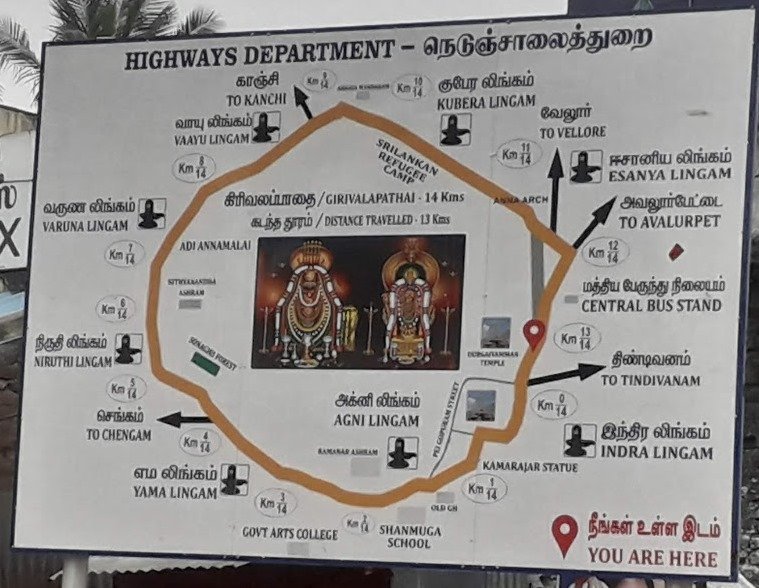
    Girivalam is the act of walking barefoot around Arunachala Hill.

    The complete route is approximately 14 kilometers.

    Devotees perform Girivalam:

    • During every Full Moon (Pournami)
    • During Karthigai Deepam Festival
    • On special Hindu festival days

    Many believe that completing Girivalam removes negative karma and brings prosperity, peace, and spiritual growth.


    Karthigai Deepam Festival

    siva 8

    The Karthigai Deepam Festival is the most famous celebration in Tiruvannamalai.

    Every year, during the Tamil month of Karthigai, a gigantic sacred lamp is lit on the summit of Arunachala Hill.

    Millions of devotees gather to witness this spectacular event.

    The flame symbolizes Lord Shiva appearing as the Infinite Light.

    The festival attracts pilgrims from across India and abroad.

    siva 9

    Sri Ramana Maharshi Ashram

    siva 10

    Another major attraction is the Sri Ramana Maharshi Ashram.

    Ramana Maharshi was one of India’s greatest spiritual masters.

    His teachings emphasized:

    • Self-Inquiry
    • Silence
    • Meditation
    • Inner Peace

    The ashram welcomes visitors from around the world who come to meditate and learn about his philosophy.

    The peaceful surroundings make it one of the most visited spiritual centers in India.

    siva 11

    Best Time to Visit Tiruvannamalai

    The ideal time to visit is between:

    October and March

    siva 5

    During these months:

    • Pleasant weather
    • Comfortable temple visits
    • Ideal for Girivalam
    • Festival celebrations

    Avoid peak summer afternoons because temperatures can become very high.


    How to Reach Tiruvannamalai

    By Road

    Regular buses operate from:

    • Chennai
    • Bengaluru
    • Vellore
    • Salem
    • Puducherry

    By Train

    Tiruvannamalai Railway Station connects the town with major cities in Tamil Nadu.

    By Air

    Nearest airports:

    • Chennai International Airport
    • Bengaluru International Airport

    From the airport, travelers can continue by bus or taxi.

    siva 15

    Famous Foods in Tiruvannamalai

    Visitors can enjoy authentic South Indian cuisine, including:

    • Idli
    • Dosa
    • Pongal
    • Vada
    • Filter Coffee
    • Lemon Rice
    • Tamarind Rice
    • Curd Rice

    Several vegetarian restaurants serve traditional Tamil meals.


    Places to Visit Near Tiruvannamalai

    Nearby attractions include:

    • Sathanur Dam
    • Gingee Fort
    • Jawadhu Hills
    • Yelagiri Hills
    • Sri Seshadri Swamigal Ashram
    • Virupaksha Cave
    • Skandashram

    These places are perfect for history lovers, nature enthusiasts, and spiritual travelers.

    siva 10

    Travel Tips

    Before visiting:

    • Wear modest clothing while entering temples.
    • Carry drinking water during Girivalam.
    • Remove footwear before entering temple premises.
    • Respect temple customs and traditions.
    • Visit early morning to avoid crowds.

    Why Should You Visit Tiruvannamalai?

    Tiruvannamalai is much more than a tourist destination.

    It offers:

    siva 12
    • Ancient history
    • Spiritual experience
    • Beautiful temple architecture
    • Sacred pilgrimage
    • Meditation centers
    • Peaceful atmosphere
    • Rich Tamil culture
    • Whether you seek devotion, history, or inner peace, Tiruvannamalai has something special to offer.

    Frequently Asked Questions

    Why is Tiruvannamalai famous?

    It is famous for Arunachaleswarar Temple, Arunachala Hill, Girivalam, and Karthigai Deepam Festival.

    How long is Girivalam?

    The Girivalam route is approximately 14 kilometers.

    Which deity is worshiped in Tiruvannamalai?

    Lord Arunachaleswarar (Lord Shiva).

    Which is the nearest airport?

    Chennai International Airport.

    When is the best time to visit?

    October to March.

    siva 13

    Conclusion

    Tiruvannamalai is one of India’s greatest spiritual destinations. From the magnificent tiruvanamalai temple to the sacred Arunachala Hill, every corner of this town reflects devotion, history, and peace.

    Whether you come for worship, meditation, or sightseeing, Tiruvannamalai offers a memorable experience that stays with you long after your visit. A journey to this sacred town is not just a trip—it is a journey of faith, culture, and self-discovery.


    siva 14
  • Departments of the Government of India – Complete List and Details

    Departments of the Government of India – Complete List and Details

    rashtrapati bhavan is the official home of the president of india
    Rashtrapati Bhavan is the official home of the President of India

    The Government of India is divided into several ministries and departments, each responsible for managing a specific sector of administration, public welfare, economic development, and national security. These departments work together to implement government policies and provide essential services to citizens.

    Department of Agriculture & Farmers Welfare

    Responsibilities

    Agricultural development.

    Farmer welfare schemes.Livestock development Dairy farming Poultry development Animal healthcare

    Crop production.

    Agricultural research.

    agriculture

    Department of Animal Husbandry & Dairying

    Responsibilities:

    Livestock development

    Dairy farming

    Poultry development

    Animal healthcare

    dairy farm, simmental cattle, feeding cows on farm

    Department of Fisheries

    Responsibilities:

    Fish farming.

    Fisheries development.

    Welfare of fishermen

    department fisher

    Department of School Education & Literacy

    Responsibilities:

    • School education .
    • Literacy programs.
    • Educational reforms.

    Department of Education

    department school

    Responsibilities:

    • Universities.
    • Colleges.
    • Higher education policies

    Department of Health & Family Welfare

    Responsibilities:

    department health
    • Public healthcare.
    • Hospitals.
    • National health programs.
    • Vaccination campaigns
    • Vaccination campaigns

    7. Ministry of Home Affairs

    Responsibilities:

    ministry of home affairs
    • Internal security
    • Police administration
    • Disaster management
    • Border management

    8. Ministry of Defence

    Responsibilities:

    ministery of defence
    • Indian Army
    • Indian Navy
    • Indian Air Force
    • National security

    9. Ministry of External Affairs

    Responsibilities:

    ministry of external
    • Foreign relations
    • Passports
    • International diplomacy
    • Overseas Indian affairs

    10. Department of Economic Affairs

    Responsibilities:

    department economic
    • National economy
    • Budget preparation
    • Financial policies

    11. Department of Revenue

    Responsibilities:

    revenue
    • Income Tax
    • GST administration
    • Customs and Excise

    12. Ministry of Railways

    Responsibilities:

    minorty image
    • Railway operations
    • Passenger services
    • Railway infrastructure

    13. Ministry of Road Transport & Highways

    Responsibilities:

    sministry of road transport and highways
    • National highways
    • Road safety
    • Driving licenses
    • Vehicle registration

    14. Ministry of Civil Aviation

    Responsibilities

    minister of civil
    • Airports
    • Aviation safety
    • Air transport services

    15. Ministry of Ports, Shipping & Waterways

    Responsibilities

    department fisher
    • Ports development
    • Inland waterways
    • Maritime transport

    16. Ministry of Electronics & Information Technology (MeitY)

    Responsibilities:

    department economic
    • Digital India
    • Cybersecurity
    • E-Governance
    • IT policies

    17. Department of Telecommunications (DoT)

    Responsibilities:

    dot
    • Telecom services
    • Internet infrastructure
    • Mobile communications

    18. Department of Posts

    Responsibilities:

    postel department image
    Ajmer, India – September 24, 2013: red postbox outside the India post office, Ajmer, Rajasthan, India.
    • India Post services
    • Speed Post
    • Postal savings
    • Parcel delivery

    19. Ministry of Power

    Responsibilities:

    ministry of power
    • Electricity generation
    • Power distribution
    • Energy policies

    20. Ministry of Petroleum & Natural Gas

    Responsibilities:

    ministry of petroleum
    • Petroleum products
    • LPG distribution
    • Natural gas development

    21. Ministry of Coal

    Responsibilities:

    ministry of coal
    • Coal production
    • Coal mining policies

    22. Ministry of Mines

    Responsibilities:

    • Mineral exploration
    • Mining regulations

    23. Ministry of Steel

    Responsibilities:

    • Steel production
    • Steel industry development

    24. Ministry of Commerce & Industry

    Responsibilities:

    • Domestic trade
    • International trade
    • Industrial growth

    25. Ministry of Micro, Small & Medium Enterprises (MSME)

    Responsibilities:

    msme
    • MSME development
    • Business support schemes
    • Entrepreneurship promotion

    26. Ministry of Labour & Employment

    Responsibilities:

    labour images
    • Employment policies
    • Labour welfare
    • Industrial relations

    27. Ministry of Women & Child Development

    Responsibilities:

    women child
    • Women’s welfare
    • Child protection
    • Nutrition programs

    28. Ministry of Social Justice & Empowerment

    Responsibilities:

    justice image
    • Social welfare
    • Welfare of senior citizens
    • Rights of persons with disabilities

    29. Ministry of Tribal Affairs

    Responsibilities:

    tribal image
    • Tribal welfare
    • Tribal development programs

    30. Ministry of Minority Affairs

    Responsibilities:

    ministry of home affairs
    • Minority welfare
    • Scholarships
    • Community development

    31. Ministry of Rural Development

    Responsibilities:

    • Rural infrastructure
    • Employment schemes
    • Poverty alleviation

    32. Ministry of Panchayati Raj

    Responsibilities:

    • Village governance
    • Panchayat administration

    33. Ministry of Housing & Urban Affairs

    Responsibilities:

    • Urban development
    • Smart Cities Mission
    • Housing schemes

    34. Department of Drinking Water & Sanitation

    Responsibilities:

    • Clean drinking water
    • Rural sanitation
    • Swachh Bharat Mission

    35. Ministry of Jal Shakti

    Responsibilities:

    • Water resources
    • River management
    • Water conservation

    36. Ministry of Environment, Forest & Climate Change

    Responsibilities:

    • Environmental protection
    • Forest conservation
    • Climate change policies

    37. Department of Science & Technology

    Responsibilities:

    • Scientific research
    • Innovation
    • Technology development

    38. Department of Space

    Responsibilities:

    • Space research
    • Satellite missions
    • ISRO programs

    39. Department of Atomic Energy

    Responsibilities:

    • Nuclear energy
    • Atomic research
    • Radiation safety

    40. Ministry of Tourism

    Responsibilities:

    • Tourism promotion
    • Heritage tourism
    • Tourist services

    41. Ministry of Culture

    Responsibilities:

    • Cultural heritage
    • Museums
    • Archaeological preservation

    42. Ministry of Youth Affairs & Sports

    Responsibilities:

    • Sports development
    • Youth empowerment
    • National sports programs

    43. Ministry of Law & Justice

    Responsibilities:

    • Legal affairs
    • Judicial administration
    • Legislative drafting

    44. Ministry of Parliamentary Affairs

    Responsibilities:

    • Parliamentary business
    • Coordination between ministries and Parliament

    45. Department of Personnel & Training (DoPT)

    Responsibilities:

    • Civil services
    • Recruitment policies
    • Administrative reforms

    46. Ministry of Statistics & Programme Implementation

    Responsibilities:

    • National statistics
    • Government project monitoring

    47. Department of Consumer Affairs

    Responsibilities:

    • Consumer rights
    • Consumer protection laws
    • Essential commodities management

    Conclusion

    The Government of India consists of numerous ministries and departments that oversee different sectors such as agriculture, education, health, defence, finance, transport, technology, environment, and public welfare. Together, these departments ensure the effective functioning of the government and the delivery of essential services to citizens across the country.

    This content is suitable as a comprehensive introductory article. For a larger website, you could expand each department into its own dedicated page with detailed information, schemes, services, eligibility, and official contacts

  • The Greatness of Women in India – A Pillar of Strength, Wisdom, and Progress

    The Greatness of Women in India – A Pillar of Strength, Wisdom, and Progress


    Introduction

    mother india

    India is a land of rich culture, traditions, and values where women have always held a place of honor and respect. An ancient Sanskrit saying states, “Yatra Naryastu Pujyante Ramante Tatra Devatah,” which means, “Where women are respected, the gods rejoice.” This timeless message reflects the importance of women in Indian society.

    From ancient times to the modern era, Indian women have contributed significantly to the growth of families, communities, and the nation. They have been mothers, teachers, leaders, scientists, entrepreneurs, soldiers, and social reformers. Their courage, compassion, wisdom, and determination have inspired generations.

    This article explores the greatness of women in India and their remarkable contributions to society.

    Women in Indian Culture

    Indian culture has always regarded women as symbols of love, wisdom, prosperity, and strength. Women are worshipped in the form of goddesses such as:

    lakshmi
    • Goddess Lakshmi – The Goddess of Wealth and Prosperity.
    • Goddess Saraswati – The Goddess of Knowledge and Learning.
    • Goddess Durga – The Goddess of Strength and Courage

    These divine forms represent the qualities that every woman possesses. Respecting women has always been considered one of the highest values in Indian civilization.

    The Role of Women as Mothers

    talli

    A mother is often called the first teacher in a child’s life. She nurtures, guides, and shapes the future of her children with love and patience.

    From teaching a child to speak and walk to instilling moral values and discipline, a mother’s influence is unmatched. She sacrifices her comfort and happiness to ensure the well-being of her family.

    That is why Indian culture teaches the principle of “Matru Devo Bhava,” meaning “Mother is equal to God.”

    Women as the Foundation of the

    study

    Women play a vital role in maintaining harmony within the family. Whether as daughters, sisters, wives, or mothers, they bring love, care, and stability to every household.

    A woman manages responsibilities with dedication while balancing both personal and professional life. Her ability to care for every family member makes her the emotional backbone of the home.

    Strong families create strong societies, and women are at the center of this strength.

    Women and stydy in

    nice

    Education has transformed the lives of millions of women in India. Today, women excel in schools, colleges, and universities across the country.

    Educated women contribute to:

    • Better family health
    • Improved financial stability
    • Children’s education
    • Social development
    • National progress

    When a woman receives education, an entire generation benefits from her knowledge.

    Women in Science and Technology

    doctor

    Indian women have made remarkable achievements in science and technology.

    Many women work as:

    • Scientists
    • Engineers
    • Researchers
    • Doctors
    • Software Professionals
    • Space Scientists

    One of the greatest inspirations is Kalpana Chawla, the first woman of Indian origin to travel into space. Her journey continues to inspire millions of young girls.

    Today, Indian women contribute significantly to organizations such as ISRO, DRDO, and various research institutions.

    Women in Politics and Leadership

    women leader

    Women have demonstrated exceptional leadership throughout Indian history.

    Some inspiring leaders include:

    Indira Gandhi

    indira

    India’s first woman Prime Minister, known for her strong leadership and determination.

    Droupadi Murmu

    murmu

    The President of India and an inspiration for millions through her dedication to public service.

    Sarojini Naidu

    sarijini naidu

    Known as the “Nightingale of India,” she played a major role in India’s freedom movement and women’s empowerment.

    Their leadership proves that women can successfully lead a nation and bring positive change.

    Women in Sports

    Indian women have brought immense pride to the nation through sports.

    Some outstanding athletes include:

    • P. V. Sindhu – Olympic Medalist in Badminton
    • Mary Kom – World Boxing Champion
    • Saina Nehwal – International Badminton Star
    • Mirabai Chanu – Olympic Weightlifting Medalist
    • Sakshi Malik – Olympic Wrestler

    Their achievements have inspired countless young athletes across India

    kalpana
    mary cum
    pv sindu

    Women in Business and Entrepreneurship

    Today, women are becoming successful entrepreneurs and business leaders.

    They establish startups, manage multinational companies, and create employment opportunities for thousands of people.

    Women entrepreneurs contribute significantly to India’s growing economy by introducing innovation, leadership, and creativity.

    Women’s Contribution to Society

    women contribute to society in countless ways.

    They work as:

    • Teachers
    • Doctors
    • Nurses
    • Police Officers
    • Judges
    • Social Workers
    • Engineers
    • Pilots
    • Farmers
    • Entrepreneurs

    Their dedication improves education, healthcare, justice, and economic development

    murmu

    The Spirit of Sacrifice

    One of the greatest qualities of women is their willingness to sacrifice for the happiness of others.

    Women often prioritize:

    • Their family’s well-being
    • Their children’s education
    • Their parents’ care
    • Their community’s welfare

    Despite facing challenges, they continue to work with determination and compassion.

    Their sacrifices often go unnoticed, yet they remain the foundation of strong families and communities

    Women’s Empowerment

    Women’s empowerment means providing equal opportunities in:

    • Education
    • Employment
    • Leadership
    • Healthcare
    • Financial Independence
    • Safety and Security

    Empowered women become confident decision-makers who contribute positively to society.

    Governments, educational institutions, and communities must continue supporting women’s empowerment for a brighter future

    Challenges Faced by Women

    chalenge

    Although Indian women have achieved tremendous success, they still face several challenges, including:

    • Gender discrimination
    • Unequal opportunities
    • Workplace inequality
    • Safety concerns
    • Limited access to education in some areas

    Addressing these issues requires collective efforts from society, government, and individuals

    Respecting Women

    two professional women shaking hands to confirm a business partnership.
    Two professional women shaking hands to confirm a business partnership.

    Respecting women should not be limited to one special day.

    Every individual should:

    • Treat women with dignity.
    • Encourage girls’ education.
    • Support equal opportunities.
    • Speak against discrimination.
    • Promote gender equality.
    • Create safe environments for women.

    The Future of Indian Women

    The future of India depends greatly on the progress of its women.

    As more women receive education and opportunities, they continue to excel in every field—from technology and medicine to politics, sports, business, and entrepreneurship.

    An empowered woman creates an empowered family, which ultimately leads to a stronger and more prosperous nation

    lady feature

    Conclusion

    Women are the heart of every family and the backbone of every nation. Their love, strength, intelligence, compassion, and resilience make them one of the greatest forces in society.

    India’s progress is closely connected with the progress of its women. By respecting, educating, and empowering women, we build a stronger, more inclusive, and prosperous nation.

    Let us honor the invaluable contributions of women and ensure that every girl and woman has the opportunity to achieve her dreams.

    “When a woman rises, a family rises. When families rise, society prospers. And when society prospers, the nation becomes stronger.”

    namaste

    thanks for u all readers

  • Difference Between ZIP Code and PIN Code – Complete Guide

    What is the Difference Between ZIP Code and PIN Code?

    Many people think that ZIP Code and PIN Code are the same. Both are used to identify postal locations, but they belong to different countries and postal systems.

    A ZIP Code is used in the United States, while a PIN Code (Postal Index Number) is used in India. Both help postal departments sort and deliver letters, parcels, and courier shipments to the correct destination.


    What is a ZIP Code?

    ZIP stands for Zone Improvement Plan.

    The United States Postal Service (USPS) introduced ZIP Codes in 1963 to improve the speed and accuracy of mail delivery.

    A ZIP Code usually contains 5 digits.

    Example:

    • 10001 – New York
    • 90210 – Beverly Hills

    Sometimes an extended ZIP Code is used with four extra digits.

    Example:

    • 10001-1234

    This provides even more accurate delivery information.


    What is a PIN Code?

    PIN stands for Postal Index Number.

    The PIN Code system was introduced by India Post on 15 August 1972 to simplify mail sorting and reduce delivery errors.

    Every Indian PIN Code contains 6 digits.

    Example:

    • 500001 – Hyderabad GPO
    • 110001 – New Delhi GPO
    • 600001 – Chennai GPO

    Each PIN Code represents a specific postal delivery area.


    ZIP Code vs PIN Code

    FeatureZIP CodePIN Code
    Full FormZone Improvement PlanPostal Index Number
    CountryUnited StatesIndia
    Introduced19631972
    Number of Digits5 (or ZIP+4)6
    Used ByUSPSIndia Post
    PurposeMail DeliveryMail Delivery

    Why Are ZIP Codes and PIN Codes Important?

    Both systems help postal services:

    • Deliver letters quickly
    • Reduce delivery mistakes
    • Identify correct postal locations
    • Improve courier services
    • Support online shopping and address verification

    Without ZIP Codes and PIN Codes, delivering millions of letters every day would be much more difficult.


    When Should You Use a ZIP Code?

    Use a ZIP Code when sending mail to the United States.

    Examples include:

    • Business addresses
    • Online shopping
    • Courier services
    • Government documents

    When Should You Use a PIN Code?

    Use a PIN Code when sending mail anywhere in India.

    Examples include:

    • Speed Post
    • Registered Post
    • Courier deliveries
    • Online shopping
    • Banking and government forms

    How to Find an Indian PIN Code?

    Finding an Indian PIN Code is simple.

    Visit All India PIN Code Search and enter any 6-digit PIN Code to instantly view:

    • Post Office Name
    • District
    • State
    • Branch Type
    • Delivery Status

    This helps users quickly verify postal information before sending letters or parcels.


    Frequently Asked Questions

    Is ZIP Code and PIN Code the same?

    No. A ZIP Code is used in the United States, while a PIN Code is used in India.

    Which country uses PIN Codes?

    India uses PIN Codes through India Post.

    Which country uses ZIP Codes?

    The United States uses ZIP Codes through the United States Postal Service (USPS).

    Can I use a ZIP Code in India?

    No. India uses only 6-digit PIN Codes.


    Conclusion

    Although ZIP Codes and PIN Codes perform the same basic function of identifying postal locations, they belong to different countries and follow different numbering systems.

    If you are sending mail within India, always use the correct 6-digit PIN Code. If you are sending mail to the United States, use the appropriate ZIP Code.

  • PIN  CODES  HISTORY  IN INDIA

    PIN CODES HISTORY IN INDIA

    Nowadays, whether we want to purchase an item, open a bank account, or submit an application for government services, the PIN code is one of the first details commonly asked for. Let us explore what a PIN code actually is, when and by whom it was introduced in India, the reasons behind its implementation, and its history.

    5744367

    What does ‘Pin code’ mean?


    PIN stands for Postal Index Number. It is a six-digit code introduced by the postal department (India Post) in India. Every post office in the country has a unique PIN code; it is through this code that letters and parcels reach their respective addresses.

    postel image

    Why did the need for a pin code arise?


    Before 1972, there was no PIN code system in India. The country was vast, comprising numerous towns and small villages. It was common for different places to share the same name. Furthermore, India is home to a multitude of languages—such as Telugu, Hindi, Urdu, Tamil, and Bengali. At that time, the use of letters was widespread and essential; however, because people wrote letters in their respective languages, postal staff faced significant confusion. Consequently, ensuring letters reached the correct recipients was difficult, and they often ended up at the wrong locations.

    When was the PIN code introduced in India?


    The PIN code system is a system devised by the Government of India after extensive planning and deliberation. It was officially launched by the government on August 15, 1972. The system was designed by Shri ram Bhikaji Velankar, an official of the Postal Department.

    postel find

    The meaning of the six digits in a PIN code


    Each digit in a PIN code has a specific meaning.
    First digit – Postal zone
    Second digit – Sub-zone
    Third digit – Sorting district
    Digits 4, 5, and 6 – The specific post office