In the next article, we’ll explore Myanmar’s unique Ramayana tradition known as Yama Zatdaw, how Rama’s story entered Burmese culture, the roles of Yama, Thida and Dathagiri, and how the epic became part of Myanmar’s theatre, dance, literature and traditional art.


What Is Yama Zatdaw?
Yama Zatdaw is the Burmese tradition based on the Ramayana.
The name is associated with Yama, the Burmese name for Rama.
The story became part of Myanmar’s cultural heritage through:
🎭 Theatre
💃 Dance
📖 Literature
🎨 Art
🗣️ Storytelling
Like other Southeast Asian traditions, Myanmar developed its own interpretation rather than simply reproducing the Indian Ramayana word for word.
Rama Becomes Yama
In the Burmese tradition, Rama is known as Yama.
He remains the central heroic figure.
His story includes familiar themes of:
🏹 Courage
🙏 Duty
❤️ Loyalty
👑 Kingship
⚔️ Conflict
The basic narrative connects Yama with the larger Ramayana tradition found throughout Asia.
Sita Becomes Thida
Sita is known as Thida in the Burmese tradition.
Her relationship with Yama remains an important part of the story.
Her separation from Yama and the events surrounding her capture provide some of the most dramatic moments in Yama Zatdaw.
Ravana Becomes Dathagiri
Ravana is known as Dathagiri in the Burmese tradition.
Like Ravana in the Indian epic, Dathagiri is a powerful ruler and the principal opponent of Yama.
His elaborate appearance and dramatic role make him an important figure in Burmese performance traditions.


Hanuman in Myanmar
Hanuman remains one of the most recognizable characters in Yama Zatdaw.
His traditional qualities include:
🐒 Courage
💪 Strength
🧠 Intelligence
🙏 Loyalty
⚔️ Bravery
His adventures provide opportunities for dramatic action and lively theatrical performances.
Theatre and Yama Zatdaw
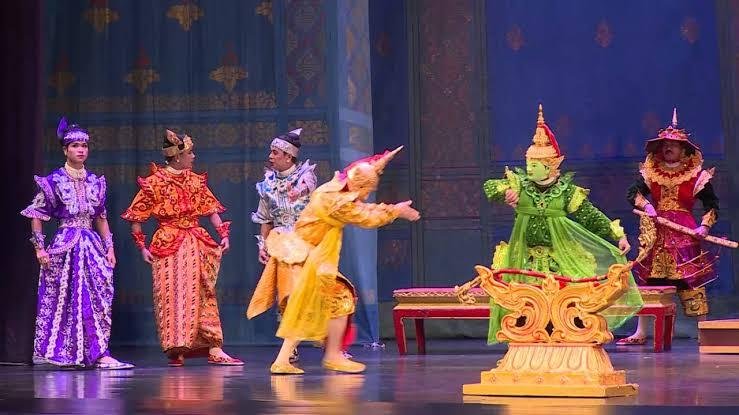
The word Zatdaw is associated with traditional Burmese theatrical performance.
Yama Zatdaw could therefore be experienced not merely as a written story, but as a performed epic.
Actors, musicians and dancers could bring the characters to life through:
🎭 Acting
🎵 Music
💃 Movement
👑 Costumes
🗣️ Dialogue

A Story Adapted for Burmese Audiences
When the Ramayana entered Myanmar, it encountered an already rich Burmese cultural environment.
The story was therefore adapted through local:
🗣️ Language
🎭 Theatre
🎨 Artistic traditions
🙏 Religious culture
🎵 Music
This helped transform the epic into something that Burmese audiences could experience as their own cultural tradition.
The Influence of Buddhist Culture
Myanmar has a long and important Theravada Buddhist tradition.
As the Ramayana became part of Burmese culture, its stories were encountered within this wider Buddhist environment.
This is another example of how the Ramayana changed as it travelled across Asia.
The epic could be interpreted through the cultural ideas already present in the society where it arrived.
Yama and Thida
The relationship between Yama and Thida remains central to the emotional side of the story.
Their journey includes:
❤️ Love
🌳 Separation
💔 Loss
⚔️ Conflict
🏹 Reunion
These themes help make the story understandable even when the names and cultural setting change.
Hanuman’s Popularity
Hanuman is especially effective in theatrical traditions because his character allows performers to combine action and humor.
He can be portrayed as:
⚔️ A warrior
🙏 A loyal servant
🧠 A clever strategist
🐒 An energetic hero
This makes him one of the most memorable figures in Yama Zatdaw.

The Ramayana Through Burmese Art
The story has also inspired visual representations.
Artists can portray:
🏹 Yama
🌸 Thida
🐒 Hanuman
👑 Dathagiri
⚔️ Battle scenes
These images provide another way for audiences to connect with the epic.
Myanmar’s Place in the Asian Ramayana Tradition
By now, the journey is becoming clear.
The Ramayana travelled across many parts of Asia.
🇮🇳 India — Ramayana
🇹🇭 Thailand — Ramakien
🇮🇩 Indonesia — Javanese and Balinese traditions
🇰🇭 Cambodia — Reamker
🇱🇦 Laos — Phra Lak Phra Lam
🇲🇲 Myanmar — Yama Zatdaw
Each tradition has its own identity.
The Same Characters, Different Names
| Indian Tradition | Myanmar Tradition |
|---|---|
| Rama | Yama |
| Sita | Thida |
| Ravana | Dathagiri |
| Hanuman | Hanuman |
| Lakshmana | Lakhan |
The differences in names show how the story was adapted to the Burmese language and cultural environment.
Why Did Yama Zatdaw Survive?
The story contains themes that can cross cultural boundaries.
People everywhere can understand:
❤️ Love
🤝 Loyalty
👨👩👦 Family
⚖️ Duty
💪 Courage
👑 Leadership
These universal themes helped the Ramayana continue to resonate even after travelling far from its original cultural environment.
From Ancient Epic to Living Tradition
Yama Zatdaw demonstrates that the Ramayana is not simply a story preserved in old manuscripts.
It has also been:
🎭 Performed
🗣️ Retold
🎨 Reimagined
🎵 Sung
💃 Danced
Each generation can encounter the story in a new form.
A Shared Asian Story
The Burmese tradition adds another important chapter to the story of the Ramayana’s journey across Asia.
It shows that cultural exchange does not erase local identity.
Instead, a travelling story can become part of a new culture while retaining connections with its earlier forms.
Conclusion
Myanmar transformed the Ramayana into Yama Zatdaw, giving the epic a distinctly Burmese cultural identity.
Rama became Yama.
Sita became Thida.
Ravana became Dathagiri.
Hanuman remained one of the most beloved figures.
Through Burmese theatre, literature, dance and art, the story continued to live within Myanmar’s cultural tradition.
🇲🇲 Yama Zatdaw is another remarkable example of how Rama’s story travelled across Asia and found a new voice in another civilization.
In the next part, we will move beyond Southeast Asia and explore the Ramayana traditions of the Philippines and other parts of Asia, discovering how far the story travelled and where its influence can still be found today.
Leave a Reply