India’s independence was not achieved in a single day.
The freedom that India celebrates every year on 15 August was the result of decades of struggle, sacrifice, protests, imprisonment and determination. Millions of ordinary Indians, along with well-known leaders, became part of a movement that eventually brought an end to British rule.
The story of Indian independence is therefore not only the story of famous leaders. It is also the story of students, farmers, workers, women, revolutionaries and countless people whose names were never recorded in history books.
The Beginning of a National Awakening
British rule in India had existed for many decades before the freedom movement developed into a mass national struggle.
The Revolt of 1857 became one of the earliest major challenges to British authority. Although the revolt did not end British rule, it became an important part of India’s later political memory.
During the late nineteenth and early twentieth centuries, political awareness grew rapidly. Indians increasingly demanded greater participation in government and began to organize themselves politically.
The formation of the Indian National Congress in 1885 provided an important platform for political discussion and, eventually, for the wider independence movement.
But the journey was still only beginning.


Mahatma Gandhi and the Power of Non-Violence
When Mahatma Gandhi returned to India in 1915, he gradually became one of the most influential figures in the freedom movement.
Gandhi believed that ordinary people could challenge an unjust system through non-violent resistance, civil disobedience and mass participation.
Movements such as the Non-Cooperation Movement and the Civil Disobedience Movement brought large numbers of Indians into the struggle.
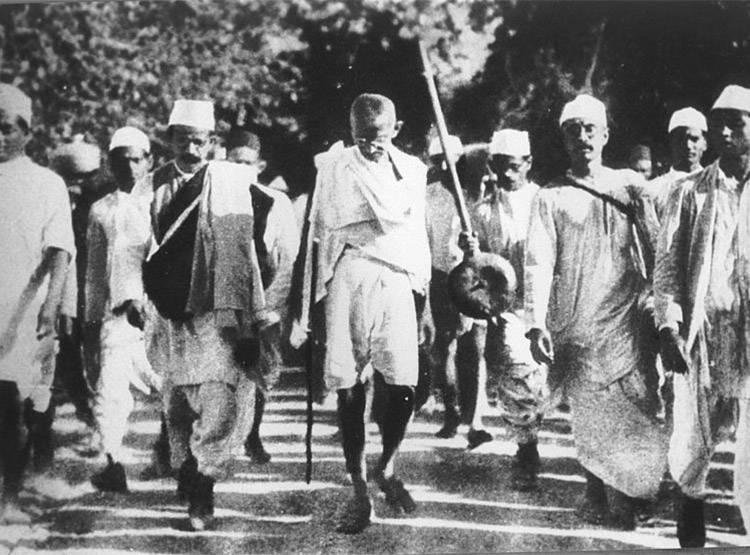
One of the most famous examples was the Salt March of 1930.
Gandhi and his followers marched to the coastal village of Dandi to challenge the British salt laws. The march became a powerful symbol because salt was something used by ordinary people every day.
The message was simple but powerful: even an ordinary object could become a symbol of resistance when people stood together.
The Freedom Movement Becomes a Mass Movement
By the 1920s and 1930s, the independence movement had spread across different parts of India.
People participated in demonstrations, boycotts, strikes and civil-disobedience campaigns.
Women also played an important role. Leaders such as Sarojini Naidu, Aruna Asaf Ali and Kamaladevi Chattopadhyay contributed to the movement in different ways.
At the same time, revolutionary groups and other political organizations followed different approaches to challenging British rule.
India’s freedom struggle was therefore not one single movement with one single method. It was a large and complicated national struggle involving many ideas and many groups.
The Quit India Movement of 1942
The Second World War created a new and difficult situation.
In August 1942, the Indian National Congress launched the Quit India Movement, demanding an immediate end to British rule.
Gandhi gave the famous call:
“Do or Die.”
The British authorities responded with mass arrests. Many national leaders were imprisoned, but the movement continued through protests and underground activities.
The Quit India Movement became one of the most important final mass movements against British rule. Official historical records also document the participation and sacrifices of many individuals across India during the movement.


6
The Forgotten Heroes
When we talk about India’s independence, names such as Gandhi, Nehru, Patel, Bose and Bhagat Singh are often remembered.
But thousands of other people also suffered imprisonment, injuries, financial hardship and, in many cases, death.
Farmers joined protests.
Students organized demonstrations.
Workers participated in strikes.
Women entered public life and political activity.
Young people distributed messages and organized resistance.
Many freedom fighters spent years in prison without knowing when India would become free.
Their contribution reminds us that independence was not achieved by a handful of famous individuals alone.
It was a national effort involving people from different regions and backgrounds.
Subhas Chandra Bose and the Indian National Army
Another important chapter of the freedom struggle was associated with Subhas Chandra Bose and the Indian National Army (INA).
Bose believed that armed struggle could play a role in ending British rule. Under his leadership, the INA sought to fight the British and advance toward India.
The INA’s military campaign did not achieve its ultimate objective, but the events surrounding the INA trials after the war created considerable public attention and sympathy in India.
The growing political pressure after the Second World War made British rule increasingly difficult to maintain.
1947: The Moment of Independence
After the Second World War, Britain’s ability to continue ruling India had weakened considerably.
Political negotiations intensified, but the final years before independence were also marked by serious communal tensions and violence.
Eventually, the Indian Independence Act 1947 provided the legal framework for the creation of two independent dominions: India and Pakistan.
On the night of 14–15 August 1947, Jawaharlal Nehru delivered his famous “Tryst with Destiny” speech.
At midnight, India entered a new chapter in its history.


5
The First Morning of Free India
The morning of 15 August 1947 was unlike any other morning in Indian history.
After nearly two centuries of British colonial rule, India was independent.
People gathered in streets and public places. The Indian flag became a powerful symbol of the new nation.
Newspapers carried the historic news across the country. The atmosphere was filled with celebration, hope and enormous emotion.


4
But independence also came with enormous pain.
The partition of British India resulted in one of the largest and most tragic population movements in modern history. Millions of people were displaced, and communal violence caused immense suffering.
Therefore, 15 August 1947 was both a day of freedom and a day marked by deep human tragedy.
What Independence Really Means
Independence was not simply the replacement of one government with another.
It gave Indians the opportunity to build their own democratic institutions and decide their country’s future.
In the years that followed, India adopted its Constitution and established itself as a democratic republic.
The journey after 1947 was not easy. The country faced poverty, social divisions, wars, economic challenges and many other difficulties.
Yet the basic idea remained powerful:
India would determine its own future.
Remembering the Freedom Fighters
Every Independence Day gives us an opportunity to remember the people who contributed to India’s freedom.
Some became famous.
Others remained unknown.
Some used non-violence.
Others believed in revolutionary methods.
Some spent years in prison.
Others lost their lives.
Their methods and political beliefs were not always the same, but they were all part of the complex history that eventually led to independence.
The freedom we have today was built through the sacrifices and efforts of generations.
Conclusion
India’s independence is not just a date in a calendar.
It is a story of courage, sacrifice, unity, disagreement, hope and determination.
From the early resistance of the nineteenth century to the mass movements of the twentieth century, India’s freedom struggle continued through several generations.
And finally, on 15 August 1947, the long struggle reached its historic turning point.
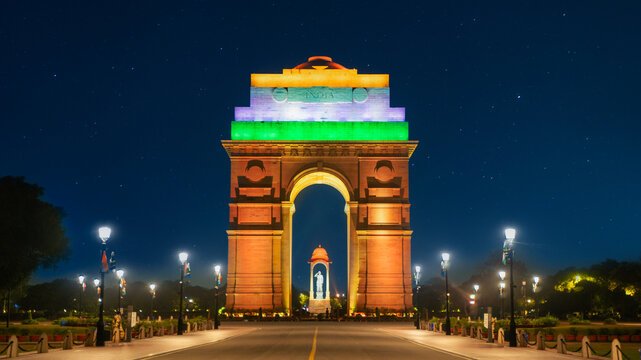
The tricolour rose over a free India.
The country had a new beginning.
But the responsibility that came with freedom was even greater:
to protect democracy, respect diversity, remember history and build a better India for future generations.
🇮🇳 Jai Hind.
Leave a Reply