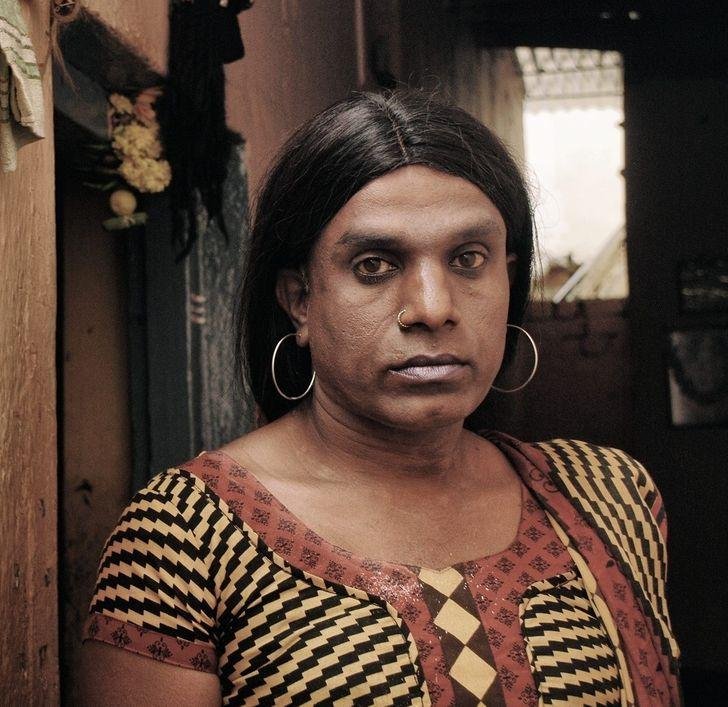
India is known for its incredible diversity of languages, religions, cultures and traditions. Among the communities that have existed in the Indian subcontinent for centuries is the Hijra community, which is now often discussed alongside the broader transgender community.
The history of Hijras is much more complex than the stereotypes often associated with them.
They have been part of India’s social and cultural history for centuries, and their story includes tradition, spirituality, royal courts, colonial laws, social discrimination, legal recognition and a continuing struggle for dignity and equality.


🌈 Who Are Hijras?
The word Hijra has been used across the Indian subcontinent for a very long time.
However, it is important to understand that not every transgender person in India identifies as Hijra.
India’s transgender communities include people with different identities and cultural backgrounds. Hijra is one particular cultural identity within this broader diversity.
Depending on their region and personal identity, people may identify as:
- Transgender
- Hijra
- Kinnar
- Aravani
- Jogta or Jogti
- Other local identities
These terms should not automatically be treated as interchangeable.
🏛️ A Long History in the Indian Subcontinent
References to gender diversity can be found in different periods of Indian history, literature, folklore and religious traditions.
However, modern concepts such as “transgender identity” should not simply be imposed on every gender-diverse person mentioned in ancient texts.
Historical societies had their own concepts and classifications, which were not necessarily identical to today’s understanding of gender identity.
The Hijra community therefore has a history that needs to be understood through different historical periods rather than through a single definition.
👑 Hijras During the Medieval Period
During parts of medieval Indian history, particularly under various royal courts, Hijras and eunuchs could hold important positions.
Some served in:
- Royal households
- Administrative positions
- Palace security
- The households of royal women
- Courtly institutions
Some individuals could also acquire considerable social or political influence.
This is an important part of their history because it challenges the modern stereotype that Hijras have always existed only on the margins of society.


🇬🇧 The Colonial Period and Its Impact
British colonial rule marked a major change in the legal and social treatment of gender-diverse communities.
Colonial authorities introduced systems for monitoring and controlling certain communities.
The Criminal Tribes Act of 1871, for example, contained specific provisions concerning “eunuchs.”
Such laws contributed to the institutionalisation of negative attitudes and social stigma surrounding gender-diverse communities.
The effects of colonial-era policies continued to influence social attitudes long after independence.
Understanding this history helps explain why some forms of discrimination faced by transgender communities have deep historical roots.
🙏 The Guru–Chela Tradition
One of the distinctive social structures associated with parts of the Hijra community is the Guru–Chela tradition.
A guru may serve as an important social and cultural guide for members of the community.
Depending on the particular group, the relationship can involve learning about:
- Community traditions
- Cultural practices
- Social responsibilities
- Customs
- Ways of earning a livelihood
For some people, these community structures have historically provided a form of social and family support, especially when individuals were rejected by their biological families.
However, experiences vary considerably from person to person.
🪔 Spiritual Traditions
Some Hijra communities have distinctive spiritual traditions.
For example, Bahuchara Mata is an important religious figure associated with sections of the Hijra community, particularly in Gujarat.
The Bahuchara Mata temple in Gujarat has become an important place of pilgrimage and cultural significance for some members of the community.
It is important to remember that transgender people in India have diverse religious beliefs and are not all followers of the same spiritual tradition.


🎉 The Tradition of Blessings
In some parts of India, members of Hijra communities have traditionally participated in celebrations such as:
- Birth ceremonies
- Weddings
- Other auspicious occasions
They may sing, dance and offer blessings in return for gifts.
This tradition is commonly associated with “Badhai”.
For many communities, Badhai is not simply an economic activity. It is also part of a cultural tradition passed from one generation to another.
⚖️ Legal Recognition of Transgender People in India
One of the most important developments in the modern history of transgender rights in India came from the Supreme Court.
NALSA v. Union of India — 2014
In its landmark 2014 NALSA judgment, the Supreme Court recognised transgender people as a “third gender” and affirmed that they are entitled to constitutional protections.
The judgment connected transgender rights with principles including:
- Equality
- Dignity
- Personal autonomy
- Freedom
- Non-discrimination
The decision became a major milestone in the legal recognition of transgender people in India.
📜 Transgender Persons (Protection of Rights) Act, 2019
India subsequently enacted the Transgender Persons (Protection of Rights) Act, 2019.
The law aims to protect transgender people against discrimination and provide a legal framework for their rights.
It addresses discrimination in areas including:
- Education
- Employment
- Healthcare
- Access to public services
- Housing
- Public spaces
The legislation also contains provisions concerning abuse and exploitation of transgender people.
🚨 Major Challenges Faced by the Transgender Community
Legal recognition is important, but it does not automatically eliminate social discrimination.
Many transgender people can still face difficulties in everyday life.
1. Family Rejection
Some transgender people experience rejection or misunderstanding within their families.
Lack of family support can affect education, employment, housing and emotional well-being.
2. Educational Barriers
Bullying, discrimination and social pressure can make school and college difficult environments for some transgender students.
3. Employment Discrimination
Some transgender people experience difficulties entering formal employment because of prejudice or discrimination.
4. Healthcare Access
Finding healthcare professionals who understand transgender health needs and provide respectful treatment can be a challenge.
5. Housing Problems
Some people may face difficulty renting accommodation or may be forced to leave their family homes.
6. Social Stigma
Perhaps one of the biggest challenges is the stigma attached to transgender identity.
Mockery, harassment and exclusion can affect a person’s ability to participate fully in society.


💼 Transgender People and Employment
Historically, some Hijra communities depended heavily on traditional forms of livelihood such as:
- Badhai
- Singing
- Dancing
- Begging
But the situation is changing.
Today, transgender people are increasingly visible in fields such as:
- Government employment
- Private companies
- Beauty and fashion
- Entrepreneurship
- Arts
- Education
- Social work
- Media
- Politics
- Community organisations
Therefore, the stereotype that “Hijras only beg for money” does not represent the entire community.
Like any other population, transgender people have diverse skills, careers and ambitions.
🗳️ Transgender Representation in Politics
Transgender people have also entered Indian politics.
Some have contested elections, while others have been elected to local government positions or taken part in political and social movements.
Greater political representation can help bring attention to issues involving:
- Education
- Employment
- Healthcare
- Housing
- Safety
- Social welfare
Political participation can also help transgender people become active participants in decisions that affect their communities.
❤️ Is Being Transgender a Crime?
No.
Being transgender is not a crime.
A person’s gender identity does not determine their intelligence, character, ability or value as a human being.
Transgender people can become:
- Teachers
- Doctors
- Engineers
- Entrepreneurs
- Artists
- Government employees
- Politicians
- Social workers
- Business owners
- Professionals in many other fields
The opportunities available to a person should not depend on whether they are transgender.
👨👩👧 What Can Families Do?
Family acceptance can make an enormous difference in the life of a transgender person.
Families can:
- Listen without immediately judging
- Avoid humiliation or violence
- Support education
- Respect the person’s identity
- Seek qualified professional guidance when needed
- Focus on safety, dignity and well-being
Family support can help prevent homelessness, educational disruption and social isolation.
🏫 What Can Schools and Colleges Do?
Educational institutions can create safer environments by:
Preventing bullying
Students should not be harassed because of their gender identity.
Providing equal educational opportunities
A student’s transgender identity should not become a reason to deny education.
Creating awareness
Teachers and students can benefit from accurate information about gender diversity.
Respecting students
Using a student’s appropriate name and respectful language can contribute to a safer environment.
🌈 The Future of India’s Transgender Community
The story of India’s transgender community is still being written.
There has been a significant shift from social invisibility toward legal recognition and public representation.
The future will depend on whether legal rights are translated into real opportunities.
Important areas include:
- Better education
- More employment opportunities
- Accessible healthcare
- Safe housing
- Political representation
- Family acceptance
- Social security
- Protection from violence and discrimination
Legal recognition is an important beginning, but social acceptance is equally important.


🇮🇳 Conclusion
The history of the Hijra and transgender community in India cannot be reduced to a stereotype.
It includes centuries of cultural traditions, spiritual practices, royal history, colonial discrimination, legal struggles and modern efforts toward equality.
Hijras have been part of the Indian subcontinent’s social history for generations.
Today, transgender people are increasingly entering education, employment, business, politics, entertainment and many other areas of public life.
The 2014 NALSA judgment and the Transgender Persons (Protection of Rights) Act, 2019 were important milestones in recognising transgender rights.
But laws alone cannot create an equal society.
Real equality begins with respect.
Acceptance begins within families.
Opportunity allows talent to become visible.
A transgender person should be seen not simply through their gender identity, but as a human being with abilities, ambitions, responsibilities and dreams.
Leave a Reply