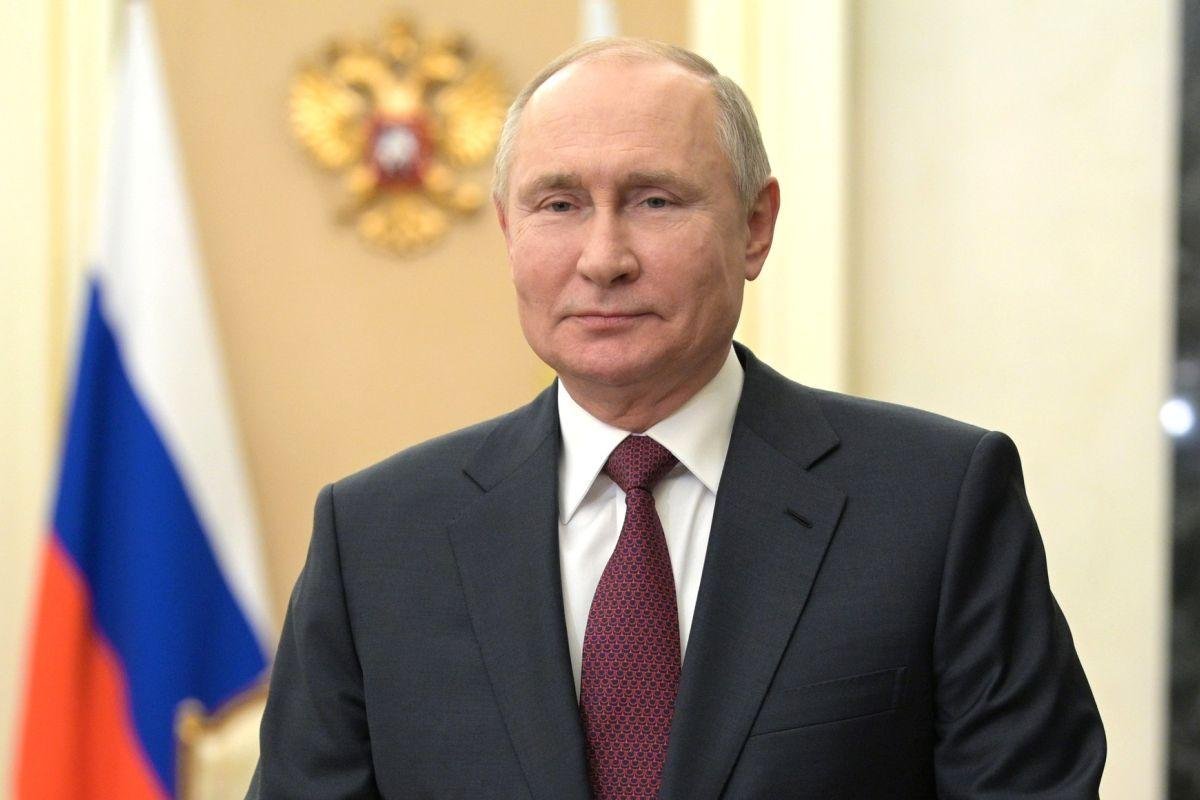


Vladimir Putin is one of the most influential and controversial political leaders of the modern world. His political career has shaped Russia’s domestic politics, its relationship with the West, and its ties with countries including India.
Born on 7 October 1952 in Leningrad, now known as St. Petersburg, Putin studied law before joining the Soviet Union’s intelligence service, the KGB. After the collapse of the Soviet Union, he entered Russian politics and gradually rose to the country’s highest office.
👤 Vladimir Putin — Quick Facts
| Detail | Information |
|---|---|
| Full Name | Vladimir Vladimirovich Putin |
| Date of Birth | 7 October 1952 |
| Birthplace | Leningrad, Soviet Union |
| Country | Russia 🇷🇺 |
| Profession | Politician, former intelligence officer |
| Political Career | President / Prime Minister of Russia |
| First Became President | 2000 |
| Current Position | President of Russia |
🌱 Childhood in Leningrad
Putin was born into a working-class family in Leningrad.
His childhood took place during the Soviet era. He developed an interest in martial arts and later became a judo practitioner.
Judo became an important part of his public image, and he has frequently spoken about lessons such as discipline, preparation and self-control.
🕵️ Life in the KGB
After completing his law degree at Leningrad State University, Putin joined the Soviet security service, the KGB.
He worked as an intelligence officer and spent part of his career in East Germany.
This experience later influenced his understanding of international politics and security.
After the Soviet Union dissolved in 1991, Putin entered government and political administration in St. Petersburg.
🏛️ The Rise of Putin
Putin moved to Moscow during the 1990s and joined the administration of President Boris Yeltsin.
In 1999, Yeltsin appointed Putin as Prime Minister.
Soon afterward, Putin became acting president.
In 2000, he won the Russian presidential election.
That marked the beginning of a political era that would continue for decades.
🇷🇺 Putin’s Long Leadership
Putin served as president from 2000 to 2008.
Because of Russia’s constitutional term limits at the time, he then became Prime Minister, while Dmitry Medvedev served as president.
Putin returned to the presidency in 2012.
He was re-elected in 2018 and again in 2024.
The constitutional changes adopted in Russia have allowed Putin to remain eligible for additional presidential terms.
🇮🇳 Putin and India — A Long-Standing Relationship
One of the most interesting parts of Putin’s international career is his relationship with India.
India and Russia have maintained close relations for decades.
The relationship developed strongly during the Soviet period and continued after the Soviet Union collapsed.
Today, cooperation between India and Russia covers:
- 🤝 Diplomacy
- 🛡️ Defence
- ⚛️ Nuclear energy
- 🛰️ Space
- 🛢️ Energy
- 💰 Trade
- 🎓 Education
- 🌍 International affairs
India has described Russia as an important partner in its foreign policy.
🤝 Putin and Narendra Modi
Putin has met Narendra Modi numerous times.
Their meetings have covered defence cooperation, energy, trade, technology and international affairs.
The relationship between Modi and Putin is part of the broader India–Russia strategic partnership.


One reason this relationship receives global attention is that India maintains strong ties with Russia while also developing closer partnerships with the United States, Europe, Japan and other countries.
🛡️ Russia and India’s Defence Relationship
For many years, the Soviet Union and later Russia became major suppliers of military equipment to India.
Indian armed forces have operated various Russian-origin platforms.
The relationship has also included cooperation in the development and production of defence systems.
A famous example is the BrahMos supersonic cruise missile programme, developed jointly by India and Russia.
⚛️ Nuclear Energy Cooperation
Russia has also played an important role in India’s civilian nuclear-energy programme.
The Kudankulam Nuclear Power Plant in Tamil Nadu was developed with Russian cooperation.
The project represents one of the most important examples of long-term India–Russia cooperation in nuclear energy.
🛢️ Energy and Oil
Energy has become another major area of India–Russia relations.
Russia is one of the world’s largest energy producers.
India, as a rapidly growing economy with large energy requirements, has developed significant energy ties with Russia.
Oil, gas and other energy-related cooperation have therefore become important elements of the bilateral relationship.
🚀 Russia and India’s Space Connection
The relationship between India and Russia also extends into space.
The Soviet Union played an important role in India’s early space journey.
Indian astronaut Rakesh Sharma travelled into space in 1984 aboard a Soviet spacecraft as part of the Intercosmos programme.
He became the first Indian citizen to travel into space.
His historic mission remains one of the most memorable chapters in India–Russia relations.
🌍 Putin and the United States
Putin’s relationship with the United States has changed dramatically over the years.
There were periods of cooperation, but relations later became increasingly tense.
Major disagreements have involved:
- NATO expansion
- European security
- Cybersecurity
- Elections
- Ukraine
- Arms control
- Russia’s relations with Western countries
The relationship became especially difficult after Russia’s actions in Ukraine.
🇺🇦 Russia and Ukraine
The most consequential event of Putin’s recent presidency has been Russia’s war against Ukraine.
Russia launched its full-scale invasion of Ukraine in February 2022.
The conflict has caused enormous human suffering, displacement and destruction.
Ukraine and its allies have condemned Russia’s actions as aggression and imposed extensive sanctions on Moscow.
Russia has presented its actions through its own security and political arguments, but those claims have been strongly rejected by Ukraine and many Western governments.
The war continues to have major consequences for global security, food supplies, energy markets and international diplomacy.
🌍 Why Putin Matters to the World
Putin’s influence extends far beyond Russia.
Russia is:
🇷🇺 A major military power
☢️ A nuclear-armed state
🛢️ A major energy producer
🌍 A permanent member of the UN Security Council
🚀 A major space power
🤝 An important partner of countries including India and China
Because of this, decisions made by the Russian leadership can have consequences across the world.
🧠 Putin’s Leadership Style
Putin is known for projecting an image of:
- Strength
- Discipline
- National power
- Strategic patience
- Centralised leadership
His supporters describe him as a leader who restored Russia’s international influence after the instability of the 1990s.
Critics argue that his government has weakened democratic institutions, restricted political opposition and media freedom, and concentrated power around the presidency.
These competing views are central to understanding Putin’s legacy.
🥋 Putin and Judo
One unusual aspect of Putin’s public image is his long association with judo.
He began training as a young man and achieved a high rank in the sport.
Judo has frequently been incorporated into his public image, alongside other activities intended to portray physical fitness and toughness.
📚 Putin’s Education
Putin studied law at Leningrad State University.
His academic background helped prepare him for a career in government and administration.
He later moved into intelligence and political work.
🤯 Interesting Facts About Vladimir Putin
1. 🗓️ Born in 1952
Putin was born on 7 October 1952 in Leningrad.
2. 🕵️ Former KGB officer
He worked for the Soviet intelligence service before entering Russian politics.
3. 🥋 Judo enthusiast
Martial arts have been an important part of his public image.
4. 🇷🇺 He became president in 2000
His first presidential term began at the start of the new millennium.
5. 🇮🇳 Strong India connection
Russia and India have maintained a long-standing strategic partnership.
6. 🚀 Rakesh Sharma’s mission
The first Indian citizen in space travelled aboard a Soviet spacecraft.
7. ⚛️ Nuclear cooperation
Russia has been involved in India’s Kudankulam nuclear power project.
8. 🛡️ Defence cooperation
India and Russia have collaborated extensively in the defence sector.
🇮🇳 Why Putin Is Important to India
For India, Russia remains significant because of decades of cooperation.
The relationship isn’t limited to one government or one leader.
It has survived:
Soviet Union → Russian Federation → Modern India
and has continued despite major changes in global politics.
India’s relationship with Russia also demonstrates an important feature of Indian foreign policy:
🇮🇳 India tries to maintain strategic relationships with different major powers.
India can cooperate with Russia while simultaneously developing relationships with the United States, Europe, Japan, Australia and other countries.
🌟 The Legacy of Vladimir Putin
Putin’s legacy will be debated for many years.
Supporters will point to Russia’s restored international influence, military strength and centralised state authority.
Critics will point to restrictions on political freedoms, the concentration of power and Russia’s wars and conflicts, especially the invasion of Ukraine.
Whatever the final historical judgment may be, one thing is clear:
Vladimir Putin has played one of the most consequential roles in shaping Russia and international politics in the 21st century.
🇮🇳 MANA BHARATHAM
Stories, Facts & Wonders From India
✍️ Written by Pasupuleti Saida Rao
🌐 Website: allpincodes.online
Know India. Explore India. Celebrate India. 🇮🇳
Leave a Reply