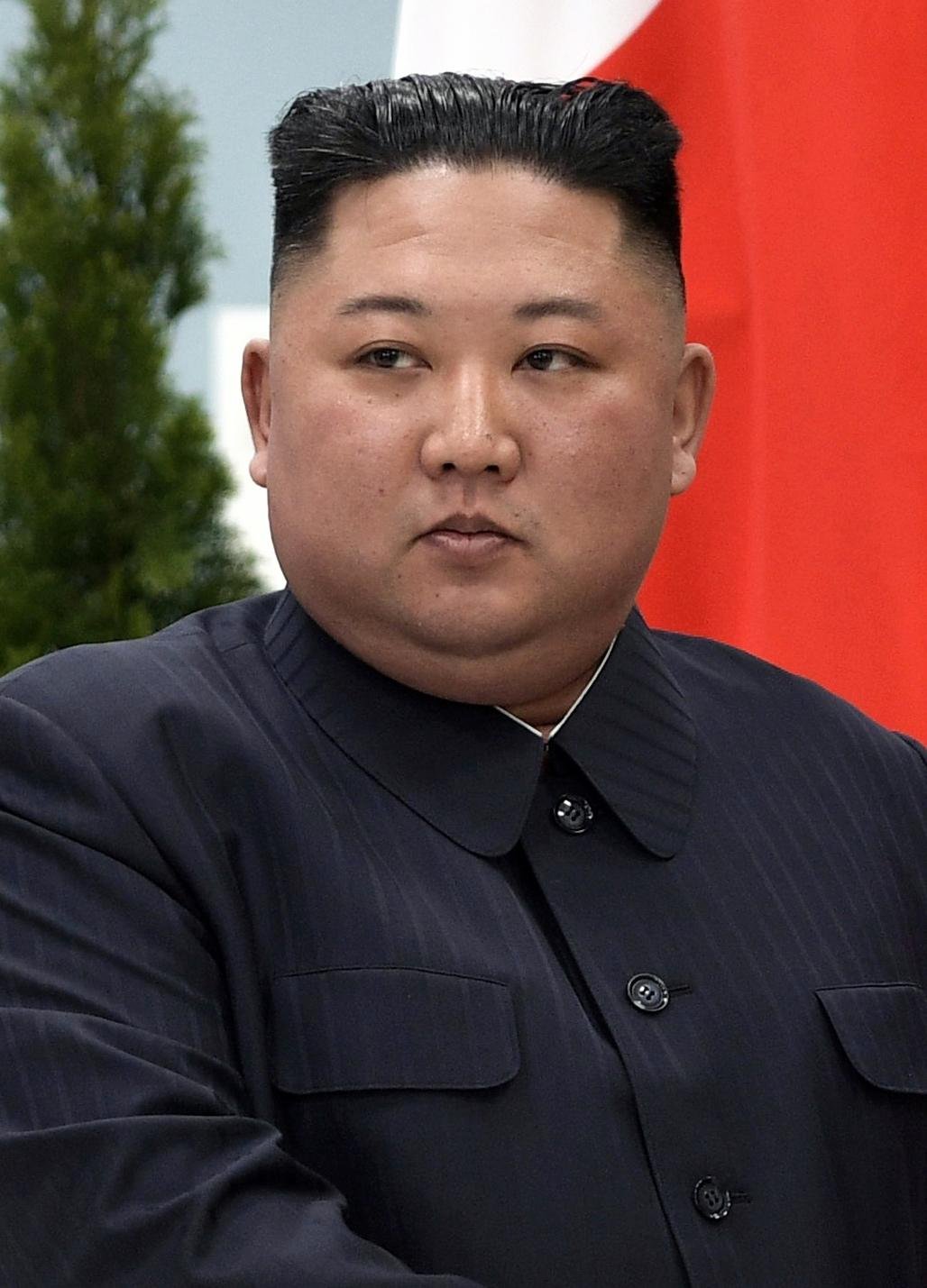
When people hear the name Kim Jong Un, they usually think of North Korea’s nuclear programme, missiles and its highly controlled political system.
But there is another, less-known side to the story: North Korea and India have maintained diplomatic relations for decades.
India’s relationship with the Democratic People’s Republic of Korea (DPRK) is not a military alliance. Instead, it has historically involved diplomacy, humanitarian assistance, trade, cultural exchanges and India’s efforts to encourage peace on the Korean Peninsula. India and North Korea established diplomatic relations at embassy level on 10 December 1973.


👤 Kim Jong Un — Quick Facts
| Detail | Information |
|---|---|
| Name | Kim Jong Un |
| Born | 8 January 1984* |
| Country | North Korea |
| Position | Supreme leader of North Korea |
| Political System | One-party socialist state |
| Capital | Pyongyang |
| Country’s Official Name | Democratic People’s Republic of Korea (DPRK) |
*Kim Jong Un’s exact birth year has historically been reported differently by various sources; 1984 is the commonly cited year.
🇮🇳 Why Does India Have Relations With North Korea?
India’s relationship with North Korea is based largely on diplomacy rather than strategic alliance.
The two countries established diplomatic relations at ambassadorial level in 1973.
The relationship has generally been described by India’s Ministry of External Affairs as one involving friendship, cooperation and understanding.
India maintains diplomatic representation in Pyongyang, while North Korea maintains diplomatic representation in New Delhi.
🌏 India and Korea: A Much Older Connection
Interestingly, India’s connection with the Korean Peninsula is much older than modern diplomacy.
According to the Korean historical text Samguk Yusa, a princess associated with Ayodhya travelled to Korea in ancient times and married King Kim Suro.
The story identifies her as Queen Heo Hwang-ok.
The historical interpretation of this tradition is debated, but the story remains an important part of cultural connections between India and Korea. India’s Ministry of External Affairs highlights the tradition in its background on India-Korea relations.
However, it is important to distinguish this ancient cultural tradition from the modern political relationship between India and North Korea.
☸️ Buddhism: Another Historical Link
India is also connected to the Korean Peninsula through Buddhism.
Buddhist traditions travelled from India across Asia and eventually reached the Korean Peninsula.
There are Buddhist historical sites in the territory of present-day North Korea as well.
India’s Ministry of External Affairs notes the presence of ancient Buddhist temple sites in the DPRK.
This creates an interesting historical bridge between the Indian subcontinent and the Korean Peninsula.
🇮🇳 India’s Role During the Korean War
This is perhaps the most fascinating part of the India–North Korea story.
The Korean War took place from 1950 to 1953.
India did not simply remain a distant observer.
It played an important diplomatic and humanitarian role.
India supported efforts toward a ceasefire and later participated in arrangements concerning prisoners of war.
India’s 60th Parachute Field Ambulance served during the Korean War and provided medical assistance.
After the armistice, Indian Lieutenant General K. S. Thimayya chaired the Neutral Nations Repatriation Commission.
India also contributed the Custodian Force India to help deal with prisoners of war.
That means India’s connection with the Korean Peninsula isn’t something that began recently.
It goes back to one of the most important conflicts of the 20th century.
🤝 India and North Korea During the Cold War
During the Cold War, India followed the policy of Non-Alignment.
North Korea and India were not military allies, but both countries interacted through international organisations and diplomatic channels.
India’s position often focused on:
- Peace
- Dialogue
- Sovereignty
- Diplomatic engagement
- Reduction of tensions
India’s historical relations with Pyongyang therefore developed differently from its relationships with the United States or Soviet Union.
🇮🇳 India’s Embassy in Pyongyang
India maintains an embassy in Pyongyang, the capital of North Korea.
This diplomatic presence is significant because North Korea is one of the world’s most isolated countries.
Through diplomatic channels, India can maintain communication with the North Korean government even when tensions rise in the region.
India’s Ministry of External Affairs continues to list Korea (DPR) among India’s overseas missions.
☢️ India Does NOT Support North Korea’s Nuclear Tests
This is an important point.
Although India maintains diplomatic relations with North Korea, that does not mean India supports all of North Korea’s policies.
India has strongly condemned North Korea’s nuclear tests and ballistic missile launches.
At the same time, India has supported dialogue and diplomatic efforts aimed at reducing tensions on the Korean Peninsula.
So the relationship can be described as:
🤝 Diplomatic engagement
❌ Not a military alliance
☢️ Opposition to nuclear and missile proliferation
🕊️ Support for dialogue and peace
🧑💼 What About Kim Jong Un Personally?
Kim Jong Un became North Korea’s leader after the death of his father, Kim Jong Il, in 2011.
His leadership has focused heavily on maintaining North Korea’s political system and strengthening its military capabilities, particularly its nuclear and missile programmes.
India’s relationship, however, is primarily with the North Korean state, rather than being a personal friendship between Prime Minister of India and Kim Jong Un.
There have been no India–Kim Jong Un summit meetings comparable to India’s high-profile summits with leaders of countries such as the United States, Russia or Japan.
🇮🇳 Did Narendra Modi Meet Kim Jong Un?
As of 2026, Narendra Modi and Kim Jong Un have not held a bilateral summit in the way Modi has with many other world leaders.
India’s engagement with North Korea has largely taken place through diplomatic and official channels.
For India, maintaining communication with Pyongyang is useful because developments on the Korean Peninsula affect wider Asian security.
📜 Agreements Between India and North Korea
India and North Korea have signed agreements covering areas such as:
- 🤝 Trade
- 🎭 Culture
- 🔬 Science and technology
- 📰 Information cooperation
- 🏛️ Foreign-office consultations
India’s MEA records a Trade Agreement from 1978, a Science and Technology cooperation agreement from 1991, and a Cultural Agreement from 1976, among others.
These agreements show that the relationship has not been limited to politics.
💰 What About Trade?
India and North Korea have had economic relations, although these are much smaller than India’s economic relationships with major Asian economies.
UN sanctions and India’s own policy decisions have also significantly affected what kinds of economic activity can take place.
India implements relevant UN Security Council sanctions concerning DPRK, including measures connected with North Korea’s nuclear and ballistic-missile programmes.
So today’s economic relationship is very different from a normal unrestricted trading relationship.
🕊️ India’s Position on Kim Jong Un’s Nuclear Programme
India’s position has been relatively consistent:
India wants the Korean Peninsula to become more peaceful.
India has condemned nuclear and ballistic missile tests by North Korea.
At the same time, New Delhi has repeatedly supported resolving tensions through dialogue and diplomacy.
For example, India welcomed the 2018 inter-Korean summit and the 2018 US–North Korea summit, expressing hope that dialogue would contribute to peace and reconciliation.
This approach is important.
India can maintain diplomatic relations with North Korea without endorsing its nuclear weapons programme.
🇮🇳 Why Is This Relationship Important to India?
You might wonder:
“If India doesn’t have a close alliance with North Korea, why maintain relations?”
There are several reasons.
1. 🌏 Regional Stability
The Korean Peninsula is one of Asia’s most sensitive security regions.
Any major conflict could affect the wider Indo-Pacific.
2. 🕊️ Diplomatic Communication
Having diplomatic relations means India has a channel through which it can communicate with Pyongyang.
3. 🇮🇳 India’s Independent Foreign Policy
India traditionally maintains relationships with countries having very different political systems.
Diplomatic relations do not automatically mean agreement on every issue.
4. 🌏 Asia’s Strategic Balance
North Korea’s relationship with China, Russia, South Korea, Japan and the United States makes developments there important for the entire Asian region.
India therefore watches the situation closely.
🇰🇵 North Korea and India’s Image
Interestingly, North Korea has historically maintained a relatively positive view of India’s independent foreign policy.
India’s role in the Korean War and its Non-Aligned position helped create diplomatic goodwill.
But that doesn’t mean the two countries share the same political or economic model.
India is the world’s largest democracy.
North Korea operates under a highly centralised political system.
Their domestic systems are therefore fundamentally different.
🤯 Interesting Facts About India & North Korea
1. 🇮🇳 India established diplomatic relations with North Korea in 1973
Embassy-level diplomatic relations were established on 10 December 1973.
2. 🏥 India helped during the Korean War
Indian medical personnel provided extensive medical assistance during the conflict.
3. 🪖 Indian forces helped with POW issues
India’s Custodian Force played a role after the Korean War.
4. ☸️ Buddhism connects India and Korea historically
India was an important source region for Buddhism’s spread across Asia.
5. 📜 India and North Korea have several bilateral agreements
These include agreements relating to trade, culture, science and technology.
6. ☢️ India does not support North Korea’s nuclear tests
India has condemned DPRK nuclear and ballistic missile tests.
7. 🕊️ India supports dialogue
India has welcomed diplomatic efforts intended to reduce tensions on the Korean Peninsula.
🌏 India, North Korea and South Korea — A Different Story
There is an important distinction between North Korea (DPRK) and South Korea (Republic of Korea).
India’s relationship with South Korea is considerably deeper economically and strategically.
India and South Korea have developed a Special Strategic Partnership, with extensive cooperation in technology, automobiles, electronics, defence, trade and other sectors.
North Korea, on the other hand, has a much smaller economic relationship with India.
Yet India maintains diplomatic relations with both sides.
That reflects India’s broader approach of maintaining communication across geopolitical divisions.
🇮🇳 The Bigger Picture
The story of Kim Jong Un and India is therefore not a story of close friendship or alliance.
It is a story of diplomacy.
It is a story that began before Kim Jong Un was even born.
It connects:
🇮🇳 India
with
🇰🇵 North Korea
through:
🏥 Korean War humanitarian assistance
🤝 Decades of diplomatic relations
📜 Bilateral agreements
☸️ Historical cultural connections
🕊️ India’s support for dialogue
☢️ India’s opposition to nuclear proliferation
🏁 Final Thoughts
The India–North Korea relationship is one of those international relationships that many people know very little about.
India has maintained diplomatic relations with North Korea for more than five decades.
At the same time, India has clearly disagreed with Pyongyang over nuclear weapons and missile testing.
That combination tells us something important about Indian foreign policy:
A country can disagree strongly with another government while still keeping the door of diplomacy open.
From India’s role in the Korean War to today’s diplomatic engagement with Pyongyang, the relationship has passed through many different phases.
And that makes the India–North Korea story far more interesting than it first appears.
🇮🇳 MANA BHARATHAM
Stories, Facts & Wonders From India
✍️ Written by Pasupuleti Saida Rao
🌐 Website: allpincodes.online
Know India. Explore India. Celebrate India. 🇮🇳
Leave a Reply