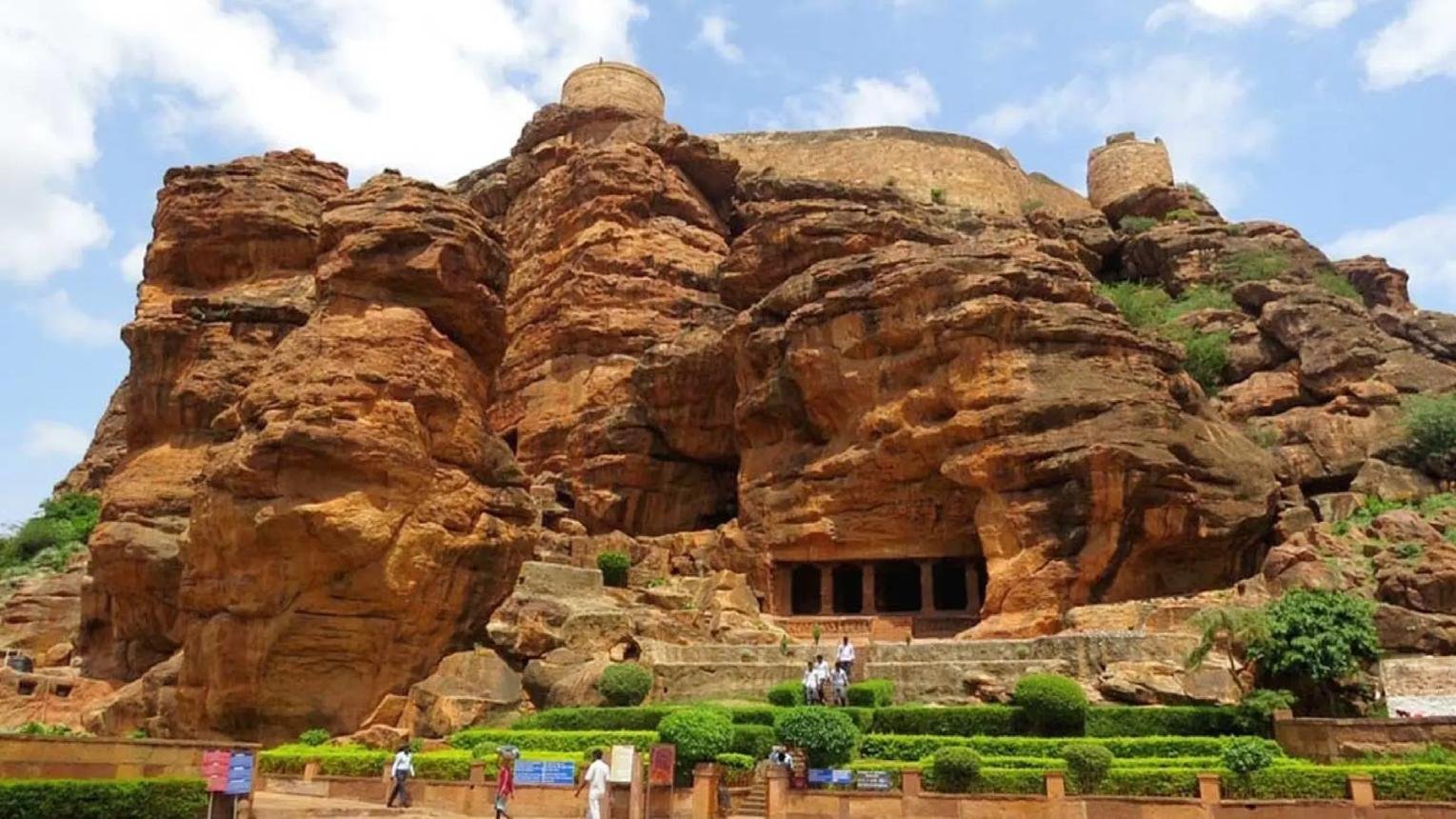
What if you could stand inside a rock shelter and see paintings created by humans thousands of years ago?
No modern buildings.
No roads.
No cities.
Just enormous rocks, forests and ancient paintings showing people hunting, dancing and living their lives.
This extraordinary place exists in Madhya Pradesh.
It is called Bhimbetka Rock Shelters.


🪨 A Window Into Prehistoric India
Bhimbetka is one of the most fascinating archaeological sites in India.
The rock shelters contain prehistoric paintings and evidence of human occupation extending across a very long period.
The site is officially recognized by UNESCO as a World Heritage Site.
Walking through Bhimbetka can feel like stepping backwards through time.
Instead of reading about prehistoric humans in a textbook, you can actually see traces of their lives preserved on rock surfaces.
🎨 Ancient Paintings on Rock
The most exciting feature of Bhimbetka is its rock art.
The paintings depict scenes involving:
- 🦌 Animals
- 🏹 Hunting
- 💃 Dancing
- 👥 Groups of people
- 🎯 Everyday activities
- 🐎 Various creatures and symbols


These paintings provide clues about how people interacted with their surroundings.
🤯 Imagine Living Thousands of Years Ago
Today, if we want to record something, we use a phone.
Thousands of years ago, people didn’t have cameras or social media.
Yet they still found ways to communicate ideas and experiences.
They painted on rocks.
A hunting scene could show animals and human figures.
A group of people could represent an activity or event.
These paintings give researchers valuable evidence about prehistoric life.
🏹 What Do the Paintings Tell Us?
The artwork suggests that prehistoric communities were closely connected to nature.
Animals were an important part of their environment.
Hunting scenes appear frequently.
Human figures are often shown together, suggesting group activities.


The paintings therefore aren’t simply decoration.
They are clues.
They help researchers understand how people interacted with the world around them.
🌳 A Natural Setting
Bhimbetka is surrounded by a landscape of rocky formations and vegetation.
The natural rock shelters provided protection from weather and created spaces where humans could live or gather.


The combination of natural shelters + archaeological evidence + rock paintings makes Bhimbetka exceptionally valuable.
🧑🤝🧑 More Than Just Paintings
One important thing about Bhimbetka is that the site is not valuable simply because of its artwork.
Archaeological evidence from the shelters helps researchers understand the long history of human occupation in the region.
Different layers of evidence represent different periods.
In other words, Bhimbetka is like a giant historical archive—but instead of pages, its records are preserved in rocks, soil and paintings.
🦌 Animals in Ancient Art
Animals feature prominently in Bhimbetka’s rock art.


This is particularly interesting because animals were central to prehistoric human life.
They could be sources of food, potential threats or simply important parts of the surrounding ecosystem.
The paintings give us a glimpse into how ancient communities viewed the world around them.
🔥 Life Before Modern Civilization
Think about the difference between life today and life thousands of years ago.
There were:
No smartphones.
No electricity.
No cars.
No supermarkets.
No modern hospitals.
No skyscrapers.
Yet people still had communities, traditions, artistic expression and ways of communicating.
Bhimbetka helps us remember that human creativity is far older than modern civilization.
🧠 Why Is Bhimbetka Important?
Archaeological sites like Bhimbetka help answer some of humanity’s biggest questions:
How did early humans live?
What did they eat?
How did they interact with animals?
How did they communicate?
What did they consider important enough to record?
Every painting and archaeological layer can provide another piece of the puzzle.
🇮🇳 India’s Ancient Heritage
India is often associated with famous monuments such as the Taj Mahal, forts and temples.
But Bhimbetka represents something much older.
It takes us beyond recorded history and into the prehistoric past.
UNESCO recognizes Bhimbetka as part of India’s World Heritage heritage, alongside many other archaeological and cultural sites.


🤔 The Mystery Behind the Paintings
Perhaps the most fascinating question is:
What were the artists thinking when they created these paintings?
We can study the images.
We can compare them with archaeological evidence.
We can examine the pigments and styles.
But we cannot ask the people who created them.
Their voices disappeared thousands of years ago.
Their paintings remained.
And that makes Bhimbetka incredibly special.
🎨 Art That Survived Time
Imagine creating a painting today and knowing that people might still see it thousands of years later.
That is essentially what happened at Bhimbetka.
Generations disappeared.
Languages changed.
Kingdoms rose and fell.
Cities developed.
Modern India emerged.
But some of those ancient images remained on the rocks.
The artists are gone—but their art is still speaking.
🌍 Why Tourists Should Know About Bhimbetka
Bhimbetka offers something different from a typical tourist destination.
You don’t visit only to take photographs.
You visit to think.
To imagine.
To understand.
To wonder what life was like before written history.


🌟 What Bhimbetka Teaches Us
🧠 Human creativity is ancient
Art isn’t a modern invention.
🌿 Humans have always depended on nature
The ancient paintings show a close relationship with animals and the environment.
📖 History isn’t found only in books
Sometimes history is written on stone.
🕰️ Time can preserve surprising things
Thousands of years can pass, yet human stories can survive.
🇮🇳 India’s history goes incredibly deep
Our archaeological heritage stretches far beyond recorded kingdoms and empires.
❓ Frequently Asked Questions
Where is Bhimbetka?
Bhimbetka is located in Madhya Pradesh, near Bhopal.
What is Bhimbetka famous for?
It is famous for its prehistoric rock shelters and ancient rock paintings.
What do the paintings show?
Many depict humans, animals, hunting scenes, dancing and other activities.
Is Bhimbetka a UNESCO World Heritage Site?
Yes. The Rock Shelters of Bhimbetka are included on UNESCO’s World Heritage List.
Why are the paintings important?
They provide valuable evidence about prehistoric human life, artistic expression and interaction with the environment.
🌟 Final Thoughts
Bhimbetka is one of those places where the past doesn’t feel completely gone.
It is still there.
On the walls.
Inside the shelters.
Among the rocks.
In the paintings.
A person standing there today can look at an ancient image and realize something incredibly powerful:
Thousands of years ago, another human being stood in almost the same place and decided to leave a mark.
We don’t know their name.
We don’t know their language.
We don’t know exactly what they were thinking.
But their art survived.
And that makes Bhimbetka more than an archaeological site.
It is a message from prehistoric India to the modern world. 🪨🎨🇮🇳


🇮🇳 MANA BHARATHAM
Stories, Facts & Wonders From India
🌐 Website: allpincodes.online
📖 Blog: MANA BHARATHAM
Know India. Explore India. Celebrate India. 🇮🇳
Leave a Reply