Imagine standing in a place where there seems to be no horizon.
The blue sky stretches endlessly in front of you, the clouds appear beneath your feet, and the ground looks like a giant mirror.
It sounds like something from another planet.
But this extraordinary place exists on Earth.
Welcome to Bolivia, a fascinating South American country famous for the spectacular Salar de Uyuni, colourful high-altitude lagoons, volcanoes, deserts and landscapes that look almost unreal.
What makes Bolivia even more fascinating is that its natural beauty is only one part of the story.


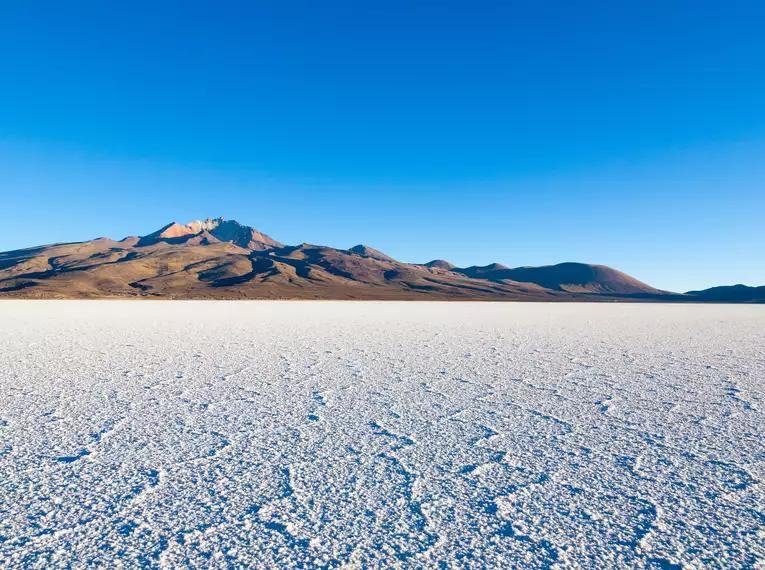
Salar de Uyuni, Bolivia
Place this photo below the introduction:
A wide panoramic photograph showing the enormous white salt flat with mountains in the distance.
🌎 1. Salar de Uyuni: The World’s Largest Salt Flat
The biggest reason Bolivia attracts worldwide attention is Salar de Uyuni.
Covering more than 10,000 square kilometres, it is the world’s largest salt flat.
The landscape is so enormous and flat that it can be difficult to understand its scale.
From certain viewpoints, the white surface seems to continue forever.
Salar de Uyuni was formed from ancient lakes that gradually dried up, leaving behind enormous deposits of salt and minerals.
Today, the area is one of the most extraordinary landscapes on the planet.
🪞 2. When the Ground Becomes a Giant Mirror
The most magical transformation happens during the rainy season.
A thin layer of water can cover parts of the salt flat.
When the surface becomes calm, it reflects the sky so clearly that the boundary between Earth and sky almost disappears.
Clouds appear to float beneath your feet.
Mountains seem to rise from the sky.
People standing on the surface can look as though they are walking through the clouds.
This incredible phenomenon has made Salar de Uyuni one of the world’s most photographed landscapes.


The Famous Mirror Effect
Place this photo here:
A photograph showing the sky and clouds perfectly reflected on the thin layer of water covering Salar de Uyuni.
🔷 3. The Strange Hexagonal Patterns
When the salt flat is dry, another fascinating feature becomes visible.
The surface develops polygon-shaped patterns, often appearing like enormous natural tiles.
These patterns are created by the drying and crystallisation of salt and the movement of water beneath the surface.
From above, the formations can look almost artificial.
It is one of those places where nature creates patterns that appear to have been designed by an artist.


Natural Salt Patterns
Place this photo here:
A close-up photograph of the geometric hexagonal patterns on the dry salt surface.
🏔️ 4. Volcanoes, Deserts and Colourful Lagoons
Bolivia’s amazing scenery does not end at Salar de Uyuni.
The surrounding high-altitude region contains spectacular mountains, volcanoes, deserts and lagoons.
Some lagoons are famous for their unusual colours.
One of the best-known is Laguna Colorada, or the Red Lagoon.
Its reddish appearance can be influenced by algae, minerals and sediment.
Against the surrounding mountains and desert, the lagoon creates an extraordinary landscape.


Laguna Colorada
Place this photo here:
A wide photograph of the reddish lagoon with mountains and, if possible, flamingos visible in the water.
🦩 5. Flamingos Living at Extreme Altitudes
One of the most surprising sights in Bolivia is seeing large groups of flamingos in remote high-altitude lagoons.
Several flamingo species can be found in the Andean region.
They feed on microscopic organisms in the shallow waters.
The contrast is extraordinary:
Pink flamingos + red or blue water + volcanic mountains + endless desert.
It looks like a scene created for a fantasy movie.
But it is completely real.


Flamingos of the Bolivian Altiplano
Place this photo here:
A photograph showing flamingos standing in a high-altitude lagoon with mountains in the background.
🌋 6. A Landscape That Looks Like Another Planet
Parts of southwestern Bolivia have such unusual scenery that visitors sometimes compare them to the surface of another planet.
You can find:
- Huge salt flats
- Volcanic mountains
- Geysers
- Rock formations
- High-altitude deserts
- Colourful lagoons
- Vast empty landscapes
The combination is extremely rare.
Within a relatively short journey, the landscape can change from brilliant white salt to red desert, green water and towering volcanic peaks.
🏙️ 7. Bolivia Has One of the World’s Most Unusual Capitals
Bolivia’s administrative capital is La Paz, one of the world’s highest major cities.
The city sits dramatically in a deep valley surrounded by the Andes.
Instead of spreading across a flat plain, La Paz climbs up the steep slopes around the valley.
The result is a spectacular cityscape.
Buildings cover the mountainsides, while the surrounding peaks rise dramatically in the distance.


La Paz, Bolivia
Place this photo here:
A panoramic photograph of La Paz showing the city filling the valley with the Andes in the background.
🚠 8. A City Connected by Cable Cars
Because of La Paz’s steep geography, transportation can be challenging.
The city and neighbouring El Alto have developed an extensive urban cable-car system, known as Mi Teleférico.
Instead of travelling only along crowded roads, passengers can move above the city while enjoying spectacular views.
The cable cars have become an important part of daily transportation as well as an attraction for visitors.
Imagine travelling above an enormous mountain city while looking down at streets far below.
🧂 9. Bolivia’s Salt Is More Than a Tourist Attraction
Salar de Uyuni is not simply a beautiful landscape.
The region is also associated with important mineral resources, particularly lithium.
Lithium is an important material used in modern rechargeable batteries.
These batteries are found in products such as:
- Smartphones
- Laptops
- Electric vehicles
- Energy-storage systems
Bolivia has some of the world’s largest known lithium resources, making its salt flats important not only for tourism but also for discussions about the future of energy and technology.
However, developing these resources also raises important questions about water, environmental protection, technology and the rights of local communities.
🏜️ 10. Bolivia Is a Country of Incredible Contrasts
Bolivia is not just one type of landscape.
It contains an extraordinary range of environments.
You can find:
🏔️ High Andes mountains
🏜️ Dry deserts
🧂 Massive salt flats
🌿 Tropical lowlands
🌊 High-altitude lagoons
🌋 Volcanoes
🌳 Amazonian regions
This diversity makes Bolivia one of the most geographically fascinating countries in South America.
🏛️ 11. Bolivia Has a Rich Indigenous Heritage
Bolivia is also remarkable because of its strong Indigenous cultural heritage.
The country is home to numerous Indigenous peoples, languages and traditions.
The Aymara and Quechua cultures have played an important role in the history and identity of the Andes.
Traditional clothing, festivals, music, food and crafts remain important parts of Bolivian culture.
This cultural diversity makes travelling through Bolivia about much more than seeing landscapes.
It is also an opportunity to understand one of South America’s richest cultural histories.
🗿 12. The Ancient Mystery of Tiwanaku
Near Lake Titicaca lies the ancient archaeological site of Tiwanaku.
It was the centre of a powerful pre-Columbian civilisation that influenced a large part of the Andean region.
The site contains impressive stone structures and monuments.
Its history demonstrates that the Andes were home to sophisticated societies long before the arrival of Europeans.
For history lovers, Tiwanaku adds another fascinating layer to Bolivia’s story.


Tiwanaku Ancient Ruins
Place this photo here:
A photograph showing the ancient stone structures and monuments of Tiwanaku.
🤯 10 Amazing Facts About Bolivia
1️⃣ Bolivia is a landlocked country in South America.
2️⃣ Salar de Uyuni is the world’s largest salt flat.
3️⃣ Salar de Uyuni covers more than 10,000 square kilometres.
4️⃣ During wet conditions, parts of the salt flat can create an extraordinary mirror effect.
5️⃣ Bolivia has enormous high-altitude landscapes in the Andes.
6️⃣ Flamingos live around several high-altitude lagoons.
7️⃣ La Paz is one of the world’s highest major cities.
8️⃣ Bolivia has enormous lithium resources associated with its salt-flat regions.
9️⃣ Tiwanaku is one of the most important archaeological sites in the Andean region.
🔟 Bolivia combines mountains, deserts, salt flats, tropical regions and ancient cultures within one country.
🌟 Why Bolivia Is One of the World’s Most Amazing Countries
There are countries famous for their beaches.
There are countries famous for their skyscrapers.
There are countries famous for their forests.
But Bolivia offers something completely different.
Here, you can stand on a white salt desert that becomes a mirror, watch flamingos in a remote high-altitude lagoon, see volcanoes rising from the Andes and explore ancient civilisations.
It is a country where nature constantly changes the way it looks.
One moment you are standing on what appears to be an endless white desert.
The next moment, rain transforms the same landscape into a giant reflection of the sky.
And somewhere beyond the salt flats, colourful lagoons and mountains create another completely different world.
🇧🇴 Final Thoughts
Bolivia is proof that some of the most extraordinary places on Earth are not always the most famous.
Its landscapes can look unreal, its cities are shaped by dramatic geography, and its ancient cultures tell stories that stretch back centuries.
But perhaps the most unforgettable sight is Salar de Uyuni.
When a thin layer of water covers the salt, the boundary between sky and Earth disappears.
You no longer feel as though you are standing on the ground.
You feel as though you are standing inside the sky.
Leave a Reply