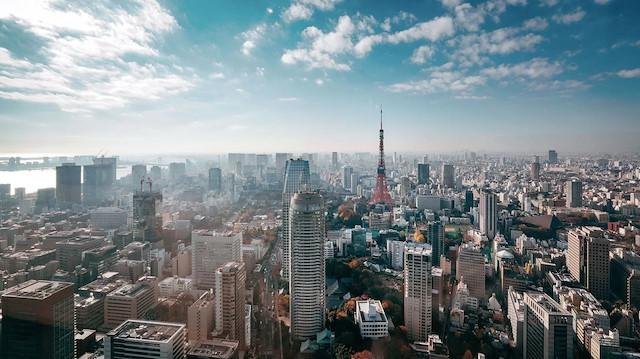
Imagine living in a country where the ground can suddenly shake beneath your feet.
For millions of people in Japan, earthquakes are not something that belongs only in history books. They are a natural hazard that has influenced architecture, technology, emergency planning and everyday life.
Japan has therefore developed some of the world’s most advanced approaches to earthquake-resistant construction.
But the fascinating story isn’t simply about strong buildings.
It is about how an entire society has learned to prepare before an earthquake happens.


🌏 Why Does Japan Experience So Many Earthquakes?
Japan lies in one of the world’s most geologically active regions.
Several tectonic plates meet around the Japanese archipelago.
When these enormous plates move against one another, energy can accumulate underground.
When that energy is suddenly released, the ground shakes.
This is why earthquakes are a recurring natural hazard in Japan.
The country has experienced some extremely powerful earthquakes throughout its history, including the devastating Great East Japan Earthquake of 2011.
🏢 How Can Tall Buildings Survive Earthquakes?
One of the most impressive aspects of modern Japanese engineering is the way buildings are designed to respond to ground movement.
A traditional building might try to resist an earthquake by simply being extremely strong.
Modern earthquake engineering takes a different approach.
The building is designed to move safely.
Engineers may use systems such as:
- Flexible structural elements
- Shock absorbers
- Dampers
- Base-isolation systems
- Special foundations
- Reinforced structural frames
Instead of trying to completely prevent movement, engineers can control how the building moves.


🏗️ What Is Base Isolation?
One fascinating technology is called:
Base Isolation
The basic concept is relatively simple.
Instead of connecting the building rigidly to the ground, special isolation devices can be placed between the building and its foundation.
When the ground moves during an earthquake, these devices can reduce the amount of movement transferred directly into the structure.
Think of it somewhat like putting a protective cushion between the building and the shaking ground.
The actual engineering is far more complicated, but the goal is straightforward:
Reduce the force transmitted into the building.
🌊 Japan Also Has a Powerful Earthquake Warning System
Japan has developed an advanced Earthquake Early Warning system.
The system detects earthquake waves and can send warnings before stronger shaking reaches some locations.
The warning time may be very short — sometimes only seconds.
But even a few seconds can be valuable.
For example, warnings can potentially allow:
- Trains to slow or stop
- Elevators to take protective action
- Factories to shut down machinery
- People to move away from dangerous objects
- Emergency systems to activate
It is important to understand that earthquake early warning is not earthquake prediction.
It does not tell people days or hours before an earthquake that one will happen.
Instead, it detects an earthquake that has already started and rapidly estimates where stronger shaking may arrive.
🚄 Japan’s Trains Are Also Designed With Earthquakes in Mind
Japan is famous for its high-speed Shinkansen railway network.
Because trains can be travelling at very high speeds, earthquake safety is extremely important.
Japan uses earthquake detection technology and railway safety systems designed to reduce risk during significant seismic events.
When strong earthquake signals are detected, railway systems can automatically take protective action.
This is another example of how earthquake preparedness has become integrated into everyday technology.


🏠 Earthquake Preparedness Starts at Home
Earthquake safety in Japan is not limited to skyscrapers and trains.
Ordinary households also prepare.
People may keep emergency supplies such as:
- Drinking water
- Food
- Flashlights
- Batteries
- First-aid supplies
- Portable radios
- Emergency toilets
- Important documents
Furniture can also be secured to reduce the chance of injuries.
This creates an important lesson:
A safe country needs prepared people as well as strong buildings.
🎒 Japanese Schools Teach Disaster Preparedness
Children in Japan can participate in earthquake and disaster-preparedness drills.
Students may practise:
- How to protect their heads
- How to evacuate buildings
- Where to gather
- How to respond to emergency instructions
- How to remain calm during disasters
Regular drills help turn emergency procedures into familiar actions.
This is particularly important because panic can make disasters more dangerous.
🌊 The 2011 Earthquake Changed Japan Forever
On March 11, 2011, one of the most powerful earthquakes ever recorded struck off Japan’s northeastern coast.
The earthquake triggered a devastating tsunami.
The disaster caused enormous loss of life and widespread destruction.
It also resulted in the Fukushima Daiichi nuclear accident.
The event became one of the most significant natural and technological disasters of modern times.


🌊 Why Was the Tsunami So Dangerous?
An earthquake beneath or near the ocean can suddenly displace a huge volume of water.
That can generate a series of powerful waves known as a tsunami.
Unlike ordinary wind-generated waves, tsunami waves involve movement of a massive amount of water.
When they reach shallow coastal areas, their height and destructive power can increase dramatically.
The 2011 tsunami caused catastrophic damage along Japan’s northeastern coast.
🧠 Japan’s Biggest Lesson: Preparation Saves Lives
Japan’s experience demonstrates an important principle.
You cannot stop an earthquake.
You cannot completely eliminate natural hazards.
But you can reduce their consequences through:
Engineering + Education + Early Warning + Emergency Planning + Public Awareness
This philosophy has influenced disaster-management practices around the world.
🏙️ Why Does Tokyo Continue to Grow Despite Earthquake Risk?
Tokyo is one of the world’s largest metropolitan areas.
It contains:
- Skyscrapers
- Railway networks
- Underground infrastructure
- High-density neighbourhoods
- Millions of residents
- Major businesses
Yet it continues to function in a region where earthquakes are a known risk.
The answer is not that Tokyo is earthquake-proof.
It isn’t.
Instead, the city continuously invests in building standards, infrastructure resilience, emergency planning and disaster preparedness.
🔬 Japan’s Earthquake Technology Keeps Evolving
Japanese researchers and engineers continue working on technologies that can improve earthquake resilience.
Research includes:
- Structural monitoring
- Seismic isolation
- Vibration control
- Earthquake-resistant materials
- Early-warning systems
- Disaster simulation
- Infrastructure resilience
The goal is not to build a world where earthquakes never cause damage.
The goal is:
Make society more capable of surviving them.
🤯 10 Interesting Facts About Japan and Earthquakes
1️⃣ Japan is located in one of the world’s most seismically active regions.
2️⃣ Several tectonic plates interact around the Japanese archipelago.
3️⃣ Japan has developed sophisticated earthquake-resistant building technologies.
4️⃣ Base isolation can reduce the transfer of ground motion into buildings.
5️⃣ Japan operates an earthquake early-warning system.
6️⃣ Railway systems use earthquake detection and safety technologies.
7️⃣ Disaster drills are an important part of preparedness.
8️⃣ Households are encouraged to prepare emergency supplies.
9️⃣ The 2011 earthquake triggered a devastating tsunami.
🔟 Japan’s experience has made disaster preparedness an important part of modern Japanese society.
🇯🇵 What Can India and Other Countries Learn From Japan?
Every country has different natural hazards.
India faces risks including:
- Earthquakes
- Floods
- Cyclones
- Landslides
- Heatwaves
Japan’s experience offers a valuable lesson:
Disaster management should begin long before the disaster happens.
Building codes, public education, emergency communication and resilient infrastructure can make a huge difference.
Technology alone cannot protect a population.
People need to know what to do, where to go and how to respond.
🌟 The Real Secret Behind Japan’s Earthquake Resilience
The secret isn’t one magical building material.
It isn’t one warning system.
And it isn’t one piece of technology.
Japan’s strength comes from combining many things:
🏗️ Strong engineering
📡 Early warning
🚄 Safe infrastructure
🎒 Emergency preparation
🏫 Public education
🚨 Regular drills
🔬 Scientific research
Together, these create a society that is better prepared for one of nature’s most unpredictable forces.
🇯🇵 Final Thoughts
Japan cannot prevent earthquakes.
But instead of simply accepting them as unavoidable disasters, the country has spent decades learning how to design, prepare and respond.
From skyscrapers and bullet trains to schools and ordinary homes, earthquake preparedness has become part of Japanese life.
And perhaps the biggest lesson from Japan is this:
We cannot always control nature — but we can control how prepared we are when nature strikes.
That is what makes Japan one of the most fascinating countries in the world.
Leave a Reply