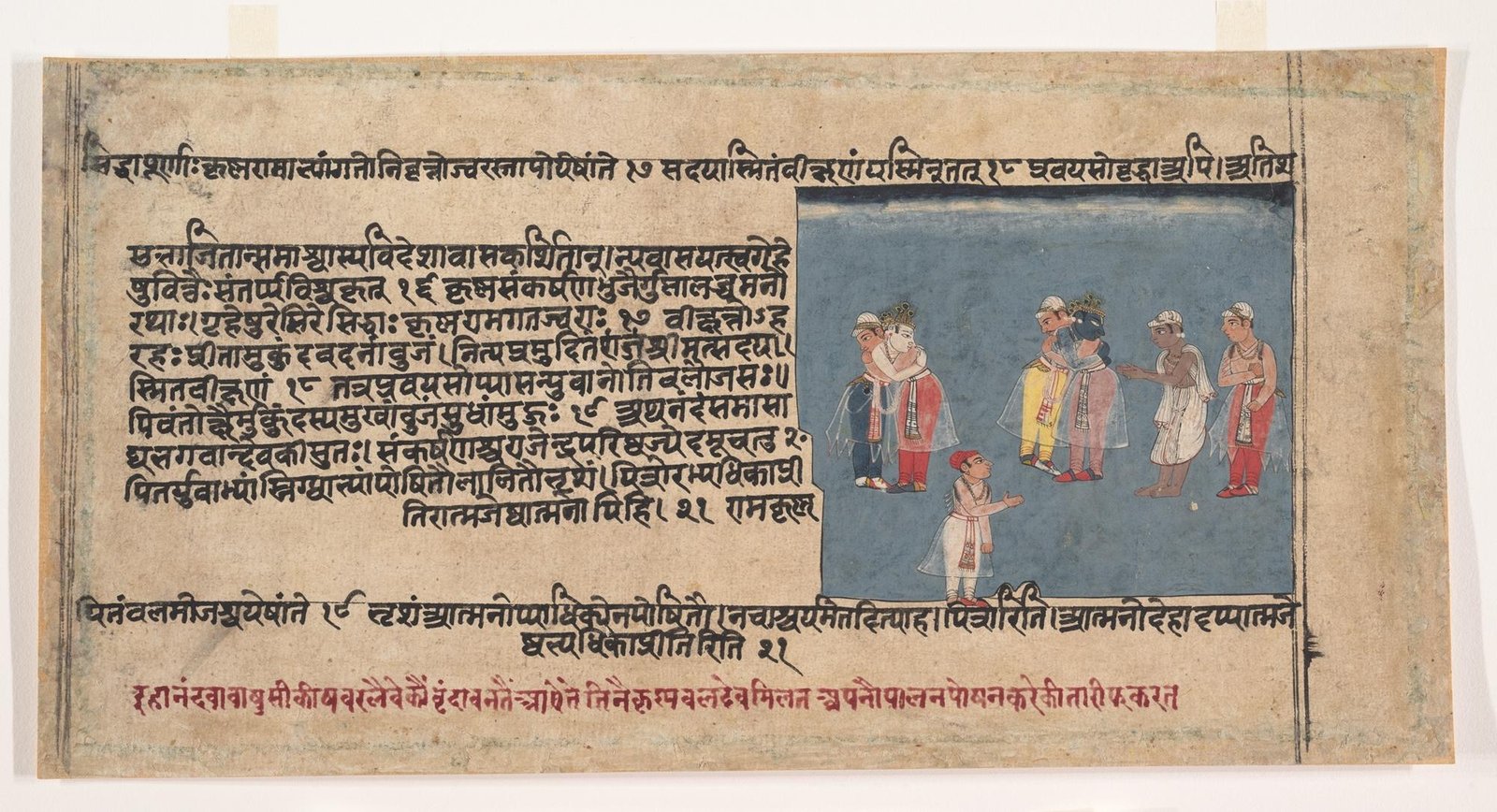
The Puranas are an important part of India’s ancient literary, religious and cultural heritage. They preserve stories about creation, gods and goddesses, kings, sages, sacred places, traditions, devotion and the cycles of time.
The word Purana is commonly understood as relating to ancient or traditional narratives. The Purana tradition contains both the well-known 18 Mahapuranas and many other Purana texts.


Image ALT: Ancient illustrated Bhagavata Purana manuscripts representing India’s Puranic literary tradition
What Are the Puranas?
The Puranas are a large body of Sanskrit literature that combines stories, teachings, traditions, genealogies, cosmology, sacred geography and religious ideas.
Unlike a simple history book, a Purana can contain many different types of material within the same work.
The stories were traditionally used to communicate important ideas through narratives and conversations between sages, kings and divine figures.
Image ALT: Illustrated Sanskrit manuscript representing the storytelling tradition of the Puranas
How Many Mahapuranas Are There?
Tradition recognizes 18 Mahapuranas, or “Great Puranas.” Different traditional lists can vary in some names, but the commonly cited list includes the following:
- Brahma Purana
- Padma Purana
- Vishnu Purana
- Shiva Purana
- Bhagavata Purana
- Narada Purana
- Markandeya Purana
- Agni Purana
- Bhavishya Purana
- Brahmavaivarta Purana
- Linga Purana
- Varaha Purana
- Skanda Purana
- Vamana Purana
- Kurma Purana
- Matsya Purana
- Garuda Purana
- Brahmanda Purana
The 18-Mahapurana classification is a traditional one, and historical manuscript traditions sometimes differ in their lists.
What Do the Puranas Talk About?
Puranic literature covers a very wide range of subjects.
Some important themes include:
- Creation of the universe
- Destruction and recreation
- Gods and goddesses
- Avatars
- Sages and saints
- Kings and dynasties
- Dharma
- Devotion
- Sacred places
- Festivals and traditions
- Cosmology
- Genealogies
- Stories of great devotees
A traditional description of Purana literature often refers to Pancha Lakshana, or five characteristic subjects: creation, recreation, the eras of Manus, genealogies and accounts of dynasties.
The Five Characteristics – Pancha Lakshana
The traditional Pancha Lakshana describes five major subjects found in Purana literature.
1. Sarga – Creation
This concerns the creation of the universe and its beings.
2. Pratisarga – Re-Creation
This concerns cycles of destruction and subsequent creation.
3. Vamsha – Genealogy
This includes genealogies of gods, sages and important lineages.
4. Manvantara – Ages of Manus
This describes different cosmic periods associated with Manus.
5. Vamshanucharita – Dynastic Stories
This includes accounts of royal dynasties and their rulers.


Image ALT: Traditional Indian depiction representing Puranic cosmology and cycles of creation
1. Bhagavata Purana
The Bhagavata Purana is one of the best-known Mahapuranas.
It is especially famous for its stories of Lord Krishna, devotion and the relationship between the devotee and the divine.
The National Museum in New Delhi describes a Bhagavata Purana manuscript as a major religious manuscript and notes its wide influence across Indian languages.

Image ALT: Illustrated Bhagavata Purana manuscript depicting stories associated with Lord Krishna
Stories connected with Krishna’s childhood, devotees, spiritual teachings and divine activities have made the Bhagavata Purana particularly influential in Indian devotional traditions.
2. Vishnu Purana
The Vishnu Purana is an important Vaishnava Purana.
It contains narratives concerning Vishnu, creation, cosmic cycles, genealogies and the history of important dynasties.
Manuscript collections preserve copies of the Vishnu Purana as one of the traditional 18 Mahapuranas.


Image ALT: Ancient Vishnu Purana manuscript representing the traditions associated with Lord Vishnu
3. Shiva Purana
The Shiva Purana is associated primarily with Lord Shiva and Shaiva traditions.
It contains stories and teachings concerning Shiva, Parvati, Ganesha, Kartikeya and other divine figures.


Image ALT: Traditional Indian depiction of Lord Shiva and Parvati associated with Shaiva Puranic traditions
The Shiva Purana has played an important role in communicating stories and devotional traditions connected with Shiva.
4. Markandeya Purana
The Markandeya Purana is another important Mahapurana.
It is especially famous because it contains the Devi Mahatmya, also known as Durga Saptashati or Chandi.
The Devi Mahatmya is devoted to the glory and power of Goddess Durga and has become particularly important in Shakta traditions. Manuscript collections identify Devi Mahatmya manuscripts as part of the Markandeya Purana.


Image ALT: Goddess Durga representing the Devi Mahatmya tradition within the Markandeya Purana
5. Skanda Purana
The Skanda Purana is traditionally regarded as one of the largest Mahapuranas.
It contains extensive material concerning sacred places, pilgrimage traditions, temples and religious practices.


Image ALT: Ancient Indian temple and pilgrimage tradition associated with the Skanda Purana
The text is especially important for understanding the traditional sacred geography of India.
6. Garuda Purana
The Garuda Purana is traditionally associated with Garuda, the vehicle of Lord Vishnu.
It contains discussions on subjects including dharma, rituals, cosmology and ideas concerning death and the journey after death.


Image ALT: Lord Vishnu and Garuda representing the Garuda Purana tradition
Because of its discussions about death and funeral traditions, the Garuda Purana is particularly well known among Indian religious texts.
7. Matsya Purana
The Matsya Purana is traditionally associated with Matsya, the fish incarnation of Vishnu.
It contains narratives about creation, mythology, traditions and sacred places.


Image ALT: Matsya avatar of Lord Vishnu representing the Matsya Purana tradition
The story of Matsya is one of the famous narratives connected with the avatar traditions of Vishnu.
Puranas and the Concept of Time
One fascinating aspect of Puranic literature is its description of vast cycles of time.
The Puranic tradition describes four major Yugas:
- Satya Yuga
- Treta Yuga
- Dvapara Yuga
- Kali Yuga
Together they form a Mahayuga, within the traditional cosmological framework.


Image ALT: Traditional Indian representation of the four Yugas and the cyclical concept of time
This cyclical view of time is one of the distinctive features of traditional Indian cosmological thought.
Puranas and Stories of Krishna
The Puranas helped preserve many stories that became deeply rooted in Indian culture.
The Bhagavata Purana, in particular, is famous for its narratives about Krishna.
Image ALT: Illustrated Bhagavata Purana manuscript depicting a scene from the stories of Lord Krishna
Stories of Krishna’s childhood, friendship, devotion and divine activities continue to inspire Indian literature, music, dance, painting and religious traditions.
Puranas and Goddess Traditions
Puranic literature also contains important traditions concerning Devi, the divine feminine.
The Devi Mahatmya is one of the best-known examples.


Image ALT: Goddess Durga representing the Shakta traditions found in Puranic literature
The stories of Durga and the victory of divine power over evil became especially important in festivals and devotional traditions throughout India.
Puranas and Sacred Places
Many Puranas describe the importance of sacred rivers, temples, mountains and pilgrimage places.
They helped connect religious stories with the geography of India.


Image ALT: Indian temple and sacred pilgrimage landscape representing Puranic sacred geography
Through these traditions, places across India became associated with particular stories, deities and sacred events.
Puranas and Indian Culture
The influence of the Puranas extends far beyond religious texts.
Puranic stories have influenced:
- Indian classical dance
- Music
- Painting
- Sculpture
- Temple traditions
- Folk stories
- Festivals
- Theatre
- Literature


Image ALT: Indian cultural traditions inspired by stories from the Puranas
Even today, many Indian festivals and cultural performances draw upon stories that have been preserved through Puranic traditions.
Puranas and Moral Teachings
The Puranas do not only tell stories.
Many stories communicate ideas about:
Dharma – righteous conduct
Bhakti – devotion
Truthfulness – speaking and living truthfully
Compassion – showing kindness
Self-control – controlling desires and actions
Devotion to God – maintaining faith and dedication
These values are often presented through the experiences of kings, sages, devotees and divine characters.
Why Are the Puranas Important?
The Puranas are important because they preserve a vast collection of stories, traditions, beliefs and cultural ideas.
They also help us understand how religious ideas were communicated to wider communities through stories and memorable characters.
Their influence can be seen throughout Indian art, literature, temple culture and festivals.
Puranas – Quick Facts
Traditional Number of Mahapuranas: 18
Language: Primarily Sanskrit in the classical textual tradition
Main Themes: Creation, mythology, genealogy, dharma, devotion, sacred places and cosmology
Famous Examples: Bhagavata Purana, Vishnu Purana, Shiva Purana, Markandeya Purana and Skanda Purana
Cultural Influence: Literature, music, dance, painting, sculpture, temples and festivals
What Can We Learn From the Puranas?
The Value of Dharma
Many stories explore the consequences of righteous and unrighteous actions.
The Power of Devotion
Stories of great devotees show the importance of faith and dedication.
Respect for Knowledge
Sages and teachers play important roles throughout Puranic narratives.
The Importance of Courage
Many stories describe the struggle between good and evil.
India’s Cultural Diversity
The Puranas connect different regions, temples, rivers, mountains and traditions through stories.
Frequently Asked Questions
What are the Puranas?
The Puranas are ancient Indian religious and cultural texts containing stories, teachings, genealogies, cosmology and traditions.
How many Mahapuranas are there?
Tradition generally recognizes 18 Mahapuranas. Some historical lists vary in the names included.
Which Purana is famous for Krishna stories?
The Bhagavata Purana is especially famous for its extensive Krishna narratives and devotional teachings.
Which Purana contains the Devi Mahatmya?
The Markandeya Purana contains the famous Devi Mahatmya, also known as Durga Saptashati or Chandi.
What are the five characteristics of a Purana?
The traditional Pancha Lakshana refers to creation, re-creation, Manvantaras, genealogies and dynastic narratives.
Why are the Puranas important to Indian culture?
They have influenced Indian religious traditions as well as literature, art, dance, music, temple culture and festivals.
Conclusion
The Puranas are one of the great treasures of India’s ancient literary and cultural heritage.
Through stories of Vishnu, Shiva, Devi, Krishna, sages, kings and devotees, they communicate ideas about dharma, devotion, courage, wisdom and the nature of existence.
The 18 Mahapuranas cover an enormous range of subjects, from creation and cosmic time to sacred places, genealogies and devotional traditions.
Their stories continue to live through Indian temples, festivals, paintings, music, dance and literature.
The Puranas remind us that sometimes the deepest teachings can be preserved through a simple story.
They are not merely collections of ancient stories — they are an important part of India’s cultural memory and spiritual heritage. 🇮🇳
Leave a Reply