In the next article, we’ll explore the important places associated with the Ramayana tradition, from Ayodhya and Mithila to Chitrakoot, Panchavati, Kishkindha and Rameswaram, and how these locations keep the memory of Rama’s journey alive even today.


The Ramayana Is Also a Journey Through Places
The Ramayana is not only a story of people and events.
It is also a journey across landscapes.
Rama’s story takes us through:
🏰 Kingdoms
🌳 Forests
🏔️ Mountains
🌊 Rivers
🛕 Sacred places
🏝️ Distant lands
Over generations, many of these locations became connected with the Ramayana through literary, religious and local traditions.
1. Ayodhya – The City of Rama
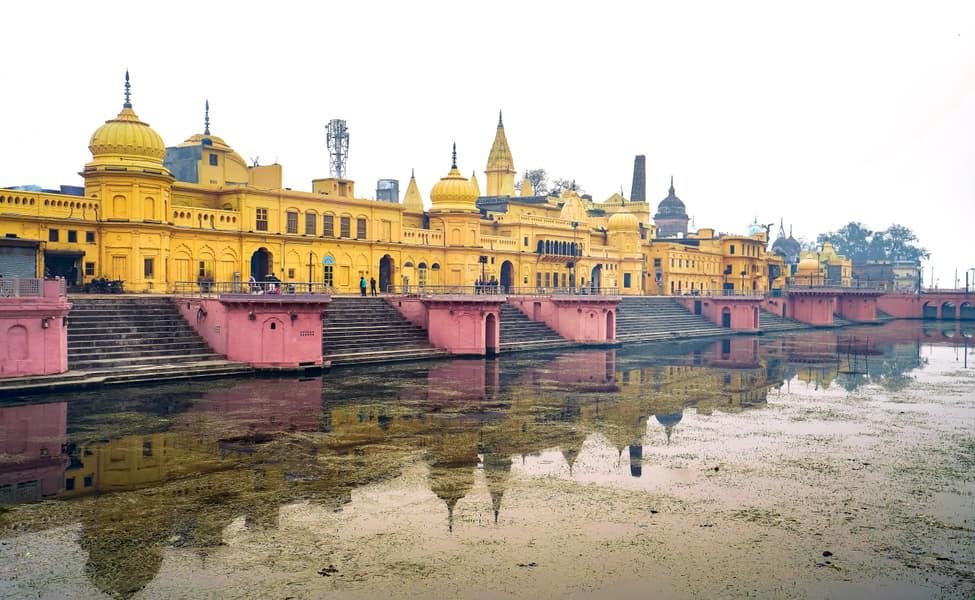
The journey begins with Ayodhya, traditionally regarded as Rama’s birthplace and the capital of the kingdom of Kosala.
Ayodhya is associated with some of the most important events in Rama’s life:
👶 His birth
👑 His royal family
🌳 His departure into exile
🏰 His return
👑 His reign
For devotees, Ayodhya remains one of the most important sacred places connected with Rama.


2. Mithila – The Land of Sita
Mithila is traditionally associated with Sita and her father, King Janaka.
The ancient region of Mithila covers areas that today lie in parts of northern India and southern Nepal.
The city of Janakpur, in present-day Nepal, is particularly associated with Sita and the story of her marriage to Rama.
The Janaki Mandir is one of the most famous landmarks connected with this tradition.
3. Chitrakoot – The Forest Years
Chitrakoot is traditionally associated with the period when Rama, Sita and Lakshmana lived during their exile.
The region is known for its forests, hills and rivers.
According to tradition, Rama spent an important period here.
Chitrakoot therefore became a major pilgrimage destination associated with the exile portion of the Ramayana.


4. Panchavati – The Forest of Important Events
Panchavati, traditionally identified with the area around present-day Nashik in Maharashtra, is another important location in the Ramayana tradition.
The forest period here is associated with several major events.
It is traditionally connected with:
🌳 Rama, Sita and Lakshmana’s residence
👹 Surpanakha’s encounter
⚔️ Conflict with Khara and Dushana
🦌 The golden deer episode
🌿 The events leading to Sita’s abduction
Because of these associations, Panchavati remains an important pilgrimage area.
5. Dandakaranya – The Great Forest Region
The Ramayana describes Rama’s journey through extensive forest regions.
Dandakaranya is traditionally associated with a large forested area of central India.
It was not simply one small location but a vast geographical region described in the epic tradition.
Rama, Sita and Lakshmana are traditionally associated with travelling through these forest areas during their exile.


6. Kishkindha – The Land of the Vanaras
The story then moves toward Kishkindha, the kingdom associated with Sugriva, Hanuman and the Vanara characters.
Kishkindha is traditionally identified with the region around present-day Hampi and Anegundi in Karnataka.
The landscape contains rocky hills, caves and rivers that have become strongly associated with the Ramayana tradition.
Places in the region are connected by local tradition with episodes involving:
🐒 Hanuman
👑 Sugriva
⚔️ Vali
🏹 Rama
7. Rishyamukha Mountain
Rishyamukha is traditionally associated with the period when Sugriva lived in fear of Vali.
It is also where Rama and Lakshmana encountered Hanuman in the traditional narrative.
That meeting became one of the most important turning points in the story.
Rama gained a devoted ally.
Hanuman found the person to whom he would dedicate himself.


8. Rameswaram – The Southern Journey
The story eventually moves toward the southern coast.
Rameswaram, in Tamil Nadu, is traditionally connected with Rama’s journey toward Lanka.
The area is especially associated with the worship of Shiva and the tradition surrounding the Ramanathaswamy Temple.
Rameswaram is therefore important both within the broader Ramayana tradition and within Hindu pilgrimage.
9. Rama Setu – The Bridge Toward Lanka
One of the most famous geographical features associated with the Ramayana is Rama Setu, traditionally described as the bridge built by Rama’s forces toward Lanka.
The Ramayana describes the Vanara army constructing a crossing over the sea.
The story of the bridge has remained one of the epic’s most memorable images.


10. Lanka
The final major geographical setting of the central Ramayana story is Lanka, the kingdom ruled by Ravana.
The epic describes Rama’s army crossing the sea and fighting a great battle there.
The identification of the Lanka of the Ramayana with the modern island nation of Sri Lanka is a subject surrounded by different traditions and interpretations.
It is therefore useful to distinguish the epic’s Lanka from claims about exact historical or archaeological identification.
A Journey Across India
When we look at these places together, the Ramayana becomes a remarkable geographical journey:
Ayodhya → Mithila → Chitrakoot → Dandakaranya → Panchavati → Kishkindha → Rameswaram → Lanka
Each place is associated with a different stage of the story.


Why These Places Matter
For millions of people, these locations are not simply geographical points.
They are connected with:
🙏 Pilgrimage
📖 Storytelling
🛕 Temples
🎭 Local traditions
🌿 Sacred landscapes
👨👩👧👦 Family traditions
People visit these places to experience the landscape associated with stories they have heard since childhood.
Tradition and Historical Evidence
It is important to understand that the connection between a modern location and a Ramayana episode can come from religious tradition, local memory and later pilgrimage practices.
Not every traditional identification can be established as a historical fact.
This does not make the tradition unimportant.
Instead, it shows how stories can become deeply connected with landscapes and communities over long periods of time.
The Ramayana as a Pilgrimage Journey
For devotees, travelling to these places can become a way of experiencing the Ramayana physically.
Instead of only reading about:
🌳 The forest
🌊 The river
🏔️ The mountain
🛕 The temple
they can visit landscapes associated with the tradition.
This creates a powerful connection between story, geography and devotion.
Conclusion
The Ramayana is not only a journey through the lives of Rama, Sita, Lakshmana and Hanuman.
It is also a journey through places that have become deeply connected with Indian cultural memory.
From Ayodhya to Mithila, from Chitrakoot to Panchavati, from Kishkindha to Rameswaram, each location carries its own traditions and stories.
🕉️ For generations, these sacred landscapes have allowed people to experience the Ramayana not only as a story they read, but as a journey they can remember, visit and pass on.
In the next part, we will explore how the Ramayana entered Indian classical dance, theatre and traditional performance, and how ancient characters continue to come alive on stage.
Leave a Reply